

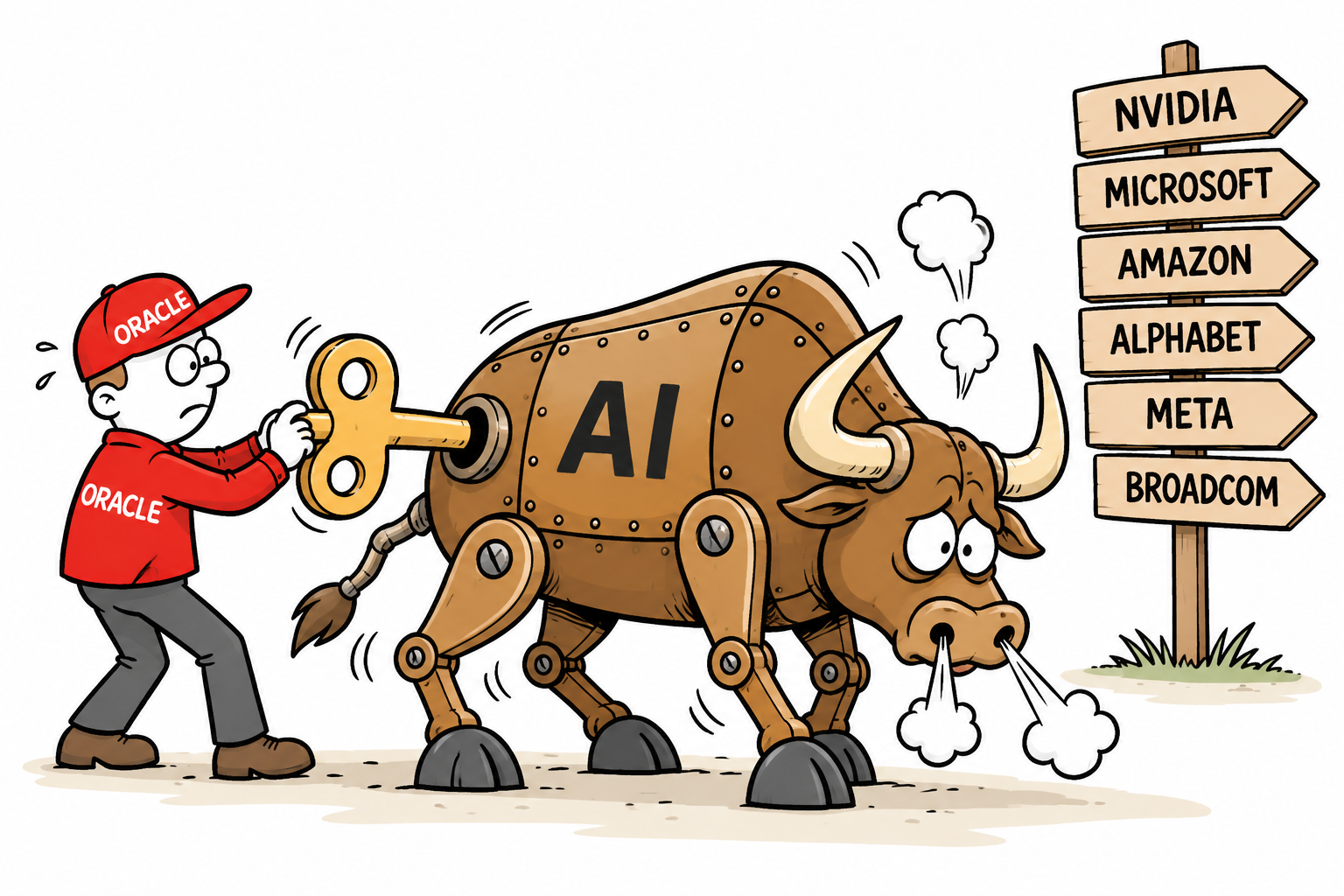
The artificial intelligence boom faces a potentially dangerous turning point. After years of extraordinary investment, soaring valuations and relentless enthusiasm, cracks are emerging in the credit markets that have helped finance America’s AI revolution.
At the centre of the storm stands Oracle, increasingly regarded as a barometer of whether the debt-fuelled AI expansion can continue.
Nervous
Investors are becoming nervous about the enormous borrowing required to construct data centres, purchase advanced chips and develop the infrastructure supporting artificial intelligence.
The warning signs are unmistakable
Oracle’s five-year credit default swap (CDS) spreads, effectively the cost of insuring against debt default, reportedly reached a record 288 basis points on 15th October 2026.
Meanwhile, heavily indebted AI infrastructure provider CoreWeave has seen its spreads exceed 1,000 basis point.
These figures do not indicate imminent defaults, but they reveal growing anxiety about the sustainability of AI financing.
The implications for Wall Street could be substantial
Oracle must convince investors that its enormous infrastructure commitments can generate sufficient revenues and cash flow to justify mounting financial obligations.
Should confidence deteriorate further, borrowing costs could rise, financing could become harder to secure and ambitious AI expansion plans could face delays.
That would threaten companies throughout the AI ecosystem
Nvidia, Broadcom and other semiconductor suppliers depend heavily on continued infrastructure spending. Microsoft, Amazon, Alphabet and Meta could also face increasing scrutiny over their enormous capital expenditure commitments.
The technology-heavy Nasdaq would be particularly vulnerable, while the broader S&P 500 could suffer from its substantial exposure to America’s largest technology companies.
A prolonged credit squeeze could trigger further selling, valuation compression and a rotation towards less capital-intensive sectors.
However, an AI collapse is far from inevitable
Strong earnings, continued demand for computing power and credible financing arrangements could restore confidence. Indeed, American technology stocks rebounded on Monday following the previous week’s sharp declines.
Nevertheless, the balance of risk appears increasingly uncomfortable.
The greatest danger is that a credit crisis develops before AI revenues can justify the investment.
Oracle may not determine the entire AI industry’s future, but its ability to reassure lenders could influence whether Wall Street’s extraordinary technology bull market survives its next major test.