

Meta’s Muse: The AI Assistant That Wants to Run Your Life

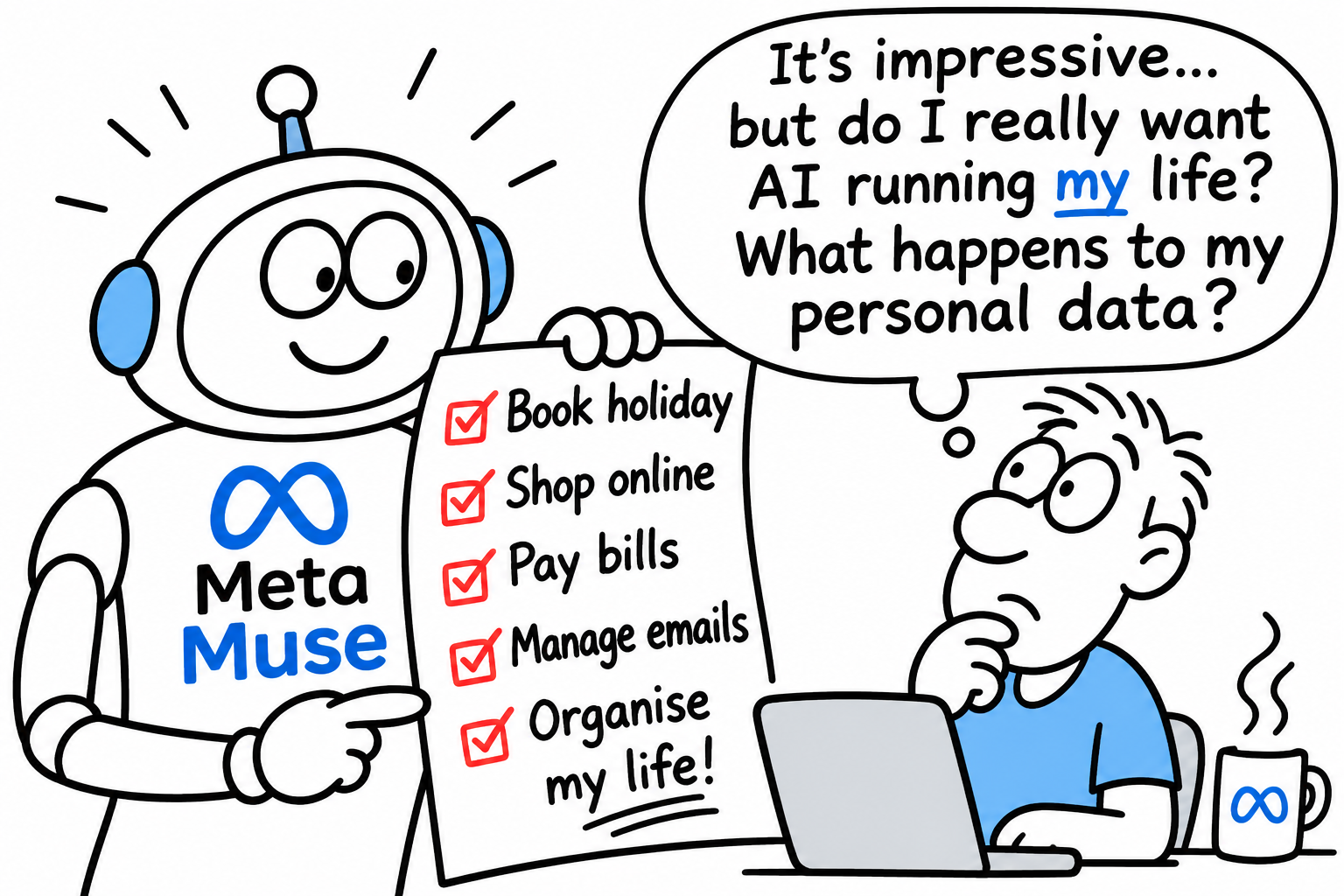
Cartoon image showing Meta's Muse AI interface alongside a user interacting with personal data settings.

Meta is taking artificial intelligence a step further with the launch of Muse, its new personal AI agent, now available in the UK.

Unlike traditional chatbots, which primarily answer questions, Muse is designed to take action. Users can ask it to organise holidays, book travel, shop online, manage emails, negotiate bills and arrange everyday tasks.

It can even continue working in the background after the user has closed the application.

Powered by Meta’s Muse Spark AI model, the technology connects with popular services and retailers, including Marks & Spencer, ASOS, Currys and easyJet.

It is available through iOS, Android and WhatsApp, with a free basic service and optional subscriptions.

Access to personal information

However, giving an AI agent access to personal information and permission to act on someone’s behalf raises important questions about privacy, security and accountability.

Meta says users remain in control, with approval required before significant actions such as purchases or sending emails.

There are also regulatory concerns. Britain’s Financial Conduct Authority has warned that AI agents entering financial services could fall under existing financial regulations.

Muse represents another significant step towards AI becoming part of everyday life. But there is a difference between asking artificial intelligence for advice and allowing it to make decisions and spend money on our behalf.

Trust will ultimately determine how far this technology goes.
AI POWER DEMAND: DATA CENTRE ELECTRICITY USE SET TO DOUBLE BY 2030

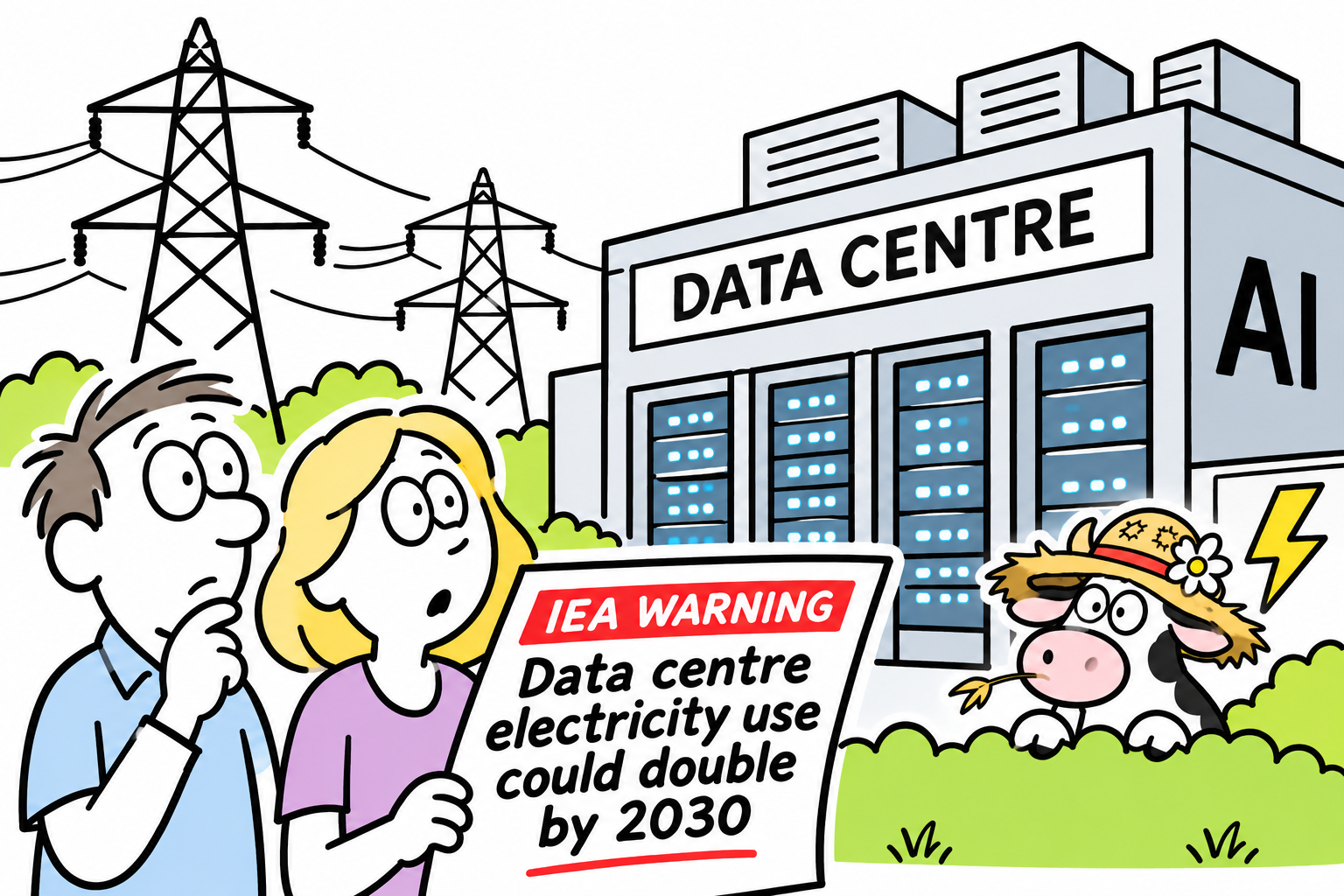
DATA CENTRE ELECTRICITY USE SET TO DOUBLE BY 2030

The extraordinary growth of artificial intelligence (AI) is creating an equally extraordinary demand for electricity, with the International Energy Agency (IEA) warning that global electricity consumption by data centres could almost double by 2030.

According to the IEA’s latest analysis, electricity consumption by data centres is expected to rise from approximately 485 terawatt-hours (TWh) in 2025 to around 950 TWh by the end of the decade.

That would represent approximately 3% of total global electricity demand and is broadly equivalent to the entire annual electricity consumption of Japan.

Artificial intelligence is the principal driving force behind this surge. The increasing use of AI applications, increasingly sophisticated models and enormous computing requirements are forcing technology companies to construct ever-larger data centres, packed with powerful processors that require substantial amounts of electricity and cooling.

Consumption increase

The scale of the expansion is already becoming apparent. Electricity consumption by data centres increased by 17% during 2025, considerably faster than the 3% growth in overall global electricity demand.

AI-focused facilities are growing even more rapidly, with their electricity consumption expected to triple between 2025 and 2030.

However, the warning extends beyond the technology industry. The enormous power requirements are placing increasing pressure on electricity networks, generation capacity and infrastructure.

Shortages of transformers, gas turbines and other essential equipment could delay new projects, while competition for available electricity could put additional pressure on energy prices.

Sourcing resources

Technology companies are increasingly looking towards renewable energy, nuclear power, natural gas and other alternatives to secure reliable supplies. Some are also investing directly in new energy projects.

The AI revolution is clearly gathering momentum, but it comes with a substantial and growing energy bill.

The question now is whether the world’s electricity infrastructure can expand quickly enough to support an industry whose appetite for computing power appears almost limitless.