
Hedge Funds – Treasuries and the Risk Nobody Should Ignore!

U.S. Treasury Potential Risk

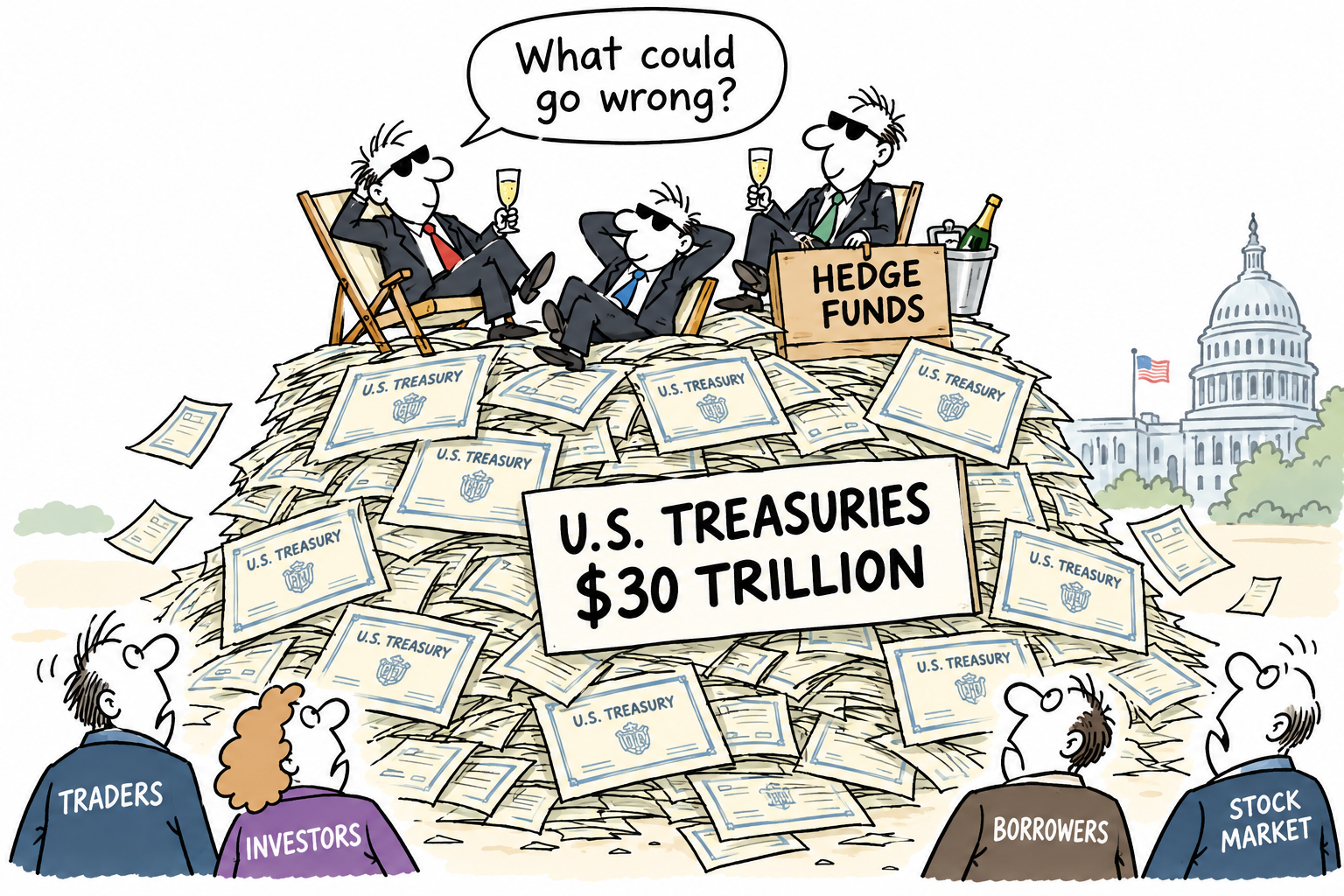
Hedge funds now occupy a record position in the enormous U.S. Treasury market. At the end of 2025, their cash Treasury holdings had reached around $2 trillion, equivalent to roughly 7% of the $28.9 trillion marketable Treasury market.

More broadly, the Federal Reserve reportedly estimates that large hedge funds had gross Treasury exposures of about $4 trillion by September 2025. Office of Financial Research

At first glance, this is not necessarily bad news. Hedge funds provide liquidity and help absorb some of the huge volume of government debt being issued. Their trading strategies can also improve pricing between Treasury securities and futures.

The potential problem is leverage

Much of the activity involves the so-called basis trade: hedge funds buy Treasury securities while simultaneously selling Treasury futures, attempting to profit from tiny price differences.

As those differences are small, the positions can be heavily leveraged, often using borrowed money through the repo market.

The Federal Reserve has reportedly warned that the combination of scale, concentration and leverage could create systemic stress if several strategies come under pressure simultaneously. Federal Reserve

That matters because Treasury markets sit at the heart of global finance.

Caution

If Treasury prices suddenly fall and funding conditions tighten, leveraged funds can face margin calls. They may then be forced to sell assets quickly.

A disorderly unwind could push Treasury yields higher, increase borrowing costs and potentially spill over into equities and other markets.

There are already signs of caution. Morgan Stanley reportedly estimates that assets involved in leveraged Treasury basis trades have fallen around 20% this year to $1.2 trillion.

Time to worry?

So should traders, investors and borrowers be worried? Concerned, yes; panicking, no. The important issue is not simply that hedge funds own more Treasuries.

It is the amount of leverage behind those positions and what happens if everyone tries to exit at the same time.

With Treasury yields already rising sharply, that is a risk worth watching closely
U.S. Inflation Rises as Energy Costs Fuel Rate Fears

U.S. Inflation up in September 2026

U.S. inflation accelerated in September 2026, raising fresh concerns that the Federal Reserve may struggle to bring price increases under control without keeping interest rates higher for longer.

CPI

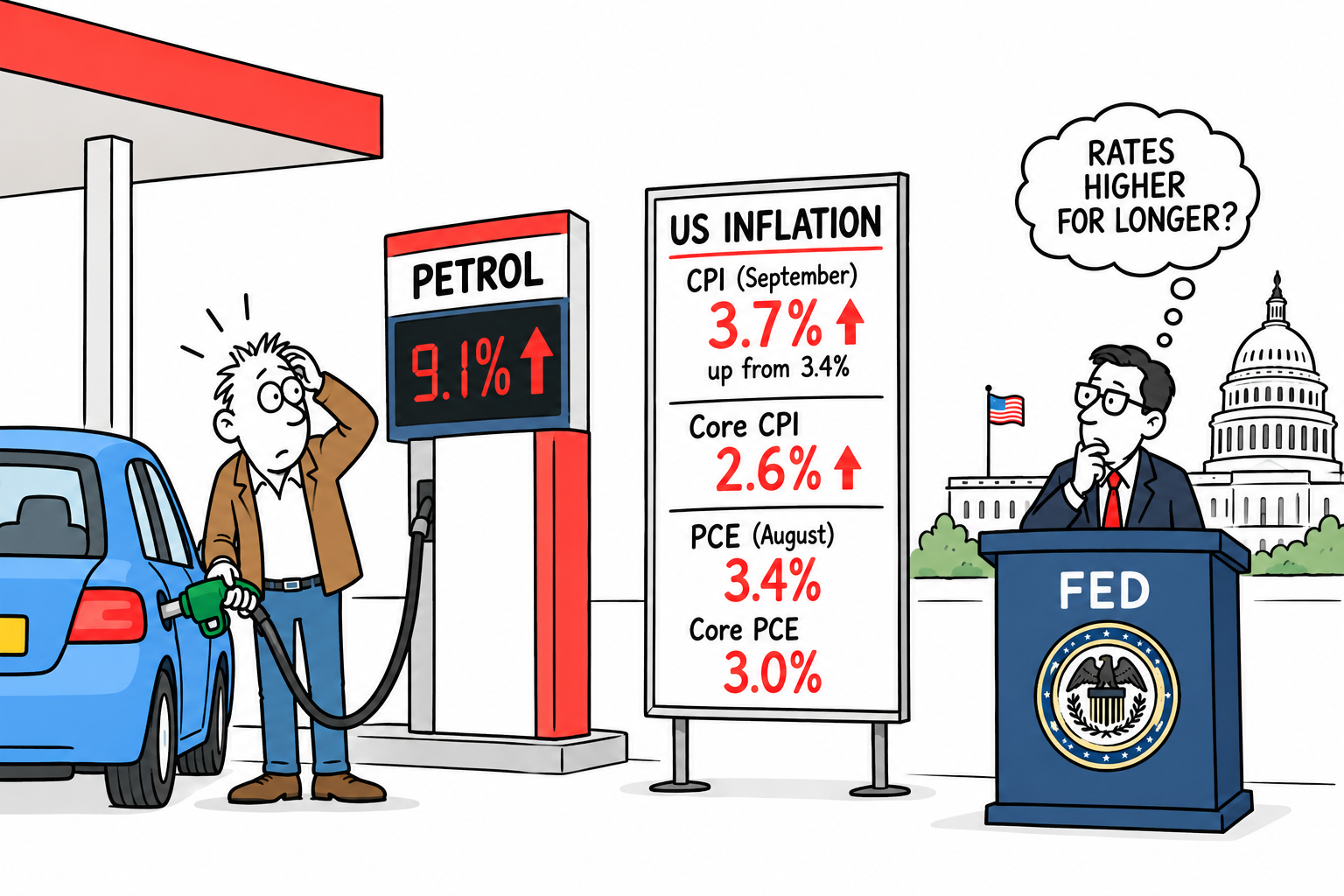
The Consumer Price Index (CPI) rose by 3.7% over the year to September, up from 3.4% in August. Monthly inflation reached 0.6%, driven largely by a sharp 9.1% increase in petrol prices. Core CPI, which excludes food and energy, rose by 2.6% annually.

The figures highlight the growing threat from rising energy costs, which can feed through into transport, manufacturing and household bills, putting further pressure on consumers.

PCE

Meanwhile, the Federal Reserve’s preferred inflation measure, the Personal Consumption Expenditures (PCE) price index, showed annual inflation holding at 3.4% in August 2026.

Core PCE, excluding food and energy, stood at 3.0%. Monthly increases were 0.3% and 0.2%, respectively.

Both measures remain above the Fed’s 2% inflation target, complicating decisions over interest rates. Renewed inflationary pressure could delay rate cuts or increase the prospect of further tightening.

For financial markets, the combination of stubborn inflation, rising energy prices and elevated borrowing costs presents a challenging outlook.

Investors will be watching the next PCE figures, due on 29th October 2026, for clues about the direction of U.S. monetary policy.

French Supermarket Fridge Hack Sparks Cybersecurity Fears

Cybersecurity Attack!

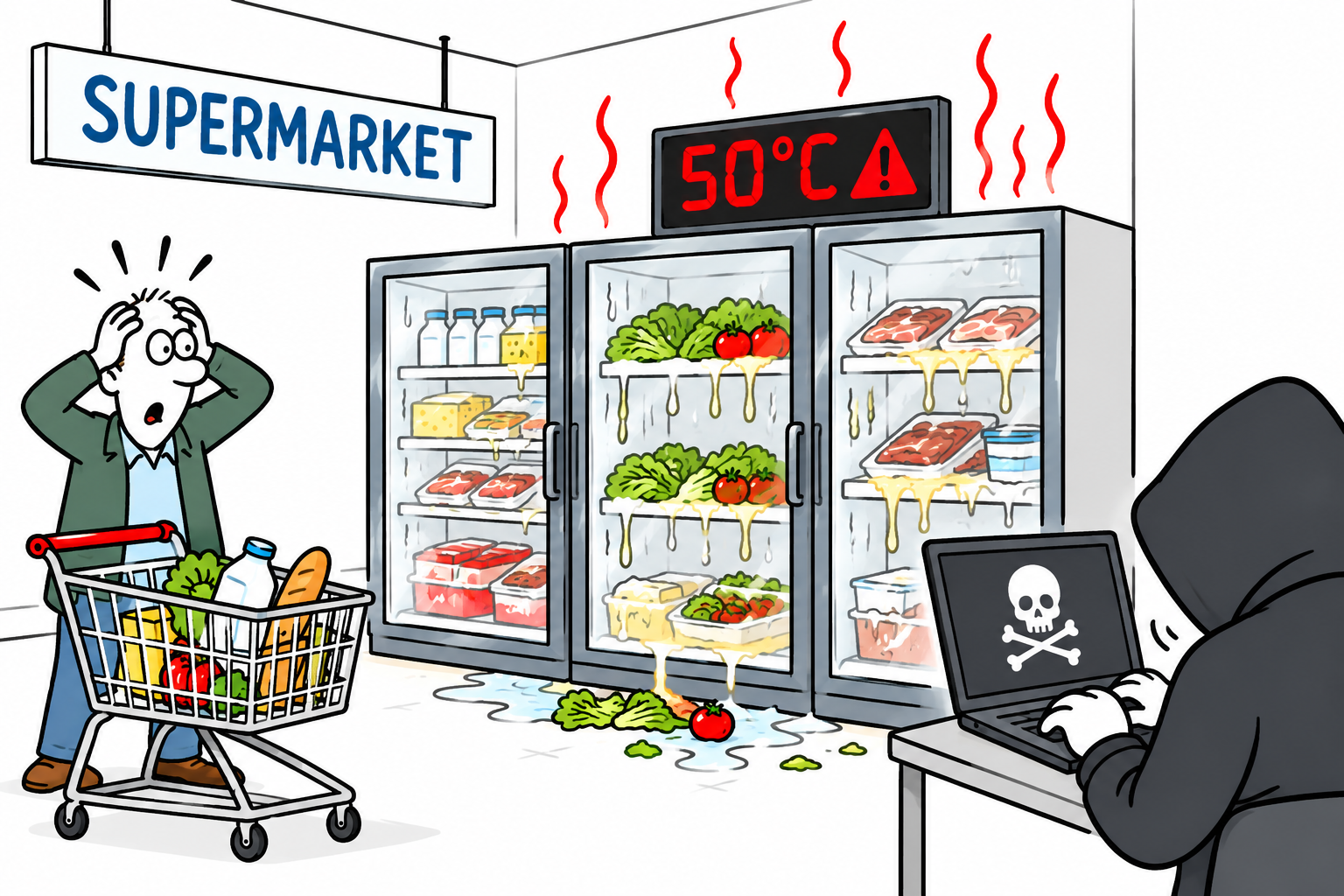
A major cyberattack on French supermarkets has exposed the surprising vulnerability of everyday technology, after hackers remotely manipulated refrigeration systems, causing food to spoil and fires to break out.

The attack, which came to light on 12th October 2026, affected hundreds of stores belonging to major retailers, including Intermarché, Carrefour, Monoprix and Coopérative U.

Heat

Reports indicate that refrigeration units were forced to heat up to 50°C, rather than maintain the low temperatures required to preserve fresh and frozen food.

In some cases, temperatures reportedly climbed even higher. The resulting damage forced supermarkets to discard large quantities of stock.

Investigators believe the attackers exploited vulnerabilities in software used to control refrigeration equipment.

Legacy software

Many of the affected systems were older models running outdated software, leaving them exposed to potential cyber intrusions.

The consequences were both financial and practical. Individual stores faced substantial losses, while the total cost across France could reach tens of millions of euros.

Some premises also reported fires or equipment damage, highlighting how a digital attack can have serious physical consequences.

Investigation

French authorities have launched an investigation, with the country’s national cybersecurity agency working to establish the extent of the incident and assess whether similar systems elsewhere could be at risk. The identity and motives of the attackers remain unclear.

The incident raises wider questions about the security of increasingly connected businesses. Refrigeration systems, once largely isolated from computer networks, can now be monitored and controlled remotely.

While this technology offers greater efficiency, it also creates potential entry points for criminals if systems are poorly secured or left unpatched.

Cybersecurity

For supermarkets, the lesson is clear: cybersecurity is no longer simply an IT issue. It is directly linked to food safety, supply chains and business continuity.

As retailers embrace connected technology, maintaining software updates, restricting remote access and monitoring unusual activity will become increasingly important.

The French incident is a stark reminder that a supermarket’s most basic equipment can become a target in the digital age.