

Australia Raises Interest Rates to an 18-Year High as Inflation Persists

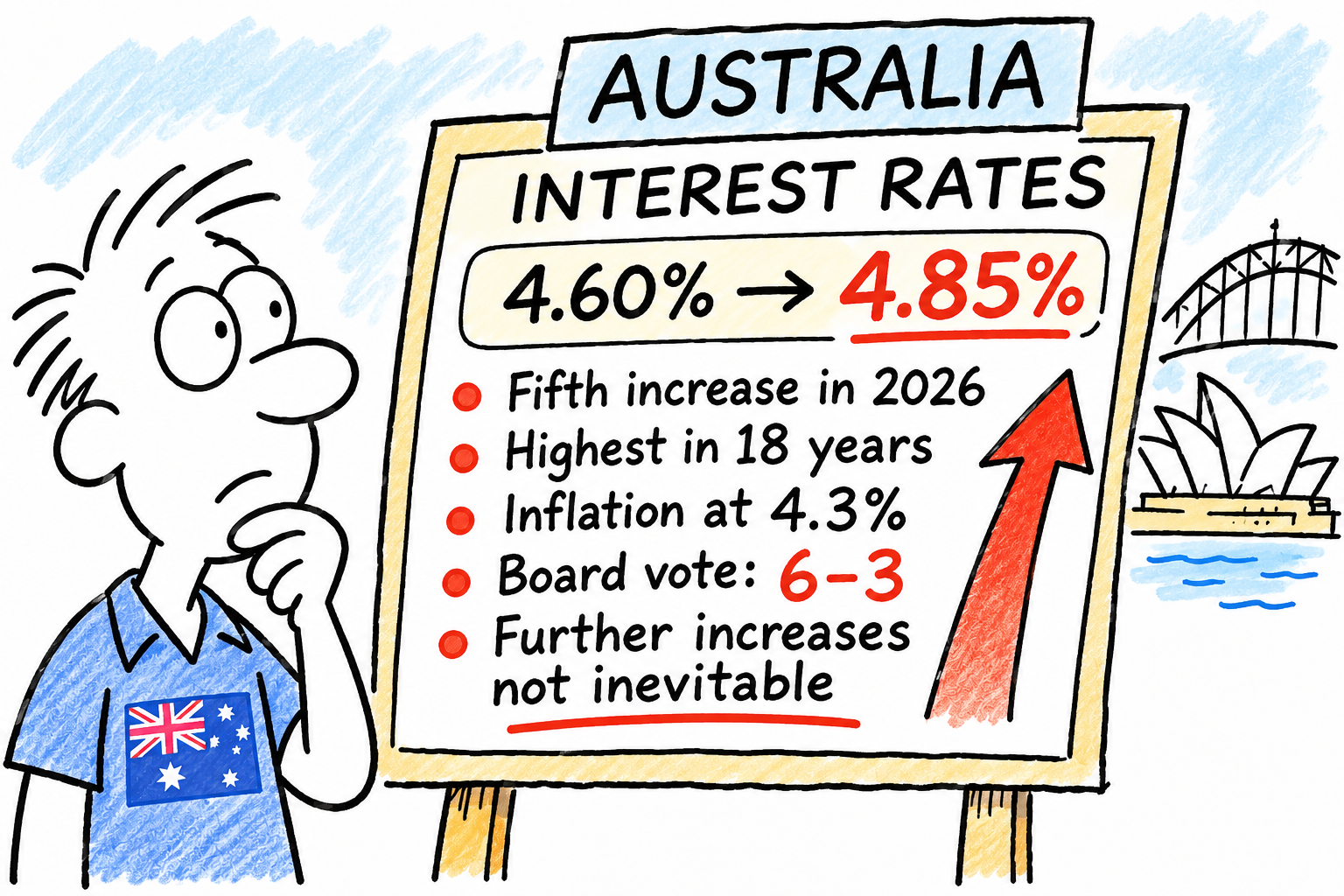
Graph showing Australia's central bank interest rate increases reaching an 18-year high amid persistent inflation pressures.

Australia has raised interest rates to their highest level in 18 years as the central bank steps up efforts to bring stubborn inflation under control.

The Reserve Bank of Australia (RBA) increased its cash rate from 4.60% to 4.85%, marking its fifth increase in 2026.

Inflation at 4.3%

Annual inflation reached 4.3% in September 2026, highlighting the difficulties policymakers face in bringing price pressures under control.

The decision was not unanimous, with six members of the nine-person board voting for an increase and three preferring to leave rates unchanged.

Pressure

The latest move will add further pressure to households already struggling with higher mortgage repayments and rising living costs.

Higher borrowing costs are intended to discourage spending, reduce demand and eventually ease inflation.

However, the RBA faces a delicate balancing act, as excessive tightening risks weakening economic activity and pushing the country towards a downturn.

Persistant issue

The decision also highlights a wider problem facing central banks worldwide. Despite previous monetary tightening, inflation has proved more persistent than policymakers had anticipated.

The RBA has indicated that further increases are not inevitable, suggesting it may be approaching the limits of how far it can tighten monetary policy without damaging growth.

For investors, the message is clear: the global interest-rate cycle may not be moving uniformly towards cheaper borrowing.

Inflation remains a stubborn obstacle, and higher interest rates could persist for longer than markets had hoped.
Apple’s Record Results Fail to Impress as Margin Pressures Mount

Apple’s results

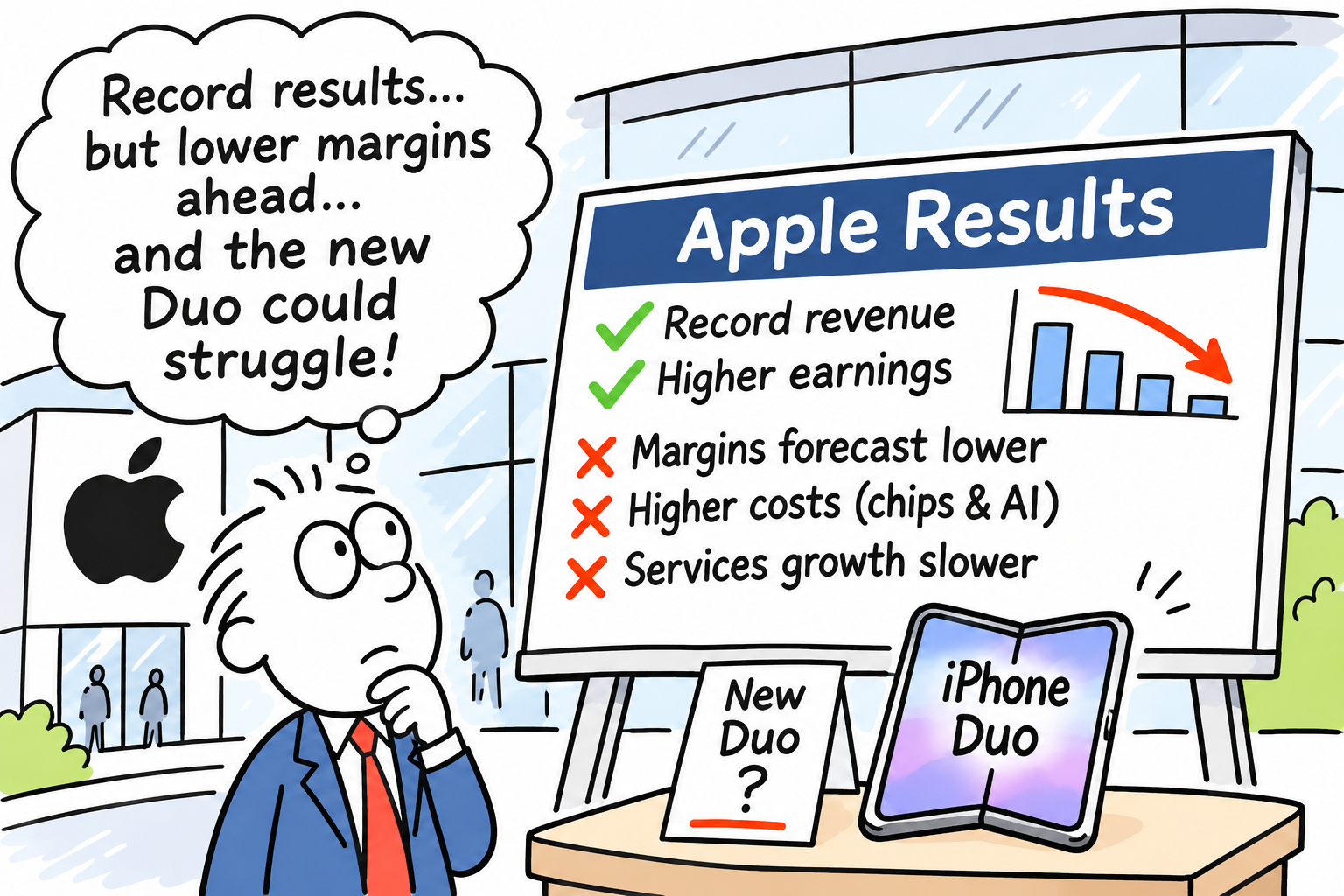
Apple has delivered another record-breaking quarter, but its latest financial results and forward guidance have done little to excite investors.

Despite beating Wall Street expectations, attention has quickly shifted from impressive headline revenues to a less encouraging outlook for profitability.

Figures

For the September 2026 quarter, Apple reported revenue of $114.5 billion, up 12% year-on-year, with earnings per share rising 14% to $2.10.

Gross margin reportedly stood at 47.9%, although this included an approximately one percentage-point benefit from tariff refunds.

Outlook

The problem lies ahead. Apple expects gross margins to fall to between 45% and 46% for the December quarter, traditionally one of its most important trading periods.

Rising memory-chip prices are a significant contributor, alongside additional costs associated with developing and introducing its artificial intelligence capabilities.

The forecast represents a notable deterioration at a time when investors are looking for continued earnings momentum.

Services revenue, another important source of higher-margin income, is also expected to grow by just 8% to 9%, below market expectations. Consequently, even the reported prospect of record holiday-quarter sales has failed to provide much reassurance.

New products

There are also questions surrounding Apple’s ambitious new iPhone Duo, its first foldable smartphone. Apple has yet to disclose sales figures or provide meaningful information about customer demand.

Independent industry estimates reportedly suggest shipments of approximately five to six million units during 2026, relatively modest against Apple’s enormous iPhone business.

Struggle for market share?

The Duo faces an uphill battle. Its premium pricing, approaching $2,000 in the U.S., places it firmly in niche territory, while foldable phones remain a relatively small segment of the global smartphone market.

High production costs and durability concerns could further restrict its appeal.

Apple remains an exceptionally profitable business, but investors are increasingly questioning how much further growth can be achieved without sacrificing margins.

For now, record revenues are not enough. The market wants evidence that Apple’s next generation of products and AI investments can deliver sustainable profits.

Editorial note: Apple has not published iPhone Duo sales figures. The five-to-six-million-unit estimates are independent analyst forecasts, not confirmed sales.