

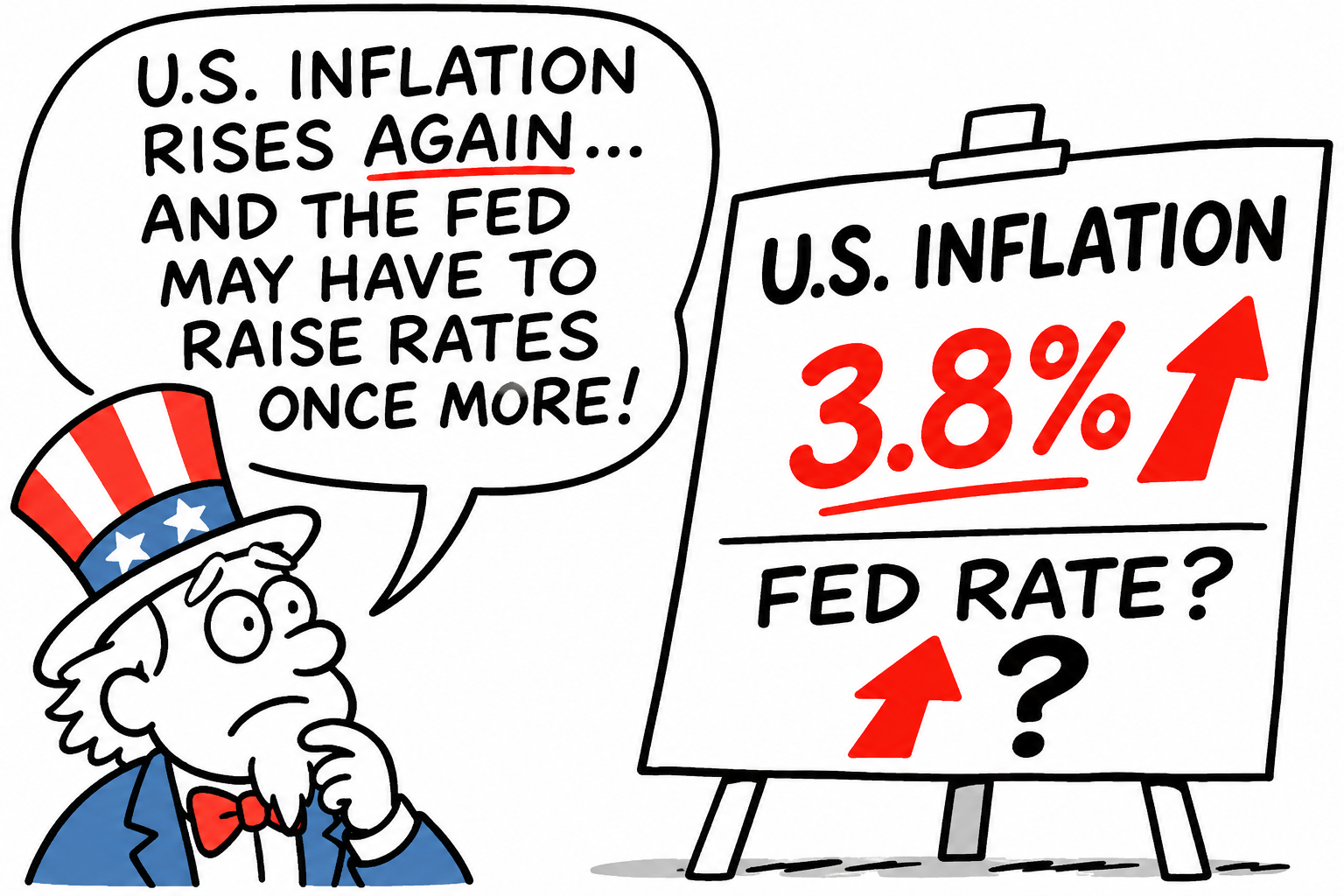
America’s battle against inflation has suffered another setback, with the latest figures showing prices continuing to climb and raising fresh questions over the Federal Reserve’s interest-rate strategy.
Data released on Wednesday 25th November 2026 by the U.S. Bureau of Economic Analysis revealed that annual Personal Consumption Expenditures (PCE) inflation, the Federal Reserve’s preferred measure, increased to 3.8% in October, up from 3.6% in September. Monthly inflation rose by 0.3%.
Core inflation concern
More concerning was the underlying picture. Core PCE inflation, which excludes volatile food and energy prices, accelerated to 3.3% annually, its highest level since November 2023. This leaves inflation substantially above the Federal Reserve‘s 2% target.
The figures come against a backdrop of surprisingly resilient economic growth. U.S. GDP expanded at an annualised 4.3% during the third quarter, suggesting consumer demand and business investment remain strong.
Rate hike likely
For policymakers, the dilemma is becoming increasingly uncomfortable. Raising interest rates could help contain inflation but risks further damaging financial markets and economic confidence.
Markets are increasingly anticipating another rate increase at the Fed’s 8th-9th December 2026 meeting, potentially followed by further tightening in early 2027.
The prospect of higher borrowing costs presents another challenge for already unsettled stock markets.
Inflation was supposed to be yesterday’s problem for the U.S.
Clearly, America isn’t out of the woods yet.