

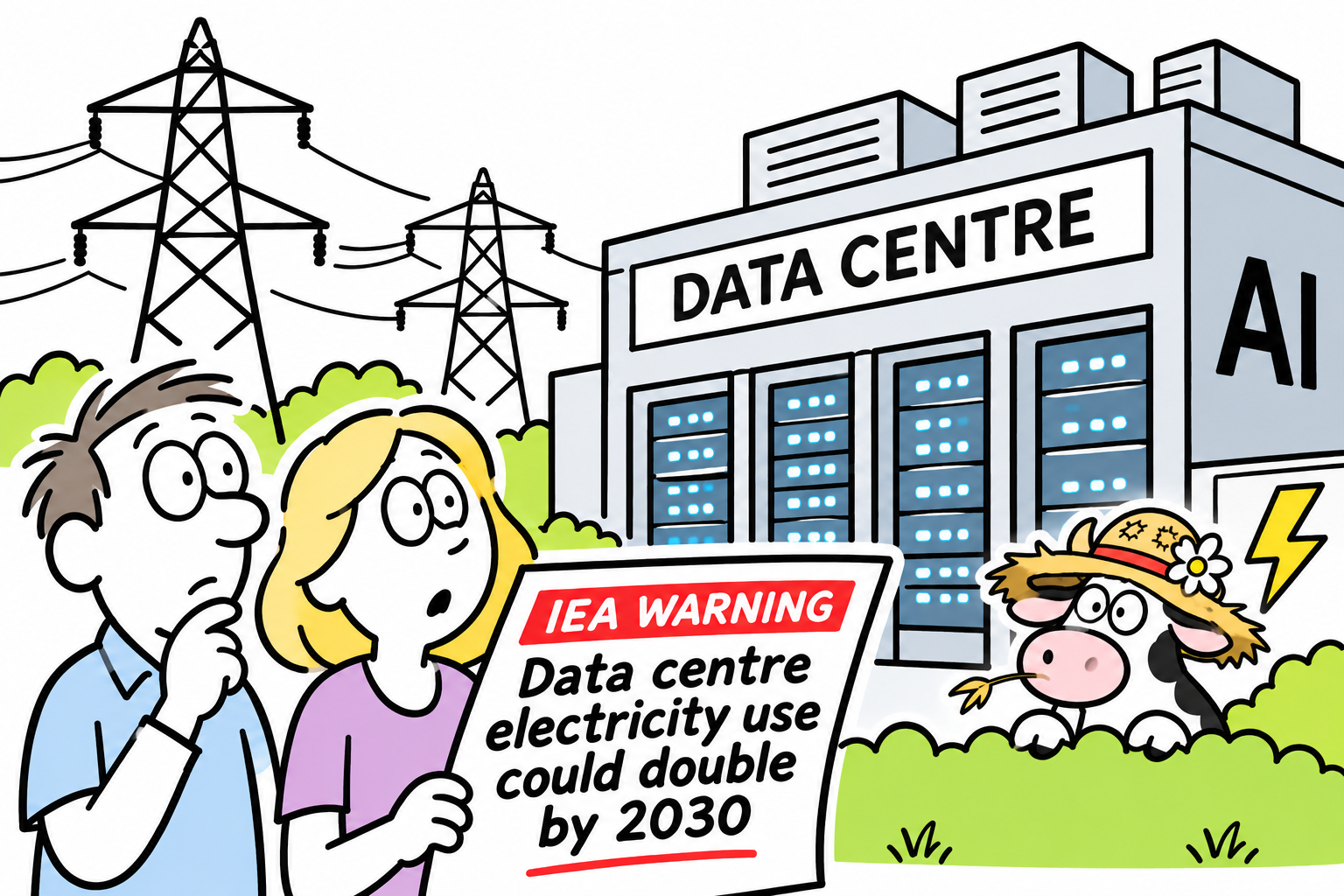
The extraordinary growth of artificial intelligence (AI) is creating an equally extraordinary demand for electricity, with the International Energy Agency (IEA) warning that global electricity consumption by data centres could almost double by 2030.
According to the IEA’s latest analysis, electricity consumption by data centres is expected to rise from approximately 485 terawatt-hours (TWh) in 2025 to around 950 TWh by the end of the decade.
That would represent approximately 3% of total global electricity demand and is broadly equivalent to the entire annual electricity consumption of Japan.
Artificial intelligence is the principal driving force behind this surge. The increasing use of AI applications, increasingly sophisticated models and enormous computing requirements are forcing technology companies to construct ever-larger data centres, packed with powerful processors that require substantial amounts of electricity and cooling.
Consumption increase
The scale of the expansion is already becoming apparent. Electricity consumption by data centres increased by 17% during 2025, considerably faster than the 3% growth in overall global electricity demand.
AI-focused facilities are growing even more rapidly, with their electricity consumption expected to triple between 2025 and 2030.
However, the warning extends beyond the technology industry. The enormous power requirements are placing increasing pressure on electricity networks, generation capacity and infrastructure.
Shortages of transformers, gas turbines and other essential equipment could delay new projects, while competition for available electricity could put additional pressure on energy prices.
Sourcing resources
Technology companies are increasingly looking towards renewable energy, nuclear power, natural gas and other alternatives to secure reliable supplies. Some are also investing directly in new energy projects.
The AI revolution is clearly gathering momentum, but it comes with a substantial and growing energy bill.
The question now is whether the world’s electricity infrastructure can expand quickly enough to support an industry whose appetite for computing power appears almost limitless.