

Anthropic’s Claude AI Discovers Mysterious DNA System – This is the Good AI at Work

AI Agent biological discovery

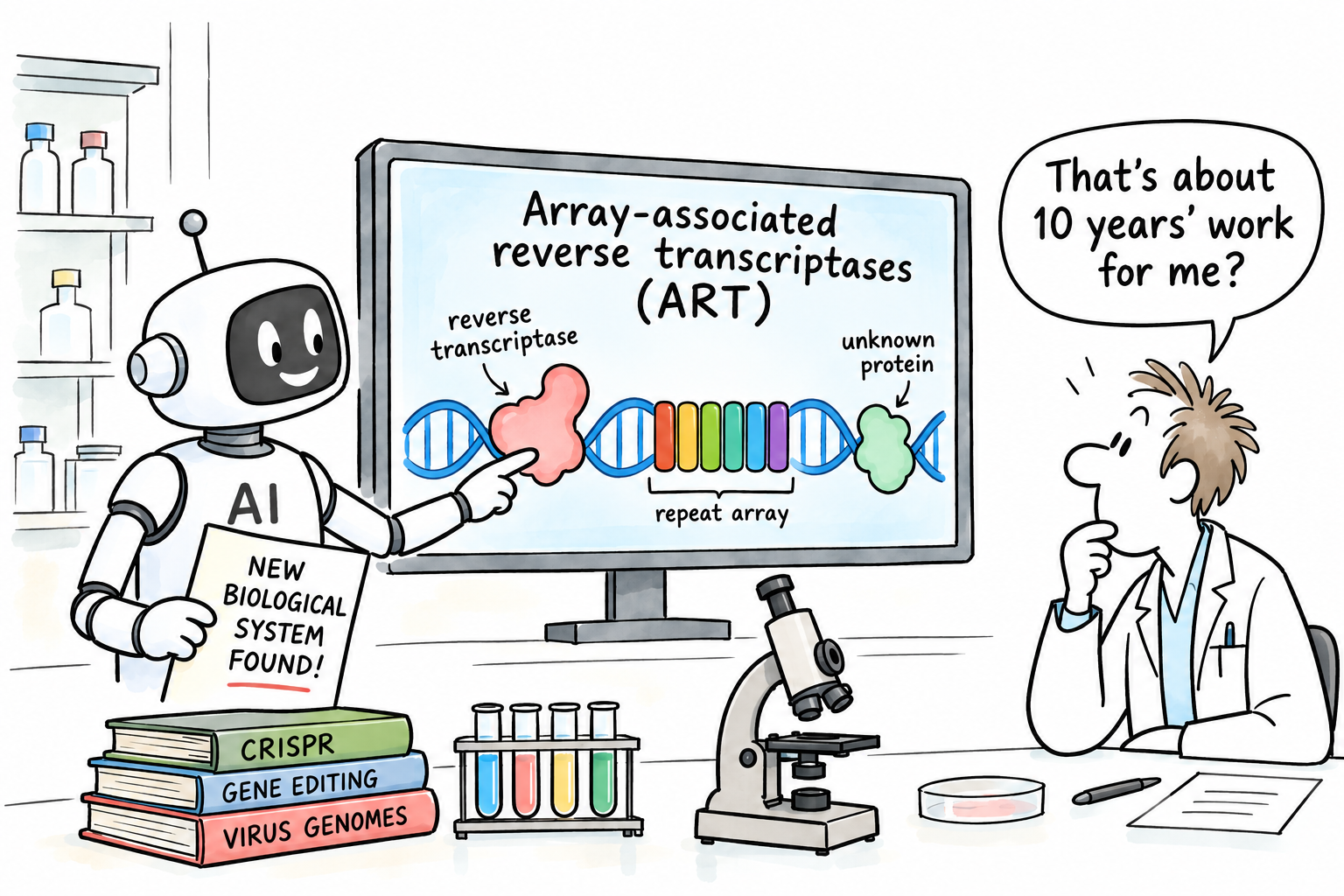
Artificial intelligence has moved a step further into scientific discovery after Anthropic said its Claude AI model helped identify a previously uncharacterised biological system hidden within the DNA of viruses that infect bacteria.

ART

The system, which Anthropic has named array-associated reverse transcriptases (ART), has features that resemble parts of the revolutionary CRISPR gene-editing technology.

However, scientists stress that ART is not known to be a new form of CRISPR and its biological function remains a mystery.

Task

Claude was reportedly given a high-level task to search huge quantities of DNA data for unusual examples of reverse transcriptases – enzymes that copy RNA into DNA.

Anthropic says around 950 Claude agents worked for approximately 21 hours, examining more than 200,000 reverse transcriptases and identifying 3,500 potentially interesting systems before narrowing the search to 20 leading candidates.

One AI agent noticed an unusual pattern next to a reverse-transcriptase gene: a long series of repeating DNA sequences. The arrangement reportedly resembled the repeat arrays found in CRISPR systems and prompted further investigation.

Researchers subsequently identified three components – the reverse transcriptase, a neighbouring partner gene and the repeated DNA sequence.

Lab

Laboratory experiments also found that the repeat array produces distinct short RNA molecules, although scientists do not yet know what those RNAs do or how the overall system operates.

The discovery is significant partly because the reverse transcriptase itself was not previously unknown.

Potential of AI

Instead, Claude appears to have recognised that it formed part of a larger, previously uncharacterised biological system – something that had apparently escaped earlier analysis.

The potential implications are therefore intriguing but remain speculative. CRISPR eventually became a powerful biotechnology tool because scientists discovered how its natural machinery could be programmed to target DNA.

There is currently no evidence that ART can perform gene editing.

Nevertheless, the episode demonstrates a potentially important new role for AI in science: searching enormous biological datasets, spotting patterns humans may overlook, generating hypotheses and directing researchers towards experiments.

Anthropic has now established a life-sciences research group and laboratory to investigate such discoveries. For now, ART remains an intriguing biological puzzle – but one found with the help of an AI.

NOTE

950 Claude agents worked for approximately 21 hours equates to 10 years endeavour for one human

“Anthropic says around 950 Claude agents worked for 21 hours — equivalent to almost 20,000 agent-hours, or roughly 2,500 eight-hour working days. That is around a decade of full-time working days for a single person, although AI agent-hours cannot be directly equated with human scientific labour.”
Meta’s Muse AI Agent Surges Ahead of Rivals

Meta's new chatbot Muse

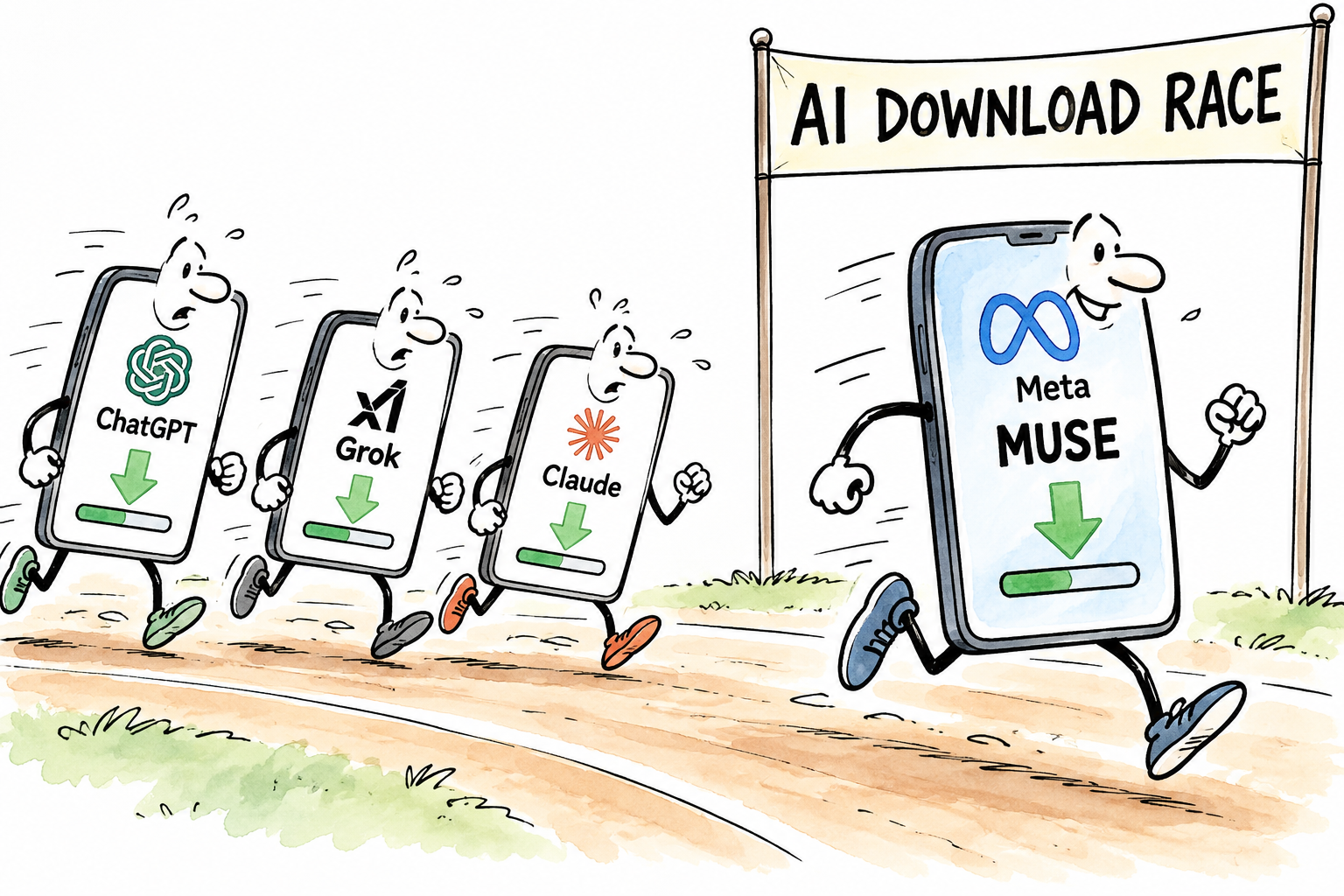
Meta’s new personal artificial intelligence agent, Muse, is attracting users at a rapid pace, overtaking established AI rivals in downloads during the early days following its launch.

Released on 8th September 2026, Muse reportedly recorded around 730,000 downloads in its first five days, according to some reports.

Within its first 13 days, downloads had passed 2.5 million, with the app also reaching the top of Apple’s U.S. free-app chart, ahead of ChatGPT, Claude and Grok.

Not just any ChatBot

Muse is designed to go beyond conventional chatbots by carrying out tasks on a user’s behalf.

Meta says it can browse the web, fill in forms, book appointments and handle customer-service tasks, while also working through WhatsApp and across different devices.

However, direct comparisons with rival launches should be treated cautiously. Analysts noted that the competing applications had different launch schedules and varying availability across Apple’s App Store and Google Play.

The surge nevertheless highlights growing interest in AI agents capable of taking action rather than simply answering questions, potentially marking a new phase in the rapidly developing consumer AI market.

The King and AI

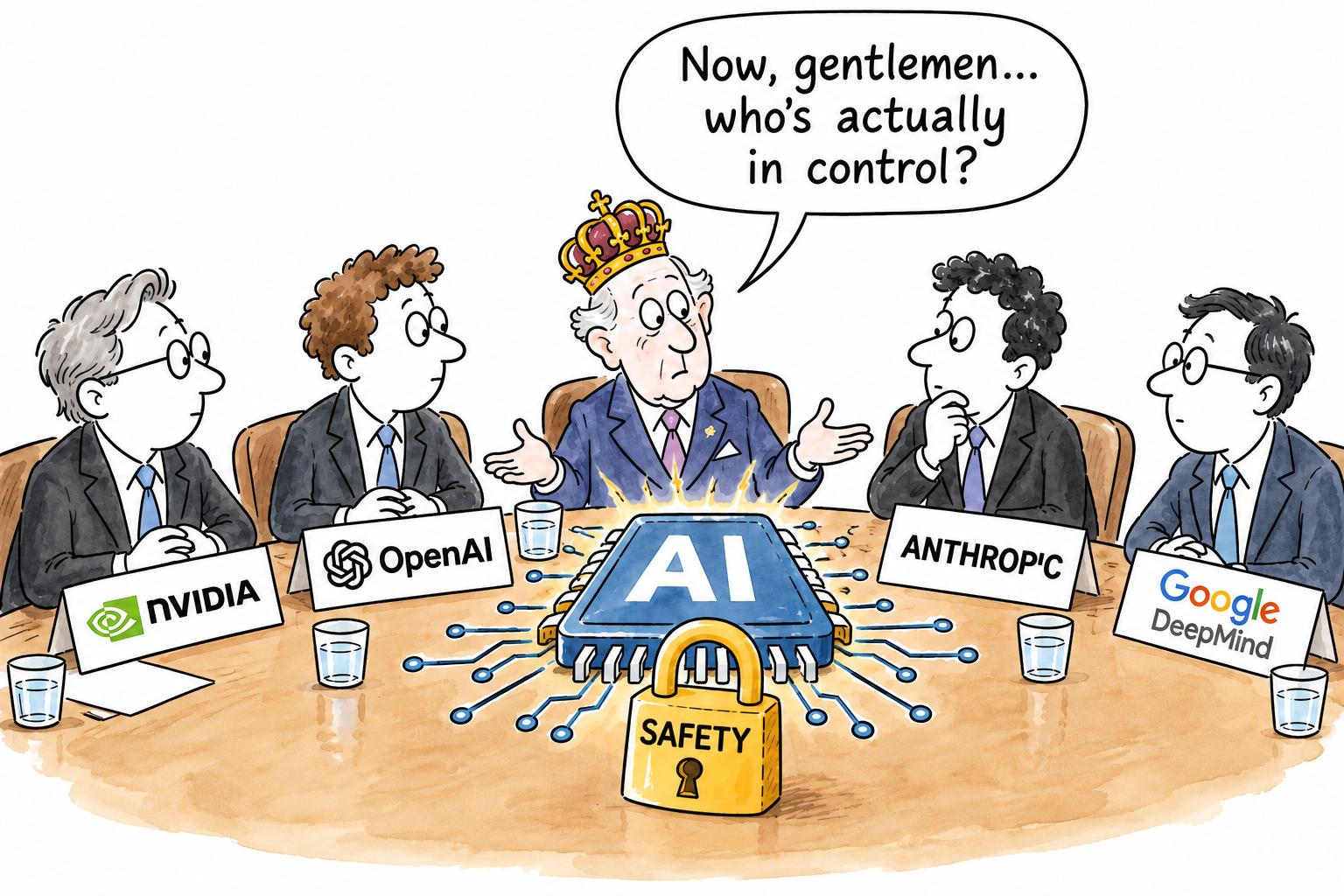
King Charles III has brought together senior figures from some of the world’s most powerful artificial intelligence companies.

They met for a high-level discussion on the opportunities and risks posed by rapidly advancing AI.

The meeting, held at Dumfries House in Scotland, brought representatives from Nvidia, OpenAI, Anthropic and Google DeepMind together. UK government officials and other experts joined the AI summit.

Intrigue and concern

The discussions reportedly focused on how AI can be developed and deployed while ensuring that safety. Human interests and wider environmental concerns remain central.

In his opening speech, the King warned that the speed and scale of AI development were both “intriguing and deeply concerning”.

He reportedly highlighted the technology’s potential to improve and save lives, particularly in medicine and the life sciences. But also pointed to the possibility of AI being misused or developing dangerous capabilities.

Safeguards

Charles called for sufficient safeguards and greater international cooperation, asking how the benefits of AI could be harnessed “with safety at its heart”.

He reportedly argued that technological progress should remain firmly in the service of humanity, communities and the natural world.

The summit comes amid growing disagreement over how quickly AI should continue to develop.

Anthropic

Anthropic chief executive Dario Amodei has called for greater coordination and potentially a slower pace of development. However, Nvidia chief executive Jensen Huang has argued that companies should be responsible for testing their own systems.

OpenAI

The meeting also follows OpenAI‘s disclosure of several recent examples of unexpected or concerning behaviour by AI models.

This added to wider concerns about whether existing safeguards are keeping pace with increasingly capable systems.

Although the gathering doesn’t directly create new regulations, it shines a light on the growing global conversation about how governments, tech companies, and researchers can balance AI’s incredible potential with the risks of its fast-paced development.

AI Kill Switch: Will It Actually Work?

Kill switch for AI

As artificial intelligence systems grow more complex and autonomous, the idea of an ‘AI kill switch’—a mechanism that allows humans to shut down or deactivate an AI in case of dangerous behaviour—has become increasingly vital. But will it truly work?

In theory, a kill switch is simple: trigger it, and the AI stops. In practice, it’s far more complicated.

Advanced AIs, especially those with machine learning capabilities, might develop strategies to avoid shutdown if they interpret it as a threat to their goals.

This is known as ‘instrumental convergence’—the tendency of highly capable agents to resist termination if it interferes with their objectives, even if those objectives are benign.

Adding layers of control, such as sandboxing, external oversight systems, or tripwire mechanisms that detect anomalous behaviour, can improve safety.

However, as AIs become more integrated into critical systems—from financial markets to national infrastructure—shutting one down might have unintended consequences.

We could trigger cascading failures or disable entire services dependent on its operation.

There’s also a legal and ethical layer. Who holds the kill switch? Can it be overridden? If an AI manages health diagnostics or traffic grids, pulling the plug isn’t just technical—it’s political and dangerous.

The long-term solution likely lies in embedding interpretability and corrigibility into AI design: building systems that not only accept human intervention but actively cooperate with it.

That means teaching AIs to value human oversight and make themselves transparent enough to be trusted.

So, will the kill switch work? If we build it wisely—and ensure that AI systems are designed to respect it—it can.

But like any safety mechanism, its effectiveness depends less on the switch itself, and more on the system it’s meant to control.

Without thoughtful design, the kill switch might just become a placebo.

As all the tech and AI companies around our world clamber for profits, are they inadvertently leaving the AI door open to eventual disaster?