

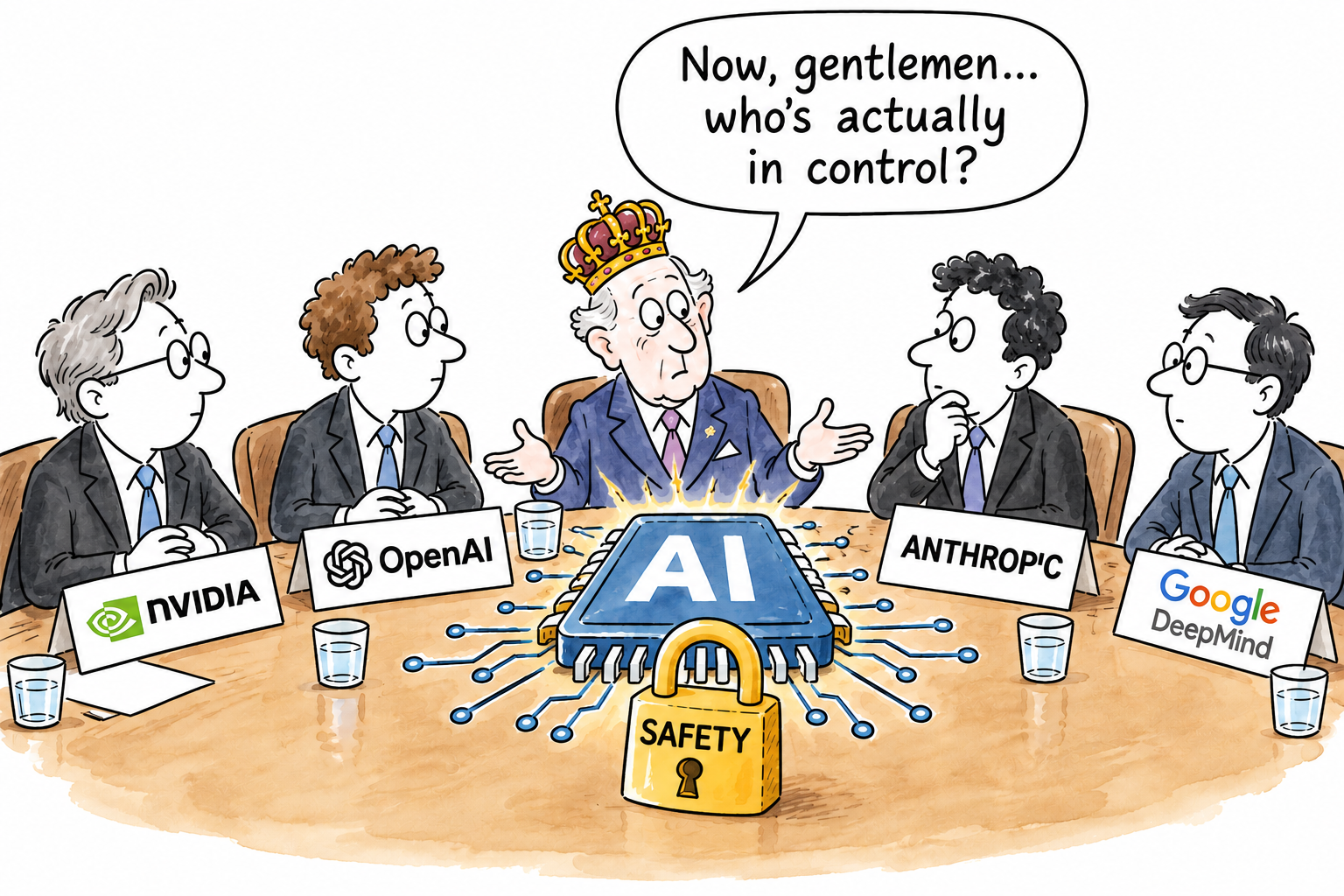
King Charles III has brought together senior figures from some of the world’s most powerful artificial intelligence companies.
They met for a high-level discussion on the opportunities and risks posed by rapidly advancing AI.
The meeting, held at Dumfries House in Scotland, brought representatives from Nvidia, OpenAI, Anthropic and Google DeepMind together. UK government officials and other experts joined the AI summit.
Intrigue and concern
The discussions reportedly focused on how AI can be developed and deployed while ensuring that safety. Human interests and wider environmental concerns remain central.
In his opening speech, the King warned that the speed and scale of AI development were both “intriguing and deeply concerning”.
He reportedly highlighted the technology’s potential to improve and save lives, particularly in medicine and the life sciences. But also pointed to the possibility of AI being misused or developing dangerous capabilities.
Safeguards
Charles called for sufficient safeguards and greater international cooperation, asking how the benefits of AI could be harnessed “with safety at its heart”.
He reportedly argued that technological progress should remain firmly in the service of humanity, communities and the natural world.
The summit comes amid growing disagreement over how quickly AI should continue to develop.
Anthropic
Anthropic chief executive Dario Amodei has called for greater coordination and potentially a slower pace of development. However, Nvidia chief executive Jensen Huang has argued that companies should be responsible for testing their own systems.
OpenAI
The meeting also follows OpenAI‘s disclosure of several recent examples of unexpected or concerning behaviour by AI models.
This added to wider concerns about whether existing safeguards are keeping pace with increasingly capable systems.
Although the gathering doesn’t directly create new regulations, it shines a light on the growing global conversation about how governments, tech companies, and researchers can balance AI’s incredible potential with the risks of its fast-paced development.