


One in a Hundred – Trump puts his Head on a Coin

Minting a new U.S. coin

Donald Trump has become the first living U.S. president in almost a century to appear on American currency, after the U.S. Mint released a new $1 coin bearing his portrait.

The coin, launched on 2nd September 2026, commemorates America’s 250th anniversary and is intended to enter circulation as well as appeal to collectors.

False idols

Trump’s image appears on the front alongside the words “LIBERTY”, “IN GOD WE TRUST” and “1776 ~ 2026”. The reverse features the Presidential Seal, including the eagle, olive branch and arrows. Despite its golden appearance, the coin contains no actual gold.

The decision is controversial because American tradition has strongly discouraged depicting living people on the nation’s money.
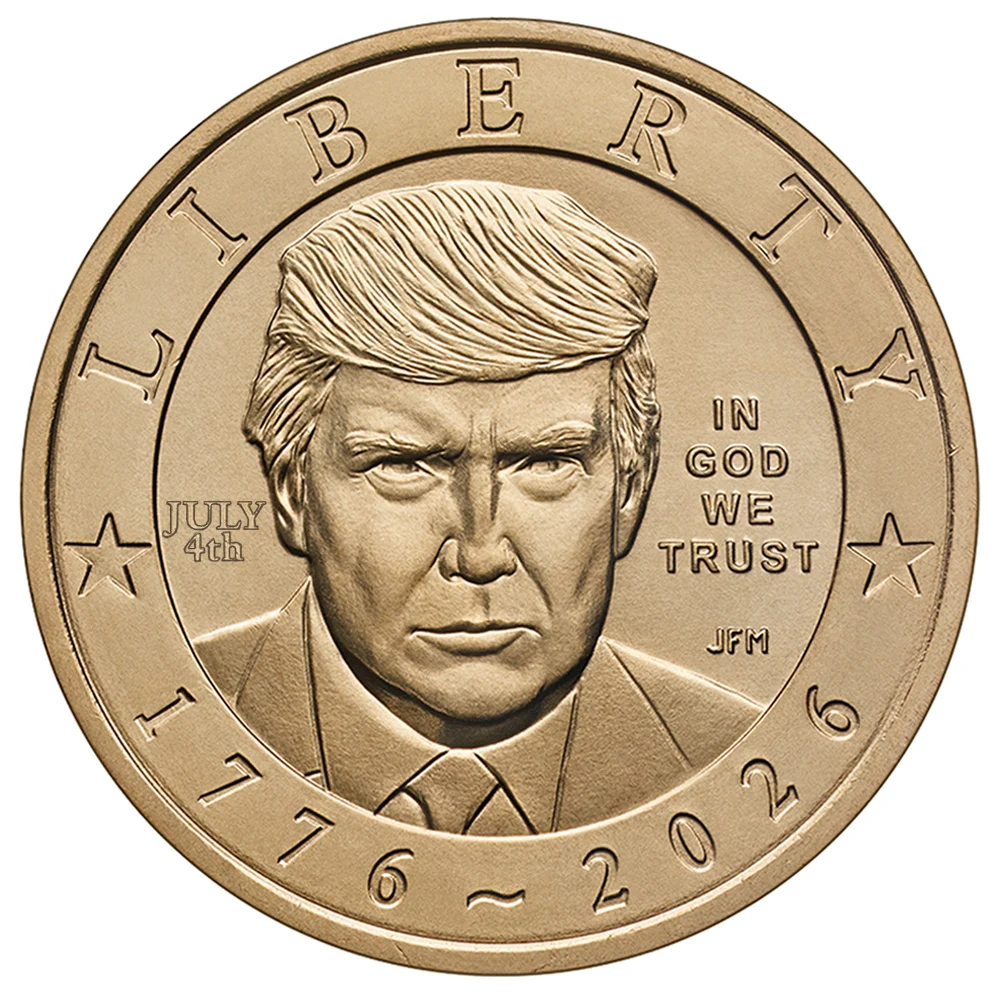
The new Trump $1 coin

The only previous living president to appear on U.S. coinage was Calvin Coolidge, whose image featured on a commemorative half-dollar in 1926, marking the 150th anniversary of American independence.

Political self-promotion?

The Trump administration argues that legislation passed in 2020 provides the necessary authority for the special anniversary coin.

Critics, however, question whether this represents an inappropriate departure from established safeguards against political self-promotion.

With Trump’s face now literally in Americans’ pockets, the coin represents more than a collectors’ novelty. It is another striking example of how the boundaries between presidential power, personal branding and national symbolism are being tested.

Dutch Gold Moves Out of the U.S. and Canada

Gold on the move to London

The Dutch central bank has made a striking move that says much about the changing geopolitical and financial landscape.

Between March and August 2026, De Nederlandsche Bank (DNB) reportedly moved around 86 tonnes of gold from the United States and Canada to London, describing the decision as part of its efforts to strengthen “crisis preparedness”.

The move does not mean the Netherlands has lost confidence in American or Canadian vaults. Rather, it is about accessibility, diversification and the possibility that the international system could become considerably less predictable.

London

Before the transfer, 31.3% of Dutch gold was held in New York and 19.7% in Ottawa. Those proportions have now fallen to 18.5% each, while London’s share has risen from 18.1% to 32.1%. Around 30.8% remains in the Netherlands.

Why London? Quite simply, liquidity. London is the world’s biggest centre for physical gold trading, meaning bullion stored there can be bought, sold, lent or mobilised rapidly if financial markets are disrupted.

DNB says gold held in New York and Ottawa cannot be utilised as quickly or directly during a crisis.

Strategy

There is also a broader strategic calculation. DNB has been examining geopolitical risks ranging from cyber attacks and disrupted supply chains to economic and physical warfare.

Gold, unlike government debt or bank deposits, carries no issuer’s credit risk and can act as a reserve asset when confidence in financial institutions is severely tested.

The timing is nevertheless significant. Relations between Europe and the U.S. have become more politically complicated, while concerns about the reliability of international alliances and financial infrastructure have increased.

Preparedness

DNB insists the move is about resilience rather than politics. But central banks rarely move tens of tonnes of bullion without careful thought.

The message is therefore subtle but important: in an increasingly uncertain world, central banks want their emergency assets not merely to be safe, but immediately usable. And increasingly, gold is becoming that asset.