Hyperscaler debt raises fresh warning over the AI spending boom

The Writing is on the Wall!

The enormous spending spree by the technology giants building the infrastructure behind the artificial intelligence boom is beginning to attract greater scrutiny from credit markets.

Apollo Global Management chief economist Torsten Slok has reportedly warned that rising credit-default swap (CDS) spreads on hyperscaler debt suggest investors are becoming increasingly concerned about the financial foundations of the AI investment cycle.

CDS contracts

CDS contracts provide protection against a company’s debt default. Reportedly, according to Apollo, the gap between CDS spreads for major hyperscalers and those of large banks has widened to around 60 basis points, having been broadly negligible in October 2025.

It is argued that this is significant because bank CDS spreads have remained relatively stable.

The implication is that investors may not simply be reacting to the huge volume of new bonds being issued. Instead, they could be reassessing the credit fundamentals of companies such as Amazon, Microsoft, Alphabet and Oracle as they borrow heavily to finance data centres, chips and other AI infrastructure.

Concern

Apollo points to three particular concerns: rising leverage, negative free cash flow and uncertainty over whether the enormous investment will generate sufficient returns before the underlying technology and equipment depreciate.

That does not necessarily mean the AI boom is about to collapse. The major hyperscalers remain large, established businesses with substantial revenues and access to capital. Indeed, Apollo itself is reportedly notes that the bond market continues to absorb enormous amounts of issuance.

Credit markets

Nevertheless, the changing behaviour of the credit markets provides another indication that investors are beginning to ask harder questions about the economics of AI.

For years, the central question was how quickly artificial intelligence would transform business. Increasingly, another question is emerging: how much debt can the AI revolution carry before investors demand a greater return for the risk?

If borrowing costs continue rising while AI revenues fail to keep pace with infrastructure spending, the industry’s extraordinary investment cycle could face a very different financial environment.


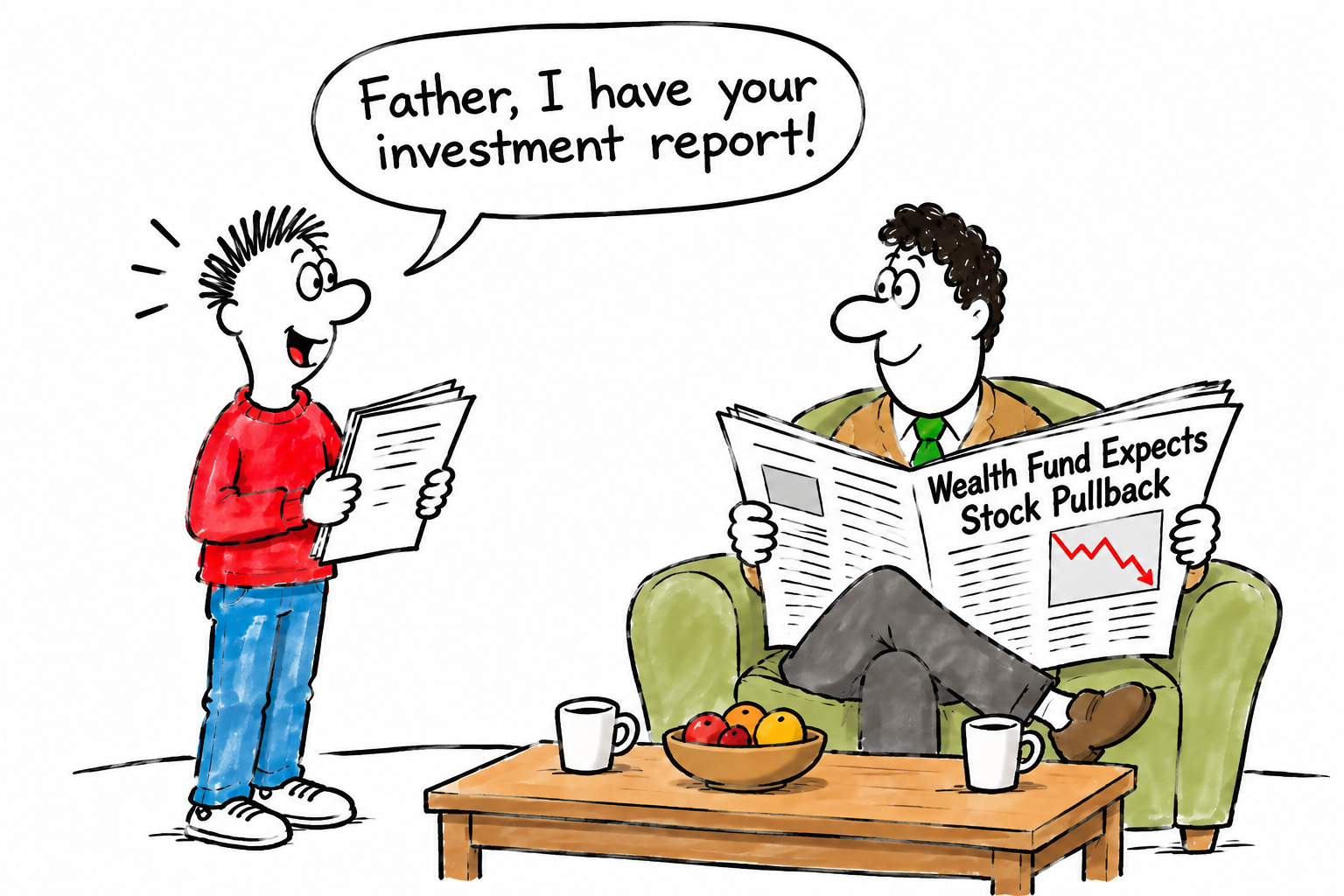
Sovereign wealth fund warns U.S. stocks may be due a pullback

Wealth Funds suggests possible pullback

The chief executive of New Zealand’s sovereign wealth fund has reportedly warned that the exceptional gains enjoyed by U.S. equities in recent years may not be sustainable, raising the prospect of a period of weaker returns or a market correction.

Jo Townsend, chief executive of the Guardians of New Zealand Superannuation, reportedly made the comments as the NZ Super Fund reported a 14.2% return for the year to the end of June 2026.

Top performance

The fund was valued at NZ$94.4 billion (£44.7bn/$54.4bn) at the end of the financial year and has been ranked the world’s best-performing sovereign wealth fund by Global SWF.

Townsend reportedly said returns from U.S. equities over the past two years had been close to double their annualised 20-year average, suggesting that some “reversion to the mean” should be expected at some point.

Warning!

The warning does not amount to a prediction that Wall Street is about to collapse. Rather, it reflects the fund’s longer-term assessment that investors should not assume the unusually strong returns of recent years will continue indefinitely.

The NZ Super Fund has consequently maintained a diversified investment strategy, rather than chasing the strongest-performing areas of the U.S. market.

Its long-term expected annual return has also been reduced from 7.8% to 7.2%, reflecting lower expectations for future investment returns.

Caution

The comments come as other major institutional investors have also expressed caution. The chief executive of Norway’s enormous sovereign wealth fund has reportedly said investors should not expect the same returns from equities as those seen over the previous six months.

For U.S. investors, the message is therefore less about abandoning equities and more about expectations. After a prolonged period of exceptional gains, even a return to more normal performance could represent a significant change in the market environment.

The key question now is whether U.S. corporate earnings and economic growth can continue to justify elevated valuations — or whether returns eventually move back towards historical norms.