
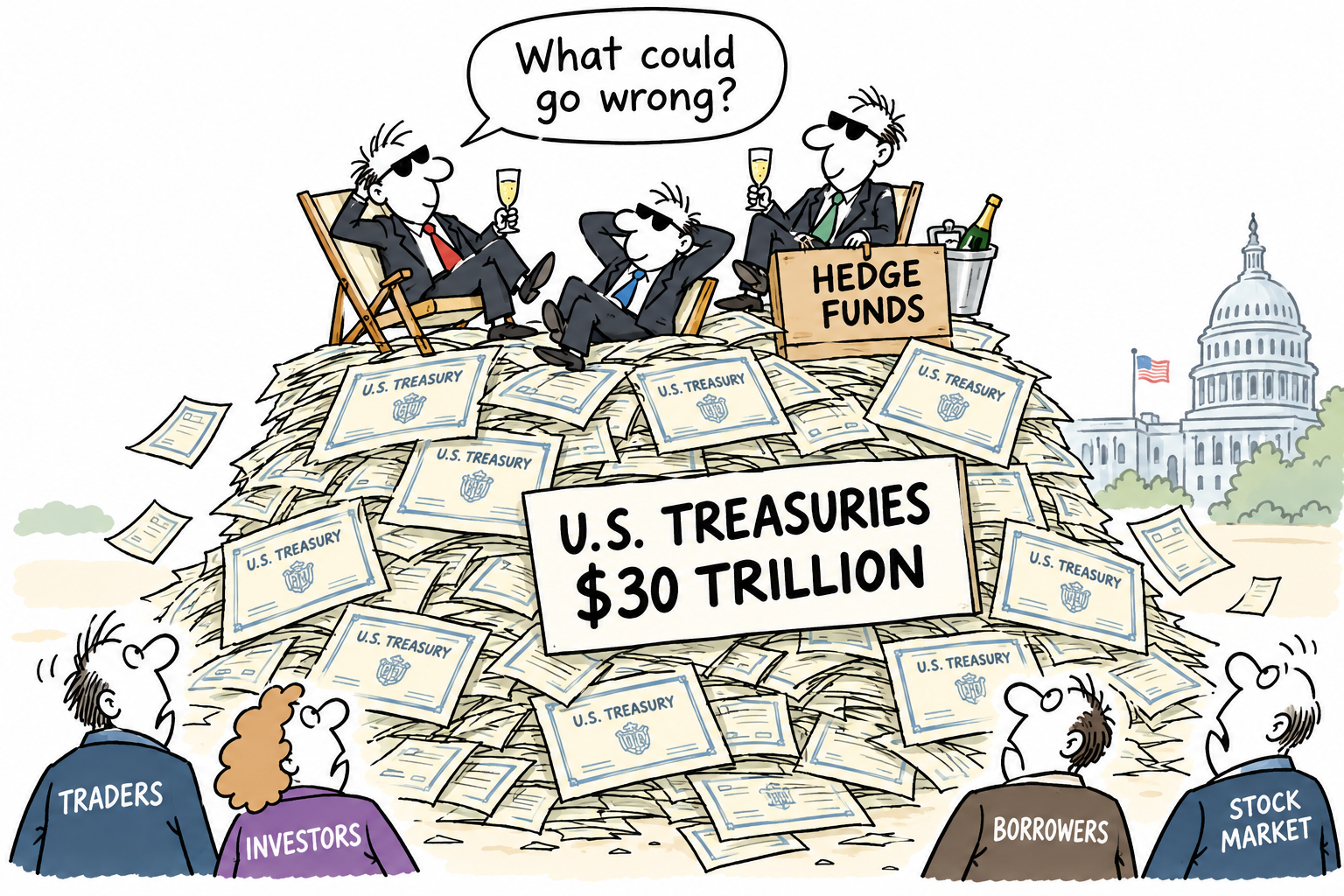
Hedge funds now occupy a record position in the enormous U.S. Treasury market. At the end of 2025, their cash Treasury holdings had reached around $2 trillion, equivalent to roughly 7% of the $28.9 trillion marketable Treasury market.
More broadly, the Federal Reserve reportedly estimates that large hedge funds had gross Treasury exposures of about $4 trillion by September 2025. Office of Financial Research
At first glance, this is not necessarily bad news. Hedge funds provide liquidity and help absorb some of the huge volume of government debt being issued. Their trading strategies can also improve pricing between Treasury securities and futures.
The potential problem is leverage
Much of the activity involves the so-called basis trade: hedge funds buy Treasury securities while simultaneously selling Treasury futures, attempting to profit from tiny price differences.
As those differences are small, the positions can be heavily leveraged, often using borrowed money through the repo market.
The Federal Reserve has reportedly warned that the combination of scale, concentration and leverage could create systemic stress if several strategies come under pressure simultaneously. Federal Reserve
That matters because Treasury markets sit at the heart of global finance.
Caution
If Treasury prices suddenly fall and funding conditions tighten, leveraged funds can face margin calls. They may then be forced to sell assets quickly.
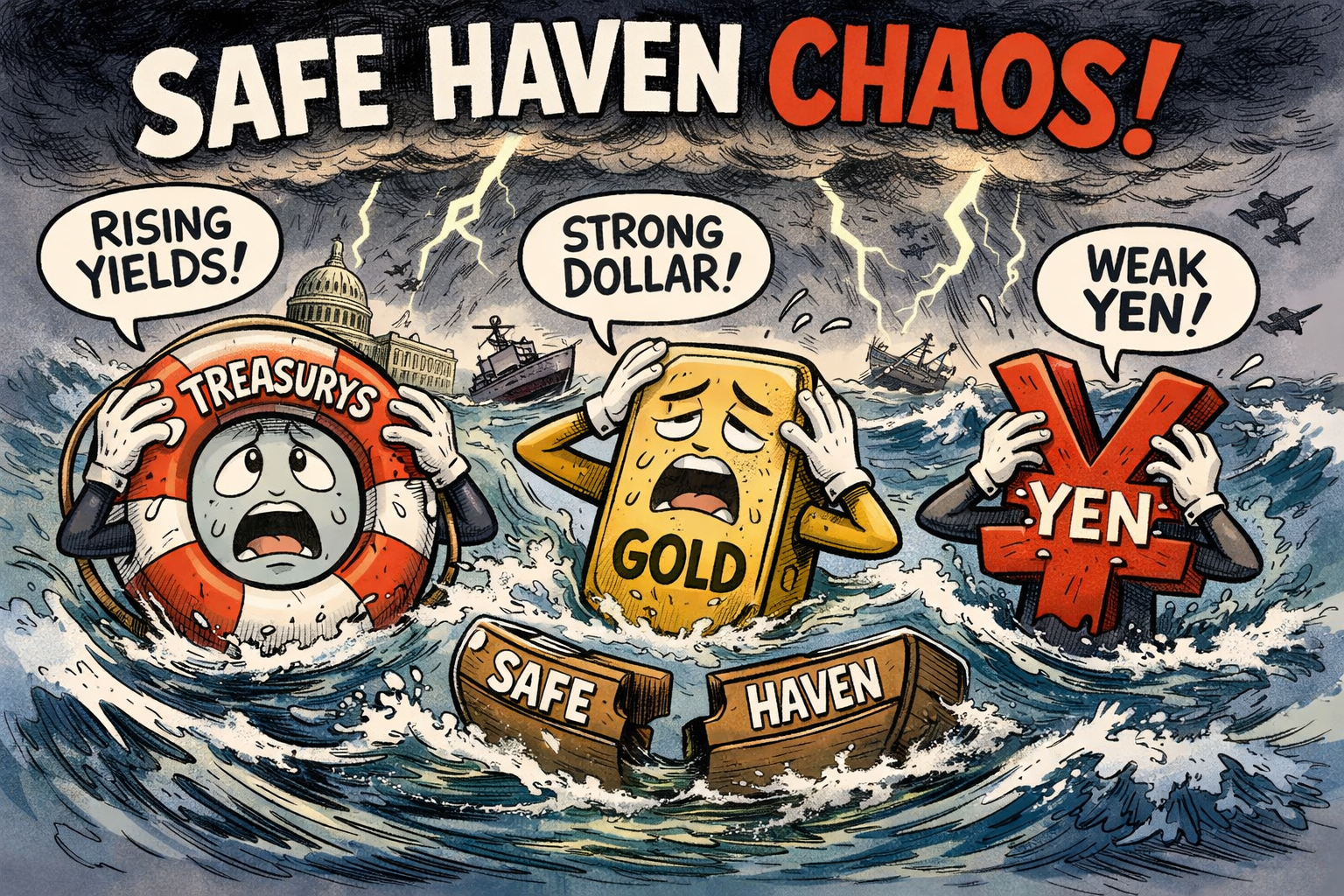
A disorderly unwind could push Treasury yields higher, increase borrowing costs and potentially spill over into equities and other markets.
There are already signs of caution. Morgan Stanley reportedly estimates that assets involved in leveraged Treasury basis trades have fallen around 20% this year to $1.2 trillion.
Time to worry?
So should traders, investors and borrowers be worried? Concerned, yes; panicking, no. The important issue is not simply that hedge funds own more Treasuries.
It is the amount of leverage behind those positions and what happens if everyone tries to exit at the same time.
With Treasury yields already rising sharply, that is a risk worth watching closely