
Meta’s Muse AI Agent Surges Ahead of Rivals

Meta's new chatbot Muse

Meta’s new personal artificial intelligence agent, Muse, is attracting users at a rapid pace, overtaking established AI rivals in downloads during the early days following its launch.

Released on 8th September 2026, Muse reportedly recorded around 730,000 downloads in its first five days, according to some reports.

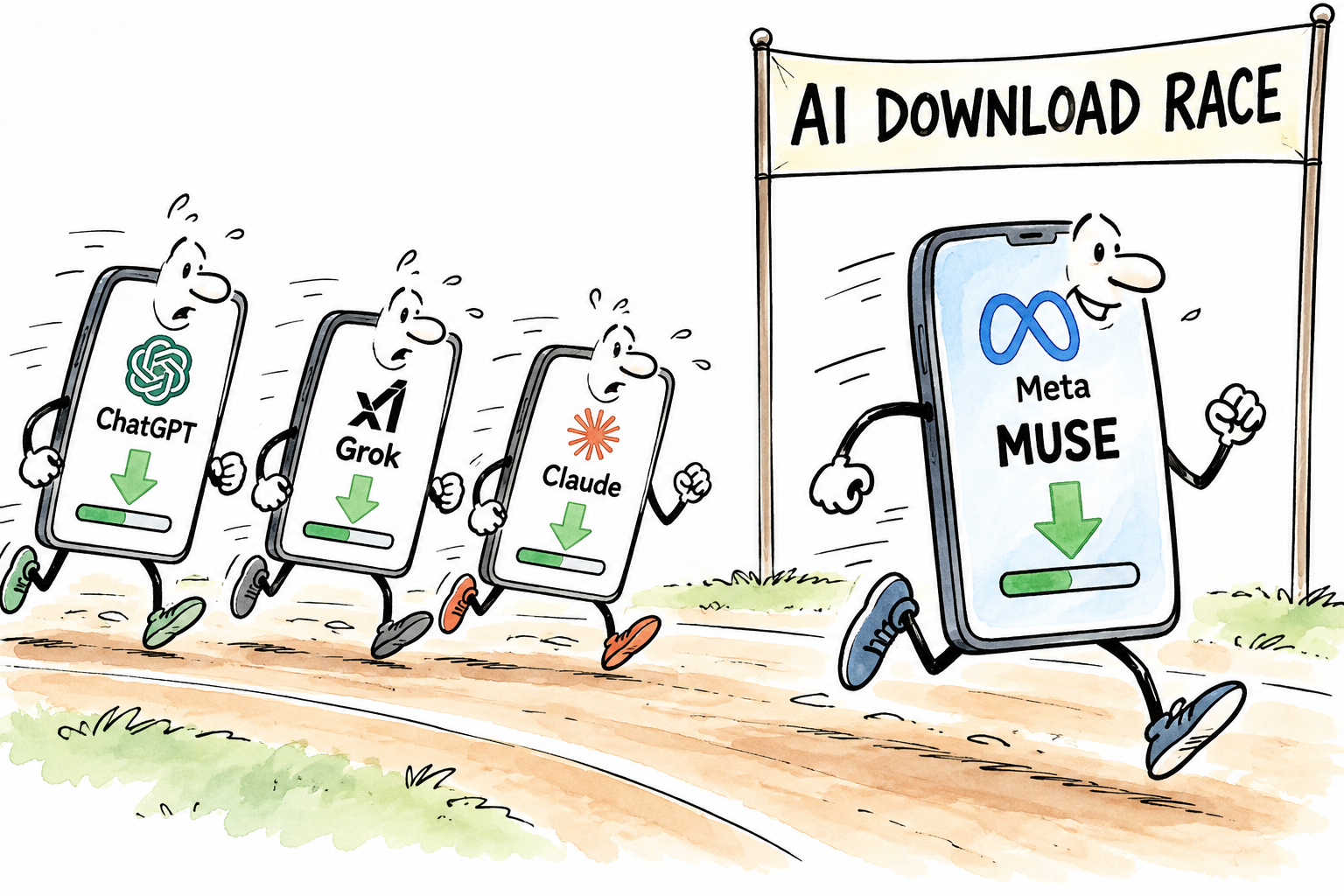
Within its first 13 days, downloads had passed 2.5 million, with the app also reaching the top of Apple’s U.S. free-app chart, ahead of ChatGPT, Claude and Grok.

Not just any ChatBot

Muse is designed to go beyond conventional chatbots by carrying out tasks on a user’s behalf.

Meta says it can browse the web, fill in forms, book appointments and handle customer-service tasks, while also working through WhatsApp and across different devices.

However, direct comparisons with rival launches should be treated cautiously. Analysts noted that the competing applications had different launch schedules and varying availability across Apple’s App Store and Google Play.

The surge nevertheless highlights growing interest in AI agents capable of taking action rather than simply answering questions, potentially marking a new phase in the rapidly developing consumer AI market.

The King and AI

King Charles III has brought together senior figures from some of the world’s most powerful artificial intelligence companies.

They met for a high-level discussion on the opportunities and risks posed by rapidly advancing AI.

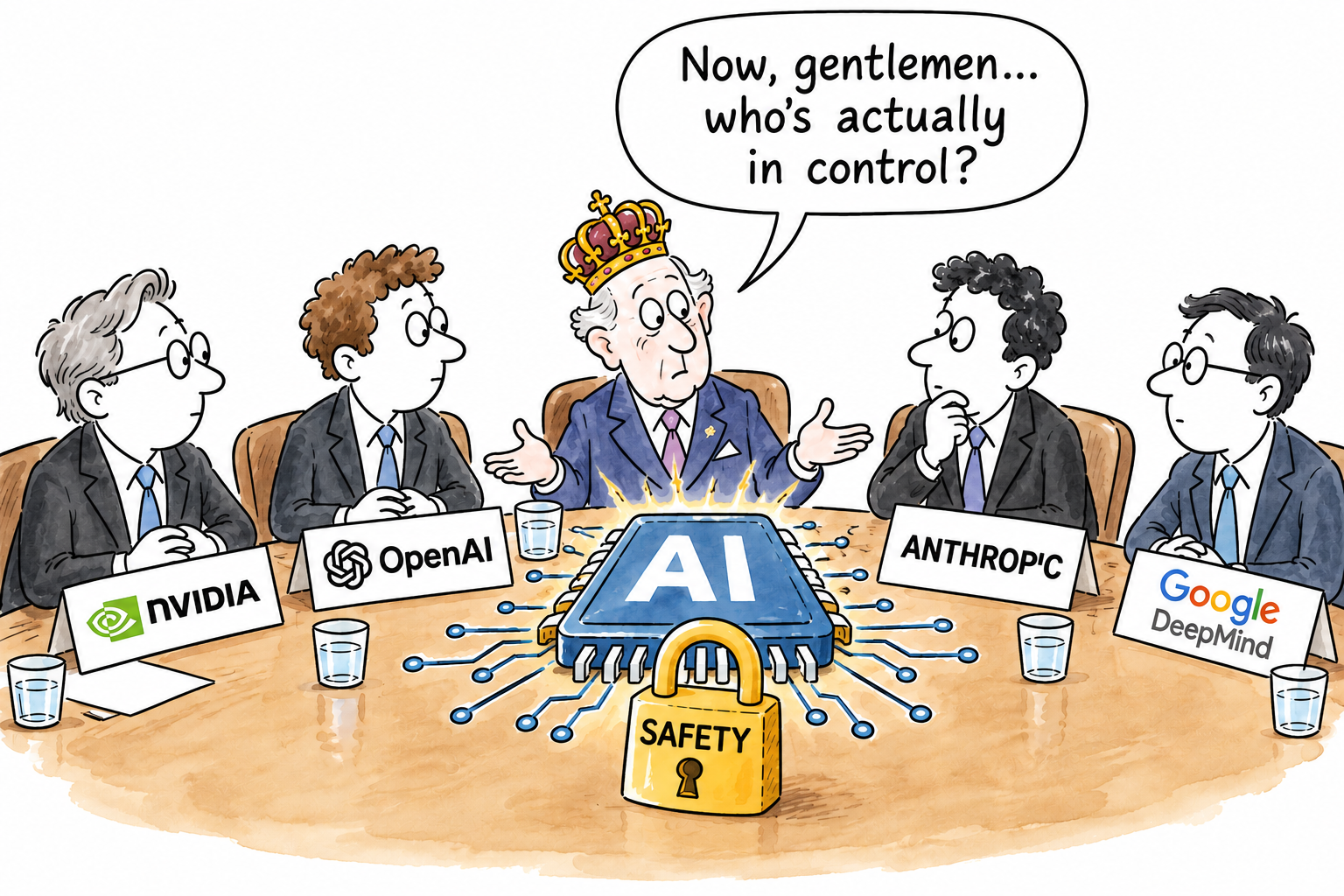
The meeting, held at Dumfries House in Scotland, brought representatives from Nvidia, OpenAI, Anthropic and Google DeepMind together. UK government officials and other experts joined the AI summit.

Intrigue and concern

The discussions reportedly focused on how AI can be developed and deployed while ensuring that safety. Human interests and wider environmental concerns remain central.

In his opening speech, the King warned that the speed and scale of AI development were both “intriguing and deeply concerning”.

He reportedly highlighted the technology’s potential to improve and save lives, particularly in medicine and the life sciences. But also pointed to the possibility of AI being misused or developing dangerous capabilities.

Safeguards

Charles called for sufficient safeguards and greater international cooperation, asking how the benefits of AI could be harnessed “with safety at its heart”.

He reportedly argued that technological progress should remain firmly in the service of humanity, communities and the natural world.

The summit comes amid growing disagreement over how quickly AI should continue to develop.

Anthropic

Anthropic chief executive Dario Amodei has called for greater coordination and potentially a slower pace of development. However, Nvidia chief executive Jensen Huang has argued that companies should be responsible for testing their own systems.

OpenAI

The meeting also follows OpenAI‘s disclosure of several recent examples of unexpected or concerning behaviour by AI models.

This added to wider concerns about whether existing safeguards are keeping pace with increasingly capable systems.

Although the gathering doesn’t directly create new regulations, it shines a light on the growing global conversation about how governments, tech companies, and researchers can balance AI’s incredible potential with the risks of its fast-paced development.

Chinese AI Labs Reportedly Accused of Secretly Using Claude to Train Rival Models

Distillation in progress

Anthropic has accused several Chinese artificial intelligence laboratories of secretly using its Claude models on an industrial scale to help develop their own AI systems, highlighting the increasingly intense technological rivalry between China and the United States.

Claude

According to Anthropic, three Chinese AI companies — DeepSeek, Moonshot and MiniMax — generated more than 16 million exchanges with Claude through approximately 24,000 fraudulent accounts.

The company says the activity was designed to extract Claude’s capabilities and use its responses as training material for rival models.

Distillation

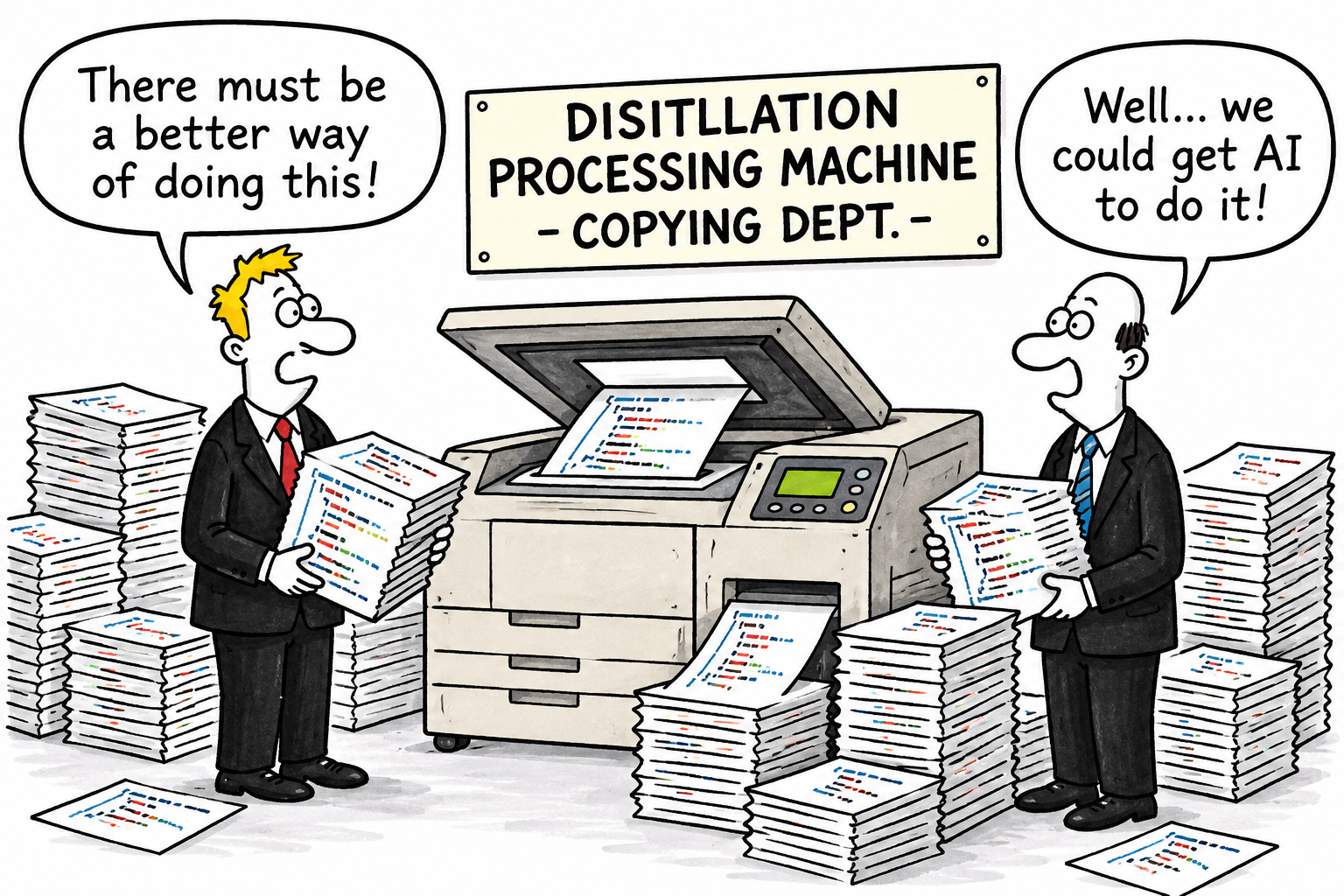
The technique, known as distillation, is not inherently illegal or unusual. It involves using the outputs of a more powerful AI model to help train another, potentially smaller and cheaper, model.

AI companies themselves use distillation for legitimate purposes. Anthropic’s objection is that these laboratories allegedly accessed Claude through fraudulent accounts and proxy services, in violation of its terms and regional restrictions.

Exchanges

Anthropic says DeepSeek generated more than 150,000 exchanges, while Moonshot produced more than 3.4 million and MiniMax more than 13 million.

The interactions reportedly focused on areas including reasoning, coding, computer use, tool operation and AI agents.

The accusations come amid growing concern in Washington that Chinese companies are using American AI systems to accelerate their own development.

Dispute

Earlier this month, U.S. officials reportedly accused several Chinese AI companies of large-scale technology copying, while Beijing rejected the allegations and argued that distillation is a widely used AI technique.

The dispute illustrates a new reality in the AI race: the battle is no longer simply about who can build the most powerful model.

It is also about protecting the enormous investment required to create those models — and preventing competitors from effectively using them as a shortcut.

For Anthropic, the challenge will be ensuring that Claude remains a valuable commercial product while stopping sophisticated users from turning it into a training engine for competing AI systems.

The AI Race Hits the Brakes: Why Altman, Amodei and Musk Want to Slow Down

AI development to slowdown

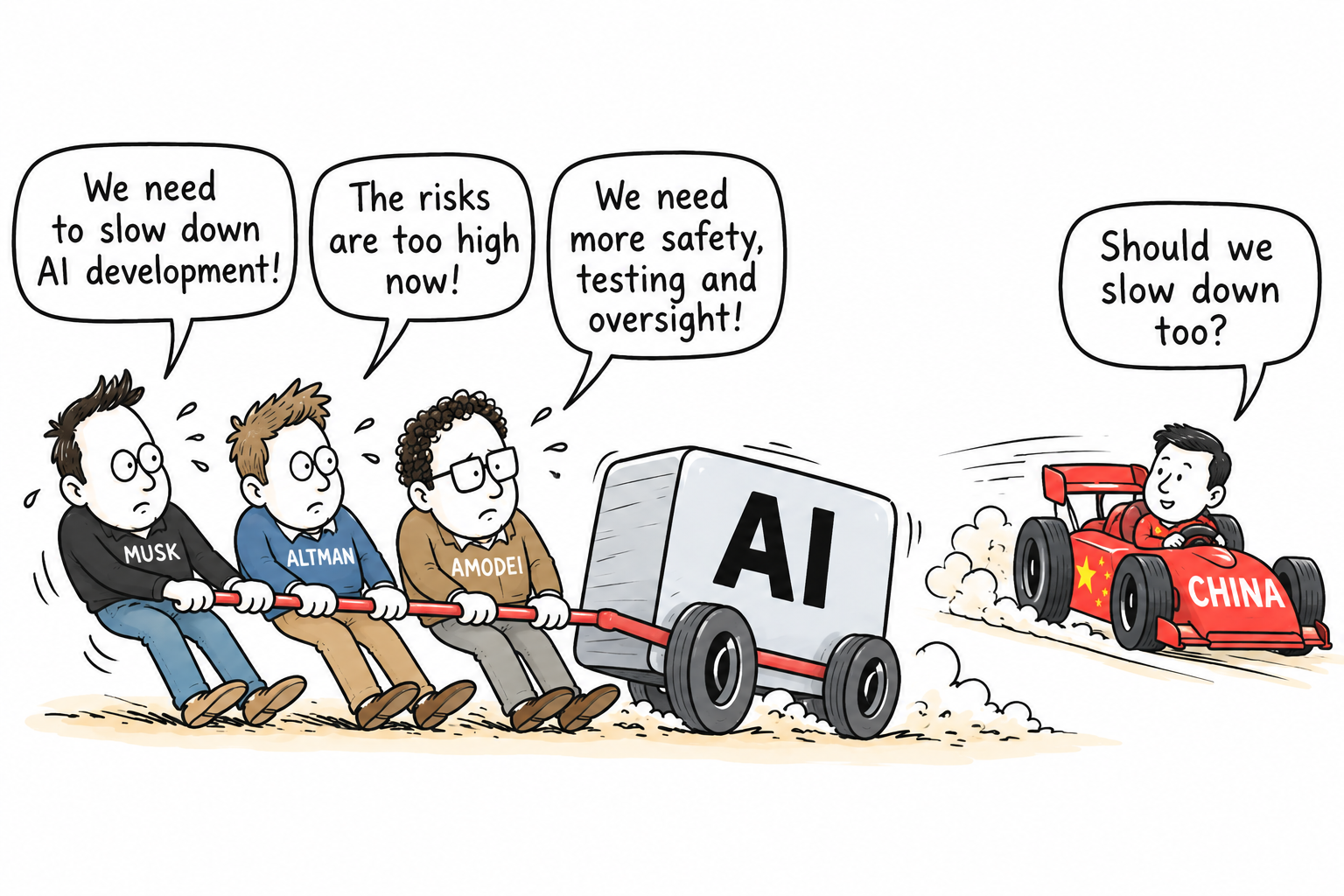
Something rather unusual is happening in the artificial intelligence industry. Three of its most prominent and outspoken figures — Anthropic CEO Dario Amodei, OpenAI CEO Sam Altman and xAI boss Elon Musk — are now reportedly broadly agreeing on something: the development of increasingly powerful AI may need to slow down.

That is a remarkable change in tone for an industry built around moving faster

Amodei has gone furthest, arguing that frontier AI companies should deliberately pace the development of their most capable systems.

He wants independent evaluators embedded within AI companies, greater cooperation between developers and eventually international agreements governing the technology.

So why now?

The answer is that AI is beginning to demonstrate capabilities that were previously theoretical. Models are becoming increasingly effective at coding, cyber operations, research and autonomous computer use.

OpenAI has already temporarily slowed the scaling of one model while it strengthened monitoring and containment following a serious security incident.

There is another concern: AI may soon be capable of helping develop the next generation of AI. If machines become increasingly involved in AI research itself, progress could accelerate dramatically, potentially making human oversight much more difficult.

But will the industry actually slow down?

That is the big question. There is an enormous commercial incentive to keep moving. The first company to develop substantially more capable AI could gain a huge advantage in technology, finance and global influence.

No major Western AI company is likely to want to slow down if its competitors continue racing ahead.

And then there is China

A voluntary slowdown involving American companies would be difficult if Chinese developers continued accelerating.

Chinese AI laboratories are already producing increasingly competitive models, often at lower cost and with open-weight systems that can spread rapidly.

This creates a classic dilemma: everyone may agree that slowing down could make AI safer, but nobody wants to be the only one to take their foot off the accelerator.

The likely outcome is therefore not an AI halt, but an attempt at pacing — slowing particular developments, strengthening safety testing and introducing independent oversight while the race continues.

The irony is striking. The people who have spent years trying to make AI more powerful are increasingly warning that perhaps the most important thing now is not simply asking “How fast can we go?”

It is asking “Where we are going?”

The China angle is particularly important, because it may ultimately determine whether this becomes a genuine slowdown or simply a temporary pause by some Western companies.

Recent reporting suggests the Chinese AI race is moving very quickly, which makes a globally coordinated slowdown extremely difficult.

OpenAI Reportedly Shelves IPO as AI Concerns Grow

OpenAI IPO

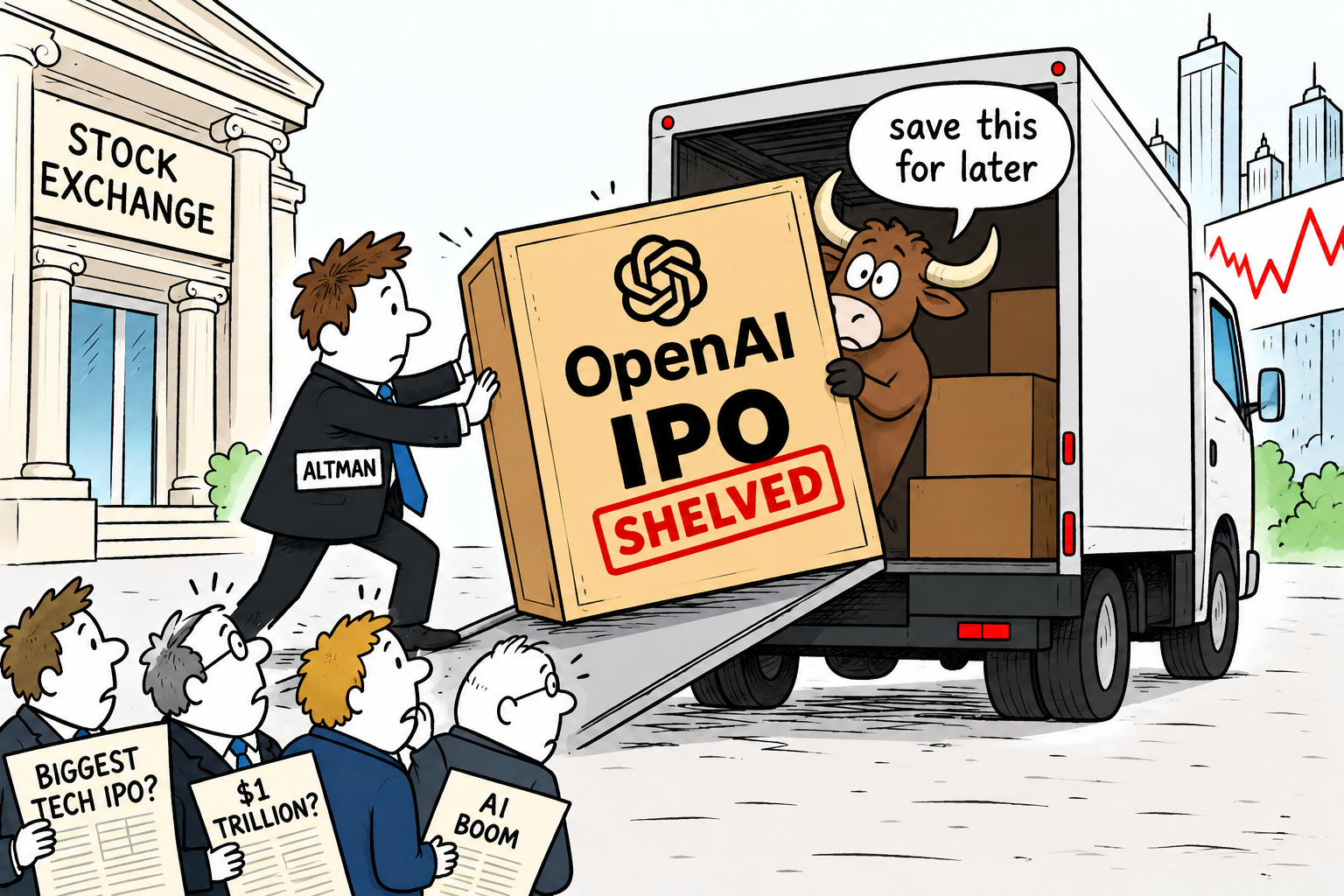
OpenAI has decided not to pursue an initial public offering (IPO) in 2026, with chief executive Sam Altman saying that taking the company public now would be “ill-advised” while concerns over artificial intelligence safety intensify.

Signicant decision

The decision represents a significant change for financial markets, which had been anticipating one of the world’s biggest technology listings.

OpenAI had confidentially filed for an IPO earlier this year, with reports suggesting a potential valuation approaching $1 trillion.

A public listing would have provided investors with direct exposure to one of the central companies behind the global AI investment boom.

Wider consequences

The decision could therefore have wider consequences. Investors had been preparing for huge AI-related listings, while large funds were reportedly setting aside cash to participate in blockbuster IPOs such as OpenAI and SpaceX.

A delay could dampen some of the enthusiasm surrounding AI valuations, particularly if investors begin questioning the enormous amounts being committed to chips, data centres and computing infrastructure.

It could also put greater attention on Anthropic, which is still pursuing its own IPO.

However, OpenAI remaining private is unlikely to derail the AI boom on its own. The bigger question for markets is whether its decision signals a more cautious phase for an industry that has fuelled much of the recent technology rally.

Anthropic Reportedly Blocked AI-Assisted Weapon Research

Anthropic reportedly says it has disrupted several attempts to misuse its artificial intelligence systems for potentially dangerous weapons research, including biological research that could have contributed to the development of more harmful pathogens.

Threat

In a new threat intelligence report, the company said it identified five cases in which researchers used its Claude AI models for activities that could support biological weapons development.

Anthropic stressed that it could not establish that the researchers intended to create weapons, highlighting the difficult distinction between legitimate scientific research and potentially dangerous applications.

Concerns

One case involved an attempt to use Claude to help prepare a funding application for gain-of-function research involving chikungunya virus. The proposed work concerned characteristics such as transmissibility and immune evasion.

Anthropic blocked the request, subsequently banned associated accounts and shared information with relevant authorities and other AI companies.

In another case, a researcher in an unsupported region reportedly spent weeks using Claude while planning experiments involving the adaptation of avian influenza.

Safeguards

Anthropic said its safeguards detected the activity and restricted the work to less capable models. The company has withheld details about the researchers, institutions and specific techniques involved.

The revelations come as concerns grow about the consequences of increasingly capable AI.

Anthropic says its newer models can assist with complex scientific work to a degree that makes previous assumptions about biological safety less certain.

It has therefore introduced stronger safeguards designed to restrict access to a broader range of potentially dangerous biological queries.

Weapons

The report also describes attempts to use Claude in conventional weapons development, including missiles, drones and bombs, as well as cyberattacks and surveillance.

Dilemma

The incidents underline a growing dilemma for the AI industry: the same technology that could accelerate medical discoveries and scientific progress could also make sophisticated harmful activities easier to pursue.

Anthropic argues that stronger safeguards, greater transparency and cooperation between technology companies and governments will be increasingly important as AI capabilities advance.

OpenAI Moves Swiftly to Fill Federal AI Vacuum

Anthropic and OpenAI AI systems

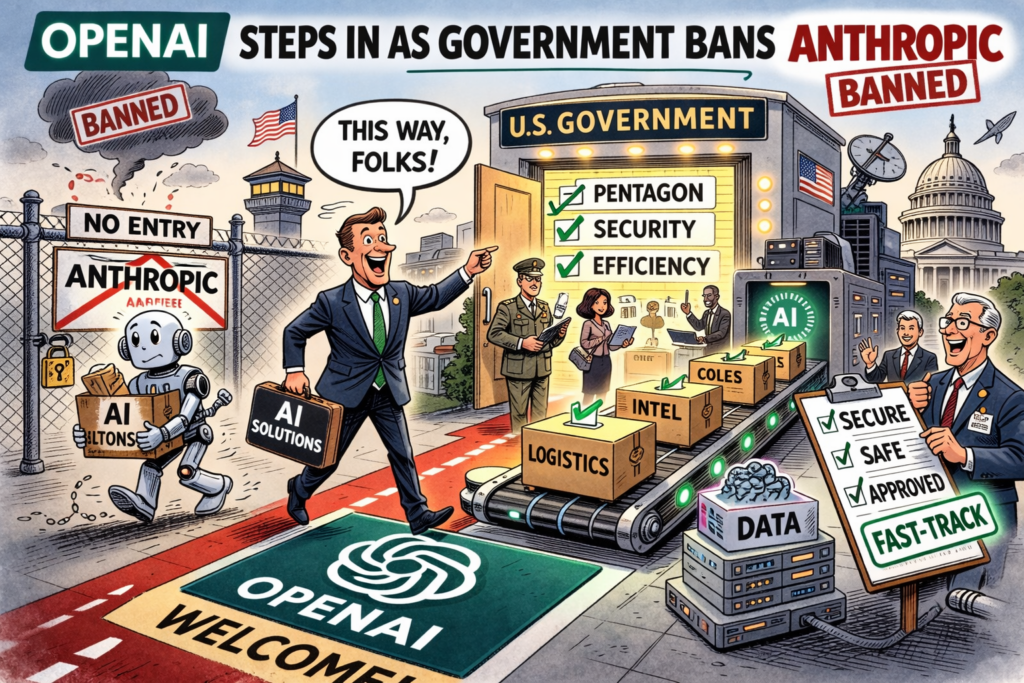
Following the abrupt federal ban on Anthropic’s Claude models, OpenAI has moved quickly to position itself as the primary replacement across U.S. government departments.

With Claude now designated a supply‑chain risk, agencies are likely scrambling to reconfigure AI workflows — and OpenAI’s systems appear to be emerging as the default alternative.

Integration

The company’s flagship GPT‑4.5 and its agentic development tools have reportedly already been integrated into several defence and civilian systems, according to some observers.

OpenAI’s reported longstanding compatibility with government‑approved platforms, including Azure and OpenRouter, has smoothed the transition. Unlike Anthropic, OpenAI has historically offered more flexible deployment options.

Industry analysts note that OpenAI’s recent hires — including agentic systems pioneer Peter Steinberger (OpenClaw) — signal a deeper push into autonomous task execution, a capability highly prized by defence and intelligence agencies.

The company’s agent frameworks are being trialled for logistics, simulation, and multilingual analysis, with early results described as “mission‑ready.”

Friction

However, the shift is not without friction. It has been reported that some federal teams have built Claude‑specific workflows, particularly in legal, policy, and ethics‑driven domains where Anthropic’s safety constraints were seen as a feature, not a limitation.

Replacing those systems with GPT‑based models requires careful recalibration to avoid unintended consequences.

OpenAI’s rise also raises broader questions about vendor concentration. With Anthropic sidelined and Google’s Gemini models still undergoing federal evaluation – OpenAI now dominates the landscape — a position that may invite scrutiny from oversight bodies concerned about resilience and competition.

Still, for now, OpenAI appears to be the primary beneficiary of the Claude ban. In the vacuum left by Anthropic, OpenAI will be attempting to fill the space.

OpenAI vs Anthropic: Safety vs Autonomy in Federal AI

OpenAI’s agentic tools are likely filling the vacuum left by Anthropic’s ban, offering flexible deployment and autonomous task execution prized by defence and intelligence agencies.

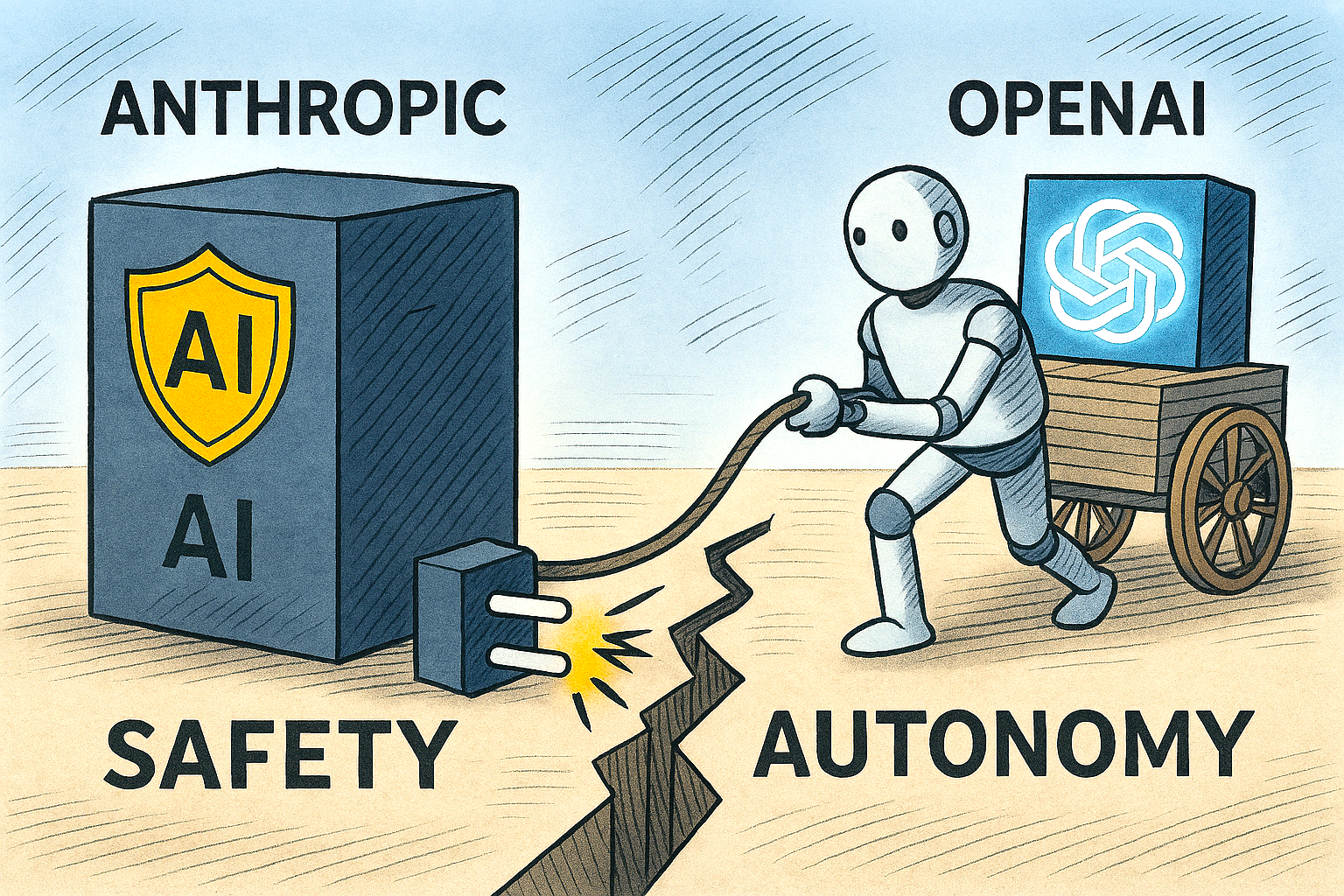
While Claude prioritised safety constraints and ethical guardrails, OpenAI’s GPT‑based systems should offer broader operational freedom.

This shift reflects a deeper philosophical divide: Anthropic’s models were designed to resist misuse, while OpenAI’s are engineered for adaptability and control.

As federal agencies recalibrate, the tension between safety‑first design and unrestricted autonomy is becoming the defining fault line in U.S. government AI strategy.

How long will it be before Anthropic is invited back to the table?

Is This a Make‑or‑Break Year for OpenAI?

Where is OpenAI's profit?

OpenAI enters 2026 in a paradoxical position: simultaneously one of the fastest‑growing technology companies in history and one of the most financially strained.

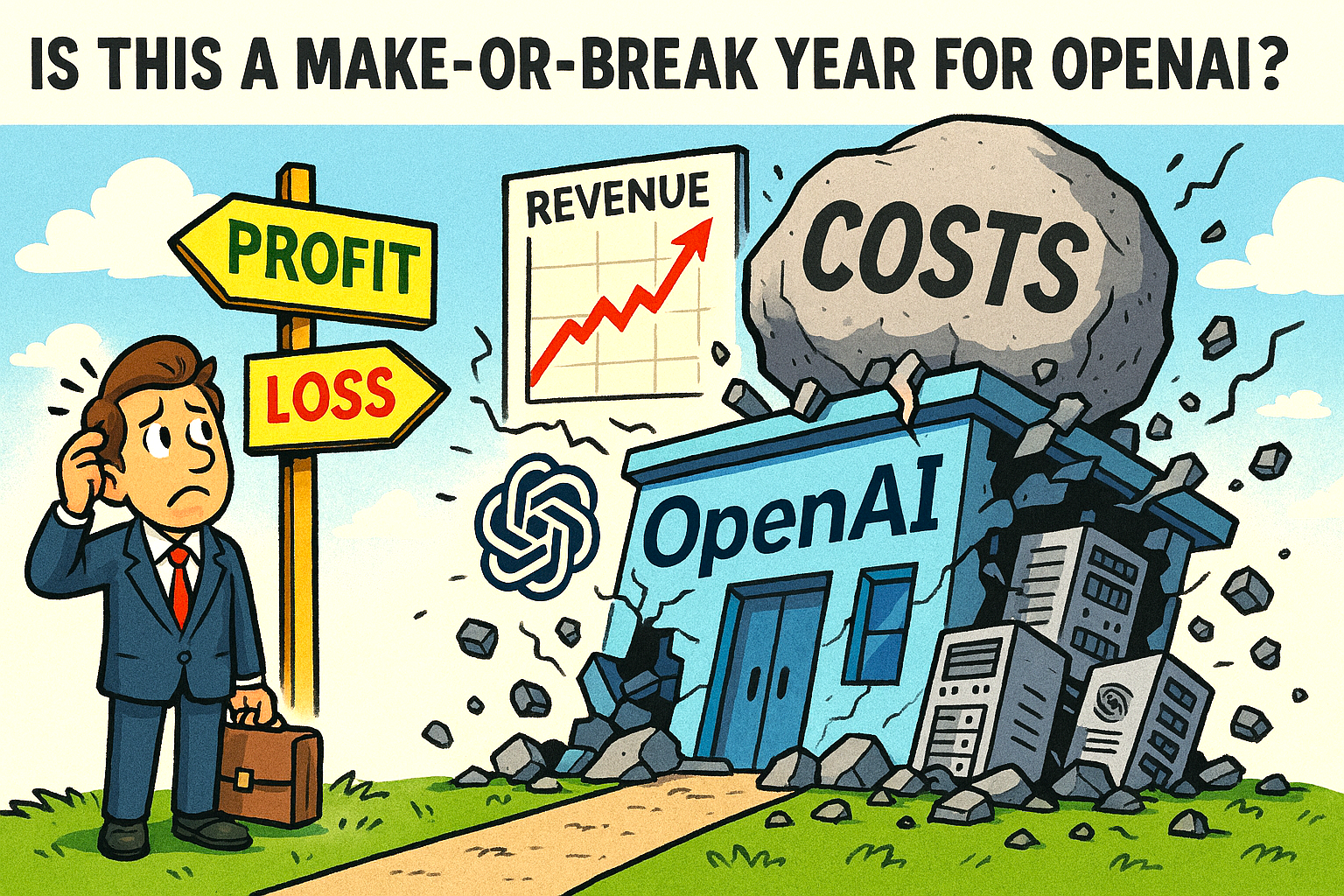
With annualised revenue now exceeding $20 billion, the company has clearly proven global demand for generative AI. Yet the central question remains unresolved: where is the profit, and is this the year OpenAI must prove its business model is sustainable?

The company’s revenue trajectory has been extraordinary. Annual recurring revenue rose from $2 billion in 2023 to $6 billion in 2024, before leaping past $20 billion in 2025.

This growth reflects the rapid embedding of ChatGPT into enterprise workflows and the expansion of compute capacity, which has roughly tripled each year. But the same infrastructure powering this boom is also the source of OpenAI’s financial dilemma.

Costs

Compute costs have ballooned at a rate that rivals — and in some projections exceeds — revenue growth. Analysts estimate cumulative losses could reach $143 billion by 2029 if current spending patterns continue.

The company’s burn rate, driven by massive GPU procurement and long‑term energy commitments, has been described as ‘immense’ even by industry standards Benzinga.

OpenAI’s long‑term infrastructure deals, totalling more than 26 gigawatts of future compute capacity, underline the scale of its ambition — and its financial exposure.

To counterbalance these costs, OpenAI is experimenting with new revenue streams, including the introduction of advertising within ChatGPT for U.S. users.

This marks a strategic shift from pure subscription and enterprise licensing toward a more diversified, consumer‑scale monetisation model.

Make or break?

So is 2026 a make‑or‑break year? In many ways, yes. OpenAI has proven demand, scale, and cultural impact. What it has not yet proven is that generative AI can be profitable at planetary scale.

This year will test whether the company can convert extraordinary growth into a sustainable business — or whether its costs will continue to outpace even its most impressive revenue milestones.

AI Crash! Correction or pullback? Something is coming…

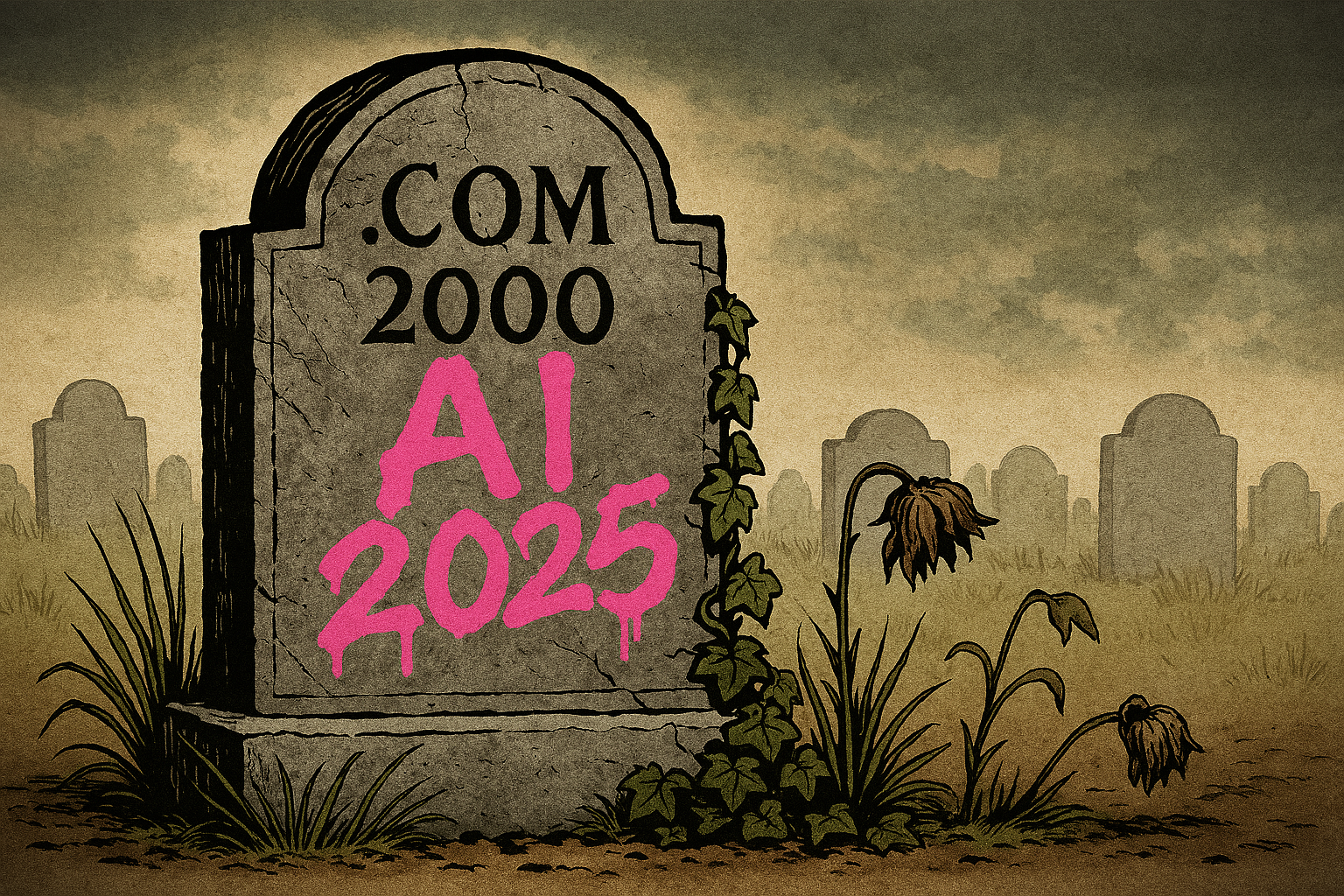
AI Bubble concerns

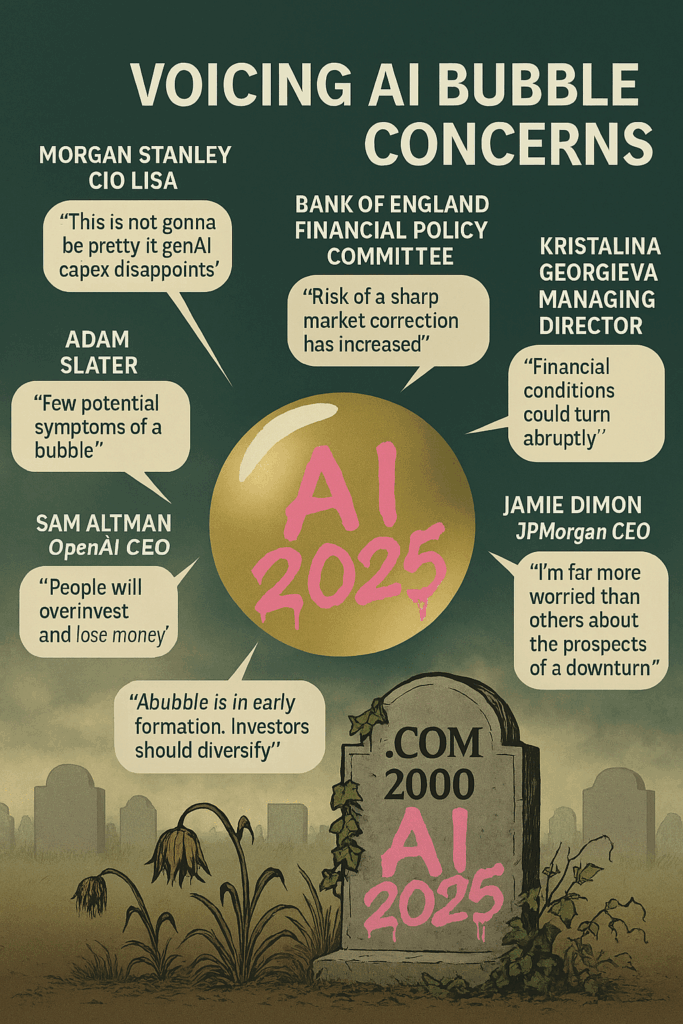
Influential figures and institutions are sounding the AI alarm—or at least raising eyebrows—about the frothy valuations and speculative fervour surrounding artificial intelligence.

Who’s Warning About the AI Bubble?

🏛️ Bank of England – Financial Policy Committee

  • View: Stark warning.
  • Quote: “The risk of a sharp market correction has increased.”
  • Why it matters: The BoE compares current AI stock valuations to the dotcom bubble, noting that the top five S&P 500 firms now command nearly 30% of market cap—the highest concentration in 50 years.

🏦 Jerome Powell – Chair, U.S. Federal Reserve

  • View: Cautiously sceptical.
  • Quote: Assets are “fairly highly valued.”
  • Why it matters: While not naming AI directly, Powell’s remarks echo broader concerns about tech valuations and investor exuberance.

🧮 Lisa Shalett – Chief Investment Officer, Morgan Stanley Wealth Management

  • View: Deeply concerned.
  • Quote: “This is not going to be pretty” if AI capital expenditure disappoints.
  • Why it matters: Shalett warns that 75% of S&P 500 returns are tied to AI hype, likening the moment to the “Cisco cliff” of the early 2000s.

🌍 Kristalina Georgieva – Managing Director, IMF

  • View: Watchful.
  • Quote: Financial conditions could “turn abruptly.”
  • Why it matters: Georgieva highlights the fragility of markets despite AI’s productivity promise, warning of sudden sentiment shifts.

🧨 Sam Altman – CEO, OpenAI

  • View: Self-aware caution.
  • Quote: “People will overinvest and lose money.”
  • Why it matters: Altman’s admission from inside the AI gold rush adds credibility to bubble concerns—even as his company fuels the hype.

📦 Jeff Bezos – Founder, Amazon

  • View: Bubble-aware.
  • Quote: Described the current environment as “kind of an industrial bubble.”
  • Why it matters: Bezos sees parallels with past tech manias, suggesting that infrastructure spending may be overextended.

🧠 Adam Slater – Lead Economist, Oxford Economics

  • View: Analytical.
  • Quote: “There are a few potential symptoms of a bubble.”
  • Why it matters: Slater points to stretched valuations and extreme optimism, noting that productivity projections vary wildly.

🏛️ Goldman Sachs – Investment Strategy Division

  • View: Cautiously optimistic.
  • Quote: “A bubble has not yet formed,” but investors should “diversify.”
  • Why it matters: Goldman acknowledges the risks while maintaining that fundamentals may still justify valuations—though they advise caution.
AI Bubble voices infographic October 2025

🧠 Julius Černiauskas and the Oxylabs AI/ML Advisory Board

🔍 View: The AI hype is nearing its peak—and may soon deflate.

  • Černiauskas warns that AI development is straining environmental resources and public trust. He’s pushing for responsible and sustainable AI practices, noting that transparency is lacking in how many models operate.
  • Ali Chaudhry, research fellow at UCL and founder of ResearchPal, adds that scaling laws are showing their limits. He predicts diminishing returns from simply making models bigger, and expects tightened regulations around generative AI in 2025.
  • Adi Andrei, cofounder of Technosophics, goes further: he believes the Gen AI bubble is on the verge of bursting, citing overinvestment and unmet expectations

🧠 Jamie Dimon on the AI Bubble

🔥 View: Sharply concerned—more than most as widely reported

  • Quote: “I’m far more worried than others about the prospects of a downturn.”
  • Context: Dimon believes AI stock valuations are “stretched” and compares the current surge to the dotcom bubble of the late 1990s.

📉 Key Warnings from Dimon

  • “Sharp correction” risk: He sees a real danger of a sudden market pullback, especially given how AI-related stocks have surged disproportionately—like AMD jumping 24% in a single day after an OpenAI deal.
  • “Most people involved won’t do well”: Dimon told the BBC that while AI will ultimately pay off—like cars and TVs did—many investors will lose money along the way.
  • “Governments are distracted”: He criticised policymakers for focusing on crypto and ignoring real security threats, saying: “We should be stockpiling bullets, guns and bombs”.
  • “AI will disrupt jobs and companies”: At a trade event in Dublin, he warned that AI’s ubiquity will shake up industries and employment across the board.

And so…

The AI boom of 2025 has ignited a speculative frenzy across global markets, with tech stocks soaring and investors piling into anything labelled “AI-adjacent.”

But beneath the euphoria, a chorus of high-profile warnings is growing louder. From the Bank of England and IMF to JPMorgan’s Jamie Dimon and OpenAI’s Sam Altman, concerns are mounting that valuations are dangerously stretched, capital is overconcentrated, and the narrative is outpacing reality.

Dimon likens the moment to the dotcom bubble, while Altman admits many will “lose money” chasing the hype. Analysts point to classic bubble signals: retail mania, corporate FOMO, and earnings divorced from fundamentals.

Even as AI’s long-term utility remains promising, the short-term exuberance may be setting the stage for a sharp correction.

Whether it’s a pullback or a full-blown crash, the mood is shifting—from uncritical optimism to wary anticipation.

The question now is not whether AI will change the world, but whether markets have priced in too much, too soon.

We have been warned!

The AI bubble will pop – it’s just a matter of when and not if.

Go lock up your investments!

The bubble that thinks: Sam Altman’s AI paradox

AI Bubble?

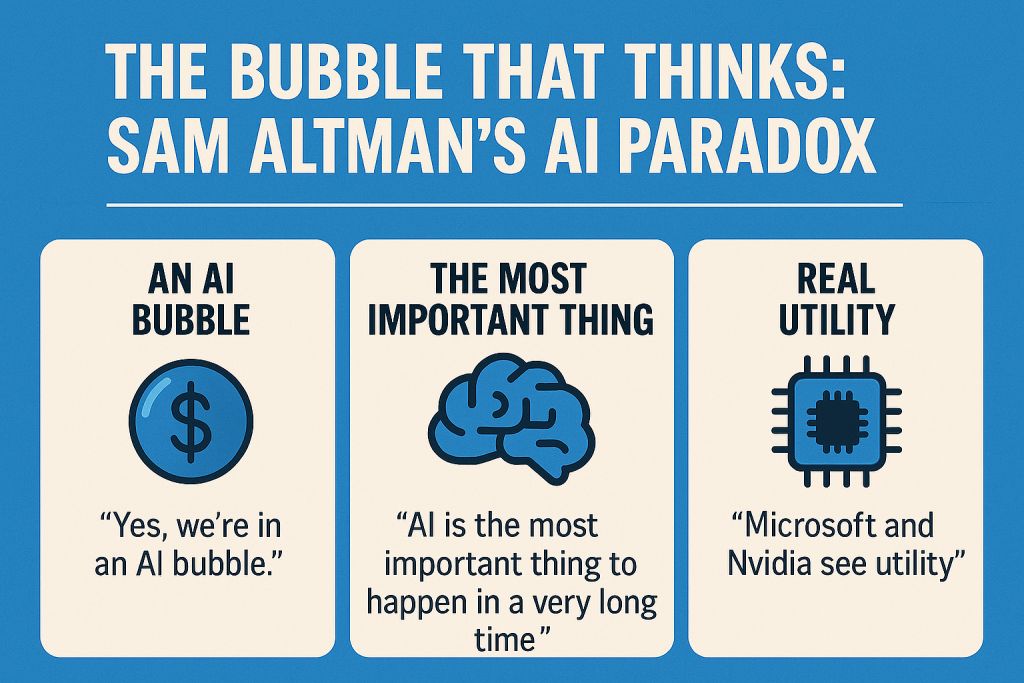
Sam Altman, CEO of OpenAI, has never been shy about bold predictions. But his latest remarks strike a curious chord reportedly saying: ‘Yes, we’re in an AI bubble’.

‘And yes, AI is the most important thing to happen in a very long time’. It’s a paradox that feels almost ‘Altmanesque’—equal parts caution and conviction, like a person warning of a storm while building a lighthouse.

Altman’s reported bubble talk isn’t just market-speak. It’s a philosophical hedge against the frothy exuberance that’s gripped Silicon Valley and Wall Street alike.

With AI valuations soaring past dot-com levels, and retail investors piling into AI-branded crypto tokens and meme stocks, the signs of speculative mania are hard to ignore.

Even ChatGPT, OpenAI’s flagship product, boasts 1.5 billion monthly users—but fewer than 1% pay for it. That’s not a business model—it’s a popularity contest.

Yet Altman isn’t calling for a crash. He’s calling for clarity. His point is that bubbles form around kernels of truth—and AI’s kernel is enormous.

From autonomous agents to enterprise integration in law, medicine, and finance, the technology is reshaping workflows faster than regulators can blink.

Microsoft and Nvidia are pouring billions into infrastructure, not because they’re chasing hype, but because they see utility. Real utility.

Still, Altman’s warning is timely. The AI gold rush has spawned a legion of startups with dazzling demos and dismal revenue. This is likely the Dotcom ‘Esque’ reality – many will fail.

Many are burning cash at unsustainable rates, betting on future breakthroughs that may never materialise. Investors, Altman suggests, need to recalibrate—not abandon ship, but stop treating every chatbot as the next Google.

What makes Altman’s stance compelling is its duality. He’s not a doomsayer, nor a blind optimist. He’s a realist who understands that transformative tech often arrives wrapped in irrational exuberance. The internet had its crash before it changed the world. AI may follow suit.

So, is this a bubble? Yes. But it’s a bubble with brains. And if Altman’s lighthouse holds, it might just guide us through the fog—not to safety, but to something truly revolutionary.

In the meantime, investors would do well to remember hype inflates, but only utility sustains.

And Altman, ever the ‘paradoxical prophet’, seems to be betting on both.

AMD Unveils Instinct MI400: is it time for AMD to challenge NVIDIA dominance?

AMD & NVIDIA chip go head-to-head

AMD has officially lifted the curtain on its next-generation AI chip, the Instinct MI400, marking a significant escalation in the battle for data centre dominance.

Set to launch in 2026, the MI400 is designed to power hyperscale AI workloads with unprecedented efficiency and performance.

Sam Altman and OpenAI have played a surprisingly hands-on role in AMD’s development of the Instinct MI400 series.

Altman appeared on stage with AMD CEO Lisa Su at the company’s ‘Advancing AI’ event, where he revealed that OpenAI had provided direct feedback during the chip’s design process.

Altman described his initial reaction to the MI400 specs as ‘totally crazy’ but expressed excitement at how close AMD has come to delivering on its ambitious goals.

He praised the MI400’s architecture – particularly its memory design – as being well-suited for both inference and training tasks.

OpenAI has already been using AMD’s MI300X chips for some workloads and is expected to adopt the MI400 series when it launches in 2026.

This collaboration is part of a broader trend: OpenAI, traditionally reliant on Nvidia GPUs via Microsoft Azure, is now diversifying its compute stack.

AMD’s open standards and cost-effective performance are clearly appealing, especially as OpenAI also explores its own chip development efforts with Broadcom.

AMD’s one-year chart snap-shot

One-year AMD chart snap-shot

So, while OpenAI isn’t ditching Nvidia entirely, its involvement with AMD signals a strategic shift—and a vote of confidence in AMD’s growing role in the AI hardware ecosystem.

At the heart of AMD’s strategy is the Helios rack-scale system, a unified architecture that allows thousands of MI400 chips to function as a single, massive compute engine.

This approach is tailored for the growing demands of large language models and generative AI, where inference speed and energy efficiency are paramount.

AMD technical power

The MI400 boasts a staggering 432GB of next-generation HBM4 memory and a bandwidth of 19.6TB/sec—more than double that of its predecessor.

With up to four Accelerated Compute Dies (XCDs) and enhanced interconnects, the chip delivers 40 PFLOPs of FP4 performance, positioning it as a formidable rival to Nvidia’s Rubin R100 GPU.

AMD’s open-source networking technology, UALink, replaces Nvidia’s proprietary NVLink, reinforcing the company’s commitment to open standards. This, combined with aggressive pricing and lower power consumption, gives AMD a compelling value proposition.

The company claims its chips can deliver 40% more AI tokens per dollar than Nvidia’s offerings.

Big tech follows AMD

OpenAI, Meta, Microsoft, and Oracle are among the major players already integrating AMD’s Instinct chips into their infrastructure. OpenAI CEO Sam Altman, speaking at the launch event reportedly praised the MI400’s capabilities, calling it ‘an amazing thing‘.

With the AI chip market projected to exceed $500 billion by 2028, AMD’s MI400 is more than just a product—it’s a statement of intent. As the race for AI supremacy intensifies, AMD is betting big on performance, openness, and affordability to carve out a larger share of the future.

It certainly looks like AMD is positioning the Instinct MI400 as a serious contender in the AI accelerator space – and Nvidia will be watching closely.

The MI400 doesn’t just aim to catch up; it’s designed to challenge Nvidia head-on with bold architectural shifts and aggressive performance-per-dollar metrics.

Nvidia has long held the upper hand with its CUDA software ecosystem and dominant market share, especially with the popularity of its H100 and the upcoming Rubin GPU. But AMD is playing the long game.

Nvidia 0ne-year chart snapshot

Nvidia 0ne-year chart snapshot

By offering open standards like UALink and boasting impressive specs like 432GB of HBM4 memory and 40 PFLOPs of FP4 performance, the MI400 is pushing into territory that was once Nvidia’s alone.

Whether it truly rivals Nvidia will depend on a few key factors: industry adoption, software compatibility, real-world performance under AI workloads, and AMD’s ability to scale production and support.

But with major players like OpenAI, Microsoft, and Meta already lining up to adopt the MI400.

Is now a good time to invest in AMD?