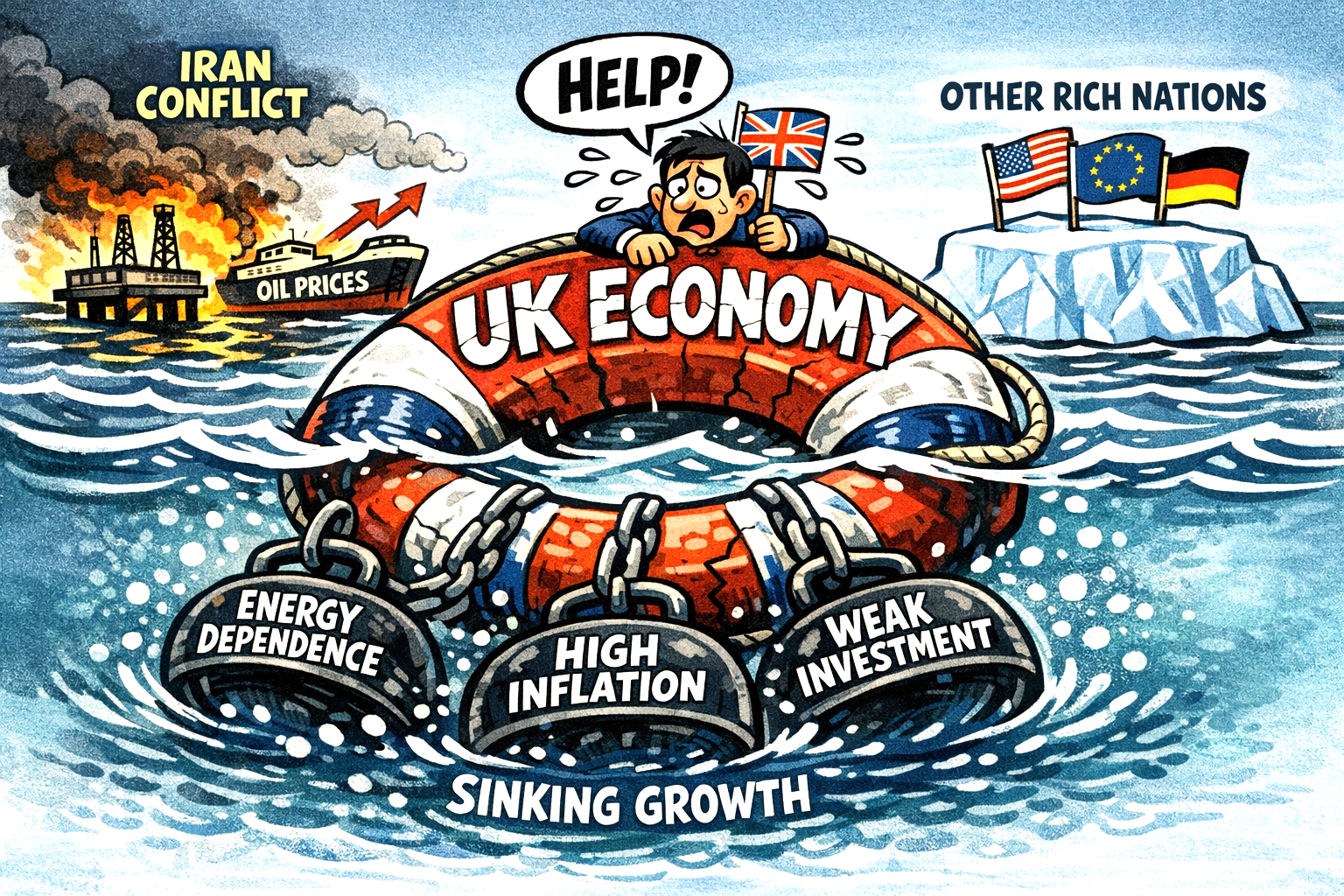
The IMF’s warning that the UK would suffer the sharpest growth hit among rich economies from an Iran‑related war is rooted in a simple structural reality.
Britain is unusually exposed to energy‑price shocks, yet unusually weak in the buffers that normally absorb them according to the IMF.
Why the UK will be hit harder than its peers
The UK enters this crisis with three vulnerabilities
High dependence on imported energy. North Sea output has declined for years, leaving Britain reliant on global LNG markets. When Middle Eastern supply is disrupted, LNG prices spike first and hardest. The U.S. and eurozone have deeper domestic energy bases or cheaper pipeline access.
A structurally fragile inflation profile. The UK’s inflation has been stickier than that of other G7 economies, driven by food, energy and services. A renewed oil shock feeds directly into household bills and transport costs, forcing the Bank of England to keep rates higher for longer.
Weak productivity and stagnant investment. Britain has less momentum to absorb an external shock. When energy prices rise, UK firms cut back faster, and consumers retrench more sharply.
UK Government policy. Ed Miliband and his ‘likely’ misguided staunch defence of Net Zero policies and expensive energy costs have left the UK seriously exposed to shocks – such as this.
The IMF’s logic
The Fund argues that a prolonged disruption in the Strait of Hormuz would push global oil prices sharply higher.
For the UK, this translates into
Higher wholesale gas costs, because LNG markets reprice off oil‑linked benchmarks.
A renewed inflation surge, delaying rate cuts and tightening financial conditions.
A squeeze on real incomes, hitting consumption—the UK’s main growth engine.
A fall in business investment, already one of the weakest in the OECD.
The IMF’s modelling suggests that the UK’s growth rate could fall more steeply than that of the U.S., Germany or France because those economies either have stronger industrial bases, more resilient energy systems or more fiscal space to cushion the blow.
The broader picture
This is less about geopolitics and more about structural brittleness. A global energy shock exposes the UK’s unresolved weaknesses: high import dependence, fragile inflation dynamics and a decade of under‑investment.
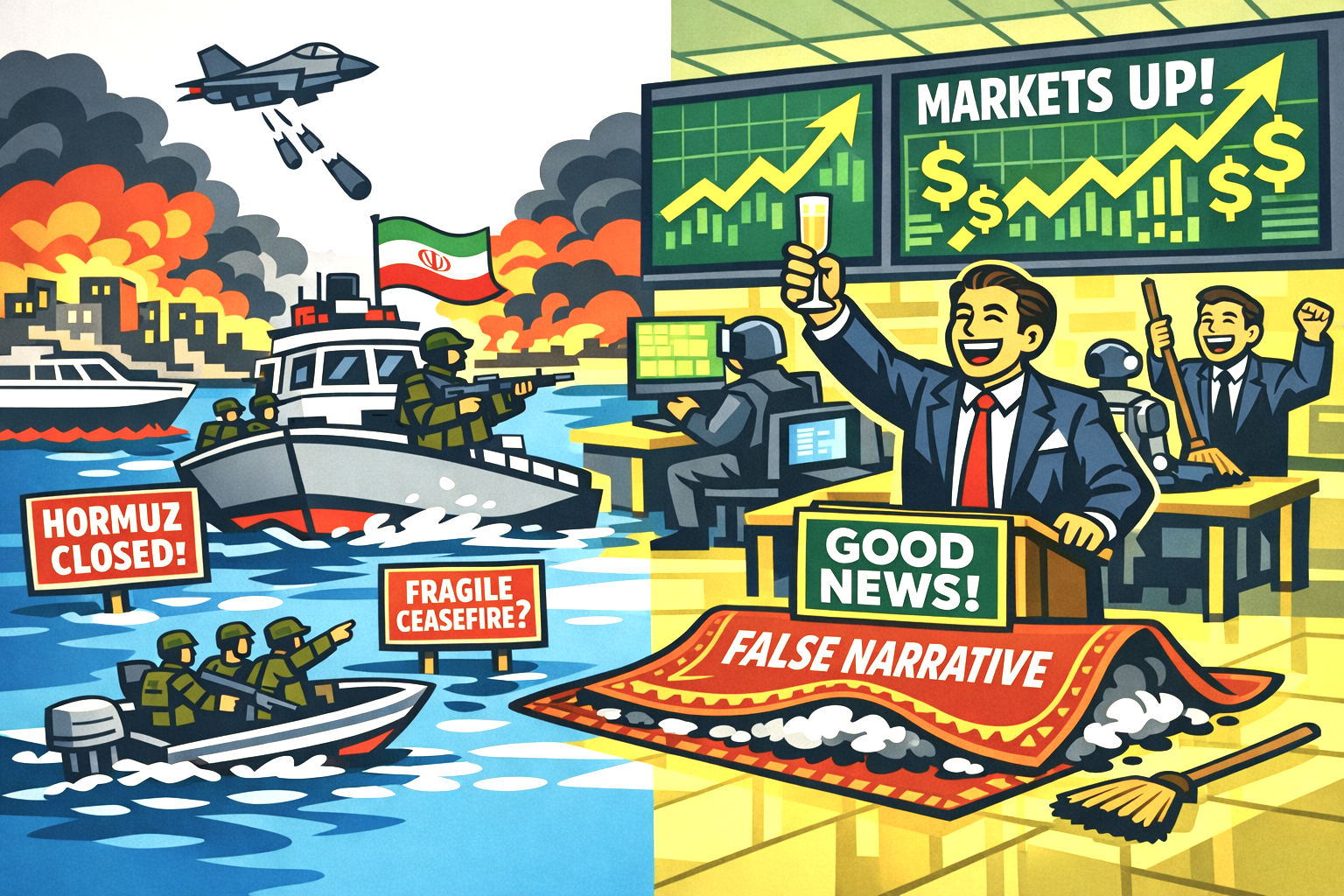
There’s a growing sense that financial markets have drifted into a parallel reality. Not the usual detachment that comes with speculation, but something deeper — a structural break between what is happening in the world and what markets choose to see.
This is how the stock market feels at the moment. I might be wrong, but the overwhelming sense of despair feels so real. I believe the markets are broken at their core, and nobody seems to care. Markets make money and remain devoid of morality.
The system is morally bankrupt.
You can watch a crisis unfold in real time, with footage, statements, explosions and diplomatic failures, and yet the markets behave as though they’re responding to a completely different script.
A ceasefire that barely exists is treated as a turning point. A strategic waterway that is “open” only in the loosest, most cosmetic sense is priced as fully restored. The disconnect isn’t subtle. It’s brazen.
And yes — it feels deceptive
Not because traders are conspiring to mislead anyone, but because the modern market has evolved into something that no longer requires truth to function.
It only needs a narrative.
A headline. A phrase that can be interpreted as “less bad than yesterday”. That’s enough to ignite a rally, even if the underlying situation is deteriorating by the hour.
This wasn’t always the case. There was a time when markets, for all their volatility and irrationality, still behaved like instruments tethered to reality.
When a major shipping lane was threatened, prices moved accordingly. When a ceasefire collapsed, markets reflected the renewed danger. There was at least a rough correlation between events and valuations — imperfect, but recognisable.
Today, that correlation has snapped. The market trades on sentiment, not substance. On the idea of stability, not the presence of it.
Appearance
On the appearance of progress, even when the facts on the ground contradict every optimistic headline. A ceasefire announcement is enough to send equities higher, even if the ceasefire is violated before the ink dries.
A promise to reopen a strait is enough to calm oil prices, even if only a handful of ships actually move.
The deception is structural. It’s the product of algorithmic trading that reacts to keywords rather than conditions.
It’s the result of a decade of central bank intervention that has taught investors to treat every crisis as temporary and every dip as a buying opportunity. It’s reinforced by political communication that prioritises market stability over factual clarity.
The system rewards optimism, even when it’s unjustified. It punishes realism when it’s inconvenient.
Surreal
This is why the current moment feels so surreal. You can see the footage of strikes in Lebanon while reading headlines about “regional de‑escalation”. You can watch tankers stalled while analysts talk about “normalising flows”.
The market shrugs, because the narrative — however flimsy — is enough to sustain the illusion.
If markets don’t need truth, then they are, in effect, trading a deception. Not a deliberate deception, but a functional one.
Economic Truth
A deception that keeps prices elevated, volatility suppressed, and investors soothed.
A deception that allows the charts to climb even as the world beneath them fractures.
A deception that has become the operating principle of a system that no longer reflects reality, only the stories it finds convenient to believe.
This isn’t investing – this is pure manipulative gameplay and benefits only those who know how to play the game.
And ‘they’ set the rules.
Markets make the money but remain devoid of morality.
I feel like I am playing a video game without the controller or at least with a rule book.
Update:
U.S. announces it will blockade of the Strait of Hormuz, or rather Iranian ‘linked’ ships. And not in the Strait but further out in international waters. This is designed to reduce the risk of conflict.
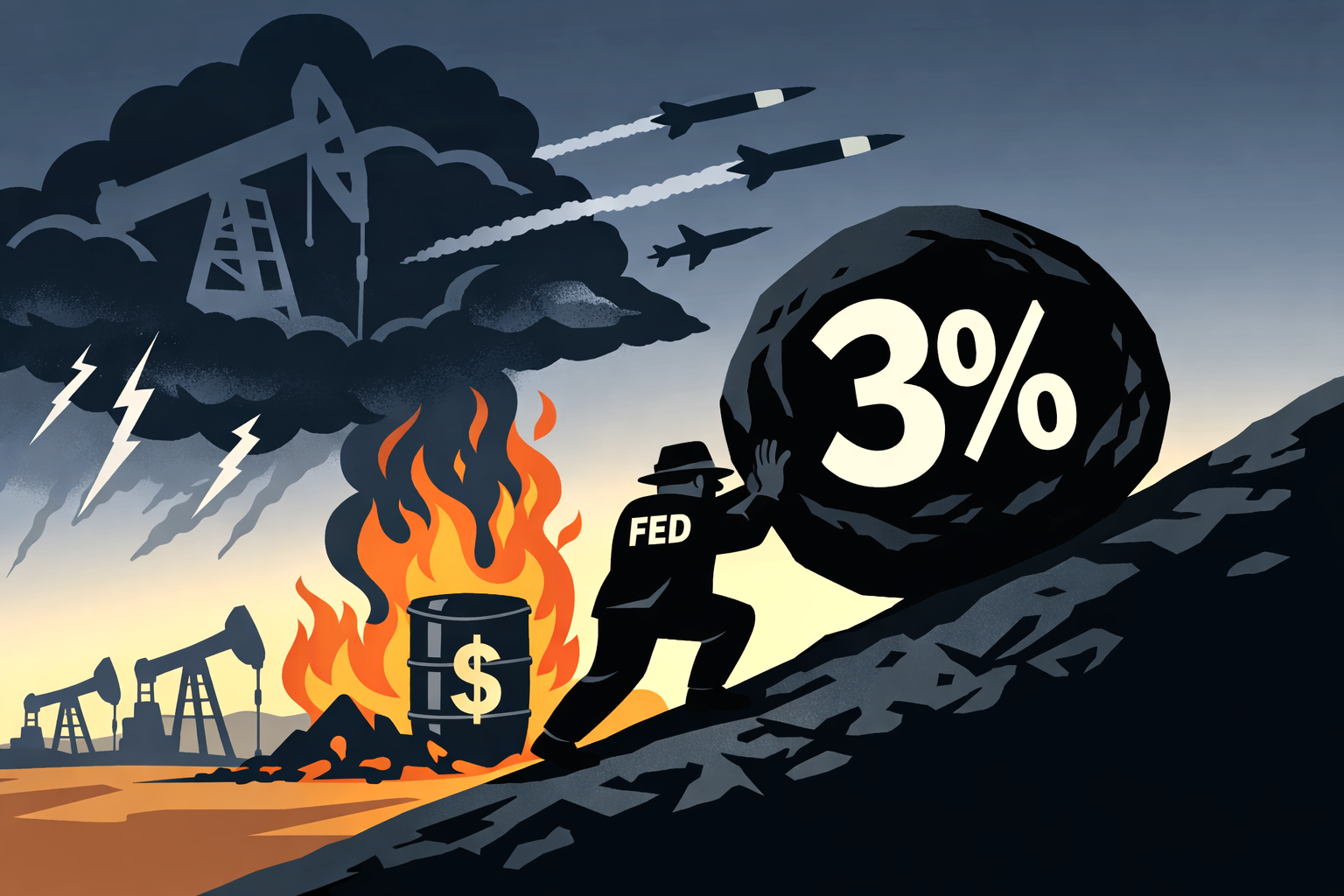
America’s latest inflation figures show price pressures proving far stickier than the Federal Reserve would like, with the core PCE index — the Fed’s preferred gauge — holding at 3% in February 2026.
Headline inflation came in slightly lower at 2.8%, but both measures remain well above the central bank’s 2% target.
A conflict that has since sent global energy markets into turmoil. Oil briefly surged past $100 a barrel, and U.S. petrol prices jumped by more than a dollar, none of which is reflected in February’s figures.
Beneath the surface, the numbers paint a mixed picture. Consumer spending rose 0.5%, suggesting households were still willing to open their wallets, yet personal income unexpectedly slipped 0.1%.
Stagflation?
Fourth‑quarter GDP for 2025 was revised down to a sluggish 0.5% annualised, reinforcing concerns that the U.S. may be drifting into a mild stagflationary phase — slow growth paired with persistent inflation.
Fed officials have been cautious in recent weeks, signalling openness to rate cuts later in the year but unwilling to commit while geopolitical risks and energy‑driven price spikes cloud the outlook.
With March’s CPI due imminently — and expected to show a sharp jump — policymakers face a narrowing path between supporting a cooling labour market and preventing inflation from becoming entrenched.
For now, the message is clear: underlying inflation was already proving stubborn before the shock of war.
The next few months will reveal whether the Fed can still engineer the soft landing it has been aiming for, or whether the global energy shock forces a rethink.
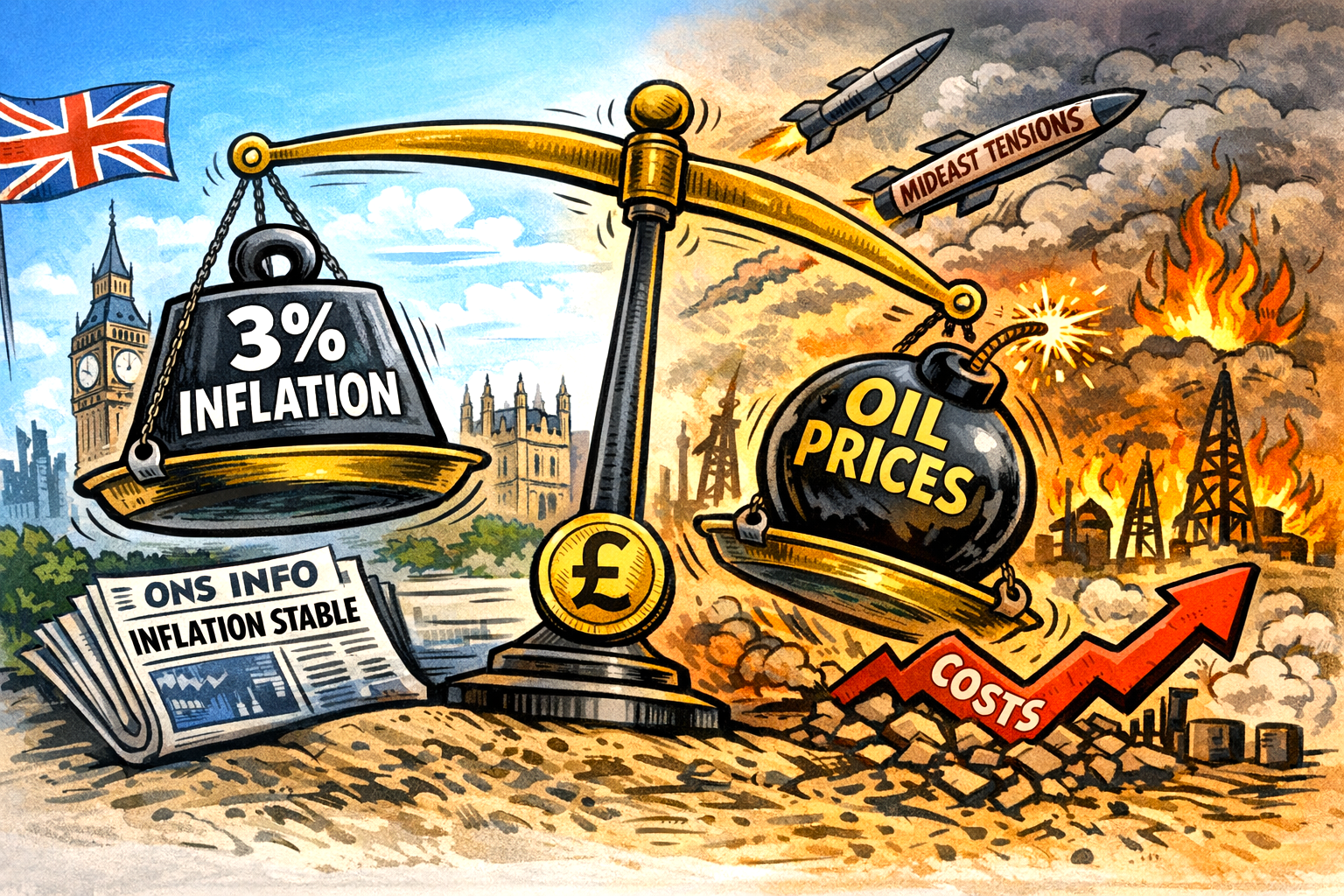
After months of gradual easing, the pause reflects a delicate moment for the UK economy, with price pressures beginning to shift beneath the surface.
Clothing was the biggest upward driver, with prices rising this year after falling during the same period in 2025.
This was offset by cheaper petrol, though those figures were captured before the recent surge in global oil prices triggered by the outbreak of war involving Iran.
While inflation is far below the peaks seen a few years ago, households are still contending with the reality that prices continue to rise—just more slowly.
ONS data
The ONS also introduced supermarket scanner data for the first time, offering a more accurate picture of food costs.
Economists warn that the conflict‑driven spike in oil and gas prices could push inflation higher again later in the year, with some forecasts suggesting a potential rise towards 4.6%.
Businesses already reliant on fuel, such as regional bus operators, report steep cost increases that may soon feed through to consumers.
The government insists it is working to ease cost‑of‑living pressures, though global events may limit its room for manoeuvre.
Financial markets are no strangers to volatility, but even seasoned traders were taken aback by the extraordinary price action that unfolded recently.
Just a minute
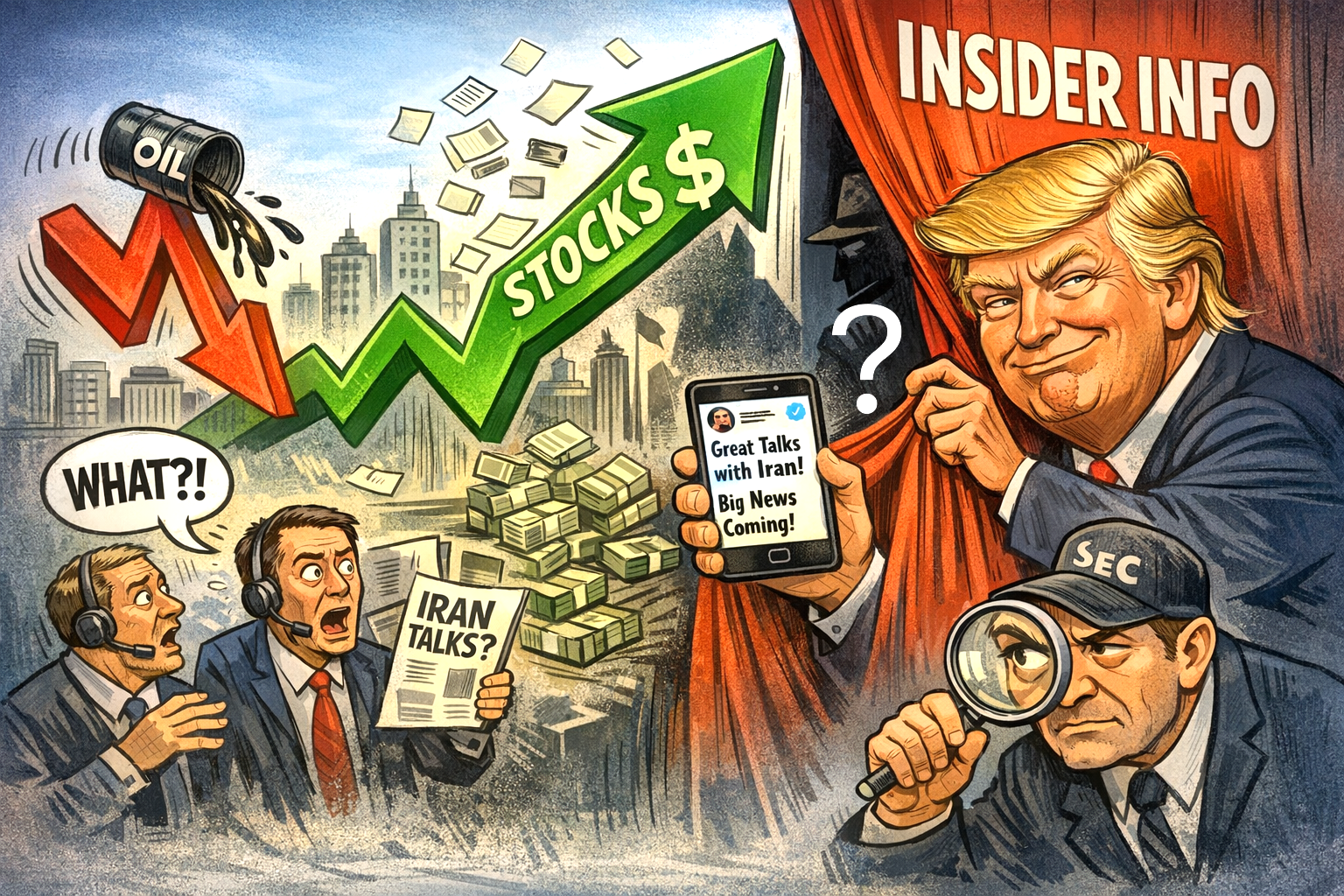
In the space of minutes, global indices lurched upwards, oil prices collapsed, and billions of dollars shifted across the financial system — all triggered by a single, unexpected announcement from President Trump claiming “productive talks” with Iran.
What followed was a whiplash-inducing reversal, a diplomatic denial from Tehran, and a growing chorus of questions about whether the market’s initial leap was quite as spontaneous as it appeared.
Spike
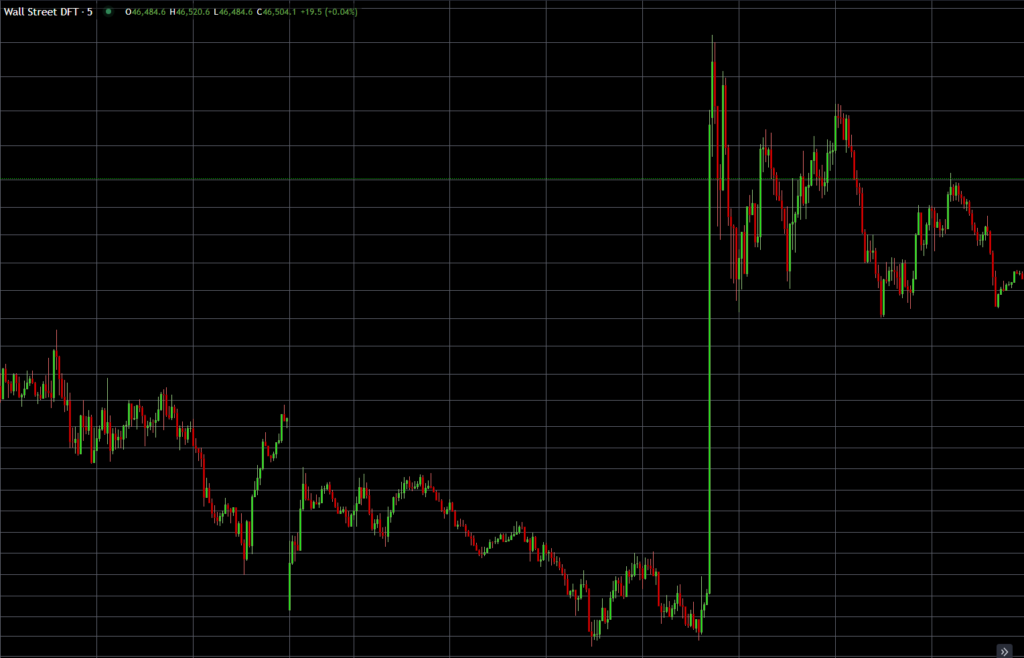
The sequence of events is now well documented. In the quiet pre‑market hours, trading volumes in S&P 500 futures and crude oil contracts suddenly spiked.
These were not the tentative probes of retail traders or the routine adjustments of algorithmic systems. They were large, directional, and unusually well‑timed.
Snapshot of Wall Street DFT (Dow Jones Industrial Average) demonstrating the spike in question
Minutes later, Trump posted his statement about progress with Iran — a geopolitical development with obvious implications for equities and energy markets.
Instant
Prices reacted instantly. Equities surged. Oil tumbled. Within the hour, Iran publicly denied that any such talks had taken place, prompting a partial reversal of the earlier moves. Maybe we should draw a distinction between ‘talks’ and ‘messages’.
It is the precision of the trades placed before the announcement that has raised eyebrows. Markets do not move in anticipation of news that does not exist in the public domain.
Yet someone, somewhere, positioned themselves perfectly for the impact of Trump’s message posted on social media.
Fortuitous coincidence or deliberate manipulation?
Scale
The scale of the trades suggests institutional capability; the timing suggests foreknowledge. Whether that foreknowledge was legitimate, accidental, or illicit is now the central question.
Speculation about insider trading is inevitable in such circumstances, but it is important to distinguish between suspicion and proof. Political announcements are not governed by the same disclosure rules that apply to corporate earnings or mergers.
Presidents are not bound by quiet periods. Their advisers, however, are. So are the staff, intermediaries, and diplomatic channels through which sensitive information flows.
Obligation to investigate
If anyone in that chain traded — or tipped off someone who did — regulators will be obliged to investigate.
There is also a broader concern about the integrity of market‑moving communication. If Iran’s denial is accurate, and no talks occurred, then the market reacted to a statement that may not have reflected reality.
Even without malicious intent, such episodes undermine confidence in the informational foundations on which markets depend. When a single message can add or erase trillions in value, the accuracy and reliability of that message become matters of systemic importance.
Suspicion
For now, the episode sits in an ambiguous space: suspicious, but unproven; dramatic, but not unprecedented. Markets will move on, as they always do.
Yet the questions raised yesterday will linger — about transparency, about the porous boundaries between politics and finance, and about the unseen hands that sometimes seem to move just a little too quickly.
Does the idea that Trump ‘massages’ the market carry any weight?
It’s a fair question, and one that keeps resurfacing because the pattern is hard to ignore.
The idea that Trump “massages” the markets isn’t a conspiracy theory in itself — it’s an observation that his public statements often have immediate, dramatic financial consequences.
The real issue is whether those consequences are accidental, strategic, or exploited by people with advance knowledge.
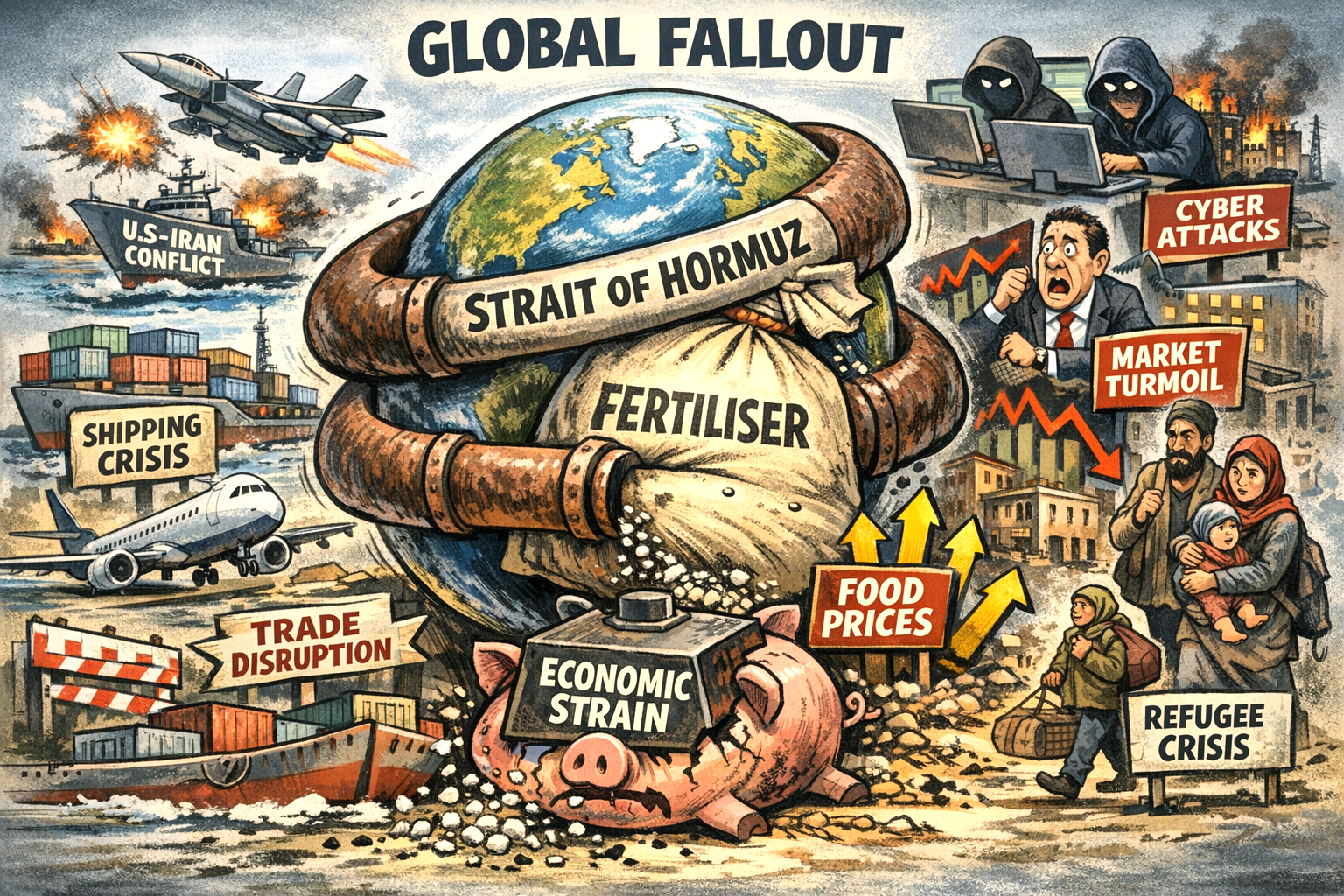
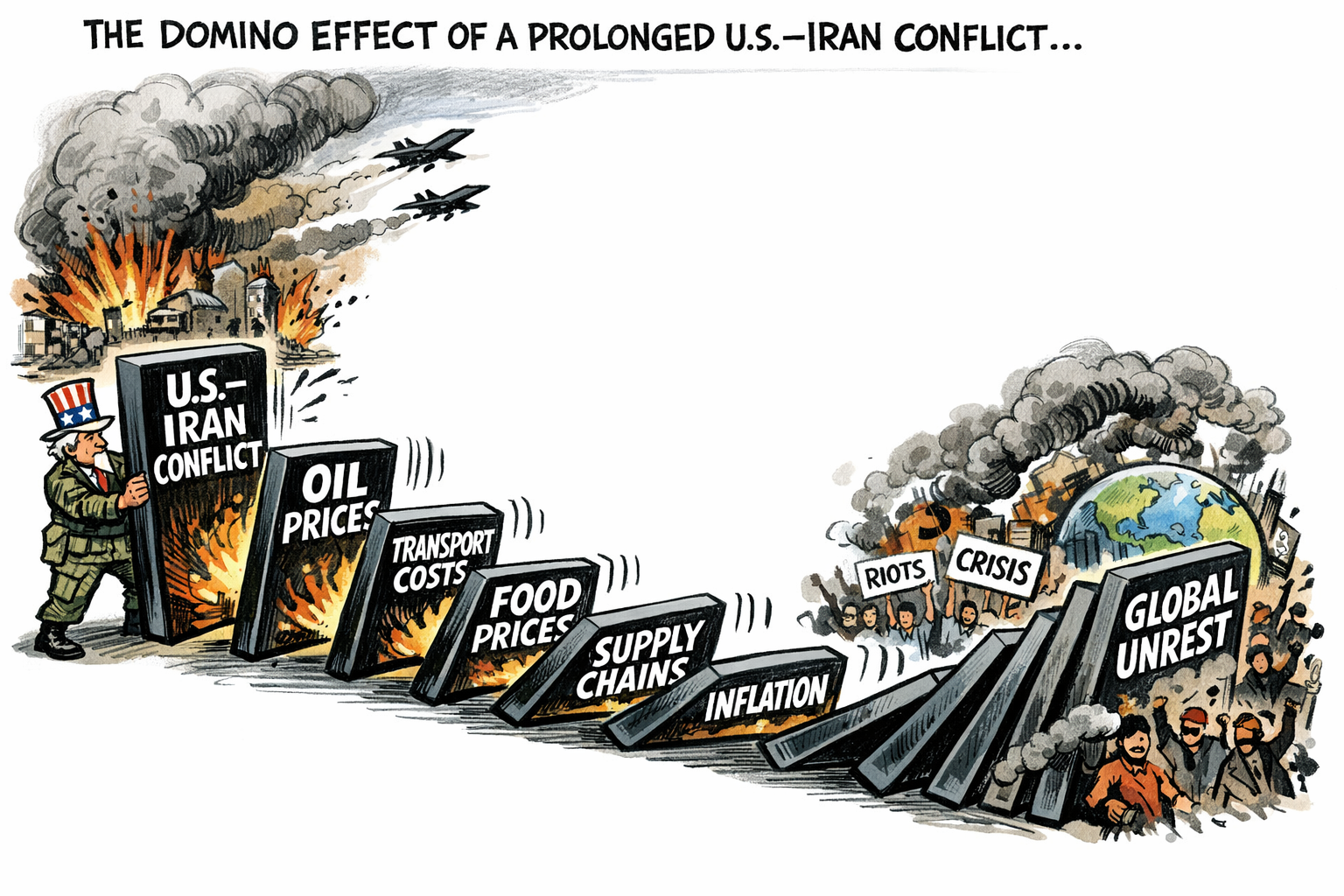
If the U.S.–Iran conflict drags on for weeks or months, the global impact will extend far beyond oil markets. Energy prices are only the first domino.
The deeper, more destabilising effects emerge through shipping disruption, fertiliser shortages, food‑price inflation, financial volatility, cyber escalation, and regional political instability.
For the UK — already wrestling with structural food‑system fragility — the conflict becomes a real‑world stress test.
This report outlines 15 potential major knock‑on effects that would shape the global economy if the conflict becomes protracted.
1. Global Shipping Disruption
The Strait of Hormuz is not just an oil artery; it is a global shipping chokepoint. As vessels reroute or halt operations:
Container shipping delays spread across Asia, Europe and the Gulf.
War‑risk insurance premiums spike for all vessels.
Freight costs rise, feeding into non‑energy inflation.
This is the mechanism by which a regional conflict becomes a global economic event.
2. Aviation and Travel Disruption
Iranian retaliation has already included strikes on Gulf airports and hotels. If this continues:
Airlines reroute or cancel flights across the Gulf, South Asia and East Africa.
Longer flight paths increase fuel burn and fares.
Tourism in the UAE, Oman, Bahrain and potentially Turkey contracts sharply.
Aviation is one of the fastest channels through which geopolitical instability hits consumers.
3. Financial Market Volatility
Markets dislike uncertainty, and this conflict delivers it in abundance.
Investors flee to gold, the dollar and U.S. Treasuries.
Emerging markets face capital outflows.
Equity volatility rises in shipping, aviation and manufacturing sectors.
The longer the conflict persists, the more entrenched this volatility becomes.
4. Fertiliser Disruption: The Hidden Trigger
Over one‑third of global fertiliser trade moves through the Strait of Hormuz. With shipments stranded:
Urea, ammonia, phosphates and sulphur prices surge.
Farmers worldwide face higher input costs.
Lower fertiliser availability leads to reduced crop yields.
This is the beginning of a food‑system shock that unfolds over months, not days.
5. Global Food‑Price Inflation
As fertiliser shortages ripple through agriculture:
Wheat, rice, maize and oilseed yields fall.
Livestock feed becomes more expensive, pushing up meat, dairy and egg prices.
Food‑importing regions face acute pressure.
Grain futures markets become more volatile.
This is how a conflict becomes a global cost‑of‑living crisis.
UK Exposure
The UK is particularly vulnerable because:
It imports a large share of its fertiliser and food.
Its agricultural sector is energy‑intensive.
Supermarket supply chains are sensitive to freight and insurance costs.
Bread, cereals, dairy and meat are the first categories to feel the squeeze.
6. Supply Chain Strain Beyond Food and Energy
A prolonged conflict disrupts:
Petrochemicals
Plastics
Fertilisers
Industrial metals
Gulf‑based manufacturing and logistics
This feeds into higher costs for everything from packaging to electronics.
7. Corporate Investment Freezes
Businesses hate uncertainty. Expect:
Delays or cancellations of Gulf megaprojects.
Slower investment in petrochemicals, logistics and tech hubs.
Reduced appetite for Gulf‑exposed assets.
This undermines diversification efforts like Saudi Vision 2030.
8. Cyber Escalation
Iran has a long history of cyber retaliation. Likely developments include:
Attacks on Western banks, utilities and government systems.
Disruptions to Gulf infrastructure, including airports and desalination plants.
Rising cybersecurity costs for businesses globally.
Cyber conflict is asymmetric, deniable and cheap — making it a likely pressure valve.
9. Regional Political Destabilisation
The killing of senior Iranian leadership has already shaken the region.
Possible outcomes include:
Internal instability within Iran.
Escalation involving Hezbollah, Iraqi militias, Syrian factions and the Houthis.
Pressure on Gulf monarchies if civilian infrastructure continues to be targeted.
This is where the conflict risks widening beyond its initial theatre.
10. Migration and Humanitarian Pressures
If the conflict intensifies:
Refugee flows from Iran, Iraq and Syria could rise.
Europe — especially Greece, Turkey and the Balkans — faces renewed border pressure.
Humanitarian budgets shrink as Western states divert funds to defence.
This adds a political dimension to the economic fallout.
11. Insurance Market Stress
War‑risk insurance is already spiking.
Expect:
Higher premiums for shipping, aviation and energy infrastructure.
Reduced insurer appetite for Gulf‑exposed assets.
Knock‑on effects on global trade costs and consumer prices.
Insurance is a silent amplifier of geopolitical risk.
12. Higher Global Borrowing Costs
Sustained conflict spending creates:
Budgetary strain for the U.S., UK, EU and Gulf states.
Reduced fiscal space for domestic programmes.
Higher global borrowing costs as markets price in sustained uncertainty.
This tightens financial conditions worldwide.
13. Pressure on Emerging Markets
Countries heavily reliant on imported energy or food face:
Worsening trade balances
Currency depreciation
Higher inflation
Greater risk of sovereign stress
This is especially acute in South Asia, North Africa and parts of Latin America.
14. Strain on Multilateral Institutions
A prolonged conflict diverts attention and resources from:
Climate finance
Development aid
Humanitarian relief
Global health programmes
Institutions already stretched by Ukraine, Gaza and climate disasters face further overload.
15. The Strategic Reordering of Alliances
A drawn‑out conflict may accelerate geopolitical realignment:
Gulf states hedge between Washington and Beijing.
India and Turkey pursue more independent foreign policies.
Europe faces renewed pressure to define its own security posture.
Russia benefits from higher energy prices and Western distraction.
This is the long‑term consequence: a shift in the global balance of power.
Conclusion: A Conflict That Radiates Far Beyond Oil
If the U.S.–Iran war limps on, the world will feel it in supermarket aisles, shipping lanes, financial markets and political systems.
The most consequential knock‑on effect is not oil — it is fertiliser. That is the hinge on which global food security turns.
For the UK, the conflict exposes the fragility of a food system dependent on imports, long supply chains and energy‑intensive agriculture.
This is not just a Middle Eastern conflict. It is a global economic event in slow motion.
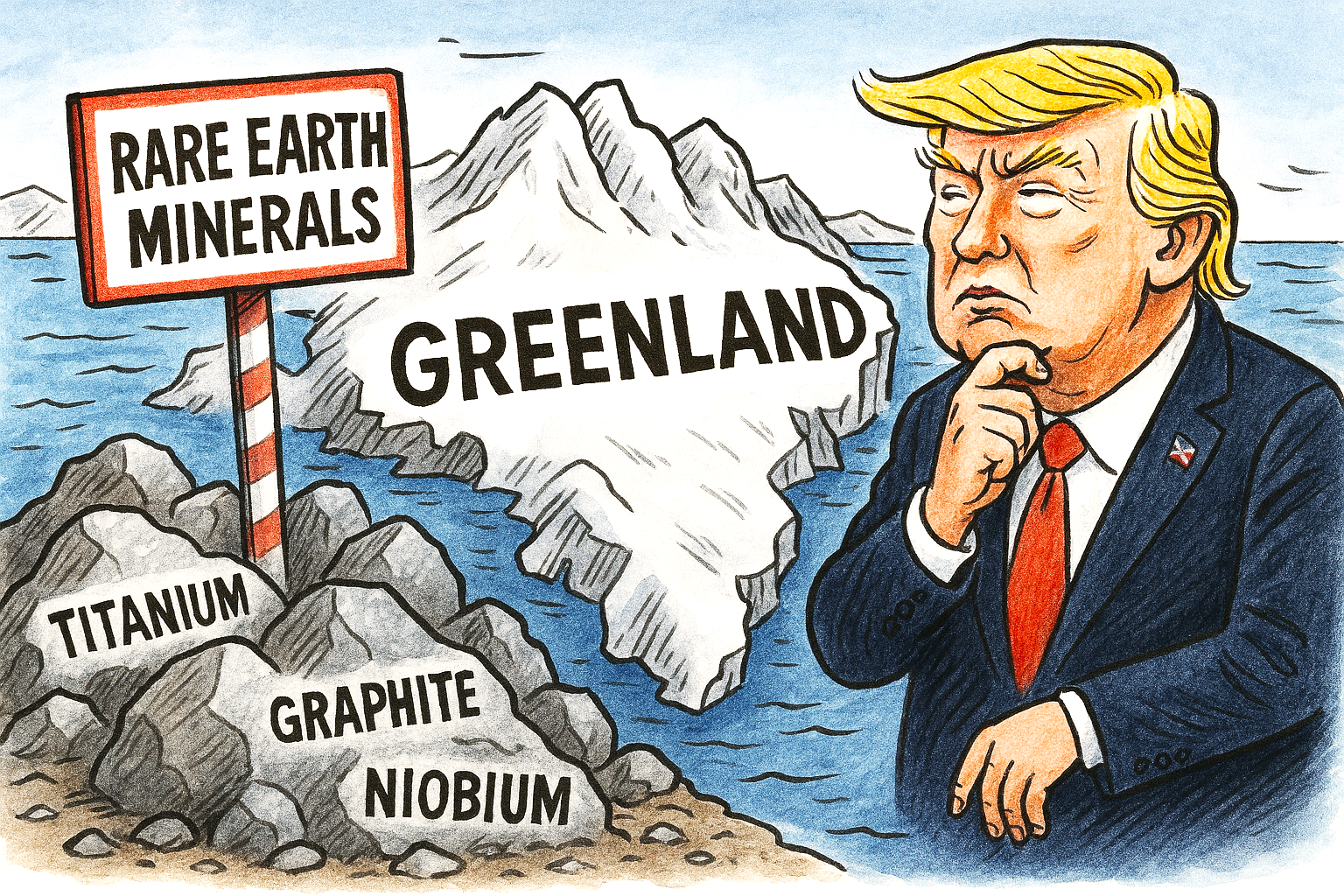
Greenland has long been portrayed as a remote Arctic frontier, but its bedrock tells a very different story.
Beneath the ice lies a concentration of critical minerals that has drawn global attention, not least from President Trump, whose administration has repeatedly emphasised the island’s strategic and economic value.
Much of that interest stems from the sheer breadth of materials Greenland contains, according to the Geological Survey of Denmark and Greenland, 25 of the 34 minerals classified as ‘critical raw materials’ by the European Commission can be found there, including graphite, niobium and titanium.
Rare Earth Elements
The most geopolitically charged of these are rare earth elements — a group of 17 metals essential for electronics, renewable energy technologies, advanced weaponry and satellite systems.
These minerals are currently dominated by Chinese production and processing, a reality that has shaped US strategic thinking for more than a decade. Analysts note that Trump’s interest is ‘primarily about access to those resources and blocking China’s access’.
Greenland also holds significant deposits of uranium, zinc, copper and potentially vast reserves of oil and natural gas. As Arctic ice retreats, previously inaccessible rock formations are becoming easier to survey and, in some cases, to mine.
Ice melt?
Melting ice is even creating new opportunities for hydropower in exposed regions, potentially lowering the energy costs of extraction in the future.
Yet the island’s mineral wealth remains largely untapped. Reportedly, only two mines are currently operational, with harsh weather, limited infrastructure and high extraction costs slowing development.
Despite these challenges, the strategic calculus is clear: in a world increasingly defined by competition over supply chains for green technologies and defence systems, Greenland represents a rare opportunity to diversify away from existing global chokepoints.
For the Trump administration, the island’s mineral potential, combined with its location along emerging Arctic shipping routes, elevates Greenland from a frozen outpost to a cornerstone of long‑term geopolitical strategy.
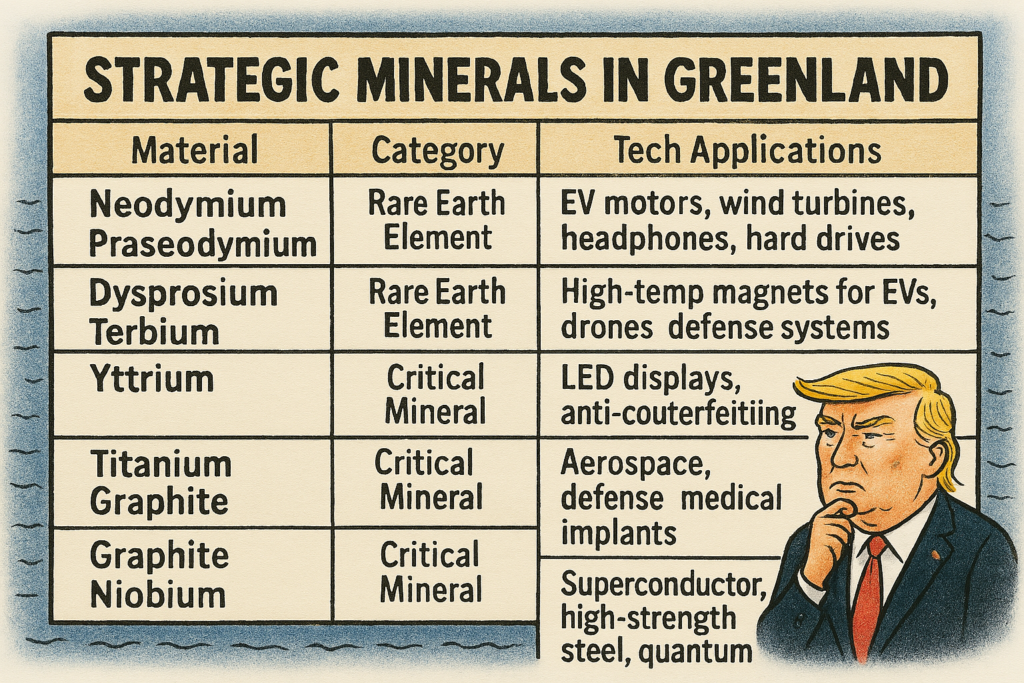
Strategic Minerals in Greenland
Material
Category
Tech Applications
Neodymium
Rare Earth Element
EV motors, wind turbines, headphones, hard drives
Praseodymium
Rare Earth Element
Magnet alloys, aircraft engines
Dysprosium
Rare Earth Element
High-temp magnets for EVs, drones, defence systems
These materials are not only present in Greenland’s geology but also feature prominently in strategic supply chains— especially as the West seeks to reduce reliance on Chinese and Russian sources.
Falling commodity prices can be a signal of economic trouble ahead
When commodity prices drop, it often reflects a decrease in demand for raw materials, which can be a sign of slowing economic activity. For instance, the recent decline in copper prices is seen as a potential indicator of economic slowdown.
Sugar, cotton, soybean, oil and iron ore are some examples where demand has fallen during this year.
However, it’s important to consider other factors as well. The global economic slowdown has reduced demand for energy, minerals, and agricultural products. While this trend is evident in many countries, the U.S. economy has shown some resilience.
So, while falling commodity prices can be a warning sign, they are just one piece of the puzzle. It’s essential to look at a broader range of economic indicators to get a complete picture.
The International Monetary Fund calculates that Russia’s economy will expand more rapidly than all advanced economies this year.
According to the latest World Economic Outlook released by the IMF, Russia’s economy is projected to expand by 3.2% in 2024.
This growth outpaces the anticipated growth rates for the U.S. at 2.7%, the U.K. at 0.5%, Germany at 0.2%, and France at 0.7%.
G7 growth percentages
Russia at 3.2%
U.S. at 2.7%
France at 0.7%
U.K. at 0.5%
Germany at 0.2%
The forecast may be galling for Western countries that have endeavoured to economically isolate, restrict and punish Russia for its invasion of Ukraine in 2022.
Russia has demonstrated that Western sanctions on its industries have made it more self-sufficient and that private consumption and domestic investment remain resilient.
Oil exports
Oil and commodity exports to nations such as India and China, (two of the largest countries in the world by population) – as well as alleged sanction evasion and high oil prices, have allowed Russia to maintain strong oil export incomes streams.
UK and Europe growth
Outside of Russia, the IMF has revised its forecasts for Europe and the UK, projecting a growth of 0.5% for this year. This positions the UK as the second-lowest performer within the G7 group of advanced economies, trailing behind Germany.
The G7 also includes France, Italy, Japan, Canada and the U.S.
However, UK growth is expected to improve to 1.5% in 2025, placing the UK in the top three best G7 performers, according to the IMF.
The IMF also reported said that interest rates in the UK will remain higher than other advanced nations, close to 4% until 2029.
Inflation, rose marginally to 4% in December, up from 3.9% in November 2023.
Economists had forecast a slight fall but unexpected rises in alcohol and tobacco prices were behind the surprise rise.
However, with energy bills predicted to come down in 2024, there are still expectations of interest rate cuts later this year.
On target still for 2%?
As we have seen in the Germany, the U.S., and France, inflation does not fall in a straight line, ‘but our plan is working and we should stick to it,‘ Jeremy Hunt reportedly said in a statement.
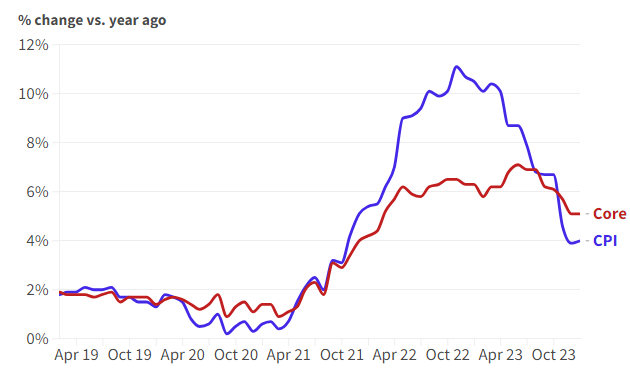
UK inflation from April 2019 to December 2023
UK inflation from April 2019 to December 2023
Unprepared for both the start and the end of the pandemic
Increases in the cost of energy and food costs, started by pandemic lockdowns ending exasperated further by Russia’s invasion of Ukraine and more recently the conflict in Israel have put household finances under extreme pressure.
The UK and other countries were woefully underprepared for all of these events as they ‘began’ and at the ‘end’. We did not prepare to come out of them – there was no exit plan!
Markets and traders are still expecting BoE to cut its base rate in 2024 due to the fast-falling inflation rate. It peaked at 11.1% in October 2022 – and now sits at 4%.
The question is: will the economic recovery be good enough to allow the Bank of England to start cutting rates?
The UK interest rate currently sits at 5.25%.
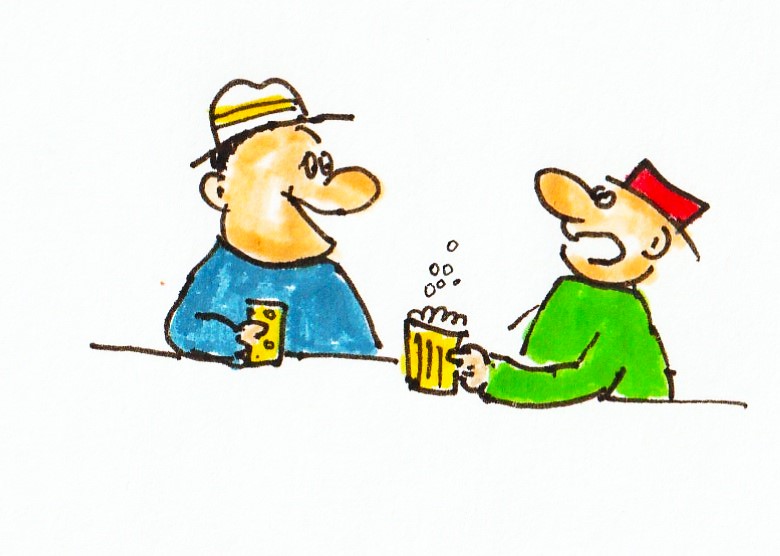
‘What’s inflation?’ ‘Dunno, but my beer’s gone up!’
A report published Tuesday by the Kick Big Polluters Out coalition found that at least 2,456 fossil fuel lobbyists registered to attend the two-week long summit. That’s more than almost every other country delegation, except for Brazil (3,081) and COP28 host the United Arab Emirates (4,409), the report said.
Supporters say the number of fossil fuel lobbyists attending the talks is ‘beyond justification’ and demonstrates that polluting industries are seeking to advance a fossil fuel agenda.
Others however say that Big Oil’s participation at COP28 should be welcomed.
Unabated
There’s also a debate about whether an agreement should centre on abated fossil fuels, which are trapped and stocked with carbon capture and storage technologies. Unabatedfossil fuels are largely understood to be produced and used without substantial reductions in the amount of emitted greenhouse gases.
Delegates at the beginning of COP28 sealed a landmark deal to help the world’s most vulnerable countries pay for the impacts of climate disasters. To me, that suggests it is okay to carry on with business as usual because the industry can throw money at the poorer people suffering at the brunt end of climate effects.
Announcements at COP28 have sought to help decarbonize the energy sector, with nearly 120 governments pledging to triple renewable energy capacity by 2030, recent news reports show.
Whichever way we care to spin this, we are nowhere near ready to switch to renewables.
United Nations’ biggest and most important annual climate conference to-date, gets underway as the United Arab Emirates on Wednesday 29th November 2023 defended what it described as ‘fake news’ designed to undermine its work as the host of the COP28 climate conference.
The UAE organizers slammed a number of ‘fake press‘ releases in the name of COP28. Among them, a letter claiming COP28 president-designate Sultan Al-Jaber was due to step down from his position as chief executive of state oil giant the Abu Dhabi National Oil Co. (ADNOC).
Al-Jaber’s appointment as COP28 president-designate had provoked a furious backlash from climate activists when it was first announced. He reportedly pushed back over reports earlier in the week that said the UAE planned to use its role as the host of the climate summit as a platform to lobby foreign government officials for oil and gas deals.
Even so, the COP28 summit, which starts on Thursday 30th November 2023 and is scheduled to run through to 12th December 2023. I will provide a critical forum for government officials, business leaders and campaign groups to accelerate action to tackle the climate crisis. Let’s hope there is no further rolling back on previous pledges such as the UK’s government announcement to increase the number of North Sea oil and gas exploration and recovery licences.
OPEC
Meanwhile, also on Thursday 30th, the influential Organization of Petroleum Exporting Countries (OPEC) and its allies will convene to decide the next production policy steps in a delayed meeting caused by the conflict in the Middle East.
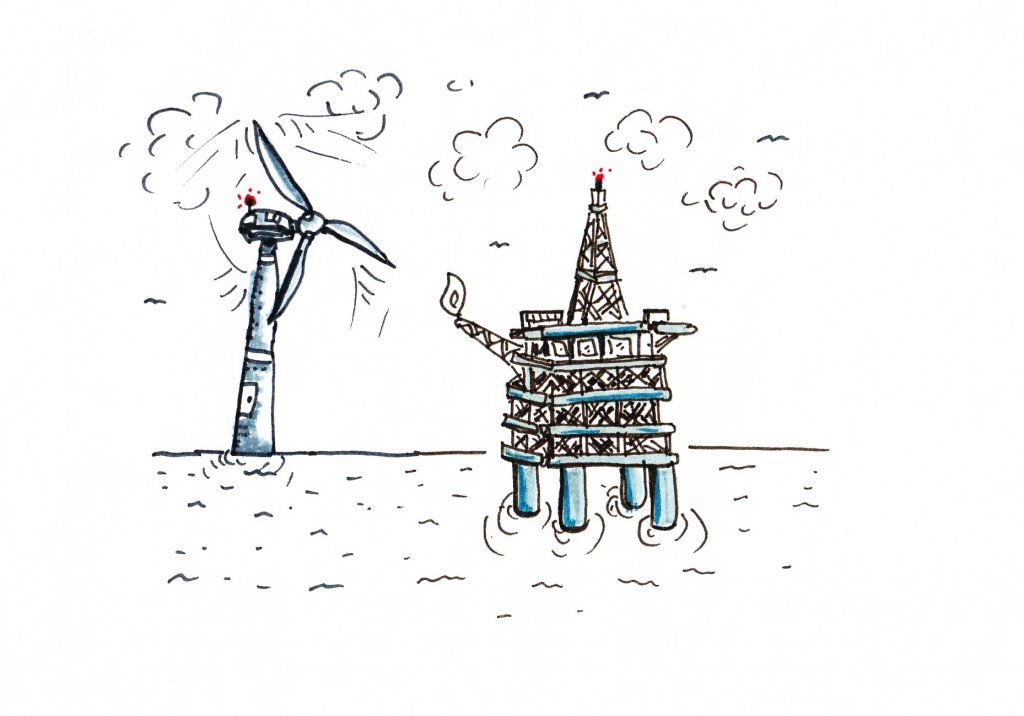
Art illustration of renewable and fossil fuel energy – Heat is on at COP28
UAE, one of the world’s major oil producers and a key OPEC+ component, is keen to burnish its reputation as a champion of the transition to green energy.
Tangible climate action though is the best way to push back all scepticism and cynicism. Now is as good as any time to start.
Production cuts will come – some analysts predict $100 a barrel.
The world is not ready to relinquish its thirst for oil and gas… just yet. It is still hungry for traditional power – and renewables is not ready to take over.
Will these projects alter the world weather pattern?
According to a study, installing large-scale wind and solar farms in the Sahara desert could increase rainfall and vegetation in the region. The researchers simulated the effects of covering 20% of the Sahara with solar panels and wind turbines and found that it would trigger a feedback loop of more monsoon rain and more plant growth.
This could have benefits for the local environment and the global climate, as well as providing a huge amount of clean energy for the world.
Could it also create a detrimental effect to the ecosystem too?
10.5 GW solar energy
The desert project would produce 10.5 GW of solar power and 3 GW of wind power. However, there are also challenges and uncertainties involved, such as the cost, feasibility, and environmental impacts of such a massive undertaking.
The Sahara is a desert on the African continent. With an area of 9,200,000 square kilometres, it is the largest hot desert in the world and the third-largest desert overall, smaller only than the deserts of Antarctica and the northern Arctic.
Daily global electricity energy demand
The global electricity energy demand is the amount of electricity that the world needs in a given day. It can be calculated by multiplying the average global electricity demand in GW by 24 hours. According to the International Energy Agency (IEA), the average global electricity demand in 2020 was about 3 TW or 3 000 GW. This means that the global electricity energy demand in 2020 was about 72 000 GWh or 72 TWh per day. However, this is an average value, and the actual demand may vary depending on the season, time of day, weather, and other factors.
The researchers simulated the effects of covering 20% of the Sahara with solar panels and wind turbines and found that it would trigger a feedback loop of more monsoon rain and more plant growth.
In the Announced Pledges Scenario, renewables in electricity generation rise from 28% in 2021 to about 50% by 2030 and 80% by 2050.
The Rosebank oil and gas field is a controversial project that has been approved by the UK government despite the concerns of environmental activists and some politicians.
It is located about 80 miles west of Shetland in the North Sea and is estimated to contain 500 million barrels of oil. It is operated by Equinor, a Norwegian state-owned energy company, with its partners Ithaca Energy and Suncor Energy. The development of the field is expected to cost £6 billion and create 2,000 jobs.
Carbon conflict
It is also expected to produce 200 million tonnes of carbon dioxide over its lifetime, which is equivalent to the annual emissions of 40 million cars.
The approval of the Rosebank field has sparked a debate over the role of fossil fuels in the UK’s energy transition and its commitment to net zero emissions by 2050. Critics argue that the project is incompatible with the UK’s climate goals and that it will undermine its credibility. They also claim that most of the cost of the development will be borne by the taxpayers through tax reliefs and subsidies.
UK not yet ready to turn off the oil and gas
However, some supporters of the project contend that it will provide a reliable source of energy and revenue for the UK, as well as support thousands of jobs in the oil and gas sector. They also point out that the UK still relies on fossil fuels for most of its energy needs and that it will need to import more oil and gas from abroad if it does not develop its own resources.
‘Didn’t expect to see you here again, thought you’d retired’. ‘Yeah, me too!’
They argue that the Rosebank field will be developed with high environmental standards and that it will contribute to the UK’s transition to a low-carbon economy by investing in renewable energy and carbon capture technologies.
Contentious
The Rosebank oil and gas field is a complex and contentious issue that reflects the challenges and trade-offs involved in balancing economic growth, energy security, and environmental protection. It is likely to remain a topic of heated discussion.
The field is expected to start producing oil from 2026
If drilling starts on time, Rosebank could account for 8% of the UK’s total oil production between 2026 and 2030.
Roughly 245 million barrels will be produced in the first five years of drilling, with the remaining being extracted between 2032 and 2051.
Though oil is the main product, the site will also produce gas.
About 1,600 jobs are expected to be created during the peak of construction. Long term, the operation will create 450 jobs.
Will it mean lower energy bills in the UK?
No! Oil and gas from UK waters is not necessarily used here – it is sold to the highest bidder on global markets.
What Rosebank produces will be sold at world market prices, so the project will not cut energy prices for UK consumers.
The Norwegian state oil company Equinor – which is the majority owner of Rosebank – has confirmed this.
Oil also tends to be sent around the world to be refined – the UK does not have the capacity to refine all its own oil-based products.
The UK government has announced a plan to issue over 100 new oil and gas licences in the North Sea, as part of its drive to make Britain more energy independent and reduce reliance on imports. The Prime Minister said that even when the UK reaches net zero by 2050, a quarter of its energy needs will still come from oil and gas.
Carbon Capture
The new licences will be subject to a climate compatibility test and will aim to unlock carbon capture and storage and hydrogen opportunities in the region. The government has also approved two new carbon capture projects in Scotland and the Humber, which are expected to be delivered by 2030.
Criticised
The move has been criticised by environmental groups, who argue that opening up new fossil fuel projects is incompatible with the UK’s climate goals and will undermine its leadership ahead of the COP26 summit in Glasgow.
They also question the claim that domestic production is cleaner than imports, as the UK’s oil and gas sector is still responsible for significant emissions.
The government has said that it will support the transition of the North Sea industry to low-carbon technologies and protect more than 200,000 jobs in the sector. The UK government has also pledged to invest in renewable energy sources, such as offshore wind, to diversify the UK’s energy mix.