Nvidia Draws a Line Under Its Arm Ambitions with Full Share Sale

Nvidia sells ARM stock

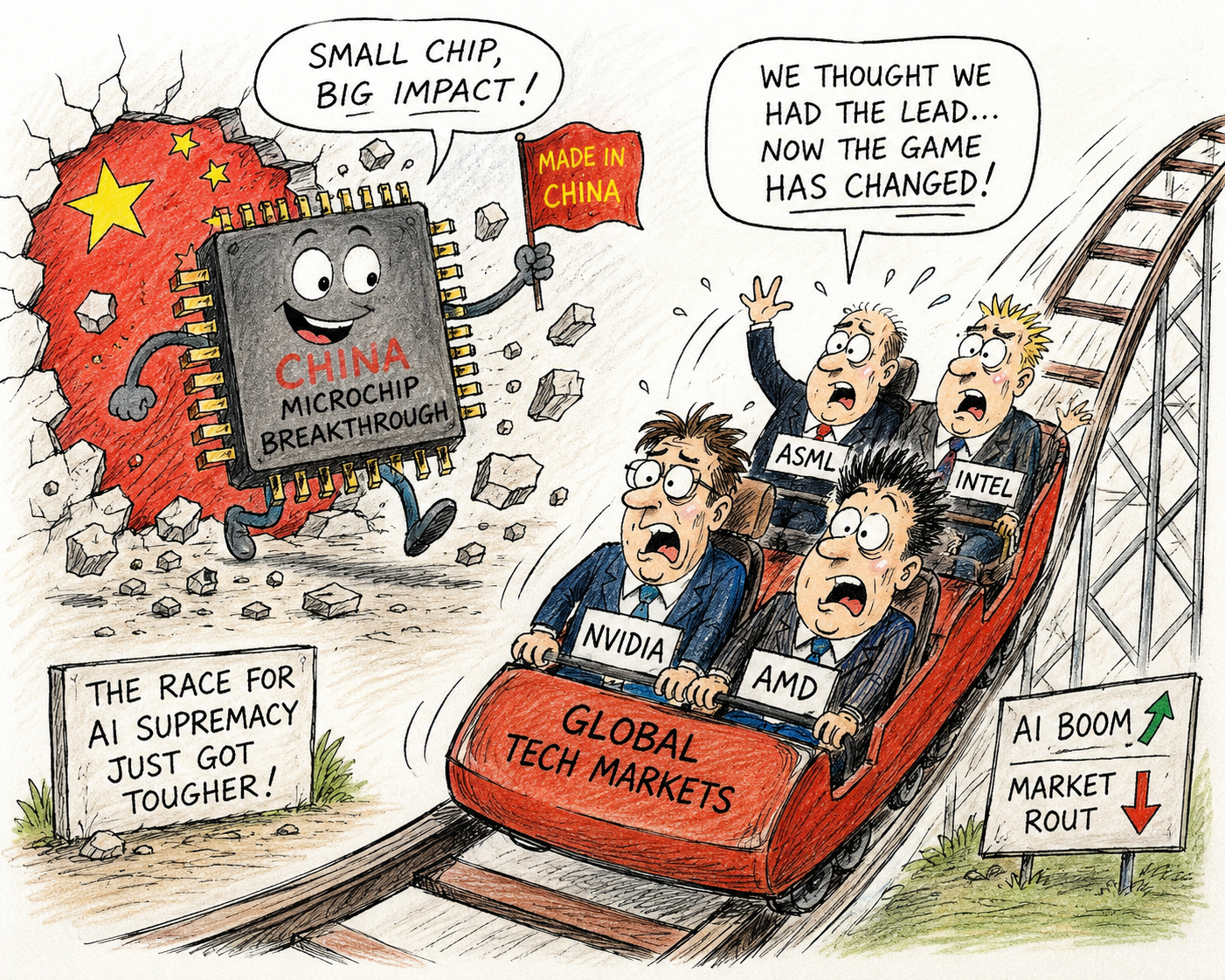
Nvidia has formally severed its financial ties with Arm Holdings, selling the final tranche of its shares and closing the book on one of the semiconductor industry’s most ambitious — and ultimately unsuccessful — takeover attempts.

Regulatory filings reportedly show the chipmaker disposed of roughly 1.1 million Arm shares during the fourth quarter, a holding valued at around $140 million based on Arm’s recent market price.

Sale of entire ARM stake

The move brings Nvidia’s ownership of the British chip‑architecture specialist to zero, marking a symbolic end to a saga that began in 2020 when Nvidia launched a bold $40 billion bid to acquire Arm.

That deal, which would have reshaped the global semiconductor landscape, collapsed under intense regulatory scrutiny and resistance from major industry players concerned about competition and neutrality.

Despite the divestment, the relationship between the two companies is far from over. Nvidia remains a major licensee of Arm’s instruction‑set technology, which underpins its current and next‑generation CPU designs.

Strategic move

Analysts note that the sale appears to be strategic housekeeping rather than a shift in technological direction, especially given Nvidia’s rapid expansion across data‑centre, AI, and edge‑computing markets.

Arm’s shares initially wobbled on news of the disposal but quickly stabilised, even edging higher as investors interpreted Nvidia’s exit as a clearing of legacy baggage rather than a signal of weakening confidence in Arm’s long‑term prospects.

The company, now primarily owned by SoftBank, continues to push ahead with its growth strategy following its public listing.

For Nvidia, the sale represents a clean break from a failed acquisition that once promised to redefine the industry.

For Arm, it marks another step in its evolution as an independent powerhouse at the centre of global chip design. The strategic paths of both companies however, remain intertwined

Alibaba’s Qwen 3.5 Marks a Strategic Shift Toward AI Agents

Qwen 3.5 AI agent

Alibaba has unveiled Qwen 3.5, its latest large language model series, signalling a decisive shift in China’s increasingly competitive AI landscape.

Released on the eve of the Chinese New Year, the new model arrives with both open‑weight and hosted versions, giving developers the option to run the system on their own infrastructure or through Alibaba’s cloud platform.

The company emphasises that Qwen 3.5 delivers improved performance and lower operating costs compared with earlier iterations, while introducing ‘native multimodal capabilities’ that allow it to process text, images, and video within a single system.

Ability

What sets Qwen 3.5 apart is its focus on agentic behaviour — the ability for AI systems to take actions, complete multi‑step tasks, and operate with minimal human supervision.

This trend has accelerated globally following recent releases from Anthropic and other U.S. based developers, prompting Chinese firms to respond rapidly.

Alibaba says Qwen 3.5 is compatible with popular open‑source agent frameworks such as OpenClaw, which has surged in adoption among developers seeking more autonomous AI tools.

Capable

The open‑weight version features 397 billion parameters, fewer than Alibaba’s previous flagship model, yet the company claims significant gains in reasoning and benchmark performance.

It also supports 201 languages and dialects — a notable expansion that reflects Alibaba’s ambition to position Qwen as a global‑ready platform rather than a purely domestic competitor.

With rivals like ByteDance and Zhipu AI launching their own upgraded models, Qwen 3.5 underscores how China’s AI race is evolving from chatbot development to full‑scale autonomous agents — a shift that could reshape software markets and business models worldwide.

China’s AI Tech Surge Puts Pressure on America’s AI Dominance

Robots line up for AI battle

For much of the modern AI era, the United States has held a clear advantage in frontier research, compute infrastructure, and commercial deployment.

Silicon Valley’s combination of elite talent, abundant capital, and world‑class semiconductor design created an environment where breakthroughs could scale at extraordinary speed.

Challenge

That dominance, however, is no longer uncontested. China’s accelerating push into advanced AI is reshaping the global technological landscape and posing the most credible challenge yet to America’s leadership.

China’s strategy is not built on a single breakthrough but on coordinated national effort. Beijing has spent years aligning universities, state‑backed funds, and private‑sector giants around a shared objective: achieving self‑sufficiency in critical technologies and becoming a global AI powerhouse.

Competitive

Companies such as Huawei, Baidu, Alibaba and Tencent are now producing increasingly competitive large models, while domestic chipmakers are narrowing the performance gap with U.S. suppliers despite export controls.

Crucially, China’s AI ecosystem benefits from scale and cost advantages that the U.S. cannot easily replicate.

Massive data availability, lower energy costs, and vertically integrated supply chains allow Chinese firms to train and deploy models at prices that appeal to developing economies.

For many countries, especially those already reliant on Chinese infrastructure, adopting a Chinese AI stack is becoming a pragmatic economic choice rather than a geopolitical statement.

Investment returns?

This shift is occurring just as U.S. tech giants embark on unprecedented spending cycles. Hyperscalers are pouring hundreds of billions of dollars into data centres, specialised chips, and model training.

The U.S. and its massive BIG Tech Spending Spree – Feeding the AI Habit

While this investment underscores America’s determination to stay ahead, it also raises questions about sustainability.

Investors are increasingly asking whether such vast capital expenditure can deliver long‑term returns in a world where China is offering cheaper, rapidly improving alternatives.

The emerging reality is not one of immediate American decline but of a genuinely multipolar AI landscape. The U.S. still leads in foundational research, top‑tier talent, and cutting‑edge semiconductor design.

Yet China’s rise represents a powerful economy that has mounted a serious challenge to the technological frontier.

The global AI race is no longer defined by a single centre of gravity. Instead, two competing ecosystems — one market‑driven, one reportedly state‑directed — are shaping the future of intelligent technology.

The outcome will influence not only economic power but the digital architecture of much of the world.

Can Hyperscalers Really Justify Their Colossal AI Capex?

Hyperscalers AI investment

The world’s largest cloud providers are engaged in one of the most expensive technological races in history.

Amazon, Microsoft, Meta and Alphabet are collectively on track to spend as much as $700 billion on AI‑related capital expenditure this year — a figure that rivals the GDP of mid‑sized nations and has understandably rattled investors.

The question now dominating markets is simple: can hyperscalers justify this level of spending, and should analysts remain so bullish on their stocks?

A Binary Bet on the Future of AI

The scale of investment has shifted the AI build‑out from a strategic growth initiative to what some analysts describe as a binary corporate bet. As some analysts suggest, the leap in capex — up roughly 60% year‑on‑year — means the payoff must be both rapid and substantial.

If monetisation fails to keep pace, the consequences could be of severe concern.

This is compounded by the fact that hyperscalers are now consuming nearly all of their operating cash flow to fund AI infrastructure, compared with a decade‑long average of around 40%. That shift alone explains the recent market jitters.

Why Analysts Remain Upbeat

Despite the turbulence, many analysts still argue the long‑term fundamentals remain intact. One reason is that hyperscalers are pre‑selling data‑centre capacity before it is even built, effectively locking in revenue ahead of deployment.

That dynamic supports the bullish view that AI demand is not only real but accelerating.

There is also a belief that as AI tools become embedded across consumer and enterprise workflows, willingness to pay will rise sharply.

If that scenario plays out, today’s eye‑watering capex could look prescient rather than reckless.

The Real Risk: Timelines

The challenge is timing. Much of the infrastructure being deployed — from chips to data‑centre hardware — has a useful life of just three to five years.

That gives hyperscalers a narrow window to recoup investment before the next upgrade cycle hits.

Without clearer monetisation strategies and firmer payback timelines, investor anxiety is likely to persist.

AI capex justification?

Hyperscalers can justify their AI capex — but only if demand scales as quickly as they expect and monetisation becomes more transparent.

Analysts may be right to stay bullish, but the margin for error is shrinking. In the coming quarters, clarity will matter as much as capital.

The New Wave of AI Anxiety: Why Every Sector Suddenly Feels Exposed

AI related job adjustment

A curious shift has taken place over the past year. The fear of AI ‘taking over’ is no longer confined to software engineers, coders, or the legal and financial professions.

It has spilled into transport logistics, estate agency, recruitment, customer service, and even the once‑untouchable world of creative work.

Anxiety spreads

The anxiety is spreading horizontally across the economy rather than vertically within a single industry — and that tells us something important about where we are in the technological cycle.

At the heart of this unease is a simple realisation: AI is no longer a specialised tool. It is becoming a general‑purpose capability, much like electricity or the internet.

When a technology can be applied to almost any workflow, the boundaries between ‘safe’ and ‘at risk’ jobs dissolve.

Estate agents see AI systems that can generate listings, negotiate pricing models, and automate client follow‑ups. Logistics managers watch algorithms optimise routes, staffing, and inventory with a precision no human team can match.

Even white‑collar professionals, once insulated by complexity and regulation, now face AI systems capable of drafting contracts, analysing case law, or producing financial models in seconds.

This broadening of impact is what’s fuelling the current wave of concern. It’s not that AI is replacing everyone — it’s that it could plausibly reshape the value chain in every sector.

Axis shift

For the stock market, this shift has created a two‑speed economy. Companies building AI infrastructure — chips, cloud platforms, foundation models — are being rewarded with valuations that assume long‑term dominance.

Meanwhile, firms whose business models rely on labour‑intensive processes are being quietly repriced. Investors are asking a new question: Which companies can integrate AI fast enough to defend their margins? Those that can’t risk being treated like legacy utilities.

But the story isn’t simply about winners and losers. The diffusion of AI across industries also creates a multiplier effect.

Productivity gains in logistics lower costs for retailers; smarter estate agency tools accelerate housing transactions; automated legal drafting reduces friction for start‑ups. Each improvement compounds the next.

AI taking over?

The fear, then, is partly a misunderstanding. AI isn’t ‘taking over’ — it’s infiltrating. It is dissolving inefficiencies, redrawing job descriptions, and forcing companies to rethink what they actually do.

The stock market has already priced in the first wave of this transformation. The second wave — where every sector becomes an AI‑enabled sector — is only just beginning.

Alphabet’s 100‑Year Bond: Ambition, Appetite and Anxiety in the AI Debt Boom

Alphabet's 100-year Sterling Bond for pensions

Alphabet’s decision to issue a 100-year sterling bond has captured the attention of global markets, not only because of its rarity but also because of what it signals about the escalating competition in artificial intelligence.

100 year sterling bond

A century-long bond denominated in pounds is an extraordinary financing move, particularly for a technology company.

It reflects both investor confidence in Alphabet’s long-term prospects and the scale of capital now required to compete in the AI era.

On the surface, the benefits are clear. Locking in funding for 100 years at today’s rates provides financial certainty. Alphabet can secure vast sums of capital without facing refinancing risk for generations.

In an industry defined by rapid change and enormous upfront costs — from data centres and semiconductor procurement to specialised AI chips and energy infrastructure — patient capital is invaluable.

Sterling

The sterling denomination also diversifies Alphabet’s funding base beyond U.S. dollar markets, potentially appealing to European institutional investors seeking stable, long-duration assets.

The bond may also be interpreted as a strategic signal. By committing to long-term financing, Alphabet demonstrates confidence in its ability to generate cash flows well into the next century.

It reinforces the company’s image as a durable, infrastructure-like enterprise rather than a volatile technology stock.

For investors such as pension funds and insurers, a 100-year instrument from a highly rated issuer can offer predictable returns in a world where long-term yield is scarce.

Cyclical

However, the move is not without shortcomings. Committing to fixed debt obligations over such an extended horizon reduces flexibility. While Alphabet currently enjoys strong balance sheet metrics, the technology sector is notoriously cyclical.

A century is an eternity in innovation terms. Business models, regulatory frameworks and geopolitical dynamics may shift dramatically.

Future generations of management will inherit the obligation, regardless of whether today’s AI investments deliver the expected returns.

More broadly, the bond feeds concern about a debt-fuelled AI arms race. As technology giants pour tens of billions into AI research, chip design and cloud infrastructure, borrowing is becoming an increasingly prominent tool.

If rivals respond with similar long-dated issuance, the sector’s leverage could rise meaningfully. In a downturn or if AI monetisation disappoints; heavy debt burdens could amplify financial strain.

Ultimately, Alphabet’s 100-year sterling bond embodies both ambition and risk. It underlines the immense capital demands of the AI revolution while raising questions about whether today’s competitive fervour is encouraging companies to stretch their balance sheets too far in pursuit of technological dominance.

Systemic anxiety

The deeper anxiety is systemic. With Oracle, Amazon, Microsoft and others also scaling up borrowing, total tech‑sector issuance is projected to hit $3 trillion over five years.

Some analysts warn this resembles a late‑cycle credit boom, where investors chase thematic excitement rather than sober fundamentals.

Alphabet’s century bond may be a masterstroke of timing — or a marker of excess.

Either way, it crystallises the tension at the heart of the AI revolution: extraordinary promise, financed by extraordinary debt.

Why a Sterling Bond?

Alphabet issued its 100‑year sterling bond to tap deep UK demand for ultra‑long‑dated assets, especially from pension funds seeking to match long‑term liabilities.

The sterling market offered strong appetite, with orders reportedly reaching nearly ten times the £1 billion on offer.

It also formed part of Alphabet’s broader multi‑currency fundraising drive to finance massive AI‑related capital spending, including data‑centre expansion.

Issuing in sterling diversified its investor base, reduced reliance on U.S. dollar markets, and signalled confidence in its long‑term stability as a quasi‑infrastructure‑scale business.

It’s all debt; however you look at it!

Alibaba Steps Into ‘Physical AI’ With New Robotics Model

AI robotics model

China’s Alibaba has taken a decisive step into the fast‑emerging field of ‘physical AI’ with the launch of a new foundation model designed specifically to power real‑world robots.

The model, known as RynnBrain*, marks one of the company’s most ambitious moves since restructuring its cloud and research divisions, and signals China’s intention to compete directly with the United States in embodied artificial intelligence.

Unlike traditional large language models, which operate entirely in digital environments, RynnBrain is built to interpret and act within the physical world.

It combines vision, language and spatial reasoning, enabling robots to recognise objects, understand their surroundings and plan multi‑step actions.

DAMO Acadamy

In demonstrations released by Alibaba’s DAMO Academy, the model guided a robot through tasks such as identifying fruit and sorting it into containers — a deceptively simple exercise that requires sophisticated perception and motor control.

The company describes RynnBrain as a ‘general‑purpose embodied intelligence model’, capable of supporting a wide range of robotic applications, from warehouse automation to domestic assistance.

Crucially, Alibaba has opted to open‑source the model, a strategic decision that invites global developers to build on its capabilities and accelerates the creation of a broader ecosystem around Chinese robotics research.

Physical AI

The timing is significant. Over the past year, major technology firms including Google, Nvidia and OpenAI have begun to emphasise physical AI as the next frontier of artificial intelligence.

The shift reflects a growing belief that the most transformative applications of AI will not be confined to screens, but will instead involve machines that can navigate, manipulate and collaborate within human environments.

Alibaba’s entry adds competitive pressure to a field already heating up. While U.S. companies currently dominate embodied AI research, China has made robotics a national priority, viewing it as a strategic industry with implications for manufacturing, logistics and economic resilience.

RynnBrain

By releasing RynnBrain openly, Alibaba positions itself as both a contributor to global research and a catalyst for domestic innovation.

The launch also highlights a broader trend: the convergence of AI models with physical systems. As robots become more capable and more affordable, the line between software intelligence and mechanical action is beginning to blur.

RynnBrain is an early example of this shift — a model designed not just to understand language or images, but to translate that understanding into purposeful action.

Whether Alibaba’s approach will reshape the global robotics landscape remains to be seen, but the message is clear: the race to build the brains of future machines is accelerating, and China intends to be at the forefront.

Other Major Players in Physical AI

Physical AI — AI that can perceive, reason and act in the real world — has become the next strategic battleground for global tech giants. Alibaba is far from alone.

Several companies are racing to build the ‘general‑purpose robot brain’.

Below are the most significant players.

1. Google DeepMind

Focus: Embodied AI, robotics‑ready multimodal model’s Key systems:

RT‑2 (Robotic Transformer)

Gemini‑based robotics extensions

Google has been working on robotics for over a decade. RT‑2 was one of the first models to show that a language model could directly control a robot arm, interpret objects, and perform multi‑step tasks.

DeepMind is now integrating robotics capabilities into the Gemini family.

2. OpenAI

Focus: General‑purpose embodied intelligence Key systems:

OpenAI Robotics (revived internally)

Vision‑language‑action research

OpenAI paused robotics in 2020 but has quietly restarted the programme. Their models are being trained to understand video, track objects and perform physical tasks. They are also working with hardware partners to test embodied versions of their models.

3. Nvidia

Focus: The infrastructure layer for physical AI Key systems:

  • Nvidia Isaac (robotics platform)
  • Cosmos models
  • Omniverse simulation

Nvidia is not building consumer robots; it is building the entire ecosystem for everyone else. Its simulation tools, training environments and robotics‑ready AI models are becoming the backbone of the industry.

4. Tesla

Focus: Humanoid robotics Key system:

  • Optimus (Tesla Bot)

Tesla is training its robot using the same AI stack as its autonomous driving system. The company claims Optimus will eventually perform factory and household tasks.

It is one of the most visible attempts to build a general‑purpose humanoid robot.

5. Amazon

Focus: Warehouse automation and domestic robotics Key systems:

  • Proteus (autonomous warehouse robot)
  • Astro (home robot)

Amazon is integrating multimodal AI into its logistics robots and experimenting with home assistants that can navigate physical spaces.

6. Figure AI

Focus: General‑purpose humanoid robots’ Key system:

  • Figure 01

Backed by OpenAI, Microsoft and Nvidia, Figure is developing a humanoid robot designed to perform everyday tasks.

Their recent demos show robots manipulating objects and responding to natural language instructions.

7. Boston Dynamics

In partnership with Google’s DeepMind Boston Dynamics is also building a ‘foundation model intelligence’ robot brain.

The Big Picture

Alibaba is entering a field dominated by U.S. companies, but the global race is wide open. Physical AI is becoming the next strategic platform — the equivalent of smartphones in the 2000s or cloud computing in the 2010s.

*RynnBrain explained

RynnBrain is Alibaba’s open‑source ‘physical AI‘ framework designed to give robots far more capable real‑world intelligence, enabling them to plan, navigate, and manipulate objects across dynamic environments such as factories and homes.

Developed by the company’s DAMO Academy, it competes directly with Google’s Gemini Robotics and Nvidia’s Cosmos‑Reason models, with Alibaba claiming stronger benchmark performance.

The system is released openly on platforms like GitHub and Hugging Face, offered in configurations from lightweight 2‑billion‑parameter models to advanced mixture‑of‑experts variants, and includes specialised versions—Plan, Nav, and CoP—targeting manipulation, navigation, and spatial reasoning respectively.

Its launch signals China’s ambition to lead global robotics and embodied AI development.

Anthropic Pushes the Frontier Again with Claude Opus 4.6

Claude Opus 4.5

Anthropic has unveiled Claude Opus 4.6, its most capable AI model to date, marking a significant leap in long‑context reasoning, autonomous agent workflows, and enterprise‑grade coding performance.

The release arrives during a turbulent moment for the global software sector, with markets reacting sharply to fears that Anthropic’s accelerating capabilities could reshape entire categories of knowledge work.

At the heart of Opus 4.6 is a 1‑million‑token context window, a first for Anthropic’s Opus line and a direct response to long‑standing limitations around ‘context rot’ in extended tasks.

Benchmarks

Early benchmarks show a dramatic improvement in maintaining accuracy across vast documents and complex, multi‑step workflows.

This expanded capacity enables the model to analyse large codebases, regulatory filings, or research archives in a single pass—an ability already drawing interest from enterprise users.

Perhaps the most striking development is Anthropic’s progress in agentic systems. Claude Code and the company’s Cowork framework now support coordinated ‘agent teams’, allowing multiple Claude instances to collaborate on sophisticated engineering challenges.

In one internal experiment, a team of 16 Claude agents built a complete Rust‑based C compiler capable of compiling the Linux kernel—producing nearly 100,000 lines of code with minimal human intervention.

Agentic shift

This agentic shift is reshaping expectations around AI‑driven software development. Anthropic positions Opus 4.6 not merely as a tool but as a foundation for autonomous, multi‑agent workflows that can plan, execute, and refine complex tasks over extended periods.

The company highlights improvements in reliability, coding precision, and long‑running task stability as core differentiators.

With enterprise adoption already representing the majority of Anthropic’s business, Opus 4.6 signals a decisive step toward AI systems that operate as high‑level collaborators rather than assistants.

As markets digest the implications, one thing is clear: Anthropic is accelerating the transition from ‘AI that helps’ to AI that works alongside you—and sometimes, entirely on its own.

Legal profession

Anthropic is pushing aggressively into the legal domain, positioning Claude as a high‑precision research and drafting partner for firms handling complex regulatory workloads.

The latest models emphasise long‑context accuracy, allowing lawyers to ingest entire case bundles, contracts, or disclosure sets without losing coherence.

Anthropic has also expanded constitutional AI safeguards, aiming to reduce hallucinations in high‑stakes legal reasoning.

Early adopters report gains in due‑diligence speed, contract comparison, and regulatory interpretation, particularly in financial services and data‑protection work.

While not a substitute for legal judgement, Claude is rapidly becoming a force multiplier for teams managing heavy document‑driven tasks.

Nintendo Switch: The Highly Successful Hybrid Console That Rewrote the Company’s Future

Nintendo Switch - super successful!

Nearly a decade after its launch, the Nintendo Switch has secured its place as the company’s most successful console, surpassing 155 million units sold and overtaking the long‑standing record held by the Nintendo DS.

It is a milestone that reflects not only commercial strength but a dramatic turnaround in Nintendo’s modern history.

Arrival of the Switch

When the Switch arrived in 2017, Nintendo was emerging from the disappointment of the Wii U, a console hampered by confused messaging and fierce competition. Investor confidence had waned, and the company’s valuation had slipped.

The Switch needed to be more than a hit — it needed to redefine Nintendo’s trajectory. It did exactly that.

The hybrid design proved transformative. By merging handheld and home console experiences into a single device, Nintendo unified two previously separate audiences and simplified its hardware strategy.

Success

Analysts have long argued that this consolidation was central to the Switch’s runaway success, allowing Nintendo to focus its creative and commercial energy on one platform rather than splitting resources across two.

Software, as ever, played a decisive role. First‑party titles such as Mario Kart 8 Deluxe, Animal Crossing: New Horizons, and a steady stream of Mario, Zelda and Pokémon releases kept the console culturally relevant.

Movie

The pandemic years accelerated demand further, while the 2023 Super Mario Bros. film reignited interest in Nintendo’s characters and, by extension, the Switch itself.

Nintendo’s broader strategy — expanding its intellectual property into theme parks, films, merchandise and collaborations — created a feedback loop that continually pushed new audiences toward the console.

With the Switch 2 already breaking internal sales records, Nintendo appears intent on repeating the formula.

But the original Switch remains the system that rescued, redefined and ultimately revitalised one of gaming’s most iconic companies.

Dow Jones Blasts Past 50,000 in Historic Milestone

Dow blasts past 50000 for the first time in history

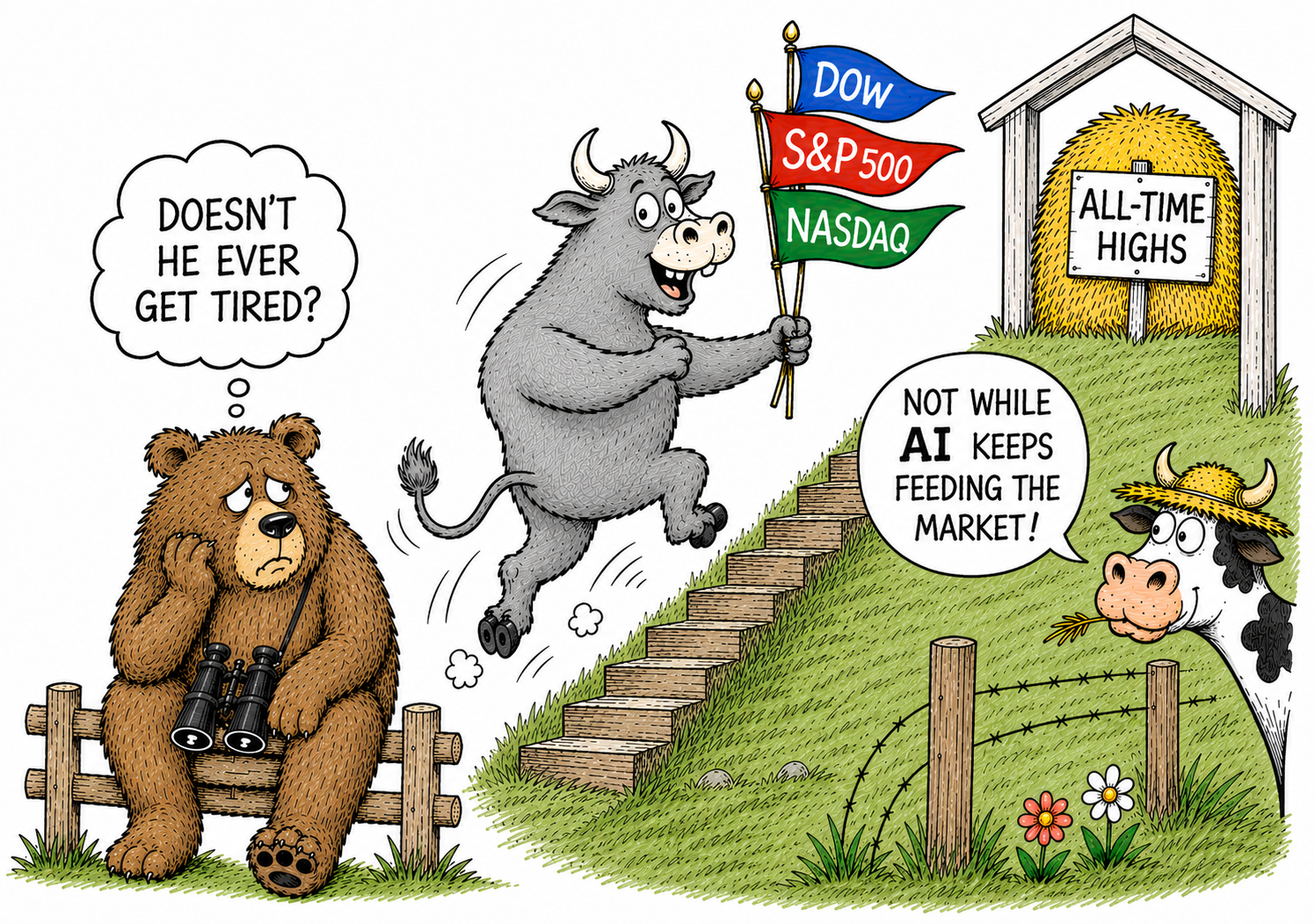
The Dow Jones Industrial Average has surged beyond the 50,000 mark for the first time in its 130‑year history, capping a dramatic rebound after a turbulent week for global markets.

The blue‑chip index leapt more than 1,200 points on Friday 6th February 2026 to close at 50,115.

DJIA one-year chart

This climb was fuelled by renewed investor confidence and a sharp recovery in technology and cyclical stocks.

Friday’s rally followed several days of heavy selling across the tech sector, but optimism returned as chipmakers and industrial giants led a broad‑based climb.

Analysts say the move signals both the resilience of the current bull market and investors’ willingness to ‘buy the dip’ despite ongoing volatility.

Political reaction was swift, with President Donald Trump celebrating the milestone as a symbol of American economic strength.

Psychological 50,0000 barrier

Market commentators, meanwhile, emphasised the psychological significance of the 50,000 threshold, noting that the Dow has added 10,000 points in record time.

For traders on the floor of the New York Stock Exchange, the moment was marked by cheers, flashing screens, and a palpable sense of relief.

Whether the momentum continues remains to be seen, but for now, Wall Street is savouring a landmark moment decades in the making.

Crypto Crash 2026!

Crypto chaos!

The crypto markets have entered one of their most turbulent phases since the 2022 downturn, and the shockwaves are rippling far beyond digital‑asset circles.

What’s unfolding right now is not just another correction but a full‑scale confidence crisis, fuelled by regulatory pressure, liquidity stress, and a sharp reversal in investor sentiment.

Collapse

At the centre of the storm is the sudden collapse in major token prices. Bitcoin has plunged after months of stagnation, breaking through key psychological floors and triggering a cascade of automated sell‑offs.

Ethereum has followed suit, dragged down by concerns over declining network activity and the unwinding of leveraged positions across decentralised finance platforms.

Altcoins, as usual, have suffered the most, with many losing more than half their value in a matter of days.

Regulators have added fuel to the fire. Several governments have announced new enforcement actions targeting exchanges, stablecoin issuers, and offshore trading platforms.

Jittery

Markets were already jittery, but the latest wave of investigations has amplified fears that the era of lightly regulated crypto speculation is coming to an abrupt end.

For institutional investors—who had cautiously re‑entered the market over the past two years—this has been enough to send them back to the sidelines.

Liquidity

Liquidity is evaporating as a result. Major exchanges are reporting thinner order books, wider spreads, and surging withdrawal volumes.

Some platforms have temporarily halted certain services to stabilise operations, which has only deepened public anxiety.

Retail traders, many of whom returned during the 2025 bull run, are now facing steep losses and scrambling to exit positions.

Yet amid the chaos, a familiar pattern is emerging. Developers continue to build, long‑term holders remain unfazed, and venture capital is quietly positioning for the next cycle.

Crypto has weathered dramatic crashes before, and each downturn has ultimately reshaped the industry rather than destroyed it.

The question now is not whether the sector will survive, but what form it will take when the dust finally settles.

China’s Tech Rout: The AI Effect Moves to Centre Stage

Tech and AI stocks hit bear territory on the Hong Kong Hang Seng

China’s Hong Kong‑listed tech stocks have slipped decisively into a bear market, with the Hang Seng Tech Index now more than 20% below its October 2025 peak.

The downturn is being driven by a potent mix of tax concerns and global anxiety over the disruptive pace of artificial intelligence.

China’s Hong Kong‑listed technology sector has entered a sharp reversal after last year’s rally, with the Hang Seng Tech Index falling and officially breaching bear‑market territory.

The decline reflects a broader shift in sentiment as investors reassess the risks facing the sector.

AI Disruption and Global Risk Aversion

While tax worries have been widely cited, the global ‘AI effect’ is proving equally influential. Investors are increasingly concerned that rapid advances in artificial intelligence could reshape competitive dynamics across the tech landscape.

Companies perceived as lagging in AI development face heightened scrutiny, while uncertainty over regulatory responses adds further pressure.

This has contributed to a wave of risk aversion, particularly toward Chinese firms already navigating geopolitical and policy headwinds.

Policy Anxiety and VAT Concerns

Fears of potential tax hikes — including a possible increase in value‑added tax on internet services — have amplified the sell‑off.

Recent VAT changes in telecom services have made markets more sensitive to policy signals, prompting investors to reassess earnings expectations for major platform companies.

A Reversal of Momentum

The speed of the downturn has surprised many, given the strong rebound seen in 2025. Yet the combination of AI‑driven uncertainty, shifting regulatory expectations, and global market caution has created a challenging backdrop for Chinese tech stocks.

With sentiment fragile, analysts warn that volatility may persist until investors gain clearer visibility on both policy direction and the sector’s ability to adapt to accelerating AI disruption.

Is it coming to western stocks – especially in the U.S.?

It’s certainly possible that a similar dynamic could wash across Western markets, though not necessarily in the same form.

The extraordinary concentration of returns in a handful of U.S. mega‑cap AI leaders has created a structural imbalance: if investors begin to doubt the durability of AI‑driven earnings, or if regulatory pressure intensifies, the correction could be sharp because so much capital is leaning in the same direction.

Europe, meanwhile, faces a different vulnerability — a chronic under‑representation in frontier AI, which could leave its tech sector exposed if global capital rotates aggressively toward firms with demonstrable AI scale.

None of this guarantees a bear market, but the ingredients are present: stretched valuations, high expectations, and a technology cycle moving faster than many business models can adapt.

U.S. software companies are gradually feeling the impact—how long before the U.S. AI sector experiences a correction?

The Coming Crunch: Could AI Face a Global Memory Shortage?

Looming AI memory shortage

The rapid acceleration of artificial intelligence has created an unexpected bottleneck that few outside the semiconductor world saw coming.

A potential shortage of the high‑bandwidth memory (HBM) that modern AI systems depend upon has become a real issue.

As models grow larger and more capable, their appetite for memory grows even faster. The result is a looming constraint that could shape the pace, cost, and direction of AI development over the next five to ten years.

The issue

At the centre of the issue is the simple fact that AI models are no longer limited by compute alone. Training and running advanced systems require vast quantities of specialised memory capable of moving data at extraordinary speeds.

Only a handful of manufacturers produce HBM, and scaling production is slow, expensive, and technically demanding.

Even with aggressive investment, supply cannot instantly match the explosive demand driven by AI labs, cloud providers, and data centres.

The growing number of companies building on these models is only adding to the concerns.

If shortages intensify, the effects could ripple widely. Training costs may rise as competition for memory pushes prices higher.

Smaller companies could find themselves priced out of cutting‑edge development, deepening the divide between the largest AI players and everyone else. Hardware roadmaps might slow, forcing engineers to prioritise efficiency over sheer scale.

AI deceleration?

In the most constrained scenarios, progress in frontier AI could decelerate simply because the physical components required to build it are unavailable.

Is this crisis inevitable? Not necessarily. The semiconductor industry has a long history of overcoming supply constraints through innovation, investment, and new fabrication techniques.

Alternative memory architectures, improved model‑compression methods, and more efficient training strategies are already being explored.

Yet the demand curve remains steep, and the next few years will test whether supply chains can keep pace with AI’s ambitions.

A genuine memory crunch is not guaranteed, but it is plausible enough that the industry is treating it seriously.

If nothing else, it highlights a truth often forgotten in the excitement created around new technological developments, in this case… AI.

Even the most advanced intelligence still relies on very real, very finite physical infrastructure.

SpaceX–xAI: A New Age Industrial Giant

IPO for SpaceX and xAI

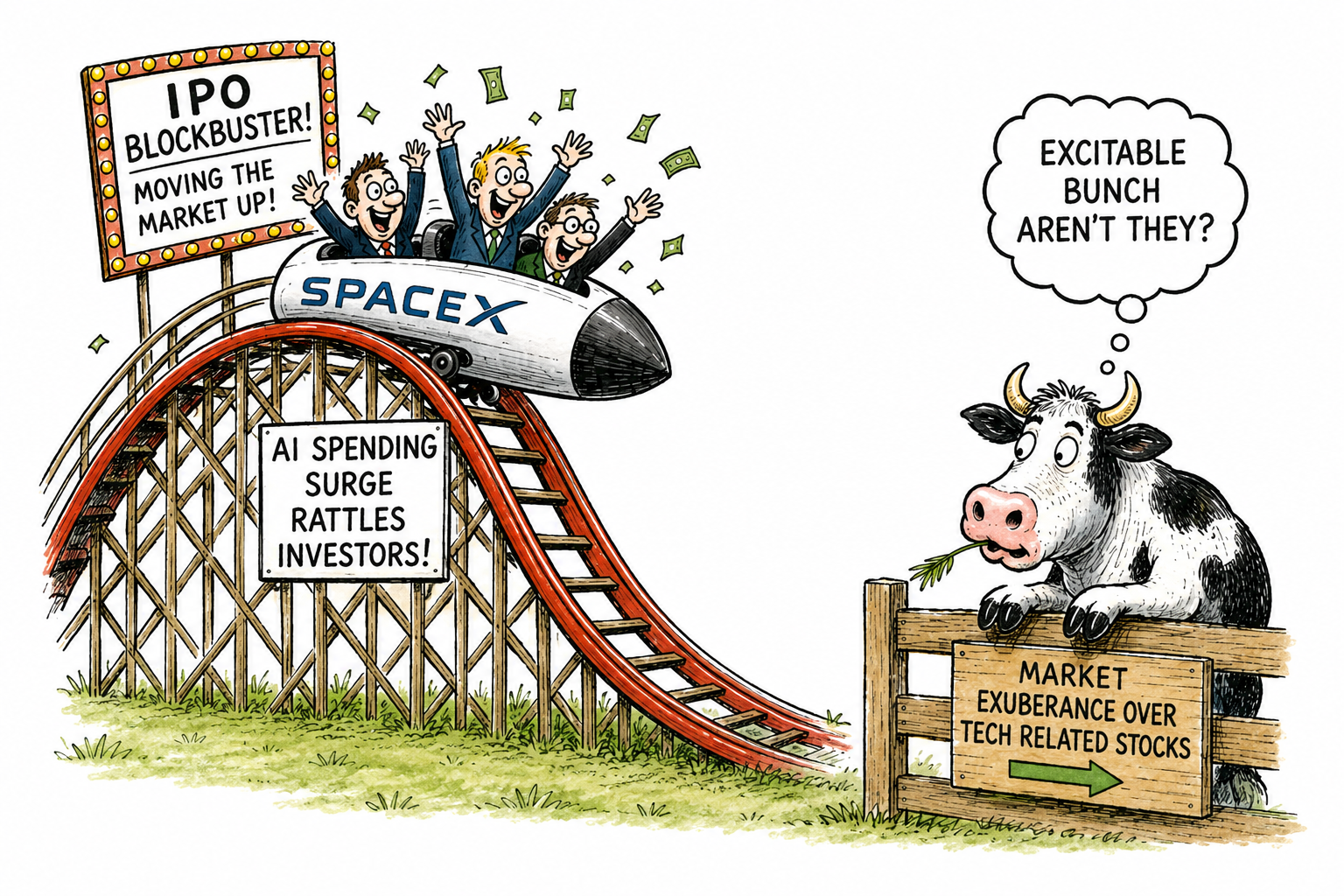
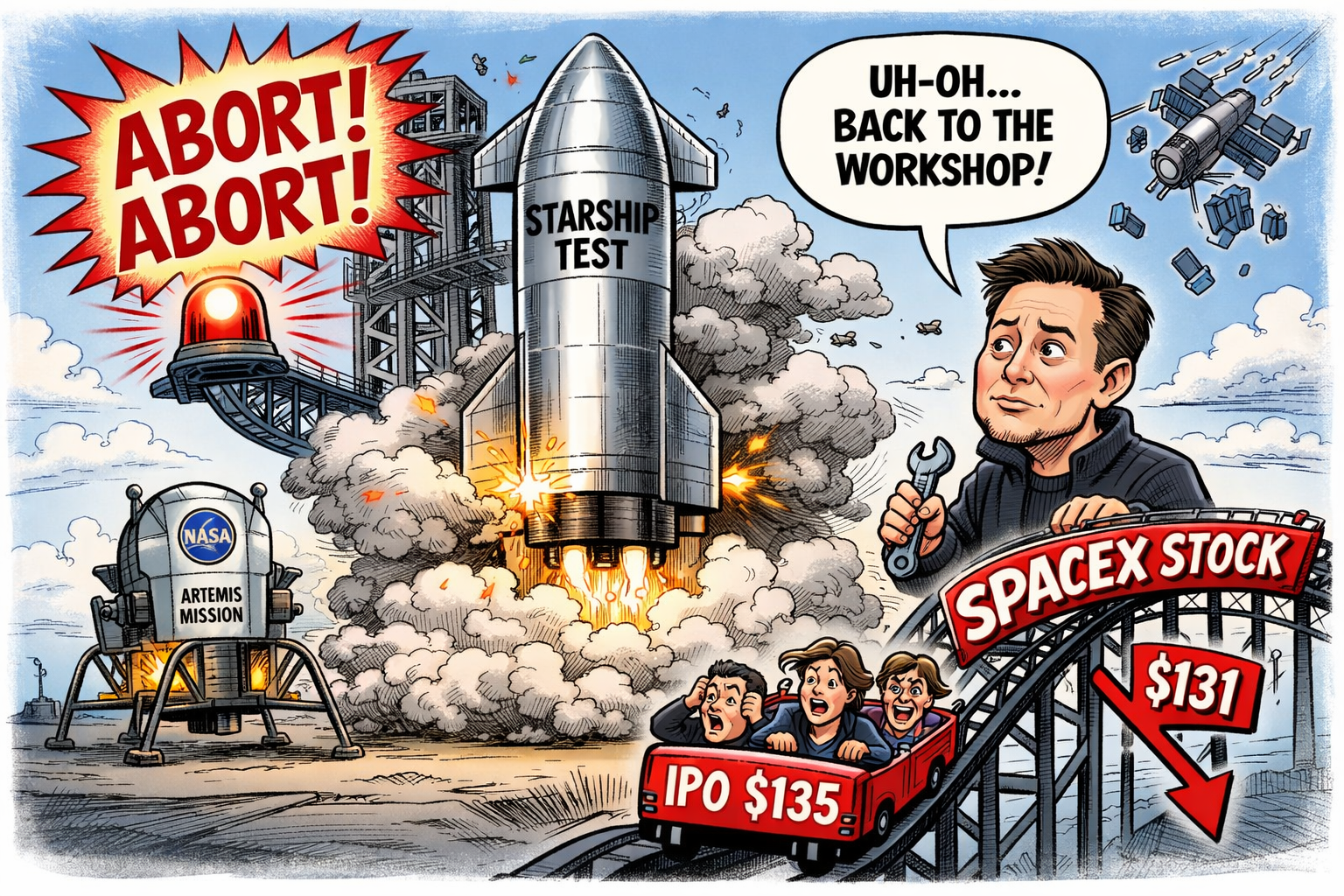
Elon Musk’s decision to fold xAI into SpaceX has set the stage for what could become one of the largest and most closely watched IPOs in market history.

The move signals a bold attempt to fuse advanced artificial intelligence with orbital infrastructure, satellite communications, and Musk’s wider technological ecosystem.

Elon Musk’s merger of SpaceX with his artificial intelligence venture xAI marks a decisive shift in the trajectory of both companies.

Integrated power

The combined entity is now positioned as a vertically integrated powerhouse spanning rockets, space‑based internet, direct‑to‑mobile communications, and frontier AI research.

Musk has described the unified structure as an ‘innovation engine’ capable of accelerating progress both on Earth and beyond.

The strategic logic is clear: AI requires immense computational resources, and Musk believes space‑based compute will become the most cost‑effective solution within a few years.

By bringing xAI under SpaceX’s umbrella, he gains the ability to scale AI training using satellite infrastructure while consolidating governance, data flows, and long‑term capital planning.

A Trillion‑Dollar Listing on the Horizon

The merged company is expected to pursue an IPO valued at roughly $1.25 trillion, with share pricing estimates placing it among the most valuable listings ever attempted.

Early reports suggest the offering could raise as much as $50 billion, instantly making it one of the largest capital‑market events in history.

Such a valuation reflects not only SpaceX’s dominance in commercial launch and satellite internet, but also the rapid rise of xAI’s Grok chatbot and its integration with Musk’s social platform, X.

The consolidation also concentrates financial scrutiny, with analysts noting that the new structure brings unprecedented transparency demands for a company that has historically operated privately.

Innovation

One of the most radical implications of SpaceX absorbing xAI is the potential to relocate data centres into orbit.

Musk has long argued that space-based compute could dramatically reduce cooling costs, thanks to the natural vacuum and thermal dissipation of low Earth orbit.

By leveraging Starlink’s satellite mesh and SpaceX’s launch cadence, the merged entity could deploy AI training clusters above the atmosphere—sidestepping terrestrial energy constraints and redefining the economics of large-scale artificial intelligence.

This vision, while technically ambitious, aligns with Musk’s broader strategy of vertical integration and frontier infrastructure.

The Stakes

If successful, the IPO will redefine the market landscape for both aerospace and artificial intelligence.

It represents a bet that the future of AI will be built not just in data centres, but in orbit—an audacious vision even by Musk’s standards.

The Rise of OpenClaw and the New Era of AI Agents

Agent AI

A new generation of artificial intelligence is taking shape, and at its centre sits OpenClaw — a fast‑evolving framework that embodies the shift from monolithic AI models to agile, task‑driven agents.

While large language models once dominated the conversation, the momentum has clearly moved toward systems that can reason, plan, and act with far greater autonomy. OpenClaw is emerging as one of the most intriguing examples of this transition.

Appeal

OpenClaw’s appeal lies in its modular design. Instead of relying on a single, all‑purpose model, it orchestrates multiple specialised components that collaborate to complete complex workflows.

This mirrors how real teams operate: one agent may handle research, another may draft content, and a third may evaluate quality or flag risks. The result is a system that behaves less like a tool and more like a coordinated digital workforce.

Defining trend

This shift is not happening in isolation. Across the industry, AI agents are becoming the defining trend. Companies are racing to build systems that can manage inboxes, run businesses, write and deploy code, or even negotiate with other agents.

The ambition is no longer to create a chatbot that answers questions, but an autonomous entity capable of executing multi‑step tasks with minimal human intervention.

OpenClaw stands out because it embraces openness and experimentation. Developers can plug in their own models, customise behaviours, and build agent ‘stacks’ tailored to specific industries.

Adoption

Early adopters in media, finance, and logistics are already exploring how these agents can streamline research, automate reporting, or coordinate supply‑chain decisions.

The promise is efficiency, but also creativity: agents that can generate ideas, test them, and refine them without constant supervision.

Of course, the rise of agentic AI brings challenges. Questions around safety, reliability, and accountability are becoming more urgent. An agent that can act independently must also be constrained responsibly.

Challenge

The industry is now grappling with how to balance autonomy with oversight, ensuring that these systems remain aligned with human goals and values.

Even with these concerns, the trajectory is unmistakable. OpenClaw and its peers represent a decisive step toward AI that is not merely reactive but proactive — capable of taking initiative, managing complexity, and collaborating with humans in more meaningful ways.

As these systems mature, they are likely to reshape not just how we work, but how we think about intelligence itself.

If you want to explore how this trend could influence your editorial or creative workflows, I’m ready to dive deeper with you.

The ups and downs of Gold and Silver as prices collapse from record highs

Gold and silver - the ups and downs!

The precious metals market has endured one of its most dramatic reversals in modern trading history, with gold and silver plunging from last week’s extraordinary peaks to deep intraday lows.

Gold, which surged to an unprecedented $5,600 per ounce, fell back to around $4,500, while silver has retreated from highs near $120 per ounce to roughly $74 in intraday trading.

The scale and speed of the correction have rattled traders and forced a reassessment of what drove the rally — and what comes next.

Why the collapse happened

The initial surge in both metals was fuelled by a potent mix of safe‑haven demand, speculation, and expectations of looser U.S. monetary policy and new Federal Reserve chair.

As gold broke above $4,500 for the first time in late December, speculative interest intensified, pushing prices into what now looks like a classic blow‑off top.

But the reversal began when sentiment shifted abruptly. A stronger U.S. dollar, firmer Treasury yields, and a wave of profit‑taking created the first cracks.

Once prices started to slip, leveraged positions in futures markets were forced to unwind. This triggered cascading sell orders, accelerating the decline.

Silver, which had risen even more aggressively than gold, suffered one of its steepest percentage drops since 1980.

How the sell‑off unfolded

The correction was not a slow bleed but a violent, liquidity‑draining plunge. Gold fell more than $1,000 per ounce from peak to trough, while silver shed $40–$45.

These moves were amplified by algorithmic trading systems that flipped from buying momentum to selling weakness as volatility spiked.

The fact that gold briefly and recently traded below $4,800 and silver below $100 before extending losses to their intraday lows shows how thin market depth became during the heaviest selling.

Even long‑term holders, typically slow to react, contributed to the pressure as stop‑loss levels were triggered.

What happens next

Despite the severity of the drop, the fundamental drivers that supported the earlier rally have not disappeared.

Concerns over global debt levels, geopolitical instability, and central bank diversification into gold remain intact. However, the market must now digest the excesses of the speculative surge.

In the short term, volatility is likely to remain elevated. A stabilisation phase — potentially lasting weeks — may be needed before a clearer trend emerges.

If the dollar strengthens further or yields continue rising, metals could retest their recent lows. Conversely, any signs of economic softening or renewed policy easing could attract dip‑buyers back into the market.

For now, the message is clear: even in a bull market, precious metals can still deliver brutal corrections — and timing remains everything.

Note: Friday to Monday (30th January to 2nd February 2026)

And… watch for the rebound.

The Rise of Young Entrepreneurs Fuelled by AI Confidence

Entrepreneurs embracing AI

A new generation of entrepreneurs is stepping forward with a level of confidence that feels markedly different from previous waves of start‑ups.

What sets them apart is not just ambition or access to technology, but a deep, intuitive understanding of artificial intelligence.

AI as a tool

For many young founders, AI is no longer a mysterious tool reserved for specialists; it is a natural extension of how they think, create, and solve problems.

Teenagers and twenty‑somethings who grew up experimenting with machine‑learning apps, chatbots, and automation platforms now see AI as a practical ally rather than an abstract concept.

This familiarity lowers the psychological barrier to entrepreneurship. Instead of wondering how to start a business, they ask what they can build with the tools already at their fingertips.

One of the most striking shifts is the speed at which ideas move from concept to prototype. Young entrepreneurs routinely use AI to draft business plans, test branding concepts, analyse markets, and even simulate customer behaviour.

It’s the greatest ‘what if’ analysis ever!

Tasks that once required expensive consultants or weeks of manual work can now be completed in hours. This acceleration doesn’t just save time; it encourages experimentation. When the cost of failure drops, creativity expands.

AI also levels the playing field. A single founder can now perform the work of a small team, using automation to handle customer support, content creation, scheduling, and data analysis.

This empowers young people who may lack capital or industry connections but possess strong digital instincts. They can launch lean, agile ventures that scale quickly without the traditional overheads.

Education is evolving too. Many young entrepreneurs learn through online communities, open‑source projects, and hands‑on tinkering rather than formal training.

Discipline

This self‑directed highly disciplined learning style aligns perfectly with AI tools that reward curiosity and rapid iteration. As a result, these founders often approach business with a hybrid mindset: part technologist, part creative, part strategist.

Of course, challenges remain. Ethical considerations, data privacy, and the risk of over‑reliance on automation require thoughtful navigation.

Responsible

Yet this generation appears unusually aware of these issues, often building transparency and responsibility into their ventures from the outset.

What’s emerging is a landscape where youth is not a disadvantage but a strategic advantage. Their fluency with AI allows them to imagine possibilities others overlook and to act on those ideas with unprecedented speed.

In many ways, they are not just starting businesses with AI—they are redefining what entrepreneurship looks like in an AI world.

Cisco chief warns of an AI bubble — but reportedly says the long‑term winners will be huge

AI boom bubble!

Cisco’s chief executive, Chuck Robbins, has issued one of the clearest assessments yet of the frenzy surrounding artificial intelligence, arguing that the sector is ‘probably’ in bubble territory even as it lays the foundations for a technological shift larger than the internet itself.

Speaking in a recent interview, Robbins said the scale of investment pouring into AI start‑ups and infrastructure mirrors the exuberance of the late‑1990s dot‑com era.

Back then, vast sums of capital chased unproven ideas, leading to a dramatic market crash. Yet the companies that survived went on to define the modern digital economy.

Caution!

Robbins believes AI is following a similar trajectory: inflated expectations today, followed by a period of painful consolidation, and ultimately a handful of dominant players reshaping global industries.

He cautioned that many firms currently attracting funding will not endure. The rush to build models, platforms and specialised hardware has created what he described as ‘inevitable carnage’ ahead, as weaker businesses fail to convert hype into sustainable products.

Even so, he stressed that the underlying technology is transformative, with applications spanning healthcare, manufacturing, cybersecurity and national infrastructure.

Embedded AI

Cisco itself is deeply embedded in the AI supply chain, providing networking systems capable of handling the enormous data flows required to train and deploy advanced models.

Robbins said demand for high‑performance infrastructure continues to accelerate, driven by cloud providers and enterprises racing to integrate AI into their operations.

Despite the risks, he argued that dismissing AI as a passing bubble would be a mistake. The coming shake‑out, he suggested, is simply part of the cycle that accompanies every major technological revolution.

Once the dust settles, the companies that remain will be those with genuine innovation, strong business models and the capacity to scale globally.

The AI Boom and Its Disruptive Force – according to the IMF

AI job Impact

Artificial intelligence is no longer a distant technological shift but a present‑day force transforming global employment.

According to IMF Managing Director Kristalina Georgieva, AI represents a ‘tsunami’ hitting labour markets, with advanced economies facing the most dramatic upheaval.

The IMF estimates that around 60% of jobs in advanced economies will be enhanced, transformed, or eliminated by AI, compared with 40% globally.

This disruption is not evenly distributed. Entry‑level roles and routine tasks—often performed by younger workers—are among the first to be automated.

The IMF highlights that young workers and the middle class are likely to bear the brunt of the transition, as many of their roles are highly exposed to automation.

A Dual Reality: Risk and Opportunity

Despite the warnings, the IMF also notes that AI is creating new opportunities. Investment in AI‑driven technologies is contributing to economic resilience, with global growth projections supported in part by tech‑sector expansion.

However, the Fund cautions that this growth is fragile and could falter if expectations around AI’s productivity gains are reassessed.

At the same time, AI is reshaping the nature of work itself. New roles, new skills, and entirely new occupations are emerging, offering alternative pathways for workers willing to adapt.

The IMF stresses that upskilling and reskilling will be essential, as the ability to learn new competencies becomes a prerequisite for job security in an AI‑driven economy.

The Policy Challenge

Georgieva warns that regulation is lagging behind technological change. Without effective policy frameworks, the benefits of AI risk becoming unevenly distributed, deepening inequality and social tension.

The IMF’s message is clear: AI’s rise is unavoidable, but its impact on jobs depends on how societies prepare.

The challenge now is ensuring that workers are not swept away by the wave but equipped to ride it.

Greenland’s Subsurface Power – Why Its Minerals Matter

Rare earths in Greenland

Greenland has long been portrayed as a remote Arctic frontier, but its bedrock tells a very different story.

Beneath the ice lies a concentration of critical minerals that has drawn global attention, not least from President Trump, whose administration has repeatedly emphasised the island’s strategic and economic value.

Much of that interest stems from the sheer breadth of materials Greenland contains, according to the Geological Survey of Denmark and Greenland, 25 of the 34 minerals classified as ‘critical raw materials’ by the European Commission can be found there, including graphite, niobium and titanium.

Rare Earth Elements

The most geopolitically charged of these are rare earth elements — a group of 17 metals essential for electronics, renewable energy technologies, advanced weaponry and satellite systems.

These minerals are currently dominated by Chinese production and processing, a reality that has shaped US strategic thinking for more than a decade. Analysts note that Trump’s interest is ‘primarily about access to those resources and blocking China’s access’.

Greenland also holds significant deposits of uranium, zinc, copper and potentially vast reserves of oil and natural gas. As Arctic ice retreats, previously inaccessible rock formations are becoming easier to survey and, in some cases, to mine.

Ice melt?

Melting ice is even creating new opportunities for hydropower in exposed regions, potentially lowering the energy costs of extraction in the future.

Yet the island’s mineral wealth remains largely untapped. Reportedly, only two mines are currently operational, with harsh weather, limited infrastructure and high extraction costs slowing development.

Despite these challenges, the strategic calculus is clear: in a world increasingly defined by competition over supply chains for green technologies and defence systems, Greenland represents a rare opportunity to diversify away from existing global chokepoints.

For the Trump administration, the island’s mineral potential, combined with its location along emerging Arctic shipping routes, elevates Greenland from a frozen outpost to a cornerstone of long‑term geopolitical strategy.

 Strategic Minerals in Greenland

MaterialCategoryTech Applications
NeodymiumRare Earth ElementEV motors, wind turbines, headphones, hard drives
PraseodymiumRare Earth ElementMagnet alloys, aircraft 
engines
DysprosiumRare Earth ElementHigh-temp magnets for EVs, 
drones, defence systems
TerbiumRare Earth ElementLED phosphors, magnet 
alloys
EuropiumRare Earth ElementLED displays, anti-counterfeiting inks
YttriumRare Earth ElementLasers, superconductors, 
ceramics
LanthanumRare Earth ElementCamera lenses, batteries
CeriumRare Earth ElementCatalytic converters, glass 
polishing
SamariumRare Earth ElementHeat-resistant magnets, missiles, precision motors
GadoliniumRare Earth ElementMRI contrast agents, 
neutron shielding
TitaniumCritical MineralAerospace, defence, medical implants
GraphiteCritical MineralBattery anodes, lubricants, 
nuclear reactors
NiobiumCritical MineralSuperconductors, high-strength steel, quantum 
technologies

These materials are not only present in Greenland’s geology but also feature prominently in strategic supply chains— especially as the West seeks to reduce reliance on Chinese and Russian sources.

Silver skyrockets to new record high!

Silver hits record high

Silver has surged with remarkable force, blasting to fresh record highs and reshaping market sentiment in the process.

Recent trading sessions have seen prices vault past previous milestones, climbing above $108 per ounce and even approaching the $109 mark as safe‑haven demand intensifies amid global uncertainty.

This dramatic meteoric ascent follows weeks of accelerating momentum, with technical indicators showing a firmly bullish structure and widening gaps between key moving averages.

Analysts note that silver’s rally has outpaced many other commodities, fuelled by its dual role as both a precious metal and an essential industrial input.

Silver one-year chart 26th January 2026

Industrial sectors—from photovoltaics to electric vehicles—are feeling the pressure as soaring prices push material costs sharply higher.

In some cases, silver now represents more than 30% of total solar module expenses, underscoring the far‑reaching impact of this surge.

With supply constraints tightening and investor appetite growing, silver’s explosive rise shows little sign of slowing down.

Gold break $5000 and moves higher

Gold takes off... again!

Gold’s dramatic surge through the $5,000 per ounce barrier has reshaped the market mood, signalling a profound shift in global investor psychology.

The metal’s ascent, driven by escalating geopolitical tensions and a deepening crisis of confidence in traditional assets, has pushed prices to unprecedented territory.

Recent trading saw spot gold climbing above $5,080, extending a rally that delivered a remarkable 64% rise in 2025 and strong gains again this year.

Analysts point to a potent mix of safe‑haven demand, monetary policy uncertainty, and sustained central‑bank buying as the forces behind this historic move.

China’s continued accumulation of reserves and record inflows into gold‑backed funds have added further momentum.

Gold one-year chart 26th January 2026

For many investors, gold has become the ultimate hedge against volatility, political disruption, and weakening confidence in government bonds and major currencies.

With tensions still simmering, the gold’s trajectory suggests this rally may not be over yet.

Some analysts speak of a not-too-distant future $7000 per ounce price tag.

The Sorry State of Modern International Diplomacy – it’s utterly surreal

Trump speaks

International diplomacy has always been a theatre of competing interests, strategic ambiguity, and the occasional flash of statesmanship.

Yet the scenes emerging from Davos yesterday seen to suggest something far more troubling: a descent into performative brinkmanship and schoolyard theatrics that would be unthinkable in any previous era of global leadership.

Tension and tariffs

At the centre of the storm was President Donald Trump, whose renewed push to acquire Greenland triggered a cascade of diplomatic tension.

Reports indicate he threatened tariffs of 10%, rising to 25%, on a range of European and NATO allies unless they agreed to sell the territory to the United States.

In the same breath, he suggested he could take Greenland by force—an extraordinary notion given that it is part of Denmark, a NATO member—before later reportedly insisting he would not actually pursue military action, as he added, he would be’ unstoppable’ if he did!

Spectacle

The spectacle did not end there. Trump’s Davos appearance was peppered with derision aimed at European leaders, including dismissive remarks about the UK and its prime minister, and barbed comments directed at France’s president.

His rhetoric framed long-standing allies as obstacles rather than partners, and NATO as a body that should simply acquiesce to American territorial ambitions.

In one speech, he declared the U.S. ‘must get Greenland‘, while markets reacted sharply to the escalating threats.

Fallout

Behind the bluster, NATO officials appeared to scramble to contain the fallout. By the end of the day, Trump announced he was withdrawing the tariff threats after agreeing to what he called a ‘framework of a future deal’ with NATO leadership.

However, details were conspicuously absent, and the announcement did little to restore confidence in the stability of transatlantic relations.

Childlike behaviour

What makes this moment feel so ‘child‑like’, as many observers have put it, is not merely the substance of the demands but the tone: the ultimatums, the insults, the swaggering threats followed by abrupt reversals.

Diplomacy has always involved pressure, but rarely has it been conducted with such theatrical volatility. The language of global leadership has shifted from careful negotiation to something closer to reality‑TV brinkmanship.

Farcical melodrama

This is not just embarrassing—it is farcical, disturbing and dangerous. When the world’s most powerful nations communicate through taunts and tariff threats, the foundations of international cooperation erode.

Allies become adversaries, institutions weaken, and global stability becomes collateral damage in a performance of personal dominance.

Davos was once a forum for sober reflection on global challenges. In 2026, it became a stage for geopolitical melodrama. And unless the tone of international diplomacy changes, the world may find itself paying a far higher price than tariffs.

Spin

The U.S. diplomatic ‘team’ later set to work ‘spinning’ the stories as the media further lost themselves in the never-ending story of ‘political noise’.

It’s farcical.

Trump whisperer – surreal or real – wake me up please and tell me this is a nightmare!

Nightmare

Oh no! It’s realI am awake.

This feels surreal because the language being used around global politics has slipped into something closer to internet fandom than international statecraft. You’re not dreaming — it really has become this strange.

The terms ‘Daddy‘ and Trump whisperer‘ are part of a wider cultural shift where political commentary, journalism, and social media increasingly borrow the tone of celebrity gossip.

Instead of treating leaders as officials with constitutional responsibilities, they’re framed like characters in a drama.

The language is deliberately provocative, designed to grab attention, generate clicks, and turn complex geopolitical dynamics into digestible entertainment. And that is not a good thing.

Why is this happening?

A vacuum of seriousness: When diplomatic behaviour itself becomes erratic or theatrical, the commentary follows suit.

Media sensationalism: Outlets know that emotionally charged or absurd phrasing spreads faster than sober analysis.

Personality‑driven politics: Modern politics often centres on individuals rather than institutions, making it easier for commentators to use personal, even infantilising labels.

Social‑media bleed‑through: Memes, nicknames, and ironic slang migrate from online communities into mainstream reporting.

Why it feels surreal

Because diplomacy used to be defined by restraint, coded language, and careful signalling. Now it’s shaped by public outbursts, personal insults, and performative bravado.

The commentary mirrors the behaviour: if leaders act like protagonists in a chaotic reality show, the language surrounding them inevitably becomes more absurd.

The result is a political environment that feels weightless — as though the stakes aren’t enormous, as though the words don’t matter.

But they do. This shift erodes the dignity of institutions, trivialises international relationships, and leaves citizens feeling as though they’ve stumbled into a parody of global governance.

It’s not a dream

You’re not dreaming. It’s simply that diplomacy has drifted so far from its traditional norms that it now resembles satire.

The challenge is that the consequences are very real, even if the language sounds like a joke.

Please STOP! Policy makers wake up and grow up, all of you – and that includes the media too.

The Billionaire Blueprint: How Ultra Wealth Shapes the World to Its Will

Billionaire simply make the future - they don't predict it

The Power Tower

The modern political landscape increasingly resembles a boardroom, where the wealthiest individuals hold the loudest voices and the most decisive influence.

Billionaires do not merely participate in politics; they shape it. Their resources allow them to steer governments, policies, and public narratives in directions that often serve their own interests rather than the collective good.

They don’t predict the future – they MAKE the future!

As the gap between rich and poor widens, the consequences of this imbalance become harder to ignore.

Money has always played a role in power, but the scale has changed dramatically. Today, a single billionaire can fund political campaigns, lobby for favourable legislation, acquire media outlets, and even bankroll ‘think tanks’ that craft ideological frameworks.

Making the future

This is not prediction; it is construction. They do not wait for the future to unfold—they design it. Their wealth becomes a tool for engineering outcomes that align with their ambitions, whether economic, technological, or geopolitical.

For ordinary citizens, this creates a troubling dynamic. Democracy is built on the principle that every voice carries equal weight, yet the reality increasingly suggests otherwise.

When political influence can be purchased, the public’s needs risk being overshadowed by the priorities of the ultra-wealthy. Policies on taxation, labour rights, housing, healthcare, and environmental protection can be shaped not by what benefits society, but by what preserves or expands elite wealth.

Inequality

This imbalance becomes even more stark when examining global inequality. Reports consistently show that billionaire wealth grows at a pace far exceeding that of the average worker.

While wages stagnate and living costs rise, the richest individuals accumulate fortunes so vast they can influence entire nations. The result is a world where opportunity is unevenly distributed, and where the wealthy can insulate themselves from the consequences of the very policies they help create.

The influence of billionaires also extends into emerging technologies. From artificial intelligence to space exploration, the wealthiest individuals are often the ones setting the agenda.

Ambition

Their visions—however innovative or ambitious—are not always aligned with public interest. When private capital drives technological progress, ethical considerations risk being overshadowed by profit motives or personal legacy-building.

Once again, the future becomes something crafted by a select few, rather than a shared endeavour shaped by collective values.

Yet the most concerning aspect is how normalised this dynamic has become. Many people accept billionaire influence as an inevitable feature of modern society, rather than a distortion of democratic principles.

The narrative of the ‘visionary entrepreneur’ can obscure the reality of concentrated power. Admiration for individual success stories sometimes blinds us to the structural consequences of allowing wealth to dictate policy.

Gap

The widening gap between rich and poor is not simply an economic issue; it is a political one. When wealth becomes synonymous with power, inequality becomes self-reinforcing.

The rich gain more influence, which leads to policies that protect their interests, which in turn allows them to accumulate even more wealth. Meanwhile, the voices of ordinary people grow quieter.

If societies wish to preserve genuine democracy, they must confront this imbalance. Transparency, regulation, and civic engagement are essential tools for ensuring that political power remains accountable to the many, not the few.

The future should be shaped by collective will, not by the unchecked ambitions of those who can afford to buy it.

According to Oxfam

Billionaires’ wealth has surged to a record $18.3 trillion, with the ultra-rich reportedly seeking power for personal benefit, according to a recent report from global charity Oxfam.

The number of billionaires reached more than 3,000 last year, and collectively they saw their fortunes increase by 16%, or $2.5 trillion, the report said.

Added to this, billionaires’ wealth has surged by 81% since 2020, the charity said, describing the past as “a good decade for billionaires.”

Having wealth creators is one thing but having them ‘run’ the world is quite another!

Gold – how high can you go?

Gold high!

Gold has surged to unprecedented levels, cementing its status as the world’s most sought‑after safe‑haven asset.

In recent sessions, the precious metal has climbed to record highs, with international prices above $4,700 per ounce.

Milestone

This historic milestone reflects a potent mix of geopolitical tension, shifting monetary expectations, and renewed investor appetite for stability.

A major catalyst behind the rally has been escalating trade friction, particularly following new tariff threats from the United States aimed at several European nations.

These developments have intensified global uncertainty, prompting investors to move capital into assets traditionally viewed as resilient during periods of instability.

At the same time, signs of softer U.S. inflation and expectations of future interest‑rate cuts have further supported gold’s upward momentum by weakening the dollar and lowering the opportunity cost of holding non‑yielding assets.

Surge

The gold surge is not limited to global markets. Futures on major exchanges, including India’s MCX, have also registered all‑time highs, underscoring the worldwide scale of the rally.

Analysts suggest that if current conditions persist, gold could continue its ascent, with some forecasting the possibility of the metal reaching $5,000 per ounce in the coming months.

For now, gold’s latest peak marks a defining moment in financial history—an emphatic reminder of its enduring role as a store of value in turbulent times.