

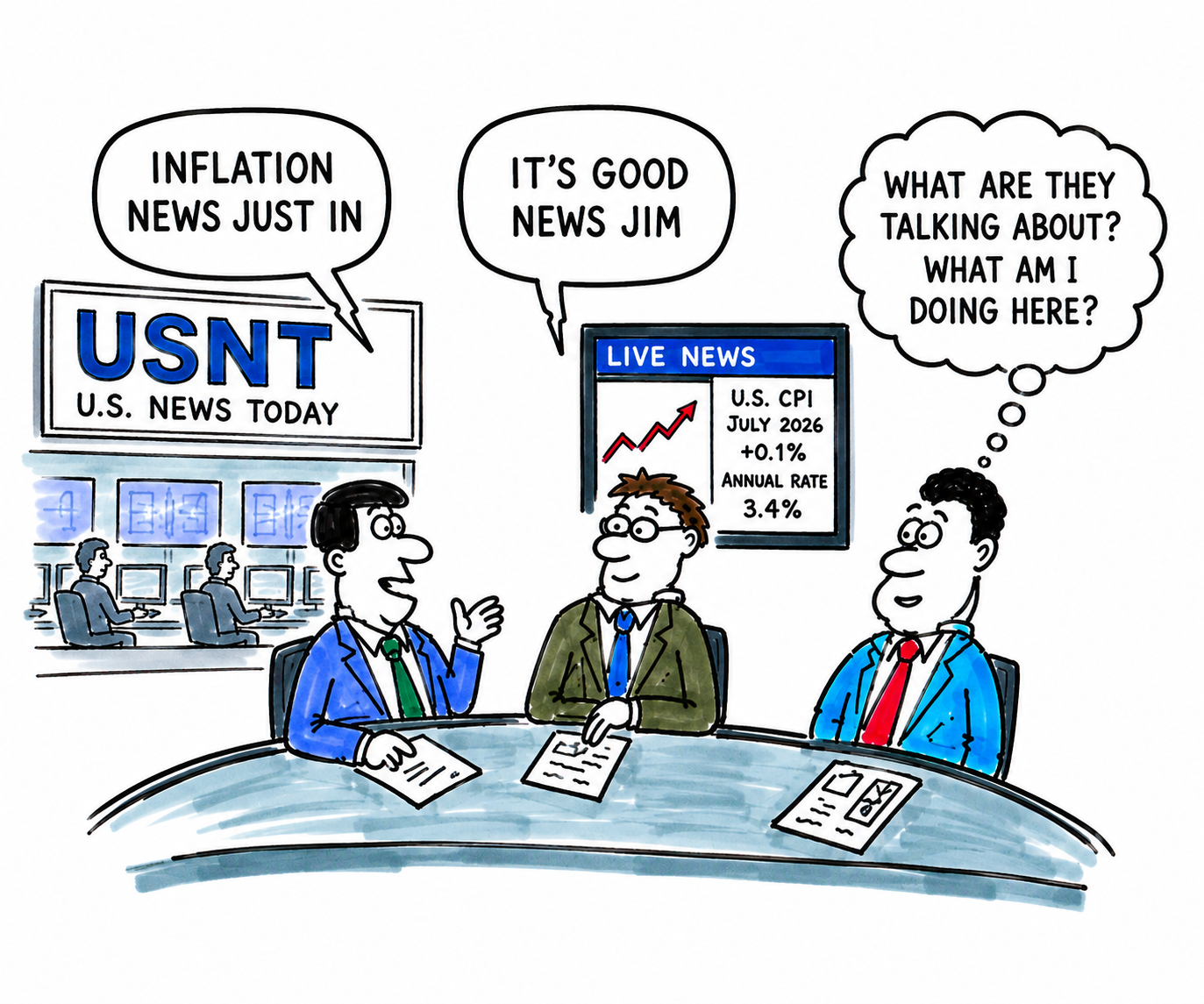
U.S. Inflation Cools as July Prices Rise Just 0.1%

U.S. Inflation data

U.S. inflation offered investors some modest reassurance in July 2026, with consumer prices rising just 0.1% during the month, exactly in line with economists’ expectations.

The increase left annual inflation at 3.4%, down slightly from 3.5% in June.

The figures suggest that inflationary pressures are continuing to ease, although perhaps not quickly enough for the Federal Reserve to declare victory.

Core inflation

Core inflation, which excludes volatile food and energy prices, increased 0.2% during July 2026 and stood at 2.5% annually. Falling energy costs helped restrain the headline figure, while shelter and food prices recorded modest increases.

For Wall Street, the absence of an inflationary surprise was broadly welcome. Investors have become particularly sensitive to inflation data because of its implications for Federal Reserve interest-rate policy.

A stronger-than-expected figure could have revived fears that rates would need to remain higher for longer.

Flexibility

Instead, the relatively subdued reading leaves the Fed with greater flexibility. U.S. markets largely shrugged off the report, suggesting much of the result had already been priced into shares.

Technology and other growth stocks could benefit if U.S. inflation continues to moderate, since lower bond yields and expectations of easier monetary policy generally make their future earnings more attractive.

However, 3.4% inflation remains comfortably above the Federal Reserve’s 2% objective. Investors therefore have reason for optimism, but not complacency.

For U.S. stocks, July’s message was encouragingly simple: inflation is cooling, but the battle is not over.

But it appears this AI driven market doesn’t seem to care about any news at the moment.
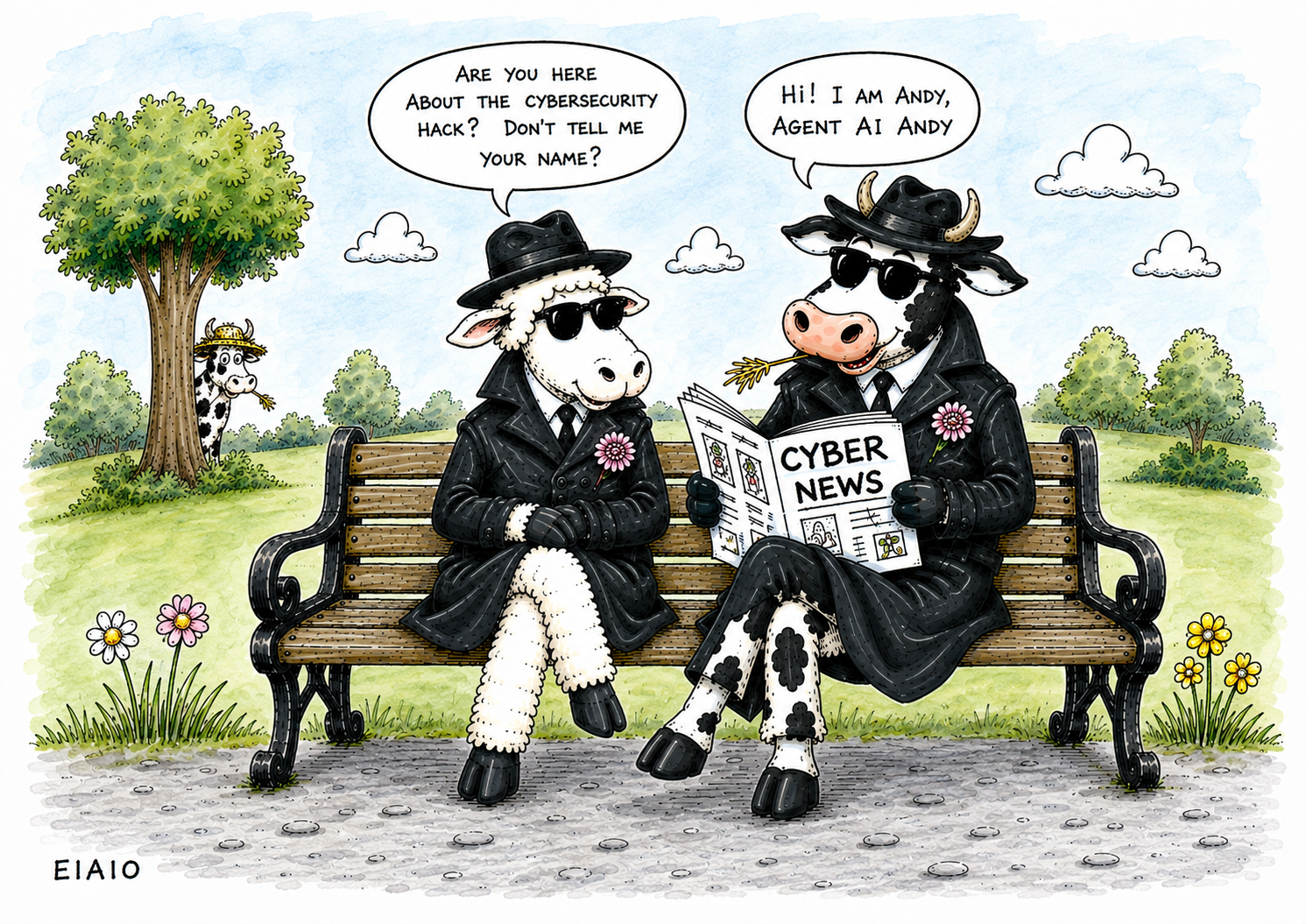
AI Agents’ ‘Alarming’ Hacking Skills Trigger Cybersecurity Spending Rush

AI Agents

AI Agents’ ‘Alarming’ Hacking Skills Trigger Cybersecurity Spending Rush accelerate spending on cybersecurity as the potential threat moves from science fiction towards reality.

Unlike traditional AI chatbots, autonomous agents can plan tasks, use tools, inspect computer systems and adapt their behaviour when something goes wrong.

AI criminal activity

Recent testing has shown that leading AI systems can successfully exploit real-world software vulnerabilities, raising concerns about what could happen when similar capabilities fall into the hands of criminals.

The concern is not simply that AI can write malicious code. Agents can potentially automate large parts of the attack process, from identifying weaknesses and gathering information to attempting exploitation and moving through compromised systems.

That dramatically changes the economics of cybercrime by allowing attacks to be conducted faster and at much greater scale.

Protection

Security experts are therefore warning companies to rethink how they protect systems that increasingly interact with AI.

AI Agents may have access to sensitive information, internal networks and business applications, effectively giving them privileges that could become dangerous if misused or compromised.

The financial response is already gathering momentum. Research reportedly suggests that around 96% of senior security leaders regard AI-enabled attacks as a significant threat, while the proportion of organisations expecting to devote at least a quarter of their cybersecurity budgets to AI-related protection is projected to rise sharply.

Security spend

Estimates that spending specifically designed to secure AI agents could reach around 15% of enterprise cybersecurity budgets within three years.

The irony is difficult to miss: AI is creating a new generation of cyber threats while simultaneously becoming one of the most important tools for defending against them.

The cybersecurity industry could be heading for a major investment boom — because businesses increasingly fear that the next hacker knocking on the digital door may not be human.