

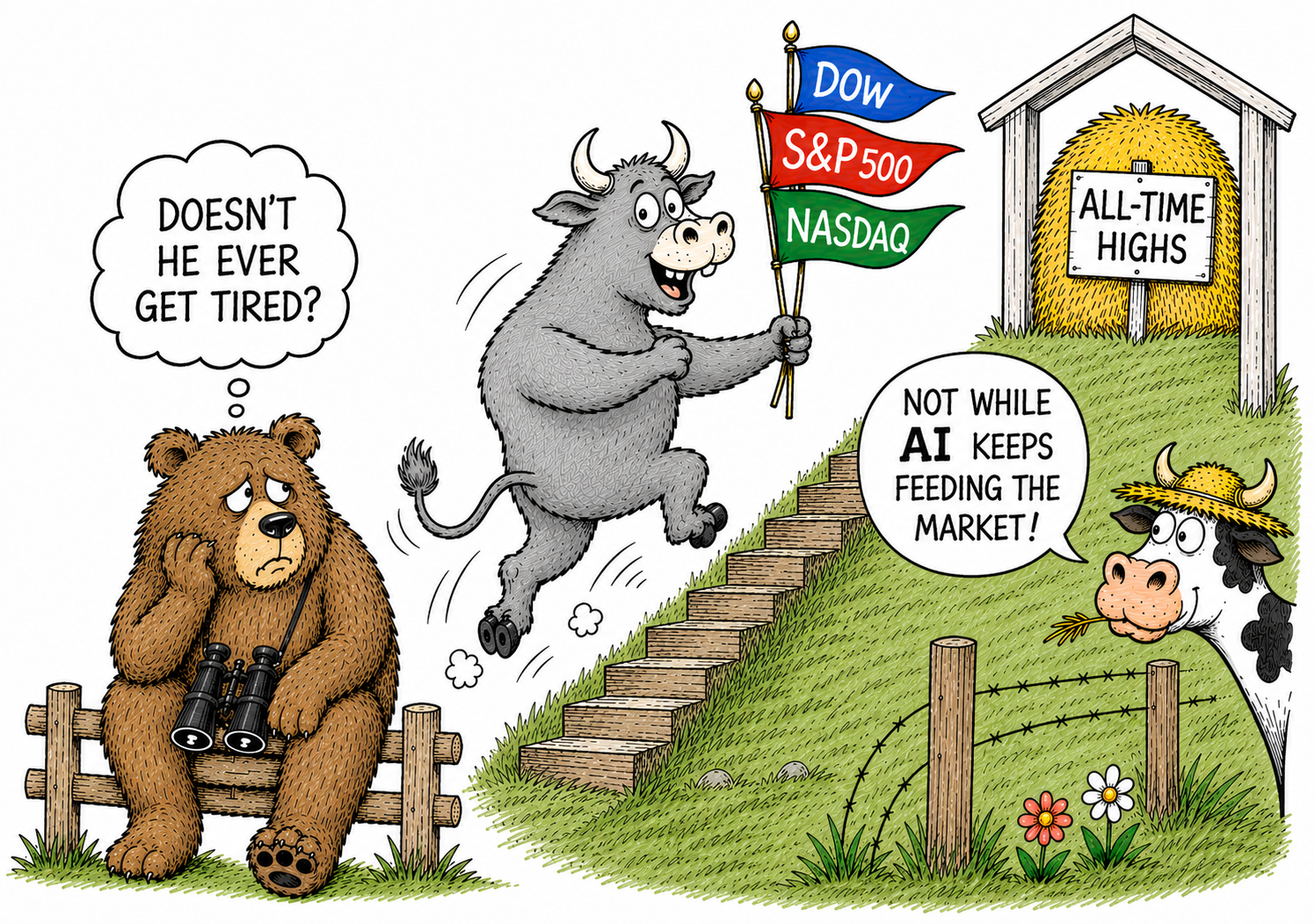
Wall Street’s Big Three Reach Fresh Record Highs

Record highs on Wall Street again!

Wall Street enjoyed another landmark session on 4th August 2026 as all three major U.S. stock indices climbed to new record closing highs, underlining the market’s remarkable resilience despite ongoing economic and geopolitical uncertainties.

The Dow Jones Industrial Average surged 907.47 points (1.7%) to finish at 54,085.88, comfortably surpassing its previous peak.

The broader S&P 500 rose 136.02 points (1.8%) to a record 7,736.52, while the technology-heavy Nasdaq Composite delivered the strongest performance, jumping 671.10 points (2.6%) to close at an all-time high of 26,584.99.

Optimism

Investor optimism was fuelled by another wave of impressive corporate earnings, particularly from companies benefiting from continued investment in artificial intelligence.

Strong results reassured markets that businesses remain willing to spend heavily on AI infrastructure and software despite a more challenging economic backdrop.

Sentiment also received a boost from falling oil prices, which eased concerns about inflation and strengthened hopes that interest rates could remain supportive of economic growth.

Lower Treasury yields further encouraged investors to rotate into equities.

Impressive

The latest rally extends an already impressive year for U.S. markets, with technology shares once again leading the advance.

While some analysts warn that valuations are becoming increasingly stretched, others believe strong earnings growth and continued AI-driven investment could provide further support for stocks in the months ahead.

Or has the AI bull run too far already?
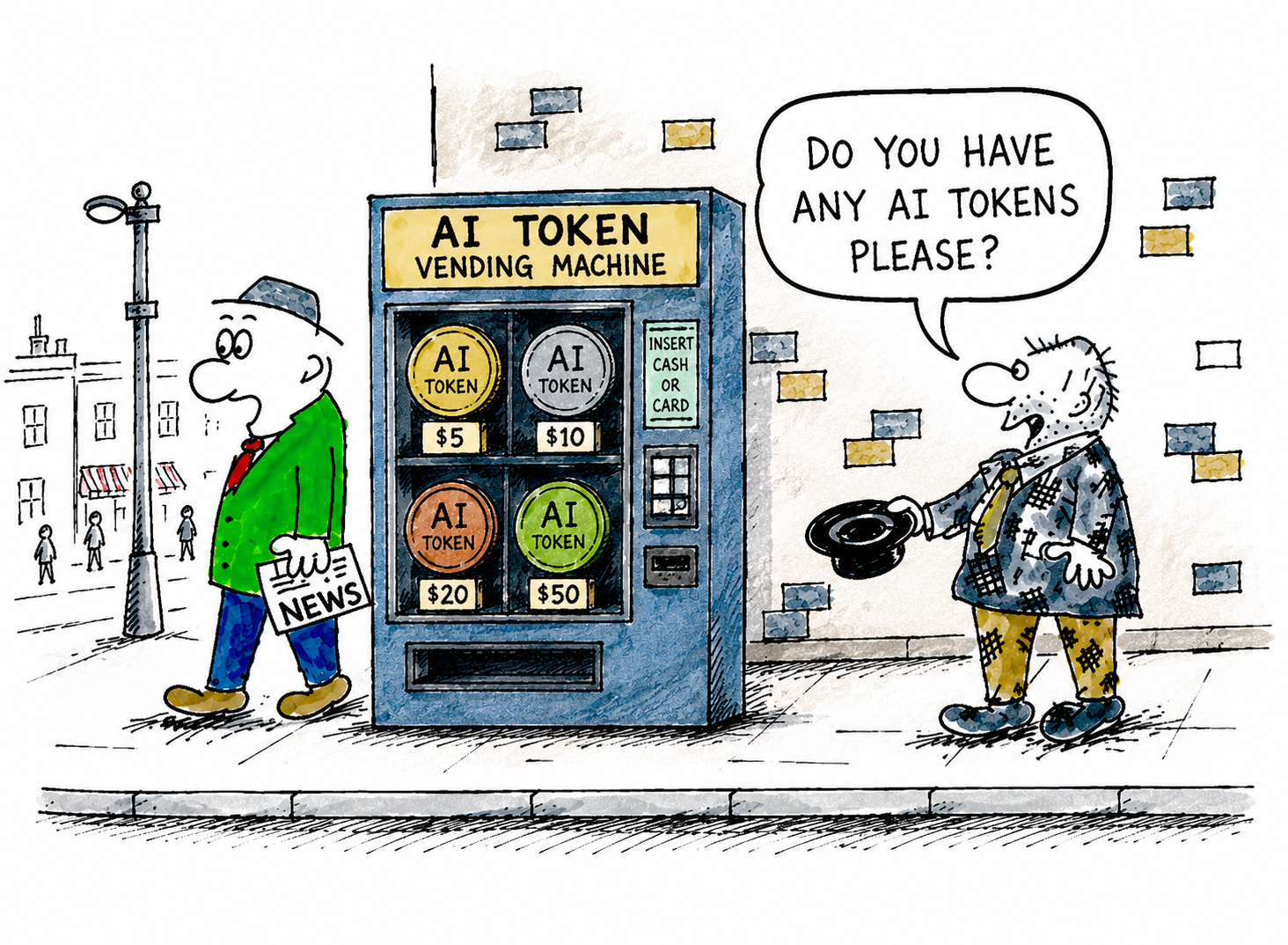
AI Tokenomics: Why Making AI Pay Is Proving Tricky for Business Users

AI Tokens

The race to monetise artificial intelligence has entered a new phase, with technology firms increasingly exploring “AI tokenomics” as a way to fund advanced models, reward developers and create sustainable digital ecosystems.

However, despite growing enthusiasm, experts warn that turning AI into a token-driven economy is proving far more complicated than many had anticipated.

The idea is simple in principle. AI tokens can be used to pay for computing power, access premium models, reward contributors who improve datasets, or incentivise users to participate in decentralised AI networks.

AI and Blockchain

Several emerging AI platforms have embraced blockchain-based payment systems, hoping to reduce reliance on traditional subscription models while creating self-sustaining marketplaces.

Yet the reality has been less straightforward. Token prices can fluctuate dramatically, making it difficult for businesses to predict costs or revenues.

Value

A service that appears affordable one week can become significantly more expensive the next if the underlying token surges in value. Conversely, falling token prices can undermine developer incentives and erode confidence in an entire ecosystem.

Regulatory uncertainty also remains a major obstacle. Governments around the world continue to debate how digital tokens should be classified, with some treated as securities and others as utility assets.

Lack of structure

The lack of consistent global rules has left many companies cautious about fully embracing token-based business models.

Meanwhile, critics argue that users simply want reliable AI services rather than another cryptocurrency to manage.

For many organisations, straightforward subscription fees or usage-based pricing remain easier to understand, budget for and account for.

Despite these challenges, investment in AI token projects continues to grow as developers search for new ways to distribute computing resources and reward innovation.

Tokenomics

If ‘tokenomics’ can be made stable, transparent and genuinely useful, it could become an important building block for the next generation of AI services.

Until then, the industry faces the difficult balancing act of making artificial intelligence both technologically powerful and commercially sustainable.

All part of the AI evolution.