

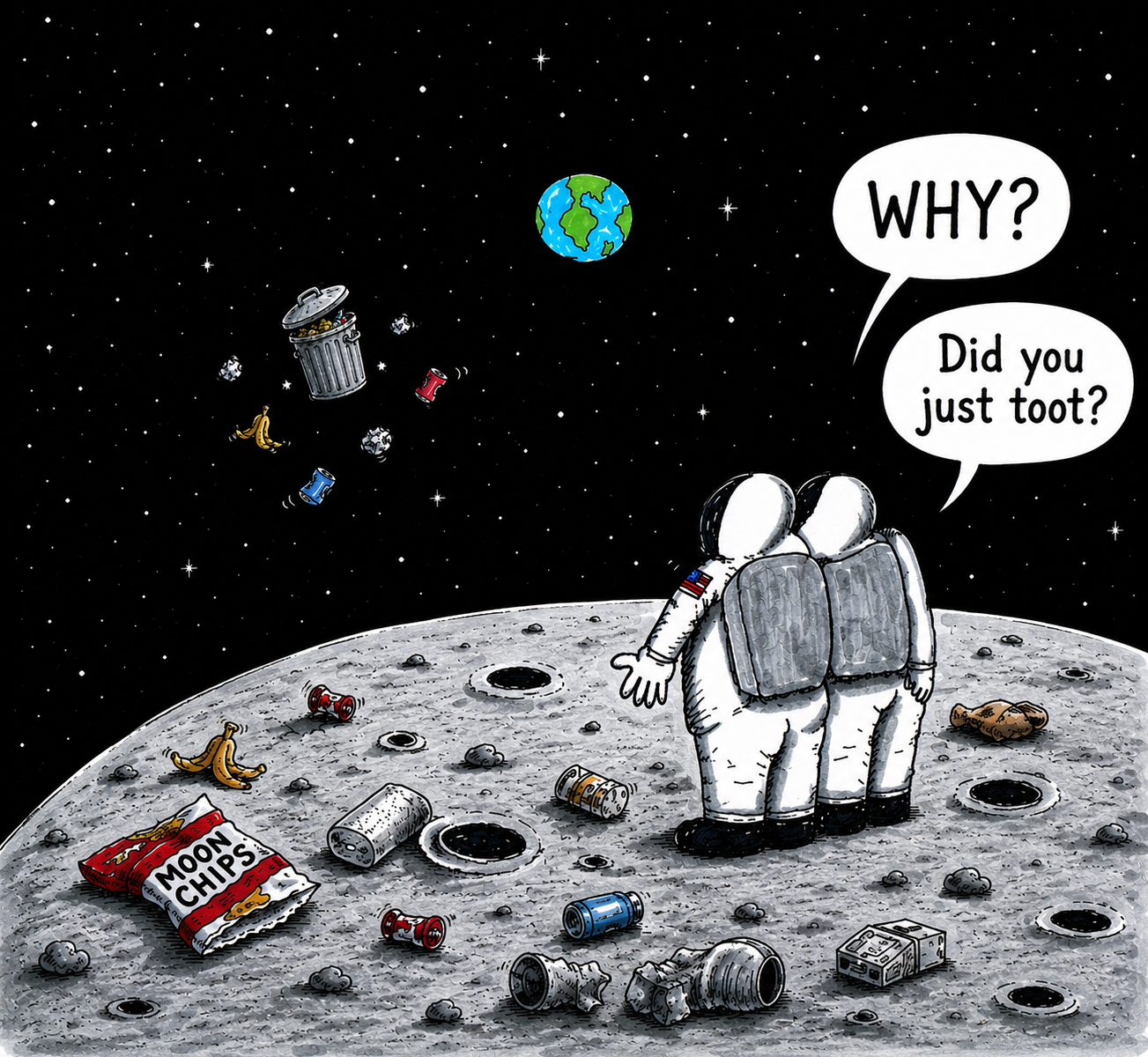
Why is Man soiling the Moon and Space? The Space Race to Waste.

The space race to waste

Space has long represented humanity’s greatest frontier—a place of wonder, mystery and scientific discovery. Yet, as our presence beyond Earth has expanded, so too has something far less inspiring: our rubbish.

It seems that wherever humans travel, waste is never far behind.

Once Pristine

The Moon, once an untouched and pristine landscape, now bears the unmistakable fingerprints of human activity. During the Apollo missions of the 1960s and 1970s, astronauts famously left behind equipment to save weight for the return journey.

Among the discarded items were scientific instruments, landing hardware, cameras, boots, empty containers and, perhaps most surprisingly, dozens of bags containing human waste.

These decisions made practical sense at the time, but decades later they remain scattered across the lunar surface, silent reminders that even our greatest achievements came with unwanted leftovers.

Extended problem

The problem extends far beyond the Moon itself. Earth’s orbit has become increasingly cluttered with discarded rocket stages, defunct satellites, broken fragments from collisions and countless pieces of debris travelling at astonishing speeds.

Even tiny fragments can damage operational spacecraft or threaten astronauts aboard the International Space Station.

Every new launch adds to an already crowded environment, increasing the risk of further collisions and creating yet more debris in an ever-growing cycle.

Invisible pollution

Modern spaceflight also leaves behind invisible pollution. Rocket launches release exhaust gases high into the atmosphere, while spacecraft vent fuel residues, gases and other materials into space during operations.

Small leaks of oxygen, carbon dioxide and propellants may seem insignificant individually, but collectively they contribute to an expanding human footprint beyond our planet.

Space may be unimaginably vast, but that should not become an excuse for careless behaviour.

Impact

Recent events have highlighted the issue once again. A spacecraft associated with SpaceX ended its mission by impacting the Moon, adding another artificial object to a celestial body already littered with relics from previous decades.

Although such impacts are often planned and scientifically useful, they also reinforce an uncomfortable truth: humanity rarely leaves a place exactly as it found it.

As commercial spaceflight accelerates and more nations enter the space race, the challenge will only grow.

Clean it up

Without international standards for orbital clean-up, debris removal and responsible lunar exploration, future generations may inherit a polluted space environment that becomes increasingly hazardous and expensive to manage.

Exploration should never come at the expense of stewardship. We rightly encourage people to recycle, reduce waste and protect fragile environments on Earth.

Surely the same principles should apply beyond our atmosphere. Space was once untouched by human hands.

As we venture further into the cosmos, perhaps the greatest mark of an advanced civilisation will not be how far it travels, but how carefully it treats the places it visits.
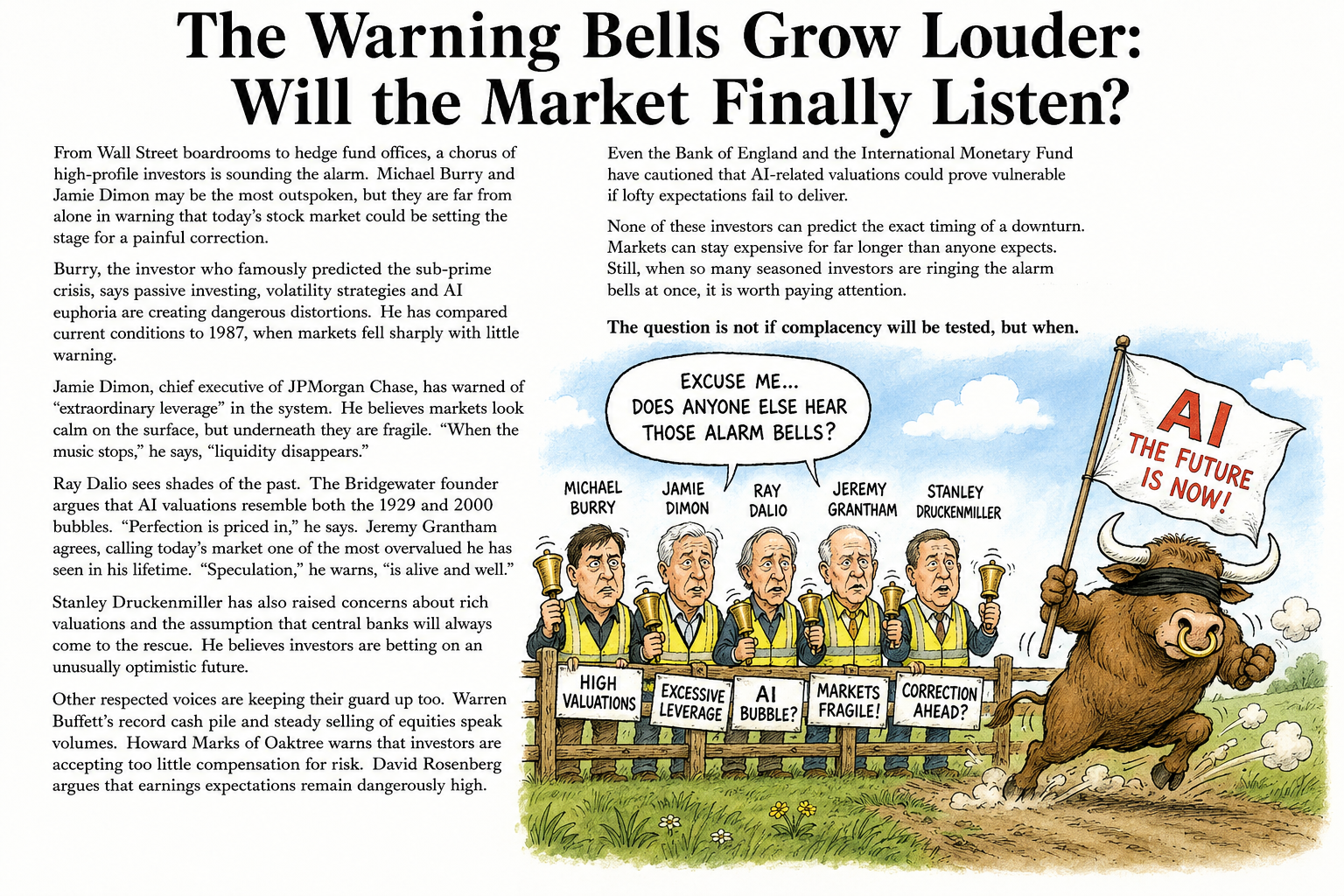
The Warning Bells Grow Louder: Will the Market Finally Listen?

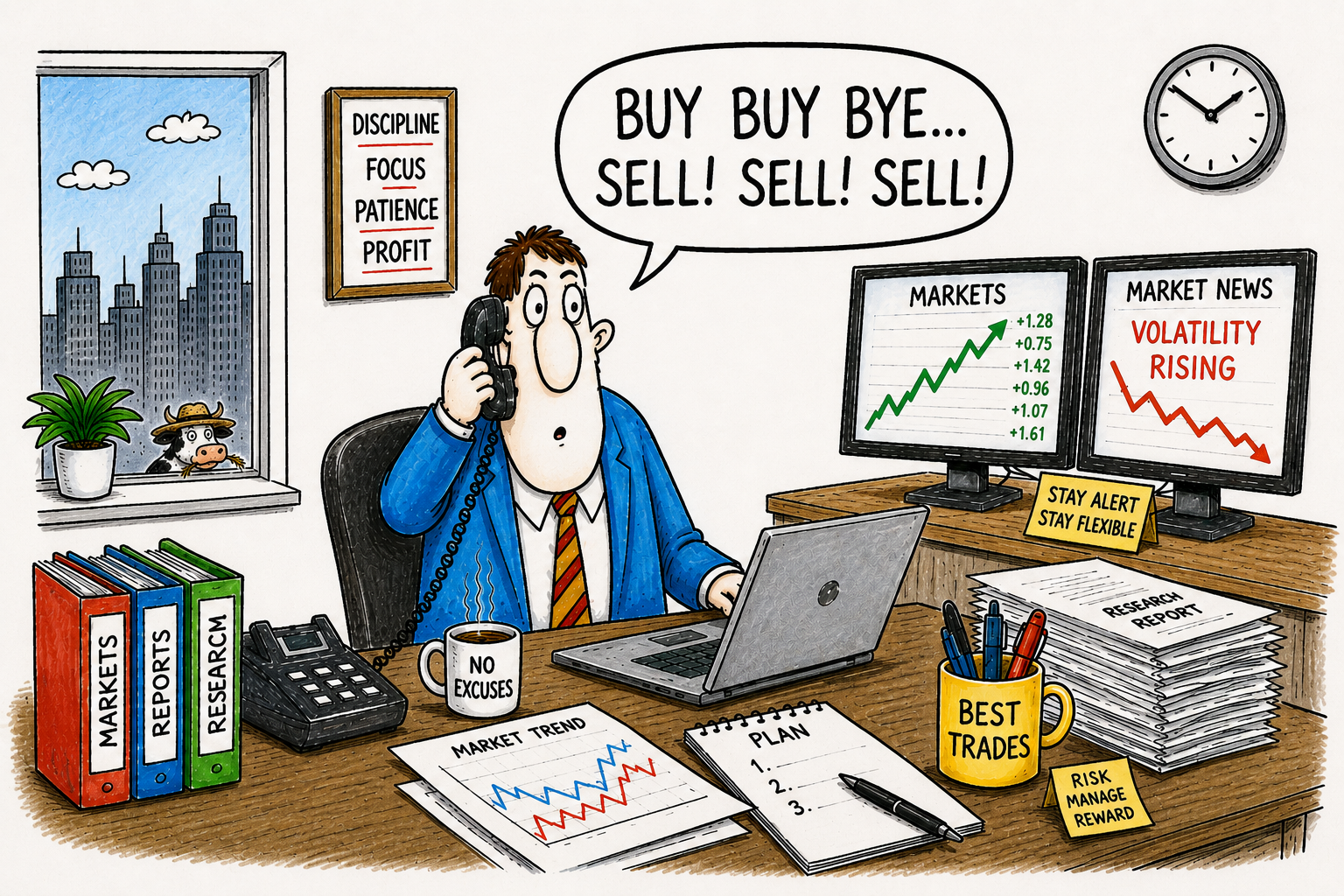
Trader selling his shares

From Wall Street boardrooms to hedge fund offices, a growing chorus of respected investors is expressing concern that today’s stock market may be approaching a dangerous turning point.

While predicting the exact timing of a correction is impossible, many believe the combination of lofty valuations, excessive leverage and relentless enthusiasm for artificial intelligence has created conditions that investors should not ignore.

Michael Burry

Among the most vocal is Michael Burry, the investor who famously anticipated the sub-prime mortgage collapse. Burry has repeatedly warned that passive investing, speculative trading and the extraordinary excitement surrounding AI are creating distortions that bear uncomfortable similarities to previous market bubbles.

He has suggested that investors are becoming increasingly complacent, assuming prices can only continue to rise.

Jamie Dimon

Jamie Dimon, Chief Executive of JPMorgan Chase, has also been reported to have raised concerns. While acknowledging the strength of the wider economy, he has warned that significant leverage remains embedded throughout the financial system.

His view is that markets often appear calm on the surface until liquidity suddenly evaporates, leaving investors scrambling for the exits.

Ray Dalio

Bridgewater founder Ray Dalio has reportedly drawn comparisons between today’s AI-driven optimism and previous periods of speculative excess, including the late 1920s and the technology bubble of 2000.

He argues that exceptional expectations have already been priced into many of the largest companies, leaving little room for disappointment should earnings fail to match investors’ hopes.

Jeremy Grantham

Veteran investor Jeremy Grantham has been reported to have echoed those concerns, describing many areas of the market as historically expensive.

He reportedly believes speculative behaviour has once again become widespread, with investors willing to overlook traditional valuation measures in favour of chasing momentum.

Stanley Druckenmiller

Meanwhile, billionaire investor Stanley Druckenmiller has questioned whether markets are becoming overly dependent upon the expectation that central banks will always provide support during periods of weakness. He believes that assumption could eventually be tested.

Warren Buffet and others

Other experienced voices have also adopted a more cautious stance. Warren Buffett‘s substantial cash holdings and continued selling of equities suggest he is finding fewer attractive opportunities at current prices.

Howard Marks has consistently warned that investors are accepting too little compensation for risk, while economist David Rosenberg reportedly believes earnings expectations remain overly optimistic.

It’s anyone’s guess

None of these investors claims to know precisely when a downturn might begin. Markets have a habit of remaining expensive for far longer than many expect.

However, when so many experienced market participants are independently highlighting the same risks—rich valuations, growing leverage, speculative enthusiasm and excessive confidence—it becomes increasingly difficult to dismiss the warnings.

Timing?

Whether the next correction arrives next month or several years from now remains uncertain.

What is becoming harder to ignore is that the warning bells are no longer being rung by one or two cautious observers, but by an increasingly influential chorus of some of the world’s most respected investors.

History suggests that while markets often ignore such warnings during the final stages of a bull run, they rarely do so forever.