UK Prime Minister announces snap general election for 4th July 2024

UK election

On 22nd May 2024, UK Prime Minister Rishi Sunak announced a snap general election for 4th July 2024 This decision caught many by surprise, as the election was called more than around six months earlier than legally required.

Election Date: 4th July 2024let the fireworks begin

The Conservative Party, led by Rishi Sunak, is facing significant challenges in opinion polls, trailing behind the opposition Labour Party.

The economy, immigration, health services, and cost of living have been identified as key issues for voters.

Labour, led by Sir Keir Starmer, is considered the clear frontrunner, with a substantial lead in recent polls.

Since 2010, the Conservatives have seen five prime ministers: David Cameron, Theresa May, Boris Johnson, Liz Truss, and now Rishi Sunak.

Sir Keir described the past 14 years as “Tory chaos” and emphasised that it’s time for change.

So, the UK is gearing up for an early election, and the outcome will be closely watched both domestically and internationally

Big tech companies pledge AI safety commitments

AI Kill Switch!

Leading technology companies, such as Microsoft, Amazon, and OpenAI, have united under a significant international accord for artificial intelligence (AI) safety measures, established at the Seoul AI Safety Summit on Tuesday 21st May 2024.

Following the agreement, firms from various nations, including the UK, China, Canada, the U.S., France, South Korea, and the United Arab Emirates, have pledged to voluntarily commit to the secure development of their cutting-edge AI models.

Framework

AI model developers who have not already done so agreed to issue safety frameworks that detail how they will address the challenges posed by their advanced models, including the prevention of technology misuse by malicious entities.

These frameworks will feature ‘red lines’ that tech companies will establish to delineate the types of risks associated with advanced AI systems that are deemed ‘unacceptable.’ These risks encompass, but are not limited to, automated cyberattacks and the potential for bioweapons.

Kill switch

In the event of such dire scenarios, companies have declared their intention to introduce a ‘kill switch’ that would halt the development of their AI models should they be unable to ensure the mitigation of these risks.

“It is unprecedented for so many prominent AI firms from diverse regions of the world to concur on identical commitments regarding AI safety,” Rishi Sunak, the UK Prime Minister reportedly said on Tuesday 21st May 2024.

He further noted that these commitments would guarantee that the world’s foremost AI companies will maintain transparency and accountability concerning their safe AI development strategies.

This agreement builds upon a prior set of pledges made in November 2023 by entities engaged in the creation of generative AI software.

The involved companies have consented to seek feedback on these standards from ‘trusted actors,’ which include their respective national governments when suitable, prior to their publication in anticipation of the forthcoming AI summit – the AI Action Summit scheduled to take place in France in early 2025.

EU gives greenlight to the world’s first significant law on artificial intelligence

Human and humanoid

On Tuesday 21st May 2024, European Union member states reached a consensus on the world’s first significant law to regulate artificial intelligence, a move echoed by institutions globally to implement controls on the technology.

The EU Council announced it has granted final approval for the AI Act, a pioneering regulation designed to establish the first extensive framework for artificial intelligence.

The EU Commission is authorized to impose fines on companies violating the AI Act, up to 35 million euros ($38 million) or 7% of their annual worldwide turnover, whichever is greater.

Microsoft announces new PCs with AI chips

AI art

Microsoft is promoting new computers equipped with advanced chips, engineered to operate the new artificial intelligence (AI) capabilities embedded in the Windows operating system.

On Monday 20th May 2024, Microsoft unveiled a Surface Laptop and a Surface Pro tablet, both featuring a Qualcomm chip capable of executing AI tasks both online and offline.

The new Microsoft Copilot+ PCs feature chips designed by ARM and are powered by Qualcomm’s Snapdragon X Elite and X Plus chips, which are also based on ARM architecture. These Snapdragon-powered PCs represent the initial series of devices under the Copilot+ PC brand, introducing over 20 models from various manufacturers, such as Acer.

The partnership between Microsoft, Qualcomm, and PC manufacturers is focused on providing superior processing and quick response times, with these ARM-based chips being integral to the new AI designs.

In addition, manufacturers like Lenovo, Dell, HP, Asus, Acer, and Samsung are launching AI-ready PCs featuring Qualcomm’s Snapdragon X Elite and X Plus processors. These processors offer extended battery life and compatibility with Microsoft’s Copilot AI chatbot.

Microsoft’s powerful AI vision – some tech information

Windows PCs designed for AI, known as Copilot+ PCs, are fitted with new, powerful chips capable of an astounding 40+ TOPS, ensuring all-day battery life and access to cutting-edge AI models.

Promoted as the fastest and most intelligent Windows PCs ever created, they boast features like Recall, Cocreator, and Live Captions, which can translate audio from over 40 languages into English.

These devices include sleek, lightweight, and elegantly designed models from Microsoft Surface and OEM partners such as Acer, ASUS, Dell, HP, Lenovo, and Samsung. Pre-orders are now open, with availability starting on June 18 and prices reportedly beginning at $999. This represents a major shift in the Windows platform, placing AI at the forefront of PC architecture.

This progress is a big part of Microsoft’s wider initiative to drive AI innovation onto devices, enhancing the AI capabilities that are already present in the cloud through Copilot.

This is a massive development in the deployment of AI to the masses.

U.S. debt and deficits are generating concerns about potential threats to the economy and financial markets

Debt burden

The federal debt reportedly reached $34.5 trillion, marking an increase of approximately $11 trillion since March 2020.

This surge has sparked discussions among government and financial leaders, with a notable Wall Street firm questioning whether the associated costs could threaten the stock market’s upward trend. The Congressional Budget Office projects that the public debt will soon surpass any previously recorded levels relative to GDP.

Federal Reserve Chair Jerome Powell has emphasized the urgency for elected officials to address this issue promptly.

AI’s excessive water consumption should be of international concern

Water precious resource

As artificial intelligence (AI) continues its rapid advancement, we must confront its environmental footprint. Beyond energy consumption, AI’s demand for water is a critical concern that demands attention.

AI data centres require cooling, and substantial amounts of fresh water are utilized for this purpose. Additionally, water is consumed in the mining and production of AI-related hardware.

The production of AI hardware utilizes and contaminates water due to the mining of rare materials like silicon, germanium, gallium, boron, lithium, gold, copper and phosphorus. The extraction of these minerals is resource-intensive and significantly affects the environment, leading to water pollution. AI is hungry for power too – the amount of additional energy required to run an AI data centre is far greater.

AI water footprint

The water consumption associated with AI is not limited to its operational phase. AI hardware production requires intensive mining for rare materials such as silicon, germanium, gallium, boron, and phosphorus. The extraction of these minerals has a substantial environmental impact and contributes to water pollution.

Additionally, AI systems’ water use extends to the production of related hardware. The extensive deployment of AI compounds this problem, putting pressure on the drinking water supplies of local communities. With the increasing adoption of AI, there is additional strain on municipalities, agriculture, and various industries that are already facing challenges due to drought and scarce water resources.

Solutions?

Researchers have explored AI’s potential to address water challenges.

Water Efficiency

AI can optimise water usage in agriculture by automating irrigation systems. Smart machines, robots, and sensors analyse data to enhance efficiency and detect leaks, as demonstrated in smart irrigation systems for crops.

Water quality monitoring

AI-powered biosensors can accurately detect toxic chemicals in drinking water, surpassing current quality monitoring practices.

Sustainable management – a double-edged sword

AI can aid in managing water security and wastewater treatment, contributing to sustainable water use. However, on the practical side, it is the willingness to implement these grand ideas and systems that is quite often the problem.

Uncharted territory

While there is peer-reviewed analysis on the role of AI in managing water and achieving Sustainable Development Goals (SDGs), the direct and indirect effects of AI on water usage are largely uncharted.

Recent reports indicate that AI systems, such as ChatGPT, may use approximately 500 millilitres of water for every 5 to 50 prompts or questions posed by a user. Given the rapid increase in chatbot usage globally, this could lead to a considerable water footprint, raising concerns among experts and environmentalists.

Conclusion

As technological advancement continues, it is imperative to move forward with caution. Achieving a balance between innovation and the responsible use of resources is essential for a sustainable future where AI contributes positively without jeopardizing our essential water resources.

Google Unveils AI Chatbot Gemini 1.5 Flash as competition from OpenAI heats up

AI Chatbot Gemini

Google is advancing the frontiers of artificial intelligence (AI) with its new release, Gemini 1.5 Flash, which is set to transform our online information interactions.

Unveiled at Google I/O 2024, this latest model enhances sophisticated features with rapid performance and efficiency. The new AI Chatbot was unveiled on 15th May 2024.

The unveiling comes a day after OpenAI announced its newest artificial intelligence (AI) model, GPT-4o.

Google Gemini 1.5 Flash

The Gemini 1.5 Flash is engineered for exceptional speed, processing queries with reduced latency, which makes it perfectly suited for real-time applications.

Context Understanding

Similar to its forerunner, Gemini 1.5 Pro, Flash is adept at contextual understanding. It is capable of interpreting user prompts through multiple modalities such as text, images, video, and speech.

Smaller Scaled Version

Google also introduced a scaled-down version called Gemini 1.5 Nano, which runs locally on devices.

AI quick answers

A prominent feature of Gemini 1.5 Flash is the AI Overviews integration. These ‘precis’ summaries deliver rapid responses to intricate inquiries. Users are presented with a topical overview and pertinent links for additional research. The AI Overviews feature is currently being introduced to U.S. users, with worldwide availability anticipated by the end of the year.

Future of Google search

Gemini 1.5 Flash is Google’s latest endeavour to improve search experiences. Whether it’s for research, planning, or brainstorming, this AI model simplifies the process. With the advent of generative AI, Google Search is becoming increasingly potent, enabling users to effortlessly access reliable information.

OpenAI launches new AI model – and it talks, sees and hears!

Chatbot GPT-4o

OpenAI has just unveiled its latest flagship model, GPT-4o. This remarkable model can reason across audio, vision, and text in real time.

Multimodal interaction

GPT-4o accepts any combination of text, audio, and image as input and generates corresponding outputs in any of these modalities. It’s a step toward more natural human-computer interaction.

Fast response time

GPT-4o can respond to audio inputs in as little as 232 milliseconds, with an average of 320 milliseconds – similar to human conversation speed.

Improved language understanding

It matches GPT-4 Turbo performance on English text and code, with significant improvements in non-English languages. Plus, it’s 50% cheaper in the API.

Vision and audio understanding

GPT-4o excels in understanding images and audio compared to existing models.

Training

Unlike previous Voice Mode (which used separate models), GPT-4o is trained end-to-end across text, vision, and audio. This means it processes all inputs and outputs using the same neural network.

Exploring capabilities

OpenAI is still exploring what GPT-4o can do and its limitations. It’s a promising step toward more versatile AI interactions.

More here on the OpenAI website

Anthropic launches Claude in Europe – its AI chatbot

AI Chatbot

Anthropic, the artificial intelligence (AI) startup backed by Amazon, reported on Monday 13th May 2024 that it’s launching its generative AI assistant Claude in Europe on Tuesday 14th May 2024.

Claude.ai will be accessible to both individuals and businesses via the web and an iPhone app. While it is already free on both platforms in the U.K., Anthropic states that this marks the product’s inaugural launch for users in the EU and non-EU nations such as, Switzerland, Norway and Iceland.

Anthropic is introducing a paid subscription-based version of its Claude assistant, named Claude Pro, which will provide users with access to all its models, including the highly advanced Claude 3 Opus.

In its announcement about launching Claude in European countries, Anthropic emphasized security and privacy as central aspects.

Earlier this year, the EU enacted the first significant global regulatory framework to govern AI.

How to Pick Stocks: A Beginner’s Guide

Investing in individual stocks can be both thrilling and profitable, yet it carries inherent risks. To make informed decisions, it’s important to adhere to some fundamental steps.

Define Your Goals

Before diving into stock picking, consider your investment goals

Invest for the longer-term, it works!

KIS – Keep It Simple! Keep your investment strategies as simple as possible.

Generate income – For regular payouts, consider focusing on dividend-paying stocks.

Preserve capital – If your primary goal is to keep pace with inflation and safeguard your savings, consider opting for lower-risk investments.

Grow capital – If you’re a young investor aiming for long-term growth, you might consider higher-risk stocks, being cautious with your selections.

Invest for the long-term

Choose your investment strategy

Value Investing – Consider purchasing stocks that are undervalued and have been neglected by the market.

Growth Investing – Invest in companies that exhibit signs of success and have the potential for further advancement.

Momentum Investing – Dispose of underperforming assets and invest in successful ones by following market trends. Be ruthless – there is no room for emotion!

Pound-Cost Averaging – Gradually invest money into the market to reduce the impact of volatility. Look into investing in funds or unit trusts.

Stay informed

Before selecting individual stocks, it’s crucial to stay informed about broader economic trends. Consult financial news websites and specialized magazines to gauge the performance of various industries. For example, economic volatility or significant global incidents, such as the emergence of a new virus variant, can affect the stock market.

Pay close attention to economic announcements from central banks, like interest rate changes. Monitor the newswires regularly and track market trends.

Explore industries you understand

Focus on investing in sectors you understand well. For instance, if your expertise lies in technology, look towards tech companies. If renewable energy is your area of interest, consider stocks in that domain. Knowledge of the industry can lead to more informed evaluations of companies.

Assess company fundamentals

When evaluating a specific stock, consider the following

Financial Health – Examine the company’s balance sheet, income statement, and cash flow. Scrutinize the levels of company debt. Observe the sales and purchases by directors. Determine if they are financially stable.

Earnings Growth – Verify whether the company has demonstrated consistent growth in its earnings over time.

Valuation – Comparing a stock’s price-to-earnings (P/E) ratio with that of its industry peers is crucial for assessing its market value relative to its earnings.

Competitive Advantage – A company’s competitive edge can stem from a unique product, a strong brand, or other distinctive factors. These elements can set a business apart and enable it to outperform its rivals in the market.

After a general market downturn – there is usually a good opportunity to pick-up good companies at a knock down bargain price.

Diversify your portfolio

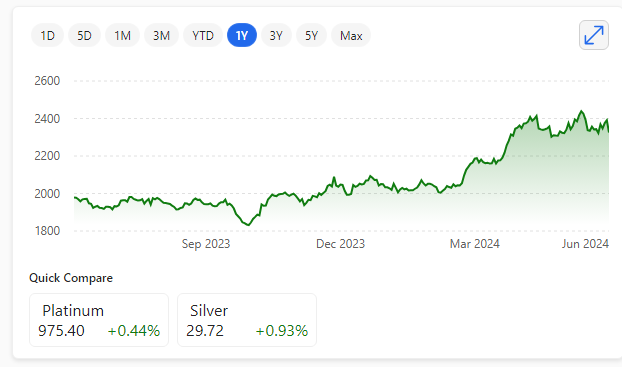
It’s wise not to concentrate all your resources in a single area. Diversify your investments across various sectors and asset classes. Look into exchange-traded funds (ETFs) or mutual funds to gain wider market exposure. Consider precious metals such as gold maybe and keep cash on the sidelines for those occasional deals that crop up from time to time.

In summary

Selecting stocks involves thorough research, patience, and a vision for the long-term. Keep in mind that all investments carry some level of risk – past performance is not indicative of future outcomes. It is advisable to seek guidance from a financial advisor prior to making any investment choices.


Remember, investing involves risk, and it’s essential to do thorough research and consider professional advice before making any investment decisions. 

RESEARCH! RESEARCH! RESEARCH!

Good luck with your stock-picking choices.

Scientists create ‘world’s purest silicon’ – it has the power to change the world

Purest silcon created

Scientists have recently achieved a remarkable breakthrough by creating pure silicon, which could pave the way for quantum computing

The world’s purest silicon

Researchers have developed an ultra-pure form of silicon, known as silicon-28 (Si-28), which is fundamental for ‘silicon-spin qubits’ in quantum computers. This advancement addresses a major challenge in quantum computing: the ‘fragile quantum coherence.’

Quantum computers tend to accumulate errors quickly due to slight environmental changes, affecting their dependability.

Quantum bits, or qubits, are analogous to classical computer bits but are extremely sensitive to environmental interference.

Technical

Current quantum computers, even when cooled to near absolute zero, can only maintain error-free operation for a very short time.

This new technique generates qubits by embedding phosphorus atoms into crystals of pure, stable silicon. A concentrated silicon beam then directs onto a silicon chip, replacing impurities with pure silicon.

As a result, the impurity levels in silicon have been significantly reduced, from 4.5% to a mere 0.0002%.

David Jamieson, a project co-supervisor from the University of Melbourne, mentioned that the team achieved this level of purity using a standard piece of equipment – an ion implanter – that’s typically found in semiconductor fabrication laboratories.

Richard Curry, a professor at The University of Manchester where extensive research took place, believes that this advancement could accelerate the development of operational quantum computers. Processes that might have taken a decade to complete could now be accomplished in potentially half that time or less.

Potential impact

Practical quantum computers have the potential to revolutionize numerous fields

  • Energy Optimization: They can solve intricate problems related to energy.
  • Artificial Intelligence: Quantum computers may significantly boost AI capabilities.
  • Drug Discovery: They could expedite drug development and molecular simulations.
  • Communication: They can enhance encryption and communication protocols.

The creation of the world’s purest silicon represents a significant step forward in the development of large-scale quantum computers.

Why are mortgage rates still going up?

Home loans increasing

Mortgage rates are still going up due to expectations that the Bank of England might not cut borrowing costs as much as expected. 

Higher-than-expected inflation figures at this point, have led to increased forecasts for UK interest rates, prompting lenders to raise the cost of new mortgage deals.

Those considering purchasing their first home or relocating have probably been monitoring the recent rise in mortgage rates closely. In the past few weeks, numerous lenders have increased the interest rates on new fixed mortgage deals, thus making borrowing costlier. Existing homeowners planning to remortgage this year might have anticipated falling rates, not an upward trend.

So, what’s driving this trend?

Borrowing costs are increasing

Mortgage rates typically reflect the actions of the Bank of England, especially changes to its benchmark interest rates, commonly referred to as the base rate. An increase in the base rate makes borrowing costlier. Swap rates, which are essentially agreements to exchange interest rates between parties for a specified duration, have a considerable impact on fixed-rate mortgage agreements. Consequently, as lenders face higher borrowing costs, fixed-rate mortgages tend to increase. With several recent rises in the base rate, mortgage rates have escalated accordingly.

Lenders’ strategies

Lenders are exercising caution in managing their customer base. The recent increases in rates do not reflect a rapid cycle as observed in the previous two years. Rather, lenders are strategically adjusting their rates. Earlier in the year, a mini price war among lenders led to favorable interest rates for borrowers. Nonetheless, these rates have subsequently increased, with lenders adopting a more conservative approach to pricing. For instance, the average interest rate for a two-year fixed deal rose from 5.55% at the end of January to 5.93% more recently.

Lenders don’t want too many customers

Mortgage brokers emphasize that the recent changes do not signify a new cycle of rapidly increasing rates, such as those experienced over the past two years.

Current mortgage rates remain below the peak of last summer and are not escalating as sharply as they did following the mini-budget of 2022. Nevertheless, some borrowers were expecting rates to consistently decrease throughout the year.

Two more key factors have created the current bump in the road.

  • Firstly, the global economic outlook has not been as positive as many would have hoped. The U.S. central bank again said it would keep interest rates unchanged, because the rate of rising prices (inflation) had proved more persistent than expected.
  • Secondly, lenders tend to move in a pack. A mortgage provider wants to set its rates to be competitive, but not too low to be suddenly inundated with custom and unable to cope with the demand.

For home buyers and owners, the financial landscape has shifted slightly; obtaining a mortgage now is somewhat more costly than it was a year ago.

According to Rightmove, the average monthly mortgage payment for a typical first-time buyer’s property, based on a standard five-year fixed, 85% loan-to-value mortgage, has risen to £1,117 from £1,056 the previous year.

Those facing the end of their two-year or, especially, five-year mortgage deals may see their monthly payments increase by hundreds of pounds, as their previous rates could have been below 2%.

Expectations and inflation

Market expectations are crucial. The Bank of England’s Monetary Policy Committee (MPC) affects mortgage rates through its decisions. The MPC recently indicated that rate cuts would not occur as soon or as frequently as once anticipated, due to persistent inflation and other economic considerations. As a result, mortgage rates have been gradually increasing.

To summarize, the escalation in mortgage rates is attributed to several factors, including higher borrowing costs, the conservative tactics of lenders, and the anticipations of the market. It is crucial for prospective homebuyers and current homeowners to keep a vigilant eye on these trends to make well-informed decisions.

Gold bars from vending machines – whatever next – coffee at Royal Mint?

Gold bars

Buy gold bars from South Korea’s convenience stores and vending machines

South Korean convenience stores are now the latest attraction for gold enthusiasts. Instead of the typical snacks and beverages, customers can now buy gold bars.

Convenience store gold bars

GS Retail, one of South Korea’s largest convenience store chains, introduced gold bars in vending machines at select locations in September 2023. These machines offer five different sizes, ranging from a tiny 0.13-ounce bar to a bigger 1.3-ounce bar.

The most sought-after option is the diminutive 0.13-ounce gold bar, with a price tag of approximately $225. It’s the younger demographic – individuals in their twenty’s and thirty’s – who are eagerly acquiring these lustrous assets. They possibly view gold as a secure refuge in the face of worldwide inflationary pressures and heightened global geopolitical tensions.

GS Retail has reported total sales of gold bars amounting to $19 million in the past nine months, concluding in May. The rising popularity of these bars has led the company to increase the number of stores offering them, aiming to reach 50 locations by the end of the year.

CU collaboration

In a competitive move, CU, the nation’s premier convenience store chain, has partnered with the Korea Minting and Security Printing Corporation (KOMSCO) to sell mini gold bars ranging from 0.1 to 1.87 grams. These diminutive bars have been on sale at CU stores since April.

The pricing of these mini gold bars is tied to fluctuating international gold prices, updated daily. Evidently, even these small quantities of gold are attracting keen interest from young consumers.

Accessibility and fun

The soaring popularity of gold bars in South Korea can be attributed to their accessibility. With convenience stores at every corner, purchasing gold has become as simple as walking in and making a selection.

A representative from Inha University reportedly noted that while some may purchase gold bars as a serious investment, others might buy them for the novelty and ease of access. Imagine the allure of picking up a gold bar along with your daily groceries.

To sum up, convenience stores in South Korea have become modern-day treasure chests, where gold bars are sold next to daily necessities. Whether for investment purposes or for a bit of indulgence, these shiny objects are creating a buzz in the country known for K-pop and kimchi.

So, next time you visit a Korean convenience store, don’t miss the chance to check out the shiny vending machine – it could present a golden opportunity.

FTSE 100 in record territory

The FTSE 100 soared past 8300, reaching a new record high amid busy trading as London markets reopened after the bank holiday.

A catch-up trading session is evident, with mainland-listed stocks having a robust session on Monday 7th May 2024 and continuing to rise. The FTSE reached around 8335 in intraday trading.

Wall Street also experienced another positive session, with the Dow Jones climbing for the fourth consecutive day following the Federal Reserve’s less aggressive stance, and the S&P 500 gaining too. Despite mixed results, earnings have bolstered risk appetite. The low U.S. job count has encouraged traders/investors to take heart that rate cuts will be on the agenda again soon, even if they are now late.

Bank of England

Attention will now turn to the Bank of England (BoE), which faces a decision on whether to guide the market towards a rate cut – the first in four years – or to exercise more patience. The consensus is that it’s premature for a cut this week, with August 2024 being the more likely date, although the Monetary Policy Committee’s (MPC) opinions vary.

Last month the Deputy Governor of the BoE, indicated his readiness to vote for a rate cut with little additional evidence of declining inflation, highlighting the ‘downside risks’ to the BoE’s February inflation forecast. In contrast, the Bank of England’s Chief Economist, expressed a more cautious stance in April regarding the initiation of rate cuts.

Inflation

Inflation is on a downward trajectory, expected to return to 2% in the next few months. CPI decreased from 3.4% to 3.2% between February and March 2024, and core inflation dropped from 4.5% to 4.2%. However, the BoE is likely to await April’s data before taking any decision.

Persistent wage growth of around 6% indicates continued strength in the labour market. Financial markets anticipate a Bank of England rate cut by August 2024, but it is believed the BoE may be prepared to act as early as June 2024, aligning with the anticipated policy move by the ECB.

Apple reportedly developing AI microchips for data centres

Apple

Apple, renowned for its innovative consumer electronics, is reported to be branching into artificial intelligence (AI).

Recent reports suggest the company is developing a project dubbed ‘Project ACDC,’ (Apple Chips in Data Centre) with the goal of creating specialized AI chips for data centres.

The AI race

AI applications are becoming ever more essential in our daily routines, prompting tech giants to vie for dominance in this arena. Apple, previously trailing behind its rivals in AI, is now channelling substantial investments to bridge the gap. Project ACDC marks Apple’s strategic endeavour to position itself as a key contender in AI processing.

The role of AI microchips

Traditionally, data centres have depended on general-purpose processors, like Intel Xeon or AMD EPYC, to manage diverse workloads. AI workloads, however, demand unique features such as extensive parallelism and high computational throughput. Specialized AI chips are crucial to meet these demands.

Apple’s AI chips, designed specifically for data centre servers, aim to efficiently expedite AI tasks. These chips will facilitate capabilities such as natural language processing, image recognition, and recommendation systems. With the development of its own AI chips, Apple seeks to secure a competitive edge in the AI technology race.

Collaborating with Taiwan Semiconductor Manufacturing Co.

Apple is said to be partnering with Taiwan Semiconductor Manufacturing Co. (TSMC) to design and produce AI chips. TSMC, a top semiconductor manufacturer, is recognized for its cutting-edge process technology. Although the release timeline for these chips is not specified, their development underscores Apple’s dedication to AI.

WWDC 2024 expectations

Rumors indicate that Apple may reveal AI-based features enabled by its new chips at the Worldwide Developers Conference (WWDC) in June 2024. Should this be accurate, it could mark a significant milestone for Apple’s AI initiatives.

In conclusion, Apple’s Project ACDC signifies an aggressive move towards AI supremacy. With ongoing investments in generative AI, we can anticipate significant advancements in the near future.

UK Ministry of Defence suffers hack and data breach

The breach involved a third-party payroll system used by the MoD

The compromised system contained names and bank details of both current and past members of the UK armed forces.

While the full extent and consequences of the breach are still under investigation, preliminary results reportedly indicate that no data was extracted during the incident.

It appears that a minimal number of addresses might have been compromised.

The Ministry of Defence (MoD) responded quickly by disconnecting the external network, which is managed by a contractor.

Affected service members will be informed as a precautionary measure and will be provided with expert advice.

Hacker’s ID not revealed

The hacker’s identity has not been revealed, but it is significant that in March, the UK and the U.S. charged China with conducting a worldwide campaign of “malicious” cyber-attacks.

These assaults targeted the Electoral Commission watchdog in 2021 and involved online “reconnaissance” of MPs’ and peers’ email accounts. The limited response to these events highlights the persistent cybersecurity challenges and the importance of constant alertness.

As the inquiry progresses, the MoD is expected to implement additional security measures to safeguard sensitive data, measures that ideally should have already been established.

UK predicted to have slowest growth of richest nations in 2025

Slow growth in UK

Forecasts indicate that the UK economy will experience sluggish growth among the largest developed nations in 2025.

The Organisation for Economic Co-operation and Development (OECD) has projected a 1% increase in the UK’s gross domestic product (GDP) for 2025, which lags behind the growth rates of other G7 nations, including Canada, France, Germany, Italy, Japan and the US.

The OECD, a globally recognised think tank, has described the UK’s economic outlook as ‘sluggish‘ for the current year. The organization attributes the lackluster performance to the cumulative effects of consecutive interest rate hikes in the UK.

Additionally, the OECD has cautioned that persistent elements of high inflation and the uncertainty surrounding the Bank of England’s interest rate decisions may deter investment.

The latest forecast for the UK economy predicts a 0.4% growth for this year, a revision downward from the OECD’s earlier estimate of 0.7% growth. Consequently, Germany is the only G7 country projected to have slower growth than the UK this year.

Year on year economic growth predictions for G7 nations from the OECD

Year on year economic growth predictions for G7 nations from the OECD

Are U.S. banks at risk of failure?

Banks at risk?

The fragility of U.S. banks: A looming financial crisis or an event unlikely to unfold?

Amid escalating interest rates and economic instability, an alarming report has surfaced, suggesting that a considerable number of U.S. banks are on the verge of collapse. This potential looming crisis is attributed to various elements that have jeopardised stability.

Hundreds of small and regional banks across the U.S. are feeling stressed.

A recent publication on the Social Science Research Network indicates that up to 186 banks in the United States may be at risk of collapse or at least severe financial damage due to a significant amount of uninsured deposits and the effects of monetary tightening.

The Federal Reserve’s policy to raise interest rates has resulted in considerable asset reductions of these banks. The study emphasizes the susceptibility of banks that depend largely on uninsured depositors, who hold account balances above the FDIC‘s insurance limit of $250,000.

The precarious situation could worsen due to a potential domino effect. Should a substantial number of uninsured depositors suddenly withdraw their funds, it ‘might’ prompt a banking crisis, endangering even insured deposits. It is estimated that nearly $300 billion in insured deposits could be at risk in such an event. Remember the financial crises of 2008/2009 – it wasn’t that long ago.

Silicon Valley Bank

The collapse of Silicon Valley Bank, for example, highlights the risks associated with rising interest rates and significant withdrawals of uninsured deposits. The bank’s failure to fulfill its obligations resulted in its shutdown, which had an impact on the financial sector.

Although the number of FDIC insured institutions on the so-called ‘Problem Bank list‘ has decreased, the current economic climate has reignited concerns about the stability of smaller banks, particularly those with assets under $10 billion.

These banks face threats from commercial real estate loans and the repercussions of rising interest rates, which could lead to unrealised losses and strain their capital reserves.

As the situation unfolds, it becomes clear that without government intervention or strategic recapitalisation, the U.S. banking system could approach a crisis. This potential crisis could affect not only the banks but also the wider economy and the communities they serve.

Therefore, vigilant oversight and proactive measures are crucial to maintain the stability of the U.S. and the global financial system and protect depositors’ interests.

Binance founder Changpeng Zhao sentenced to 4 months

Cryptocurrency trading

Changpeng Zhao (CZ), the founder of Binance, who admitted to money laundering offences in November 2023, received a four-month prison sentence on Tuesday 30th April 2024.

U.S. prosecutors had suggested a sentence of 36 months for Zhao. As part of his deal with the Justice Department, the cryptocurrency billionaire resigned from his position as CEO of Binance.

The billionaire is reportedly expected to see his massive crypto fortune remain intact. His wealth is likely to continue to climb even as he serves time in prison.

WEF president warns about global debt levels

Global debt burden

Borge Brende, the president of the World Economic Forum (WEF), recently issued a stark warning about global debt levels.

Speaking at the ‘Special Meeting on Global Collaboration, Growth and Energy for Development‘ in Riyadh, Saudi Arabia, (see WEF website), he highlighted that global debt ratios are approaching levels not seen since the 1820s.

The WEF president also reportedly emphasized the risk of ‘stagflation‘ for advanced economies. He cautioned that without appropriate economic measures, the world could face a decade of low growth.

The current global growth estimate stands at around 3.2%, down from the 4% trend growth seen for decades. Brende urged governments to address the mounting debt situation and implement prudent fiscal measures to avoid triggering a global recession. 

He also noted the persistence of inflationary pressures and suggested that generative artificial intelligence could offer opportunities for developing nations. The International Monetary Fund (IMF) concurs with this concern, reporting that global public debt reached 93% of GDP last year, still 9% higher than pre-pandemic levels. 

The IMF projects that global public debt could approach 100% of GDP by the end of the decade.

AI energy consumption is shocking!

AI Energy Consumption

Powering artificial intelligence (AI) models takes a substantial toll on our planet’s energy resources.

Delving deeper into AI, it becomes crucial to comprehend the environmental impact of this technological revolution.

Current trends

A new peer-reviewed study featured in ‘Joule‘ highlights the significant energy requirements of AI. The research, carried out by Alex de Vries, a data scientist at the Dutch central bank, provides a quantification of the energy usage linked to the trends in AI capacity and adoption.

The energy appetite of AI

The AI industry is experiencing rapid growth as major technology companies incorporate AI-driven services into their platforms. These applications require significantly more power than traditional ones, resulting in online interactions that are more energy-intensive.

Projected impact

Continuing on the present course, NVIDIA could be dispatching 1.5 million AI server units each year by 2027. If these servers were to run at maximum capacity, they would consume a minimum of 85.4 terawatt-hours of electricity annually. For comparison, this amount of energy surpasses the yearly consumption of numerous small nations.

Comparisons

By 2027, it is projected that global AI-related electricity consumption may rise by 85 to 134 terawatt-hours (TWh) annually. This estimate is on par with the yearly electricity requirements of nations such as the Netherlands, Argentina, and Sweden.

Why sustainability matters

While AI heralds significant breakthroughs, its sustainability is a crucial risk factor to consider. Picture Google’s search engine evolving into a ChatGPT-style chatbot, managing nine billion interactions daily. This would cause energy demands to soar, matching the consumption of a nation like Ireland. Although this scenario isn’t immediately likely due to logistical limitations, it highlights the resource-intensive nature of generative AI applications.

As we explore the AI domain, sustainability should not be neglected. Discussing AI’s risks, such as errors and biases, should also include its environmental impact. Innovation must be balanced with responsible energy use for a sustainable future.

Conclusion

In essence, AI’s demand for power is substantial, and the challenge is to leverage its capabilities while reducing its environmental impact. We must proceed with caution to ensure our technological advances do not compromise the health of our planet.

Voyager One phones home for the first time in 5 months

Voyager One

Voyager 1, launched in September 1977, holds the distinction of being the furthest human-made object from Earth.

It embarked on an incredible journey, venturing beyond the boundaries of our solar system and into interstellar space.

Here’s the latest update on this iconic spacecraft

Communication

On 14th November 2023, Voyager 1 experienced an unexpected glitch, rendering its binary communication code with NASA’s flight team incomprehensible.

However, after several months of indecipherable signals, Voyager 1 has resumed clear communication with Earth. On 20th April2024, the spacecraft reported back to its NASA team, detailing its health status for the first time in five months.

Although it is not yet transmitting scientific data, Voyager 1 is providing valuable information regarding the health and functionality of its onboard engineering systems.

Historic

Thirty-five years post-launch, Voyager 1 marked a milestone as the first human-made object to exit the solar system and enter interstellar space.

Six years thereafter, in 2018, Voyager 2 emulated its predecessor, venturing beyond the sun’s dominion. Together, these spacecraft stand as humanity’s lone envoys in the cosmic expanse, bearing our scientific endeavours and inquisitive spirit.

Technical repair

In March, the team operating NASA’s Voyager 1 sent a command to the spacecraft, which triggered its flight data subsystem (FDS) to transmit a complete memory readout to Earth.

The analysis of the memory dump reportedly indicated that the malfunction was due to a piece of corrupted code on a single chip, accounting for approximately 3% of the FDS’s memory.

While it’s not possible to physically repair or replace the chip, the team is adeptly shifting the problematic code within the FDS’s memory. This process apparently involves dividing the code into segments and reallocating them to different storage areas, with the goal of maintaining the smooth operation of Voyager 1’s systems.

Clever

Ultimately, Voyager 1’s recent successful communication serves as a remarkable example of human creativity and determination in space exploration. Even from its extraordinary distance from Earth, the venerable spacecraft continues to provide important updates on its status and insights into the unknowns of interstellar space.

15 billion miles and counting

Voyager 1 is approximately 15 billion miles from home. It takes about 1 day for information to travel from Voyager to Earth. Voyager 1 is travelling at an estimated speed of: 38026

Voyage One mission status

Will Bitcoin experience another growth spurt after the latest halving event?

Bitcoin halving is a significant event in the cryptocurrency world

What is Bitcoin Halving?

Bitcoin halving, which happens roughly every four years, cuts the rate of new Bitcoin creation by half. This event is tied to the method of recording and generating Bitcoins. Transactions are logged on a blockchain, a ledger accessible to all.

Miners compile transactions into blocks and connect them by resolving cryptographic challenges, earning new bitcoins as their reward.

Satoshi Nakamoto, the enigmatic creator of Bitcoin, designed the cryptocurrency to have a maximum circulation of 21 million coins. To ensure this, the Bitcoin protocol halves the reward given to miners every 210,000 blocks, an event that occurs approximately every four years.

The Latest Halving

The latest Bitcoin halving took place in the early hours of Saturday 20th April 2024, reducing the reward for adding a new block of transactions to the blockchain from 6.25 Bitcoins to 3.125. Bitcoin’s halving will persist until the total supply approaches the 21 million cap, anticipated around the year 2140.

Impact on Bitcoin Price

The halving of Bitcoin reduces the number of new coins entering circulation, which, in theory, could drive up the price if demand remains constant.

According to economic principles, a stable demand coupled with a reduced supply should lead to a price increase.

Analysis of the three previous halvings (in 2012, 2016, and 2020) indicates an average price surge of 16% in the 60 days post-halving.

Typically, investors see the highest price increase approximately 500 days following a halving event.

Despite a recent drop from its peak, Bitcoin holds a high-level interest for crypto investors, even with its volatile behaviour. It has posted a 40% increase in 2024 compared to the same period last year.

In summary, the halving of Bitcoin reduces the availability of new coins, which could lead to an increase in value. However, the complete effects may only become apparent gradually over time.

Global police forces take down massive scam website that defrauded thousands of victims

Online fraud

UK police have dismantled a gang that provided a technology service enabling criminals to use fraudulent text messages to defraud victims

Britain’s Metropolitan Police announced on Thursday 18th April 2024 that the ‘LabHost‘ website had been utilised by 2,000 criminals to pilfer personal details from users.

The police have reportedly identified approximately 70,000 UK individuals whose details were compromised via LabHost’s websites. The websites of LabHost have been disrupted and now displays a notice indicating that the services have been seized by law enforcement.

They have arrested 37 people worldwide and are contacting victims affected by the scam.

Phishing scam

Officers say younger people who grew up with the internet were the most likely to fall for the ‘phishing’ scam.

What is ‘phishing’

‘Phishing’ is a type of social engineering attack where perpetrators trick individuals into disclosing sensitive information or downloading malware. This often entails the use of deceptive emails or messages that mimic reputable entities, luring users to input their login details on counterfeit websites.

See Wikipedia definition.

The technology enabled scammers without technical expertise to inundate victims with deceptive messages aimed at eliciting online payments.

Authorities focused on the gang’s website, LabHost, which facilitated the despatch of these messages and steered victims towards counterfeit websites. These sites mimicked authentic online payment or shopping platforms.

ID theft

This operation allowed the perpetrators to pilfer personal identity details, including 480,000 card numbers and 64,000 PIN codes. It was referred to as ‘fullz data‘ in criminal circles, according to the police.

The exact amount of money stolen remains unknown. However, detectives estimate that the LabHost site generated close to £1 million ($1.25 million) in profits.

IMF says Russia is expected to grow faster than all advanced economies in 2024

Oil

The International Monetary Fund calculates that Russia’s economy will expand more rapidly than all advanced economies this year.

According to the latest World Economic Outlook released by the IMF, Russia’s economy is projected to expand by 3.2% in 2024.

This growth outpaces the anticipated growth rates for the U.S. at 2.7%, the U.K. at 0.5%, Germany at 0.2%, and France at 0.7%.

G7 growth percentages

  • Russia at 3.2%
  • U.S. at 2.7%
  • France at 0.7%
  • U.K. at 0.5%
  • Germany at 0.2%

The forecast may be galling for Western countries that have endeavoured to economically isolate, restrict and punish Russia for its invasion of Ukraine in 2022.

Russia has demonstrated that Western sanctions on its industries have made it more self-sufficient and that private consumption and domestic investment remain resilient.

Oil exports

Oil and commodity exports to nations such as India and China, (two of the largest countries in the world by population) – as well as alleged sanction evasion and high oil prices, have allowed Russia to maintain strong oil export incomes streams.

UK and Europe growth

Outside of Russia, the IMF has revised its forecasts for Europe and the UK, projecting a growth of 0.5% for this year. This positions the UK as the second-lowest performer within the G7 group of advanced economies, trailing behind Germany.

The G7 also includes France, Italy, Japan, Canada and the U.S.

However, UK growth is expected to improve to 1.5% in 2025, placing the UK in the top three best G7 performers, according to the IMF.

The IMF also reported said that interest rates in the UK will remain higher than other advanced nations, close to 4% until 2029.

Bank of England school report: must try harder – a brutal analysis of ‘out of date’ systems

Bank of England forecasts

The Bank of England (BoE) stands as a bastion of economic stability, guiding the United Kingdom through the ebbs and flows of financial tides. 

Modernising the Bank of England’s forecasting system has become a critical necessity. A recent independent review has cast a spotlight on the ‘serious deficiencies’ within its economic forecasting system, calling for an urgent modernisation.

Out of date forecasting methods

What have they all been doing for all these years to not have updated their systems?

The review, led by Dr. Ben Bernanke, a former chair of the U.S. Federal Reserve, paints a picture of an institution grappling with outdated systems and under-investment in critical infrastructure. The Bank’s staff, the report suggests, are hindered by software that is not just out-of-date but also complicates the already intricate task of economic forecasting.

This revelation comes at a time when accurate economic forecasting is more vital than ever. The world is still reeling from the effects of the pandemic, the 2008/2009 financial crisis and the UK faces unique challenges post-Brexit. The Bank’s ability to predict economic trends accurately is paramount in crafting policies that safeguard the nation’s financial health.

Deficiencies

The deficiencies highlighted are not just a matter of outdated software; they reflect a deeper need for a paradigm shift in how economic data is handled and analysed. The report recommends a complete overhaul of the system, emphasizing the need for automation of tasks that are currently performed manually.

Governor Andrew Bailey’s reportedly responded to the review by acknowledging the gravity of the situation, stating that updating the Bank’s systems is a ‘high priority’. This commitment to modernisation is a step in the right direction, but it should be followed by swift and decisive action, surely.

A broken compass?

The Bank of England’s forecasting system is more than a tool; it is the compass by which the nation navigates its economic future. Modernising this system is not just a recommendation; it is an imperative. As the UK charts its course in a rapidly changing global economy, the reliability and sophistication of its economic forecasting are not just beneficial but essential for continued prosperity.

In conclusion, the Bank of England’s economic forecasting system is at a crossroads. The call to modernise is clear, and the path forward must be paved with innovation, investment, and a steadfast commitment to excellence in economic stewardship.

The future of the UK’s economy depends on it.