

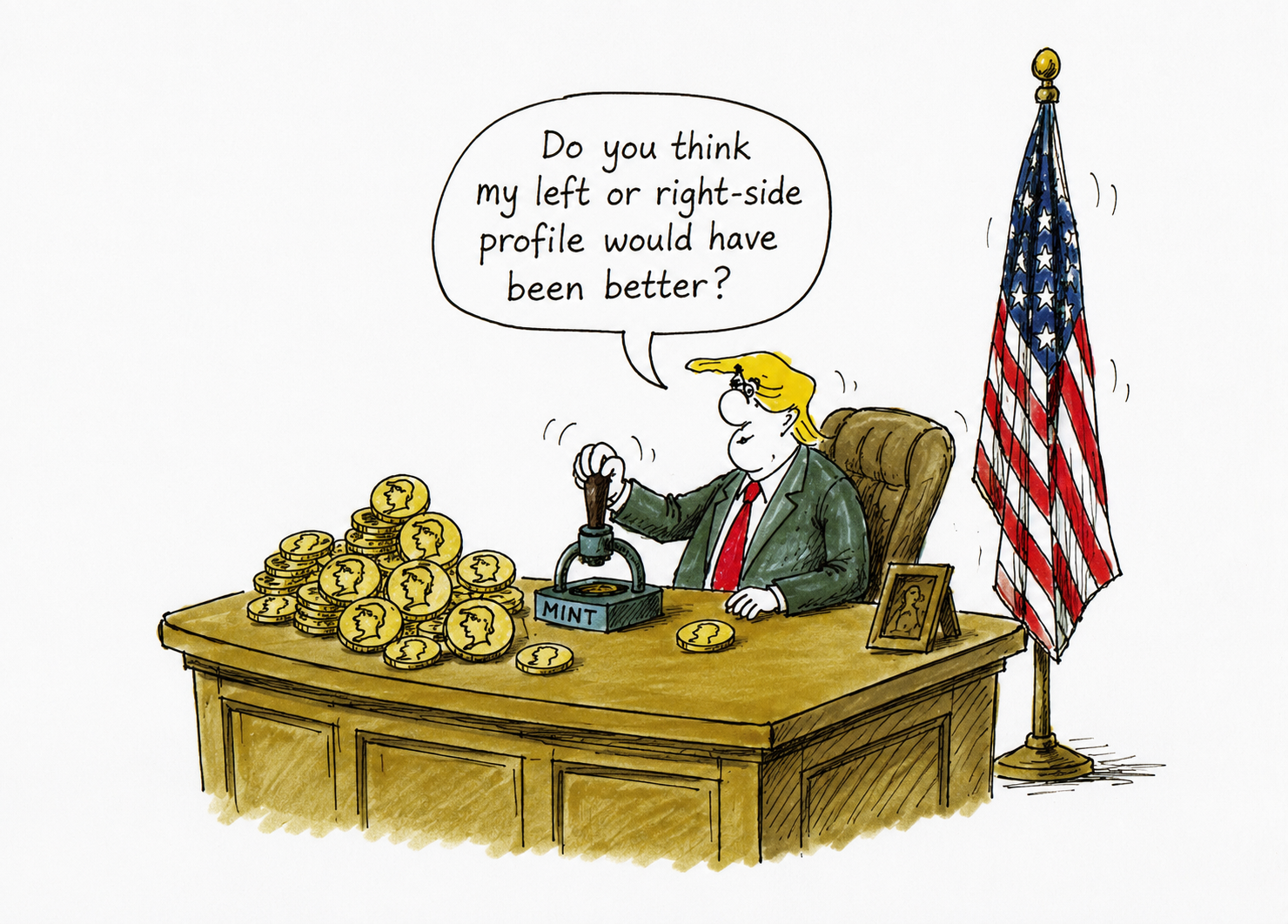
One in a Hundred – Trump puts his Head on a Coin

Minting a new U.S. coin

Donald Trump has become the first living U.S. president in almost a century to appear on American currency, after the U.S. Mint released a new $1 coin bearing his portrait.

The coin, launched on 2nd September 2026, commemorates America’s 250th anniversary and is intended to enter circulation as well as appeal to collectors.

False idols

Trump’s image appears on the front alongside the words “LIBERTY”, “IN GOD WE TRUST” and “1776 ~ 2026”. The reverse features the Presidential Seal, including the eagle, olive branch and arrows. Despite its golden appearance, the coin contains no actual gold.

The decision is controversial because American tradition has strongly discouraged depicting living people on the nation’s money.
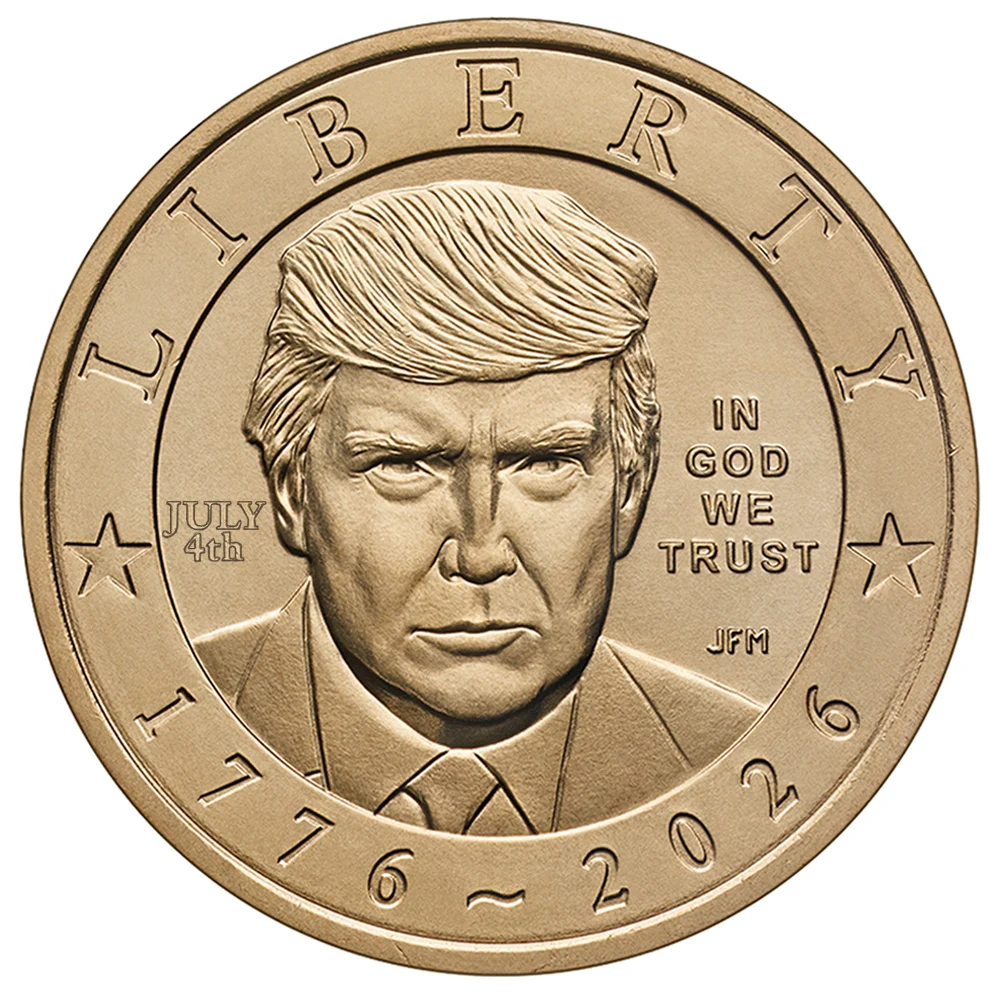
The new Trump $1 coin

The only previous living president to appear on U.S. coinage was Calvin Coolidge, whose image featured on a commemorative half-dollar in 1926, marking the 150th anniversary of American independence.

Political self-promotion?

The Trump administration argues that legislation passed in 2020 provides the necessary authority for the special anniversary coin.

Critics, however, question whether this represents an inappropriate departure from established safeguards against political self-promotion.

With Trump’s face now literally in Americans’ pockets, the coin represents more than a collectors’ novelty. It is another striking example of how the boundaries between presidential power, personal branding and national symbolism are being tested.

Paxos – A PayPal Crypto Partner Mints $300 Trillion in Stablecoins—A Glitch of Galactic Proportions

Stablecoin Glitch

In a surreal twist that briefly defied economic logic, Paxos—the blockchain infrastructure firm behind PayPal’s PYUSD stablecoin—accidentally minted $300 trillion worth of digital dollars in a technical mishap.

The error, reportedly spotted on Ethereum’s public ledger Etherscan, triggered a wave of astonishment across crypto circles before Paxos swiftly burned the excess tokens and issued a statement clarifying the blunder.

Technical error?

‘This was an internal technical error. There is no security breach. Customer funds are safe’, Paxos assured, adding that the root cause had been addressed.

To put the scale of the error in perspective: $300 trillion is more than double the estimated total GDP of the entire planet. And we trust these people and systems?

It’s a sum that could theoretically buy every publicly traded company several times over—and still leave room for a few moon bases. Fortunately, the minting was part of an internal transfer and never entered circulation.

Who is in charge?

PYUSD is designed to be a dollar-pegged stablecoin, backed by U.S. dollar deposits and short-term treasuries. Its promise of 1:1 redemption relies not on algorithmic magic but on real-world reserves and third-party attestations.

The incident, while resolved in under 20 minutes, underscores the fragility of trust in digital finance—especially when automation meets scale.

The crypto community, already wary of stablecoin transparency, seized on the event as a cautionary tale.

While no funds were lost and no users affected, the episode raises questions about auditability, protocol safeguards, and the symbolic weight of ‘minting’ in a decentralised economy.

In an era where digital assets are increasingly mainstream, even a fleeting glitch can ripple through markets and headlines.

Thin air

Paxos may have burned the tokens, but the spectacle of $300 trillion conjured from code won’t be forgotten anytime soon.

Hey, let’s go make some money!

We can ‘print’ dollars too… can’t we?