U.S. inflation reading of 2.4% for November 2024 is better than expected

Inflation PCE

The PCE price index, the Fed’s preferred inflation gauge, showed an increase of just 0.1% from October and a 2.4% annual rate – which was below expectations.

Excluding food and energy, core PCE also increased 0.1% monthly and was 2.8% higher from a year ago, with both readings being 0.1% off the forecast.

The personal consumption expenditures price index (PCE) – the Fed’s preferred inflation gauge, showed an increase of just 0.1% from October 2024.

The reading indicated a 2.4% inflation rate on an annual basis, still ahead of the Fed’s 2% goal, but lower than the 2.5% consensus estimate.

The markets cheered the inflation report and recovered loses after yesterdays (19th December 2024) FOMC meeting where the Fed announced it may only reduce interest rates on two more occasions in 2025 – even after a 0.25% rate reduction.

Fed cuts interest rate by 0.25% – indicates fewer cuts in 2025

U.S. interest rate

The Federal Open Market Committee (FOMC) cut its borrowing rate to a range of 4.25% – 4.50%, mirroring its December 2022 level.

The Fed indicated that it probably would only lower twice more in 2025, according to the closely watched ‘dot plot’ matrix of individual members’ future rate expectations

While the decision itself was closely watched, the primary concern centered on what they would communicate regarding its future direction, considering inflation remains above and economic growth is relatively – conditions that do not typically align with easing.

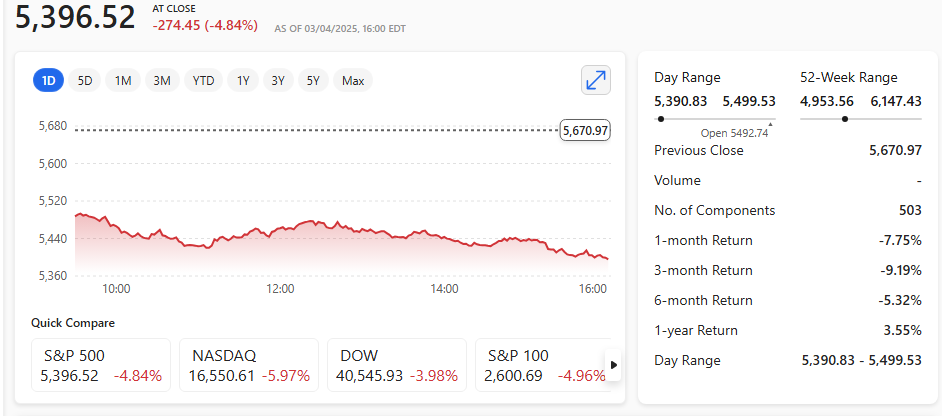
The Fed said that it would probably only lower the interest rate twice in 2025. The markets reacted with a sharp pullback with the Dow hitting a 10-day losing streak – last seen in 1974.

UK inflation rate rises to 2.6% to hit highest level since March 2024

The UK inflation rate has gone up for the second month in a row, rising at the fastest pace since March 2024. The UK inflation rate rose to 2.6% in the year to November 2024, according to official figures.

However, the rise was predicted by economists and was apparently within the range of the expected increase anticipated.

Fuel and clothing were significant contributors to the increase. Additionally, rising ticket prices for concerts and theatrical performances played a role according to data from the Office for National Statistics (ONS).

The Bank of England raises interest rates to maintain inflation at its target of %. The next rate decision is on Thursday 19th December 2024 and economists anticipate that rates will remain at 4.75%.

Prices for food and non-alcoholic drinks, alcohol and tobacco, and footwear all rose at a faster pace last month.

A wider measure of inflation showed housing and household services costs, including rent, rose by 3.5%.

UK inflation 2016 – 2024

UK inflation 2016 – 2024

UK economy shrinks unexpectedly for second month in a row contracting 0.1% in October 2024

The U.K. economy contracted unexpectedly in October 2024, according to data from the Office for National Statistics (ONS).

Gross Domestic Product (GDP) fell by an estimated 0.1% on a monthly basis, the ONS said Friday 13th December 2024, attributing the downturn to a decline in production output. 

It marked the second consecutive economic downturn, following a 0.1% GDP decline in September 2024. Sterling declined on the back of these disappointing figures, trading 0.3% lower against the U.S. dollar in early trade.

However, ‘real’ GDP is estimated to have grown 0.1% in the three months to October 2024, the ONS said, compared to the previous three months ending in July 2024.

In a statement on Friday 13th December 2024, U.K. Finance Minister Rachel Reeves reportedly conceded that the October figures were ‘disappointing,’ but defended the government’s economic strategies. I expect the chancellor would have been quick to own the success had the GDP improved – especially after the ‘for growth’ budget.

The economy has grown just once over the past five months and is 0.1% lower than before Labour won the election. That may suggest it’s not just the Budget that is holding the economy back. Instead, the drag from higher interest rates may be lasting longer than was calculated.

Either way, be it budget or inflation pressure – the UK economy isn’t growing.

UK GDP January 2022 – October 2024

Note: preliminary ONS figures may be revised in future assessments

Tesla shares climb to record high – boosted by Trump election victory

Tesla EV

Tesla shares soared to an all-time high on Wednesday exceeding their previous record set in 2021, driven by a post-election rally and heightened enthusiasm Wall Street for Elon Musk’s electric vehicle company.

The stock increased to an intraday high of $415, exceeding its previous peak by 50 cents and closed above its highest finish of $409.97 recorded on 4th November 2021.

Tesla’s market has increased reportedly increased by around 69% this year, with nearly all of those gains occurring after Trump’s election victory early last month. The stock’s 38% rally in represented its monthly performance since January 2023 and ranks as the 10th best on record.

Reportedly according to Federal Election Commission filings, Musk invested $277 million into a pro-Trump campaign effort and transformed his support for the Republican nominee into a full-time job in the lead-up to the election. He financed an operation in swing states to register voters and utilised his social media platform, to promote his chosen candidate, often disseminating misinformation.

The world’s wealthiest individual, whose net worth has increased to over $360 billion, is poised to head the Trump administration’s ‘Department of Government Efficiency,’ DOGE – together with former Republican presidential candidate Vivek Ramaswamy.

The newly formed DOGE will be tasked with culling government bureaucracy by streamlining and junking departments.

Musk’s role may grant him authority over the budgets and staffing of federal agencies, well as the capability to advocate for the removal of inconvenient regulations. During a Tesla earnings call in October, Musk reportedly stated intention to leverage his influence with Trump to create ‘Federal approval for autonomous vehicles.’ At present, approvals are at the state level.

Is business now openly running he U.S. government?

U.S. Fed’s preferred inflation measure rises to 2.3% 

U.S. inflation

The Personal Consumption Expenditures (PCE) price index announced 27th November 2025, rose by 0.2% monthly, matching a 12-month inflation rate of 2.3%, aligning with expectations.

Core U.S. inflation recorded more robust figures, climbing 0.3% monthly and reaching an annual rate of 2.8%, but also in accordance with forecasts.

Consumer spending increased by 0.4% monthly, as expected, while personal income surged by 0.6%, exceeding the estimated 0.3%.

The Federal Reserve is now likely searching for economic clues on how to proceed at its next interest rate meeting.

UK inflation unexpectedly rises to 2.3% in October 2024

UK shoppers

The inflation rate, which measures price changes, hit 2.3% in the year to October 2024, a bigger-than-expected increase from 1.7% in September 2024.

The increase was in part due to an increase in the regulator-set energy price cap that took effect in October 2024, which is expected to increase energy price inflation through the winter.

The Office for National Statistics (ONS), said while higher energy costs had contributed, this increase was offset by falls in live music and theatre ticket prices.

October 2024 UK inflation

October 2024 UK inflation

UK growth slows – it’s the ‘budget’ stupid!

Low UK growth figures

The UK economy expanded by just 0.1% from July to September 2024, as announced in the most recent official data release.

The growth was less than anticipated, and the Office for National Statistics (ONS) reported that most sectors experienced subdued activity over the quarter.

Labour, having prioritised economic growth upon assuming power, found Chancellor Rachel Reeves expressing dissatisfaction with these figures, which represent the initial three months of the new administration.

Several economists have attributed the uncertainty surrounding the contents of October’s Budget as a factor impeding growth.

This impact was notably pronounced in September, when the economy saw a contraction of 0.1%.

Moreover, the government is contending with criticism from certain businesses that are opposed to the tax increases introduced in the Budget.

Whichever way you look at these figures; they’re utterly dire.

U.S. inflation rate at 2.6% in October 2024 as expected

U.S. inflation

In October 2024, the U.S. consumer price index rose by 0.2%, bringing the annual inflation rate to 2.6%, aligning with expectations, according to the U.S. Bureau of Labor Statistics.

The core CPI, which excludes food and energy, saw a monthly increase of 0.3% and an annual rate of 3.3%, also in line with projections.

For the month, the consumer price index, assessing a range of goods and services, went up by 0.2%. This increment raised the year-over-year inflation rate to 2.6%, a 0.2% increase from September 2024.

These figures matched estimates. When food and energy were excluded, the core CPI’s monthly rise was even more significant, at 0.3%, with an annual rate of 3.3%, confirming the forecasts.

Trump announces the new ‘Department of Government Efficiency’- DOGE – Dogecoin climbs over 150% on the news

DOGE

The purchase of Meme coins is often viewed as indicators of retail interest and the willingness to take risks in the cryptocurrency market. Increased activity in meme coins typically signals that retail investors are engaging and are inclined to speculate more aggressively on the risk spectrum.

Trump initially proposed the concept of an efficiency commission in September 2024. Since that time, Musk -who has previously referred to himself as the ‘Dogefather’ – is known for making public statements about the meme coin that affect its value, has posted on his social media platform X, referring to the commission as theDepartment of Government Efficiency’ or ‘D.O.G.E.

Dogecoin’s relevance surged in 2021 due to Elon Musk’s endorsement and the continuous hype on social media, which became a significant catalyst for the cryptocurrency. In May of that year, Musk’s tweets propelled Dogecoin to its peak value around 67 cents, according to market analysis. However, his reference to Dogecoin as ‘a hustle’, caused its value to plummet.

Recently, Dogecoin’s value increased following the post-election announcement by President-elect Donald Trump about the establishment of theDepartment of Government Efficiency‘, which he acronymized as ‘DOGE’ in his statement.

Elon Musk, CEO of Tesla, and Vivek Ramaswamy, the former Republican presidential candidate and co-founder of Strive Asset Management, have been appointed to lead this department.

According to Trump’s statement, their role will be instrumental in his administration’s efforts to dismantle government bureaucracy, reduce unnecessary regulations, eliminate wasteful spending, and reorganise federal agencies.

It’s time for D.O.G.E.

Bank of England lowers UK interest rate by 0.25% to 4.75%

Interest rate down

The Bank of England cut interest rates by 0.25% Thursday 7th November 2024, even as Labour’s budget announcement confuses the outlook for future policy easing.

The anticipated reduction, marking the central bank’s second this year, lowers the key rate to 4.75%.

Financial markets had forecast a high probability of the quarter-point decrease at the November 2024 meeting, although analysts cautioned that future cuts might be postponed due to the Labour government’s tax-and-spend budget.

Investors are now awaiting remarks from Governor Andrew Bailey and his team regarding their updated economic forecast following the budget and the U.S. presidential election.

U.S. economy added just 12,000 jobs in October 2024

U.S. workers

In October 2024, non-farm payrolls saw an increase of 12,000, a significant drop from September’s figures and falling short of the 100,000 predicted

The unemployment rate remained steady at 4.1%, meeting expectations.

The rate of job growth in October 2024 was the slowest since the end of 2020, hindered by the effects of storms in the and a considerable labour standoff (strike action), which impacted the overall employment picture.

According to the Bureau of Labor Statistics‘ Friday report, the modest increase in nonfarm payrolls for October, which was already anticipated to be subdued, marked the smallest rise since December 2020.

U.S. monthly job creation

U.S. monthly job creation

U.S. inflation rate hits 2.1% in September 2024

Inflation saw a modest rise in September 2024, edging closer to the Federal Reserve’s target, as reported by the Commerce Department on Thursday 31st October 2024.

The personal consumption expenditures (PCE) price index recorded a seasonally adjusted increase of 0.2% for the month, and the year-over-year inflation rate stood at 2.1%, aligning with predictions. The PCE index is the Fed’s preferred inflation measure, although officials monitor various other indicators as well.

The Fed aims for a 2% yearly inflation rate, a benchmark not met since February 2021.

Despite the main figure indicating that the central bank is approaching its objective, the inflation rate, excluding food and energy, was at 2.7%. This core inflation metric rose by 0.3% monthly, with the annual rate exceeding expectations by 0.1 percentage points.

This report arrives as markets strongly anticipate the Fed will reduce its benchmark short-term interest rate at the upcoming meeting. In September 2024, the Fed made a significant half-percentage-point rate cut, a rare action during an economic upturn.

Officials remain optimistic that inflation will realign with their target, yet they are wary about the labour market’s condition, even as most data suggests steady hiring and low layoff rates.

U.S. economy grew at 2.8% in the third quarter -below expectations

GDP U.S.

The U.S. economy experienced another growth spurt, albeit slightly underwhelming, growth period in the third quarter, driven by strong consumer spending that has surpassed slowdown expectations

The gross domestic product (GDP), which gauges all goods and services produced from July through September 2024, rose at a 2.8% annualised pace, as per the inflation and seasonality-adjusted Commerce Department report released Wednesday 30th October 2024.

This report verifies that the U.S. growth persists, notwithstanding high interest rates and persistent concerns that the surge of fiscal and monetary stimulus, which supported the economy during the Covid crisis, might not suffice to maintain growth.

IMF cuts China’s growth as property market concerns grow

China growth at risk

The International Monetary Fund (IMF) has issued a warning about the potential decline of China’s property market while reducing its growth forecast for the world’s second-largest economy.

In a report published Tuesday, The IMF has reduced its growth forecast for China this year to 4.8%, which is 0.2 percentage points below its July projection. For 2025, the IMF reportedly anticipates growth to be at 4.5%.

The IMF has pointed out that the unexpected contraction of China’s property sector is among several factors posing risks to the global economic outlook.

The real estate market could face worsening conditions, potentially leading to further price declines amid a drop in sales and investment’, the report indicated.

The report referenced past property crises in countries such as Japan in the 1990s and the U.S. in 2008, suggesting that if China’s situation is not managed, property prices may fall even more.

According to the IMF‘s World Economic Outlook, this could undermine consumer confidence, leading to lower household spending and domestic demand.

ECB cuts rates for the third time this year by 0.25% to 3.25%

ECB interest rate cut

On Thursday 17th October 2024, the ECB announced its third interest rate reduction of 2024, as inflation risks within the European Union diminished more rapidly than anticipated.

At its October meeting, the central bank decreased the deposit rate by 0.25%. This decision followed a slowdown in the euro area’s price increases to 1.8% in September 2024, falling below the central bank’s target of 2%.

The EU interest rate is now: 3.25%

UK inflation in surprise fall to 1.7%

UK Inflation down below target

UK inflation fell unexpectedly to 1.7% in the year to September 2024, the lowest rate in three-and-a-half years

This indicates that inflation, which is the rate at which prices increase over time, is currently below the Bank of England’s target of 2%, potentially leading to further reductions in interest rates next month.

The Office for National Statistics (ONS) reported that petrol and diesel prices saw a notable decrease, falling by 10.4% in September 2024compared to the same month the previous year.

Additionally, the cost of fares for domestic, European, and long-haul flights contributed to the lower inflation rate. While fares typically decrease after the summer peak, this year they have reduced more than usual.

UK interest rate at 1.7% below the Bank of England target of 2%

UK interest rate at 1.7% below the Bank of England target of 2%

With inflation dropping below economists’ expectations, the markets are anticipating a cut in interest rates at the Bank of England’s upcoming meeting in November 2024. The present rate stands at 5%, and a reduction of 0.25% is now deemed highly probable.

China’s PPI deflation deepens in September 2024

Economic data China

In September 2024, China witnessed a decline in consumer inflation rates and an intensification of producer price deflation, despite efforts to implement additional stimulus measures aimed at reviving weak demand and stabilizing economic activity

The consumer price index (CPI) rose by 0.4% from the previous year, a slowdown from the 0.6% increase observed in August, as reported by the National Bureau of Statistics (NBS) on Sunday 13th October 2024. This increase was below the 0.6% rise economists had forecasted.

Month-on-month, the CPI remained unchanged, contrasting with the 0.4% increase in August and missing the expected 0.4% rise.

The producer price index (PPI) registered a year-on-year fall of 2.8% in September 2024, a sharper decline than the 1.8% decrease in the previous month and exceeding the 2.5% drop projected by analysts.

China’s exports and imports came in less than expected in September 2024 – missing targets

China exports and imports

China’s exports increased by 2.4% in September 2024 compared to the previous year when measured in U.S. dollars, and imports saw a rise of 0.3%, customs data showed Monday 14th October 2024

The figures fell short of expectations. China’s exports were predicted to rise by 6% year-on-year in September 2024, measured in U.S. dollars, as per reported analysts’ data. This increase would be less than the 8.7% rise seen in August 2024.

Imports were also projected to grow by 0.9% in September from the previous year, based on analysts’ data, which would be a slight uptick from the 0.5% growth in August 2024.

Exports have been a highlight for China’s economy amidst subdued consumer spending and a downturn in real estate.

According to reported analysis of the official data, China’s exports to the U.S., its biggest trading partner, went up by 2.2% in September year-on-year, while imports from the U.S. saw a 6.7% increase.

UK economy grows 0.2% in August 2024

UK GDP economic data

In August 2024, the U.K. economy experienced a 0.2% growth on a month-on-month basis, according to preliminary figures released by the Office for National Statistics on Friday 11th October 2024.

But there is a warning of a potential UK slowdown despite the August pick-up.

The gross domestic product (GDP) matched the 0.2% growth anticipated by economists.

Over the three months leading to August, Britain’s economic growth also registered a 0.2% increase, which was marginally below the expectations of economists.

A rebound in construction and a robust month for accountancy, manufacturing, and retail sectors contributed to a 0.2% boost in the economy, following a stagnation in growth over the prior two months.

However, the Office for National Statistics (ONS) noted that economic growth has been weaker relative to the first half of the year and of a potential slowdown.

U.S. consumer prices rose by 0.2% in September 2024 – higher than expected at 2.4%

U.S. CPI

Over the past year, the rate of U.S. price increases accelerated unexpectedly in September 2024, as policymakers considered their decision on interest rates, as indicated in a U.S. Labor Department report on Thursday 10th October 2024.

Sticky U.S. inflation

The consumer price index (CPI), which measures the cost of goods and services throughout the U.S. economy, rose by 0.2% for the month, resulting in an annual inflation rate of 2.4%. Both figures were 0.1% than ‘forecast’.

When food and energy are excluded, the core prices saw a 0.3% increase for the month, leading to an annual rate of 3.3%. These core figures were also 0.1% above the ‘forecast’.

The report from the Bureau of Labor Statistics noted that the majority of the inflation rise – over three quarters of the increase was due to a 0.4% surge in food prices and a 0.2% rise in shelter costs.

Chinese stocks tumble amid stimulus benefit scepticism

China stocks drop

On Wednesday 9th October 2024, Chinese stocks experienced a sharp decline, with the Shanghai benchmark plummeting by 6.6%

Hong Kong’s index fell by 1.5%, in contrast to the mostly positive performance of other global markets.

Beijing’s recently detailed economic stimulus plans did not meet the high expectations set after the central bank and other agencies announced measures aimed at revitalising the struggling property sector and accelerating economic growth.

The Shanghai Composite Index fell 6.6% reversing a 4.6% gain from Tuesday 8th October 2024 when it re-opened following a weeklong national holiday.

The CSI 300 Index, which follows the top 300 stocks in the Shanghai and Shenzhen exchanges, relinquished 7.1% – ending a 10-day winning streak.

In Shenzhen’s smaller market, the benchmark tumbled by 8.7%.

The Hang Seng index in Hong Kong dropped 1.5% – and this coming after a steep decline of over 9% the previous day.

The U.S. modern economy is number one in the world by GDP

U.S. economy number one

The U.S. economy, often considered the largest globally, is characterised by a dynamic mix of sectors. It is propelled by strong industrial production and a vibrant service sector, offering a varied economic environment

The United States possesses a highly developed mixed economy. It stands as the world’s largest economy by nominal GDP and the second largest by purchasing power parity (PPP), following China. As of 2024, it holds the sixth highest per capita GDP (nominal) and the eighth highest per capita GDP (PPP) globally.

In 2023, the U.S. constituted 26% of the world’s economy in nominal terms and approximately 15.5% in PPP terms.

The U.S. dollar, the most utilised currency in international transactions, serves as the global reserve currency, supported by the extensive U.S. treasuries market, its pivotal role in the petrodollar system, and its connection to the eurodollar.

It is the official currency of several countries and the de facto currency in many others. Following World War II, the U.S. economy has seen consistent growth, maintained low unemployment and inflation rates, and experienced rapid technological advancements.

Manufacture

Manufacturing, traditionally fundamental, has transformed with technological advancements. While the automotive and aerospace industries continue to be important, there has been a significant shift toward advanced manufacturing, such as semiconductors and renewable technologies. This change mirrors the wider trend of innovation, which is synonymous with the U.S. economy.

Service

The service sector, which includes finance, healthcare, and information technology, is critical. The financial markets, with New York City at their core, are vital to global finance. Silicon Valley remains the hub of tech innovation, pushing the boundaries in artificial intelligence, cybersecurity, and financial technology.

Nonetheless, the U.S. economy faces challenges. Income disparity persists, a situation worsened by the COVID-19 pandemic, which exposed weaknesses in healthcare and social support systems. The pandemic hastened the shift to digital, underscoring the necessity for investments in digital infrastructure and education to close the digital gap.

Policy

Fiscal and monetary policies are key to navigating the economy. The Federal Reserve aims to manage inflation and unemployment through interest rate adjustments and quantitative easing. Government spending and tax policies are also instrumental in ensuring economic stability and expansion.

Future

Looking to the future, the emphasis on sustainability is increasing. Investment in green energy and eco-friendly practices are not only environmental mandates but also avenues for economic growth. As international competition grows, the U.S. economy’s capacity for innovation and adaptation will be vital.

Fundamentally, the U.S. economy is a multifaceted and dynamic system. Its robustness stems from its ability to innovate and adapt, despite facing systemic obstacles and shifts in the global landscape.

U.S. non-farm payrolls surged by 254,000 in September 2024

U.S. non-farm payroll data

In September 2024, the U.S. economy saw a significant increase in job additions, substantially surpassing expectations and contributing to a robust employment landscape as the unemployment rate declined, according to the U.S. Labor Department’s report issues Friday 4th October 2024.

U.S. Non-farm payroll numbers rose by 254,000 in September 2024, a jump from the revised figure of 159,000 in August and exceeding the forecast of 150,000.

The unemployment rate dropped to 4.1%, a decrease of 0.1 percentage point, while the household employment survey reported a substantial increase of 430,000 jobs.

Average hourly earnings grew by 0.4% for the month and saw a 4% rise compared to the previous year, outpacing the projected estimates.

U.S. Bureau of Labor Statistics

German inflation falls to 1.8% in September 2024

CPI data Germany

In September 2024, the German consumer price index softened to 1.8%, falling below expectations based on preliminary data from Destatis, the national statistics office.

Month-on-month, the preliminary harmonized CPI saw a slight decrease of 0.1%.

According to recent analysis, the last instance of the German harmonized CPI falling below 2%, the inflation target rate of the European Central Bank, was in February 2021.