U.S. interest rates held steady at 4.25% to 4.50%

U.S. Federal Reserve

On 30th July 2025, the Federal Reserve opted to keep its benchmark interest rate unchanged at 4.25%–4.50%, defying mounting pressure from President Trump to initiate cuts.

The decision, reached by a 9–2 vote, marked the first time since 1993 that two governors—Michelle Bowman and Christopher Waller—formally dissented, advocating for a quarter-point reduction.

Fed Chair Jerome Powell cited “moderated” economic growth and “somewhat elevated” inflation as reasons for maintaining the current stance.

Despite a robust Q2 GDP reading of 3%, Powell emphasised the need for caution, particularly amid uncertainty surrounding Trump’s tariff policies.

Markets reacted with disappointment, as hopes for a dovish pivot were dashed. Powell remained non-committal about September’s outlook, reportedly stating, ‘We have made no decisions about September’.

With inflation still above target and political tensions rising, the Fed’s wait-and-see approach underscores its commitment to data-driven policy.

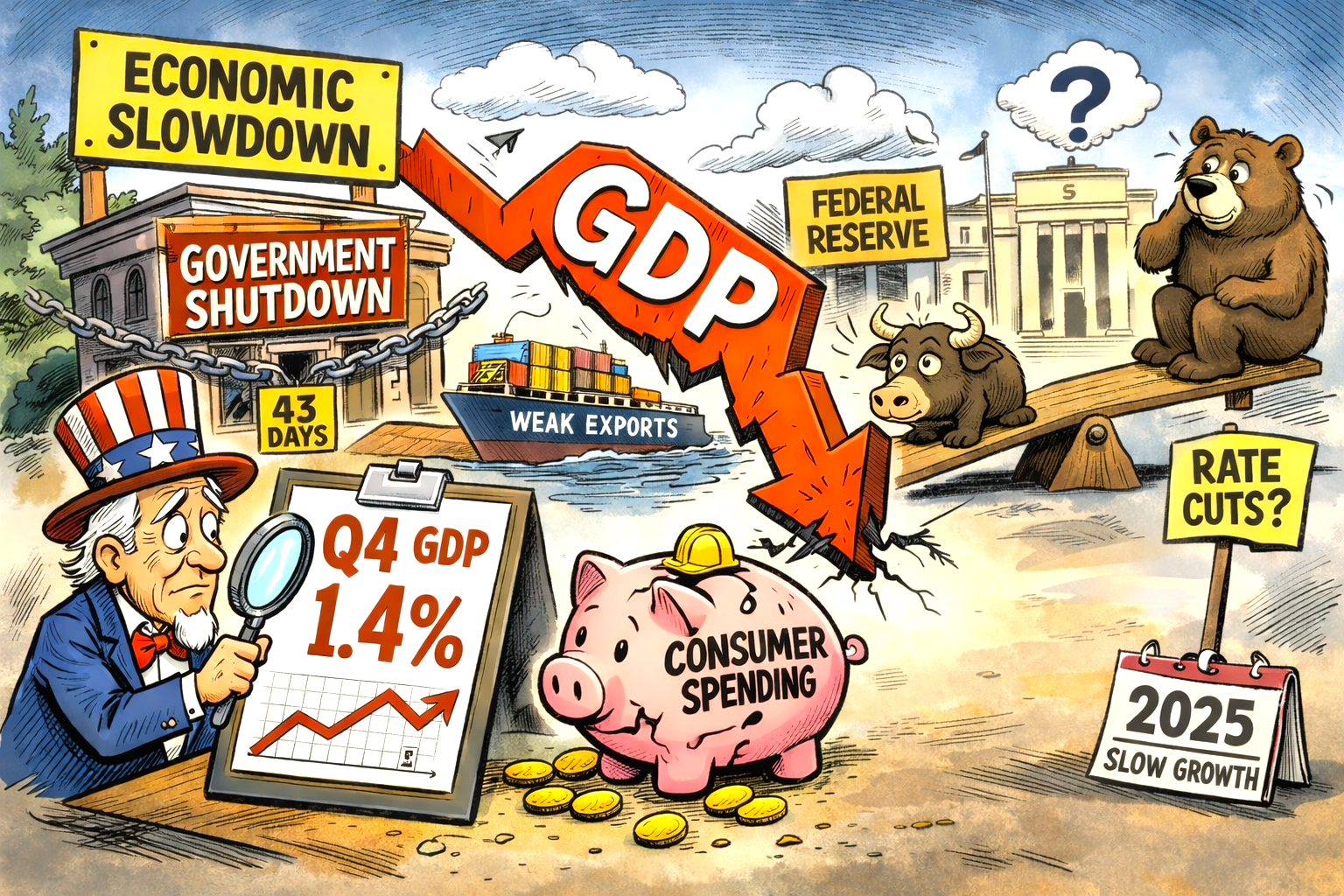
U.S. GDP surges 3.0% in Q2 — but what’s driving the rebound?

U.S. GDP

After a lacklustre start to 2025, the U.S. economy posted a surprising comeback in the second quarter, with GDP rising at an annualised rate of 3.0%, according to data released today.

The sharp upswing follows a 0.5% contraction in Q1, catching analysts off-guard and fuelling speculation about the durability of the recovery.

📈 A Rebound Built on Consumers and Imports

At the heart of the turnaround lies a 1.4% increase in consumer spending, led by strong demand in sectors like healthcare, finance, and automotive sales.

But what really moved the needle was a dramatic collapse in imports — down 30.3%, reversing the Q1 surge and effectively boosting the GDP calculation.

While exports and business investment both shrank modestly, the overall picture was buoyed by domestic strength and favourable trade math.

💰 Inflation Retreats — Temporarily?

The Personal Consumption Expenditures (PCE) Price Index, a key measure of inflation, ticked up just 2.1%, down from 3.7% in the previous quarter.

The Core PCE, which excludes volatile food and energy prices, landed at 2.5%, easing pressure on the Federal Reserve to act aggressively.

Yet policymakers are watching warily. A surge in tariffs—particularly those scheduled for August—could distort prices and consumer behaviour in the months ahead.

🧠 Fed and Market Implications

The GDP bounce gives the Federal Reserve some breathing room, but not total confidence. Investment weakness and subdued export activity could signal structural fragilities beneath the headline growth.

With tariff uncertainty, election-year dynamics, and a cautious jobs market all in play, rate policy may stay frozen until the economic picture becomes clearer.

UK retail sales rebound slightly in June 2025 thanks to the sunny weather

Retail figures UK

The British retail sector saw a modest lift in June 2025, with sales volumes rising 0.9% month-on-month, according to figures released today by the Office for National Statistics.

☀️ Weather Wins Following May’s steep 2.8% decline, the warmest June on record helped drive spending on fuel ⛽, clothing 👕, and drinks 🥤. Supermarkets saw a 0.7% rise after last month’s slump, and automotive fuel sales jumped 2.8%, the strongest gain in over a year.

💻 Online Resilience E-commerce continued to thrive, with online retail up 2.3%, now accounting for 27.8% of all UK retail transactions.

Non-store sales have steadily outpaced traditional footfall, which remains weak in categories like household goods 🛋️ and second-hand stores.

📉 Cautious Optimism Despite the improvement, quarterly growth was a tepid 0.2%, and consumer confidence remains shaky amid inflationary pressure (CPI 3.6%) and speculation about forthcoming tax changes.

📍 Long View Retail volumes are still 1.6% below pre-pandemic benchmarks, highlighting a recovery that’s inching forward rather than sprinting.

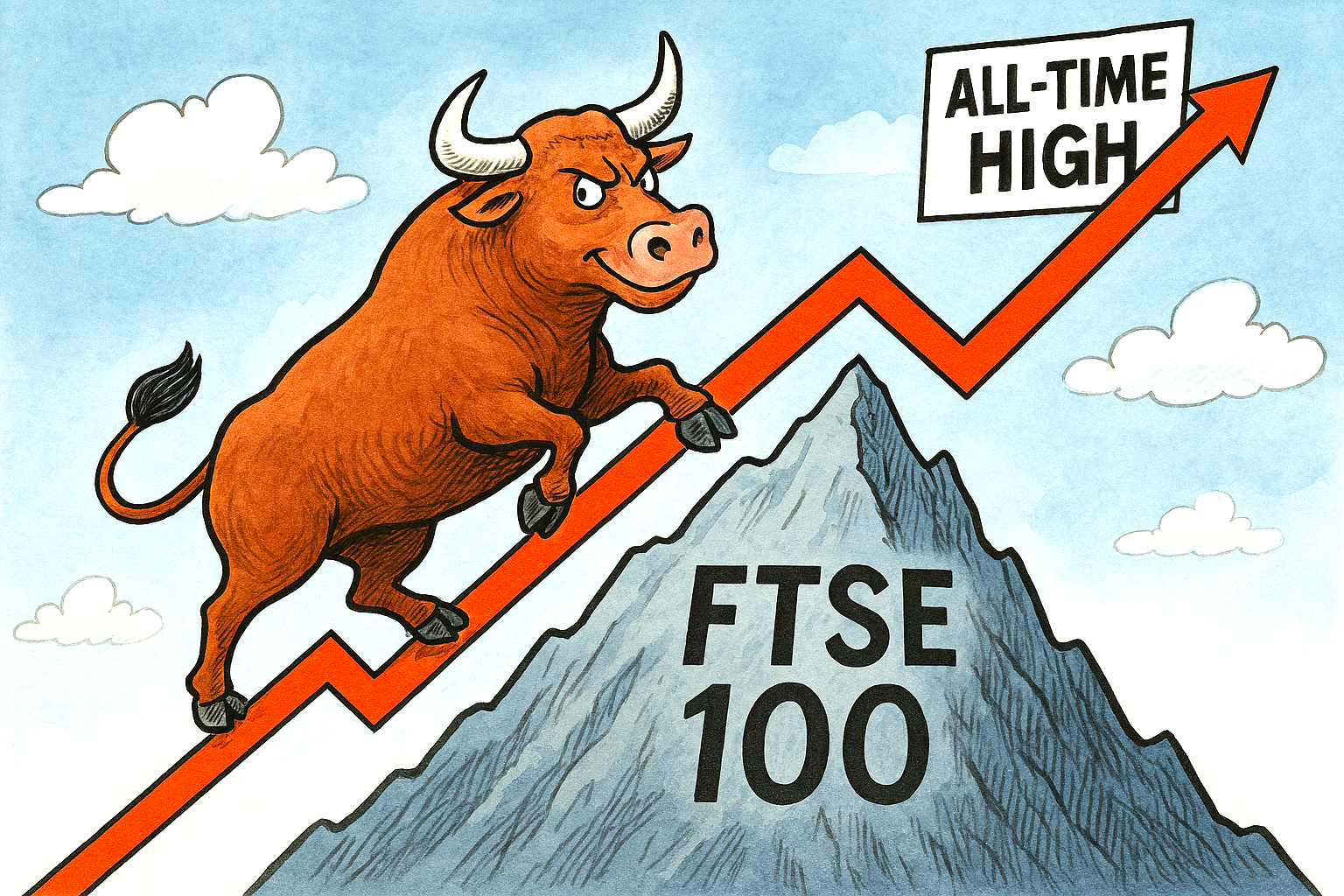
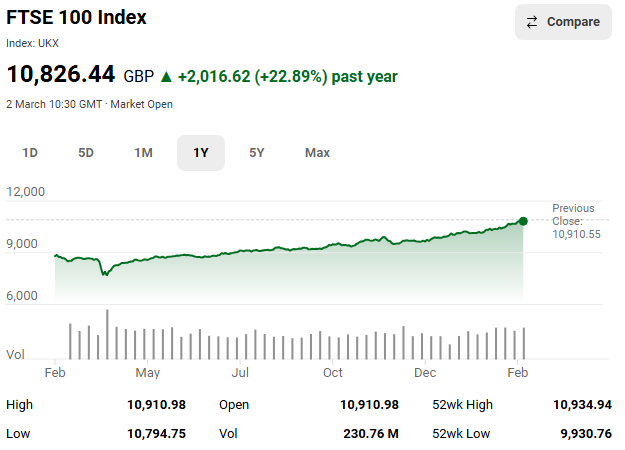
FTSE 100 breaks 9000 barrier in historic rally – hitting new all-time intraday high!

FTSE 100 ascent above 9,000

The FTSE 100 surged past the 9,000-point mark on 15th July 2025, setting a new all-time high and signalling renewed investor confidence in the UK’s economic outlook.

Driven by strong performances in energy, banking, and AI-adjacent tech firms, the benchmark index shattered psychological resistance with broad-based gains.

Much of the momentum came from robust earnings reports and upbeat forecasts from major constituents such as Shell and HSBC.

Analysts also pointed to growing international interest in UK equities, especially as sterling remains relatively stable amid global currency fluctuations.

The breakthrough follows months of resilience in the face of inflationary pressures and geopolitical uncertainty.

Investors appear to be rewarding UK equities as a steady alternative option against the backdrop of U.S. market turmoil – maybe the U.S.is running out of steam?

While traders welcomed the milestone, some caution against irrational exuberance. Crossing 9,000 is significant, but sustainability depends on whether earnings growth can be maintained

Nonetheless, market watchers view the rally as a strong signal of the FTSE 100’s ability to compete globally.

With fresh liquidity and stabilising rates, the index might not just pause at 9,000 — it may soon look to test even higher ground.

UK economy contracts in May 2025 amid global tariff trade turmoil

UK GDP squeezed

Britain’s economy shrank by 0.1% in May 2025, marking its second consecutive monthly decline and casting fresh doubt over the strength of the post-pandemic recovery.

The latest figures from the Office for National Statistics defied analyst expectations of modest growth, underlining deepening concerns within the Treasury and among business groups.

The drop was largely driven by a sharp 0.9% fall in production output, particularly in oil and car manufacturing, alongside a 0.6% decline in construction activity.

These weaknesses come despite a slight uptick in services, which rose by 0.1%, buoyed by gains in legal services and software development.

Summary

🏭 Production output fell by 0.9%, led by declines inl oil and gas extraction and car manufacturing.

🏗️ Construction dropped 0.6%, reversing April’s gains.

🛍️ Services eked out a 0.1% rise, with legal services and computer programming offsetting a sharp fall in retail.

Finance Minister Rachel Reeves faces increasing pressure as her economic reboot agenda collides with rising domestic costs and global headwinds.

April’s national insurance hikes and Trump’s aggressive tariff policy have created economic drag, despite the UK having brokered a swift bilateral trade agreement with the U.S.

The three-month growth rate stands at 0.5%, but economists now predict a meagre 0.1% expansion for the second quarter.

With inflation edging back above 3% and interest rate cuts looming, the government must navigate a delicate balance between stimulus and stability.

The first official Q2 GDP estimate will be released on 14th August 2025, with markets braced for further volatility.

UK GDP figures February through May 2025

Month% Change in GDPKey Drivers/Comments
February+0.5%Strong services and frontloaded activity pre-tariffs
March+0.2%Moderate growth, tax rise concerns begin
April–0.3%Domestic tax hikes, Trump tariff shock
May–0.1%Production –0.9%, construction –0.6%; weak manufacturing
UK GDP figures February through May 2025

U.S. holds interest rates steady – Trump isn’t happy!

U.S. Interest Rate

U.S. Federal Reserve has kept its benchmark interest rate steady at 4.25% to 4.50% for the fourth consecutive meeting.

This decision reflects a cautious stance amid ongoing uncertainty surrounding President Trump’s tariff policies and their potential impact on inflation and economic growth.

The Fed still anticipates two rate cuts later in 2025, but officials are split – some expect none or just one cut.

Inflation projections have been revised upward to 3.0% for 2025, while economic growth expectations have been trimmed to 1.4%.

U.S. President Donald Trump has been sharply critical of Federal Reserve Chair Jerome Powell, especially following the Fed’s decision on June 18, 2025, to keep interest rates steady.

He’s called Powell ‘a stupid person’, ‘destructive’, and ‘Too Late Powell’. accusing him of being politically motivated and slow to act on rate cuts.

And the Federal Reserve is supposed to act independently of political influence.

UK economy shrank in April 2025

UK flag on a squeezed bottle

The UK economy contracted by 0.3% in April 2025, a sharper decline than the 0.1% forecast by economists, according to the Office for National Statistics (ONS).

The unexpected downturn has raised fresh concerns about the country’s economic resilience amid rising costs and global trade tensions.

April’s contraction was driven by a combination of domestic and international pressures. A significant rise in employers’ National Insurance contributions, coupled with increases in water, energy, and council tax bills, placed added pressure on businesses and households.

Simultaneously, newly imposed U.S. tariffs, introduced by President Trump, led to the steepest monthly drop in UK exports to the United States on record.

Services and manufacturing, which together form the backbone of the UK economy, both saw declines.

Legal and real estate sectors were particularly affected, following a surge in house sales in March 2025 ahead of stamp duty changes. Car manufacturing also faltered after a strong first quarter.

Despite the monthly setback, UK GDP still grew by 0.7% over the three months to April 2025, suggesting some economic activity may have been pulled forward earlier in the year.

Chancellor Rachel Reeves reportedly acknowledged the figures were ‘clearly disappointing’ but reaffirmed her commitment to long-term growth through strategic investments in infrastructure, housing, and energy.

While April’s figures may not signal an immediate crisis, they underscore the fragility of the UK’s recovery.

With UK inflation still above target and interest rates elevated, the UK government faces a delicate balancing act to sustain momentum without stifling growth.

Debt and trade issues weaken UK growth – so says the OECD

UK growth

The latest OECD report presents a cautious outlook for the UK economy, predicting slower growth amidst global uncertainties and domestic fiscal challenges.

The UK’s GDP is projected to grow by 1.3% in 2025 and 1% in 2026, reflecting a slight downward revision.

According to the OECD, trade tensions, particularly U.S. tariffs, are disrupting global supply chains and weakening business confidence.

At the same time, consumer sentiment remains low, and business investment is expected to decline, counteracting the benefits of recent government spending initiatives.

A significant concern highlighted in the report is the UK’s public finances. The OECD warns that the government’s limited fiscal buffers could leave the economy vulnerable to future downturns.

It suggests targeted spending cuts and tax reforms, including a reassessment of council tax bands to reflect updated property valuations.

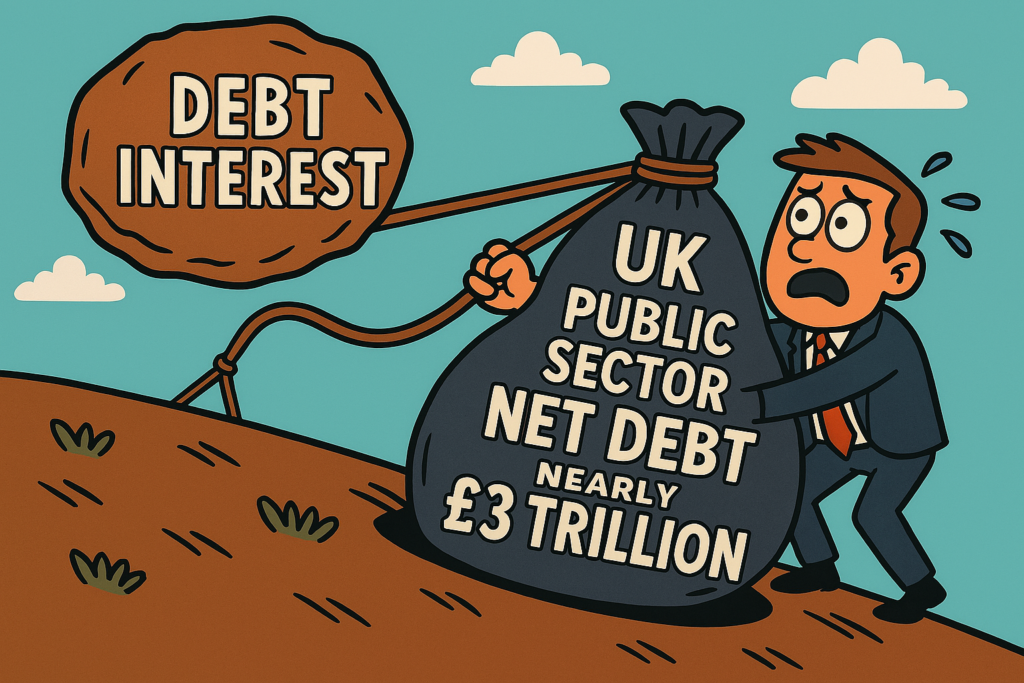
Debt interest

The OECD has warned that high interest payments on government debt and trade tensions are weighing on the UK’s economic growth. The UK’s fiscal position is described as having ‘very thin’ margins, meaning there is little room for unexpected financial shocks – of which there have been many.

Despite these hurdles, the UK is expected to outperform some major European economies, including France and Germany. However, the UK government face a complex challenge, balancing growth stimulation with fiscal responsibility.

The OECD encourages the government to accelerate infrastructure investments and enhance productivity to ensure long-term economic resilience.

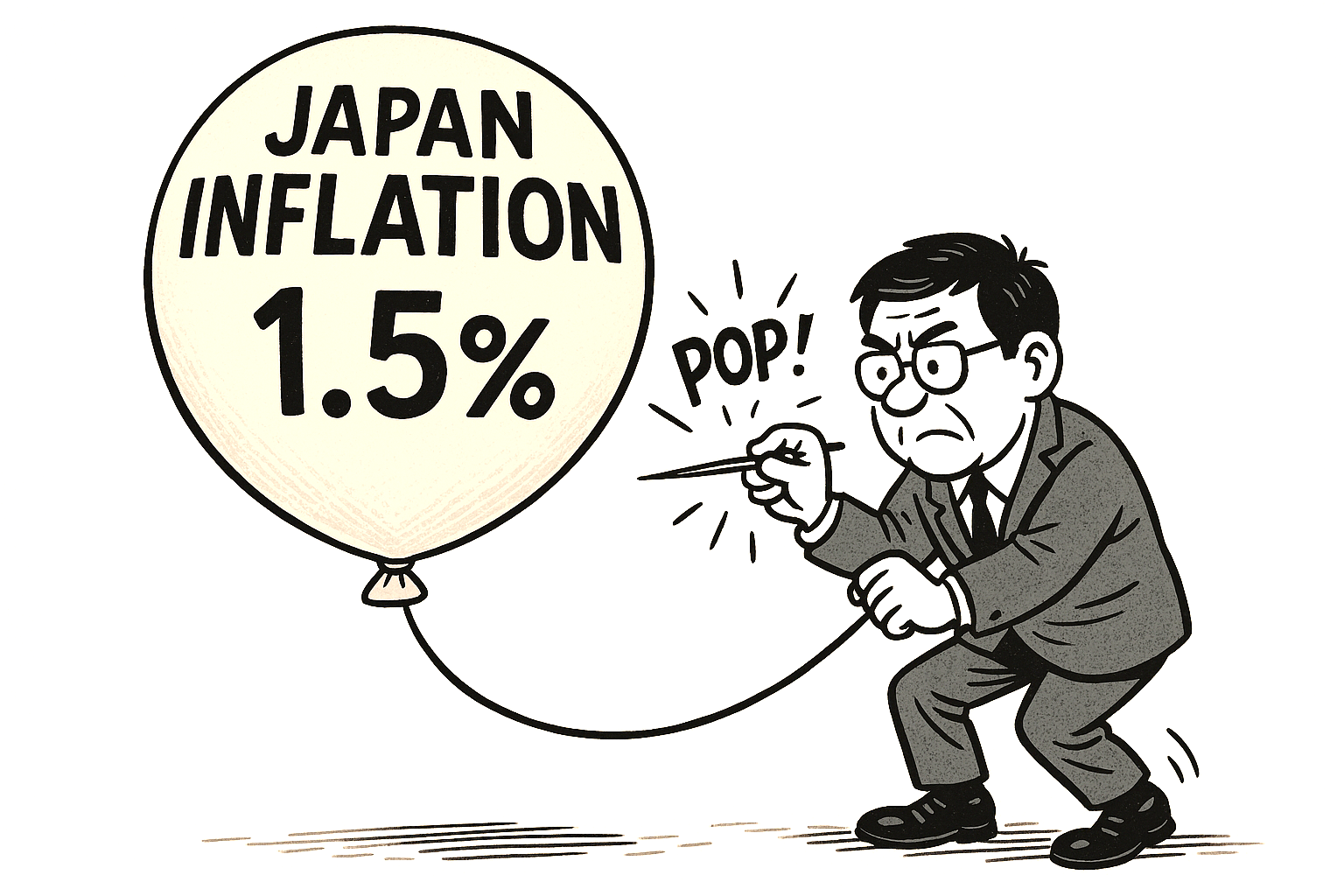
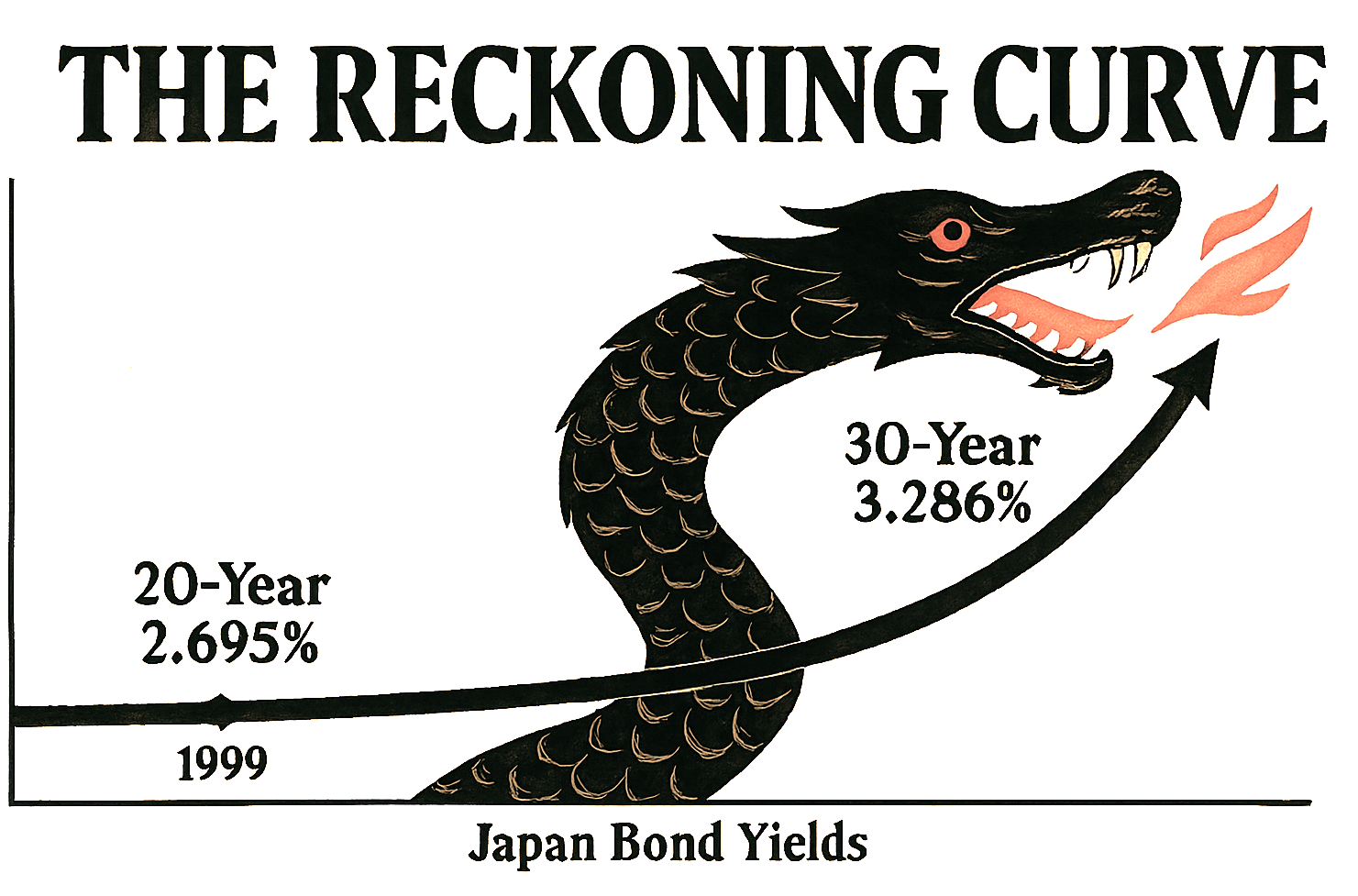
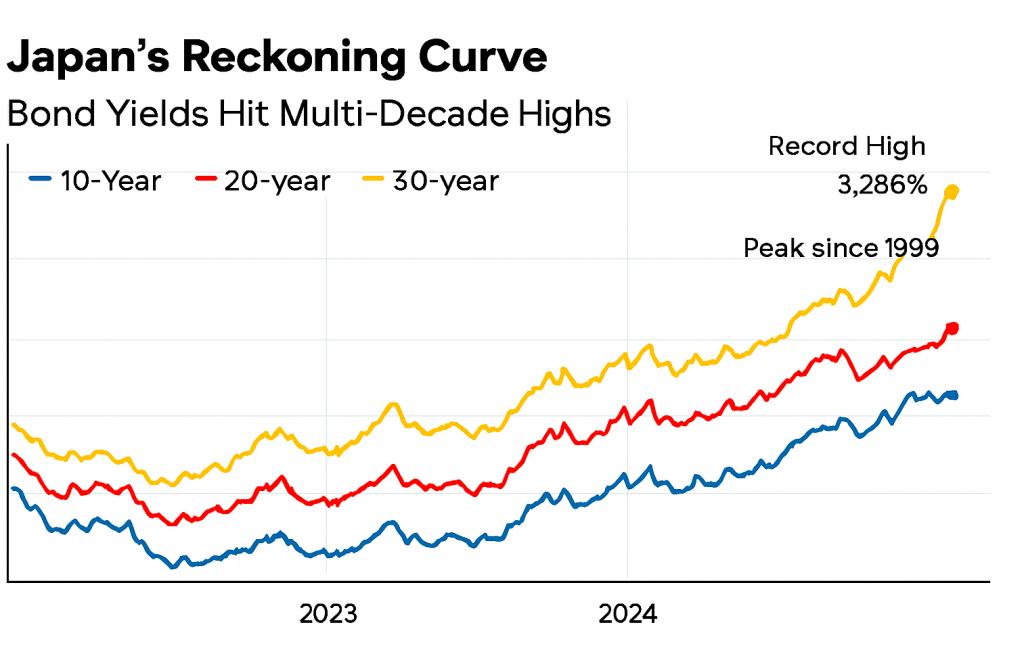
Japan’s core inflation rises to 3.5% – higher than expected

Japan economic data

Japan’s inflation figures for April 2025 have revealed a continued rise in consumer prices, with the Consumer Price Index (CPI) climbing 3.6% year-on-year.

This marks a sustained period of inflation above the Bank of Japan’s (BoJ) target of 2%, prompting speculation about potential interest rate hikes later in the year.

Core inflation, which excludes fresh food, rose 3.5% YoY, exceeding market expectations. A major driver of this surge has been food prices, particularly rice, which has soared by an astonishing 98% compared to last year.

The sharp increase has led the government to release emergency stockpiles to stabilise the market.

The BoJ faces a delicate balancing act. While inflation remains strong, economic uncertainty – partly fueled by U.S. tariffs, could complicate monetary policy decisions. The central bank has already raised rates in recent months but has paused further hikes to assess the broader economic impact.

With inflationary pressures persisting, analysts predict that the BoJ may tighten policy again by October 2025.

Concerns over global trade and domestic economic stability could influence the timing of any further rate adjustments.

The core inflation increase of 3.5% was far higher than expected.

UK inflation hits 3.5% in April 2025 as household bills surge

UK inflation up!

UK inflation rose to 3.5% in April 2025, exceeding expectations and placing further financial strain on households.

The increase, reported by the Office for National Statistics, was driven by higher energy costs, water bills, and taxation pressures on businesses.

One of the most striking factors behind the surge was the 26.1% increase in water and sewerage costs, the largest recorded jump since 1988.

This, combined with electricity and gas prices, contributed to the unexpected rise in inflation. Meanwhile, falling fuel prices and clothing discounts helped mitigate some of the upward pressure.

The Bank of England, which had forecasted inflation at 3.4%, may now reconsider its approach to interest rates. A sustained period of inflation over 3% could delay potential rate cuts, impacting mortgage rates and borrowing costs.

Despite concerns, economists believe inflation should gradually ease in the coming months. However, persistent cost pressures on household essentials mean many families will continue to feel the squeeze.

The Bank of England will be closely monitoring economic trends before making further financial decisions.

With inflation unexpectedly climbing, individuals may need to rethink their budgets, spending habits, and savings strategies for the months ahead.

China’s retail and industrial growth slows amid ongoing tariff driven economic uncertainty

China retail data

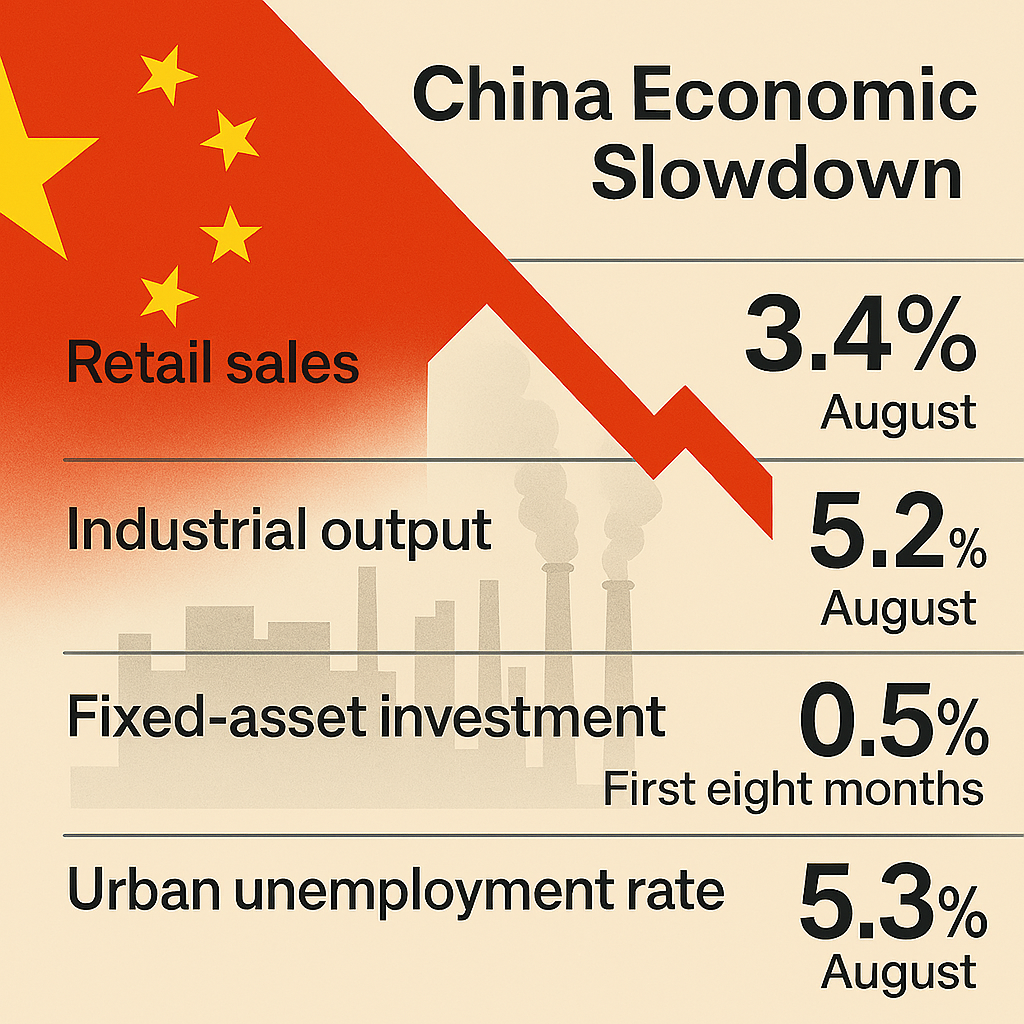
China’s economy showed signs of slowing in April 2025, with both retail sales and industrial output missing expectations.

Retail sales grew 5.1% year-on-year, falling short of analysts’ forecasts of 5.5% growth. The slowdown reflects weak consumer sentiment, driven by deflationary pressures and uncertainty in the housing market.

While categories like gold and jewellery (+25.3%) and furniture (+26.9%) saw strong growth, car sales stagnated at just 0.7%.

Industrial production expanded 6.1% year-on-year, down from 7.7% in March 2025. The decline was largely attributed to tariff trade war tensions, which have disrupted exports.

However, fixed-asset investment rose 4% in the first four months of 2025, signalling continued infrastructure spending.

Despite the slowdown, China remains confident in achieving its 5% GDP growth target for the year. The government has introduced stimulus measures, including interest rate cuts and liquidity injections, to stabilise the economy.

With global trade uncertainties and domestic economic challenges, China’s policymakers face a delicate balancing act to sustain growth while addressing structural weaknesses.

Signs of weakness in the U.S. economy – is a recession coming and is the United States causing harm to global economies?

Cracking world economies

The U.S. economy is showing cracks as multiple indicators suggest that growth may be slowing.

With GDP shrinking by 0.3% in the first quarter of 2025, concerns about an impending recession have intensified among analysts and investors.

A key driver of this economic downturn is the ongoing trade uncertainty, which has prompted businesses to stock up on imports before new tariffs take effect.

While some experts argue this is a temporary setback, others caution that prolonged trade conflicts could stifle growth for months to come.

Resilient labour market

Despite these concerns, the labour market has remained resilient, with unemployment hovering at 4.2%. However, signs of strain are emerging – job openings have declined, and layoffs have picked up in certain industries.

If hiring slows further, consumer spending could weaken, adding pressure to the economy.

Inflation remains another point of concern. Rising costs of goods and services have strained household budgets, leading to reduced discretionary spending.

The Federal Reserve, which has maintained high interest rates, is carefully assessing whether policy adjustments are needed to prevent a sharper downturn.

On Wall Street, sentiment is divided. Goldman Sachs estimates a 45% probability of a recession, while J P Morgan suggests the likelihood could be as high as 60%.

Some economists believe strategic trade deals and government intervention could avert a full-blown recession, but the margin for error is slim.

Does it really matter if there is to be a recession – it will likely be short lived. It will not please the U.S. President Donald Trump.

While uncertainty clouds the future, one thing is clear – the U.S. economy is at a pivotal moment. Whether policymakers can stabilise growth or if the nation is headed towards a deeper slowdown will depend on the next few quarters and the outcome of Trump’s tariffs.

Tudor Investment Corporation

Paul Tudor Jones, the founder of Tudor Investment Corporation, recently shared his outlook on the U.S. economy, and his perspective isn’t exactly optimistic.

He believes that U.S. stocks are likely to hit new lows before the end of the year, even if President Trump dials back tariffs on Chinese imports.

Jones pointed out that the combination of high tariffs and the Federal Reserve’s reluctance to cut interest rates is putting significant pressure on the stock market.

He reportedly noted that even if Trump reduced tariffs to 50% or 40%, it would still amount to one of the largest tax increases since the 1960s, potentially slowing economic growth.

The billionaire investor also warned that unless the Fed adopts a more dovish stance and aggressively cuts rates, the market is likely to continue its downward trajectory.

He reportedly emphasised that the current economic conditions – marked by trade uncertainty and tight monetary policy – are not favourable for a stock market recovery.

Interestingly, Jones also expressed concerns about artificial intelligence, stating that AI poses an imminent threat to humanity within our lifetime.

Maybe AI will start running hedge funds too…?

No tariffs for Russia?

Russia escapes Trumps tariffs

Russia’s exemption from recent U.S. tariffs has sparked curiosity and debate. While many nations face new trade duties, Russia remains notably absent from the list

This decision stems from a combination of geopolitical, economic, and strategic factors.

One key reason is the existing sanctions imposed on Russia by several countries, including the United States, following its invasion of Ukraine in 2022.

These sanctions have already significantly curtailed trade between Russia and its global partners, rendering additional tariffs less impactful.

For instance, U.S.-Russia trade has dwindled to a fraction of its pre-war levels, focusing primarily on strategic goods like fertilisers and chemicals.

Another factor is the ongoing diplomatic efforts to address the conflict in Ukraine. Some analysts suggest that exempting Russia from tariffs could be a strategic move to maintain a channel for negotiation and potential cooperation.

This approach might aim to encourage Russia’s participation in peace talks or other diplomatic initiatives.

Additionally, the structure of Russia’s exports plays a role. Certain goods, such as fertilisers, are critical to global supply chains, and imposing tariffs could disrupt markets and harm economies reliant on these imports.

While the decision has drawn criticism, it underscores the complexities of balancing economic policies with geopolitical realities.

The debate continues as the global community navigates these challenging dynamics caused through the imposition of U.S. tariffs.

UK economy shows welcome signs of resilience with positive GDP growth and inflation relief

Union Jack flag and stocks charts

The UK economy displayed unexpected resilience in February 2025, with GDP growing by 0.5%.

This figure has exceeded market expectations and provided a welcome boost to UK economic confidence. The growth was fueled by robust activity in the services and manufacturing sectors, which helped counterbalance ongoing challenges in other areas.

February’s performance marks a recovery from the flat growth seen in January 2025, underscoring the adaptive capacity of businesses and consumers alike.

Adding to the positive momentum, the Consumer Prices Index (CPI) inflation rate eased to 2.6% in March 2025, down from February’s 2.8%.

The decline in inflation reflects a combination of factors, including falling fuel costs and stable food prices, which have alleviated pressure on household budgets.

This marks the lowest inflation level since late 2024 and aligns with the Bank of England’s goal of achieving price stability.

The interplay of stronger-than-expected GDP growth and easing inflation suggests a cautiously optimistic outlook for the UK economy.

While challenges persist, such as global economic uncertainties and lingering effects of Brexit, these latest figures indicate a potential turning point, despite the Chancellors autumn and spring ‘budgets’.

The UK government and market participants will be watching closely to see if this positive trend continues into the coming months.

See: Office for National Statistics (ONS)

Dow dives 1600 points after Trump’s tariff attack – S&P 500 and Nasdaq drop the most since 2020

Stocks markets fall

The U.S. stock market experienced a dramatic plunge following President Donald Trump’s announcement of sweeping tariffs, marking one of the most significant market downturns since 2020.

On 3rd April 2025, the Dow Jones Industrial Average plummeted by 1,600 points, a staggering 4% drop, closing at 40,546.

Dow Jones one day chart

The S&P 500 fell by 4.8%, while the tech-heavy Nasdaq Composite suffered a 6% decline, reflecting widespread investor anxiety.

S&P 500 one day chart

Trump’s tariffs, which include a baseline 10% levy on imports from all trading partners and higher rates for specific countries, have sparked fears of a global trade war.

The effective tariff rate for China, for instance, has risen to 54%, raising concerns about supply chain disruptions and inflation. Major industries, including technology, retail, and manufacturing, were hit hard.

Apple shares dropped nearly 10%, while companies like Nike and Nvidia saw significant losses.

Apple one day chart

The market reaction underscores the uncertainty surrounding the economic impact of these tariffs. Analysts warn that the measures could dampen consumer spending, increase inflation, and slow economic growth.

The ripple effects were felt globally, with European and Asian markets also experiencing declines. The Nikkei index declined a further 3%.

Nikkei Index five-day chart

Despite the turmoil, Trump defended the tariffs, likening them to a necessary ‘operation’ for the economy. He expressed confidence that the markets would eventually rebound, emphasising the long-term benefits of reshoring manufacturing and generating federal revenue.

As investors grapple with the implications of these policies, the focus remains on potential retaliatory measures from affected countries and the broader impact on global trade dynamics.

The sharp market sell-off serves as a stark reminder of the delicate balance between protectionist policies and economic stability in an interconnected world.

The coming weeks will be crucial in determining whether these tariffs lead to lasting economic shifts or temporary market volatility.

U.S. companies are experiencing more harm from Trump’s tariffs. He wants manufacturing to come back to America – but after decades of globalization fine tuning – that is no easy task.

Are markets underestimating the impact of the tariffs on inflation?

Are markets pricing in the fact that Trump’s tariff policy will not be fully followed through?

The U.S. would be lucky to see a single rate cut from the Federal Reserve this year – and that will unsettle investors.

The U.S. economy could now only expand by between 1% and 1.5% this year – this would be a significant change in the growth outlook when compared with the International Monetary Fund’s (IMF) projection of 2.7% U.S. growth made earlier this year.

If we get close to 1%, we get close to ‘stall’ speed and then it could just stop – and that will mean recession or worse for the U.S.

Japan’s inflation up 3% in February 2025 – interest rates expected to rise

Japan inflation

Japan’s core inflation rate rose to 3% in February, exceeding market expectations of 2.9%

This marks the 35th consecutive month that inflation has remained above the Bank of Japan’s 2% target.

While the figure is slightly lower than January’s 3.2%, it reflects persistent price pressures, driven by rising food and wage costs. Government subsidies for fuel helped ease the overall inflation rate to 3.7%, down from January’s 4%.

The Bank of Japan has maintained its interest rate at 0.5%, but the data strengthens the case for potential rate hikes in the coming months as inflationary trends continue to challenge households.

Bank of England holds interest rate at 4.5%

UK interest rate

The Bank of England (BoE) has decided to maintain its base interest rate at 4.5%, following its latest Monetary Policy Committee (MPC) meeting

The Bank of England has warned economic and global trade uncertainty has ‘intensified’ as it held UK interest rates at 4.5%.

This decision, supported by eight out of nine committee members, reflects the Bank’s cautious approach amidst ongoing economic challenges.

The move comes as inflation remains above the Bank’s 2% target, with the UK Consumer Prices Index (CPI) inflation recorded at 3% in January 2025. Rising energy costs, water bills, and transportation fares have contributed to the persistent inflationary pressures.

Despite these challenges, the UK economy has shown mixed signals, with a slight GDP growth of 0.1% in the final quarter of 2024, followed by a contraction of 0.1% in January 2025.

The BoE’s decision to hold rates steady aims to balance the need to control inflation while supporting economic stability. Governor Andrew Bailey reportedly emphasised the importance of monitoring both global and domestic economic developments closely (that’s useful then – what a good idea).

The MPC’s cautious stance reflects concerns over global trade uncertainties and the potential impact of geopolitical tensions.

While the decision provides some relief to borrowers, it leaves savers and businesses navigating a landscape of economic uncertainty.

Analysts predict that the Bank of England may consider rate cuts later in the year, depending on inflation trends and economic performance.

For now, however, the focus remains on maintaining stability in a forever fast challenging environment.

U.S. holds interest rate steady despite Trumps tariff threats – transitory inflation is back – remember that?

U.S. Interest rate

The Federal Reserve has opted to maintain its federal funds rate within the range of 4.25% to 4.5%, a decision that aligned with market expectations

This comes amidst increasing uncertainty surrounding the economic landscape. While the Fed’s current stance is to hold interest rates steady, it has reiterated its intention to implement two rate cuts later this year – a prospect that has garnered significant attention and appreciation from investors.

Fed Chair Jerome Powell reportedly expressed measured optimism about the state of the U.S. economy during his press conference.

He highlighted the strength of labour markets, and the progress made toward reducing inflation, which, although still above the 2% target, has shown improvement.

Powell also addressed potential short-term impacts of tariffs but downplayed their long-term influence on inflation.

Financial markets responded positively to the announcement, with major stock indices such as the Dow, S&P 500, and Nasdaq rallying after the recent slump.

This reflects investor confidence in the Fed’s ability to navigate economic challenges while supporting growth. However, economists warn of potential risks, including stagflation, as uncertainties tied to Trump’s tariffs and consumer spending persist.

The decision underscores the Fed’s balancing act between fostering economic stability and addressing inflationary pressures, leaving room for cautious optimism as the year unfolds.

UK economy unexpectedly shrank by 0.1% in January 2025

UK economy shrinks

The UK economy faced an unexpected contraction of 0.1% in January, marking a surprising downturn following a 0.4% growth in December 2024

This decline, reported by the Office for National Statistics (ONS), has raised concerns about the nation’s economic trajectory, particularly as the government prioritizes boosting growth.

The contraction was primarily attributed to a slowdown in manufacturing, alongside weak performances in oil and gas extraction and construction.

The ONS noted that while the economy shrank in January 2025, the broader three-month period still showed modest growth of 0.2%. But never-the-less, it remains one of weak growth.

Interestingly, the services sector provided a glimmer of hope, driven by robust retail activity, especially in food stores, as consumers opted to eat and drink at home more frequently. This sector’s resilience partially offset the declines in other areas.

The timing of this economic dip is particularly significant, as it precedes the Chancellor’s Spring Statement, where even more government spending cuts are expected to be outlined.

Chancellor Rachel Reeves acknowledged the challenges and reportedly commented that the global economic landscape has shifted, and the UK is feeling the repercussions. She reiterated the government’s commitment to accelerating efforts to stimulate growth and reform public services.

However, the unexpected contraction has sparked criticism from opposition parties, who have labeled the government’s policies as ineffective in fostering sustainable economic growth.

The Shadow Chancellor reportedly described the government as a ‘growth killer,’ citing high taxes and restrictive employment legislation as barriers to business confidence and therefore growth.

As the UK navigates these economic headwinds, the focus will remain on the Chancellor’s upcoming measures and their potential to steer the economy back on track.

The January figures serve as a stark reminder of the fragile state of the UK economy and the challenges that lie ahead.

China’s exports miss forecasts as U.S. tariffs bite -imports record sharp decline

China exports drop

China’s exports in the January 2025 to February 2025 period rose 2.3% in U.S. dollar terms from a year earlier, significantly undershooting expectations of a 5% increase

That marked the slowest growth since April 2024 last year when exports increased by just 1.5% on the year, according to recently released data.

Imports surprised markets by declining 8.4% year-on-year in the first two months of 2025, the sharpest fall since July 2023.

Trump’s first round of 10% tariff hikes on Chinese goods took effect on 4th February 2025, followed by another 10% tariff increase just one month later, taking the cumulative levies to 20%.

China retaliated in kind.

Data from the customs authority

China announces 7.2% increase in defence spending and targets around 5% growth for 2025

China has unveiled plans for 2025, announcing a 7.2% increase in defence spending alongside a GDP growth target of around 5%

These decisions, revealed during the annual National People’s Congress in Beijing, reflect the nation’s strategic priorities amid a challenging and fast changing global landscape.

The 7.2% rise in defence spending mirrors last year’s increase, underscoring China’s commitment to modernizing its military capabilities. With a defence budget of approximately 1.78 trillion yuan ($245.7 billion), China maintains the world’s second-largest military budget, though it remains significantly smaller than that of the United States.

The funds are expected to support advancements in high-tech military technologies, including stealth fighters, aircraft carriers, and nuclear capabilities. This move comes as China navigates heightened tensions with the U.S., territorial disputes in the South China Sea, and concerns over Taiwan.

On the economic front, the target of around 5% GDP growth signals a cautious yet determined approach to sustaining economic momentum.

This figure aligns with last year’s target and reflects the government’s focus on addressing domestic challenges, such as a sluggish property market and subdued consumer spending, while countering external pressures like trade tensions with the U.S.

Premier Li Qiang emphasized the importance of boosting domestic consumption and fostering innovation to achieve this goal.

China’s dual focus on defence and economic growth highlights its efforts to balance national security with economic stability.

However, the path forward is fraught with uncertainties, including geopolitical tensions and the need for structural economic reforms.

As the world watches, China’s ability to navigate these challenges will shape its trajectory in the years to come.

China says

‘Tariff war, a trade war or any other type of war’ – China says it’s ready to fight U.S. until the end.

Ominous!

UK Government finances in surplus but…

UK finances

The UK government has announced a significant budget surplus for January 2025, marking a notable achievement in its fiscal management

The surplus, which is the difference between what the government spends and the tax it takes in, amounted to £15.4 billion. This figure represents the highest level for the month of January since records began over three decades ago.

However, despite this impressive surplus, the figure fell short of the Office for Budget Responsibility’s (OBR) forecast of £20.5 billion. The shortfall has increased pressure on Chancellor Rachel Reeves to meet her self-imposed fiscal rules.

The OBR, which monitors the government’s spending plans and performance, will release its latest outlook for the UK economy and public finances on 26 March 2025.

The surplus was driven by a surge in tax receipts, particularly from self-assessed taxes, which are typically higher in January compared to other months. However, the lower-than-expected tax receipts suggest underlying weaknesses in the UK economy.

The Office for National Statistics (ONS) reported that borrowing in the financial year to January 2025 was £118.2 billion, which is £11.6 billion more than at the same point last year.

The government now faces the challenge of balancing its fiscal rules with the need to support economic growth. Weak economic growth and higher borrowing costs have reduced the headroom available to the Chancellor, making it more difficult to meet her fiscal targets.

Economists have suggested that Reeves may need to consider raising taxes or cutting public spending to stay within her fiscal rules.

As the UK economy continues to navigate these challenges, the government’s ability to manage its finances effectively will be crucial in maintaining credibility with financial markets and ensuring long-term economic stability.

The upcoming Spring Forecast will be a critical moment for the UK Chancellor to outline her plans and address the fiscal challenges ahead

Japan ekes out economic growth of 0.7% in 2024

Japan growth

Japan’s economy showed modest growth in 2024

The economy expanded by 0.7% in the fourth quarter, which was higher than market expectations of 0.3%. However, for the full year, Japan’s GDP growth was just 0.1%, a significant slowdown from the 1.5% growth seen in 2023.

Exports played a key role in boosting economic growth during the fourth quarter, while domestic demand remained relatively weak.

The Bank of Japan has been gradually raising interest rates, signalling a move away from the long-standing policies aimed at combating deflation.

It’s a mixed picture, but there are some positive signs, especially with the increase in business spending and a rebound in inbound consumption

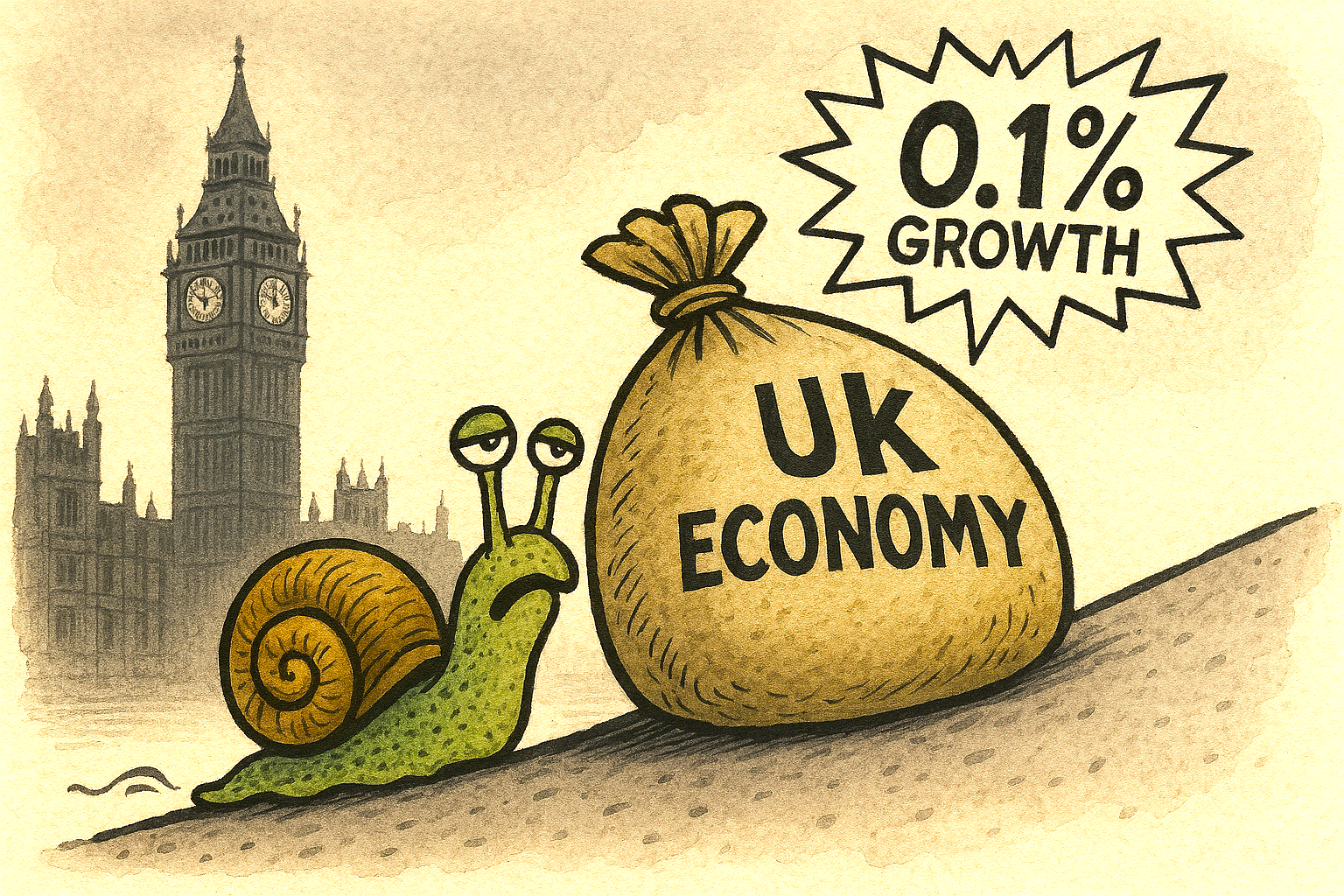
EEK! Only 0.1% growth for the UK

Tepid UK GDP

The U.K. economy grew by just 0.1% in the fourth quarter according to a preliminary estimate from the U.K.’s Office for National Statistics (ONS) released Thursday 13th February 2025.

Economists had expected the country’s GDP to contract by 0.1% over the period.

The services and construction sectors contributed to the better-than-expected performance in the economy, up 0.2% and 0.5% respectively, but production fell by 0.8%, according to the ONS.

Sluggish growth

The UK economy recorded zero growth in the third quarter, accompanied by lacklustre monthly GDP. There was a 0.1% contraction in October 2024 followed by a 0.1% expansion in November 2024.

On Thursday 13th February 2025, the ONS that growth had picked up in December, with an estimated 0.4% month-on-month expansion attributed to growth in and production.

Sluggish and a recent decline in inflation prompted the Bank of England to implement its interest rate cut of the year last week, reducing the benchmark rate to 4.5%.

The central bank indicated that additional rate cuts are anticipated as inflationary pressures diminish. However, it noted that higher energy costs and regulated price changes are projected to increase headline inflation to 3.7% in the third quarter of 2025.

Pressure

The expectation is that UK underlying inflationary pressures will continue to decline. The Bank of England expects the inflation rate to return to its 2% target by 2027.

The bank also halved the U.K.’s economic growth forecast from 1.5% to 0.75% this year.

Poor economic performance will add additional pressure on U.K. Chancellor Rachel Reeves, whose fiscal plans have been criticised for increasing the tax burden on businesses.

Critics say the plans, which increase the amount that employers pay out in National Insurance (NI) contributions as well as a hike to the national minimum wage, could harm investment, jobs and growth. This appears to be coming to fruition.

Chancellor Reeves defended her ‘dire’ Autumn Budget reportedly saying the £40 billion of tax rises were needed to fund public spending and that she is prioritising economic growth.

A poor start – 0.1% is an anaemic growth percentage!

Bank of England cuts interest rate to 4.50% and cuts growth forecast for 2025

BoE

The Bank of England has halved its growth forecast for 2025 as it cut interest rates to 4.50% – the lowest for around 18 months

The economy is now expected to grow by 0.75% in 2025, the Bank of England reportedly said, down from its previous estimate of 1.5%.

Not good news for the chancellor, Rachel Reeves.

Bank of England cuts interest rates to 4.5% amid economic slowdown

The Bank of England announced a reduction in its benchmark interest rate from 4.75% to 4.5%, marking the third cut since August 2024.

This decision comes as a response to the ongoing economic challenges facing the UK, including sluggish growth and concerns about the potential effect of Trump’s tariffs.

The primary reason behind this rate cut is the Bank’s effort to stimulate economic activity by making borrowing cheaper.

With the cost of borrowing now at its lowest level since June 2023, homeowners with variable rate or tracker mortgages will see immediate relief, with monthly repayments expected to decrease by approximately £29 per month on an average mortgage.

Small businesses, which have been struggling under heavy borrowing burdens, are also expected to benefit from this move.

Growth concerns linger

The Bank’s decision follows a series of disappointing economic indicators. The latest GDP figures showed that the economy only grew by 0.1% in November 2024, falling short of economists’ forecasts.

This sluggish growth, coupled with two months of falling output, has led the Bank to revise its growth forecast for 2025 downward.

The Bank now anticipates no growth during the fourth quarter of the year, and some economists are predicting as many as six rate cuts this year, potentially bringing the rate down to 3.25%.

While the rate cut is expected to provide some relief to borrowers, it also raises concerns about the long-term impact on savings and investment. With interest rates at historic lows, savers may find it challenging to earn meaningful returns on their deposits.

Additionally, the low-interest rate environment could encourage excessive borrowing and lead to asset bubbles, posing risks to financial stability. Has inflation finished?

The Bank of England’s decision to cut interest rates to 4.50% is a strategic move aimed at boosting economic activity and providing relief to businesses and homeowners.

Recent surprise rise in UK borrowing – deals yet another disappointment for the chancellor

UK borrowing

The latest UK borrowing figures, reveal a significant increase in public sector net borrowing. In December 2024, the UK government borrowed £17.8 billion, which is the highest figure for the month for four years.

This amount was reportedly £10.1 billion higher than the same month last year and exceeded the £14.1 billion forecast by most economists.

The reported rise in borrowing was driven by several factors, including increased spending on public services, benefits, debt interest, and capital transfers. The interest payable on central government debt alone was £8.3 billion, nearly £4 billion higher than the previous year.

Additionally, a reduction in National Insurance contributions following rate cuts earlier in 2024 partially offset the increase in tax receipts.

Chancellor Rachel Reeves faces a challenging fiscal environment, with borrowing costs rising due to lower economic growth, higher public sector wages, and increased benefits payments. The unexpected jump in December 2024’s borrowing highlights the difficulties in balancing the budget and maintaining economic stability. The Chancellor’s budget was one of growth, but employer NI hikes have unravelled her ‘growth’ plan.

Despite the rise in borrowing, government bond prices remained relatively stable, suggesting that traders were not overly concerned by the surge. However, the overall fiscal position remains precarious, with public sector net debt estimated at 97.2% of GDP, the highest level since the early 1960s.

The government has pledged to take a hard line on unnecessary spending and to ensure that every penny of taxpayer money is spent productively.

As the fiscal year progresses, the Chancellor will need to navigate these financial challenges carefully to maintain economic stability and growth.

However, it is anticipated next month, following the January tax income boost, figures will appear favourable for the government, albeit temporarily.