

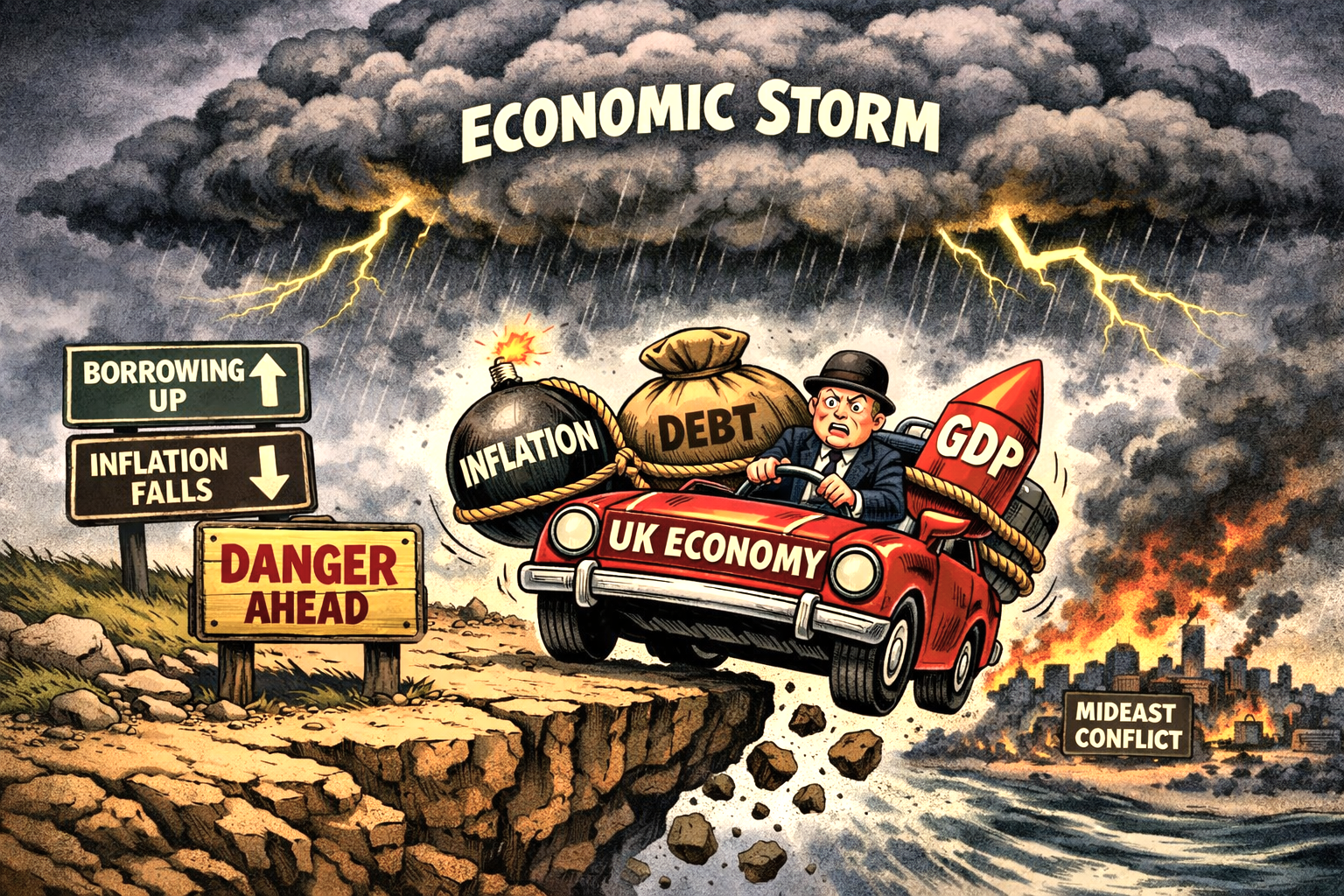
The UK’s latest run of economic data has delivered a contradictory picture: inflation easing sharply, borrowing surging, and growth outperforming expectations.
Together, the figures show an economy stabilising in some areas while coming under renewed strain in others.
Inflation (CPI)
April CPI fell to 2.8%, down from 3.3% in March, the lowest rate in nearly three years.
The drop was driven by Ofgem’s April energy price cap, which cut household gas and electricity bills, alongside softer rises in water charges, road tax and several food categories.
But economists warn the relief will be temporary. Wholesale energy prices have risen sharply since the U.S. / Iran conflict escalated, and inflation is expected to climb back above 4% later in the year.
The Bank of England is therefore likely to remain cautious about cutting rates.
Forecast out of sync
Government Borrowing (April 2026) The borrowing picture was far less encouraging. The government borrowed £24.3 billion in April — the highest April figure since 2020 and well above the £20.9 billion forecast by the OBR.
Borrowing was £4.9 billion higher than the same month last year, driven by inflation‑linked increases in benefits, the earnings‑linked rise in the state pension, and record April debt‑interest payments of £10.3 billion in 2026.
Analysts note that this deterioration comes before the full impact of the energy‑price shock is felt, raising concerns about the fiscal outlook for the rest of the year.
Growth
GDP Growth The bright spot came from growth: the economy expanded 0.3% in March 2026, beating expectations of a slight contraction, and delivered 0.6% growth for Q1 — the fastest among G7 countries reporting so far.
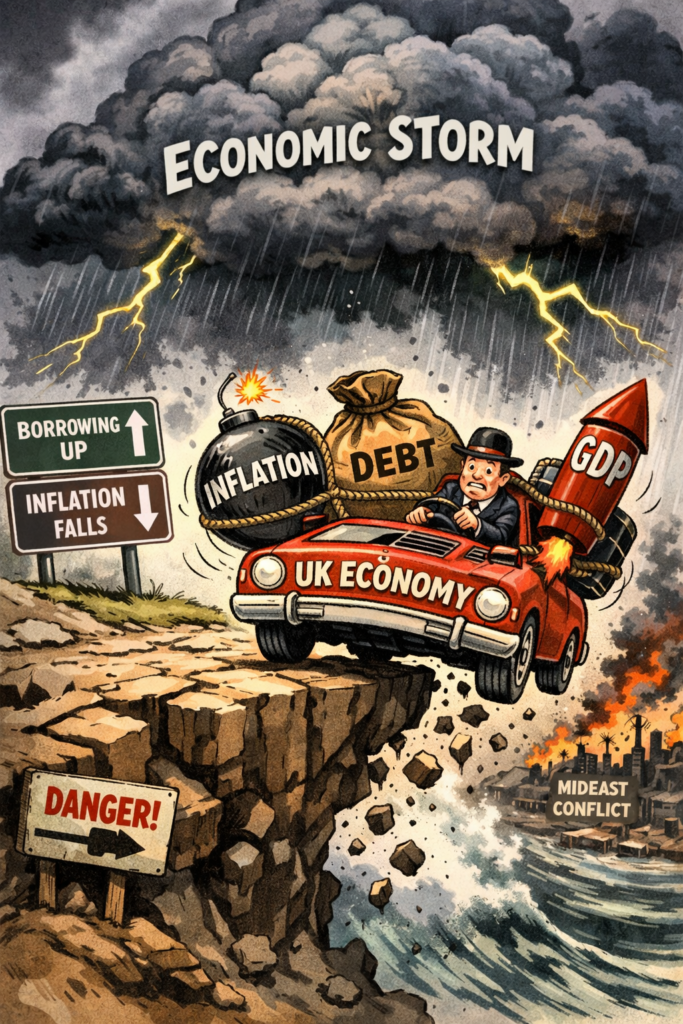
However, the ONS highlights that much of March’s strength reflected “front‑loading” of spending ahead of expected price rises linked to the Iran war, suggesting momentum may fade as higher energy and fuel costs feed through.
This data comes as the global economy waits for the full impact of the U.S. / Iran conflict to unravel.