

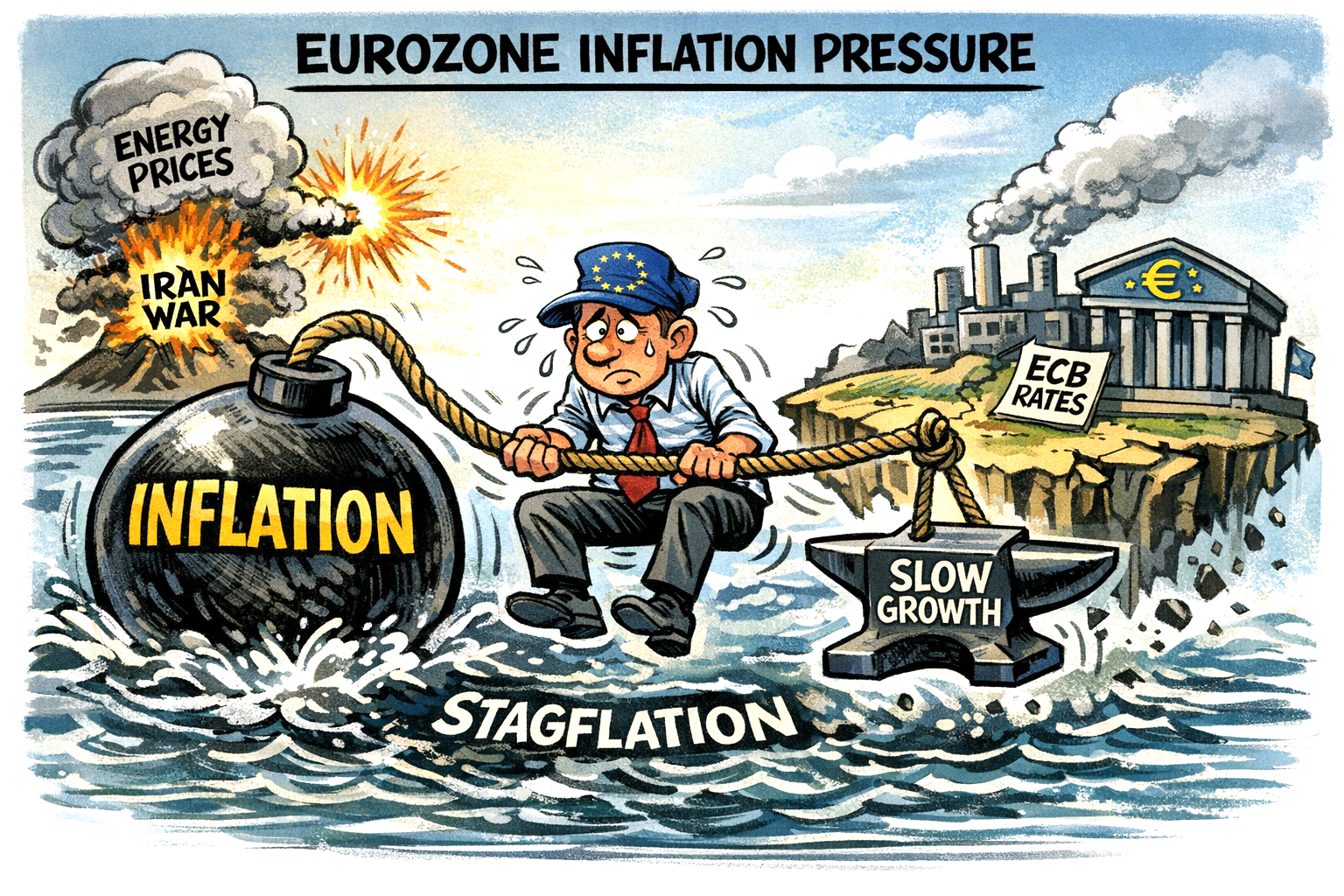
Euro zone inflation accelerated sharply in April 2026, rising to 3%, as the bloc’s economy barely grew — a combination that deepens fears of a stagflationary year.
The latest flash estimate from Eurostat shows headline inflation climbing from 2.6% in March, driven overwhelmingly by surging energy costs linked to the U.S./Iran war and the ongoing disruption in the Strait of Hormuz.
Energy
Energy inflation jumped to 10.9%, more than double the previous month’s rate, underscoring how exposed the currency bloc remains to external supply shocks.
Core inflation, however, edged down to 2.2%, offering a small reassurance that second‑round effects — wage‑price spirals — have not yet taken hold.
Growth was anaemic. First‑quarter GDP expanded by just 0.1%, reflecting weak industrial output, fragile consumer confidence, and higher input costs for businesses.
Stagnation
Economists warn that the combination of rising prices and near‑stagnant activity risks pushing the region into a period of low‑growth, high‑inflation pressure.
The figures land just ahead of the European Central Bank’s policy meeting. With inflation above target but growth faltering, the ECB faces a difficult balancing act.
Policymakers are widely expected to hold rates at 2%, wary that tightening into a supply‑driven shock could deepen the slowdown.
For now, the data reinforce a picture of a euro zone squeezed by global energy turmoil and struggling to regain momentum.