

Euro zone inflation jumps to 3% as economic growth almost stalls

Euro Zone Inflation Pressure April 2026

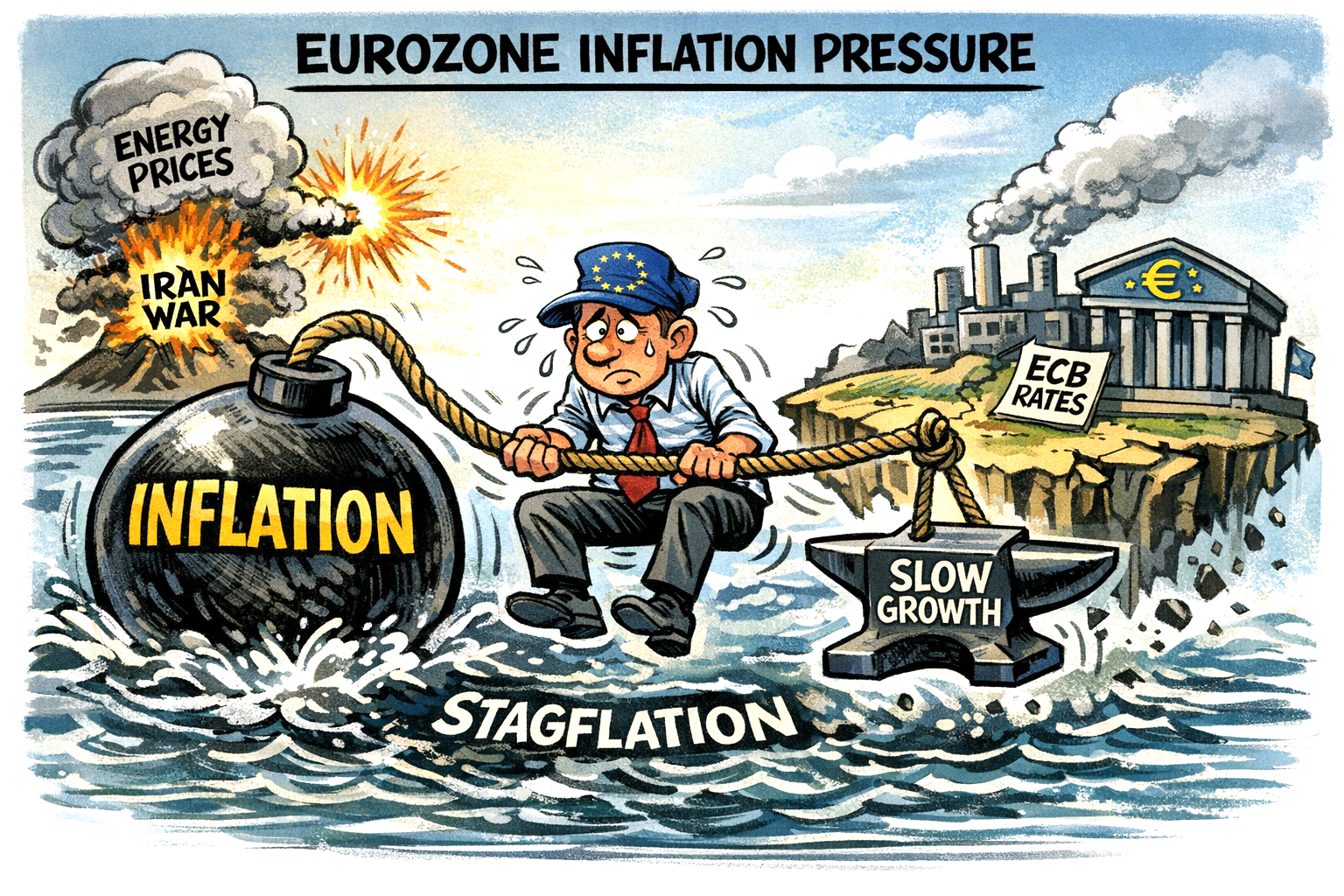
Euro zone inflation accelerated sharply in April 2026, rising to 3%, as the bloc’s economy barely grew — a combination that deepens fears of a stagflationary year.

The latest flash estimate from Eurostat shows headline inflation climbing from 2.6% in March, driven overwhelmingly by surging energy costs linked to the U.S./Iran war and the ongoing disruption in the Strait of Hormuz.

Energy

Energy inflation jumped to 10.9%, more than double the previous month’s rate, underscoring how exposed the currency bloc remains to external supply shocks.

Core inflation, however, edged down to 2.2%, offering a small reassurance that second‑round effects — wage‑price spirals — have not yet taken hold.

Growth was anaemic. First‑quarter GDP expanded by just 0.1%, reflecting weak industrial output, fragile consumer confidence, and higher input costs for businesses.

Stagnation

Economists warn that the combination of rising prices and near‑stagnant activity risks pushing the region into a period of low‑growth, high‑inflation pressure.

The figures land just ahead of the European Central Bank’s policy meeting. With inflation above target but growth faltering, the ECB faces a difficult balancing act.

Policymakers are widely expected to hold rates at 2%, wary that tightening into a supply‑driven shock could deepen the slowdown.

For now, the data reinforce a picture of a euro zone squeezed by global energy turmoil and struggling to regain momentum.
Are markets becoming complacent about the U.S. Iran war?

U.S. Iran war effect underestimated?

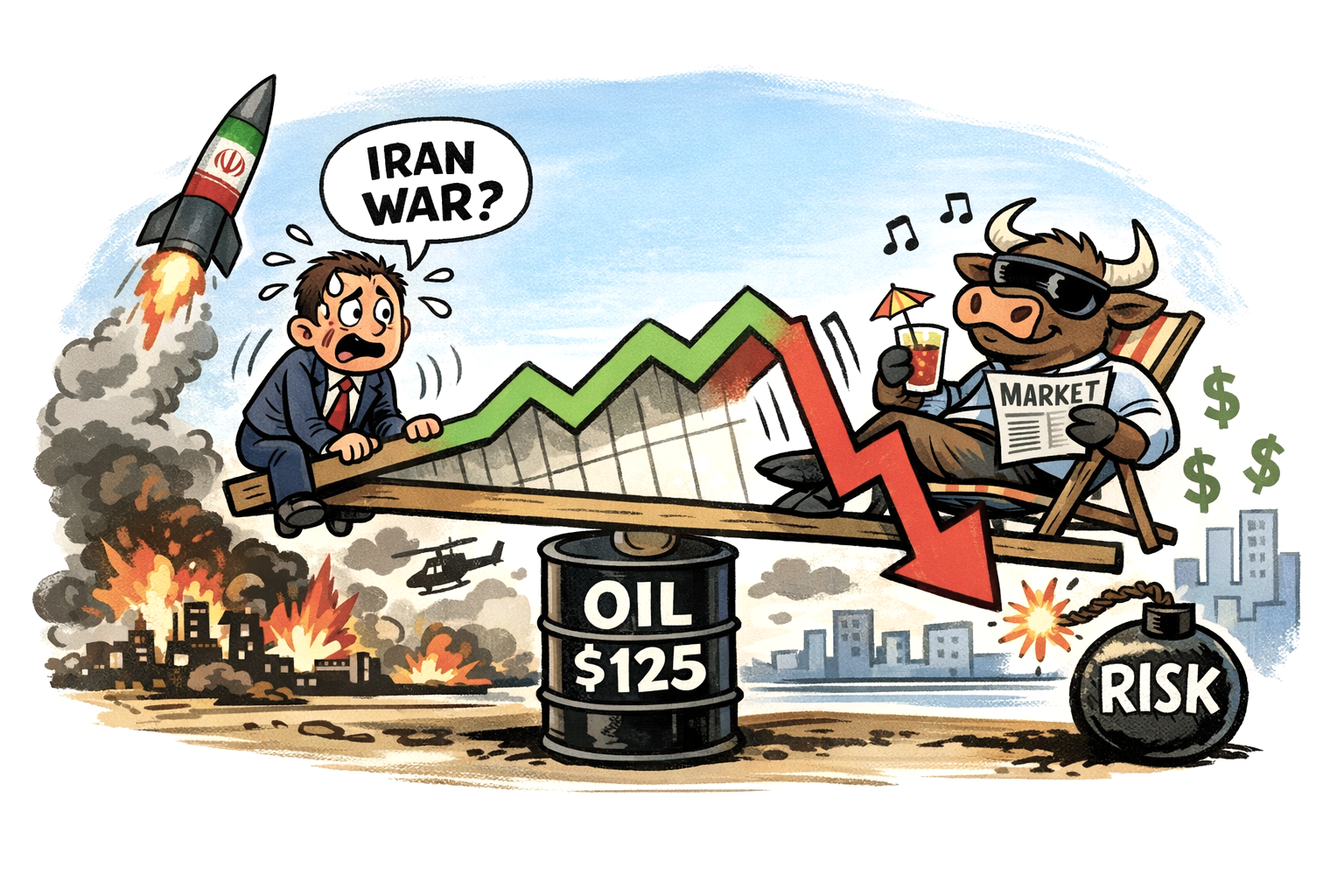
Markets are flashing warning signs that too many investors are still treating the U.S.-Iran war as a temporary disturbance rather than a structural shock.

Brent crude’s brief surge to around $125 a barrel — its highest level in four years — has reignited fears that the conflict’s economic fallout is being dangerously underpriced.

Complacency

Analysts argue that markets are behaving as though a clean resolution is imminent, even as evidence points in the opposite direction.

The core concern is complacency. Oil’s extreme pricing — where near‑term contracts trade at a steep premium to longer‑dated ones — shows traders are still assuming the Strait of Hormuz will reopen soon and that supply chains will normalise.

Yet millions of barrels per day remain blocked, inventories of refined products like diesel and jet fuel are sliding toward crisis levels, and the White House is reportedly weighing further military action.

None of that aligns with the market’s pricing of a quick return to stability.

The disconnect

This disconnect matters because the real economic damage has not yet fully surfaced. As one investment chief notes, the macro impact will “come back into stark focus” if oil stays elevated.

Higher energy costs feed directly into inflation, squeeze corporate margins, and erode consumer spending power. Equity markets have so far shown resilience, but that resilience is built on the assumption that the shock is temporary.

If the conflict drags into far into May 2026 — as several analysts expect — the stagflationary risk becomes harder to ignore.

Stress

The refined products market is already behaving like a stress test. Diesel prices have nearly doubled, and traders warn that refineries will soon be able to “charge whatever they want”.

Even a peace deal would not deliver instant relief: shipping logistics, sanctions decisions, and depleted reserves would take weeks to unwind.

The fear among seasoned investors is simple: markets are pricing for peace while the fundamentals are still pricing for war. Before long, that gap may close — abruptly and painfully.

Wall Street Closes at Fresh Record Highs as AI Tech Stocks Surge

S&P 500 and Nasdaq hit new record high!

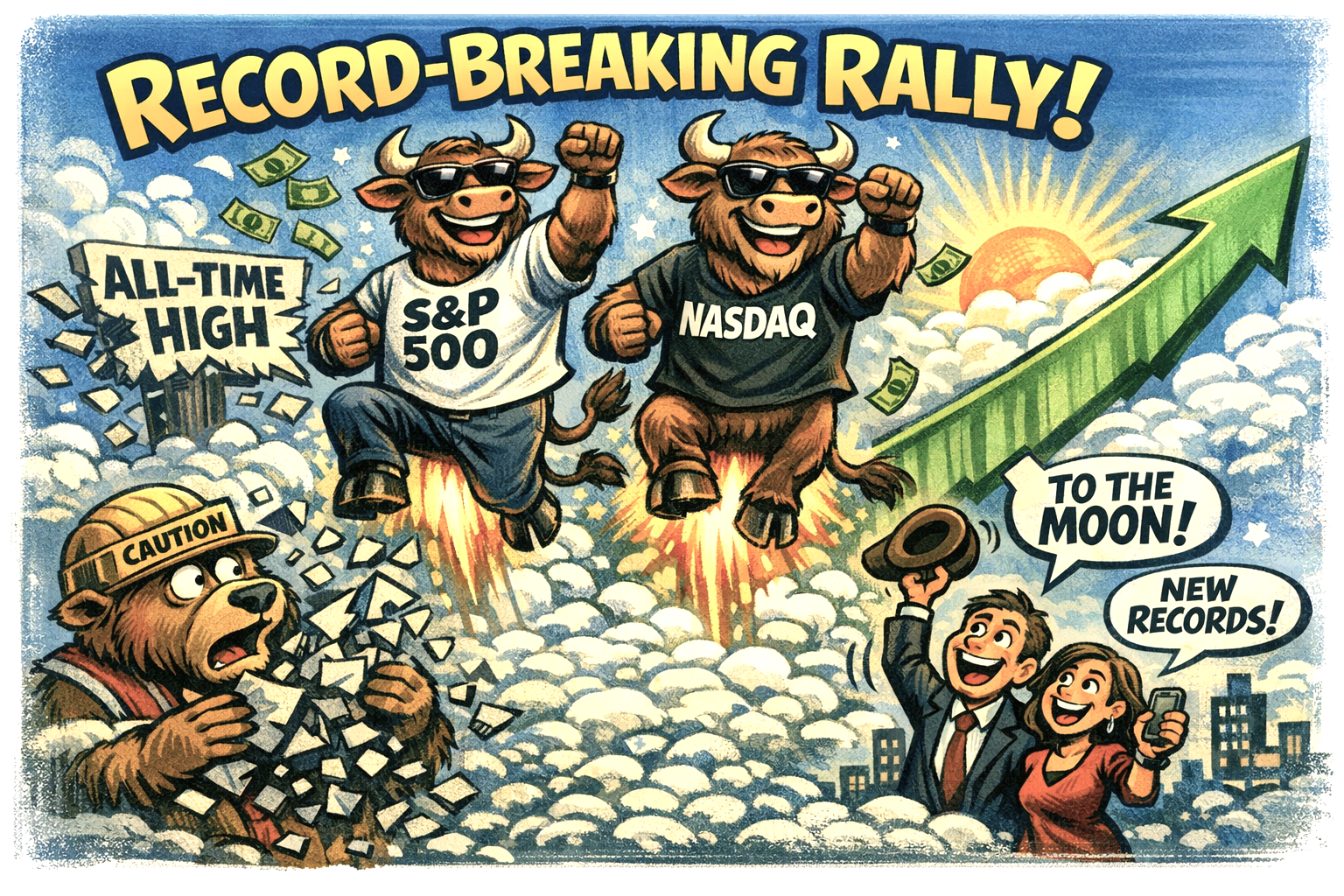
Wall Street ended April on a strong note as both the S&P 500 and the Nasdaq Composite closed at new record highs on 30th April 2026.

Investors pushed major indices higher for a second consecutive session, encouraged by resilient corporate earnings and renewed confidence in the technology sector.

The S&P 500 finished at 7,209, surpassing its previous peak set only days earlier. The Nasdaq Composite also broke new ground, closing at 24,892 after strong gains in semiconductor and cloud‑computing stocks.

IndexClose (30 Apr 2026)Previous Record CloseNew Record?
S&P 5007,209.017,173.91Yes
Nasdaq Composite24,892.3124,887.10Yes

Market sentiment was buoyed by expectations that the Federal Reserve will maintain its current policy stance, with inflation data showing signs of stabilising.

April’s performance caps a remarkable start to the year for U.S. equities, driven largely by robust demand for AI‑related technologies.

While analysts warn that valuations are becoming stretched, investors appear comfortable extending the rally as earnings continue to justify optimism.