

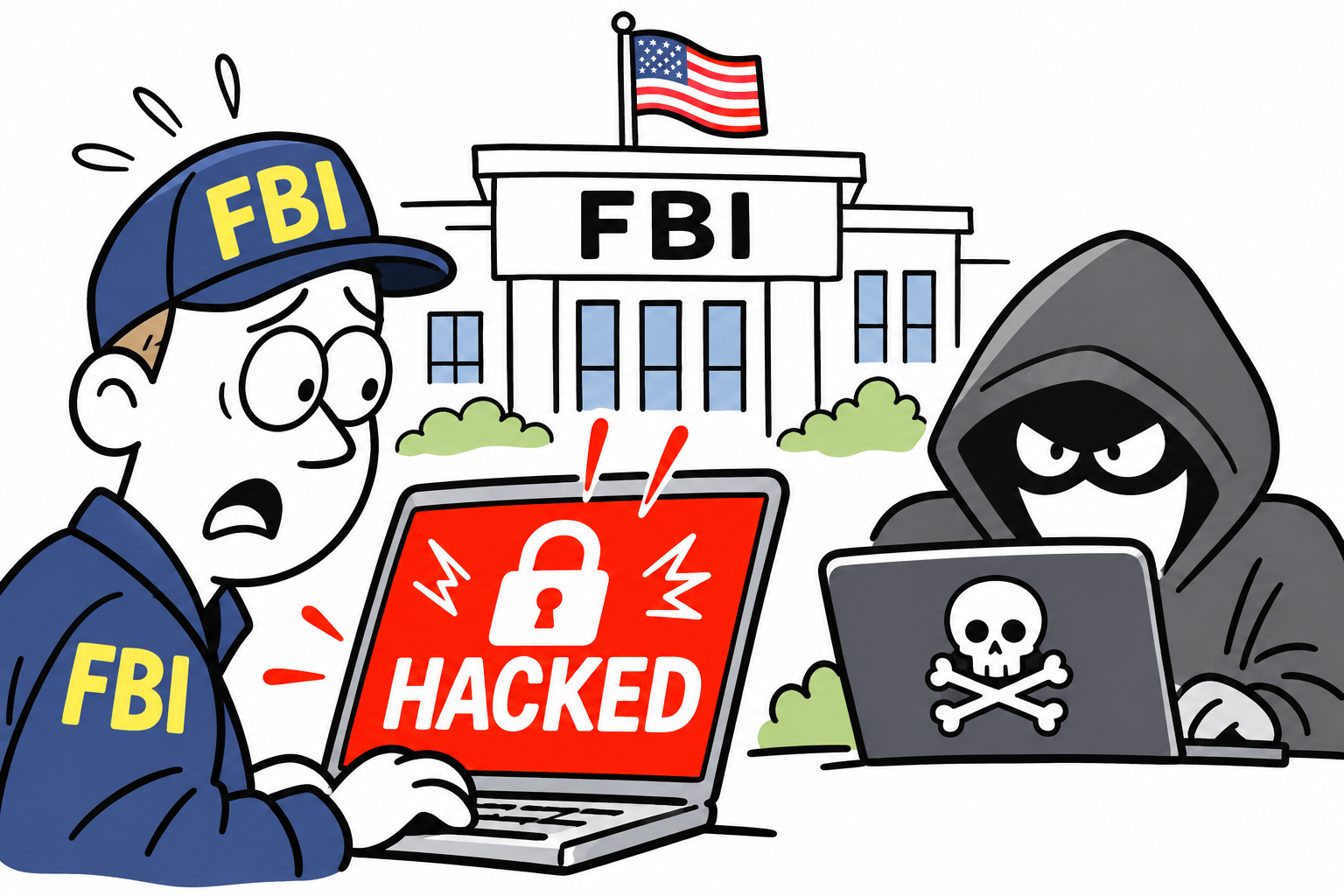
FBI REPORTEDLY HACKED: America’s Law Enforcement Database Under Threat

Art cartoon image of a news article titled "FBI HACKED: America's Law Enforcement Database Under Threat" showing a digital alert about the security breach.

The FBI is facing fresh questions over the security of America’s national law-enforcement infrastructure following reports of a suspected cyber intrusion into one of its most important databases, the U.S. National Crime Information Center (NCIC).

The system, operated by the Federal Bureau of Investigation, is used by thousands of law-enforcement agencies across the United States.

Classified

It holds highly sensitive information, including criminal records, outstanding arrest warrants, missing-person reports and details of stolen vehicles and firearms.

Any unauthorised access could have serious consequences, not simply for individual privacy but for the operation of American law enforcement itself.

The concern is that criminals gaining access to such information could potentially identify confidential investigations, expose sensitive personal details or exploit information about police operations.

Troubling

Even more troubling would be the possibility of records being manipulated, potentially compromising the accuracy of warrants, criminal histories or missing-person records.

The latest incident adds to a growing list of cybersecurity concerns surrounding the FBI. Previous security breaches and suspected intrusions have raised questions about the vulnerability of government systems. These systems hold some of America’s most confidential information.

At this stage, the full extent of the latest suspected breach remains unclear. Investigators have yet to establish publicly how much information may have been accessed, who was responsible. It has not been reported whether sensitive records were actually removed.

Growing worldwide issue

The incident also highlights a growing problem facing governments worldwide. As more critical services become dependent on interconnected digital systems, the consequences of a successful cyberattack become increasingly significant.

The FBI is supposed to be at the forefront of America’s fight against cybercrime. Finding itself investigating an intrusion into its own systems is an uncomfortable reminder that even the most powerful security organisations are not immune.

For Washington, the immediate challenge is establishing what happened. The longer-term question is whether America’s digital defences are keeping pace with the increasingly sophisticated criminals.

Some are likely to be state-backed hackers.
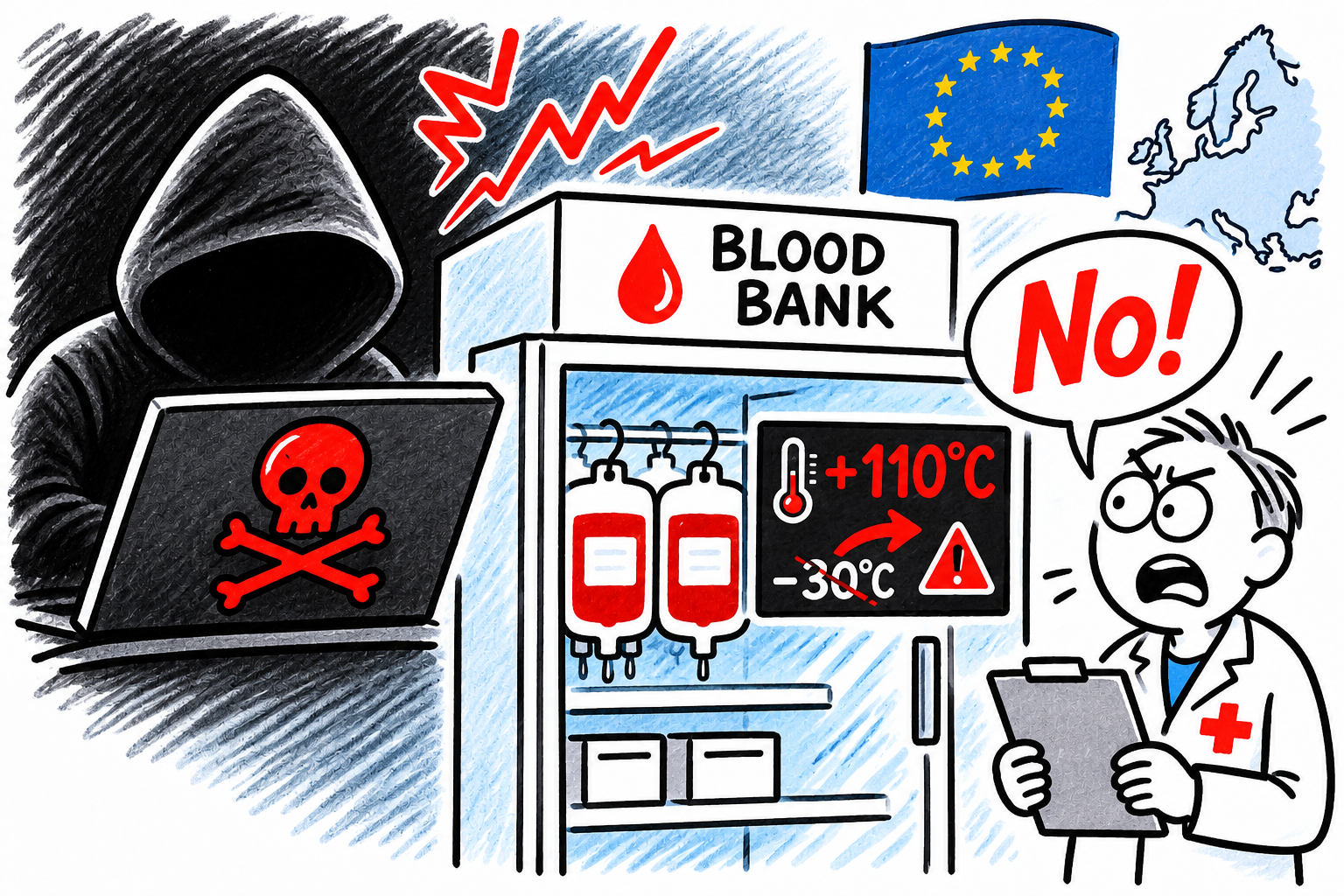
Hackers Target French Blood Banks in Alarming Escalation of European Cyberattacks

Hackers attack blood banks

A cyberattack on refrigeration systems at French blood-storage facilities has raised concerns about the vulnerability of essential services to digital sabotage.

The incident formed part of a wave of attacks targeting supermarket fridges and freezers across Europe.

France’s national blood service, the Établissement Français du Sang (EFS), said hackers interfered with monitoring and control systems at three cold-storage sites.

Temperature and defrost settings were altered to dangerously high levels, threatening plasma and other biological materials. Reports said attackers attempted to raise temperatures from around minus 30°C to as high as 110°C.

Alarm systems detected the abnormal settings and staff acted quickly. Products were secured or transferred to unaffected storage facilities.

No damage this time

The EFS reportedly said no blood products or samples were lost, no health consequences had been identified, and collection and distribution to hospitals continued uninterrupted. Remote access to the affected equipment was disabled as investigations began.

The attack appears to have reached the blood service through a refrigeration equipment provider, rather than directly targeting the EFS. The supplier referred to a vulnerability in a third-party component.

Investigators have not identified those responsible or established whether the blood-bank incident and supermarket attacks involved the same group.

Wider concern

The wider campaign has affected refrigeration equipment in several European countries, including France, Belgium, the Netherlands, Sweden and Ireland. In supermarkets, remotely altered settings caused food to spoil and led to substantial financial losses.

The episode exposes a weakness in infrastructure. Internet-connected systems make it easier to monitor temperatures and manage energy use, but poorly secured remote access, outdated software and vulnerable components can turn equipment into a target.

The immediate threat to France’s blood supplies was contained. However, the incident is a warning that cybersecurity is no longer just an IT concern: it is also a matter of public health, food security and national resilience.