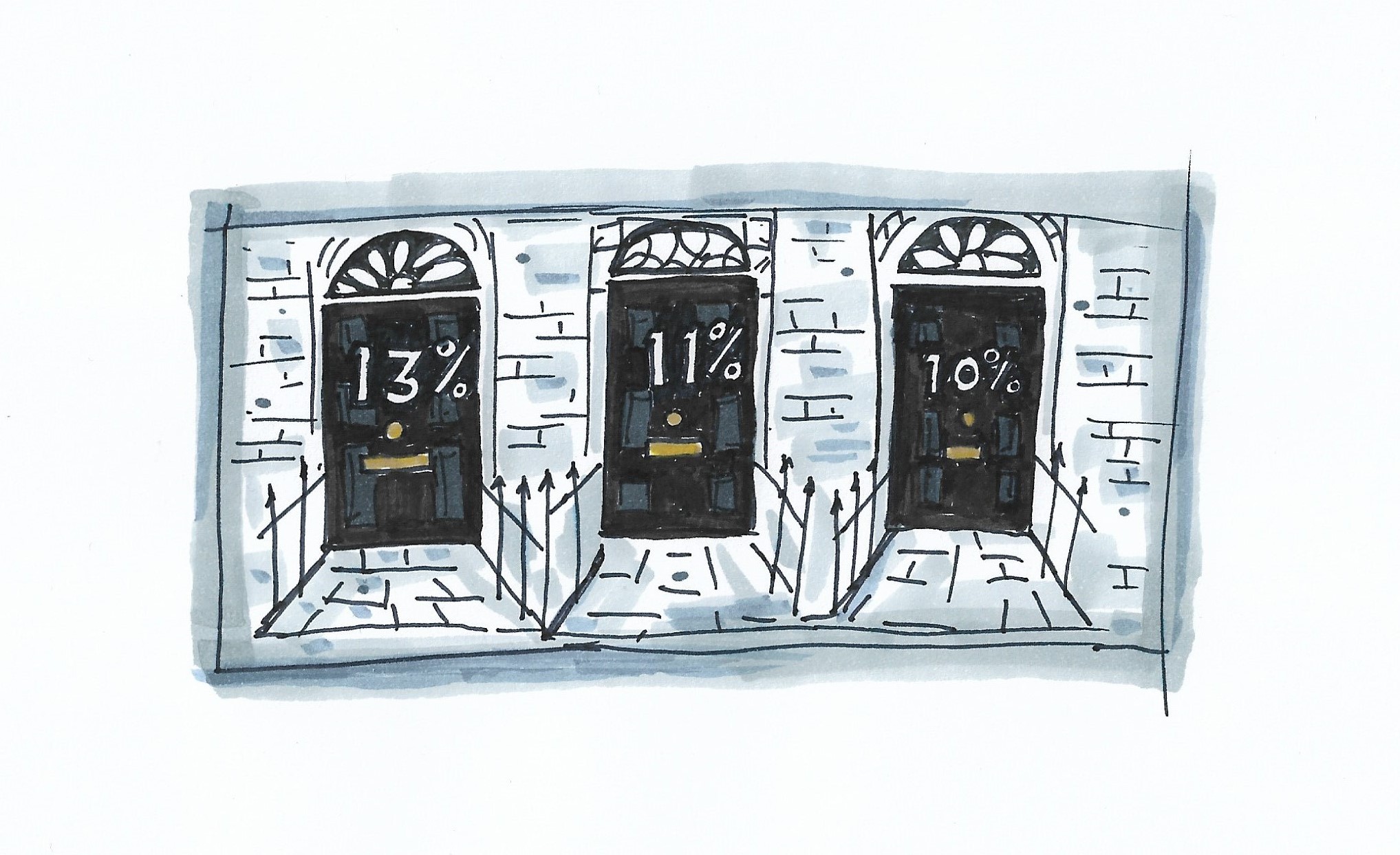
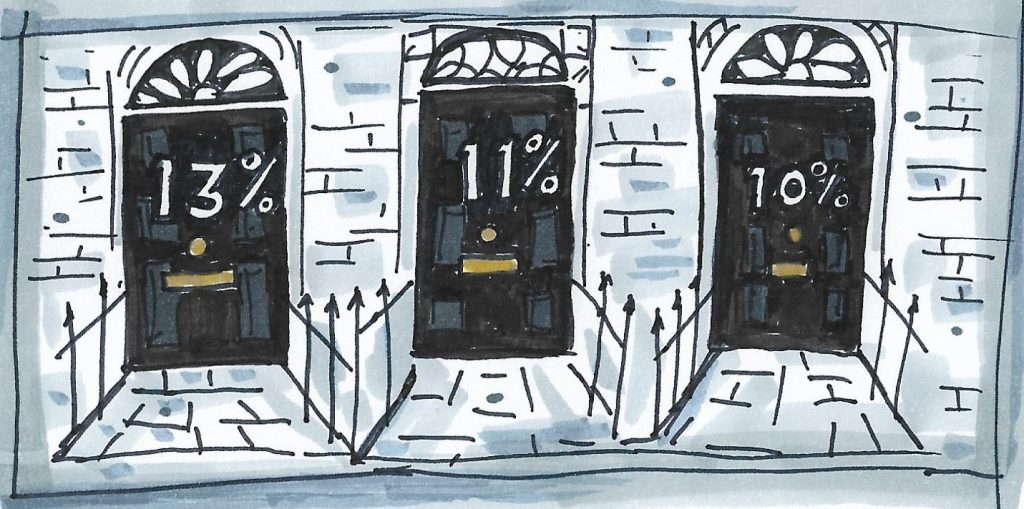
The value of UK mortgage arrears jumped by almost a third in April to June 2023 compared with the same period last year, according to the Bank of England (BoE).
Outstanding mortgage debt is now £16.9bn, the highest since 2016, it said.
Mortgage costs have risen for millions as the Bank has repeatedly hiked interest rates to slow soaring prices.
Some experts warn defaults will rise, but others say the number unable to repay remains relatively low.
According to the BoE, in April-June 16% of mortgages in arrears were new cases, which it said ‘was little changed compared to the previous quarter’.
It added that the proportion of mortgages in arrears was the highest since 2018.
The digital pound is a proposed new form of money that would be issued by the Bank of England and backed by the government. It would be similar to a digital banknote, enabling you to use it in-store or online to make payments.
It would not be intended to replace cash, but complement it. The digital pound is also known as digital sterling or Britcoin.
Bank of England and UK Government
The Bank of England and HM Treasury are looking at the idea of a digital pound because they think it might offer a new way to pay, help businesses, build trust in money, and better protect the UK’s financial system. They have published a Consultation Paper, which explores the need for the digital pound and proposes a set of design choices for it. They are also engaging with businesses and communities to get their views on the digital pound.
The digital pound is not a cryptocurrency or cryptoasset. Unlike cryptocurrencies, which have volatile values, the digital pound would be issued by the Bank of England and have a stable value, just like banknotes.
I promise to pay the bearer on demand the sum of £10.00
The digital £ is coming to a bank near you or more likely, an app near you
£10 in digital pounds would always have the same value as a £10 banknote.
The Nationwide Building Society says house prices are 5.3% lower compared to August last year, in the biggest annual decline since 2009.
Nationwide said the drop represented a fall of £14,600 on a typical home in the UK since house prices peaked in August 2022. It also said higher borrowing costs for buyers had led to a slowdown in activity in the housing market. Mortgage approvals are also about 20% below pre-Covid levels.
After 14 rate increases from the Bank of England – a two year fixed rate mortgage is now touching 6.7%
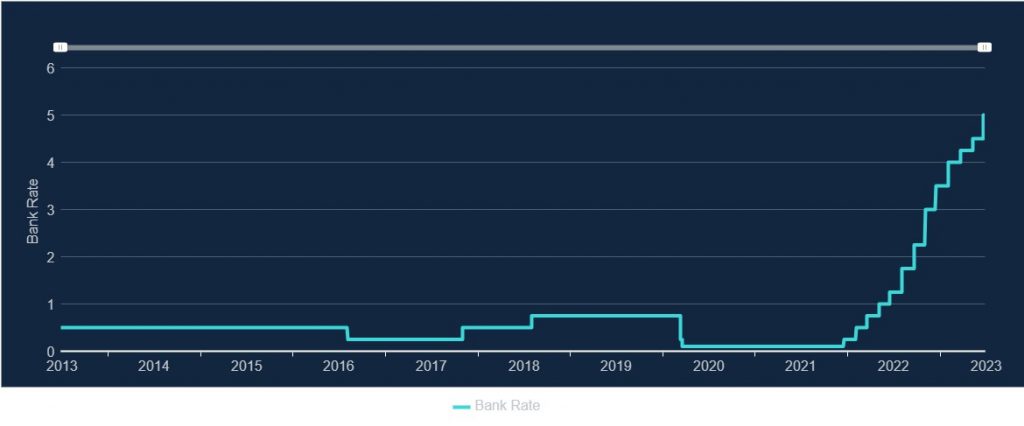
Since December 2021, the Bank of England (BoE) has raised interest rates 14 times in row in a bid to clamp down on rising inflation in the UK. The bank’s base rate now stands at 5.25%. This has led to lenders raising their mortgage rates, putting increased pressure on homebuyers.
The average two-year fixed mortgage rate on Friday was 6.7%, while the average five-year fix was 6.19%.
Average house prices in the UK peaked at £273,751 in August 2022 but fell to £259,153 last month.
The Bank of England’s forecasting, which has a major impact on the UK economy, is being reviewed and has been criticised.
After the Bank raised interest rates for a 14th time in a row in an effort to slow price rises in Augts 2023, officials have predicted inflation to fall from the current rate of 7.9%, to ‘around 5%‘ by the end of the year. The Bank puts rates up when they are concerned that too much spending will send prices spiralling.
So, in light of its estimating techniques being challenged, how much faith should we put in ‘5% by Christmas’?
For the last two years, the Bank of England has been underestimating the likely rate of inflation in the short term. MPs have been critical of the Bank’s forecast, and its officials have acknowledged they have got some judgements wrong in their forecasting.
The Central Bank has also announced a review into how it makes forecasts.
This was one of the questions put to the Bank of England governor
Mr Baron:Good morning, everyone. In looking at the bank rate going forward, some of us, it is fair to say, have long believed that central banks, including the Bank of England, have been well behind the curve with regard to inflation. As the Chair has said, forecasting has been awry. The Bank of England is one among others that has been too slow in raising interest rates, allowing inflation to mushroom well above the 2% target.
I have put it as strongly as suggesting that it has been a woeful neglect of duty. It is causing real pain out there for people and businesses. We should always remember, as we sit in our, sometimes, white ivory towers, having these debates, that we are talking about people’s lives and businesses that are having to grapple with double-digit inflation and interest rates perhaps going up too quickly. I think that you get it, but it is useful to remind ourselves of that.
Why should the public have confidence in your ability to get it right going forward? What lessons do you think that you have learned? What are you going to do differently? I am not hearing a satisfactory answer to that...
See the full report here – be prepared, it’s an acquired taste and a long read…
More wrong than right
However, some critics have argued that the BoE’s forecasts are often too optimistic or pessimistic, and that they fail to capture the impact of major shocks or structural changes in the economy. For example, the BoE was widely criticised for underestimating the severity of the 2008 financial crisis and overestimating the negative effects of Brexit on the economy. Some have also questioned the usefulness of the BoE’s forecasts for guiding monetary policy decisions, as they may be influenced by political or psychological factors.
Therefore, it may be wise to take the BoE’s forecasts with a grain of salt, and not to rely on them too much for making economic or financial decisions. The BoE’s forecasts are not useless, but they are not infallible either. They are one of many sources of information and analysis that can help us understand the state and prospects of the UK economy, but they should not be treated as gospel truth.
The Bank of England has been wrong with too many forecasts, so why bother? Target 2%, actual above 10%!
According to the chancellor Jeremy Hunt, the UK economy is caught in a trap
The UK and other advanced economies are facing a low-growth trap that is hard to escape. This means that the potential growth of the economy, which depends on factors such as productivity, innovation, investment, and labour force, is very low and insufficient to meet the demand and expectations of the people.
Brexit
The UK economy has been hit by huge global shocks that have disrupted its normal functioning and recovery. These include the Covid-19 pandemic, which caused lockdowns, restrictions, and health crises; the energy crisis, which led to soaring gas prices and supply shortages; and the Brexit transition, which created uncertainty and trade barriers.
Inflation
The UK economy is also struggling with high inflation, which erodes the purchasing power of consumers and businesses. Inflation is driven by various factors, such as rising energy costs, global supply chain bottlenecks, labour shortages, and pent-up demand.
‘Don’t you just love numbers?’
The Bank of England has raised interest rates to 5.25% as of August 2023 – the highest level since 2008, to curb inflation and maintain price stability. The Bank of England inflation target is 2%.
The plan?
The chancellor reportedly has vowed to stick to the plan that he believes will bring down inflation and boost growth in the long term.
He said that he will unveil a plan in the autumn statement that will show how the UK can break out of the low-growth trap and become one of the most entrepreneurial economies in the world. He also said that he will not ‘veer around like a shopping trolley‘ and change course in response to short-term pressures.
The Bank of England (BoE) announced another increase in its base rate, from 5% to 5.25%, the highest level in over 15 years as of 3rd August 2023. This is the 14th consecutive rise since December 2021, when the BoE started to tighten monetary policy in response to rising inflation.
The Bank said that inflation, which fell to 7.9% in June, remained well above its 2% target and that further action was needed to bring it down. It also cited the risks posed by the global economic situation, especially the conflict in Ukraine and the slowdown in China.
Affect on borrowers
The rate hike will affect millions of borrowers and savers across the UK. Fixed-rate mortgages will not change until the end of their term, but new deals will be hit borrowers hard. Savers may see some benefit from higher interest rates, but only if banks and building societies pass on the increase, which they are slow to do.
Bear in mind that for the past 15 years many have benefitted from ultra low interest rates and cheap money, this is not the ‘norm’. And now, as more ‘normal’ interest rates return it will initially disrupt financial stability for some, and it will be difficult for many for a time. But money has been cheap and mortgages have always been the cheapest way to borrow long term and that is still the case – even if it doesn’t feel like it right now.
Expected
The Bank of England’s decision was widely expected by market analysts, but some have warned that further rate rises could damage the UK economy, which is already showing signs of weakness. House prices are falling, manufacturing activity is contracting and consumer confidence is low.
The prime minister, Rishi Sunak, said he was disappointed that inflation was not falling faster, but claimed that he was making progress and that there was ‘light at the end of the tunnel‘.
And a train too if he isn’t careful!
UK has the highest interest rate in the G7
Interest rates have been increasing across the world in recent months.
The Bank of England’s latest rate hike means the UK now has the highest rates in the G7 – a group of the world’s seven largest so-called ‘advanced’ economies.
That’s higher than France, Germany, Italy, Japan, Canada and the U.S.
If you think the UK’s got it bad, spare a thought for these countries where interest rates are rampant
UK inflation rate remains high at 8.7% in May 2023
The UK inflation rate remained at 8.7% in the year to May 2023, according to the latest official figures from the Office for National Statistics (ONS). This is the same rate that was recorded in April, but down from the 10.1% level seen in March.
The ONS said that rising prices for air travel, recreational and cultural goods and services, and second-hand cars resulted in the largest upward contributions to the annual inflation rate. However, these were offset by falling prices for motor fuel and food and non-alcoholic beverages.
The ONS also reported that core inflation, which excludes energy, food, alcohol and tobacco, rose to 7.1% in May, up from 6.8% in April, and the highest rate since March 1992.
‘I’m just taking this calculator thingy to my boss, I thought it might help’. ‘Well, good idea, guess it can’t make it any worse’.
High inflation is the fault of everyone else other than the central bank
The inflation rate is measured by the Consumer Prices Index (CPI), which tracks the changes in the cost of a basket of goods and services that are typically purchased by households. The CPIH, which includes owner occupiers’ housing costs, rose by 7.9% in the year to May, up from 7.8% in April.
The high inflation rate has been driven by a combination of factors, including supply chain disruptions, labour shortages, higher energy costs, and strong consumer demand as the economy recovers from the coronavirus pandemic.
The Bank of England has a target to keep inflation at 2%, but it has said that it expects inflation to rise further in the coming months before falling back next year. The Bank has also signalled that it may raise interest rates sooner than expected to curb inflationary pressures.
However, June’s inflation reading came in below economists expectations at 7.3% A small but welcome reversal of high UK inflation. UK inflation is higher than the EU and U.S.
Are central banks doing a good job at controlling inflation? Bear in mind the inflation target is 2%…
The current interest rate in the UK is 5% as of June 2023.
This is the Bank Rate set by the Bank of England (BoE), which influences the interest rates that other banks charge borrowers and pay savers. The BoE has raised the Bank Rate 13 times in a row from 0.1% to 5% in a bid to control inflation, which is the rate at which the prices of goods and services increase over time. The BoE has a target of keeping inflation at 2%, but the current inflation rate is 8.7%, which is much higher than the target. This means that the purchasing power of money is decreasing and people have to pay more for the same things.
Summary
The Bank of England has increased the base rate to 5% – up from 4.5% in June 2023
It’s a bigger increase than most forecasters expected
The last time the base rate was 5% or higher was in 2008
Higher interest rates are intended to lower inflation, by giving mortgage-holders and consumers less to spend
The government’s target is to have inflation down to 5% by the end of the year
Rishi Sunak said: ‘I always said this would be hard – and clearly it’s got harder over the past few months’ – I am totally, 100%, on it, and it’s going to be OK‘
Seven of the nine members of the bank’s committee voted for the 5% rate – two wanted no change at all
Bank of England mission statement
Promoting the good of the people of the United Kingdom by maintaining monetary and financial stability.
Meet our new policy adviser
Well, the BoE has clearly done a good job here then with the UK interest rate now at 5%, again… and inflation at 8.7% after peaking at 11.1% in November 2022, a 41 year high! Great job!
And the UK PM said, ‘I always said this would be hard – and clearly it’s got harder over the past few months. I am totally, 100%, on it, and it’s going to be OK‘.
That’s good to know then – it’s going to be OK – so reassuring for borrowers! It’s going to be OK, so don’t worry!
Sorry PM, but that is so weak it’s bordering pathetic. Weren’t you the chancellor too?