
China posts slowest quarterly growth since 2022 as investment slumps

Q2 investment slows in China's economy

China’s second‑quarter performance marks a clear loss of momentum in an economy already struggling to find stable footing.

GDP grew 4.3% year‑on‑year, the slowest pace since late 2022 and below both economists’ expectations and Beijing’s modest full‑year target of 4.5%–5%.

Weaker investment

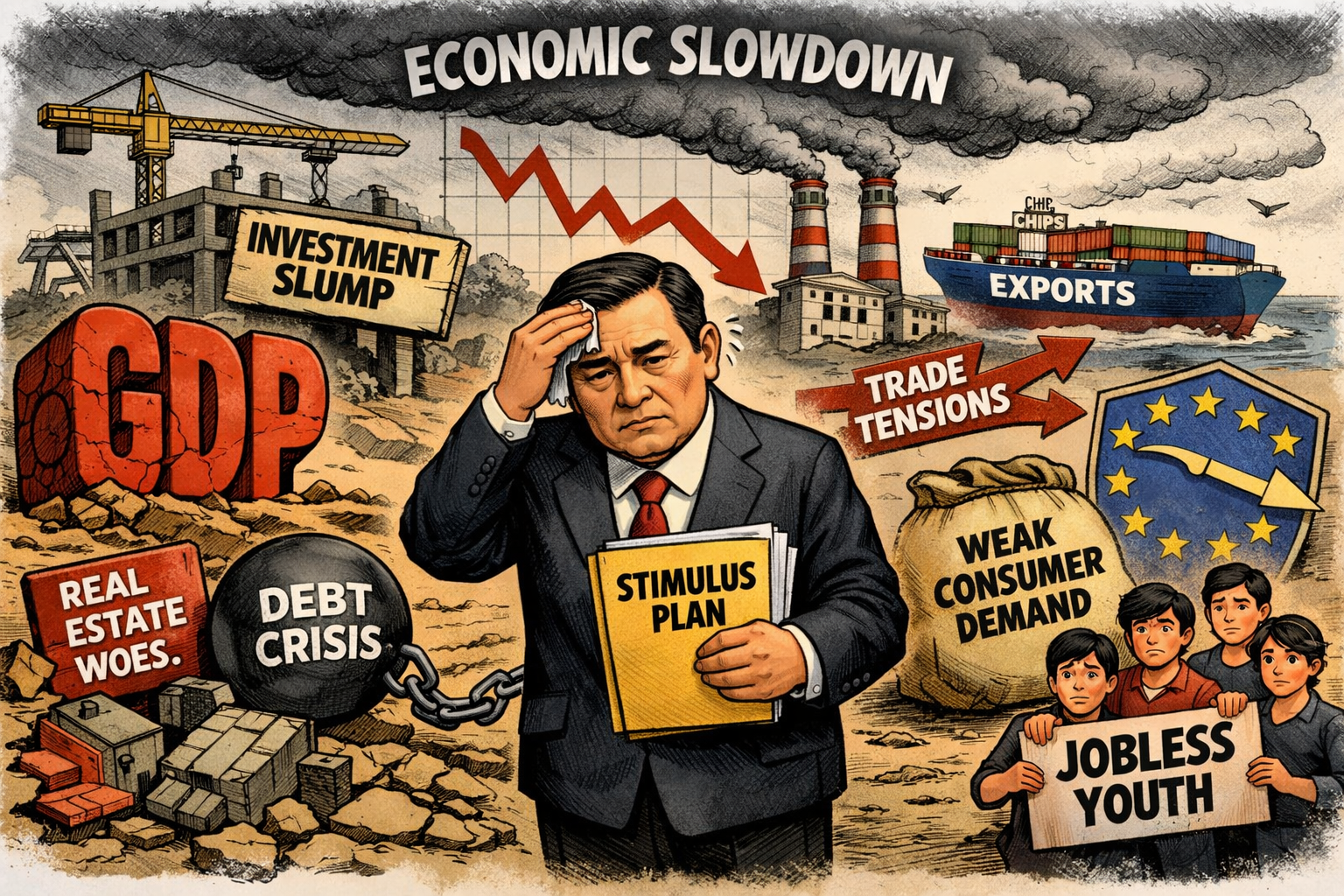
The weakness was driven primarily by a deepening collapse in investment, which has become the defining drag on China’s post‑pandemic recovery.

Urban fixed‑asset investment fell 5.7% in the first half of the year, a sharper decline than forecast. Real estate investment plunged 18%, infrastructure dropped 2.4%, and manufacturing slipped 1.2%.

Slow

Analysts attribute the slump to local governments diverting resources into debt restructuring, a shortage of viable new projects, and Beijing’s campaign to curb excess industrial capacity.

The result is an investment pullback described by economists as “unprecedented,” with some reportedly calling for a major expansion of government borrowing to stabilise growth.

Consumption remains fragile. Retail sales rose 1% in June, rebounding from May’s decline but still signalling weak household confidence amid pay cuts and job insecurity.

Two speed

Industrial output, however, accelerated to 5.3%, highlighting China’s two‑speed economy: strong production and exports powered by the global AI boom, contrasted with subdued domestic demand.

Policymakers reportedly warn of an “acute” imbalance between supply and demand.

China’s second‑quarter performance marks a clear loss of momentum in an economy already struggling to find stable footing.

GDP grew 4.3% year‑on‑year, the slowest pace since late 2022 and below both economists’ expectations and Beijing’s modest full‑year target of 4.5%–5%.

But 4.3% is a very healthy GDP.

Exports

Exports continue to outperform, driven by surging shipments of chips, computers, and power equipment. Yet this strength is straining relations with major partners.

China’s trade surplus with the EU widened 24%, raising the risk of renewed trade conflict despite a temporary truce.

Labour‑market pressures persist. Official unemployment held at 5%, but broader measures suggest joblessness closer to 10%, with youth unemployment still elevated despite methodological changes.

Overall, the data reinforce expectations that Beijing will likely need to intensify stimulus—potentially including rate cuts and expanded borrowing—to prevent the slowdown from becoming entrenched.
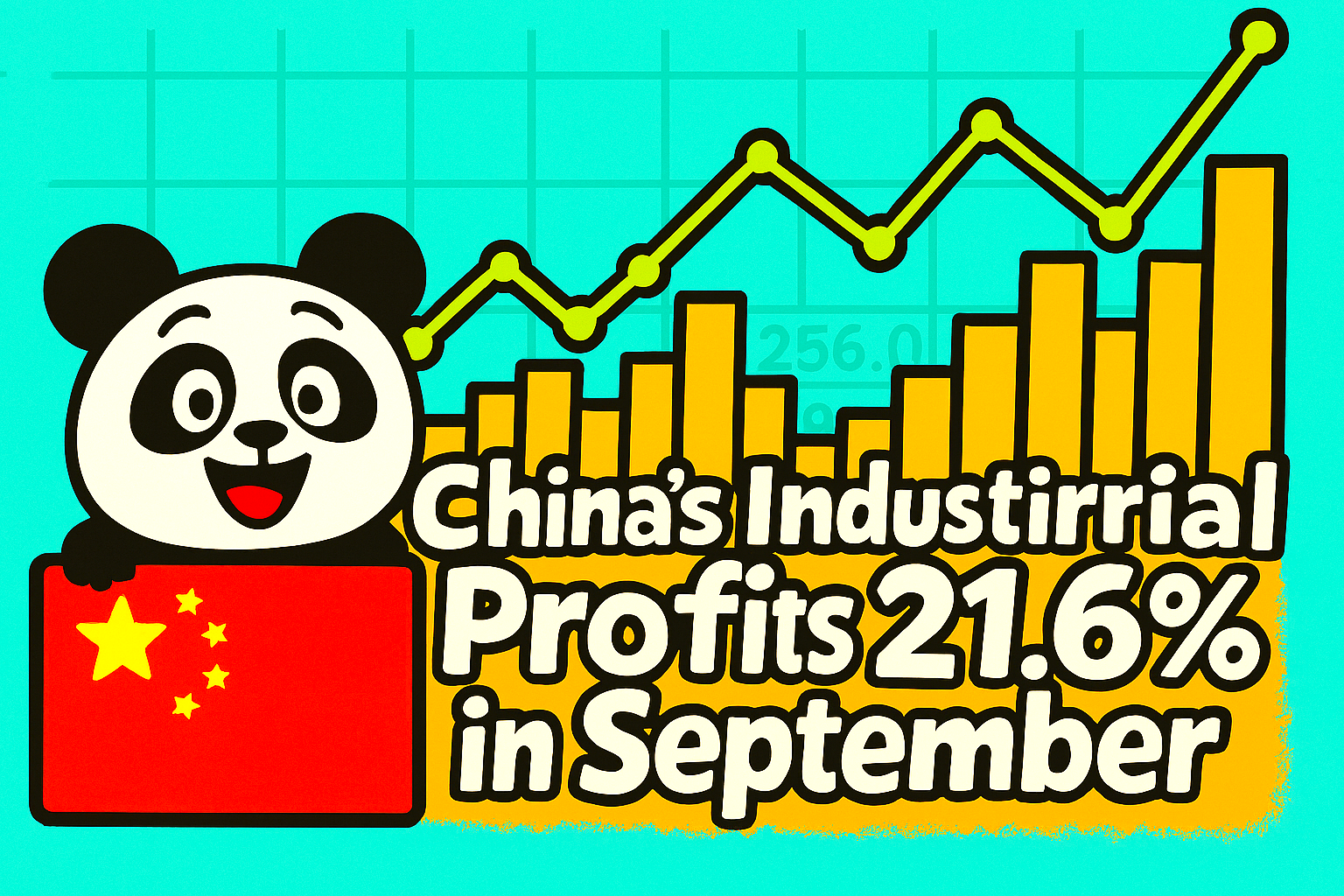
China’s Industrial Profits Surge 21.6% in September 2025, Marking Strongest Growth in Nearly Two Years

Industrial profit surge in China September 2025

China’s industrial sector roared back to life in September, posting a 21.6% year-on-year increase in profits— reportedly the sharpest monthly gain in approximately two years.

The rebound offers a glimmer of optimism for the world’s second-largest economy, which has been grappling with sluggish domestic demand and a challenging global trade environment.

According to data released by China’s National Bureau of Statistics, the profit growth was broad-based, reportedly with 30 out of 41 major industrial sectors returning gains.

Key areas

Key contributors included the equipment manufacturing and automotive industries, both of which benefited from policy support and a modest uptick in consumer sentiment.

Analysts reportedly suggest the surge reflects a combination of easing input costs, improved factory output, and a low base effect from the previous year.

However, they caution that the momentum may not be sustainable without deeper structural reforms and stronger domestic consumption.

The September figures follow a 17.2% rise in August, indicating a tentative recovery trend after months of contraction earlier in the year.

Up but down

Still, cumulative profits for the first nine months of 2025 reportedly remain down 9% compared to the same period last year, underscoring the uneven nature of the recovery.

Beijing has recently stepped up efforts to stabilise the economy, including targeted fiscal stimulus and measures to support private enterprise.

Whether these gains can be sustained into the final quarter remains to be seen, but for now, September’s data offers a rare bright spot in an otherwise subdued industrial landscape.

Mumbai surpasses Beijing as the billionaire capital of Asia

Billionaires

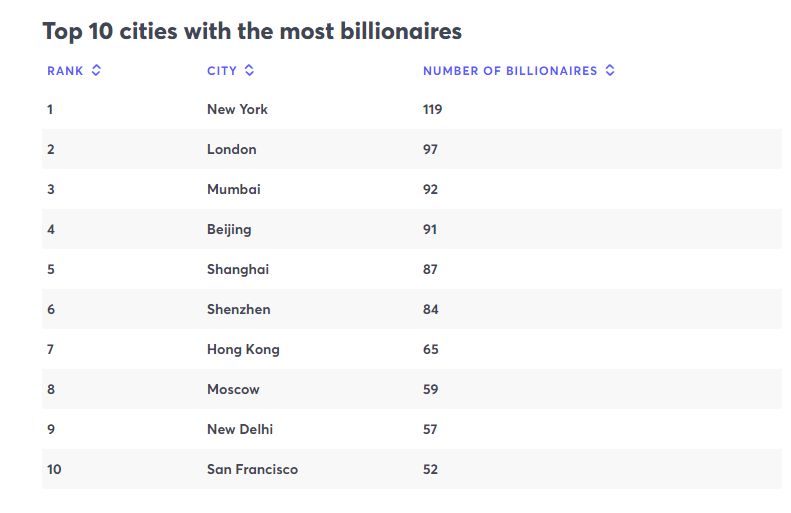
Mumbai, India’s bustling financial hub, has achieved a remarkable milestone: it now reigns as Asia’s billionaire capital, surpassing Beijing for the first time

According to the Hurun Research Institute’s global rich list, Mumbai boasts 92 billionaires with a combined wealth of $445 billion. This historic feat marks the first time that India’s most populous city has claimed the top spot in Asia.

While New York (with 119 billionaires) and London (with 97 billionaires) lead the global rich list for cities, Mumbai’s ascent is a testament to its thriving energy and pharmaceutical sectors. The city’s entrepreneurial spirit and economic dynamism have propelled it to the forefront of wealth creation in the region.

Beijing, which previously held this distinction, now trails closely behind with 91 billionaires, followed by Shanghai with 87 billionaires. The competition among these financial powerhouses reflects the shifting landscape of global wealth distribution.

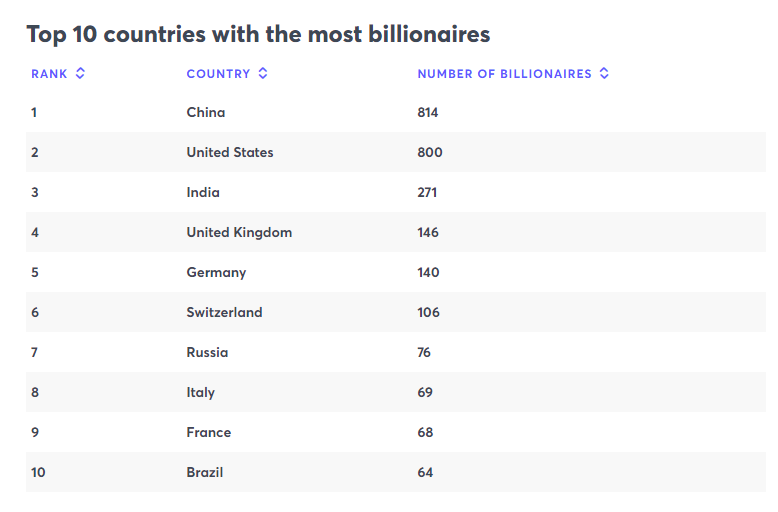
Globally, there are currently 3,279 billionaires, representing a 5% increase from 2023. China remains at the helm with 814 billionaires, despite a loss of 155 billionaires over the past year. The United States follows closely with 800 billionaires, while India claims the third spot with 271 billionaires.

Mumbai’s skyline, ever-changing, now reflects its title as Asia’s billionaire capital, highlighting the city’s resilience, innovation, and steadfast quest for prosperity.