Bank of England Raises Interest Rates to 4%

Graph showing the Bank of England's interest rate increase to 4% as of November 2026, with trends in previous rates indicated.

The Bank of England has raised interest rates for the first time in more than three years, increasing the base rate from 3.75% to 4% in a move aimed at tackling renewed inflationary pressures.

The decision, announced on Thursday 5th November 2026, followed growing concerns over rising energy prices, fuelled by the continuing conflict in the Middle East. and of the Russia-Ukraine war.

UK inflation reached 3.5% in September 2026, and the Bank now expects it could approach 5% by the middle of 2027.

Vote

The Monetary Policy Committee voted 8–1 in favour of a quarter-point increase, although one member wanted a larger rise to 4.25%.

Higher interest rates will increase borrowing costs for mortgage holders and businesses, while potentially offering better returns for savers.

The Bank has warned that further increases remain possible if energy prices continue to drive inflation higher.

The decision highlights the difficult balancing act facing policymakers: controlling inflation without damaging an already fragile economy.

Hackers Target French Blood Banks in Alarming Escalation of European Cyberattacks

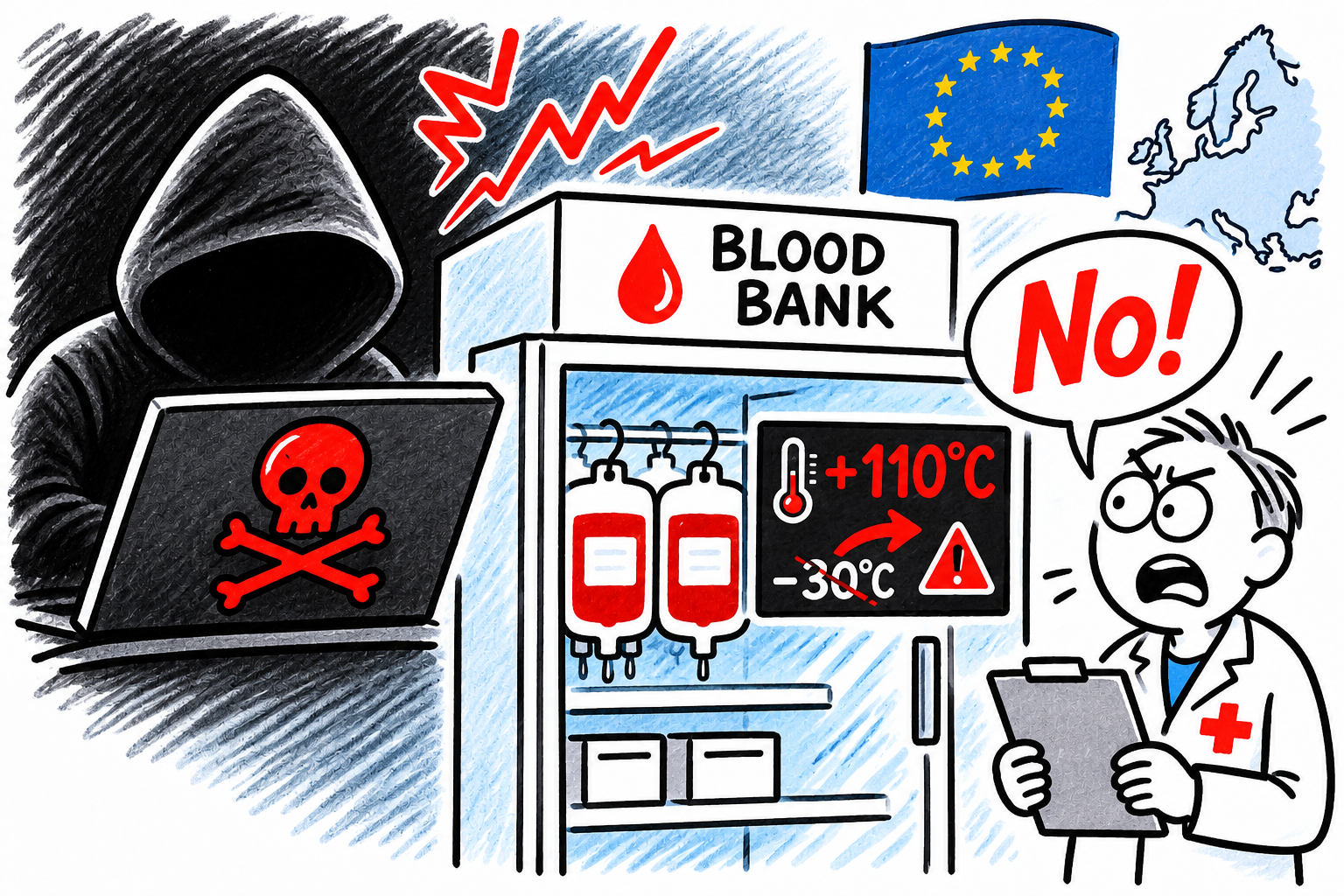
Hackers attack blood banks

A cyberattack on refrigeration systems at French blood-storage facilities has raised concerns about the vulnerability of essential services to digital sabotage.

The incident formed part of a wave of attacks targeting supermarket fridges and freezers across Europe.

France’s national blood service, the Établissement Français du Sang (EFS), said hackers interfered with monitoring and control systems at three cold-storage sites.

Temperature and defrost settings were altered to dangerously high levels, threatening plasma and other biological materials. Reports said attackers attempted to raise temperatures from around minus 30°C to as high as 110°C.

Alarm systems detected the abnormal settings and staff acted quickly. Products were secured or transferred to unaffected storage facilities.

No damage this time

The EFS reportedly said no blood products or samples were lost, no health consequences had been identified, and collection and distribution to hospitals continued uninterrupted. Remote access to the affected equipment was disabled as investigations began.

The attack appears to have reached the blood service through a refrigeration equipment provider, rather than directly targeting the EFS. The supplier referred to a vulnerability in a third-party component.

Investigators have not identified those responsible or established whether the blood-bank incident and supermarket attacks involved the same group.

Wider concern

The wider campaign has affected refrigeration equipment in several European countries, including France, Belgium, the Netherlands, Sweden and Ireland. In supermarkets, remotely altered settings caused food to spoil and led to substantial financial losses.

The episode exposes a weakness in infrastructure. Internet-connected systems make it easier to monitor temperatures and manage energy use, but poorly secured remote access, outdated software and vulnerable components can turn equipment into a target.

The immediate threat to France’s blood supplies was contained. However, the incident is a warning that cybersecurity is no longer just an IT concern: it is also a matter of public health, food security and national resilience.

AI Is Breaking Down the Barriers to Starting a Business

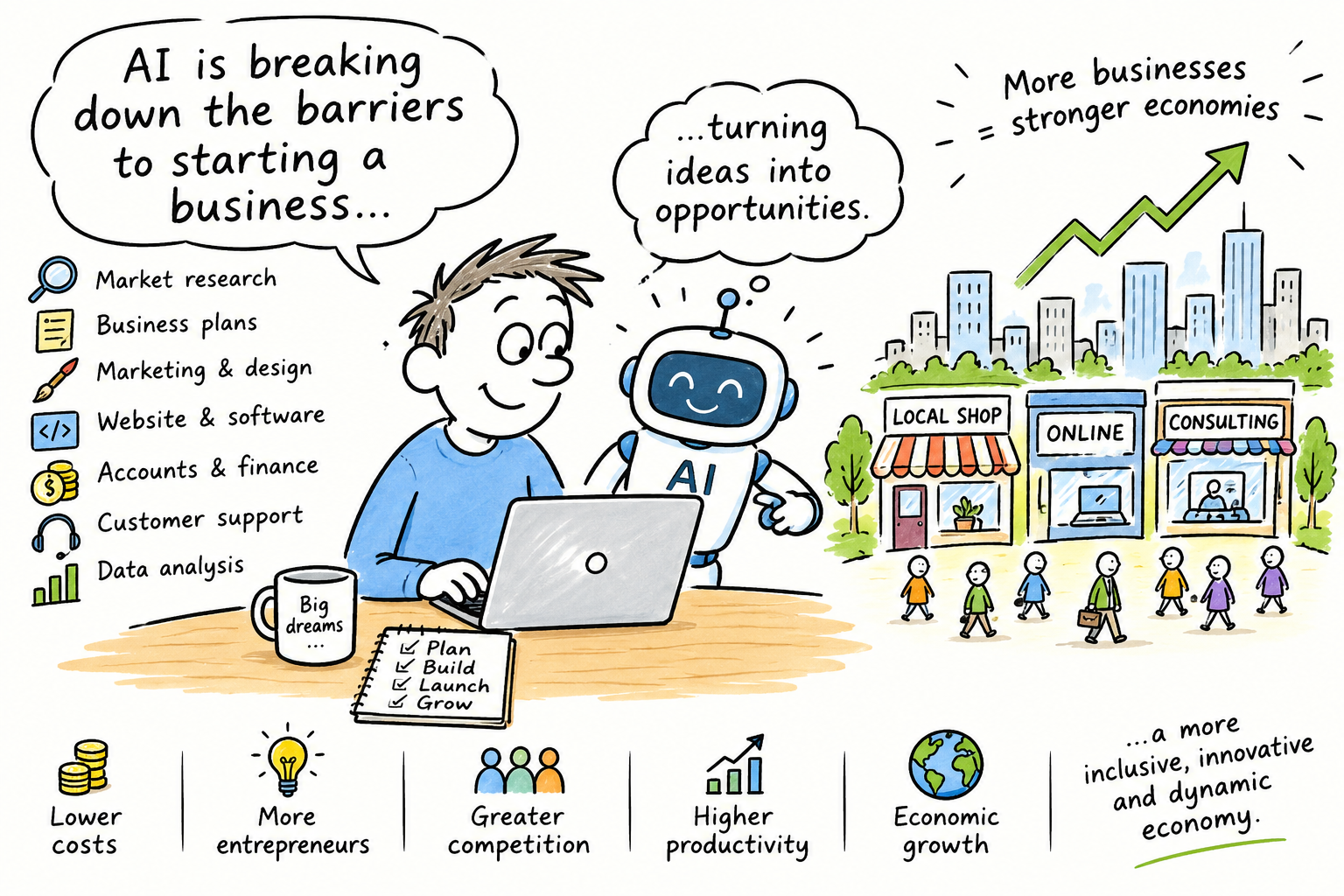
The power of AI empowering business start-ups

Artificial intelligence is beginning to reshape the economics of starting and running a business.

AI is easily accessible

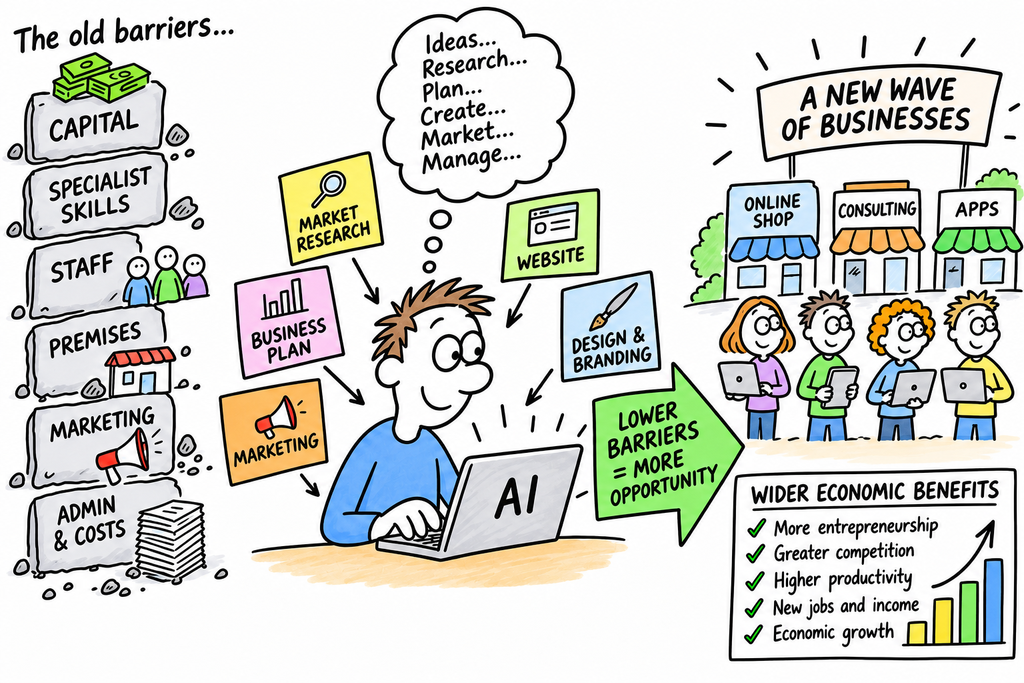
What once required substantial financial investment, specialist skills and a team of employees can increasingly be achieved by an individual with a computer, an internet connection and access to AI tools.

The implications could extend well beyond entrepreneurship, potentially changing productivity, employment, competition and economic growth.

Traditionally, starting a business involved considerable upfront costs. Entrepreneurs needed to invest in staff, premises, marketing, professional services, technology and administration, often before generating their first pound of revenue.

These expenses created significant barriers to entry, particularly for individuals without access to capital or business connections.

AI is changing this economic equation

An individual can now use AI to conduct market research, develop business plans, build websites, write software, produce marketing campaigns, analyse financial information and manage customer enquiries.

Tasks that previously required several employees or expensive external consultants can increasingly be handled by one person at a fraction of the cost.

This has the potential to create a new generation of micro-businesses, independent entrepreneurs and highly productive one-person companies.

Lower operating costs could allow businesses to become profitable with considerably less revenue than was previously necessary.

For the many

The wider economic consequences could be significant. If millions of individuals can establish businesses with relatively little capital, entrepreneurship could become a much more accessible route to generating income and creating employment.

Smaller businesses may also become more competitive, challenging established corporations that have traditionally benefited from economies of scale, larger workforces and greater financial resources.

But first we will have a period of transition and discovery.

Productive

There is also a potentially important productivity dividend. Businesses able to produce more with fewer employees could reduce operating costs, improve margins and increase output.

At a national level, this could contribute to economic growth without requiring the same expansion in the workforce.

For governments struggling with ageing populations, labour shortages and weak productivity, AI could become an increasingly important economic tool.

Saturation

However, there is another side to the equation. As the cost of establishing a business falls, competition will intensify.

Markets could become saturated with similar products and services, while automation may displace certain administrative, creative and professional roles.

The economic benefits will depend partly on whether new businesses and industries create sufficient opportunities to offset employment lost elsewhere.

Access to AI will also matter. If the technology becomes concentrated among a small number of powerful companies, the savings generated by automation may not be distributed evenly.

Nevertheless, AI could represent a significant democratisation of business ownership. The traditional advantages of capital, staffing and infrastructure may become less important, while creativity, commercial judgement and the ability to identify opportunities become increasingly valuable.

The Next Wave

The next wave of business creation may not come from large corporations investing billions, but from individuals using AI to build businesses that previously would have been financially impossible.

AI is not eliminating the risks of entrepreneurship. It is, however, dramatically reducing the cost of trying. That could have profound implications for the future structure of the global economy.

Eurozone Inflation Hits 4%: Is an Interest Rate Hike on the Horizon?

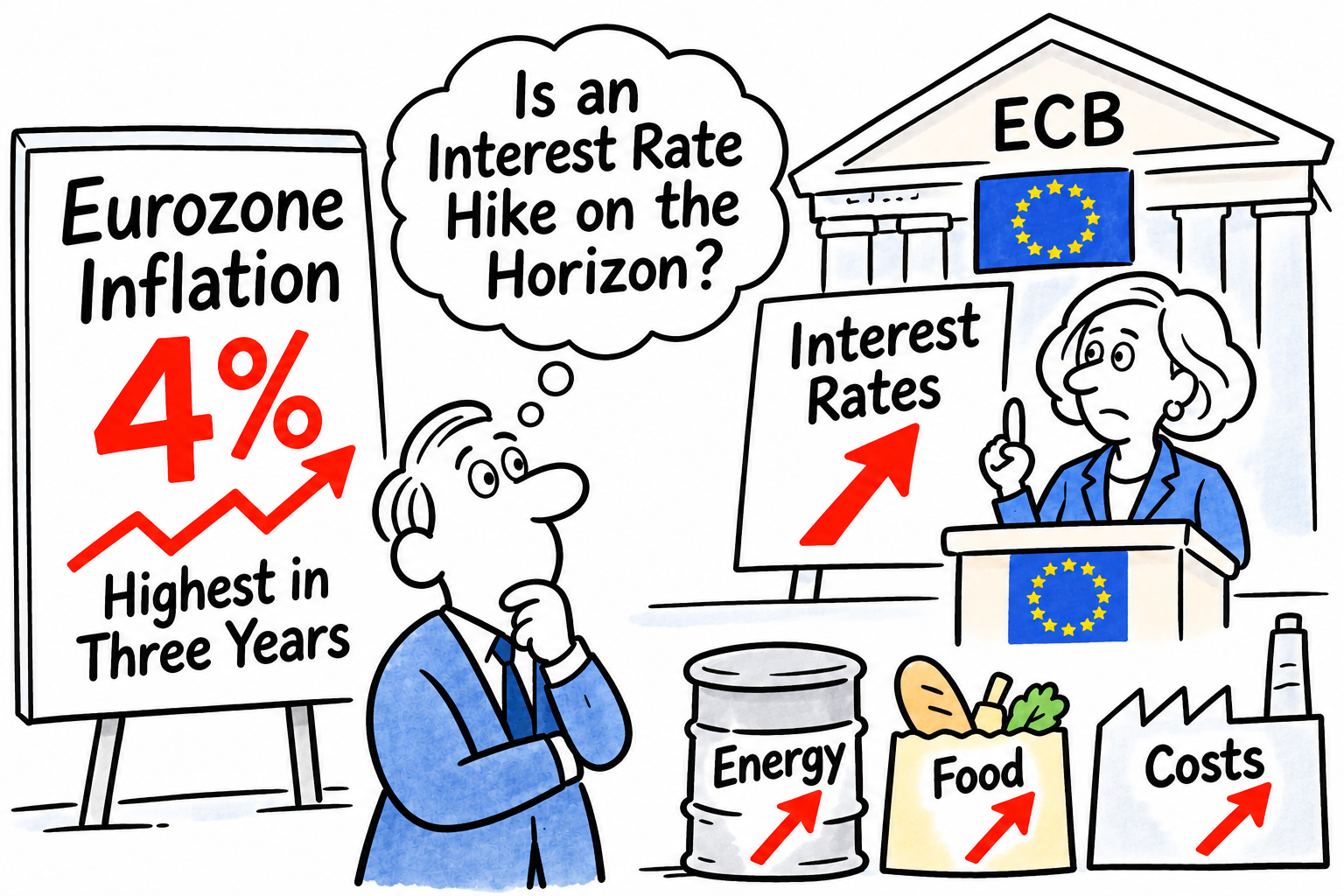
Graph showing Eurozone inflation rising to 4% with a line chart and arrows indicating potential interest rate hikes.

Eurozone inflation has climbed to 4% for the first time in three years, raising expectations that the European Central Bank (ECB) could deliver another interest rate increase before the end of the year.

October’s inflation figure rose from 3.8% in September 2026, putting further pressure on policymakers as energy prices continue to surge.

Energy Inflation

Energy inflation has accelerated to more than 20%, largely reflecting the impact of the ongoing conflict in the Middle East and disruption to global energy markets.

Although core inflation, which excludes food and energy, remained unchanged at 2.5%, rising food and services costs suggest the inflationary pressure could become more widespread.

The ECB has already raised interest rates during 2026, but policymakers now face an increasingly difficult balancing act.

Higher borrowing costs could help contain inflation, but would also put additional pressure on businesses, households and an already fragile European economy.

Rate increase?

Markets are increasingly anticipating another 0.25 percentage point increase in December 2026, with expectations of further tightening into 2027.

The central question is whether this latest inflation surge proves temporary or becomes embedded in the wider economy. If energy costs continue rising and feed through to wages and consumer prices, the ECB may have little choice but to act.

For Europe, the prospect of higher interest rates alongside rising energy costs presents an uncomfortable economic outlook.

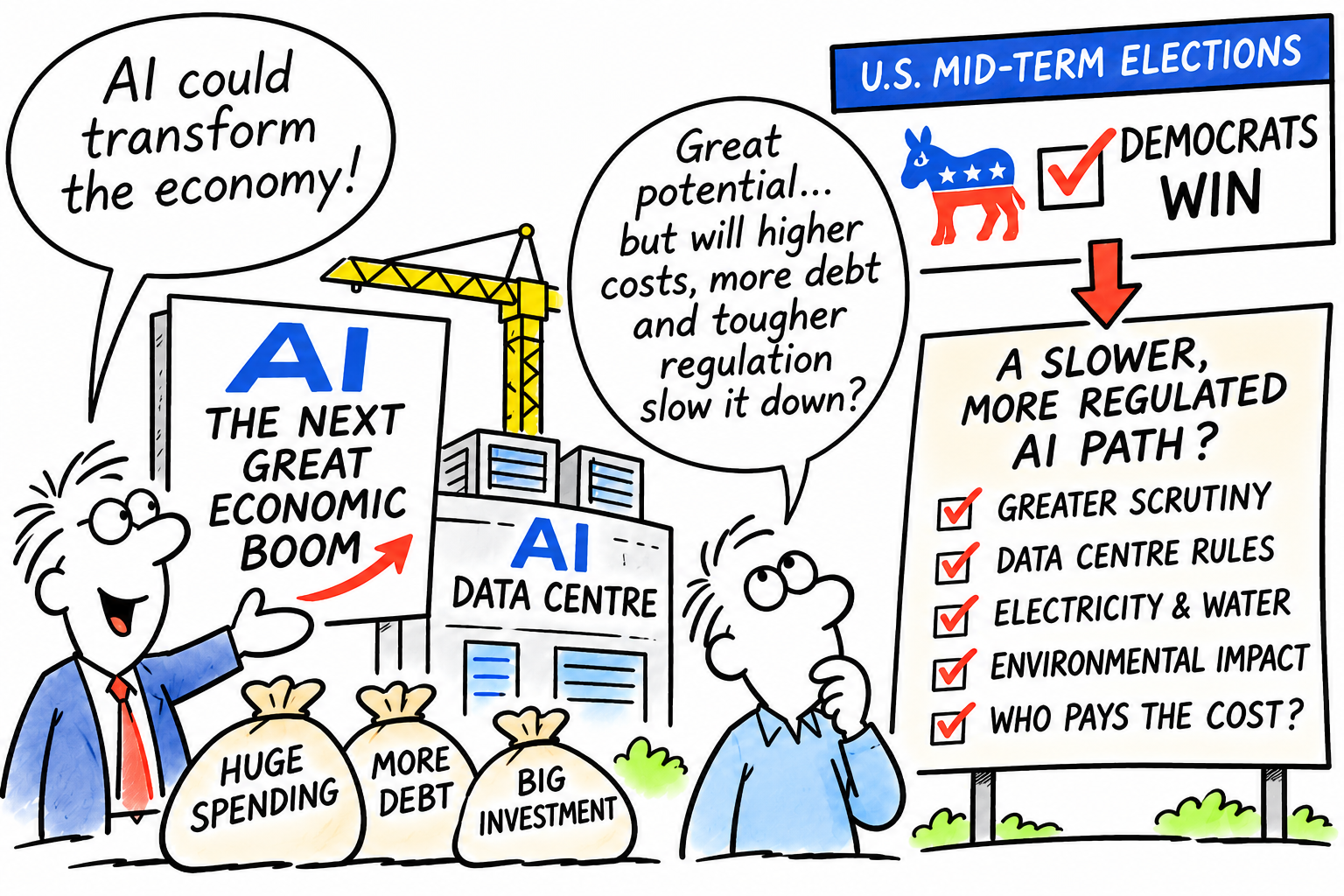
AI: The Next Great Economic Boom – But at What Financial and Economic Cost?

The artificial intelligence revolution continues to dominate financial markets, attracting extraordinary investment from some of the world’s largest technology companies.

Yet beneath the enthusiasm, a growing number of economic, financial and political concerns are emerging. While technology shares have recently staged a recovery, the fundamental questions surrounding the sustainability of the AI investment boom remain unanswered.

The central issue is becoming increasingly difficult to ignore: can the commercial returns from artificial intelligence justify the enormous cost of building the infrastructure required to support it?

An unprecedented investment programme

Microsoft, Amazon, Alphabet, Meta, Oracle and many others are committing hundreds of billions of dollars to data centres, specialist processors and supporting infrastructure. Their ambitions are substantial, with AI expected to transform productivity, business operations, healthcare, manufacturing and countless other industries.

However, the scale of expenditure is creating growing financial pressures. The Bank of England has highlighted the increasing reliance on borrowing to finance AI infrastructure. Morgan Stanley reportedly estimated that global AI-related debt issuance had reached approximately $450 billion by early September 2026, more than double the total for the whole of 2025.

The Bank has also highlighted the growing involvement of private credit and more complicated financing arrangements. These developments raise questions about where the financial risks ultimately sit, particularly if expected commercial returns fail to materialise.

Debt itself is not necessarily a problem. Large companies routinely borrow to finance expansion. The concern is whether the investment will generate sufficient cash flow to service that borrowing while continuing to fund further development.

The returns question

Technology companies are investing on the assumption that AI adoption will eventually produce enormous commercial opportunities. However, the gap between infrastructure expenditure and demonstrable financial returns remains an important consideration.

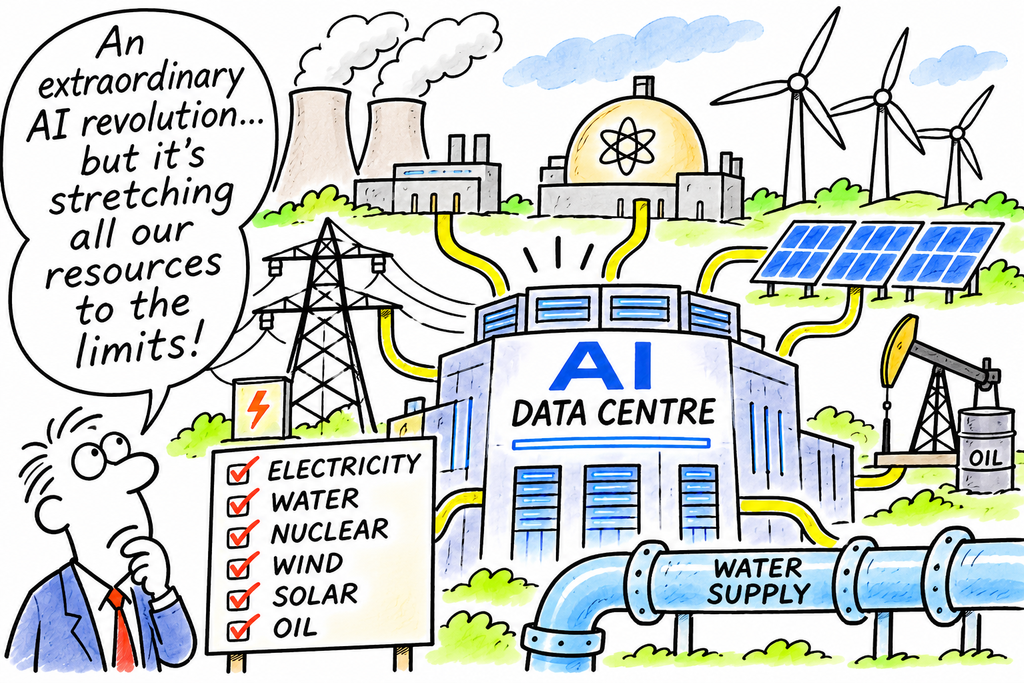
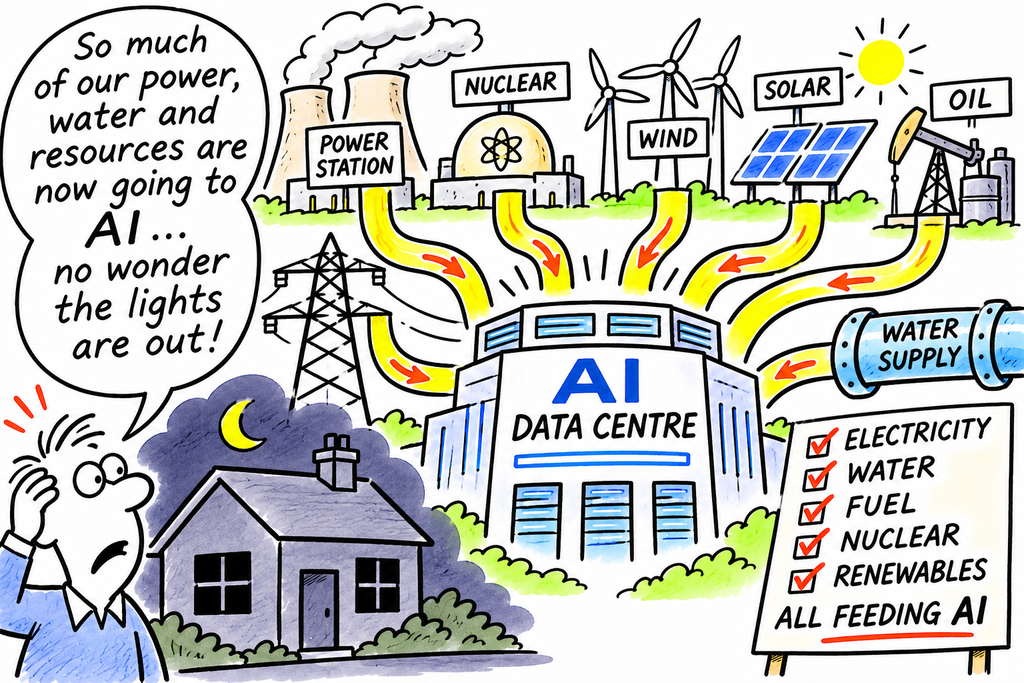
Data centres are expensive to construct and operate. Specialist chips require continual investment, while electricity, cooling, water and network infrastructure add further costs.

The industry must also contend with rapidly changing technology. Today’s expensive processors and facilities could become less competitive as more efficient systems emerge.

There is also the possibility that investment is running ahead of commercial demand. Businesses are experimenting with AI, but widespread adoption does not automatically translate into sufficient revenue to justify the enormous infrastructure costs.

Investors will increasingly want evidence that AI-related revenues and productivity improvements are keeping pace with capital expenditure.

Chinese competition adds another complication

Competition from China represents another potential challenge.

Chinese developers have demonstrated that increasingly capable AI models can be produced using more cost-efficient approaches. This could put pressure on the pricing structures of American technology companies.

If businesses can access capable AI systems at considerably lower prices, the commercial returns expected by companies investing heavily in infrastructure could be affected.

The AI industry may ultimately become much larger, but that does not guarantee that every company currently investing in it will generate attractive returns.

The political landscape changes

The U.S. midterm elections have introduced another dimension.

Democrats have secured control of both the House of Representatives and the Senate, creating a more challenging political environment for President Trump during the remainder of his term.

Technology companies could face increased scrutiny over data-centre construction, electricity consumption, environmental considerations, water supplies and AI regulation.

There are already disagreements in Washington over who should pay for the additional electricity infrastructure required by data centres. Some lawmakers want technology companies to shoulder more of the cost rather than passing it on to ordinary electricity consumers.

These concerns are particularly relevant in states such as Texas, where substantial AI infrastructure investment is planned.

Greater political scrutiny does not necessarily mean that AI development will stop. However, additional regulation, planning restrictions and infrastructure costs could slow the expansion or reduce the profitability of some projects.

Why is the Nasdaq recovering?

Despite these concerns, technology shares have recently demonstrated considerable resilience.

On 3rd November 2026, the Nasdaq gained approximately 0.83%, supported by a recovery in major AI and semiconductor shares. Nvidia, Broadcom and Micron were among the beneficiaries.

However, this recovery seemed to start ahead of the full midterm election results. Following the Democratic victories, global markets initially reacted negatively, reflecting concerns about potential regulatory changes and the future pace of AI infrastructure investment.

The recovery in technology shares should therefore not be interpreted as evidence that the underlying problems have disappeared.

Investors may be buying following recent declines, taking advantage of lower valuations or closing short positions. Such activity can produce substantial market recoveries without any corresponding improvement in the industry’s financial fundamentals.

A defining moment for investors

The AI revolution could ultimately prove to be one of the most important technological developments in modern economic history. Its potential should not be underestimated.

However, technological success and investment success are not necessarily the same thing.

The companies building the infrastructure must demonstrate that their investments can generate sustainable revenues, adequate cash flow and acceptable returns. Meanwhile, increasing borrowing, competition, resource constraints and political intervention could complicate that process.

For investors, the next stage of the AI story may be less about excitement surrounding technological possibilities and more about financial discipline.

Capital expenditure, debt issuance, free cash flow, AI-related revenues and institutional investment decisions deserve particularly close attention.

The wider economic consequences also matter. If AI delivers the productivity improvements its supporters anticipate, the benefits could extend well beyond the technology sector.

Conversely, if investment expectations become disconnected from commercial reality, the financial consequences could reach credit markets and the wider economy.

The AI revolution may be gathering momentum, but the investment boom financing it is approaching an important test.

The question is no longer simply how transformative AI might become. It is whether the extraordinary sums being committed today can generate sufficient economic value tomorrow.

For investors, that distinction could become increasingly important.

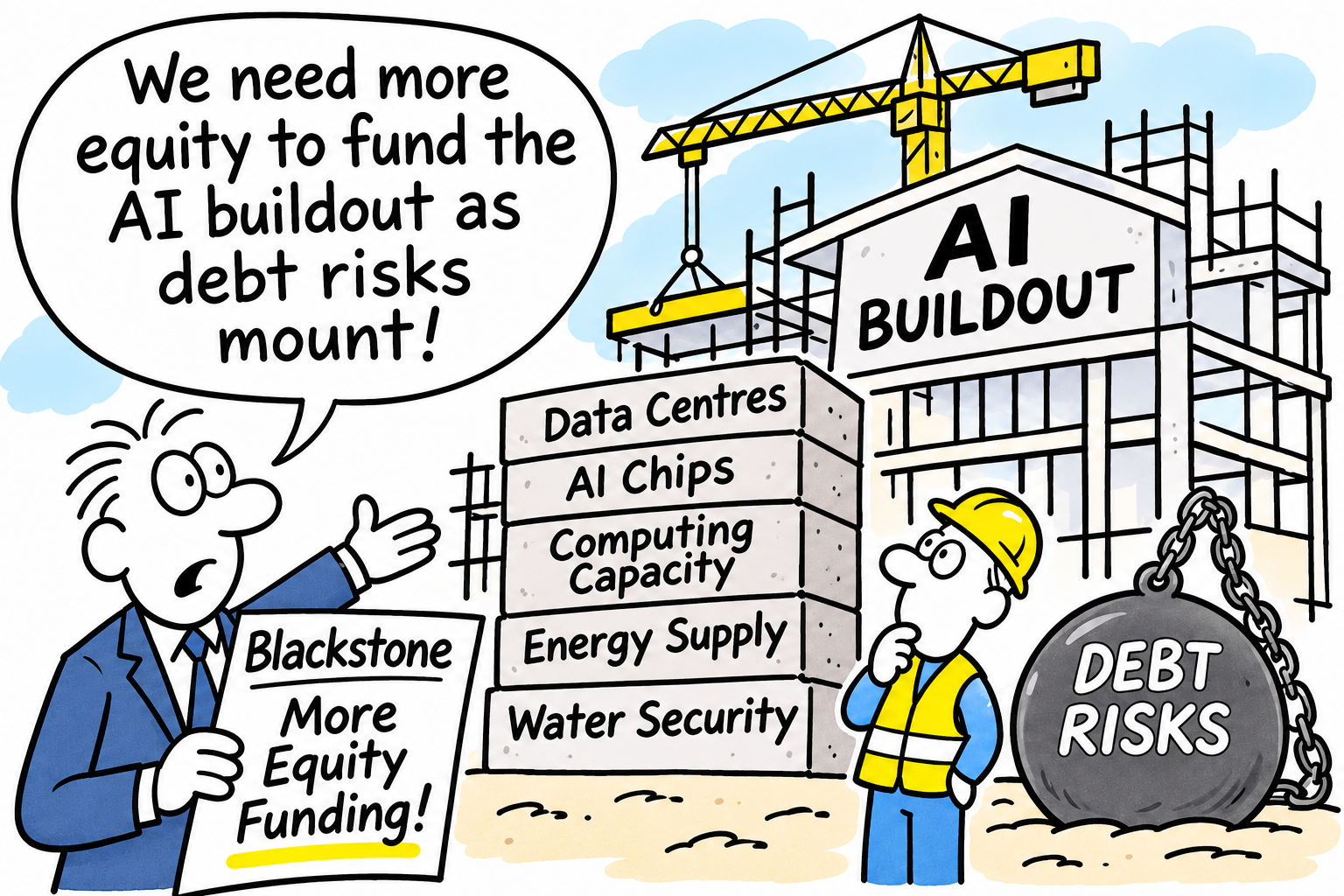
Blackstone Calls for More Equity to Fund AI Boom as Debt Risks Mount

The artificial intelligence investment surge is driving unprecedented capital demand, with Blackstone cautioning that the sector will require significantly more equity funding to sustain its growth amid rising concerns over debt exposure.

Caution

Blackstone President and Chief Operating Officer Jon Gray reportedly says the scale of investment required to build the infrastructure behind AI is becoming increasingly difficult to finance through borrowing alone.

At the Hong Kong Monetary Authority’s Global Financial Leaders’ Investment Summit, Gray reportedly cautioned that debt investors are increasingly exposed to concentration risks as capital continues to funnel into a limited number of technology firms and infrastructure projects.

Equity and not debt

His argument is straightforward. Lenders receive interest payments and repayment of their capital, but shareholders benefit from potentially unlimited gains if the businesses succeed.

With so much money being committed to data centres, specialist chips, computing capacity and electricity generation, a greater proportion of the funding needs to come from equity rather than debt.

Extraordinary expenditure

The scale is extraordinary. Estimates suggest that AI-related infrastructure investment could run into trillions of dollars over the coming years.

Meanwhile, technology companies are increasingly turning to banks, private credit providers and bond markets to finance their ambitions.

The concern is that borrowing could become excessive before the industry has demonstrated that its enormous investment will generate sufficient commercial returns.

If demand disappoints, technology changes or AI revenues fail to meet expectations, heavily indebted companies could find themselves struggling to service their obligations.

Wider implications

There are also wider financial stability implications. The Bank of England has already highlighted the growing reliance on debt to finance AI infrastructure, warning that problems within the sector could eventually affect broader financial markets.

Nobody is suggesting the AI revolution is ending. However, the financing model deserves closer scrutiny.

The technology may ultimately transform the global economy, but investors must remember that even the most promising industrial revolutions can produce expensive financial mistakes.

Australia Raises Interest Rates to an 18-Year High as Inflation Persists

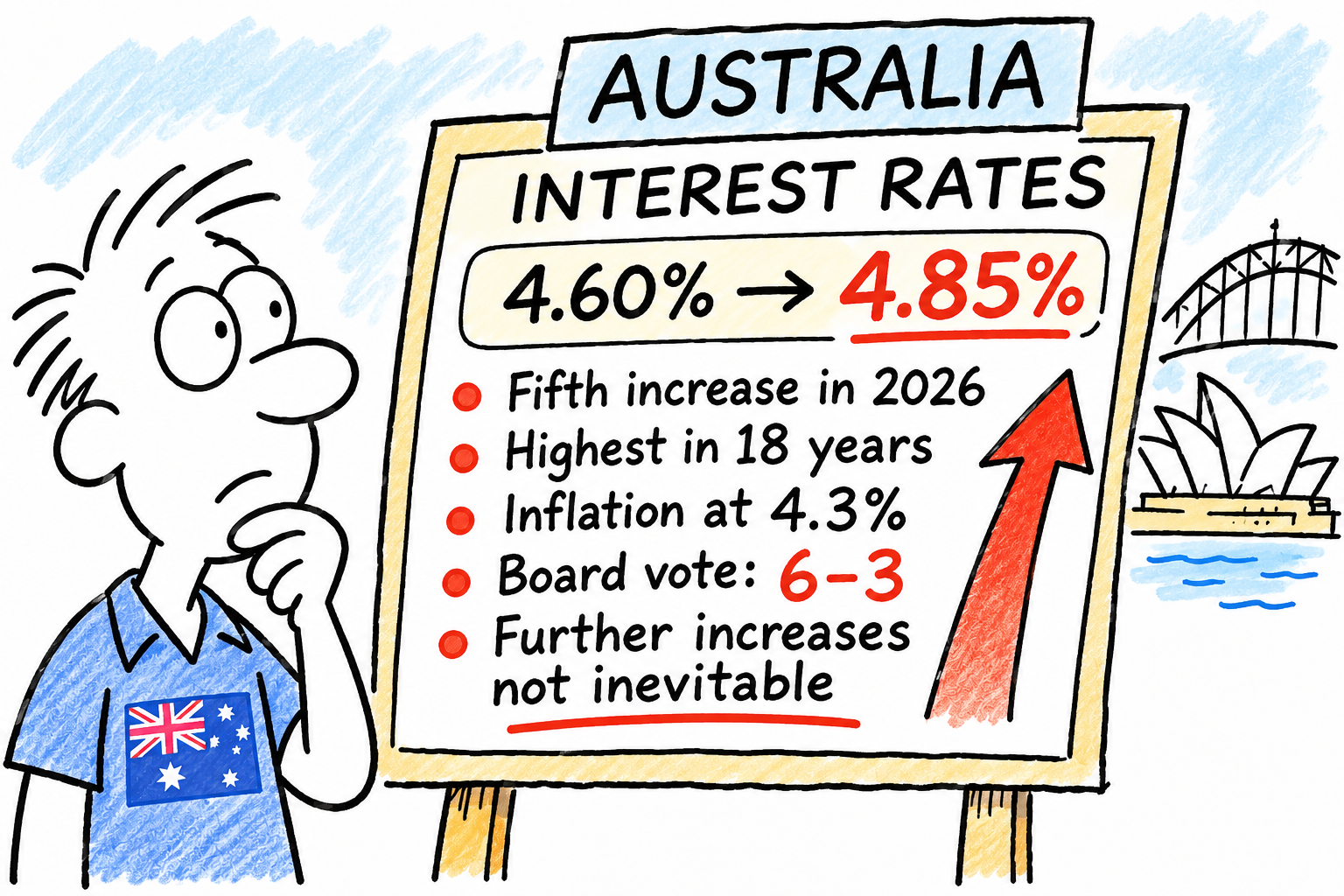
Graph showing Australia's central bank interest rate increases reaching an 18-year high amid persistent inflation pressures.

Australia has raised interest rates to their highest level in 18 years as the central bank steps up efforts to bring stubborn inflation under control.

The Reserve Bank of Australia (RBA) increased its cash rate from 4.60% to 4.85%, marking its fifth increase in 2026.

Inflation at 4.3%

Annual inflation reached 4.3% in September 2026, highlighting the difficulties policymakers face in bringing price pressures under control.

The decision was not unanimous, with six members of the nine-person board voting for an increase and three preferring to leave rates unchanged.

Pressure

The latest move will add further pressure to households already struggling with higher mortgage repayments and rising living costs.

Higher borrowing costs are intended to discourage spending, reduce demand and eventually ease inflation.

However, the RBA faces a delicate balancing act, as excessive tightening risks weakening economic activity and pushing the country towards a downturn.

Persistant issue

The decision also highlights a wider problem facing central banks worldwide. Despite previous monetary tightening, inflation has proved more persistent than policymakers had anticipated.

The RBA has indicated that further increases are not inevitable, suggesting it may be approaching the limits of how far it can tighten monetary policy without damaging growth.

For investors, the message is clear: the global interest-rate cycle may not be moving uniformly towards cheaper borrowing.

Inflation remains a stubborn obstacle, and higher interest rates could persist for longer than markets had hoped.

Apple’s Record Results Fail to Impress as Margin Pressures Mount

Apple’s results

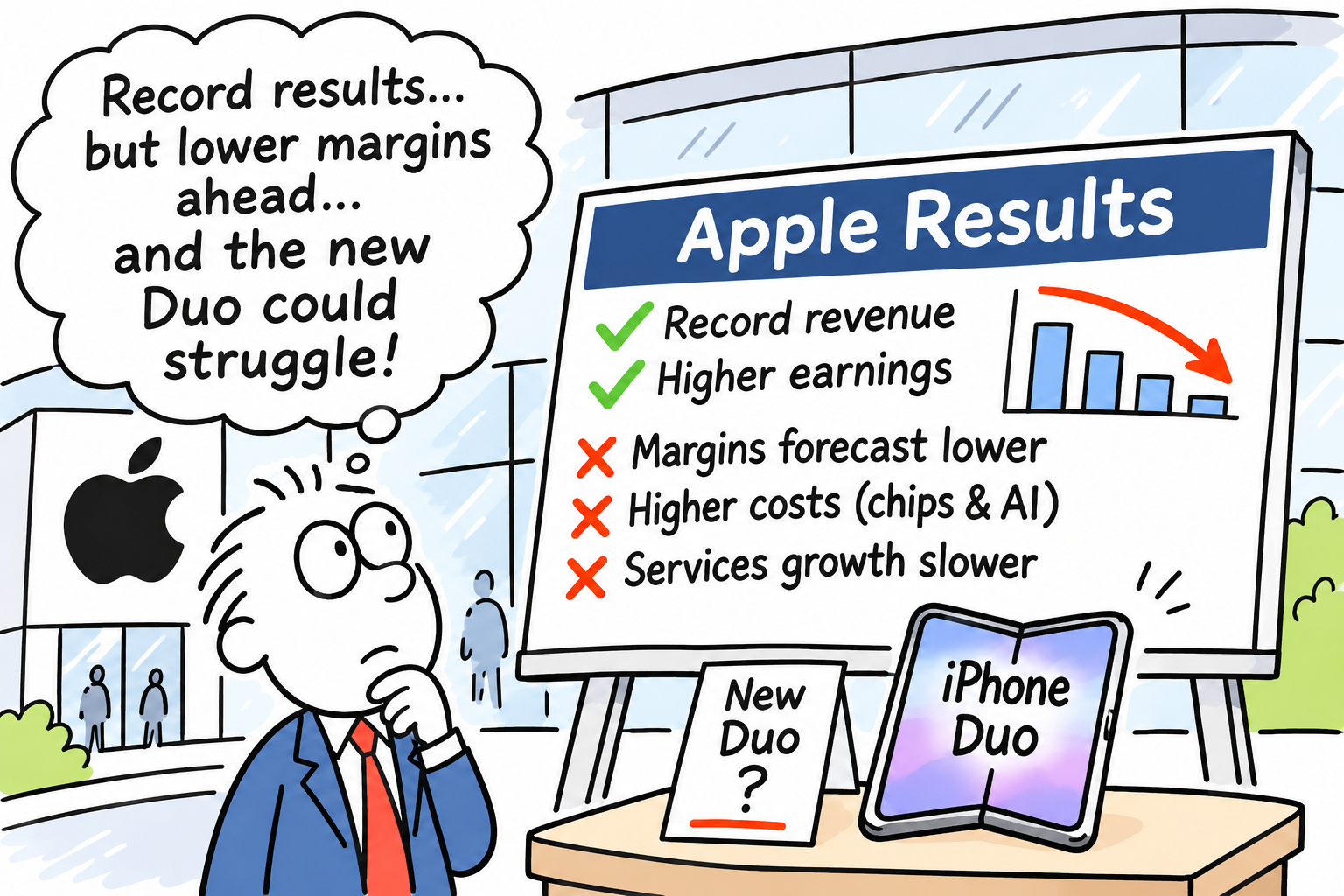
Apple has delivered another record-breaking quarter, but its latest financial results and forward guidance have done little to excite investors.

Despite beating Wall Street expectations, attention has quickly shifted from impressive headline revenues to a less encouraging outlook for profitability.

Figures

For the September 2026 quarter, Apple reported revenue of $114.5 billion, up 12% year-on-year, with earnings per share rising 14% to $2.10.

Gross margin reportedly stood at 47.9%, although this included an approximately one percentage-point benefit from tariff refunds.

Outlook

The problem lies ahead. Apple expects gross margins to fall to between 45% and 46% for the December quarter, traditionally one of its most important trading periods.

Rising memory-chip prices are a significant contributor, alongside additional costs associated with developing and introducing its artificial intelligence capabilities.

The forecast represents a notable deterioration at a time when investors are looking for continued earnings momentum.

Services revenue, another important source of higher-margin income, is also expected to grow by just 8% to 9%, below market expectations. Consequently, even the reported prospect of record holiday-quarter sales has failed to provide much reassurance.

New products

There are also questions surrounding Apple’s ambitious new iPhone Duo, its first foldable smartphone. Apple has yet to disclose sales figures or provide meaningful information about customer demand.

Independent industry estimates reportedly suggest shipments of approximately five to six million units during 2026, relatively modest against Apple’s enormous iPhone business.

Struggle for market share?

The Duo faces an uphill battle. Its premium pricing, approaching $2,000 in the U.S., places it firmly in niche territory, while foldable phones remain a relatively small segment of the global smartphone market.

High production costs and durability concerns could further restrict its appeal.

Apple remains an exceptionally profitable business, but investors are increasingly questioning how much further growth can be achieved without sacrificing margins.

For now, record revenues are not enough. The market wants evidence that Apple’s next generation of products and AI investments can deliver sustainable profits.

Editorial note: Apple has not published iPhone Duo sales figures. The five-to-six-million-unit estimates are independent analyst forecasts, not confirmed sales.

Binance Hack: The $6.3 Billion Crypto Heist That Shook the Market

Biggest heist in history

The cryptocurrency world is facing an unprecedented security crisis after Binance, the world’s largest cryptocurrency exchange, suffered a devastating cyberattack on 29th October 2026, resulting in the theft of approximately $6.3 billion in digital assets.

The incident is believed to be the largest cryptocurrency theft in history, possibly even the biggest heist in history!

How can this happen in such a secure environment?

Investigators believe hackers compromised Binance’s internal transaction-signing infrastructure, enabling them to authorise enormous unauthorised withdrawals from its hot wallets.

The FBI has reportedly attributed the attack to North Korea’s TraderTraitor hacking group, although investigations remain ongoing.

The scale of the theft initially raised fears about Binance’s ability to meet customer withdrawals and maintain confidence in its financial position.

Withdrawals suspended

Binance temporarily suspended withdrawals while it investigated the breach and strengthened security systems.

However, the exchange moved quickly to reassure customers, pledging that users would not bear the financial losses. It set reportedly aside approximately $6.34 billion from corporate funds, its Secure Asset Fund for Users (SAFU) and insurance reserves to replace the stolen assets.

Recovery

By 31st October, Binance reported that 90% of the missing assets had been replenished, with the remaining 10% involving less liquid cryptocurrencies.

Recovery efforts have also achieved some success. Blockchain investigators and cryptocurrency issuers have helped freeze approximately $3 billion of stolen funds, restricting the hackers’ ability to move or convert them.

Damage limitation

But confidence has taken a significant hit. When withdrawals gradually reopened on 1 November, customers withdrew $4.65 billion, against deposits of just $1.01 billion. The resulting net outflow of $3.64 billion represented approximately 2.1% of Binance’s reported $171 billion in assets.

Confidence

Although withdrawal volumes subsequently began stabilising, the episode highlights a fundamental weakness in cryptocurrency markets: even the largest exchanges remain vulnerable to sophisticated cyberattacks.

Binance may have the financial resources to absorb the losses, but rebuilding customer confidence could prove considerably harder.

The incident raises fresh questions about security, transparency and whether cryptocurrency exchanges can truly guarantee the safety of billions in digital wealth.

Footnote

Binance founder Changpeng Zhao (CZ) pleaded guilty in November 2023 to violating U.S. anti-money-laundering laws, resigned as chief executive and served a four-month prison sentence in 2024. Despite his conviction, he retained his estimated 90% ownership stake in Binance.

In October 2025, President Donald Trump granted him a full presidential pardon. The pardon did not erase the historical events or Binance’s separate corporate wrongdoing, but it removed the federal criminal consequences for CZ.

Legally, a criminal conviction does not automatically prevent someone from owning a private company, and ownership is distinct from day-to-day management.

Consequently, CZ can remain the majority shareholder of the world’s largest cryptocurrency exchange, even though he is no longer its chief executive.

It raises an uncomfortable question about accountability: how can an individual convicted of serious financial regulatory offences retain such enormous influence over a global financial institution?