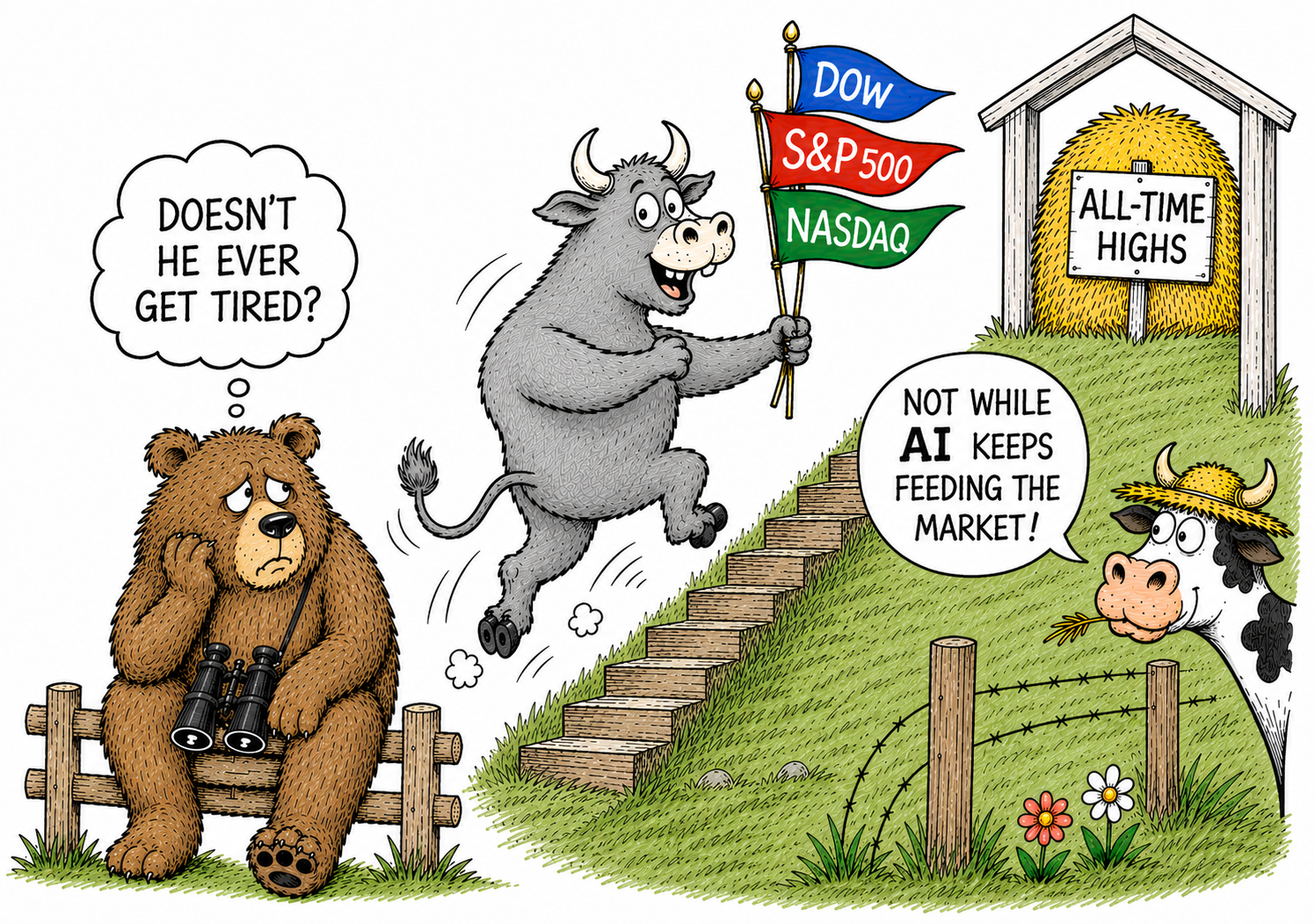

The Warning Bells Grow Louder: Will the Market Finally Listen?

Trader selling his shares

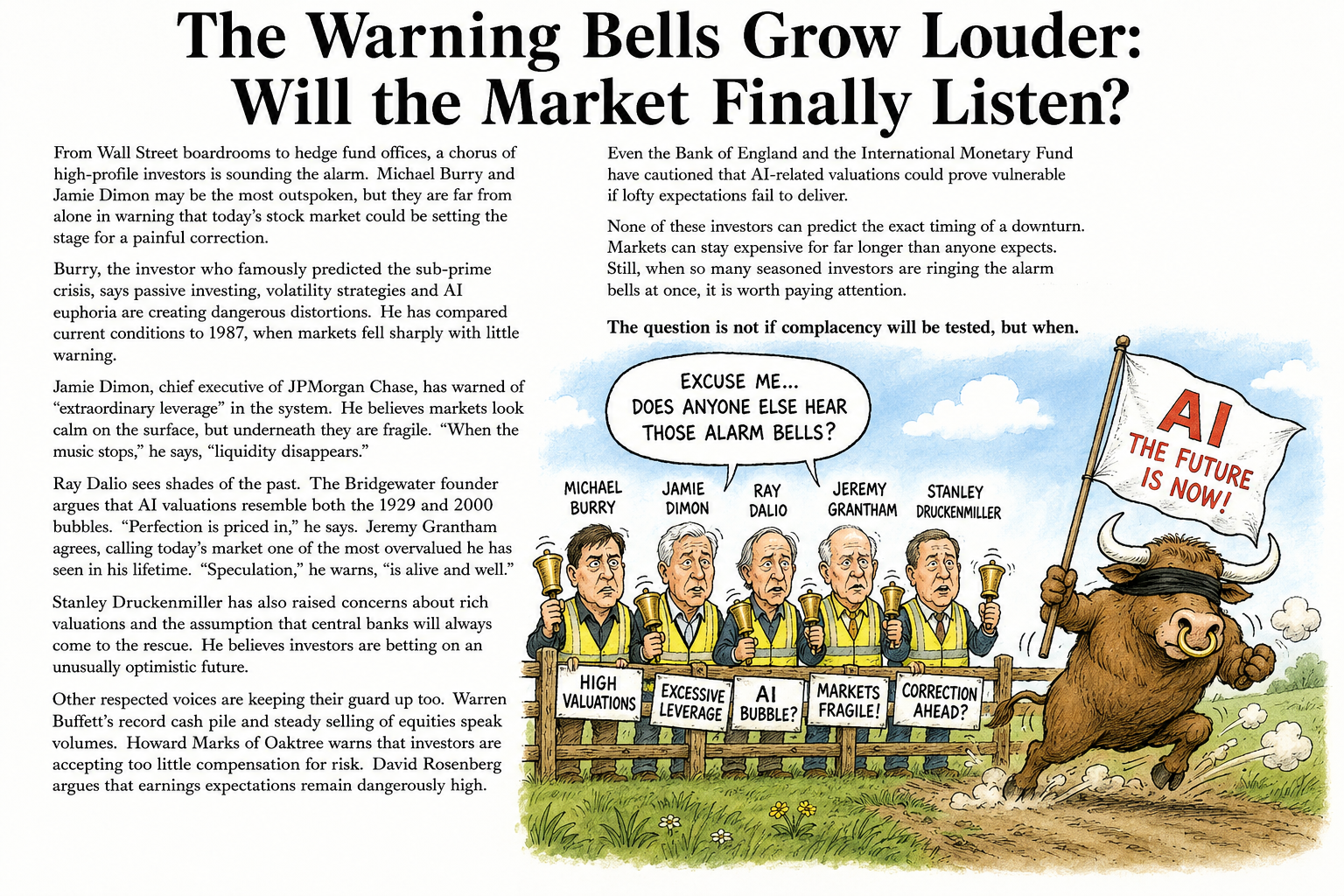
From Wall Street boardrooms to hedge fund offices, a growing chorus of respected investors is expressing concern that today’s stock market may be approaching a dangerous turning point.

While predicting the exact timing of a correction is impossible, many believe the combination of lofty valuations, excessive leverage and relentless enthusiasm for artificial intelligence has created conditions that investors should not ignore.

Michael Burry

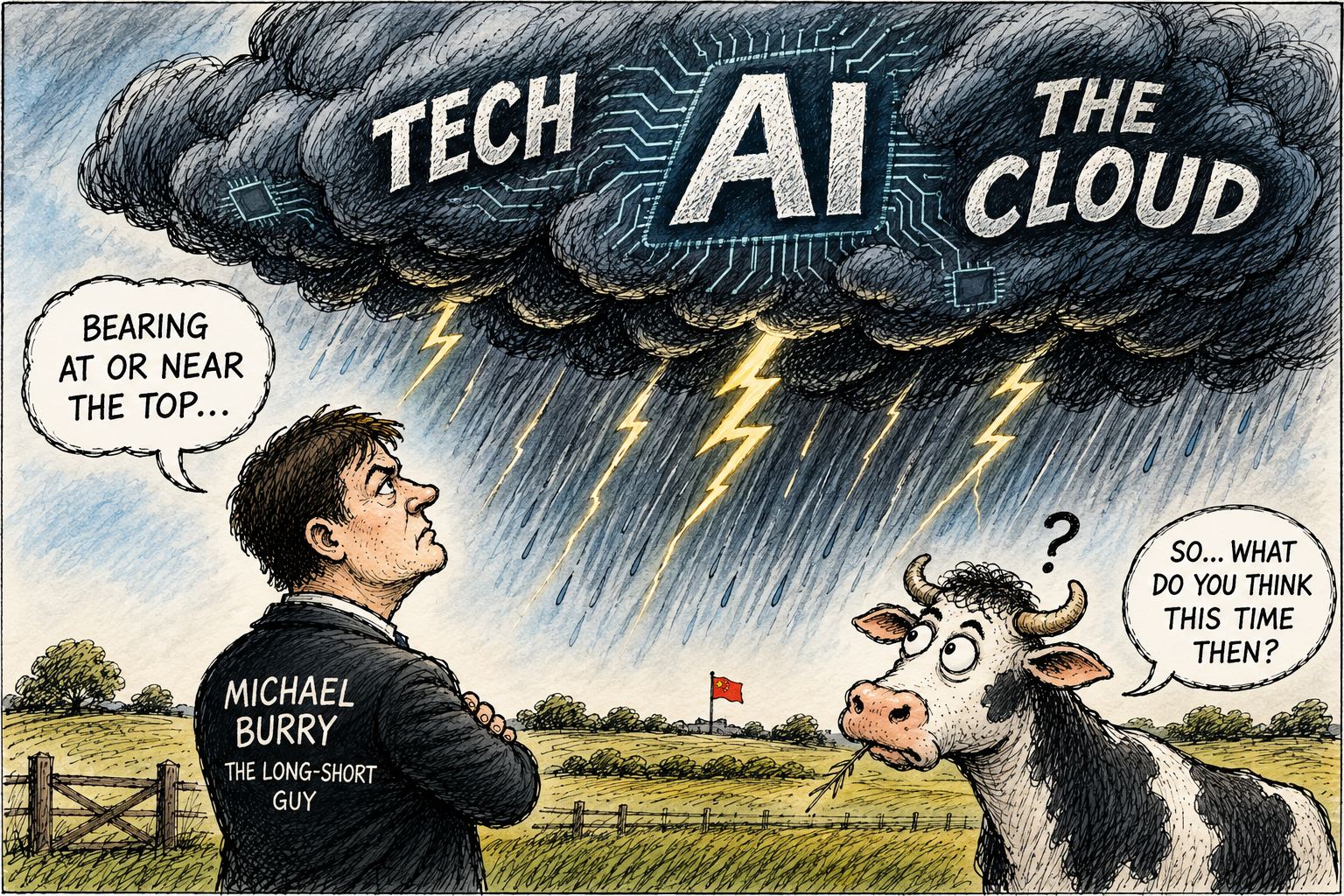
Among the most vocal is Michael Burry, the investor who famously anticipated the sub-prime mortgage collapse. Burry has repeatedly warned that passive investing, speculative trading and the extraordinary excitement surrounding AI are creating distortions that bear uncomfortable similarities to previous market bubbles.

He has suggested that investors are becoming increasingly complacent, assuming prices can only continue to rise.

Jamie Dimon

Jamie Dimon, Chief Executive of JPMorgan Chase, has also been reported to have raised concerns. While acknowledging the strength of the wider economy, he has warned that significant leverage remains embedded throughout the financial system.

His view is that markets often appear calm on the surface until liquidity suddenly evaporates, leaving investors scrambling for the exits.

Ray Dalio

Bridgewater founder Ray Dalio has reportedly drawn comparisons between today’s AI-driven optimism and previous periods of speculative excess, including the late 1920s and the technology bubble of 2000.

He argues that exceptional expectations have already been priced into many of the largest companies, leaving little room for disappointment should earnings fail to match investors’ hopes.

Jeremy Grantham

Veteran investor Jeremy Grantham has been reported to have echoed those concerns, describing many areas of the market as historically expensive.

He reportedly believes speculative behaviour has once again become widespread, with investors willing to overlook traditional valuation measures in favour of chasing momentum.

Stanley Druckenmiller

Meanwhile, billionaire investor Stanley Druckenmiller has questioned whether markets are becoming overly dependent upon the expectation that central banks will always provide support during periods of weakness. He believes that assumption could eventually be tested.
Warren Buffet and others

Other experienced voices have also adopted a more cautious stance. Warren Buffett‘s substantial cash holdings and continued selling of equities suggest he is finding fewer attractive opportunities at current prices.

Howard Marks has consistently warned that investors are accepting too little compensation for risk, while economist David Rosenberg reportedly believes earnings expectations remain overly optimistic.

It’s anyone’s guess

None of these investors claims to know precisely when a downturn might begin. Markets have a habit of remaining expensive for far longer than many expect.

However, when so many experienced market participants are independently highlighting the same risks—rich valuations, growing leverage, speculative enthusiasm and excessive confidence—it becomes increasingly difficult to dismiss the warnings.

Timing?

Whether the next correction arrives next month or several years from now remains uncertain.

What is becoming harder to ignore is that the warning bells are no longer being rung by one or two cautious observers, but by an increasingly influential chorus of some of the world’s most respected investors.

History suggests that while markets often ignore such warnings during the final stages of a bull run, they rarely do so forever.
SpaceX Stumbles as AI Spending Clouds the IPO Glow

SpaceX Shares Drop from IPO Value

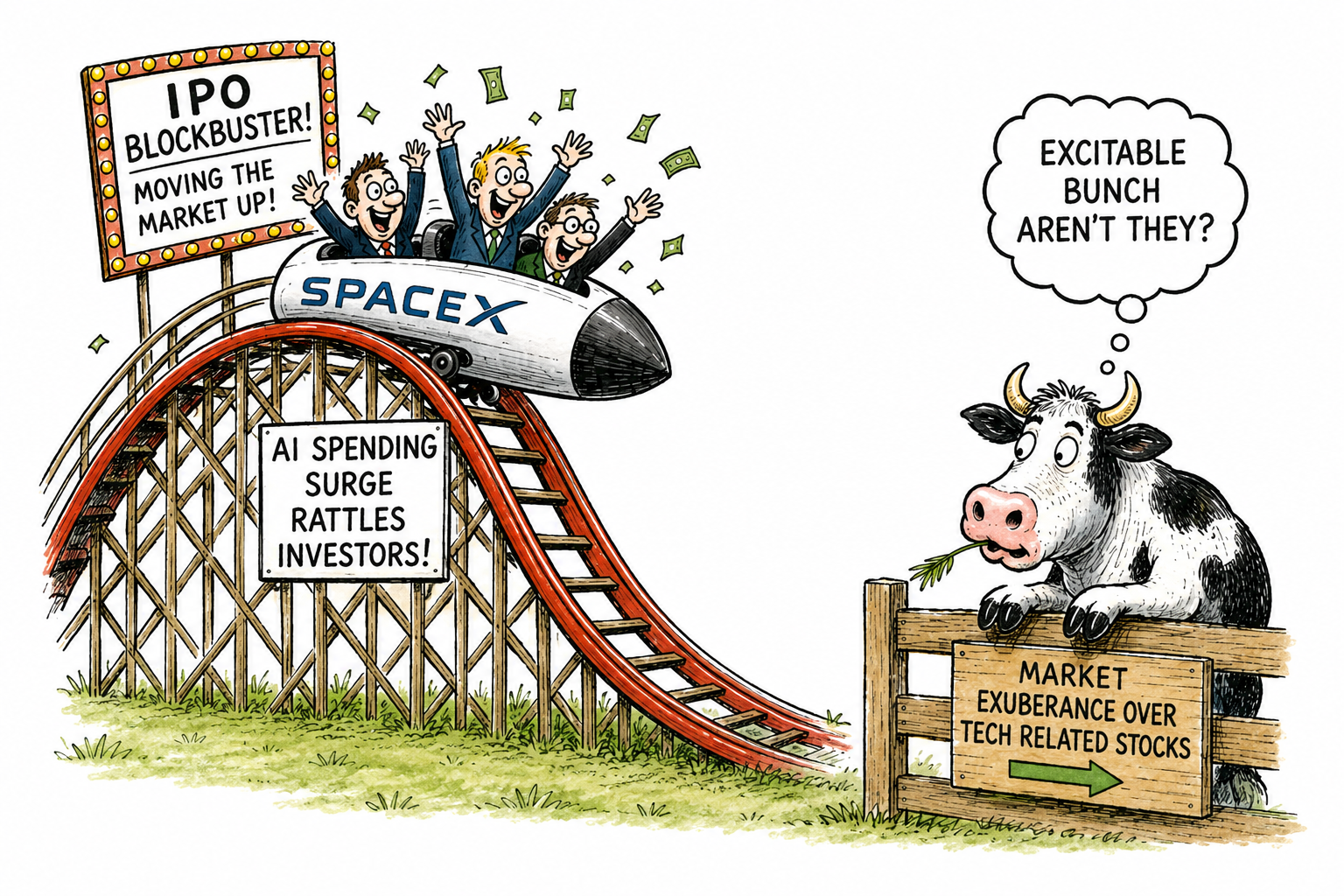
In June 2026 – SpaceX seemed unstoppable. Its long-awaited stock market debut was hailed as one of the biggest public offerings in years, helping lift investor confidence and fuelling another wave of enthusiasm for technology shares.

The company’s arrival on public markets was viewed as confirmation that the AI revolution, combined with space technology, would continue to power the next leg of the bull market.

That optimism has now been tempered.

Sharp fall

SpaceX shares fell sharply after investors reacted to the company’s latest results, with soaring artificial intelligence spending becoming the chief concern.

While management argued that massive investment in AI infrastructure and advanced computing would strengthen the company’s long-term competitive position, many shareholders focused instead on the near-term impact on profits and cash flow.

The sell-off highlights an increasingly familiar dilemma across the technology sector. Investors remain excited by the promise of artificial intelligence, but they are becoming more selective about how much they are willing to finance before seeing meaningful returns.

Massive Investment

Building cutting-edge AI systems requires enormous investment in data centres, specialised chips and energy-hungry computing infrastructure, all of which place pressure on corporate earnings.

Yet despite the decline in SpaceX shares, broader market sentiment has remained remarkably resilient.

Investors have largely shrugged off the weakness, instead turning their attention to fresh AI announcements, semiconductor developments and upbeat economic data.

Focus

The enthusiasm that once surrounded the SpaceX IPO has not disappeared; it has simply migrated elsewhere.

This shifting focus demonstrates just how rapidly today’s markets move. Yesterday’s headline can quickly become today’s footnote as investors chase the next technological breakthrough or market narrative.

From vision to achievement

For SpaceX, the challenge now is clear. Investors have already bought into the vision. The next step is proving that billions spent on artificial intelligence can eventually translate into stronger revenues, higher margins and sustainable shareholder returns.

In today’s market, bold ambition alone is no longer enough. Investors increasingly want evidence that the AI race will deliver profits as well as promises.

What Michael Burry Has to Say about the AI Fueled Stock Frenzy

Michael Burry Says

Michael Burry, the investor made famous by The Big Short, is once again swimming against the tide.

While Wall Street has embraced the latest AI-driven surge, Burry believes investors should be asking whether enthusiasm has once again raced too far ahead of reality.

Concern

His concern is not that artificial intelligence lacks transformative potential. Rather, he argues that today’s market is showing many of the hallmarks of previous speculative booms.

According to Burry, soaring semiconductor shares, record valuations and relentless optimism are beginning to resemble the final stages of the dot-com bubble in 1999 and 2000.

More recently, he has warned that markets could even be approaching the type of sharp reversal witnessed during the 1987 stock market crash.

Bearish against AI

Burry has taken a series of bearish positions against AI-related stocks and semiconductor investments, arguing that demand for cutting-edge chips may have been pulled forward by hyperscale technology companies racing to build AI infrastructure.

If that spending eventually slows, suppliers could face a painful adjustment as excess capacity meets softer demand.

His stance stands in stark contrast to today’s market mood. Investors continue to reward companies linked to AI, encouraged by strong earnings, heavy capital investment and expectations that artificial intelligence will reshape industries for years to come.

Bulls argue this is a genuine technological revolution rather than another speculative bubble.

High profile

Whether Burry proves right remains uncertain. He has made several high-profile bearish calls over the years that arrived far too early, yet his successful prediction of the 2008 financial crisis ensures markets continue to listen whenever he speaks.

For investors, his latest warning serves as a reminder that even the most exciting technological revolutions can produce excessive optimism.

As history has repeatedly shown, the higher valuations climb, the greater the importance of separating genuine long-term opportunity from speculative excess.

Wall Street’s Big Three Reach Fresh Record Highs

Record highs on Wall Street again!

Wall Street enjoyed another landmark session on 4th August 2026 as all three major U.S. stock indices climbed to new record closing highs, underlining the market’s remarkable resilience despite ongoing economic and geopolitical uncertainties.

The Dow Jones Industrial Average surged 907.47 points (1.7%) to finish at 54,085.88, comfortably surpassing its previous peak.

The broader S&P 500 rose 136.02 points (1.8%) to a record 7,736.52, while the technology-heavy Nasdaq Composite delivered the strongest performance, jumping 671.10 points (2.6%) to close at an all-time high of 26,584.99.

Optimism

Investor optimism was fuelled by another wave of impressive corporate earnings, particularly from companies benefiting from continued investment in artificial intelligence.

Strong results reassured markets that businesses remain willing to spend heavily on AI infrastructure and software despite a more challenging economic backdrop.

Sentiment also received a boost from falling oil prices, which eased concerns about inflation and strengthened hopes that interest rates could remain supportive of economic growth.

Lower Treasury yields further encouraged investors to rotate into equities.

Impressive

The latest rally extends an already impressive year for U.S. markets, with technology shares once again leading the advance.

While some analysts warn that valuations are becoming increasingly stretched, others believe strong earnings growth and continued AI-driven investment could provide further support for stocks in the months ahead.

Or has the AI bull run too far already?

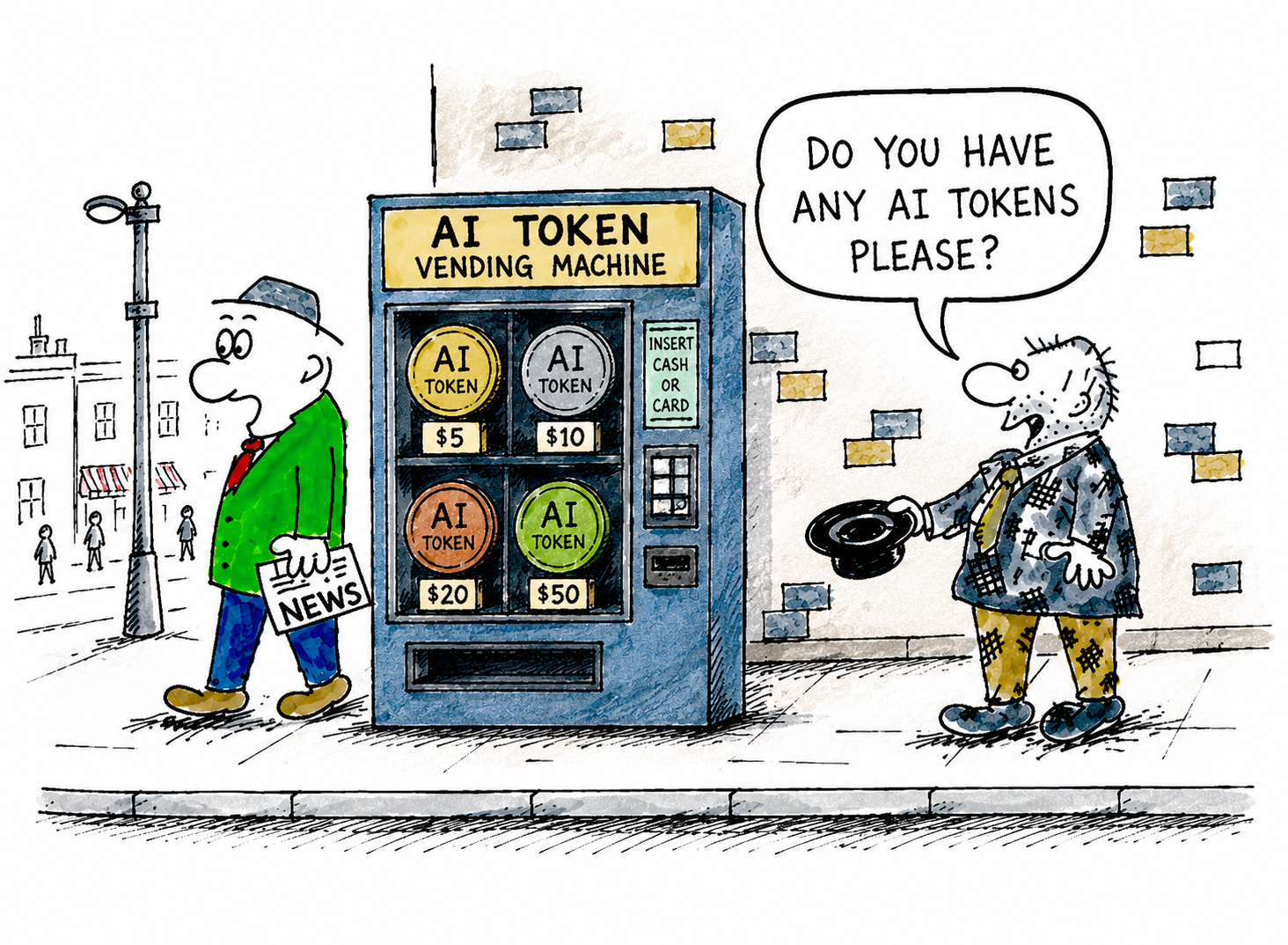
AI Tokenomics: Why Making AI Pay Is Proving Tricky for Business Users

AI Tokens

The race to monetise artificial intelligence has entered a new phase, with technology firms increasingly exploring “AI tokenomics” as a way to fund advanced models, reward developers and create sustainable digital ecosystems.

However, despite growing enthusiasm, experts warn that turning AI into a token-driven economy is proving far more complicated than many had anticipated.

The idea is simple in principle. AI tokens can be used to pay for computing power, access premium models, reward contributors who improve datasets, or incentivise users to participate in decentralised AI networks.

AI and Blockchain

Several emerging AI platforms have embraced blockchain-based payment systems, hoping to reduce reliance on traditional subscription models while creating self-sustaining marketplaces.

Yet the reality has been less straightforward. Token prices can fluctuate dramatically, making it difficult for businesses to predict costs or revenues.

Value

A service that appears affordable one week can become significantly more expensive the next if the underlying token surges in value. Conversely, falling token prices can undermine developer incentives and erode confidence in an entire ecosystem.

Regulatory uncertainty also remains a major obstacle. Governments around the world continue to debate how digital tokens should be classified, with some treated as securities and others as utility assets.

Lack of structure

The lack of consistent global rules has left many companies cautious about fully embracing token-based business models.

Meanwhile, critics argue that users simply want reliable AI services rather than another cryptocurrency to manage.

For many organisations, straightforward subscription fees or usage-based pricing remain easier to understand, budget for and account for.

Despite these challenges, investment in AI token projects continues to grow as developers search for new ways to distribute computing resources and reward innovation.

Tokenomics

If ‘tokenomics’ can be made stable, transparent and genuinely useful, it could become an important building block for the next generation of AI services.

Until then, the industry faces the difficult balancing act of making artificial intelligence both technologically powerful and commercially sustainable.

All part of the AI evolution.

Wall Street’s Relentless Climb

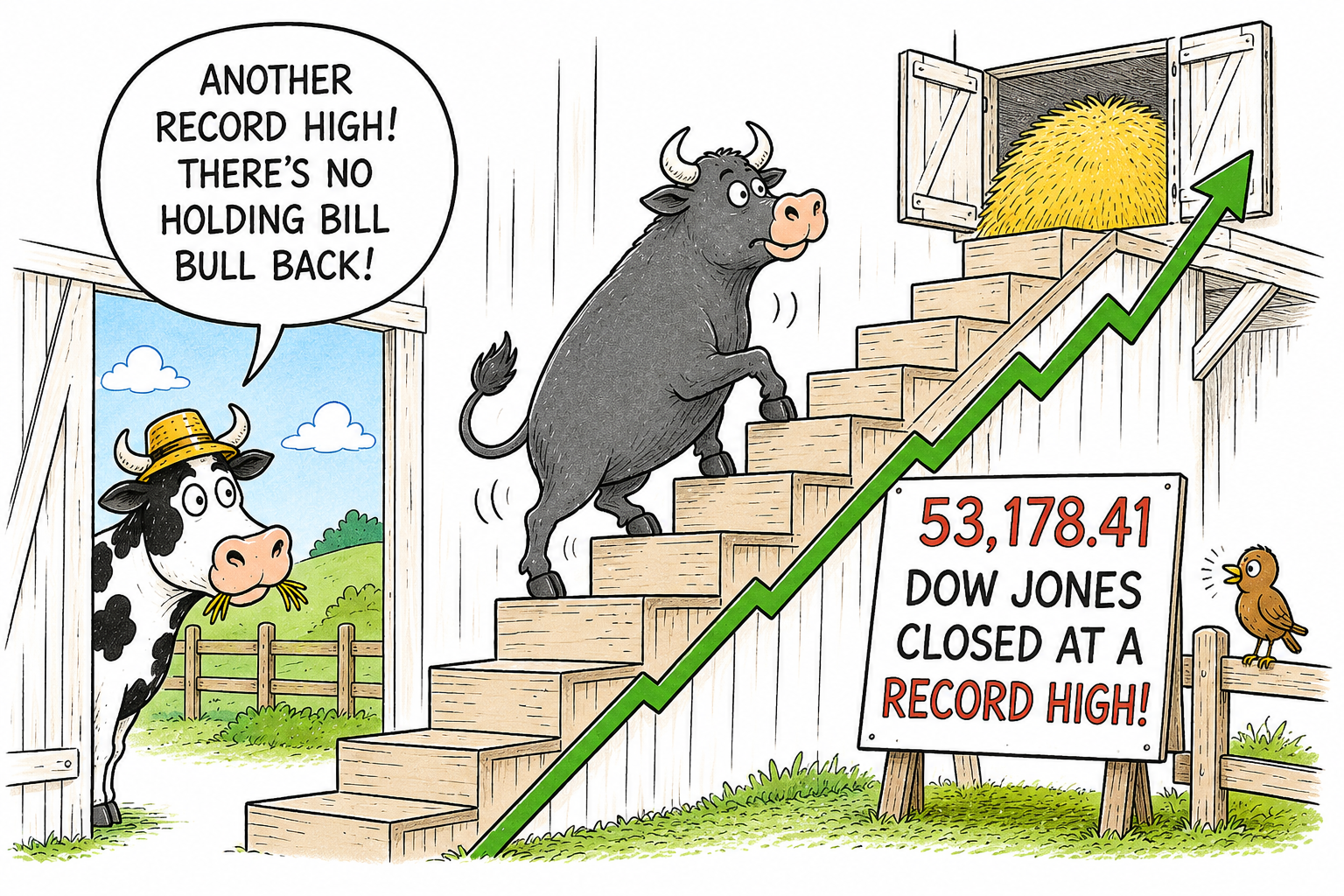
Bill Bull

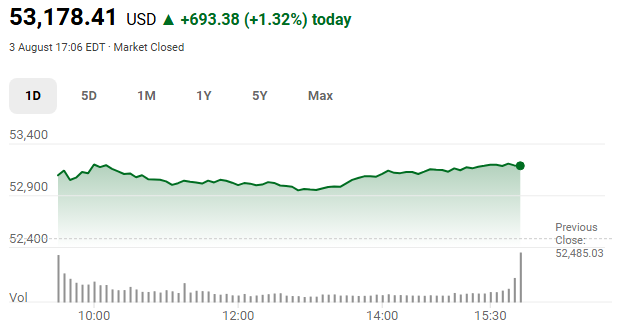
The Dow Jones Industrial Average reached yet another record closing high on 3rd August 2026. This extended one of the strongest rallies in recent years. It reinforced the market’s remarkable resilience.

Despite months of uncertainty surrounding inflation, interest rates and global tensions, investors continue to find reasons to buy.

Results

Much of the latest optimism has been fuelled by encouraging corporate earnings. This eased concerns over inflation and growing confidence that the U.S. economy can continue to expand without slipping into recession.

Falling bond yields and lower oil prices have also provided a welcome tailwind for equities, while the continuing enthusiasm surrounding artificial intelligence has kept technology stocks firmly in the spotlight.

Yet record highs inevitably raise an important question: how much good news is already reflected in share prices?

Straight line?

Markets have an uncanny ability to climb a ‘wall of worry’. The latest climb is another reminder that investor sentiment can remain surprisingly robust even when the headlines suggest otherwise.

Dow Jones hits new high on 3rd August 2026 at 53,178

However, history also tells us that markets rarely move in a straight line. Periods of exuberance are often followed by bouts of profit-taking as investors reassess valuations and future expectations.

Bulls in charge for now

For now, though, Wall Street’s message is clear. Confidence remains firmly in control, and the bulls continue to dictate the direction of travel.

Whether this latest record proves to be another stepping stone higher—or simply a pause before the next bout of volatility—will depend on whether corporate earnings can continue to justify today’s elevated valuations.

The Great Social Truth Manipulation

The Art of Manipulation

There is an old saying apparently that if you create a problem, you can then claim credit for solving it.

Whether that saying is fair in every circumstance is open to debate, but it raises an uncomfortable question about the way modern politics is increasingly presented to the public.

Every day we hear another announcement that “a deal is close”, “talks are progressing” or “a breakthrough is expected”. These headlines are designed to sound reassuring. They suggest that leaders are successfully navigating a difficult situation.

But what if we are asking the wrong question?

Perhaps we should not be asking whether another deal is close. Perhaps we should be asking why the deal has become necessary in the first place.

That is where the irony begins.

Take the current tensions involving the United States and Iran. The public is repeatedly encouraged to view the next agreement as a diplomatic success.

Yet before the military confrontation, there was already diplomacy. The Strait of Hormuz was open. Oil continued to flow. The world’s attention was focused on preventing escalation rather than recovering from it.

Today, after military action, regional instability and renewed fears over global shipping and energy supplies, we are told that another agreement will represent progress.

But is it progress?

Or is it simply an attempt to restore what already existed?

That distinction is rarely discussed.

Instead, public attention is directed towards the negotiations themselves.

Every meeting becomes news.

Every statement hints at a breakthrough.

Every possible agreement is presented as evidence that events are moving in the right direction.

The irony is that the benchmark has quietly changed.

Yesterday, stability was taken for granted. Today, merely returning to that same level of stability is presented as a diplomatic triumph.

This is how truth manipulation often works.

It does not necessarily rely upon telling outright lies. Instead, it changes the point from which people measure success.

Once the public stops comparing today’s position with where events began, and starts comparing today’s headlines with yesterday’s headlines, perceptions change. Recovery begins to look like achievement.

That is an extraordinarily effective political technique.

It shifts the conversation away from asking whether earlier decisions improved the situation and towards celebrating efforts to repair the consequences.

The public becomes invested in the next deal rather than reflecting upon whether the circumstances requiring that deal could have been avoided.

This is not an argument against diplomacy. Quite the opposite. Negotiation should always be preferred to conflict wherever possible.

Nor is it a claim that every crisis is avoidable. International affairs are rarely that simple.

The real issue is whether governments should be judged by the number of deals they announce or by whether their decisions leave the world in a better position than before.

That is the question often left unasked.

Perhaps the greatest social truth manipulation is persuading people to celebrate returning to yesterday’s starting point while calling it tomorrow’s success.

This pattern is hardly unique to one administration or one country. Governments throughout history have sought to frame events in ways that favour their own decisions.

However, democratic societies rely upon citizens asking a simple but essential question:

Are we genuinely better off than we were before?

Big Tech’s Fortunes Diverge as Investors Favour AI Winners

Wall Street delivered another reminder last week that the artificial intelligence race is creating clear winners and losers.

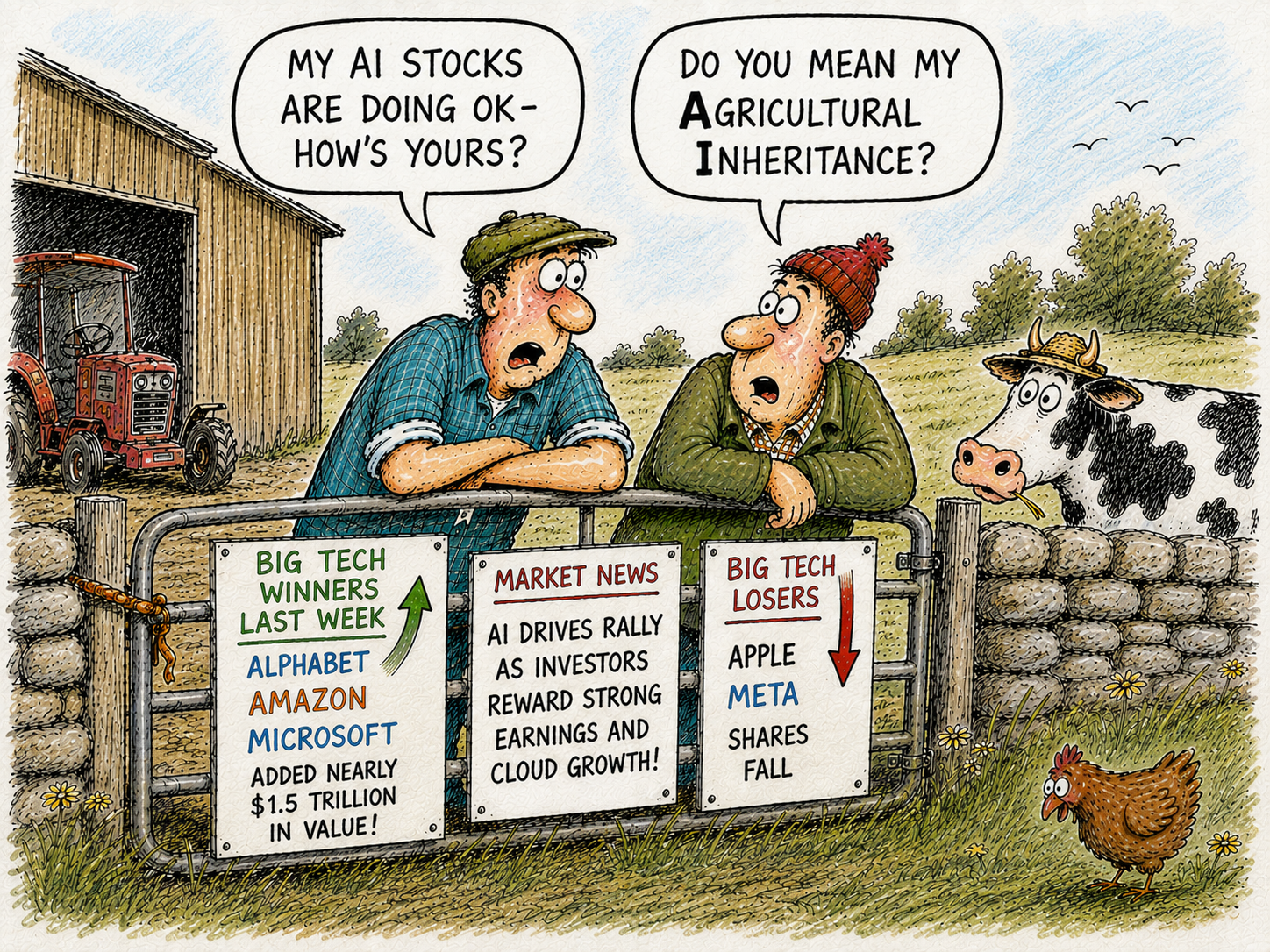
Alphabet, Amazon and Microsoft added almost $1.5 trillion in combined market value as investors applauded strong earnings, cloud growth and convincing evidence that vast AI investments are beginning to translate into commercial success.

Meanwhile, Apple and Meta moved in the opposite direction, highlighting how quickly sentiment can shift among the world’s largest technology companies.

Microsoft surge

Microsoft led the charge with a record-breaking surge following better-than-expected results. Robust Azure cloud growth and management’s confident outlook reassured investors that its enormous spending on AI infrastructure is delivering tangible returns.

Amazon also enjoyed a powerful rally after reporting strong cloud performance and improving profitability, while Alphabet benefited from renewed confidence that Google Cloud will remain a major force in enterprise AI despite concerns over heavy capital expenditure.

Contrast

The contrast with Apple and Meta was striking. Apple’s shares came under pressure after disappointing forward guidance, while Meta’s stock retreated as investors questioned whether escalating AI spending would continue to weigh on free cash flow.

The market’s reaction suggests that simply investing billions in artificial intelligence is no longer enough. Investors increasingly want evidence that those investments are producing sustainable revenue growth and healthier profits.

AI experiment is expensive in the U.S.

The week’s dramatic swings underline a broader change in market thinking. During the early stages of the AI boom, investors rewarded ambitious spending almost indiscriminately. Today, expectations have become far more demanding.

Companies must demonstrate that AI is not merely an expensive technological experiment but a profitable business strategy capable of generating long-term shareholder value.

As earnings season continues, the divide between AI leaders and AI hopefuls is likely to become even more pronounced.

For investors, execution—not ambition—is rapidly becoming the defining measure of success in the next phase of the artificial intelligence revolution.