

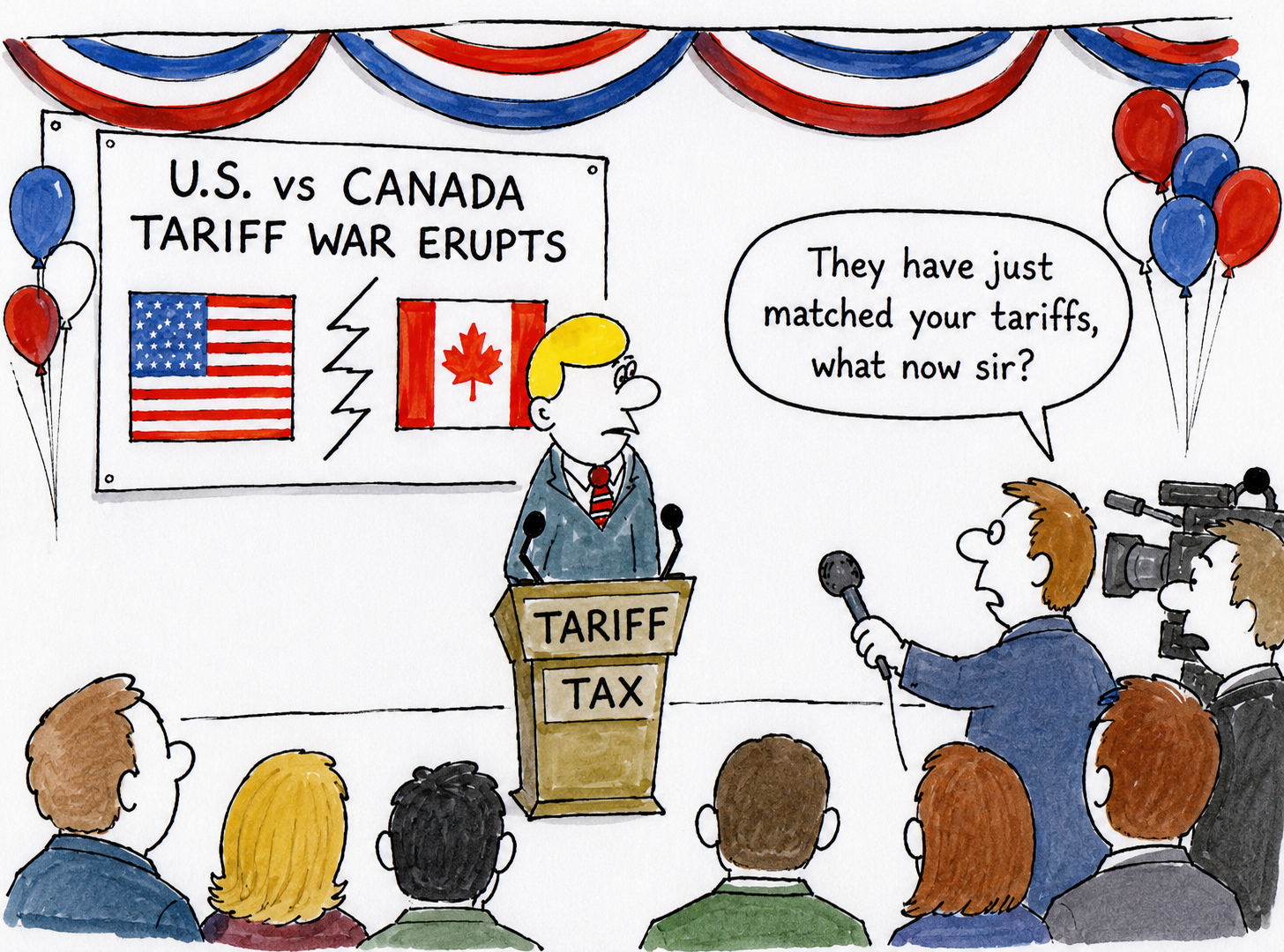
The United States and Canada have entered a new and potentially damaging phase of their long-running trade dispute, with both neighbours now imposing steep tariffs on each other’s goods.
Escalation
The latest escalation came after trade negotiations broke down. From 22nd August 2026, the United States imposed 50% tariffs on around $27.6 billion (£20.5bn) of Canadian goods, targeting products covered by new Section 338 measures.
The duties include major categories of Canadian exports, with steel, aluminium, vehicles, auto parts and other manufactured goods among those affected.
U.S. action
Washington argues that the measures are necessary to counter what it regards as discriminatory Canadian trade policies, particularly involving dairy, motor vehicles and U.S. alcoholic drinks.
The White House has also threatened further action, including a planned 50% tariff on Canadian cars and trucks from January 2027, adding another major risk for the integrated North American automotive industry.
Canada responds
Canada has now responded in kind. From 8th September 2026, Ottawa will impose retaliatory tariffs of 15%, 25% and 50% on approximately $27.6 billion of US imports, matching the American duties product for product.
The targeted goods include steel and aluminium, furniture, clothing, appliances, dairy products, fish and seafood, agricultural equipment, pulp and paper and electronics.
Significant
The significance of this confrontation extends far beyond the value of the tariffs themselves. The U.S. and Canada have one of the world’s largest trading relationships, with hundreds of billions of dollars in goods crossing their shared border every year.
Tariffs ultimately act like a tax on trade. Importers face higher costs, which can feed through to manufacturers, retailers and eventually consumers.
Trust?
Companies that have spent decades building highly integrated North American supply chains could also face disruption.
What began as a dispute over market access and trade policy is therefore becoming a much broader economic confrontation.
The big question now is whether Washington and Ottawa can return to negotiations before the tariff battle starts inflicting lasting damage on both economies.