Stock markets are continuing to climb despite a growing list of concerns that would normally be expected to unsettle investors.
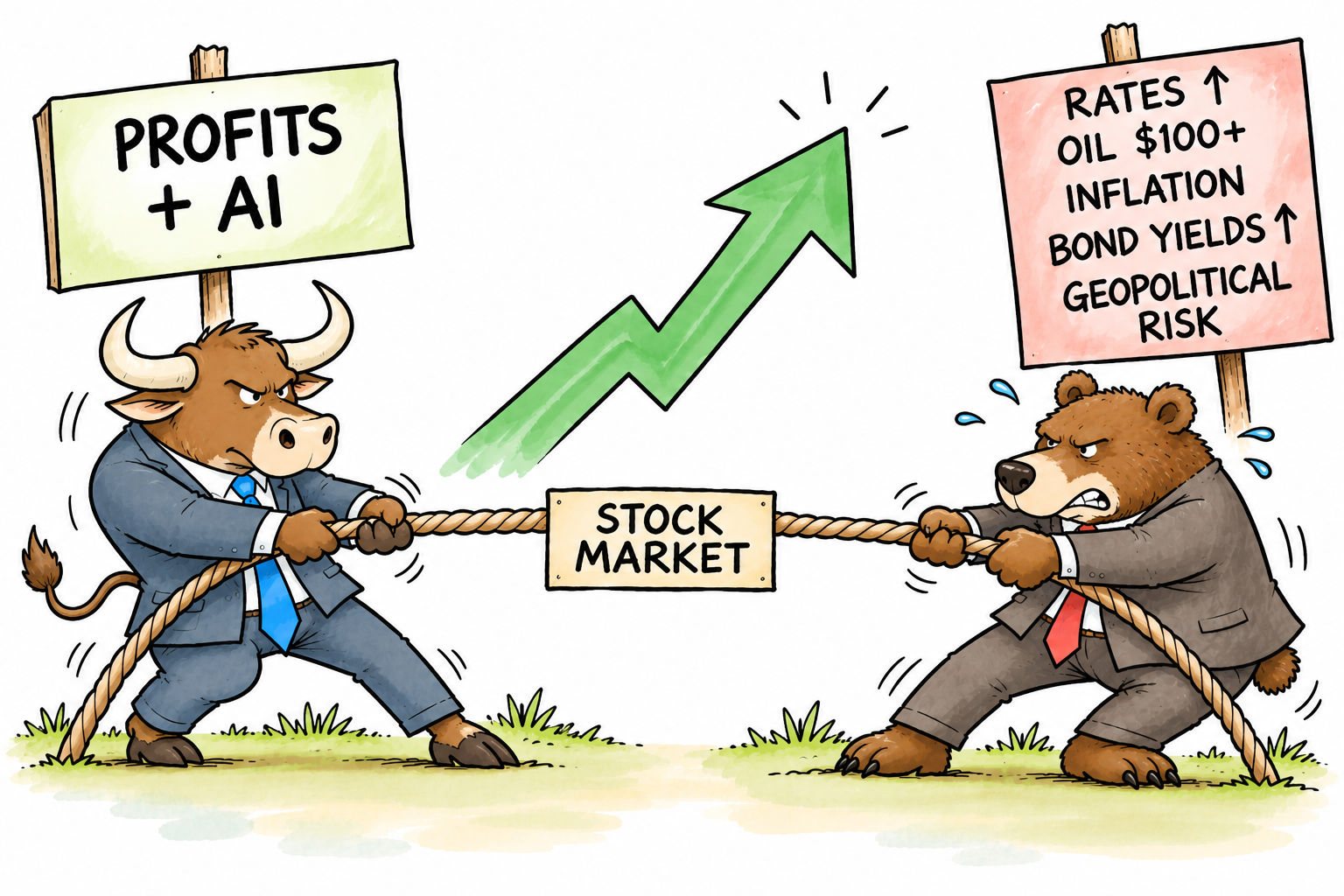
Interest rates are higher, government bond yields have risen, oil prices are elevated and inflation remains a concern. Geopolitical tensions are also creating uncertainty. Tariffs still on the agenda. Global debt rising and rogue AI concerns.
Yet investors continue to buy shares, particularly in the United States.
So why?
One important reason is corporate earnings. Investors appear willing to tolerate higher interest rates and expensive valuations while they believe company profits will continue to grow.
Large technology companies, in particular, remain at the centre of this optimism, with huge investment in artificial intelligence fuelling expectations of strong future earnings.
Buying dips
Another factor is the willingness of investors to buy market dips. When share prices fall, investors who remain confident about the longer-term outlook see an opportunity to buy at cheaper prices.
This can create a self-reinforcing cycle: markets fall, buyers move in, confidence returns and prices rise again.
There is also a belief that the economy remains sufficiently resilient to withstand higher borrowing costs and expensive energy.
Bad news is therefore being viewed as a problem, but not necessarily one capable of seriously damaging corporate profits.
However, this resilience could eventually be tested.
Earnings faith
The market is currently placing considerable faith in continued earnings growth and the economic benefits of artificial intelligence. If either begins to disappoint, investors could reassess the high valuations attached to many shares.
Higher oil prices could also keep inflation elevated, forcing interest rates to remain higher for longer. Rising bond yields would then provide investors with an increasingly attractive alternative to shares.
Bull Bear
For now, the bulls remain in control of market prices, even though the bears have plenty of arguments on their side.
The important question is whether company profits can continue to justify today’s share prices.
If they can, markets may continue climbing despite the bad news. If they cannot, investors may suddenly start paying much closer attention to all those warning signs they have recently been ignoring.