What Happens to the S&P 500 if the Magnificent Seven Fail to Deliver on AI?

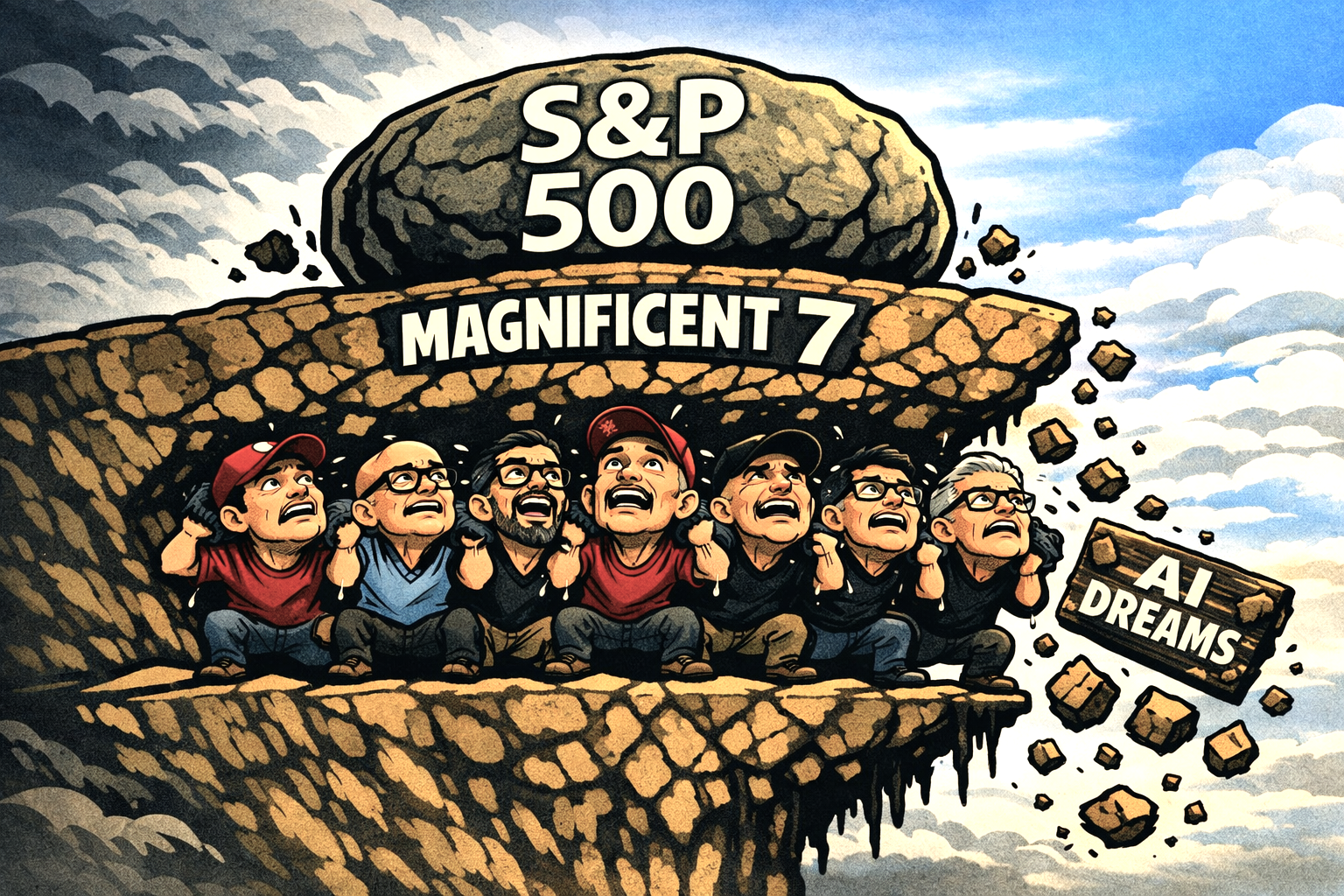
Mag 7 holding up the S&P 500 to the tune of almost 35% value of the entire S&P 500

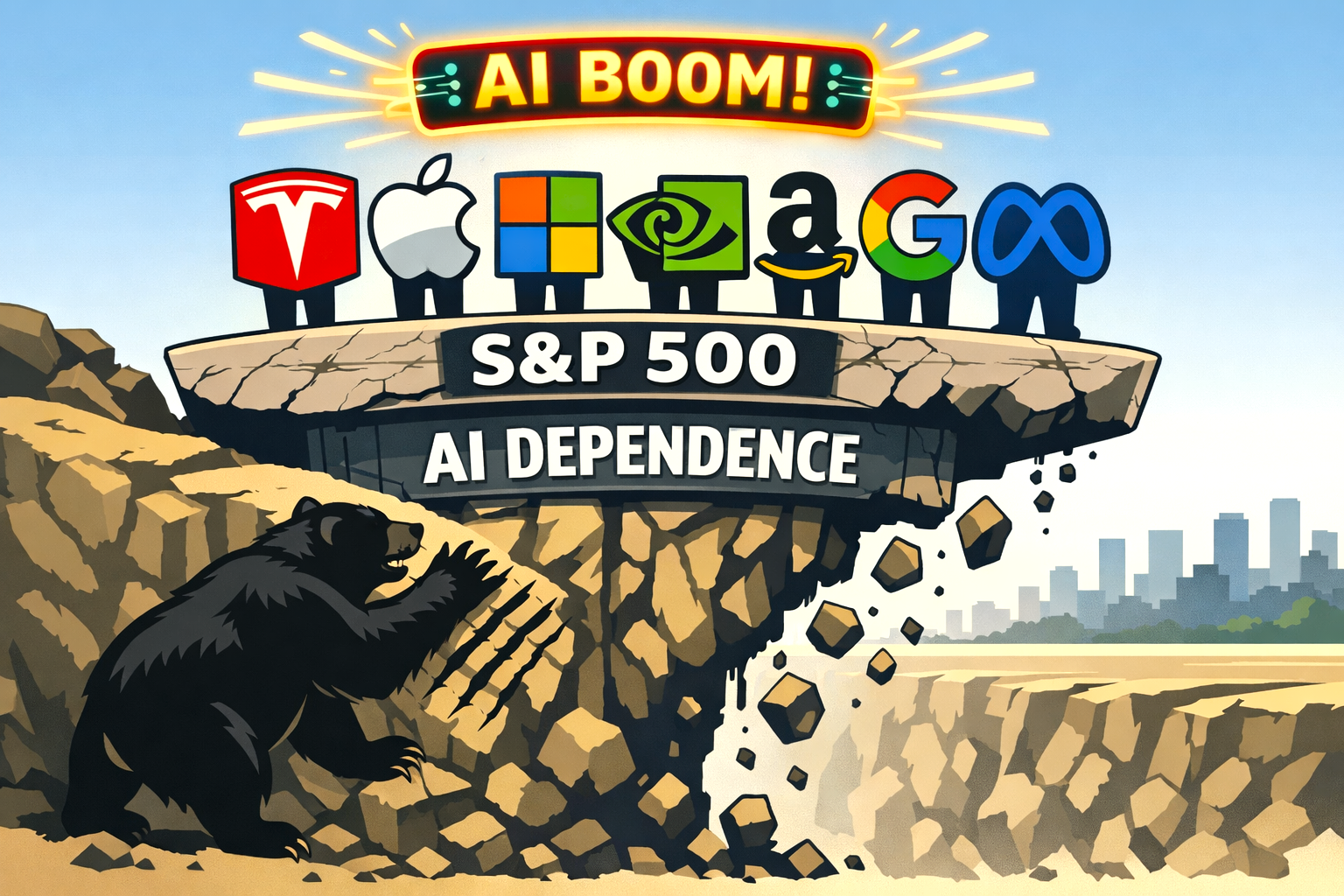
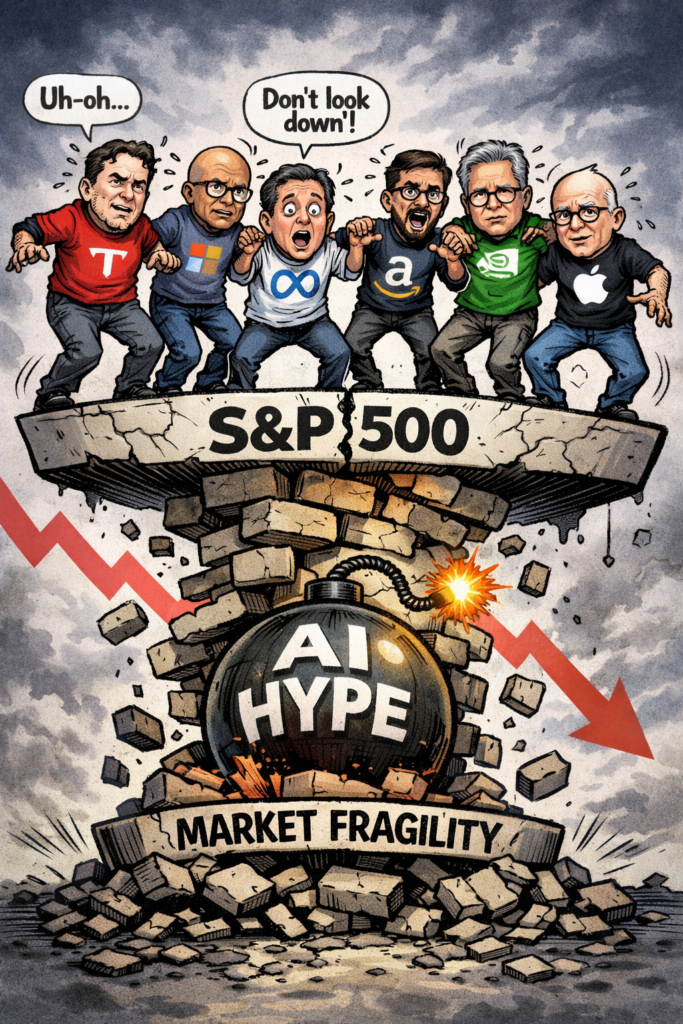
The S&P 500 has never been so dependent on so few companies. The Magnificent Seven — Microsoft, Apple, Nvidia, Alphabet, Amazon, Meta and Tesla — now account for roughly one‑third of the entire index’s value – that’s 33% of the whole S&P 500 vlauation.

Their dominance is not simply a reflection of current earnings power; it is a collective bet on an AI‑centred future that investors assume will transform productivity, reshape industries and justify valuations that stretch far beyond historical norms.

If one, several, or all of these companies fail to deliver the AI revolution that markets have priced in, the consequences for the S&P 500 would be immediate, structural and potentially severe.

Mild

The mildest scenario is a stumble by one or two members. If Apple’s device strategy falters, or Tesla’s autonomy narrative weakens further for instance, the index absorbs the shock.

A 3–5% pullback is plausible, driven by mechanical index weighting rather than systemic fear. Investors already expect uneven performance within the group, and the remaining leaders could offset the disappointment.

Major

The more destabilising scenario is a collective slowdown among the AI infrastructure leaders – Microsoft, Nvidia and Alphabet. These firms sit at the centre of the global capex cycle.

If cloud AI demand proves slower, less profitable or more niche than expected, the market would be forced to reassess the entire economic promise of generative AI.

In this case, the S&P 500 could see a 10–15% correction as valuations compress, volatility spikes and passive flows unwind years of momentum.

Dramatic

The most dramatic outcome is a broad failure of the AI ‘sector’ itself. If the promised productivity gains do not materialise, if enterprise adoption stalls, or if regulatory and cost pressures erode margins, the S&P 500 would face a structural reset.

With a third of the index priced for exponential growth, a collective disappointment could trigger a decline of 20% or more.

This would not resemble a cyclical recession; it would be a leadership collapse similar to the dot‑com unwind, but with far greater concentration and far more passive capital tied to the winners.

The uncomfortable truth is that the S&P 500’s trajectory is now inseparable from the Magnificent Seven. If they deliver, the index continues to defy gravity. If they falter, the market must rebuild a new narrative — and a new set of leaders — from the ground up.

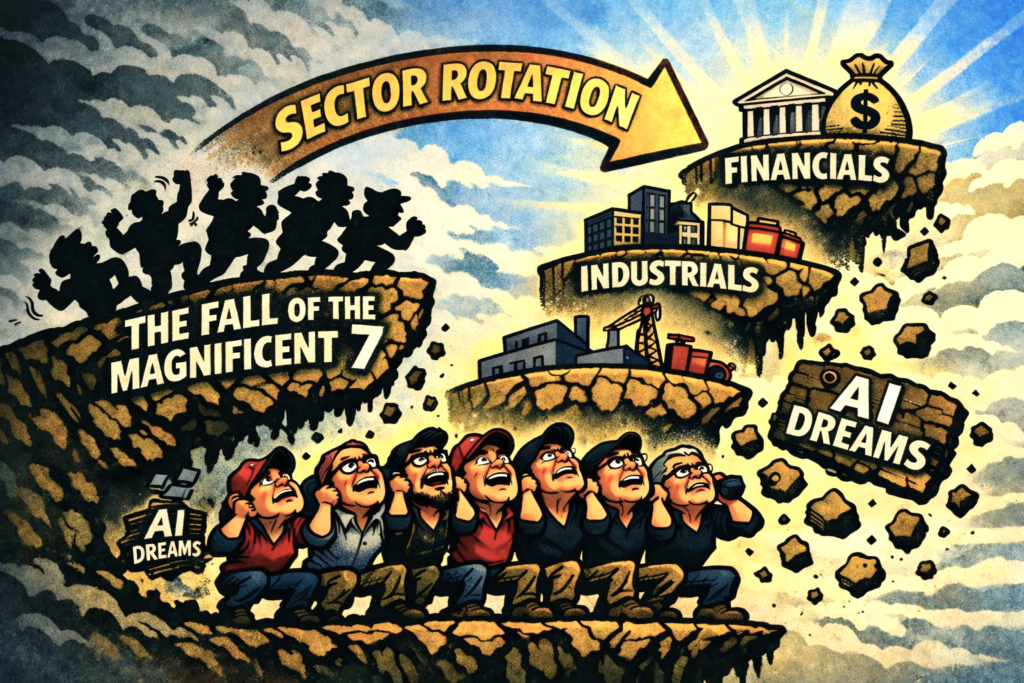
If the Magnificent Seven Lose Their Grip, Who Rises Next?

For years, the S&P 500 has been defined by the gravitational pull of the Magnificent Seven. Their dominance has shaped index performance, investor psychology and the entire narrative arc of global markets.

If these companies lose momentum — whether through slower AI adoption, regulatory pressure, margin compression or simple over‑expectation — leadership will not disappear.

It will rotate. And the beneficiaries are already hiding in plain sight.

Alternative investment to AI

The first and most obvious winners would be Energy and Utilities. As AI enthusiasm cools, investors tend to rediscover the appeal of tangible cash flow. Energy companies, with their dividends and pricing power, become natural refuges.

Utilities, often dismissed as dull, regain relevance as defensive anchors in a more volatile market. If AI‑driven data‑centre demand slows, the sector’s cost pressures ease, improving margins.

Next in line are Industrials and Infrastructure. A retreat from speculative tech would likely redirect capital towards physical productivity — logistics, construction, defence, electrification and manufacturing modernisation.

These sectors have been quietly compounding earnings while Silicon Valley has monopolised attention. If the market shifts from promise to proof, industrials become the new growth story.

Healthcare and Pharmaceuticals would also rise. Their earnings cycles are largely independent of AI hype, driven instead by demographics, innovation and regulatory frameworks. When tech stumbles, healthcare’s stability becomes a premium rather than an afterthought.

Biotech, in particular, benefits from capital rotation when investors seek uncorrelated growth.

Financials stand to gain as well. A correction in mega‑cap tech would rebalance passive flows, giving banks and insurers a larger share of index‑tracking capital. Higher rates and wider spreads already support the sector; a shift away from tech simply amplifies the effect.

Finally, Consumer Staples would reassert themselves. In a market recalibrating after an AI disappointment, investors gravitate towards predictable earnings. Food, beverages and household goods regain their defensive premium as volatility rises.

The broader truth is simple: if the Magnificent Seven falter, the S&P 500 does not collapse — it redistributes. Leadership moves from code to concrete, from speculative multiples to operational reality. The market has always found new champions. It will again.

The Rise of OpenClaw and the New Era of AI Agents

Agent AI

A new generation of artificial intelligence is taking shape, and at its centre sits OpenClaw — a fast‑evolving framework that embodies the shift from monolithic AI models to agile, task‑driven agents.

While large language models once dominated the conversation, the momentum has clearly moved toward systems that can reason, plan, and act with far greater autonomy. OpenClaw is emerging as one of the most intriguing examples of this transition.

Appeal

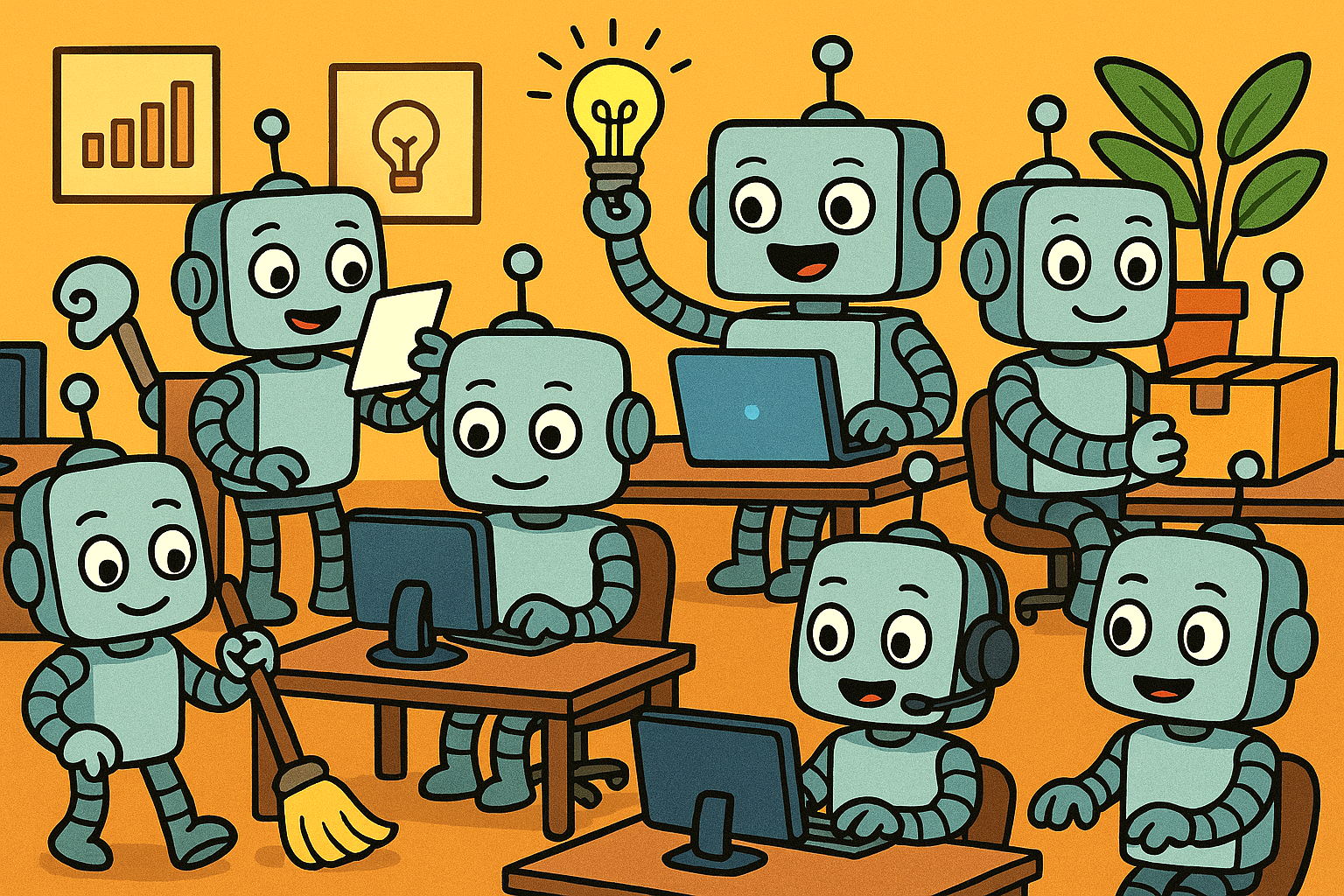
OpenClaw’s appeal lies in its modular design. Instead of relying on a single, all‑purpose model, it orchestrates multiple specialised components that collaborate to complete complex workflows.

This mirrors how real teams operate: one agent may handle research, another may draft content, and a third may evaluate quality or flag risks. The result is a system that behaves less like a tool and more like a coordinated digital workforce.

Defining trend

This shift is not happening in isolation. Across the industry, AI agents are becoming the defining trend. Companies are racing to build systems that can manage inboxes, run businesses, write and deploy code, or even negotiate with other agents.

The ambition is no longer to create a chatbot that answers questions, but an autonomous entity capable of executing multi‑step tasks with minimal human intervention.

OpenClaw stands out because it embraces openness and experimentation. Developers can plug in their own models, customise behaviours, and build agent ‘stacks’ tailored to specific industries.

Adoption

Early adopters in media, finance, and logistics are already exploring how these agents can streamline research, automate reporting, or coordinate supply‑chain decisions.

The promise is efficiency, but also creativity: agents that can generate ideas, test them, and refine them without constant supervision.

Of course, the rise of agentic AI brings challenges. Questions around safety, reliability, and accountability are becoming more urgent. An agent that can act independently must also be constrained responsibly.

Challenge

The industry is now grappling with how to balance autonomy with oversight, ensuring that these systems remain aligned with human goals and values.

Even with these concerns, the trajectory is unmistakable. OpenClaw and its peers represent a decisive step toward AI that is not merely reactive but proactive — capable of taking initiative, managing complexity, and collaborating with humans in more meaningful ways.

As these systems mature, they are likely to reshape not just how we work, but how we think about intelligence itself.

If you want to explore how this trend could influence your editorial or creative workflows, I’m ready to dive deeper with you.

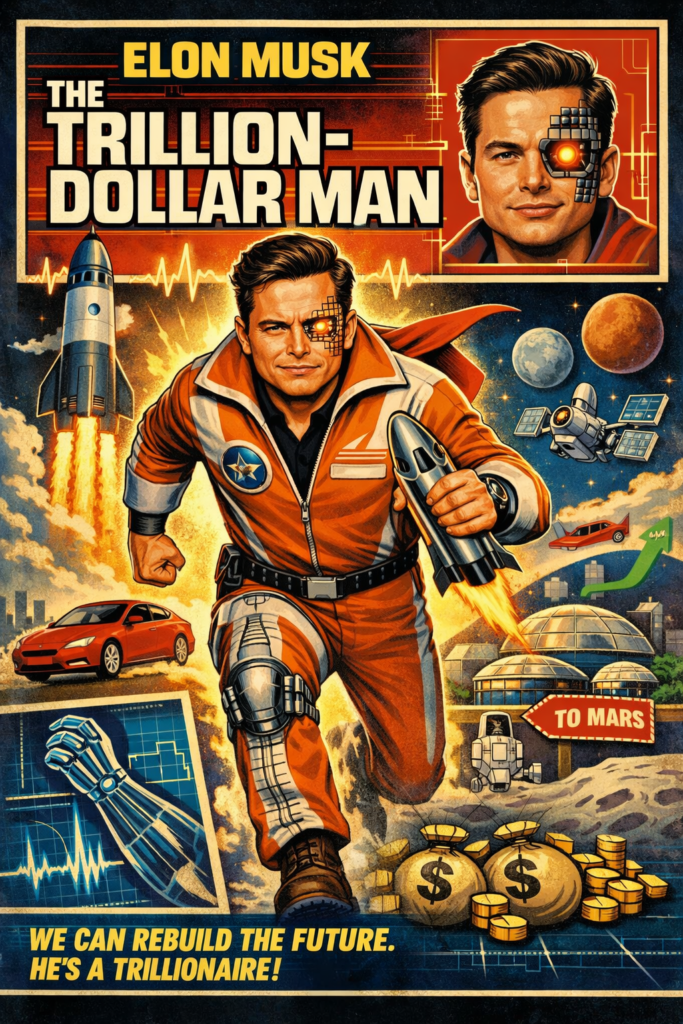
Elon Musk’s wealth is just crazy!

Wealth

According to the Bloomberg Billionaires Index, Elon Musk is the wealthiest person in the world, with an estimated net worth of $243.46 billion USD as of 8th Jan 2024.

Musk is the founder and CEO of Tesla and SpaceX, X and X.ai as well as the co-founder of PayPal and Neuralink. He made his fortune from various business ventures, starting from a web software company called Zip 2 that he sold in 1999 for around $307 million. He also inherited some wealth from his father, who owned an emerald mine in South Africa.

Think about this for a moment

It’s a little difficult to imagine such wealth so, maybe think of it like this… If you had been given $10,000 every day since the birth of Jesus Christ, 2024 years ago – you would have accumulated some $7.4 billion (without interest and leap years etc).

So, Mr Elon Musk has a net worth of around $243 billion and you would have $7.4 billion and that equates to only 3% of his current wealth.

Or, if you had been given $10,000 every day since the pyramids were built in Egypt around 4500 years ago – you would have accumulated $16.4 billion. That’s still only 6.75% of Elon Musk’s current wealth.

One last thought

A recent report conducted by Oxfam calculated that just 5 of the world’s richest men (including Musk) are worth $869 billion between them.

Your $16.4 billion accumulated over 4500 years would equate to less than 2% of that combined wealth.

Now that’s crazy!

Final thought

8 of the top 10 current billionaires made their money in… technology.

Please note: figures are estimated, but it perfectly demonstrates my point.

X.AI to raise $1 billion

Chatbot illustration

X.AI, Elon Musk’s artificial intelligence (AI) startup, has filed with the SEC to raise up to $1 billion in an equity offering.

The company has already raised nearly $135 million with the first round on 29th November 2023 according to the filing.

The AI startup, which Musk announced in July 2023, seeks to ‘understand the true nature of the universe’, according to X.AI website.

What is Grok?

Robot learning

Definition

Grok is a neologism (a newly coined word or expression), referenced by Robert A. Heinlein for his 1961 science fiction novel Stranger in a Strange Land. It means to understand something so deeply that you become one with it.

Grok is a term used in computer programming to mean to ‘profoundly understand something‘, such as a system, a language, or an algorithm.

Elon Musk’s Grok

Elon Musk debuts ‘Grok’ AI bot to rival ChatGPT and others. But, ‘Grok’ isn’t quite ready yet for the general public – it still has some learning to do. xAI, Elon Musk’s new AI venture, launched its first AI chatbot technology named ‘Grok’.

The prototype is in its infancy and early stages of training and is only available to a select group of users before a wider release.

Elon Musk debuts ‘Grok’ AI bot to rival ChatGPT and others. But, ‘Grok’ isn’t quite ready yet for the general public – it still has some learning to do

Musk is positioning xAI to compete with OpenAI, Inflection, Anthropic and others.

Less woke

Grok, the company said, is modelled on ‘The Hitchhiker’s Guide to the Galaxy’. It is supposed to have ‘a bit of wit, a rebellious streak’ and it should answer the ‘spicy questions’ that other AI might dodge, according to a statement from xAI.

Grok, the company said, is modelled on ‘The Hitchhiker’s Guide to the Galaxy’.

The company’s published mandate is to build artificial intelligence ‘to advance our collective understanding of the universe’. Musk has previously said that he believes today’s AI makers are bending too far toward ‘politically correct’ systems.

xAI’s mission, it reportedly said, ‘is to create AI for people of all backgrounds and political views’.

Future AI

Self-driving car technology, an AI Chatbot built around humour with access to current public data through X, a robot called Optimus and Musk’s drive for the ‘different’. If you add all this together, X.ai, through Musk, is likely positioning itself for the next big push in AI…

A humanoid robot for the workplace and for the home! Get ready… it’s coming!