

AI revolution will be “50 times bigger” than the dot‑com boom says Masayoshi Son of Softbank

In essence, Son is reframing SoftBank’s entire identity around AI, portraying it not as a sector but as the next economic infrastructure — a claim that, if realised, would make the dot‑com era look modest by comparison.

SoftBank becomes Japan’s most valuable company as of May 2026.

Scale of transformation: Son argues that artificial intelligence will reshape every industry, dwarfing the internet’s impact in the early 2000s.

SoftBank’s strategy: He reportedly plans to channel the group’s investment focus almost entirely toward AI ventures, positioning SoftBank as a global accelerator for AI‑driven companies.

Vision Fund revival: After years of losses, Masayoshi Son sees AI as the catalyst to reignite the Vision Fund’s profitability, citing rapid advances in generative and autonomous systems.

Economic outlook: He predicts exponential productivity gains and new business models emerging from AI integration, describing it as a “moment of singularity” for technology and finance.

Investor sentiment: Some analysts remain cautious, recalling SoftBank’s volatile history with tech valuations, but acknowledge that Son’s influence could again shape global investment trends.

AI is more than the next dot-com era – it’s the new tech revolution in creation.
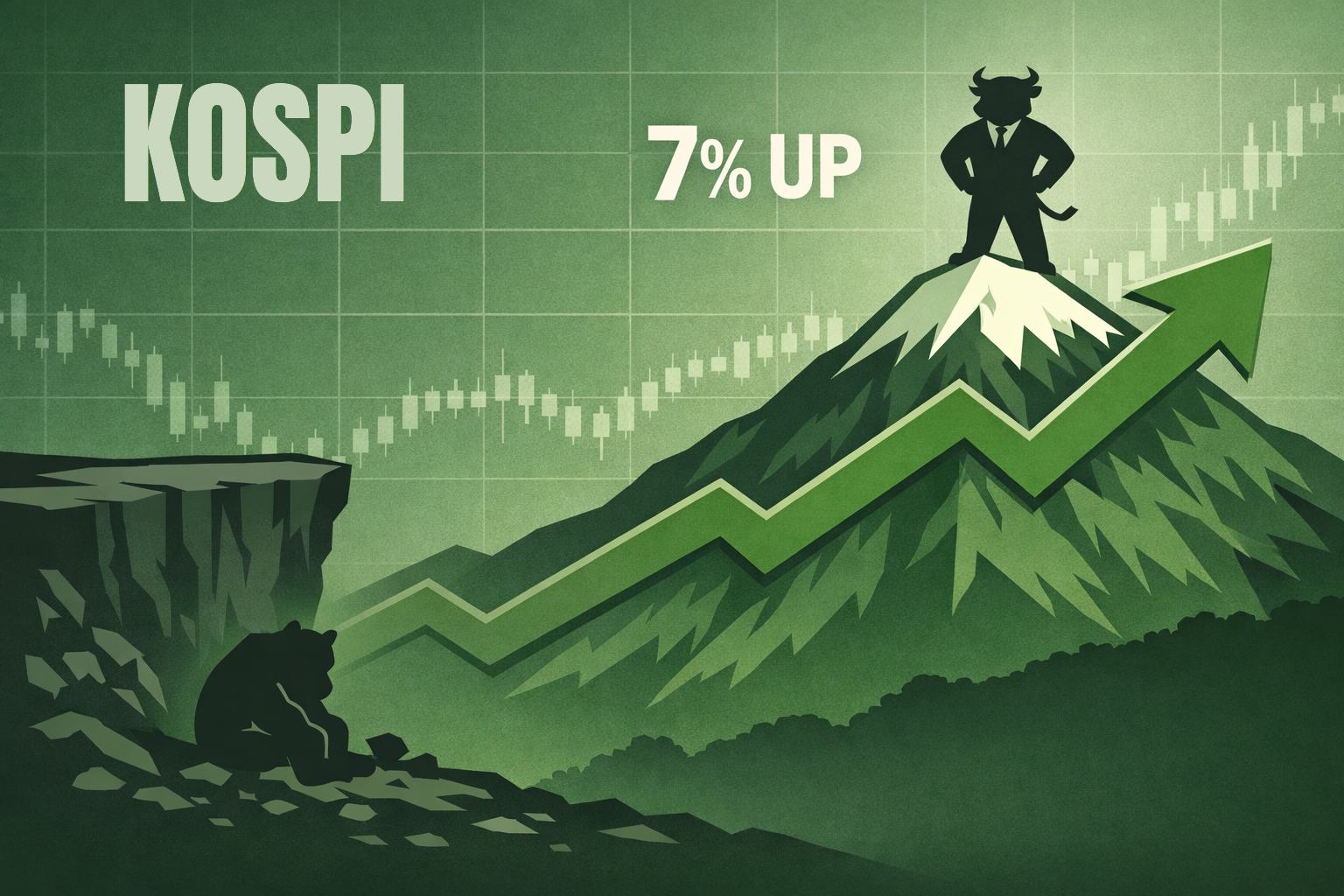
KOSPI down – KOSPI up!

KOSPI rebounds

The Kospi staged a sharp and surprisingly confident rebound on Tuesday, 9 June, clawing back 7% – a meaningful portion of Monday’s bruising 8% plunge.

The reversal was driven less by any single catalyst and more by a collective sense that Monday’s sell‑off had overshot fundamentals.

Bargain hunters moved quickly, snapping up oversold technology and battery names, while institutional investors stepped in to stabilise the market after the previous session’s disorderly drop.

Overnight cues helped sentiment. A steadier tone in U.S. futures and a pause in global risk aversion gave Korean equities room to breathe.

The Won also firmed slightly, easing pressure on foreign flows. By mid‑session, the KOSPI had regained momentum, with traders framing Monday’s collapse as a capitulation move rather than the start of a deeper structural downturn.

The rebound doesn’t erase underlying fragilities, but it does show how quickly sentiment can flip.

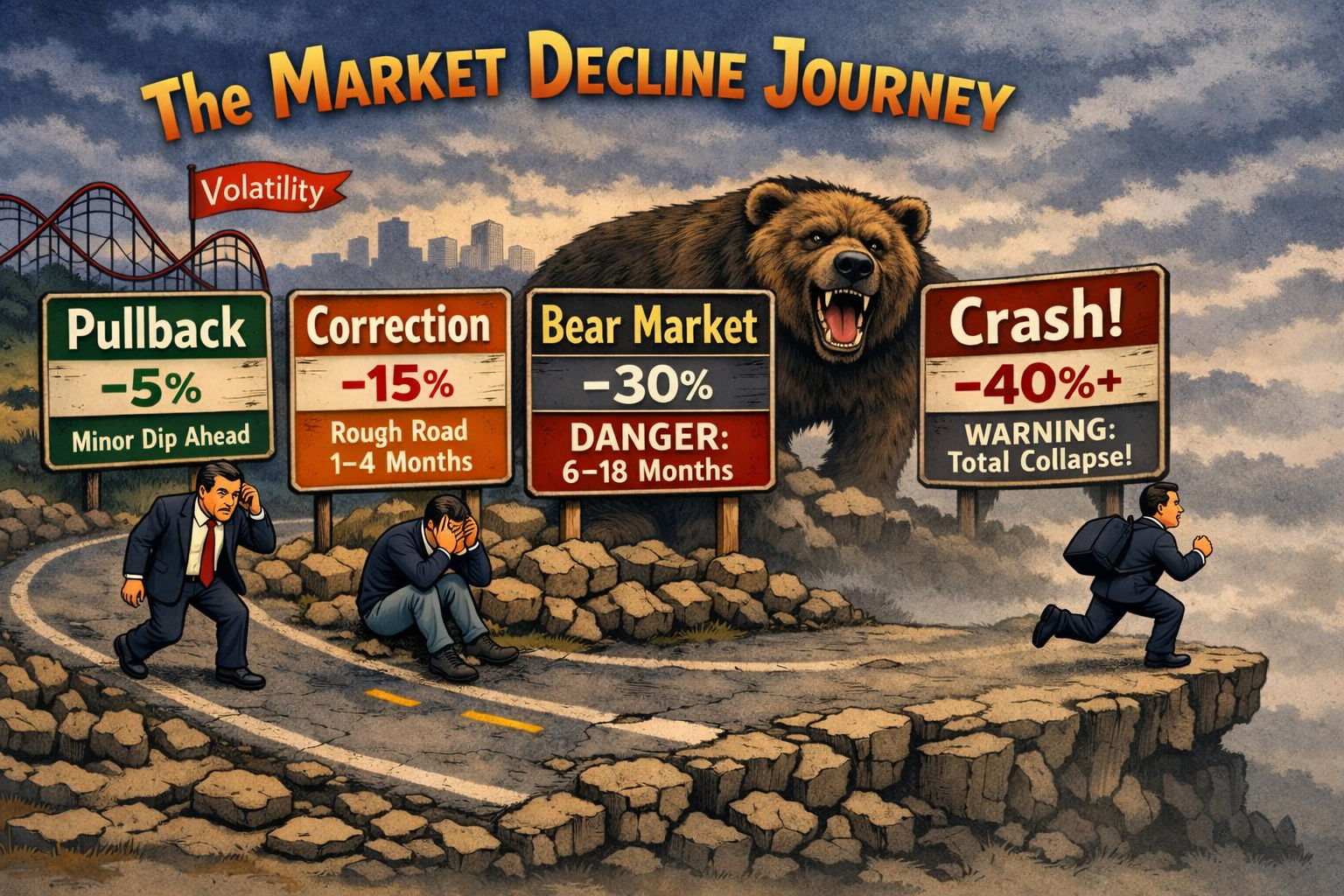
From Pullback to Crash: How Market Declines Evolve – Opinion

Markets rarely fall in a straight line. They move through recognisable phases — each with its own tempo, psychology, and structural drivers.

Understanding these stages doesn’t predict the future, but it does anchor expectations in how markets actually behave.

1. Pullback (–3% to –7%) — Duration: Days to Weeks

A pullback is the market taking a breath. It’s usually triggered by a short‑term shock: a hot inflation print, a geopolitical wobble, or simple exhaustion after a strong run.

Pullbacks are fast, shallow, and dominated by technical flows. They typically last 3–15 trading days. Most bull markets experience several each year. They clear froth but rarely change the underlying trend.

2. Correction (–10% to –20%) — Duration: 1–4 Months

A correction is a repricing, not a collapse. It reflects a shift in expectations: earnings disappointment, tightening liquidity, or stretched valuations finally meeting gravity.

The drop to –10% is usually rapid (2–6 weeks), but the stabilisation phase drags on. Corrections often include retests, false dawns, and volatility spikes. They end when positioning resets and macro data stops deteriorating.

3. Bear Market (–20% to –40%) — Duration: 6–18 Months

A bear market is a regime change. Growth slows, earnings contract, and sentiment breaks. Bear markets unfold in waves: an initial shock, a relief rally, then a grinding decline as fundamentals worsen.

The middle phase — the grind — is the longest and most psychologically draining. Policy responses (rate cuts, fiscal support) eventually form the bottoming process, but the recovery is uneven and sector‑specific.

4. Crash (–30% to –50%+) — Duration: Days to Weeks

A crash is not a bigger correction — it’s a liquidity event. Selling becomes indiscriminate, correlations go to one, and markets gap lower because buyers vanish.

Crashes are rare and almost always linked to systemic stress: leverage unwinds, credit freezes, or sudden macro shocks.

They are violent but short. The panic phase typically lasts 5–20 trading days, followed by months of volatility as markets rebuild confidence.

Market Decline Stages at a Glance

StageTypical DeclineTime to ReachTotal DurationKey Drivers
Pullback–3% to –7%2–10 daysDays–2 weeksTechnicals, sentiment
Correction–10% to –20%2–6 weeks1–4 monthsEarnings, valuations, macro
Bear Market–20% to –40%1–3 months6–18 monthsGrowth slowdown, credit tightening
Crash–30% to –50%+DaysDays–weeksLiquidity shock, systemic stress