

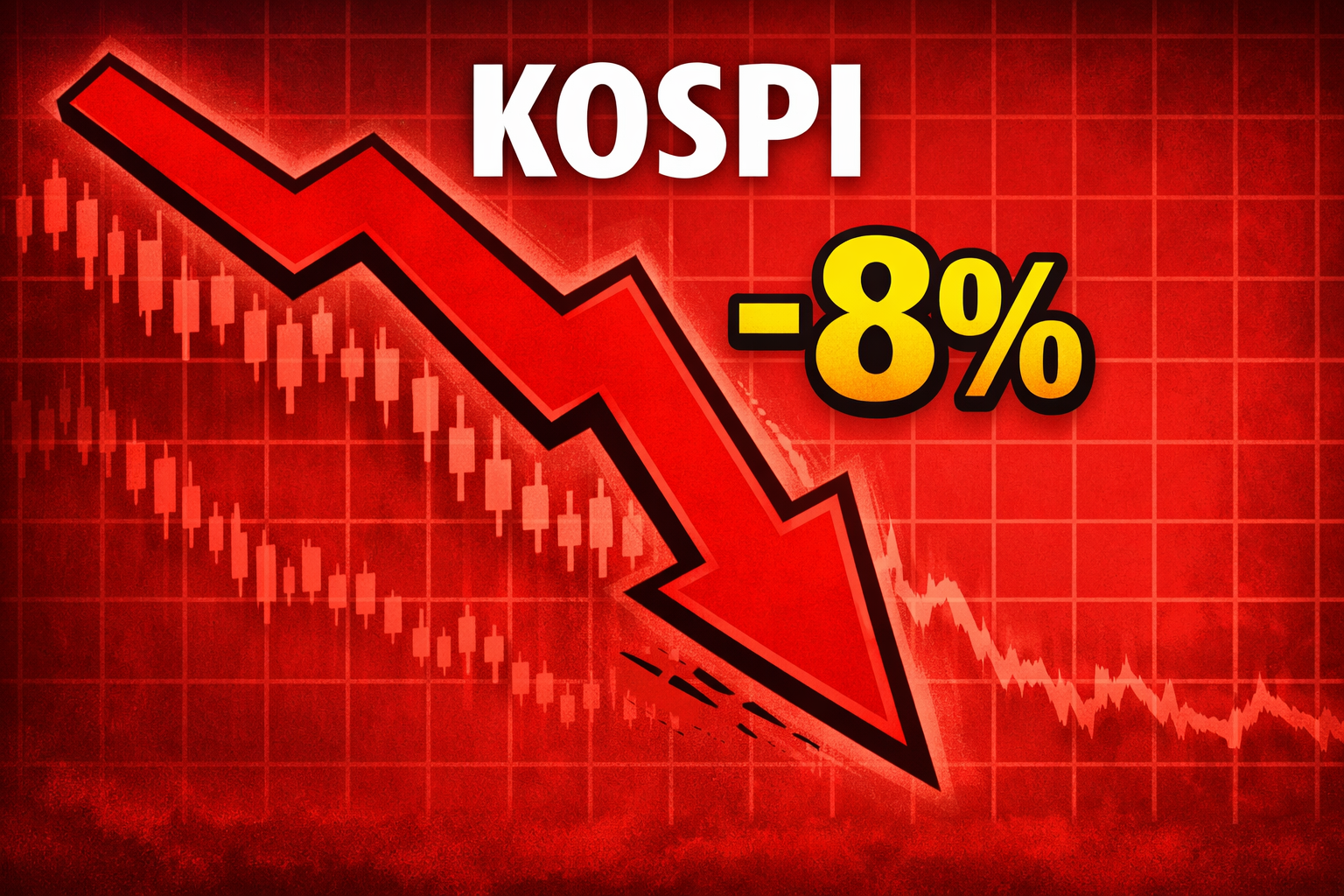
South Korea’s KOSPI plunges 8%!

Kospi Index falls again

South Korea’s KOSPI index suffered a severe shock on Monday, 8th June, plunging more than 8% in early trading and triggering an automatic 20‑minute circuit breaker as panic selling swept through the market.

The index briefly fell to the mid‑7,400s, marking its third circuit‑breaker event of the year and underscoring the fragility of sentiment after a sharp global tech sell‑off.

Semiconductor heavyweights led the rout. Samsung Electronics slumped more than 8.5%, while SK Hynix dropped over 7%, with additional steep losses across major industrial names including LG Electronics, Hyundai Motor and Samsung SDI.

The sell‑off mirrored a sharp downturn in U.S. markets the previous Friday 5th June 2026, where semiconductor giants such as Nvidia, Broadcom and Micron were hit hard, fuelling fears that the AI‑driven rally had overheated.

A hotter‑than‑expected U.S. jobs report also stoked concerns that the Federal Reserve may lean towards further rate hikes, adding to the risk‑off mood.

Currency markets reflected the stress: the Korean won weakened sharply to around 1,554 per dollar as foreign investors accelerated withdrawals.

Although local institutions and retail investors later stepped in to “buy the dip,” helping trim some losses, the episode highlighted the market’s vulnerability to global tech sentiment and shifting U.S. rate expectations.
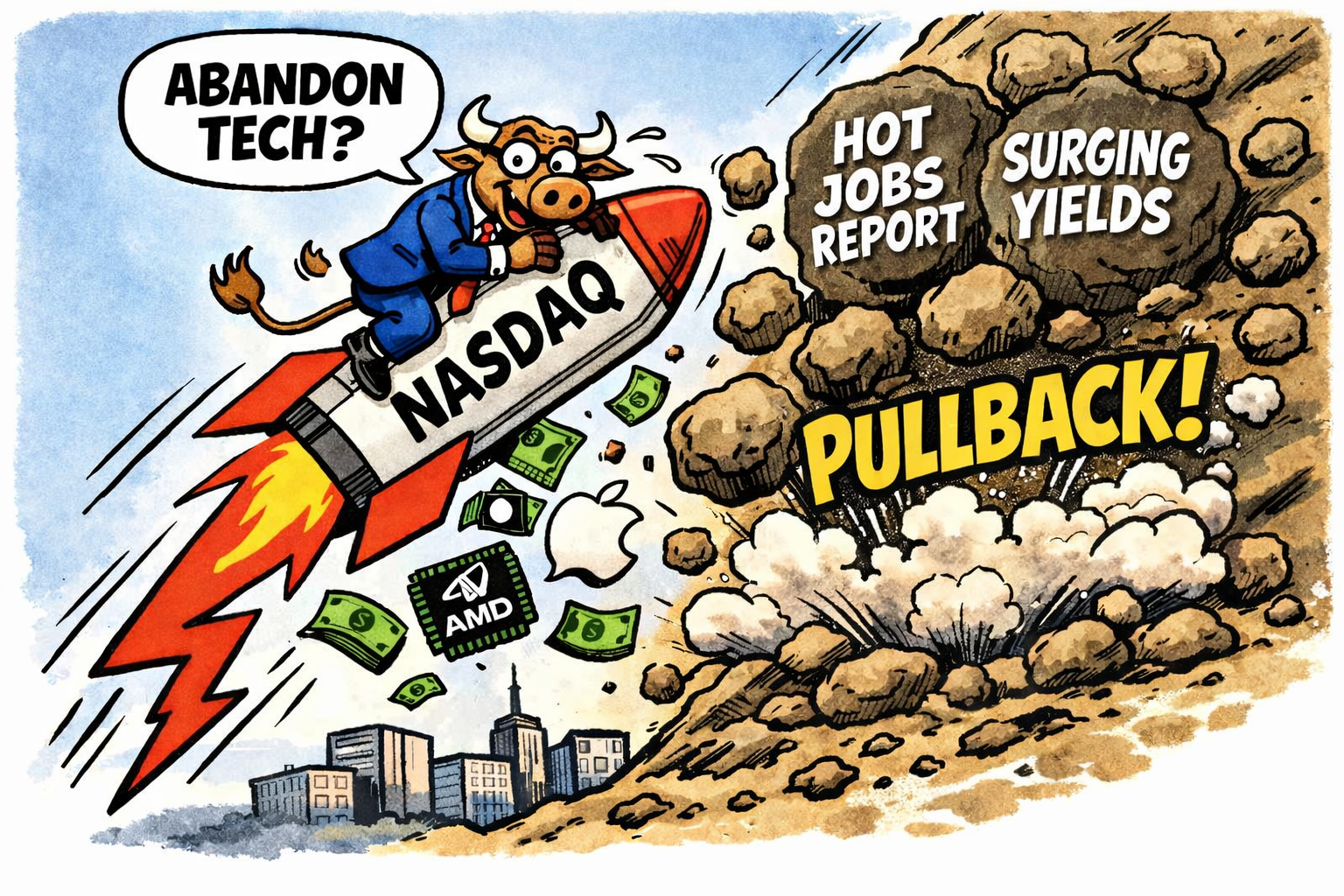
Nasdaq’s Rally Snaps as Hot Jobs Data Slams Tech

Nasdaq drops

The Nasdaq Composite endured a bruising session on Friday, 5th June 2026, tumbling more than 4% in its steepest single‑day decline since April 2025.

The sell‑off was triggered by a powerful combination of surging Treasury yields and a violent unwinding in semiconductor and mega‑cap technology stocks, following a far stronger‑than‑expected U.S. jobs report.

Employers added 172,000 jobs in May 2026, more than double economists’ forecasts, a result that swiftly erased hopes of near‑term Federal Reserve rate cuts and instead fuelled expectations of tighter policy for longer.

Chipmakers bore the brunt of the rout. Broadcom, Nvidia, Micron, Marvell and AMD all suffered heavy losses, with the sector’s slump wiping out well over a trillion dollars in market value across the week.

The Nasdaq closed at 25,709.43, down around 4.18%, while the S&P 500 fell 2.6% and the Dow Jones Industrial Average dropped 695 points.

The broader risk‑off mood extended beyond equities. Bitcoin slid below $60,000 for the first time since 2024, while gold and silver also weakened as investors recalibrated expectations for monetary policy.

With Treasury yields climbing above 4.5%, markets ended the week facing renewed questions about valuations, positioning, and the durability of the two‑year AI‑driven rally.