


Is America’s Safe-Haven Status Starting to Slip? Why Central Banks Are Moving Gold Out of New York

U.S. Gold Migration

For decades, the United States has been regarded as the world’s ultimate financial safe haven. Is America’s Safe-Haven Status Starting to Slip?

From U.S. Treasury bonds to the U.S. dollar and the vaults of the Federal Reserve Bank of New York, global investors have traditionally trusted American institutions to protect their wealth in times of crisis.

That confidence is now being tested.

The Dutch

The Netherlands has recently moved around 86 tonnes of gold from the United States and Canada to London. The country cites growing geopolitical uncertainty and the need to ensure its reserves can be accessed quickly in a crisis.

The Dutch central bank reportedly said the move was designed to improve the “tradability” of its gold. Distributing its reserves more evenly is considered a top priority.

France and Germany

France has also reportedly removed its remaining gold holdings from New York, while Germany previously repatriated a substantial proportion of its reserves.

These moves do not necessarily mean central banks believe their gold is unsafe in America. Rather, they reflect a growing desire for greater control and diversification.

Poland and China

Gold has become increasingly attractive as governments confront geopolitical tensions, sanctions, inflation and concerns about the long-term sustainability of government debt.

Central banks bought 289 tonnes of gold in the second quarter of 2026 alone, with Poland and China among the largest buyers.

The question, therefore, is whether this represents the beginning of a broader shift away from the U.S. financial system.

Treasuries are still desirable

The evidence is mixed. The Federal Reserve itself argues that Treasury securities remain an important component of global reserves, with foreign official investors still buying U.S. Treasuries overall since 2022.

Yet symbolism matters. When countries start moving their gold away from New York, they are signalling that diversification and control have become more important.

The U.S. may not have lost its safe-haven status. But the world’s central banks are clearly no longer taking it entirely for granted.
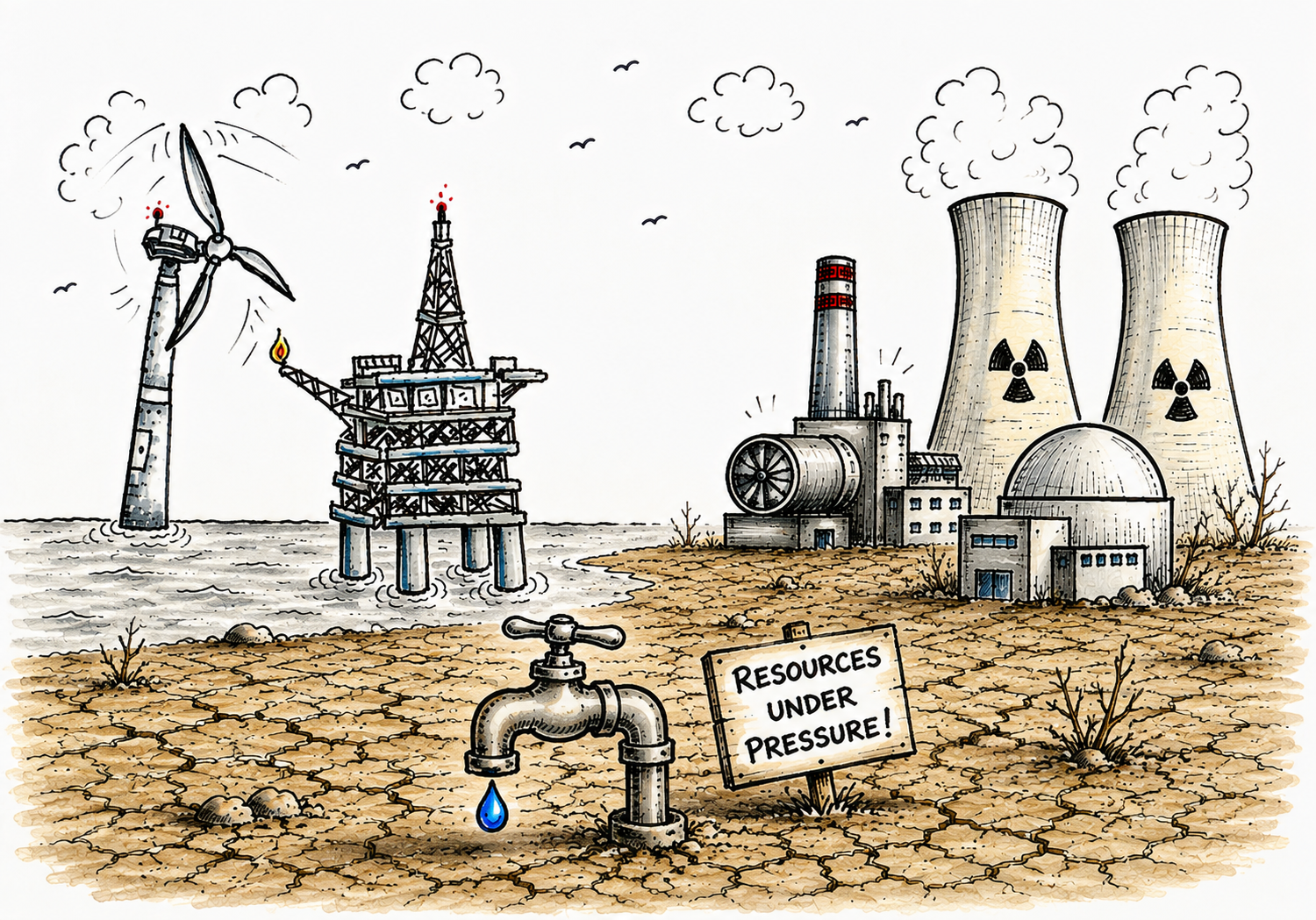
When Water Becomes the Weak Link in Europe’s Energy System

Energy, AI, Data Centres, people and water!

Europe’s extraordinary summer heatwave is exposing an uncomfortable truth about modern energy systems: electricity may be generated from uranium, gas, coal, wind or sunlight, but much of the infrastructure still depends on something increasingly unreliable — water.

The Danube has become the most dramatic example. Romania has now shut down both reactors at its Cernavoda nuclear power station after the river fell to historically low levels. The plant normally supplies around a fifth of Romania’s electricity.

Hungary’s Paks nuclear station has also been operating at sharply reduced output as the Danube struggles to provide sufficient cooling water.

Emergency engineering measures have even been considered to raise water levels around the plant.

But this is not simply a Danube problem

France’s huge nuclear fleet is facing a different version of the same challenge. Several reactors have been shut down or had their output reduced because rivers and seawater have become too warm.

Nuclear plants need enormous quantities of cooling water, but environmental rules restrict how much additional heat can be discharged into rivers when their temperatures are already dangerously high.

As of 13th August 2026, almost 20% of French nuclear capacity was unavailable, with the heatwave expected to force further reductions.

Jellyfish blockage

France has also encountered a rather more bizarre cooling problem. At Gravelines, one of Europe’s largest nuclear stations, huge quantities of jellyfish clogged seawater intake systems, forcing three reactors temporarily offline.

Warmer seas may make such biological disruptions more frequent

Elsewhere, Italy, Poland and Slovenia have also experienced power-plant restrictions linked to low river levels or excessive water temperatures.

Slovenia’s Krško nuclear plant, for example, reduced output because of hydrological and meteorological conditions affecting the Sava River.

The problem extends beyond nuclear: coal, gas and other thermal power stations also require cooling, while drought reduces the water available for hydroelectric generation.

UK gas heats up

Britain has not escaped the problem. During an earlier heatwave, five major gas-fired power stations reportedly had to reduce output because high temperatures made cooling more difficult.

The UK grid has also been under unusual summer pressure as air-conditioning demand rises, power-plant efficiency is affected and electricity imports become more important.

The bigger warning

Climate change does not simply mean hotter weather. It means the simultaneous arrival of several stresses: higher electricity demand for cooling, lower river flows, warmer cooling water, drought, wildfires, reduced hydroelectric output and pressure on transmission infrastructure.

Irony

The irony is striking. We build power stations to protect society from the weather, yet increasingly extreme weather can interfere with the very systems designed to keep the lights on.

Europe’s energy challenge is therefore becoming a climate-and-water challenge as much as an electricity challenge.

Future power stations may need alternative cooling systems, greater water efficiency, more storage, stronger interconnections and a much wider mix of generation.

Water security

The lesson from this summer is uncomfortable but simple: energy security depends on water security too.