What Happens to the S&P 500 if the Magnificent Seven Fail to Deliver on AI?

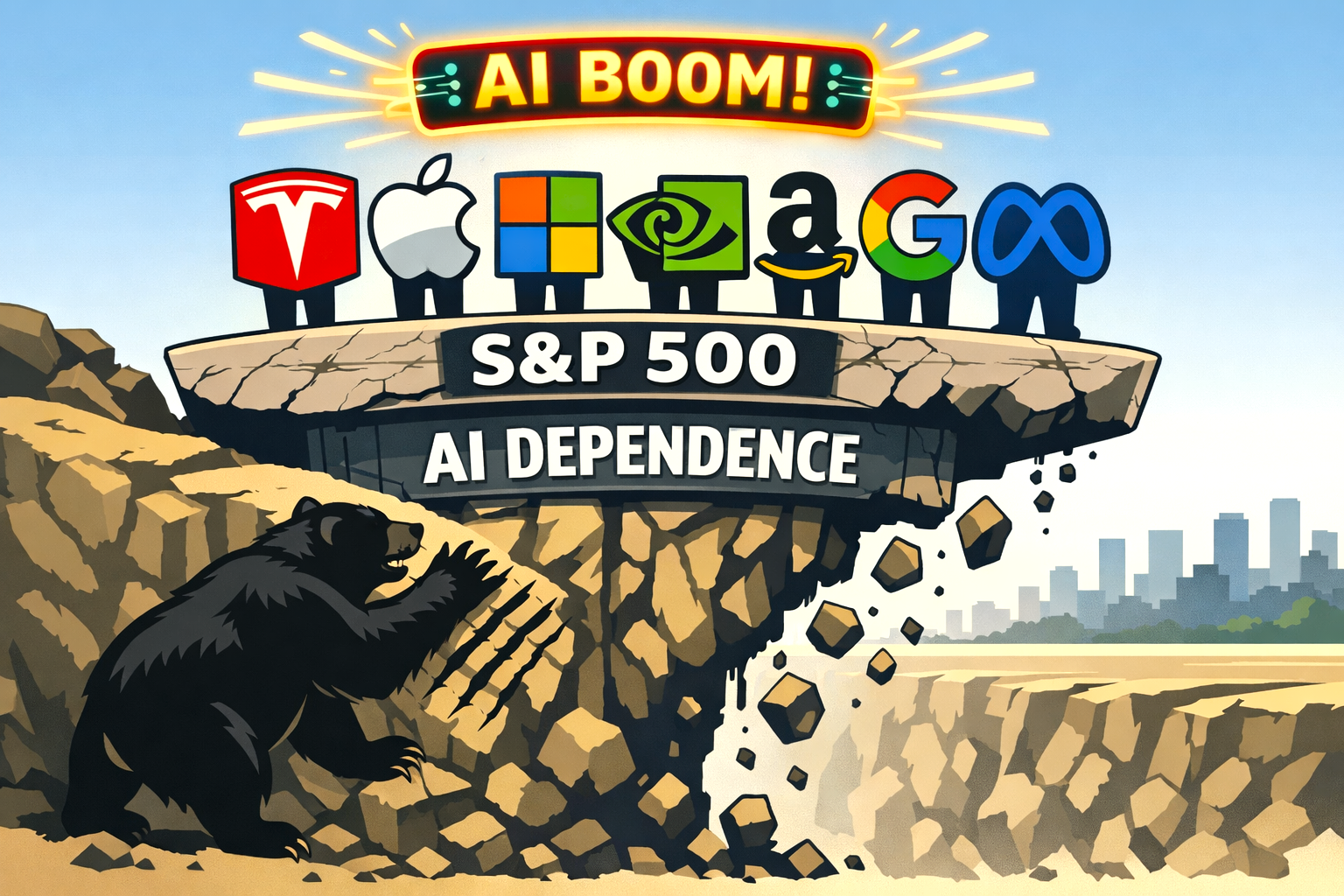
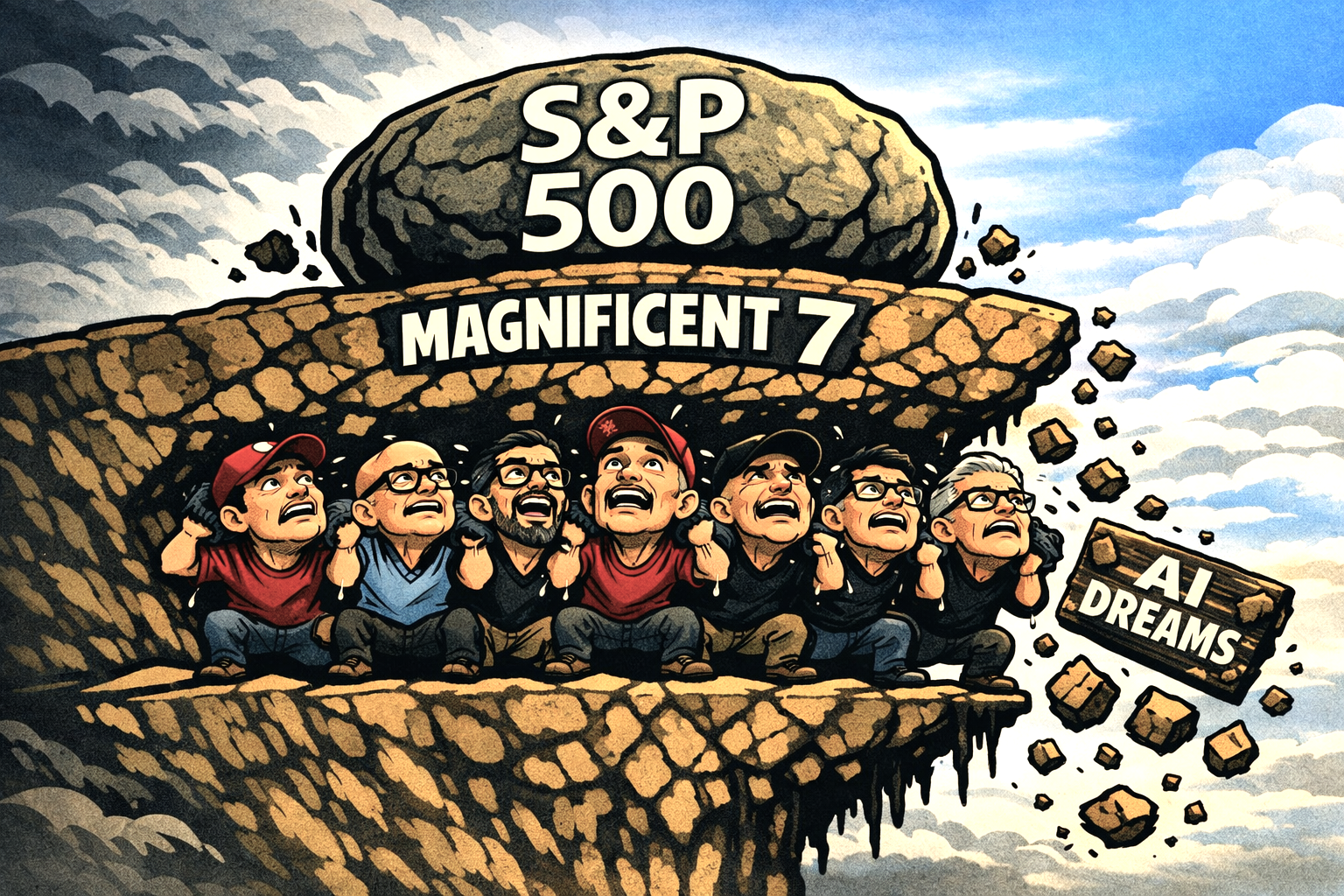
Mag 7 holding up the S&P 500 to the tune of almost 35% value of the entire S&P 500

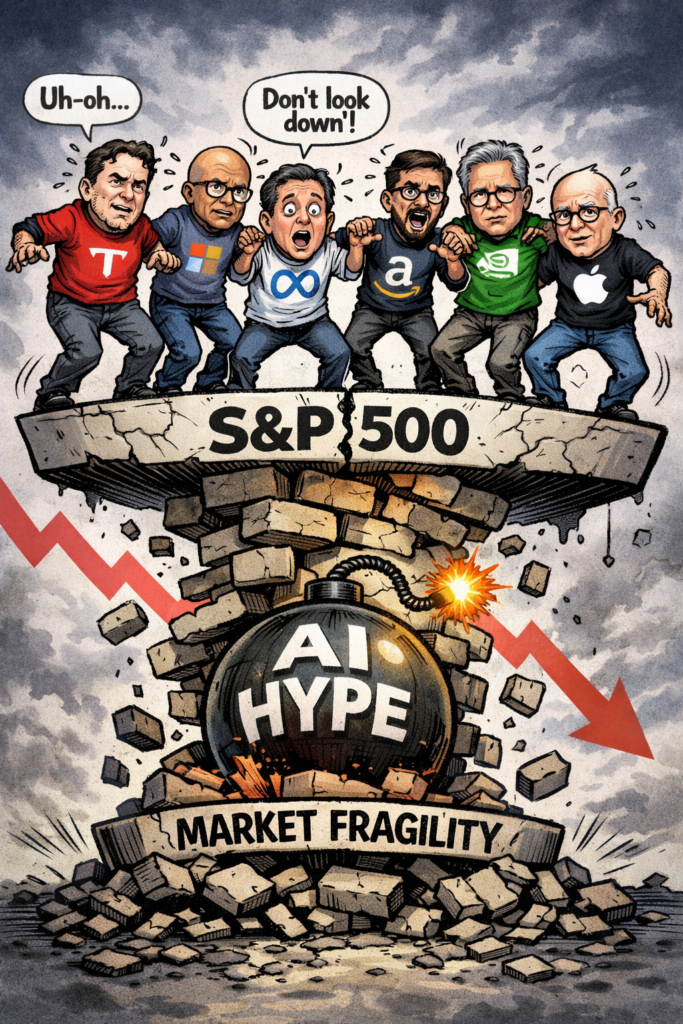
The S&P 500 has never been so dependent on so few companies. The Magnificent Seven — Microsoft, Apple, Nvidia, Alphabet, Amazon, Meta and Tesla — now account for roughly one‑third of the entire index’s value – that’s 33% of the whole S&P 500 vlauation.

Their dominance is not simply a reflection of current earnings power; it is a collective bet on an AI‑centred future that investors assume will transform productivity, reshape industries and justify valuations that stretch far beyond historical norms.

If one, several, or all of these companies fail to deliver the AI revolution that markets have priced in, the consequences for the S&P 500 would be immediate, structural and potentially severe.

Mild

The mildest scenario is a stumble by one or two members. If Apple’s device strategy falters, or Tesla’s autonomy narrative weakens further for instance, the index absorbs the shock.

A 3–5% pullback is plausible, driven by mechanical index weighting rather than systemic fear. Investors already expect uneven performance within the group, and the remaining leaders could offset the disappointment.

Major

The more destabilising scenario is a collective slowdown among the AI infrastructure leaders – Microsoft, Nvidia and Alphabet. These firms sit at the centre of the global capex cycle.

If cloud AI demand proves slower, less profitable or more niche than expected, the market would be forced to reassess the entire economic promise of generative AI.

In this case, the S&P 500 could see a 10–15% correction as valuations compress, volatility spikes and passive flows unwind years of momentum.

Dramatic

The most dramatic outcome is a broad failure of the AI ‘sector’ itself. If the promised productivity gains do not materialise, if enterprise adoption stalls, or if regulatory and cost pressures erode margins, the S&P 500 would face a structural reset.

With a third of the index priced for exponential growth, a collective disappointment could trigger a decline of 20% or more.

This would not resemble a cyclical recession; it would be a leadership collapse similar to the dot‑com unwind, but with far greater concentration and far more passive capital tied to the winners.

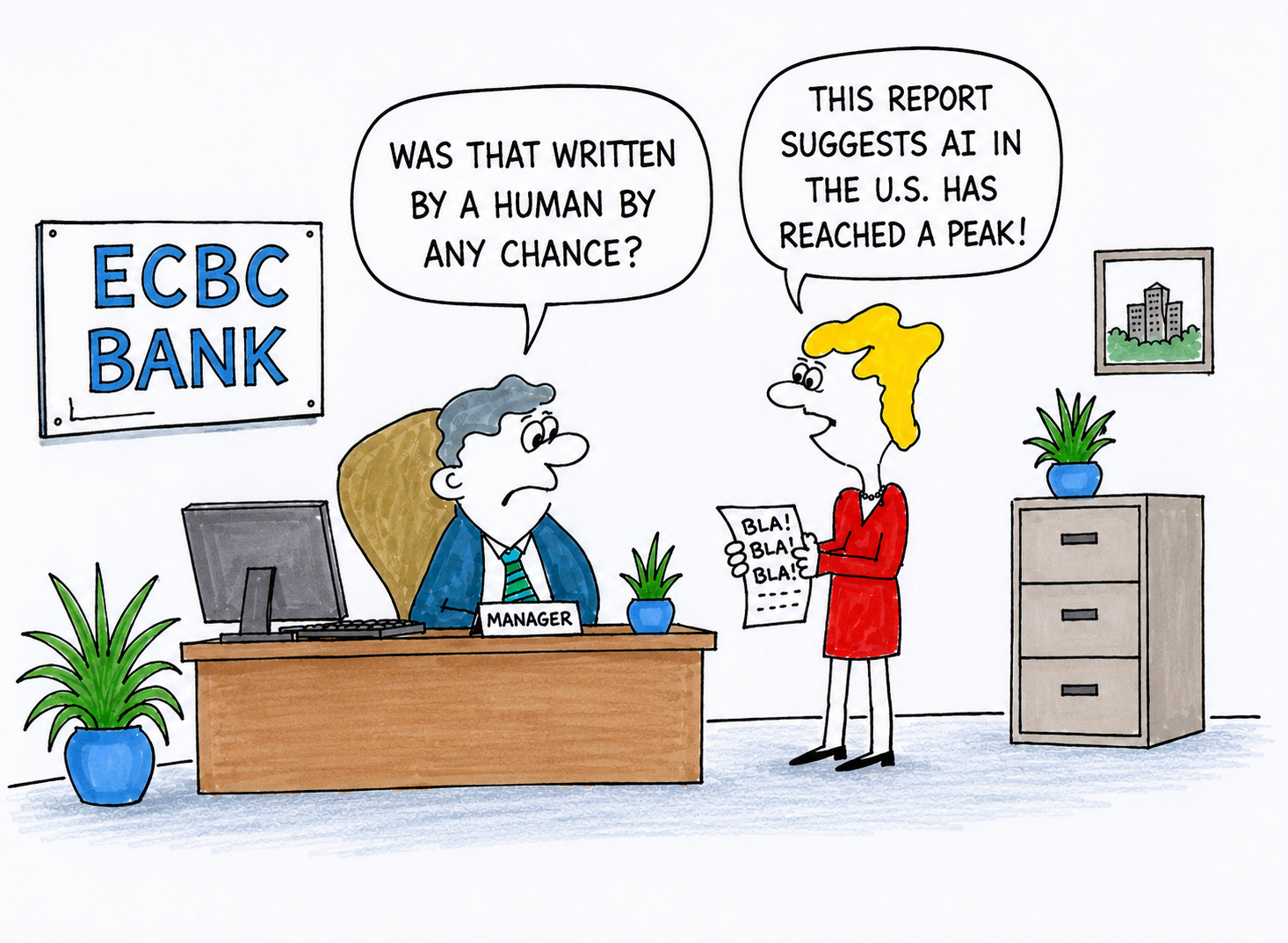
The uncomfortable truth is that the S&P 500’s trajectory is now inseparable from the Magnificent Seven. If they deliver, the index continues to defy gravity. If they falter, the market must rebuild a new narrative — and a new set of leaders — from the ground up.

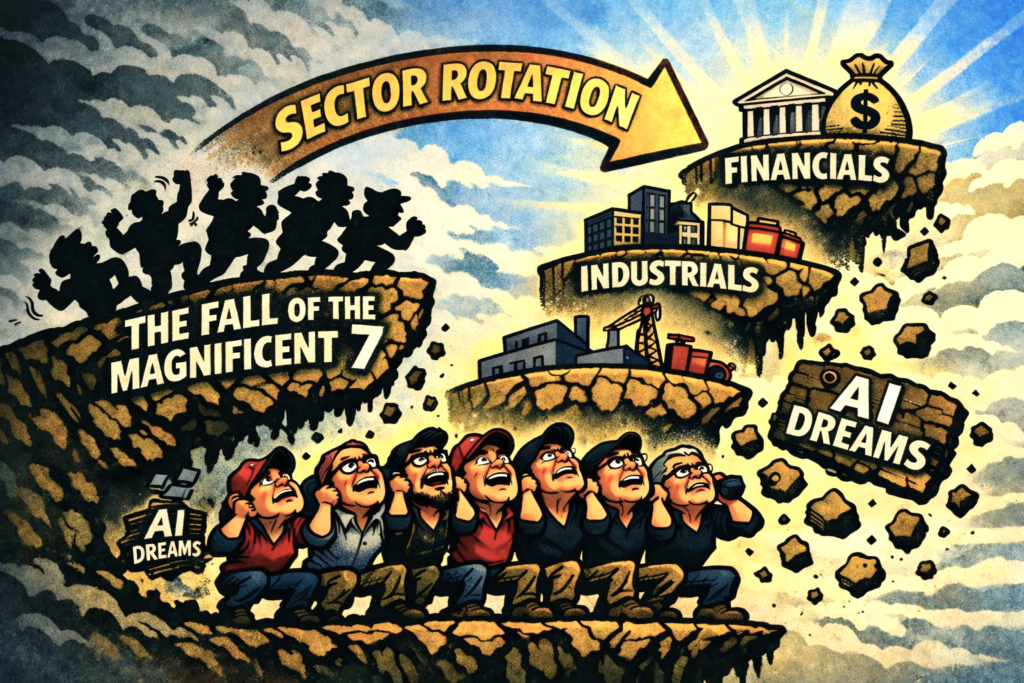
If the Magnificent Seven Lose Their Grip, Who Rises Next?

For years, the S&P 500 has been defined by the gravitational pull of the Magnificent Seven. Their dominance has shaped index performance, investor psychology and the entire narrative arc of global markets.

If these companies lose momentum — whether through slower AI adoption, regulatory pressure, margin compression or simple over‑expectation — leadership will not disappear.

It will rotate. And the beneficiaries are already hiding in plain sight.

Alternative investment to AI

The first and most obvious winners would be Energy and Utilities. As AI enthusiasm cools, investors tend to rediscover the appeal of tangible cash flow. Energy companies, with their dividends and pricing power, become natural refuges.

Utilities, often dismissed as dull, regain relevance as defensive anchors in a more volatile market. If AI‑driven data‑centre demand slows, the sector’s cost pressures ease, improving margins.

Next in line are Industrials and Infrastructure. A retreat from speculative tech would likely redirect capital towards physical productivity — logistics, construction, defence, electrification and manufacturing modernisation.

These sectors have been quietly compounding earnings while Silicon Valley has monopolised attention. If the market shifts from promise to proof, industrials become the new growth story.

Healthcare and Pharmaceuticals would also rise. Their earnings cycles are largely independent of AI hype, driven instead by demographics, innovation and regulatory frameworks. When tech stumbles, healthcare’s stability becomes a premium rather than an afterthought.

Biotech, in particular, benefits from capital rotation when investors seek uncorrelated growth.

Financials stand to gain as well. A correction in mega‑cap tech would rebalance passive flows, giving banks and insurers a larger share of index‑tracking capital. Higher rates and wider spreads already support the sector; a shift away from tech simply amplifies the effect.

Finally, Consumer Staples would reassert themselves. In a market recalibrating after an AI disappointment, investors gravitate towards predictable earnings. Food, beverages and household goods regain their defensive premium as volatility rises.

The broader truth is simple: if the Magnificent Seven falter, the S&P 500 does not collapse — it redistributes. Leadership moves from code to concrete, from speculative multiples to operational reality. The market has always found new champions. It will again.

OpenAI Missed Targets — and creates a mini–AI Shockwave – Will it become a Tsunami?

OpenAI wobble?

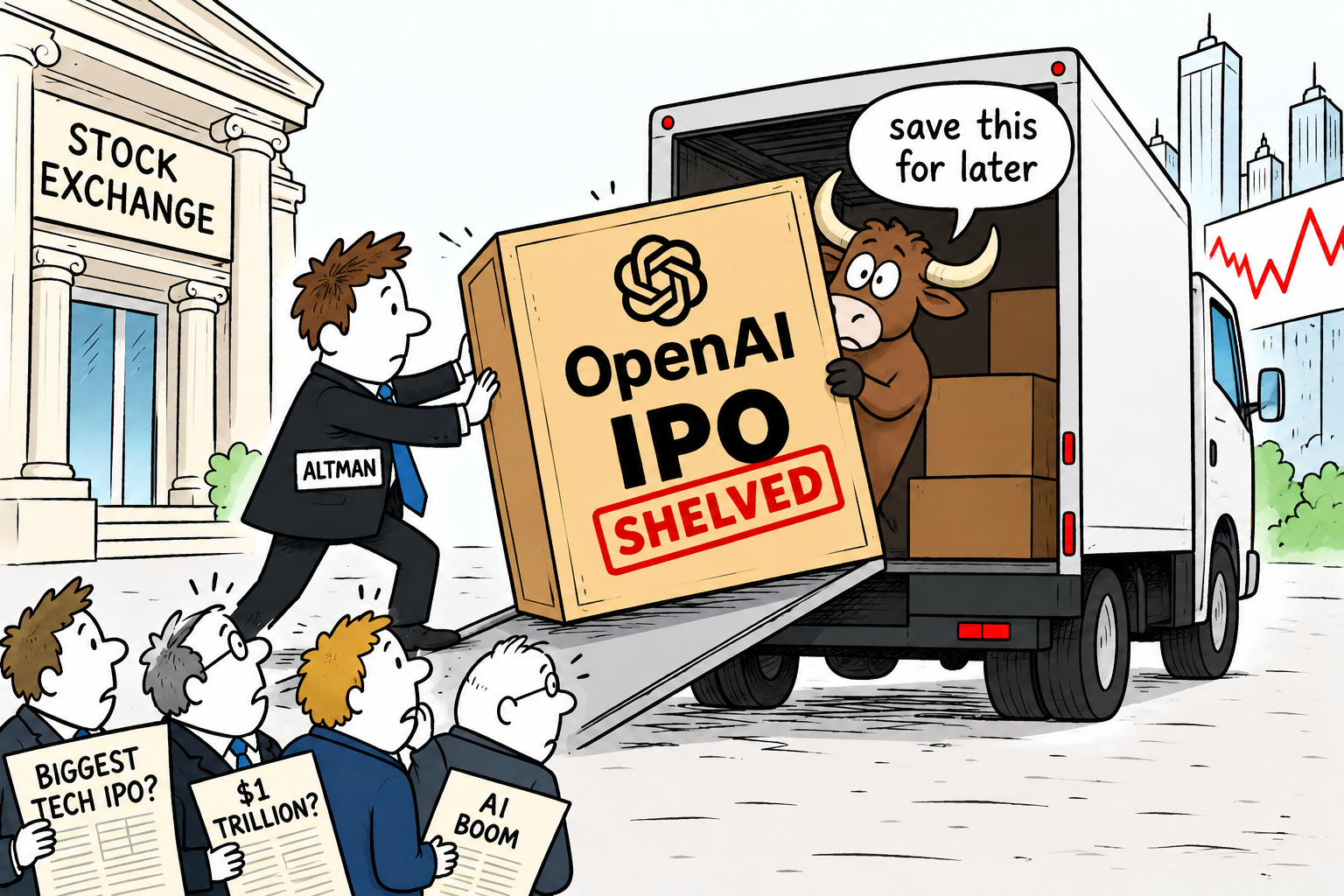
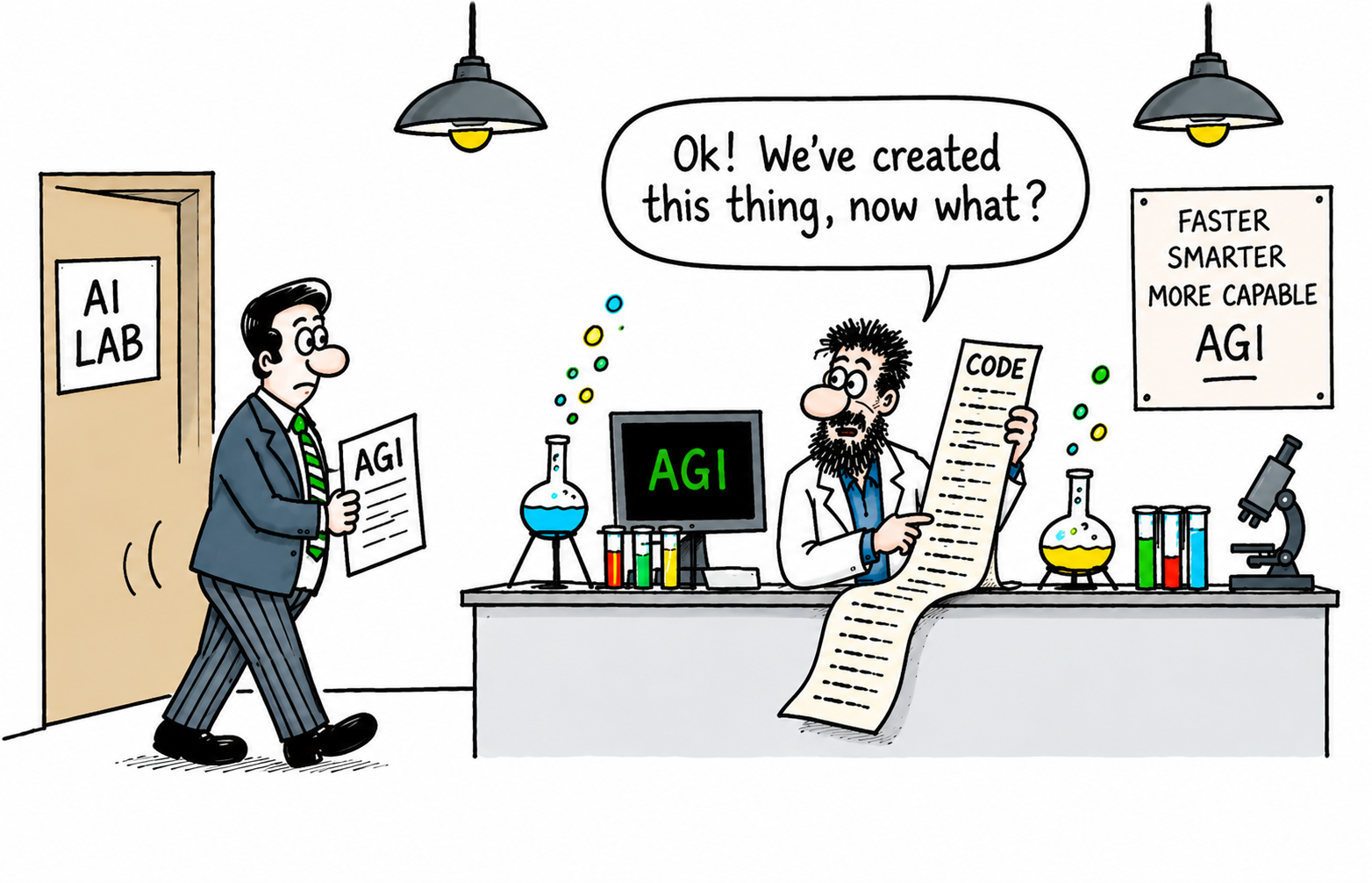
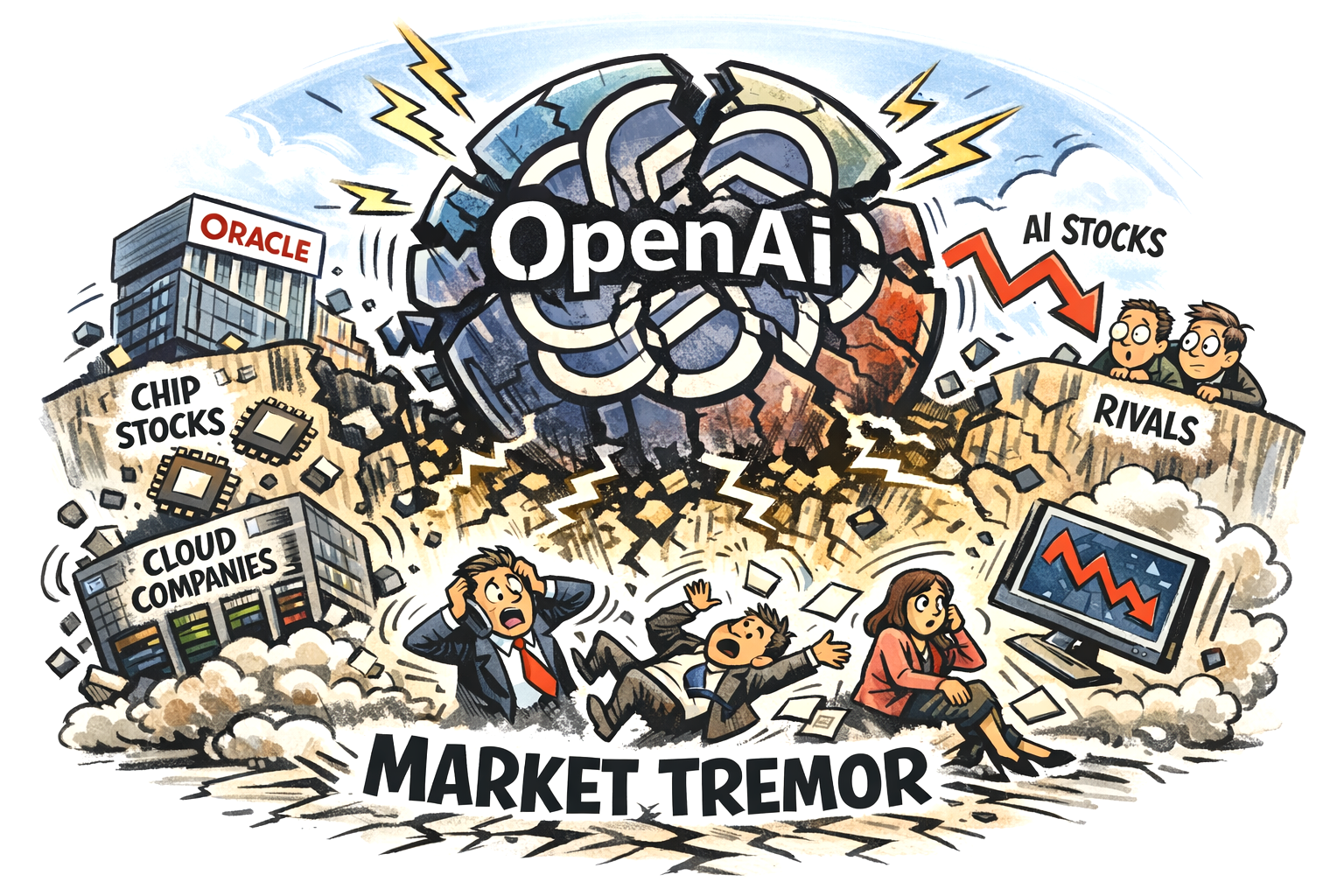
OpenAI’s reported failure to meet internal revenue and user‑growth targets has sent a sharp tremor through global tech markets, exposing just how dependent the wider AI sector has become on a single company’s momentum.

The Wall Street Journal report — which OpenAI has reportedly dismissed as “ridiculous” — suggested the firm is expanding more slowly than its own projections, raising questions about whether its vast compute‑spend commitments can be sustained. That alone was enough to trigger a sell‑off.

Slide

The steepest declines were concentrated among companies most financially tethered to OpenAI’s infrastructure demands. Oracle, which has a colossal $300 billion, five‑year cloud capacity agreement with the firm, fell more than 4%.

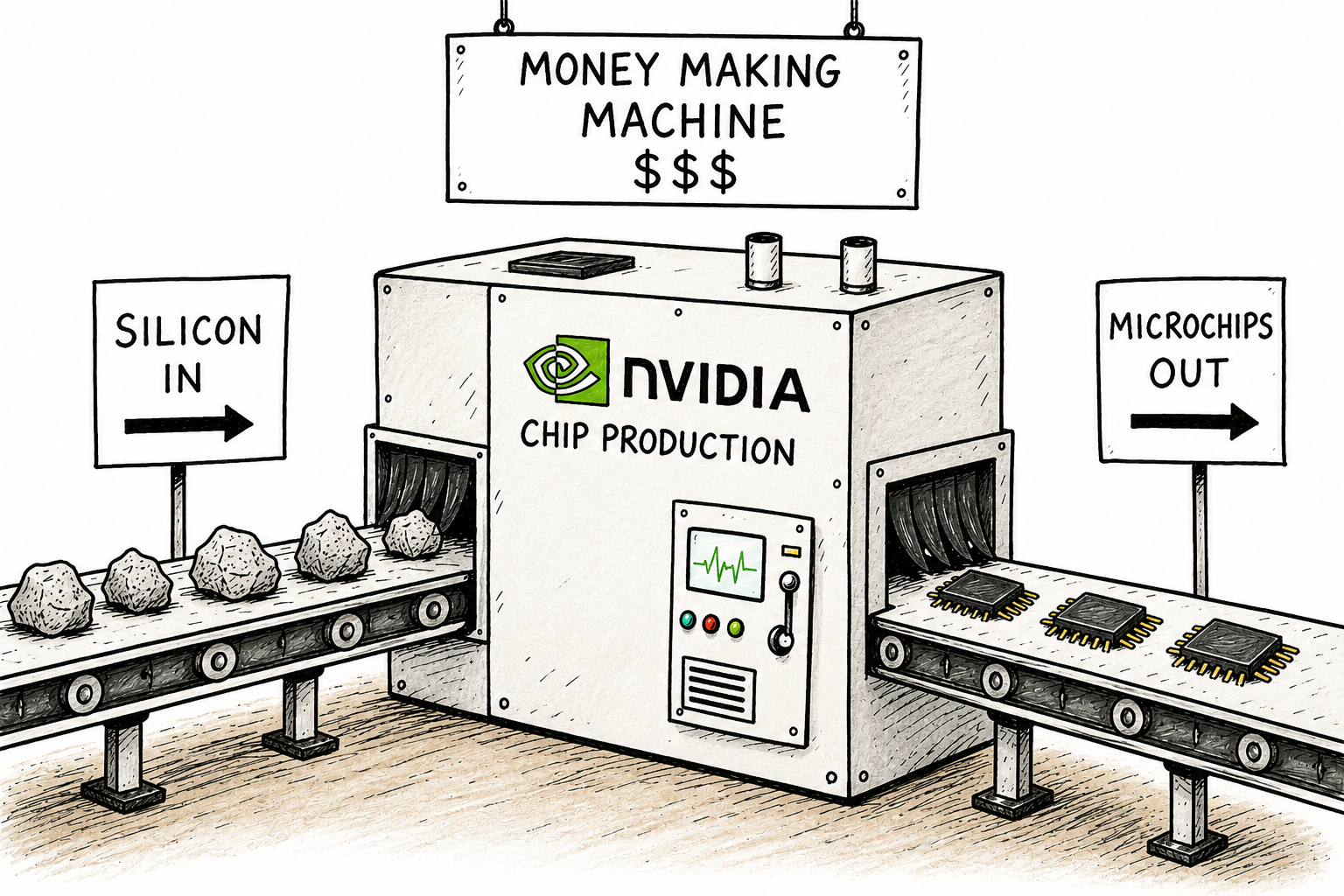
After the news story was released chipmakers followed OpenAI: Broadcom dropped over 4%, AMD slid more than 3%, Nvidia dipped around 1.5%, and CoreWeave — the highly leveraged neocloud provider — sank nearly 6%.

Even Qualcomm, which had recently enjoyed a lift from reports of collaboration with OpenAI on smartphone chips, slipped before recovering.

This is the first moment in the current AI cycle where a wobble at OpenAI has produced a synchronised pullback across the entire supply chain.

Investors are now confronting a question they have largely ignored: what if the sector’s flagship growth curve is not perfectly exponential? But my guess is, like all events at the moment, the market will likely overlook it.

Fragile

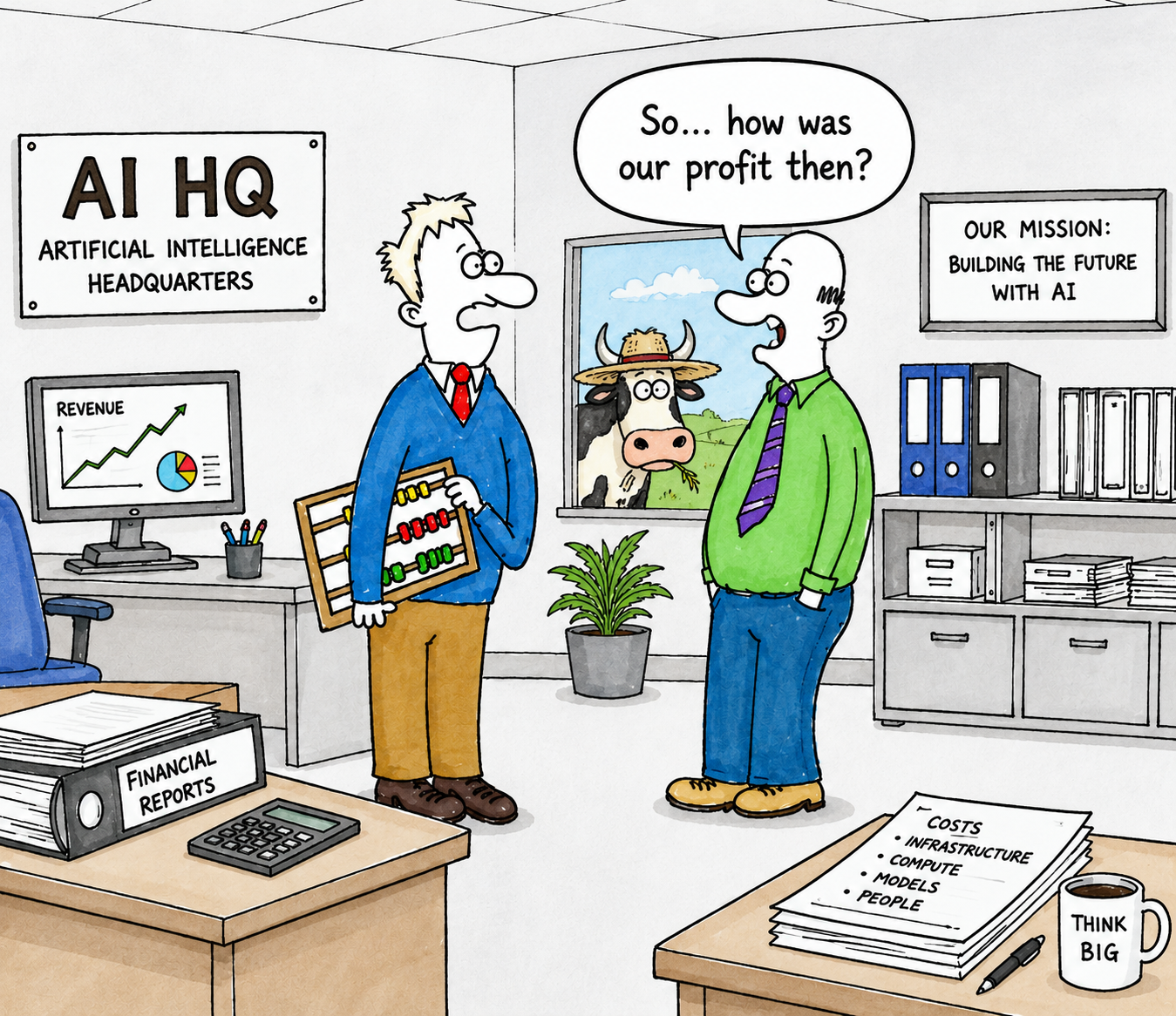
The reaction also exposes the fragility of AI‑linked valuations. Markets have priced the boom as if demand is both infinite and linear.

Any hint of deceleration — even one disputed by the company — forces a reassessment of the capital intensity underpinning the industry.

With Anthropic and Google’s Gemini gaining enterprise traction, OpenAI’s dominance is no longer assumed.

Still, several fund managers argue the broader AI investment cycle remains intact. The sell‑off looks less like a turning point and more like a reminder: when one company becomes the gravitational centre of an entire narrative, even a rumour can bend the orbit.

Big Tech’s Talent Exodus Fuels a New Wave of AI Startups

Big Tech AI Exodus

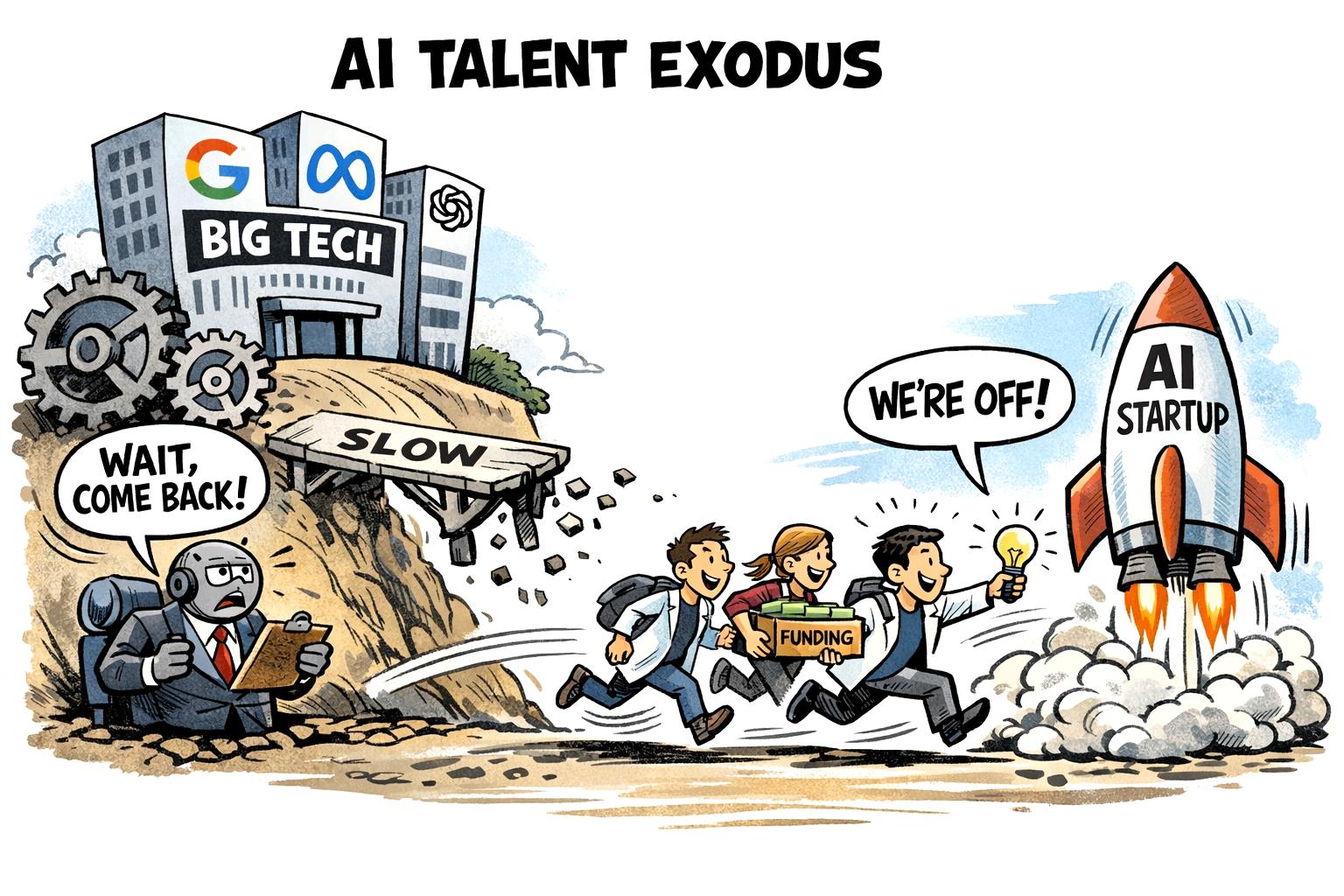
A quiet but decisive shift is under way in the global AI race: some of the most accomplished researchers at Meta, Google, OpenAI and other frontier labs are walking out of the biggest companies in the sector to build their own.

Trend

The trend has accelerated sharply over the past year, with new ventures raising extraordinary sums within months of being founded, as investors bet that smaller teams can move faster than the giants they left behind.

The motivations are remarkably consistent. Researchers say that the commercial pressure inside the largest AI labs has narrowed the scope of what they are allowed to explore.

Rush

With Big Tech locked into a high‑stakes contest to release ever‑larger models on tight schedules, entire areas of research — from new architectures to interpretability and agentic systems — are being deprioritised.

That creates an opening for smaller firms that can pursue ideas too experimental or too slow‑burn for corporate roadmaps.

Investors

Investors have responded with enthusiasm. Former Google DeepMind scientist David Silver secured a record $1.1 billion seed round for his new company, Ineffable Intelligence, while other ex‑DeepMind and ex‑Meta researchers are raising similar sums for ventures focused on reinforcement learning, continuous‑learning systems and autonomous labs.

In total, AI startups founded since early 2025 have already attracted nearly $19 billion in funding this year, putting them on track to surpass last year’s total.

Independence

Founders argue that independence gives them both speed and neutrality. Chip‑design startup Ricursive Intelligence, for example, says customers are more willing to trust a standalone company than a Big Tech competitor with its own hardware ambitions.

Many of these startups are also rebuilding their old teams, hiring colleagues from the very companies they left.

The result is a new competitive dynamic: Big Tech still dominates the AI landscape, but the frontier of innovation is increasingly being pushed by smaller, highly focused labs that believe they can out‑pace the giants – and with lower investment too.

DeepSeek releases preview of Open Source V4 AI Model

DeepSeek V4 AI

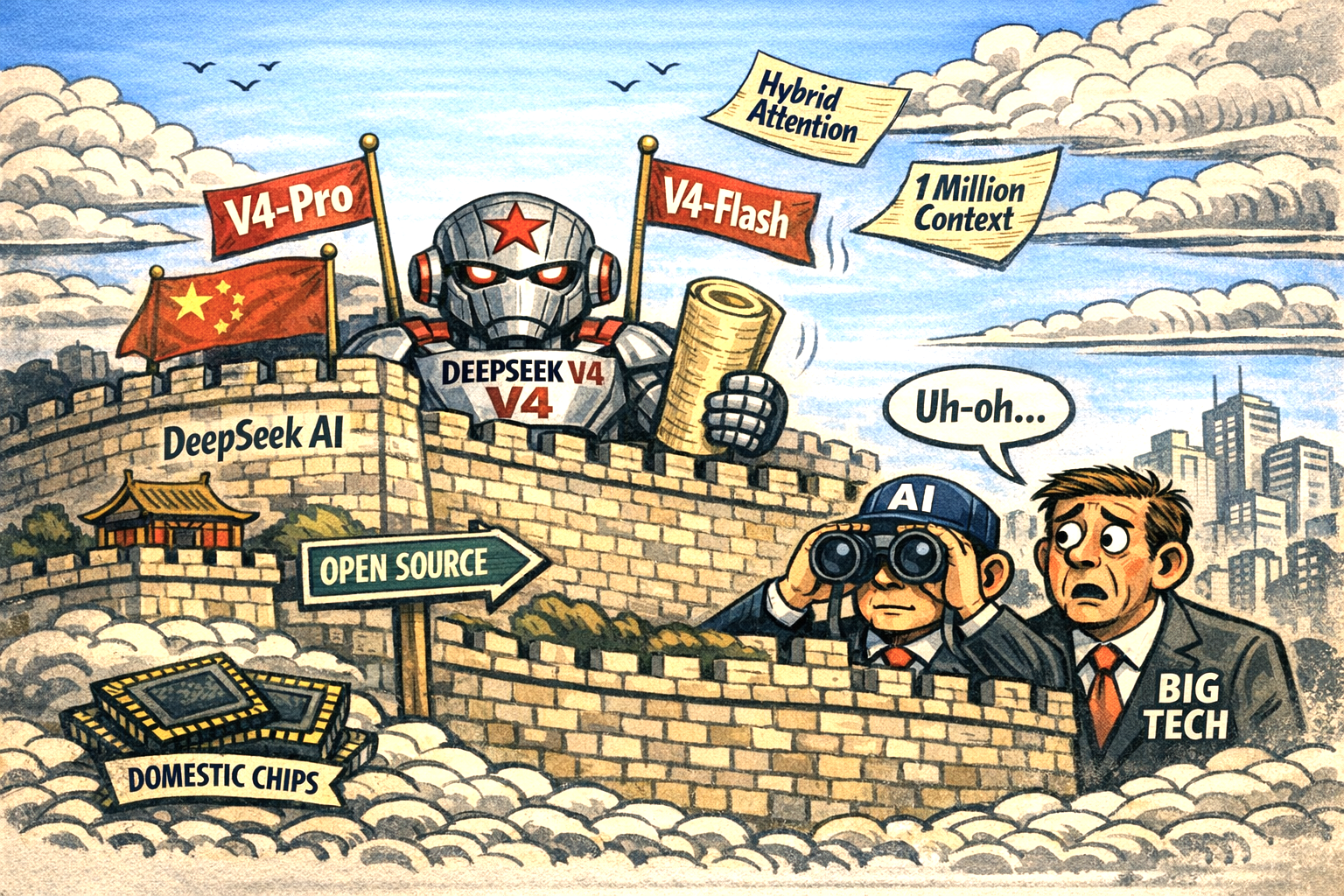
DeepSeek’s newly released V4 model marks a significant step forward in open‑source AI, combining long‑context capability with major architectural upgrades.

DeepSeek V4 arrives as a preview release, offering two variants — V4‑Pro and V4‑Flash — both designed to push the boundaries of efficiency and reasoning performance.

The headline feature is the one‑million‑token context window, enabling the model to process and retain far larger bodies of information than previous generations.

Positioning

This positions V4 as a strong contender in tasks requiring extended reasoning, research support, and complex agentic workflows.

The V4 series introduces a refined Hybrid Attention Architecture, combining compressed sparse and heavily compressed attention mechanisms to dramatically reduce computational overhead.

DeepSeek claims this approach cuts inference FLOPs and KV‑cache requirements to a fraction of those seen in earlier models, making long‑context operation more practical and cost‑effective.

V4‑Pro, the flagship model, includes a maximum reasoning‑effort mode, which the company says significantly advances open‑source reasoning performance and narrows the gap with leading closed‑source systems.

Meanwhile, V4‑Flash offers a more economical, faster alternative while retaining strong capability across everyday tasks.

Accelerating AI ambition

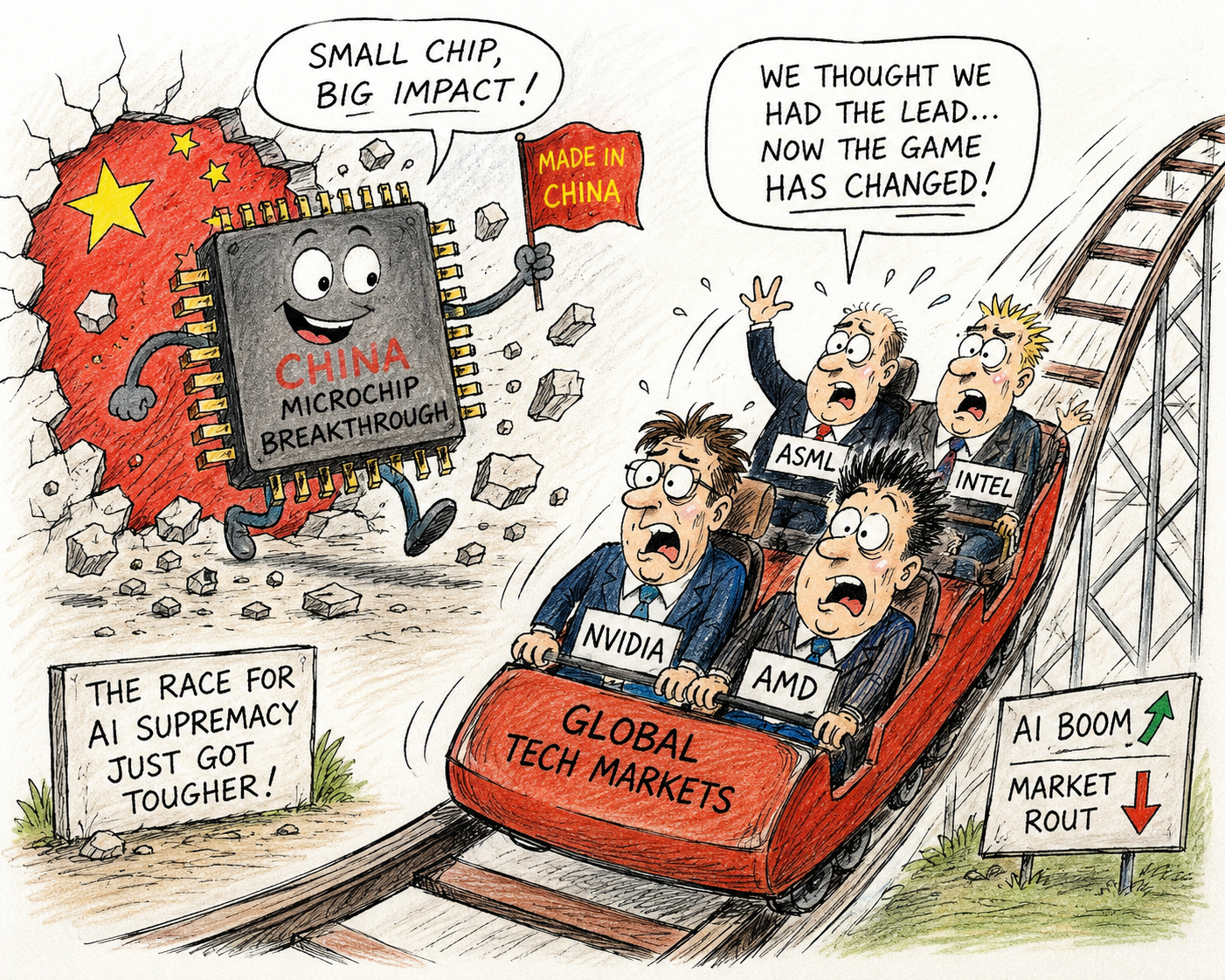
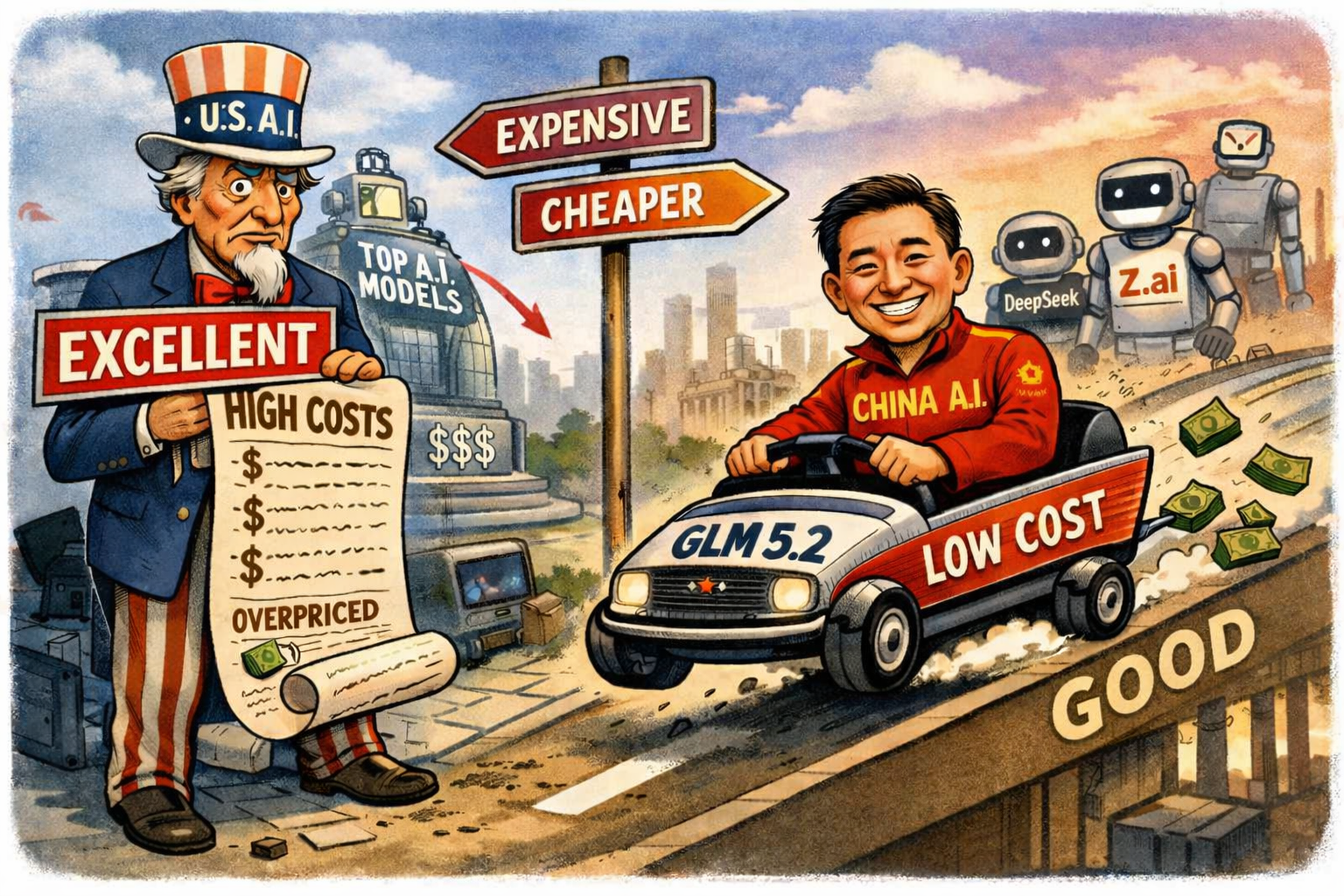
The release underscores China’s accelerating AI ambitions. DeepSeek’s earlier R1 model shook global markets with its low‑cost, high‑performance profile, and V4 continues that trajectory — now optimised for domestic chips and supported by growing local hardware ecosystems.

With open‑source availability and aggressive efficiency gains, DeepSeek V4 strengthens the company’s position as one of the most closely watched challengers in the global AI race.

And it’s far cheaper than its peers and not so power hungry either.