
Nvidia–Unitree: A BIG Strategic Investment on Physical AI

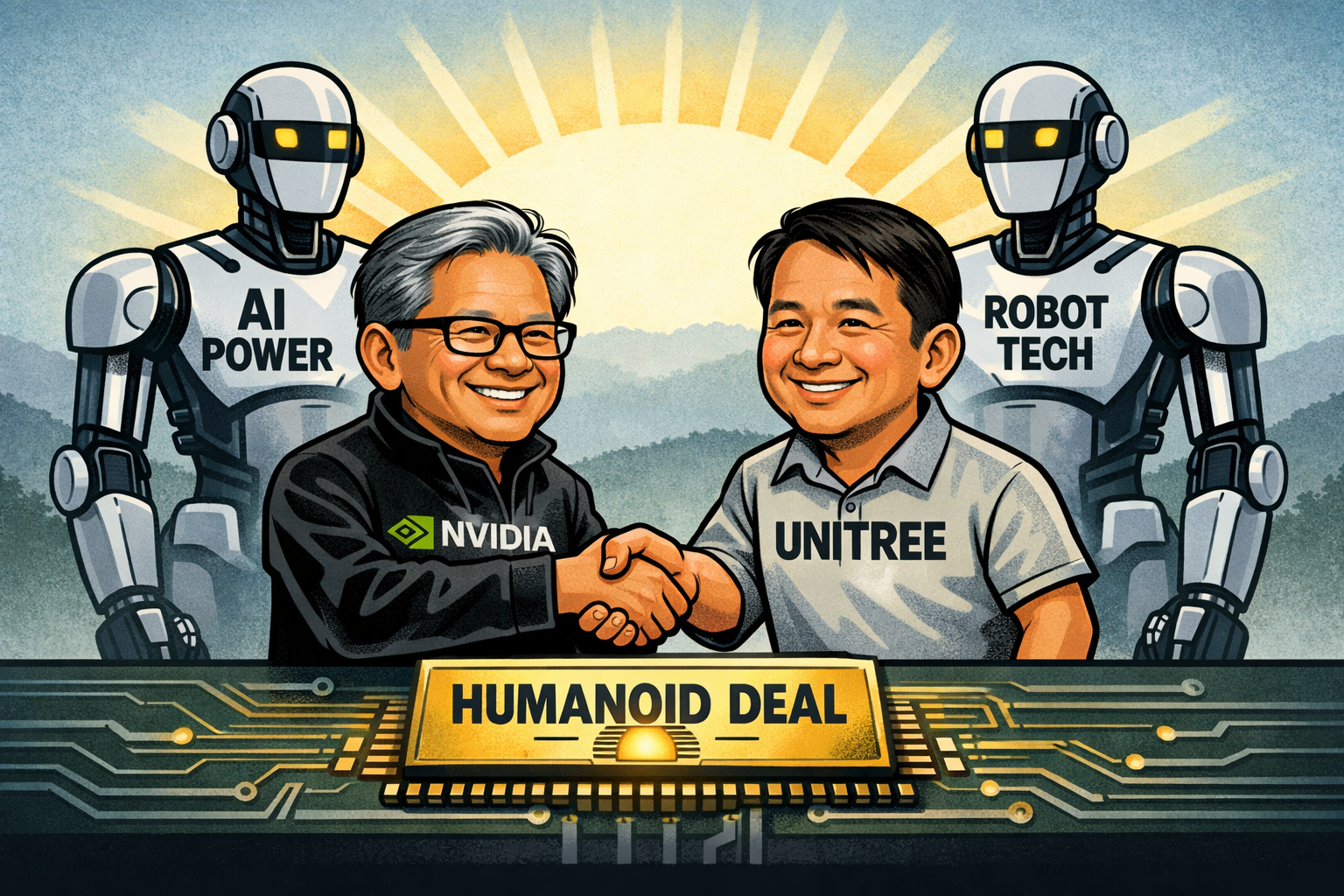
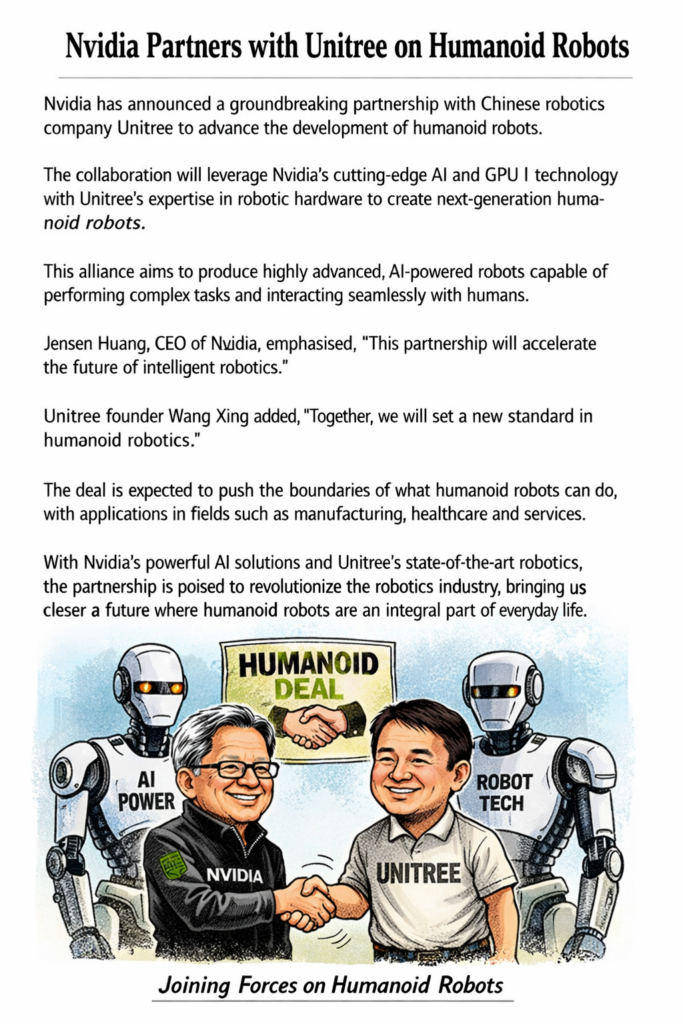
Nvidia has taken another decisive step into the world of “physical AI” by selecting China’s Unitree as its partner for a new humanoid robotics platform aimed squarely at global research institutions.

The collaboration pairs Nvidia’s Jetson Thor hardware — built around the company’s advanced Blackwell GPU — with Unitree’s nearly six‑foot H2 humanoid frame, creating a turnkey system designed to accelerate robotics development in universities and specialist labs.

Isaac Groot

The package integrates Nvidia’s Isaac GR00T humanoid‑focused AI models, simulation tools, and data‑generation stack, effectively offering researchers a complete environment for training, testing, and deploying humanoid behaviours.

Nvidia argues that building such a system independently is “insanely hard”, and that lowering the barrier to entry will broaden the field beyond the world’s largest tech companies.

Unitree timing

For Unitree, the timing is significant. The Hangzhou‑based robotics firm is preparing for a 4.2 billion yuan IPO on Shanghai’s STAR Market, with more than 40% of its revenue already coming from outside China.

The Nvidia partnership gives Unitree a high‑profile global showcase just as it seeks to convince investors of its international potential.

The upgraded H2 Plus model — available later this year — will be open for purchase by any lab, not just elite institutions. Early adopters include Stanford, ETH Zurich, UC San Diego and Seattle’s AI2, underlining Nvidia’s ambition to make humanoid research mainstream.

Multi-trillion-dollar industry in the making

Nvidia reportedly argues that building such a system independently is “insanely hard”, and that lowering the barrier to entry will broaden the field beyond the world’s largest tech companies.

Humanoid robots remain a nascent market, with deployments still limited and safety concerns unresolved. But Nvidia’s move signals a belief that physical AI will become a multi‑trillion‑dollar industry.

By fusing its AI stack with Unitree’s maturing hardware, Nvidia is positioning itself not just as the supplier of chips for the robotics boom, but as the architect of the ecosystem that powers it.

Humanoid Robots on the Front Line in Ukraine Signal a New Frontier in Warfare

The testing of humanoid robots in Ukraine marks a striking moment in the evolution of modern warfare, blending Silicon Valley ambition with the brutal pragmatism of a live conflict.

Foundation Future Industries

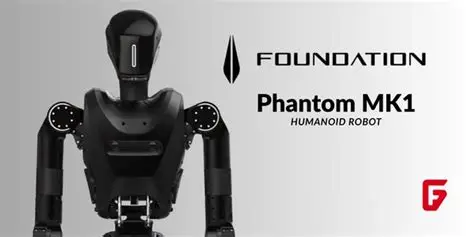
Foundation Future Industries, a San Francisco start-up founded in 2024, has positioned itself at the centre of this shift by deploying its Phantom MK‑1 robots for pilot demonstrations on the Ukrainian front lines.

The company’s pitch is simple but provocative: humanoid robots should be used not for household chores, but for the world’s most dangerous jobs. Ukraine, now in its fifth year of war, has become the proving ground.

The MK‑1 units tested so far are limited — they carry modest payloads, lack waterproofing, and cannot yet operate at scale. But their early tasks, such as retrieving supplies from hazardous areas, hint at the potential of autonomous systems shaped for human environments.

Urban combat, with its stairwells, basements and narrow corridors, is inherently built around the human form. Analysts note that this gives humanoid robots theoretical advantages over tracked or quadruped machines in certain scenarios.

Yet the technology’s military promise is entangled with political controversy. The company recently appointed Eric Trump as chief strategy adviser, prompting accusations of impropriety given its $24 million in U.S. government research contracts.

Two humanoid robots were reportedly sent to Ukraine in February 2026.

Foundation insists the partnership reflects a shared vision of rebuilding American manufacturing, but the optics are unavoidable.

Multiple sources describe this as the first recorded deployment of humanoid robots to an active warzone — not just Ukraine, but any modern conflict.

The robot race

The broader context is a deepening geopolitical race. Foundation openly frames its mission as part of a contest with China, whose own robotics sector has showcased early military prototypes.

The U.S. military, meanwhile, has not yet deployed humanoid systems, though it is increasingly integrating AI into battlefield decision-making.

Experts caution that cost, complexity and manufacturability may ultimately limit humanoids’ role. But the symbolism is unmistakable.

Whether or not these machines succeed, Ukraine has become the first real-world laboratory for autonomous, human-shaped robots — a glimpse of how future conflicts may be fought.

U.S. AI vs China AI – the difference

China and U.S. AI

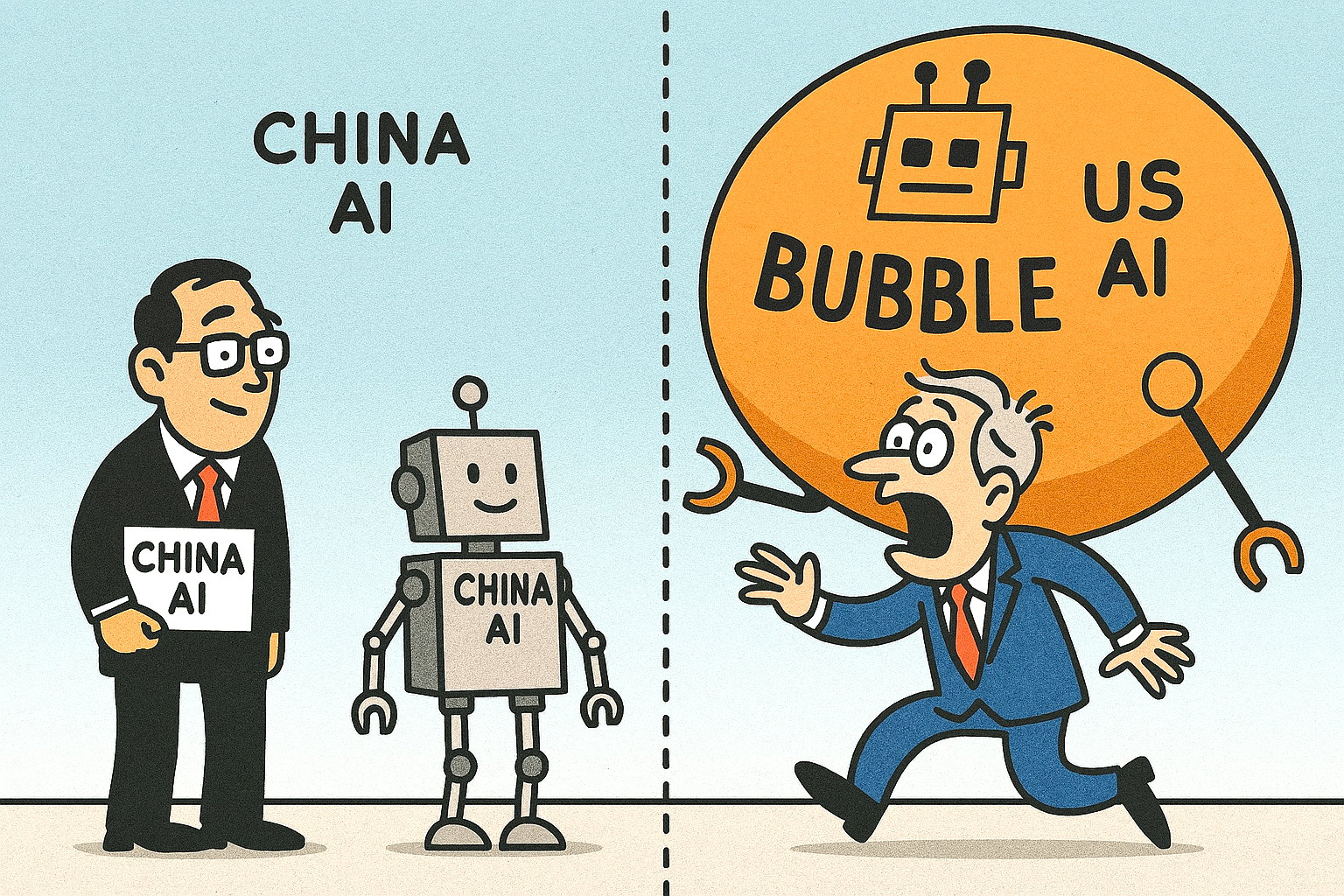
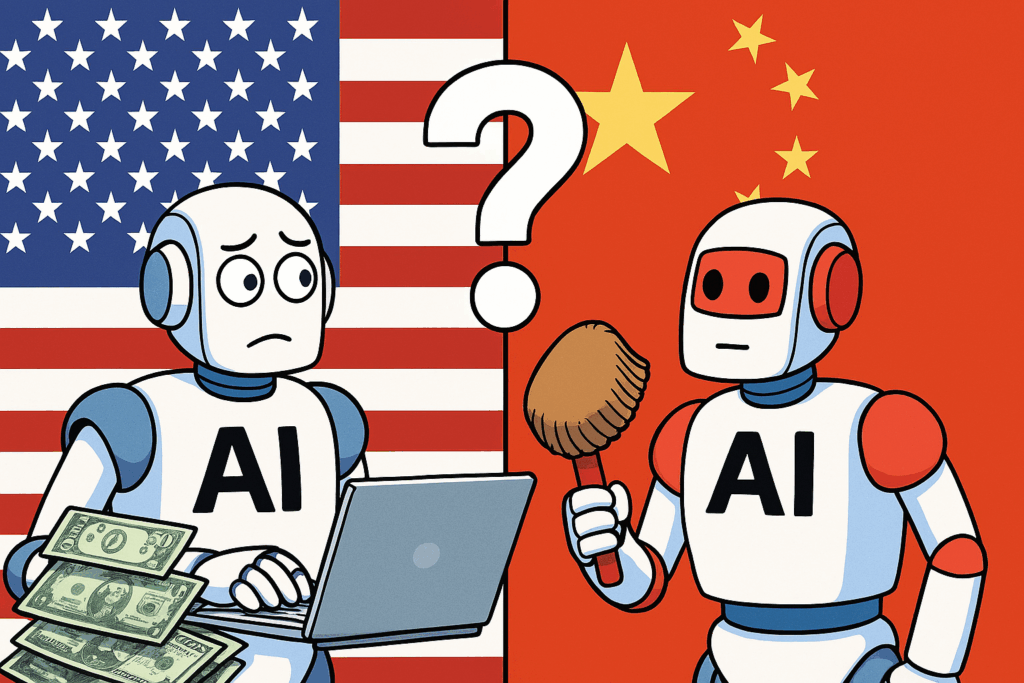
China’s AI industry has indeed cultivated a reputation for ‘doing more with less’, while the U.S. has poured vast sums into AI development, raising concerns about overinvestment and inflated valuations.

The contrast lies not only in the scale of funding but also in the efficiency and strategic focus of each country’s approach.

The U.S. Approach: Scale and Spending

The United States remains the global leader in AI infrastructure, driven by massive private investment and access to advanced computing resources.

Venture capital deals in U.S. AI and robotics startups have more than quadrupled since 2023, surpassing $160 billion in 2025.

This surge has produced headline-grabbing valuations, such as humanoid robotics firms raising billions in single rounds. Yet analysts warn of bubble risks, with valuations often detached from sustainable revenue models.

The U.S. strategy prioritises scale: building the largest models, securing the most powerful GPUs, and attracting top-tier talent.

This has led to breakthroughs in generative AI and large language models, but at extraordinary cost.

Estimates suggest that OpenAI alone has spent over $100 billion on development. Critics argue this reflects a ‘more is better’ philosophy, where innovation is equated with sheer financial muscle.

China’s Approach: Efficiency and Restraint

China, by contrast, has invested heavily but with a different emphasis. In 2025, Chinese AI investment is reportedly projected at $98 billion, far below U.S. levels.

Yet Chinese firms have achieved notable progress by focusing on cost-efficient innovation. For example, AI2 Robotics developed a model requiring less than 10% of the parameters used by Alphabet’s RT-2, demonstrating a commitment to leaner, more resource-conscious design.

Foreign investors are increasingly drawn to China’s cheaper valuations, which are roughly one-quarter of U.S. equivalents.

This efficiency stems from lower research costs, government-led initiatives, and a culture of frugality shaped by regulatory pressures and limited access to advanced hardware.

Rather than chasing scale, Chinese firms often prioritise practical applications and affordability, enabling broader adoption across industries.

Doing More with Less?

The evidence suggests that China has achieved competitive outcomes with far fewer resources, while the U.S. has arguably overpaid in pursuit of dominance.

However, the U.S. still leads in infrastructure, talent, and global influence. China’s strength lies in its ability to innovate under constraints, turning scarcity into efficiency.

Ultimately, the question is not whether one side has ‘overinvested’ or ‘underinvested’, but whether their strategies align with long-term sustainability.

The U.S. risks a bubble fuelled by excess capital, while China’s leaner approach may prove more resilient. In this sense, China is indeed ‘doing more with less’—but whether that will be enough to surpass U.S. dominance remains uncertain.

Bubble vulnerability

The sheer scale of U.S. AI investment has left the industry vulnerable to bubble shock, as valuations and spending appear increasingly detached from sustainable returns.

Analysts warn that the U.S. equity market is showing signs of an AI-driven bubble, with trillions poured into data centres, chips, and generative models at unprecedented speed.

While this has fuelled rapid innovation, it has also created irrational exuberance reminiscent of the dot-com era, where hype outpaces monetisation.

If growth expectations falter or capital tightens, the U.S. could face sharp corrections across tech stocks, credit markets, and employment, exposing the fragility of an industry built on extraordinary but potentially unsustainable levels of investment.

China’s humanoid robots are coming for Elon Musk’s Tesla $1 trillion dollar payday

China humanoid robot challenge

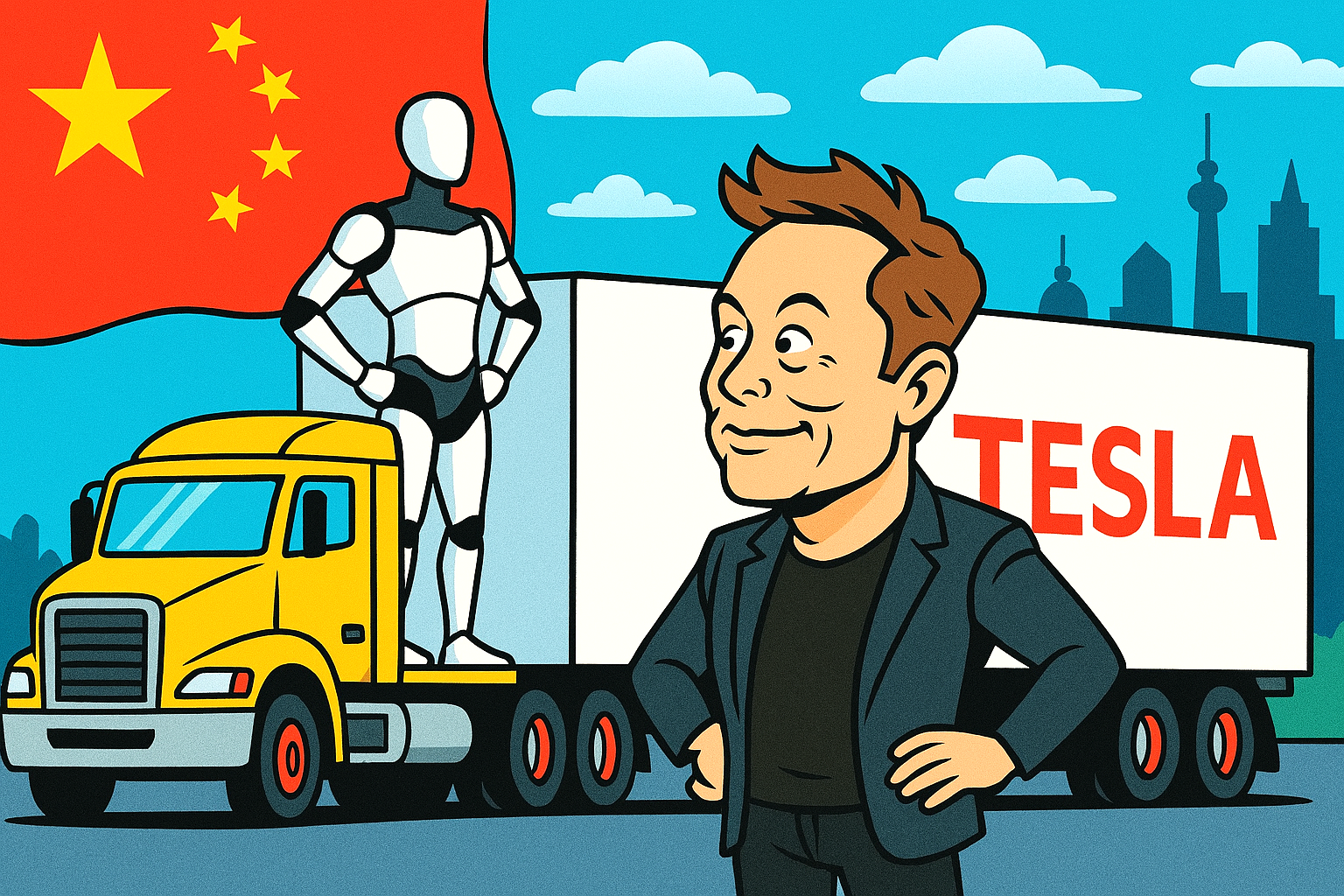
Elon Musk’s $1 trillion Tesla payday is tightly bound to the rise of humanoid robots—and China’s role in their production may determine whether his vision succeeds.

Elon Musk’s record-breaking compensation package, worth up to $1 trillion, hinges on Tesla’s transformation from an electric vehicle pioneer into a robotics powerhouse.

At the centre of this ambition is Optimus, Tesla’s humanoid robot, designed to walk, learn, and mimic human actions. Musk envisions deploying one million robots within the next decade, a scale that would redefine both Tesla’s business model and the global labour market.

Yet the road to mass production likely runs directly through China. While Tesla engineers designed prototype Optimus in the United States, China dominates the industrial infrastructure and critical components needed for large-scale deployment.

Robot installations in China

In 2023 alone, China reportedly installed over 290,000 industrial robots, more than the rest of the world combined, and reached a robot density of 470 per 10,000 workers, surpassing Japan and Germany.

This aggressive expansion is reportedly backed by state subsidies, low-cost financing, and mandates requiring provincial governments to integrate automation into their restructuring plans.

For Musk, this creates both opportunity and risk. On one hand, China’s manufacturing ecosystem offers the scale and efficiency necessary to bring Optimus to market at competitive costs.

On the other, Beijing’s strict regulations on humanoid robots introduce uncertainty, with geopolitical permission becoming the most unpredictable factor in Tesla’s robot revolution.

If Musk can navigate these challenges, Optimus could anchor Tesla’s evolution into a robotics giant, securing the milestones required for his trillion-dollar payday, and beyond.

But if Chinese competitors or regulatory hurdles slow progress, Tesla risks losing ground in the very sector Musk believes will make work ‘optional’ and money ‘irrelevant’.

In short, the robots coming from China are not just machines—they are very much the ‘key code’ to Musk’s trillion-dollar future.

Never underestimate Elon Musk.