Albert Einstein 1879 – 1955
Albert Einstein (1879 – 1955) was a German-born theoretical physicist who is widely held to be one of the greatest and most influential scientists of all time.
Best known for developing the theory of relativity.

From Calm to Chaos and Back Again. A Lighthearted Look at Daily Financial News and Events Moving Global Markets
Albert Einstein 1879 – 1955
Albert Einstein (1879 – 1955) was a German-born theoretical physicist who is widely held to be one of the greatest and most influential scientists of all time.
Best known for developing the theory of relativity.
The market reaction to the U.S. jobs report comes down to a simple observation: bad news is good news, as long as it is not too bad.
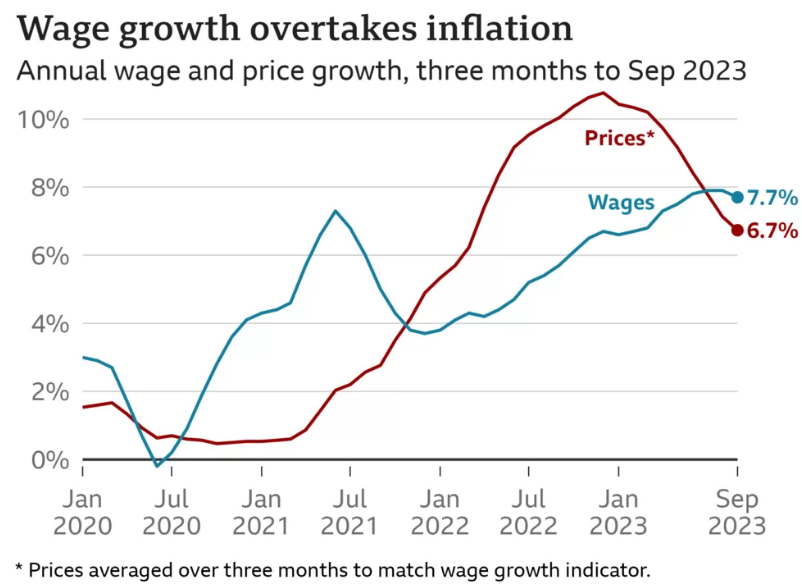
Stocks rallied sharply after the Labour Department said nonfarm payrolls rose by 150,000 in October 2023, 20,000 fewer than expected but a difference caused mostly by the auto strikes, which appear to be over – a case of bad news is good news.
For the Federal Reserve, the relatively constrained job creation coupled with wage gains nearly in line with expectations adds up to a scenario in which the central bank doesn’t really have to do anything.
The Fed finally got what it’s been looking for – a meaningful slowdown in the labour market.
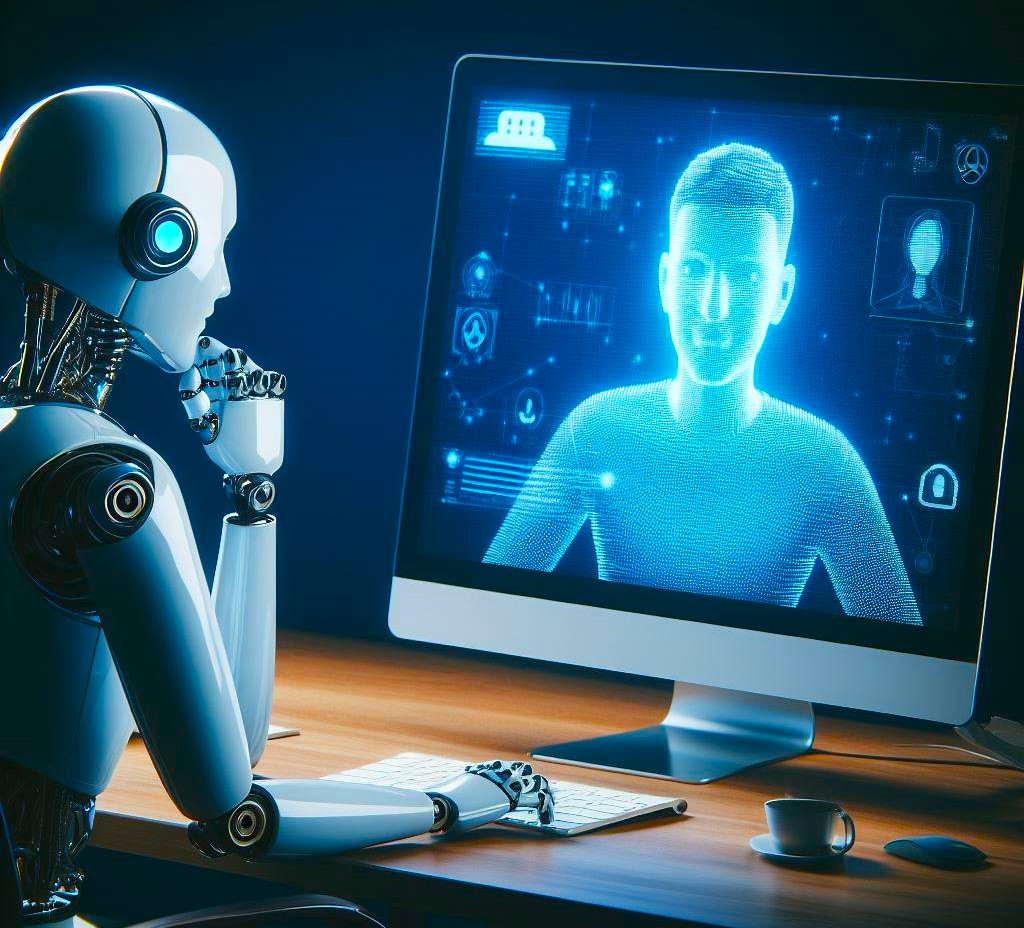
He has recently shared his views on how AI will eventually create a situation where no job is needed, and how humans will have to find meaning in life.
Elon Musk recently reportedly said that AI will have the potential to become the ‘most disruptive force in history’ and that it will be smarter than the smartest human.
He compared AI to a ‘magic genie’ that would grant unlimited wishes to its owners. He also said that AI will be able to do everything, and that people will not need to work for money, but only for personal satisfaction.

This is a very optimistic and futuristic vision of AI, but it also raises some important questions and challenges.
These are some of the issues that were discussed at the AI Safety Summit 2023 at Bletchley Park in England, where world leaders agreed to a global communique on AI that recognized the potential risks associated with AI.
The summit was attended by, Prime Minister Rishi Sunak, U.S. Vice President Kamala Harris and other tech and business executives, including Elon Musk himself.
AI is a powerful technology that can bring many benefits and opportunities to humanity, but it also requires careful and responsible development and regulation. It can bring ‘disaster’ too if not managed constructively.
It is hoped humans and AI can coexist peacefully and harmoniously in the future.
My biggest fear is this will not be the case.
Grok is a neologism (a newly coined word or expression), referenced by Robert A. Heinlein for his 1961 science fiction novel Stranger in a Strange Land. It means to understand something so deeply that you become one with it.
Grok is a term used in computer programming to mean to ‘profoundly understand something‘, such as a system, a language, or an algorithm.
Elon Musk debuts ‘Grok’ AI bot to rival ChatGPT and others. But, ‘Grok’ isn’t quite ready yet for the general public – it still has some learning to do. xAI, Elon Musk’s new AI venture, launched its first AI chatbot technology named ‘Grok’.
The prototype is in its infancy and early stages of training and is only available to a select group of users before a wider release.

Musk is positioning xAI to compete with OpenAI, Inflection, Anthropic and others.
Grok, the company said, is modelled on ‘The Hitchhiker’s Guide to the Galaxy’. It is supposed to have ‘a bit of wit, a rebellious streak’ and it should answer the ‘spicy questions’ that other AI might dodge, according to a statement from xAI.

The company’s published mandate is to build artificial intelligence ‘to advance our collective understanding of the universe’. Musk has previously said that he believes today’s AI makers are bending too far toward ‘politically correct’ systems.
xAI’s mission, it reportedly said, ‘is to create AI for people of all backgrounds and political views’.
Self-driving car technology, an AI Chatbot built around humour with access to current public data through X, a robot called Optimus and Musk’s drive for the ‘different’. If you add all this together, X.ai, through Musk, is likely positioning itself for the next big push in AI…
…A humanoid robot for the workplace and for the home! Get ready… it’s coming!
South Korea stocks surged on Monday, 6th November 2023 after the country imposed a ban on short selling, while most Asia-Pacific markets took the lead from a lighter than expected U.S. jobs report that helped reduce interest rate expectations.
Financial decision makers in South Korea said short selling will be banned until the end of June 2024. Short selling is when a trader sells borrowed shares to buy back at a lower price and pocket the difference.
AI could increase the complexity and opacity of financial markets, making it harder to monitor and prevent systemic risks. For example, AI could enable new forms of market manipulation, fraud, or cyberattacks that could destabilize the financial system.
AI could create feedback loops or cascading effects that could amplify shocks and cause contagion across different sectors and regions. For example, AI could trigger flash crashes or sudden liquidity shortages that could spread rapidly and disrupt market functioning.
AI could create new sources of concentration and interdependence that could increase the vulnerability of the financial system. For example, AI could create a reliance on a few dominant data providers, platforms, or models that could fail or malfunction.
AI bots could take control of a stock trading platform or worse a stock exchange.
These are some of the possible scenarios that AI could create the next financial crisis. However, there are many potential benefits and opportunities that AI could bring to the financial sector, such as enhancing efficiency and innovation and even enhancing easier access and personal financial control for millions of investors and savers.

As always, it is important to balance the risks and rewards of AI and to develop appropriate regulatory frameworks and ethical standards to ensure its safe and responsible use.
Sam Bankman-Fried, founder of the world’s biggest cryptocurrency exchange, has been found guilty of fraud and money laundering at the end of a month-long trial in New York.
He was accused of lying to investors and customers and stealing billions of dollars from FTX, which went bankrupt in November 2022. He now faces up to 115 years in prison. The jury delivered its verdict after less than five hours of deliberations. His sentencing has been set for 28th March 2024.
The verdict was delivered after a month-long trial that saw three of his former associates, including his ex-girlfriend, testify against him as part of a plea deal. They revealed that Bankman-Fried used customer deposits from FTX to fund his other company, Alameda Research, as well as to buy property and make political donations. He denied the charges and claimed that he acted in good faith and made mistakes due to being overwhelmed by the rapid growth of his businesses.
It concludes a dramatic fall from grace for the 31-year-old former billionaire and one of the most public faces of the crypto industry.
The case has been seen as a major blow to the crypto industry, which has been struggling to recover from the market crash and regulatory scrutiny that followed the FTX collapse. Bankman-Fried was once one of the most prominent and influential figures in the sector, known for his philanthropy and crypto industry innovation.
His downfall has been described as the industry’s greatest cautionary tale.
‘Sam Bankman-Fried perpetrated one of the biggest financial frauds in American history – a multibillion-dollar scheme designed to make him the king of crypto’, U.S. attorney Damian Williams said in a statement after the verdict. ‘This case has always been about lying, cheating and stealing, and we have no patience for it’.

Prosecutors had accused Bankman-Fried of lying to investors and lenders and stealing billions of dollars from cryptocurrency exchange FTX, helping to precipitate its collapse. They charged him with seven counts of fraud and money laundering.
He had pleaded not guilty to all the charges, maintaining that, while he had made mistakes, he had acted in good faith.
After the verdict Bankman-Fried’s lawyer Mark Cohen said: ‘We respect the jury’s decision. But we are very disappointed with the result’.
Mr Bankman-Fried reportedly maintains his innocence and will continue to vigorously fight the charges against him.
He now faces up to 115 years in prison.
The Bank of England’s (BoE) Monetary Policy Committee (MPC) voted by a majority of 5-4 to maintain Bank Rate at 5.25%, the highest level in 15 years. However, four members preferred to increase the bank rate, to 5.5%.
The MPC also voted unanimously to reduce the stock of UK government bond purchases held for monetary policy purposes by £100 billion over the next twelve months, to a total of £658 billion.
The BoE’s decision was influenced by the weak economic outlook, the high inflation rate, and the uncertainty surrounding the Covid-19 pandemic and the Brexit saga.
The BoE said that the UK economy was likely to contract by 0.5% in Q3 2023, and that underlying growth in the second half of 2023 was also likely to be weaker than expected. The BoE also warned that there was a 50% chance of a recession in the next year (50/50). I think even I could guess with odds at 50/50.
The BoE also said that inflation, which was 6.7% in September 2023, was expected to peak at around 7% in Q4 2023, before falling back to the 2% target by 2025 Q2. The BoE said that the inflation spike was largely driven by temporary factors, such as higher energy and food prices, and that it would not respond to it.
The Bank of England was behind the curve calling it transitory. Can we trust any future forecasts?
The BoE’s decision was in line with the market expectations, as most analysts and investors had predicted that the BoE would keep rates on hold.
The UK supercomputer project is a major initiative by the UK government to boost the country’s capabilities in artificial intelligence, weather forecasting, climate research and other highly important scientific research projects.
The project involves building and connecting two new supercomputers across the UK: Isambard-AI and Dawn.
Isambard-AI will be the UK’s most powerful supercomputer, with over 5,400 NVIDIA GH200 superchips, capable of 200 quadrillion calculations per second. It will be based at the University of Bristol and delivered by Hewlett Packard Enterprise (HPE). It will offer computing capacity never seen before in the UK for researchers and industry to make AI-driven breakthroughs in fields such as robotics, big data, climate research, and drug discovery.
Dawn will be a new supercomputer cluster at the University of Cambridge, delivered by a partnership with Dell and UK SME StackHPC. It will be powered by over 1,000 Intel chips that use water-cooling to reduce power consumption. It will target breakthroughs in fusion energy, healthcare and climate modelling.
The two supercomputers will form the government’s AI Research Resource (AIRR), which will give researchers access to resources with more than 30-times the capacity of the UK’s current largest public AI computing tools. The AIRR will support the work of the Frontier AI Taskforce and the AI Safety Institute, which are tasked with analysing and mitigating the risks posed by the most advanced forms of AI.
The UK supercomputer project is part of a £300 million investment from the government to create a new national Artificial Intelligence Research Resource for the country. The project is expected to be completed by summer 2024.
The investment comes as the UK hosts an AI safety summit in Bletchley Park, home of World War II codebreakers.
These announcements are all part of the £1 billion supercomputer plan launched in May 2023.
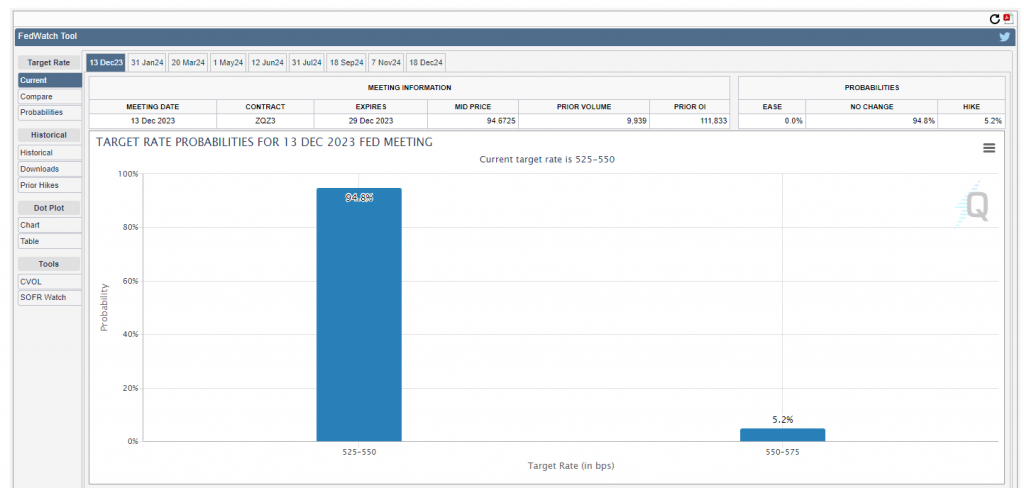
The Federal Reserve’s rate remains at 5.25%-5.5%.
The bank has been raising interest rates in an attempt to tame the economy and slow inflation, (the rate at which prices rise). Recent data showed the U.S. economy grew faster than expected.
Raising interest rates is a way for central banks tackle rising inflation. The idea is that by raising interest rates and making it more expensive to borrow, consumers will spend less and that would lead to slower price rises. In the U.S. however, the consumer is not slowing down. This may lead to higher rates, or higher for longer which in turn could push the U.S. into a recession.
The bank had faced criticism, with some suggesting that holding interest rates at higher levels could put the U.S. economy at risk of entering a recession.

House prices had the biggest monthly rise in October for more than a year, according to the Nationwide Building Society.
However, they were still down sharply on a year ago, the UK’s biggest building society noted. The rise in prices was most likely due to there not being enough properties to meet demand.
However, activity in the housing market is still extremely slow, as buyers struggle with higher mortgage rates.
Interest rates, which underpin mortgage pricing, have moderated recently but they are still well above the lows of 2021. The Bank of England has raised interest rates from lows of around 0.1% to 5.25% in its inflation battle.
UK inflation is over 6.5% – the target is 2%.
According to the latest data from Eurostat, the statistical office of the European Union, the euro area annual inflation was 2.9% in October 2023, down from 4.3% in September 2023.
The main factor behind the decline in inflation was a sharp drop in energy prices, which fell by some 15% year-on-year in October 2023, compared to a 10.7% decrease in September.
The euro area economy also contracted by 0.1% in the third quarter of 2023, after growing by 0.6% in the second quarter, according to preliminary estimates from Eurostat. This puts the eurozone on the brink of recession, as high interest rates and weak demand weigh on the economic activity.
However, some analysts argue that the ECB’s monetary policy is too tight and risks choking off the recovery. They suggest that the ECB should adopt a more flexible approach and consider cutting rates or expanding its bond-buying programme if the economic outlook worsens.
Core inflation which excludes volatile food and energy prices dropped to 4.2% year-on-year in October 2023 from 4.5% in September 2023, according to European Union statistics agency Eurostat.
The agency also revealed Tuesday that the euro zone economy contracted by 0.1% in the third quarter, according to initial estimates, below consensus estimates for GDP to be unchanged from the previous quarter.
The ECB expects the euro zone economy to grow by just 0.7% this year, by 1% in 2024 and 1.5% in 2025.
In an announcement Monday 30th October 2023, the U.S. Treasury Department said it will be looking to borrow $776 billion.
The Treasury said it expects to borrow $816 billion between January and March 2024.
The announcement comes 10 days after the government said the fiscal 2023 budget deficit would be about $1.7 trillion.
According to the U.S. Treasury Fiscal Data, the national debt of the United States was $33.52 trillion as of 23rd October 2023.
This news comes as the UK draws attention hosting a UK led AI summit. The U.S. wants to police and control the AI arena too as it does most other aspects of our life.
An executive order from President Biden requires Artificial Intelligence AI developers to share safety results with the U.S. government. It is an attempt to place the U.S, at the centre of the global debate on AI governance.
However, this is a position the UK government has already engineered as the UK AI safety summit gets underway this week. The UK desires to place itself at the centre of AI governance.
The U.S. executive order from Biden suggests the U.S. fancies itself as the leader of global AI governance in terms of how to address such threats or does it simply want to stamp its authority in the AI world. It tried to do the same with cryptocurrencies but fundamentally failed.
The UK summit is referenced in the executive order. But it’s mentioned under the heading of ‘advancing American leadership abroad’ – indicating that the U.S. very clearly knows that it is the big player here alongside China.

However, U.S. Vice President Kamala Harris and top executives from the U.S. tech giants are arriving in the UK this week to discuss AI safety at the UK government’s AI Summit, which it has billed as a ‘world first’.
The summit, hosted by UK Prime Minister Rishi Sunak, will focus on the growing fears about the implications of so-called frontier AI. President of the EU Commission Ursula von der Leyen and UN Secretary-General Antonio Guterres will also be in attendance.
The UK is determined to position itself as a global leader in the space of trying to minimise the risks posed by this powerful technology.
But the U.S. as usual, will want to be in control…
If the Israel-Hamas conflict further intensifies, the risks to the global economy are growing, economist Mohamed el-Erian reportedly said Monday 30th October 2023.
The impact on global markets was initially limited, as investors viewed the conflict as contained. However, the prospect of a regional spillover has added to a sense of unease.
‘The longer this conflict goes on, the more likely it will escalate. The higher the risk of escalation, the higher the risk of contagion to the rest of the world in terms of economics and finance’, el-Erian said.
The U.K. government has recently announced its plans to regulate the crypto industry with formal legislation by 2024. The government aims to protect consumers and grow the economy by ensuring robust, transparent, and fair standards for crypto activities. Some of the proposed measures include:
Regulating a broad suite of crypto activities, such as trading, lending, and custody services.
Strengthening rules for crypto trading platforms and requiring them to have admission and disclosure documents.
Introducing a crypto market abuse regime to prevent manipulation and fraud.
Enhancing oversight of stablecoins, which are digital tokens pegged to fiat currencies or other assets.
The government’s consultation paper is open for feedback until January 31, 2024.
The government said it is committed to embracing technological change and innovation, while mitigating the most significant risks posed by crypto-assets.
John Lennon. 1940 – 1980
John Lennon was an English songwriter, singer, musician and peace activist who gained worldwide fame as the founder, co-songwriter, co-lead vocalist and rhythm guitarist of the Beatles.
This was the fastest quarterly advance in nearly two years, driven by robust consumer spending, increased inventories, exports, residential investment and government spending.
The U.S. economy faced several challenges in the third quarter, such as high interest rates, inflation pressures, and global headwinds, but still managed to overcome them and show strong growth.
However, some analysts expect a slowdown in the fourth quarter and in early 2024, especially if the Federal Reserve implements another interest rate hike and the housing market remains sluggish and if consumer spending shows signs of slowing.
The GDP report also showed that inflation rose 3.7% in September 2023, down from 9.1% in June, but still above the Fed’s 2% target. The Fed is expected to keep its policy tight and may announce a tapering of its bond-buying program next week.
A correction is a term used to describe a decline of 10% or more from a recent peak in the price of an asset. The Nasdaq entered correction territory on Wednesday 25th October 2023, as it closed at 12,922, which was 10% lower than its previous high of 14,358 on 19th July 2023.
The main reason for the Nasdaq’s correction is believed to be the rise in long-term Treasury yields, which increased the borrowing costs for companies and reduced the attractiveness of growth stocks. The 10-year Treasury yield rose to 4.95% on Wednesday 25th October 2023, the highest level since June 2021. Higher interest rates also make future earnings for tech companies much more difficult.
Another factor that contributed to the Nasdaq’s correction was the disappointing third-quarter earnings reports from some of the biggest tech companies, such as Alphabet (Google), Amazon, and Meta (Facebook fame).
These companies reported lower-than-expected revenue growth, profit margins, and cloud computing performance, which weighed on their stock prices and dragged down the Nasdaq. Investors expect more, especially with AI – now the new kid-on-the-block.
The Nasdaq’s correction has raised concerns among investors about the outlook for the tech sector and the broader stock market. However, some analysts have argued that the correction could be a healthy and temporary adjustment that creates buying opportunities for long-term investors.
They have pointed out that the Nasdaq is still up 22.5% year-to-date as of Wednesday 25th October 2023, and that the fundamentals of the tech industry remain strong despite the challenges posed by inflation, regulation, yields and competition.
Every time you buy shares in a company, you have purchased a piece of that company. And as a share owner, you are entitled to a ‘share’ of the profits.
When it comes to investing, the goal is to find great companies, super companies. Buy shares in these companies at good prices. And then behave like owners of these companies and enjoy all of the successes.
Then… HOLD those shares for as long as possible – as if you own the company.
Holding on as long as possible means that as long as you believe a company is still a great, you are more likely to keep the shares. But if something changes and it’s no longer a good choice, then it may be time to sell up.
The message here is to believe in a long-term investing strategy – because it works!
What you must not do is gamble on shares or any other high-risk activity or product. Share prices go up and they go down all the time. And in some cases, prices continue to move even after the stock market has closed!

Most people aren’t successful trying to ‘bet’ on when a share is going to go up or down especially short-term bets laced over minutes, hours, days or weeks. You can’t build wealth this way. In fact, there are plenty of traders out there with tragic stories to tell of failed ‘dumb money bets’. This is one of the fastest ways to lose your hard-earned cash; just don’t do it!
There are many investing platforms available today that offer all sorts of trading solutions, from day trading, CFDs (contract for differences), spread betting, and more recently, cryptocurrencies. These instruments aren’t really designed to assist a long-term strategy but rather a short-term punt or bet. It’s an endless game where someone, somewhere is always left with nothing. These systems will happily take your money.
Please read the small print for these services. Do not be surprised to see disclosures that read something like, ‘75%+ of retail traders lose money’. It’s true, they do, and it could be you! Its far far easier to learn to become financially successful over the long term.
A hard truth about investing is that sometimes you’ll get it wrong, we all do.
The term for this is firm-specific risk (sometimes referred to as unsystematic risk). And every company in the world, even industry behemoths like Amazon, Apple or Microsoft get it wrong sometimes too. It’s unavoidable.
Fortunately, such risk can be mitigated through diversification. By owning a number of companies, the returns of one successful investment can easily offset the losses of several losers.
It is wise to aim to build a portfolio over time of around say 10 – 20 quality businesses that you believe in. If you would be prepared to ‘buy’ the company; buying shares in it is the next best option.
In the short term, the movements of the stock market are chaotic, unpredictable or volatile even. But over a longer period of time, a recurring pattern starts to emerge among quality businesses.

Companies can’t magically double their profits overnight. Building a massive multi-billion or even trillion-pound enterprise takes time. But the investors who have the patience and financial prudence to invest in quality businesses with such long-term potential can unlock enormous wealth.
Getting started with investing is the first major step. The second is to keep investing over time. Little and often. It’s not easy to ‘free up’ cash but the more money you put to work by investing in stocks, the better your portfolio will do overall.
It is easy for me to suggest for you to go invest and spend your money, you most likely need the money spare to be able to go do this in the first place. So, a little invested spread over time will help open that ‘wealth’ door as time trickles by.
However, there is a caveat to this rule. You should only invest money you don’t need to live. Invest only what you have spare or can ‘free up’.
Long-term investing requires holding investments for years or even decades. This strategy works – this is the way! It’s easier said than done, but a little invested now will go a long way later. It’s also a matter of priorities and sacrifice to ‘free up’ some spare cash to invest instead of buying that new must have gadget (that you don’t really need).
Also, the last place you want to find yourself in is where you are forced to sell your investment before it’s had time to ‘climb’ because you’re short on cash. Or even worse, forced to sell your holding during a stock market crash when prices are extremely low. That’s an awful place to be – don’t go there if you can avoid it. However, buying after a crash is a different matter – but again, buy only good quality companies.

In short, invest consistently. But only the money you can afford. Don’t borrow, don’t use credit. Only invest what you can afford. It will work for you over time. But invest wisely in good high quality comapnies,
The stock market will crash; this is an inevitable fact of investing. Naive investors, who panic during these volatile times, often end up selling their shares that are either completely unaffected by the catalysts of the crash or perfectly capable of weathering the storm.
Just take a look at what happened with Apple in 2008. The tech giant fell by over 50% in the space of 12 months despite having no exposure to the U.S. housing market – even Apple got caught up in the sub-prime lending fiasco. And while the subsequent recession did impact sales, recessions, just like stock market crashes, are temporary. Apple share price recovered, as did many other top-notch companies too.
As horrible a stock market crash is, this is actually one of the best times to buy shares, especially when investing for the long-term. And these opportunities only come around once a decade or so. So, don’t miss out on these incredible opportunities to buy fantastic businesses at major discounts if you have the cash spare.
Portfolio management is something every investor has to do. Yet a common mistake, is to sell shares in thriving companies too soon. This is usually an error – bear in mind that winners have a tendency to keep winning! But I get that – I understand you may want to sell as you need the money or want some of your investment back. Try and hold if you can – but not at any odds. Keep a close eye on the market – sentiment will change and that will alter the markets direction.

Having said that, there is an exception. It’s perfectly possible for a company that was just 2% of your portfolio to grow to 20% or even higher. In these scenarios, it can be wise to sell a few shares to reduce the risk of being over-exposed to a single investment.
But otherwise, let your winners win. LET THE WINNERS RUN!
There is no such thing as risk-free investing, even with a long-term approach. But many of these risk factors can be mitigated through strategies like diversification. Try and manage your portfolio, add stop losses and follow your investments through the newswires.
Remember to always do your research! No short cuts!
RESEARCH, RESEARCH, and even more RESEARCH!
The inflation rate in Argentina is extremely high and has surpassed 100% for the first time since the early 1990’s. The inflation rate for consumer prices in Argentina was 138.28% in September 2023, based on the CPI values for the last 12 months.
This means that the prices of many goods and services have more than doubled since 2022. The main factors that contributed to this increase were the rise in food prices, especially meat, due to adverse weather conditions and a drought, as well as the economic difficulties and policy divisions that have plagued the country for years.
Argentina has been receiving bailout funds from the International Monetary Fund (IMF), but it has not been able to contain inflation, which has eroded the purchasing power of many people and pushed them into poverty.
The inflation rate in Argentina is one of the highest in the world and has a negative impact on its economic growth and social stability.

Argentina is the second largest country in South America, the fourth largest in the Americas, and the eighth largest in the world.
The Fed and other central banks insisted that inflation would be ‘transitory’ – it wasn’t. It reached 7%. That’s 5% above the target of 2%.
Along with the misdiagnosis on prices, Fed officials, according to projections released in March 2022, collectively saw the key interest rate rising to just 2.8% by the end of 2023. It is now 5.25%.
The Fed failed to prevent the collapse of the banking system and the contraction of the money supply in the late 1920s and early 1930s, which worsened the economic downturn and prolonged the recovery. The Fed also raised interest rates in 1931 and 1932, which further depressed economic activity and deflation.
The Great Depression (1929–1939) was an economic bomb that affected countries across the world. It was a period of severe economic depression after a major fall in stock prices in the United States. It began around September 1929 and led to the Wall Street stock market crash on 24th October 1929 (Black Thursday). See Wikipedia article here.
It was the longest, deepest, and most widespread depression of the 20th century.

The Fed pursued an overly expansionary monetary policy in the 1960s and 1970s, which fueled high inflation and eroded the value of the dollar. The Fed also underestimated the impact of oil shocks and other supply shocks on inflation and was slow to tighten monetary policy to restore price stability. The Fed eventually raised interest rates sharply in the late 1970s and early 1980s, which triggered a severe recession. And in1991 inflation surged to 8.5%.
The Fed likely contributed to the build-up of financial imbalances and excessive risk-taking in the 2000s, (Dotcom bubble) – by keeping interest rates too low for too long and by failing to adequately supervise and regulate the financial system.

The Fed also reacted too slowly to the emerging signs of distress in the housing market and the financial sector and was unprepared for the global financial crisis that erupted in 2008. Remember, ‘sub-prime’ lending. We can see signs of similar stress in the U.S. car loan market now.
The Fed had to resort to unconventional monetary policy tools, such as quantitative easing and forward guidance, to stimulate the economy and prevent deflation.
The Fed and other central banks including the Bank of England initially underestimated the severity and duration of the pandemic and its impact on the economy. The Fed also overestimated the transitory nature of inflation, which surged to a 30-year high in 2021 due to supply chain disruptions, pent-up demand, fiscal stimulus, and base effects. The Fed maintained an ultra-accommodative monetary policy stance for too long, despite mounting evidence of overheating and inflationary pressures.
The Fed finally raised interest rates by 0.75% in December 2022, but faced criticism for being behind the curve and for communicating poorly with the markets.
The Fed said inflation would be transitory in 2021 and 2022. The Fed used this term to describe the higher-than-normal prices that emerged during the Covid-19 economic crisis, which were expected to be temporary and not part of a long-term trend. The Fed attributed the inflation surge to factors such as supply chain bottlenecks, pent-up demand, fiscal stimulus, and base effects.
The Fed also said that it would let inflation run above its 2% target for some time, to achieve an average inflation rate of 2% over time. However, as inflation remained high and persistent in 2021 and 2022, the Fed faced criticism for being behind the curve and for communicating poorly with the markets. The Fed eventually raised interest rates.
And now, much of the same. The Fed is again ‘tinkering’ with policy to manage ‘transitory’ inflation and will most probably engineer a recession as a result.
Enough said.
According to the U.S. Treasury Fiscal Data, the national debt of the United States was $33.52 trillion as of 23rd October 2023.
This includes both the debt held by the public, which is the amount the federal government owes to outside entities such as foreign governments, corporations, and individuals, and the debt held by federal government accounts, which is the amount the federal government owes to itself, such as trust funds and special funds.
Some argue that the U.S. debt is a problem because it increases the risk of a fiscal crisis, reduces the government’s ability to respond to emergencies, imposes a burden on future generations, and lowers the nation’s creditworthiness.
Others contend that the U.S. debt is not a problem because the U.S. can always print more money, (isn’t this why there is so much debt already)? Borrow at low interest rates, (not easy in the current climate), stimulate economic growth, and benefit from its status as the world’s reserve currency.
So, is U.S. debt a problem or not? It depends on various factors such as the size, composition, and sustainability of the debt, as well as the economic and political context in which it operates.
Most analysts and policymakers agree that the U.S. debt is projected to grow faster than the economy in the long-term, which could pose significant challenges for fiscal policy and economic stability. Therefore, it is important to understand the causes and consequences of the U.S. debt and to find solutions that balance the trade-offs between spending and income.
The U.S. debt of GDP was estimated to be around 120% to 130% in 2023.
The U.S. debt of GDP is the ratio of the total public debt of the United States to its gross domestic product (GDP), which measures the size of the economy.
Apple and generative AI technology is a topic that has been generating a lot of interest and speculation lately.
According to various reports, Apple is working on developing its own large language model and chatbot, which could potentially enhance its products and services with new features and capabilities. However, some analysts and experts have also raised questions about whether Apple has missed an opportunity to be a leader in the generative AI field, as it seems to be lagging behind its competitors such as Google, Microsoft, and OpenAI.
Apple uses AI in its products but hasn’t launched a generative AI product along the lines of OpenAI’s ChatGPT or Google Bard. Instead, Apple’s AI is used for improving photos and autocorrecting text.
Generative AI is a subfield of artificial intelligence that focuses on creating content such as text, images, videos, music, and more, based on data and algorithms. One of the most popular examples of generative AI is ChatGPT, a chatbot that can respond to questions and other prompts in a natural and human-like way.

ChatGPT was released by OpenAI in 2022, and since then, it has been widely used and improved by various companies and researchers.
Apple, on the other hand, has been relatively quiet about its generative AI efforts, until recently. In October 2023, Bloomberg reported that Apple was internally testing a ‘ChatGPT-like’ chatbot nicknamed ‘Apple GPT’, but it had not devised a clear strategy for releasing generative AI tools to the public. Apple’s CEO Tim Cook also confirmed that the company was working on generative AI for years, but it was approaching it ‘really thoughtfully and think about it deeply’ because of the potential risks and challenges.
Apple has always been more cautious than its competitors in handling user data, and it has built its reputation on being a privacy-focused company. However, generative AI requires a lot of data to train and improve its models, which could pose a dilemma for Apple. How can it balance the need for data with the respect for user privacy? How can it ensure that its generative AI does not leak or misuse personal information?
Apple is known for its elegant and intuitive design philosophy, which applies to both its hardware and software products. However, generative AI is a complex and unpredictable technology, which could challenge Apple’s design principles. How can it make its generative AI features easy to use and understand for its customers? How can it avoid confusing or misleading users with its generative AI outputs?
Apple has always been mindful of the social and ethical implications of its products, and it has often taken a stance on issues such as human rights, environmental sustainability, and diversity. However, generative AI could raise new ethical concerns, such as bias, misinformation and manipulation. But then that is a common problem for all generative AI systems.

These are some of the questions that Apple needs to answer before it can launch its generative AI products to the public. It is possible that Apple is taking its time to address these issues carefully and thoroughly, as it has done in the past with other technologies such as Face ID or Apple Pay. However, it is also possible that Apple has missed an opportunity to be a pioneer in the generative AI field, as it has done in the past with other technologies such as smart speakers or cloud computing.
Google has integrated its large language model LaMDA into various products and services, such as Google Assistant, Google Photos, Google Docs, Google Translate etc. LaMDA can generate natural and conversational responses to any query or prompt, as well as create images and videos based on text descriptions.
Microsoft has acquired OpenAI’s ChatGPT technology and made it available through its Azure cloud platform. ChatGPT can be used by developers and businesses to create chatbots, voice assistants, content generators, and more. Microsoft has also integrated ChatGPT into some of its products such as Outlook, Teams, PowerPoint, and more.
Amazon has launched Alexa Conversations, a feature that allows Alexa users to have more natural and engaging conversations with the voice assistant. Alexa Conversations can also leverage Amazon’s vast e-commerce data to provide personalized recommendations and suggestions to users.
These are just some examples of how generative AI is being used by Apple’s competitors.

Apple has missed an opportunity to be a leader in the generative AI field by being too slow or too cautious in developing and deploying its own generative AI products.
However, it is highly likely that Apple is waiting for the right moment to surprise everyone with its innovative and unique generative AI features that will set it apart from its competitors.
Time will tell.
The price of Bitcoin breached the $34,000 level to hit its highest value since May 2022, encouraged by optimism around the possibility of a Bitcoin ETF.
Bitcoin was trading at one point on Tuesday morning, 23rd October 2023 touched $34,940 before pulling back.

Anticipation of a Bitcoin ETF grew after the court sided with Grayscale over the U.S. SEC in its bid to turn its huge GBTC Bitcoin fund into an ETF.