Some of the strangest locations affected by Trump’s tariffs include an uninhabited island near Antarctica?
U.S. President Donald Trump’s ‘reciprocal tariffs‘ hit major trading partners around the world, but some tiny islands and remote locations were also unlikely targets.
These ‘odd’ choices have cast doubt on the validity of the calculation used to fire off these tariff salvos.
President Donald Trump set a baseline tariff rate of 10% across the board, with a raft of levies affecting over 180 countries.
The Russell 2000, a key benchmark for small-cap U.S. stocks, has officially entered bear market territory.
This means the index has fallen more than 20% from its all-time high in late November 2024. The decline was accelerated by the recent rollout of President Donald Trump’s sweeping tariffs, which have raised concerns about rising costs, economic softening, and global supply chain disruptions3.
Small-cap stocks, which were initially seen as beneficiaries of Trump’s policies due to their domestic focus, are now facing significant challenges. Many of these companies are particularly vulnerable to input cost shocks and lack the financial flexibility of larger firms.
Analysts warn that the combination of higher costs and a slowing economy is squeezing profits, leaving small caps in a precarious position.
The Russell 2000’s downturn highlights the broader market volatility triggered by the tariff measures. While other major indices like the S&P 500 and Nasdaq are in correction territory, the Russell 2000 was the first to enter a bear market.
Russell 2000 index
Russell 2000 index
This development underscores the heightened risks for small-cap stocks in the current economic climate.
Despite the challenges, some strategists believe there could be opportunities for recovery, particularly if the Federal Reserve takes steps to cut interest rates.
However, Trump’s tariffs have introduced uncertainty into this policy, as inflation is likely to increase, casting doubt on the possibility of further interest rate cuts.
For now, the Russell 2000’s performance serves as a stark reminder of the delicate balance between protectionist policies and market stability.
The Russell 2000, a key benchmark for small-cap U.S. stocks, has officially entered bear market territory.
Dow Jones decline – the ripple effects of tariff policies
The Dow Jones Industrial Average has seen a sharp decline, falling from its all-time high of 45,073.63 points in December 2024 to its current level of 38,314.86 points—a drop of approximately 15%.
Dow Jones one-year chart
This downturn reflects a mix of economic challenges, including the impact of President Donald Trump’s tariff policies.
Trump’s sweeping tariffs, introduced as part of his ‘Liberation Day‘ initiative, aimed to bolster American manufacturing by imposing taxes on imported goods. While the policy sought to ‘level the playing field’, it triggered significant disruptions in global trade.
Retaliatory tariffs from key trading partners, including China and the European Union, compounded the issue, ultimately leading to higher costs for U.S. businesses and consumers.
The tariffs have also strained supply chains, particularly in industries reliant on international components. This has contributed to inflationary pressures, further dampening investor sentiment.
The tech sector, already grappling with regulatory scrutiny, has been hit hard, with companies facing increased production costs.
Nasdaq tech 100 one-year chart
While some view the market’s decline as a natural correction, others warn of prolonged economic challenges, especially with the uncertainty surround Trump’s tariff agenda.
For investors, the key lies in navigating these turbulent times with caution and a focus on long-term fundamentals.
As the Dow adjusts to these pressures, its performance underscores the far-reaching consequences of trade policies on global markets.
The stock market was smashed for a second day Friday 4th April 2025 after China retaliated with new tariffs on U.S. goods, sparking fears President Donald Trump has ignited a global trade war that will lead to a global recession.
Stock market damage
The Dow Jones Industrial Average dropped 2,231.07 points, or 5.5%, to 38,314.86 on Friday 4th April 2025, the biggest decline since June 2020 during the Covid-19 pandemic.
This follows a 1,679-point decline on Thursday 3rd April 2025 and marks the first time ever that it has shed more than 1,500 points on consecutive days.
The S&P 500 collapsed 5.97% to 5,074.08, the biggest decline since March 2020. The benchmark shed 4.84% on Thursday 3rd April 2025 and is now down more than 17% off its recent high.
The Nasdaq Composite, home to many well-known tech companies that sell to China and manufacture there as well, dropped 5.8%, to 15,587.79.
This follows a nearly 6% drop on Thursday 3rd April 2025 and takes the index down by 22% from its December 2024 record – pushing it into a bear market.
The selling was wide ranging with only 14 members of the S&P 500 higher on the day. Major market indexes closed at their lows of the session.
China’s commerce ministry said the country will impose a 34% levy on all U.S. products, disappointing investors who had hoped countries would negotiate with Trump before retaliating.
Technology stocks led the massive rout Friday
Apple shares slumped 7%, bringing its loss for the week to 13%.
Nvidia dropped 7% during the session.
Tesla fell 10%.
All three companies have large exposure to China and are among the hardest hit from Beijing’s retaliatory tariffs.
The bull market is dead, and it was destroyed by self-inflicted wounds!
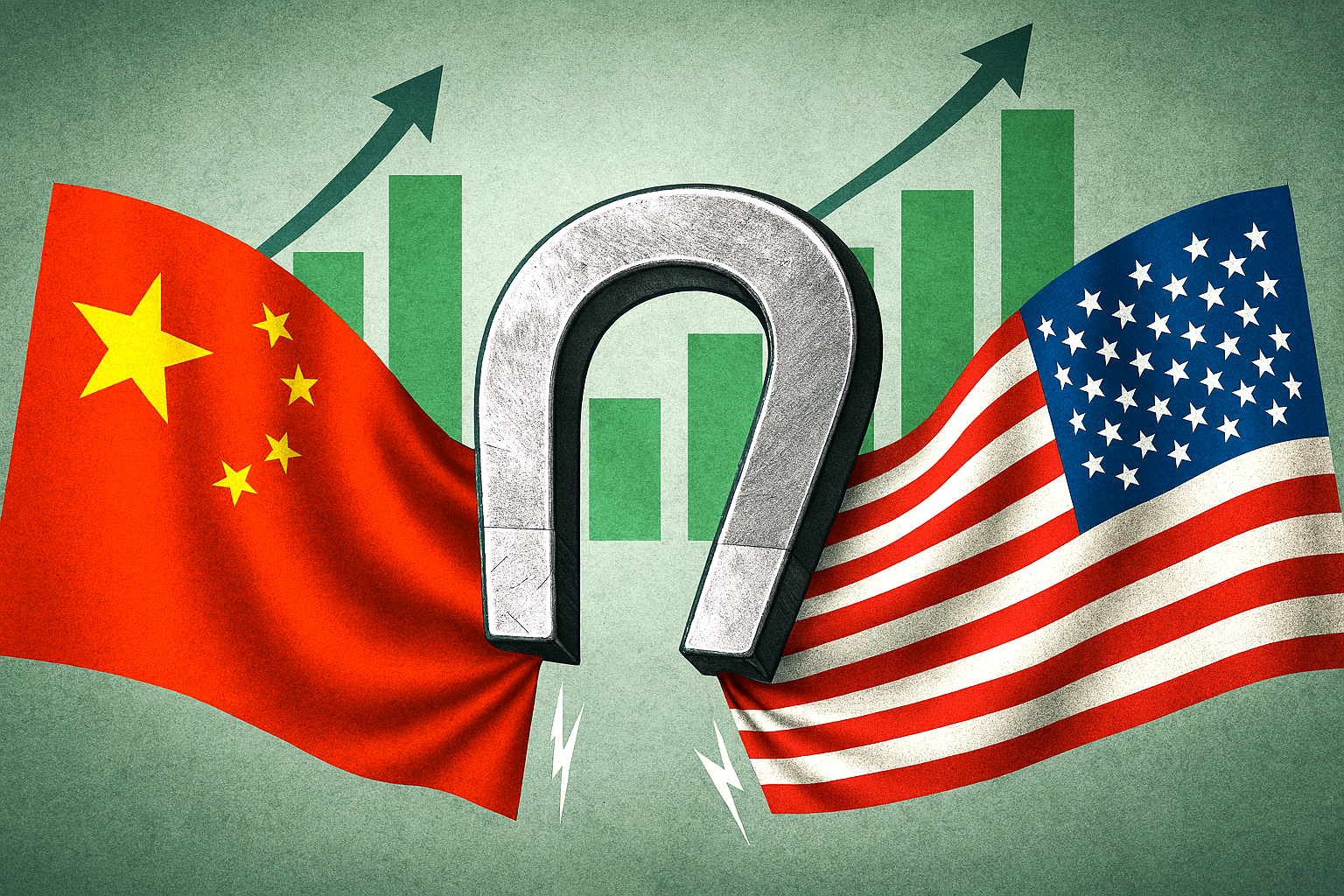
China has reportedly announced a significant escalation in its trade dispute with the United States, declaring a 34% retaliatory tariff on all U.S. goods.
The Chinese Ministry of Finance reportedly stated that these measures are aimed at safeguarding China’s economic interests and countering what it describes as ‘unilateral bullying’ by the U.S. government.
The tariffs will apply across a wide range of American exports, potentially impacting industries such as agriculture, technology, and manufacturing.
This development has heightened global market uncertainty, with investors bracing for further economic disruptions.
The ongoing tit-for-tat measures between the two economic giants underscore the fragility of international trade relations in the current climate.
The U.S. stock market experienced a dramatic plunge following President Donald Trump’s announcement of sweeping tariffs, marking one of the most significant market downturns since 2020.
On 3rd April 2025, the Dow Jones Industrial Average plummeted by 1,600 points, a staggering 4% drop, closing at 40,546.
Dow Jones one day chart
The S&P 500 fell by 4.8%, while the tech-heavy Nasdaq Composite suffered a 6% decline, reflecting widespread investor anxiety.
S&P 500 one day chart
Trump’s tariffs, which include a baseline 10% levy on imports from all trading partners and higher rates for specific countries, have sparked fears of a global trade war.
The effective tariff rate for China, for instance, has risen to 54%, raising concerns about supply chain disruptions and inflation. Major industries, including technology, retail, and manufacturing, were hit hard.
Apple shares dropped nearly 10%, while companies like Nike and Nvidia saw significant losses.
Apple one day chart
The market reaction underscores the uncertainty surrounding the economic impact of these tariffs. Analysts warn that the measures could dampen consumer spending, increase inflation, and slow economic growth.
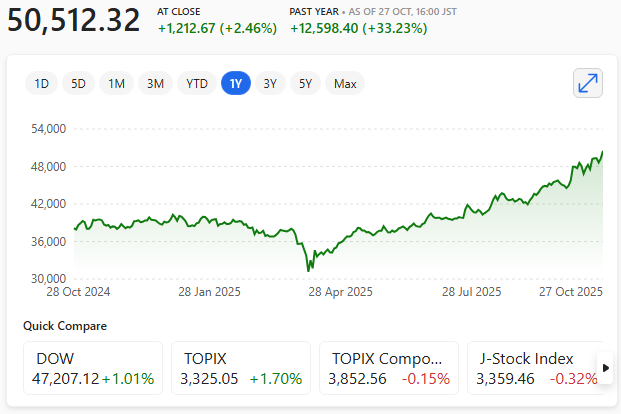
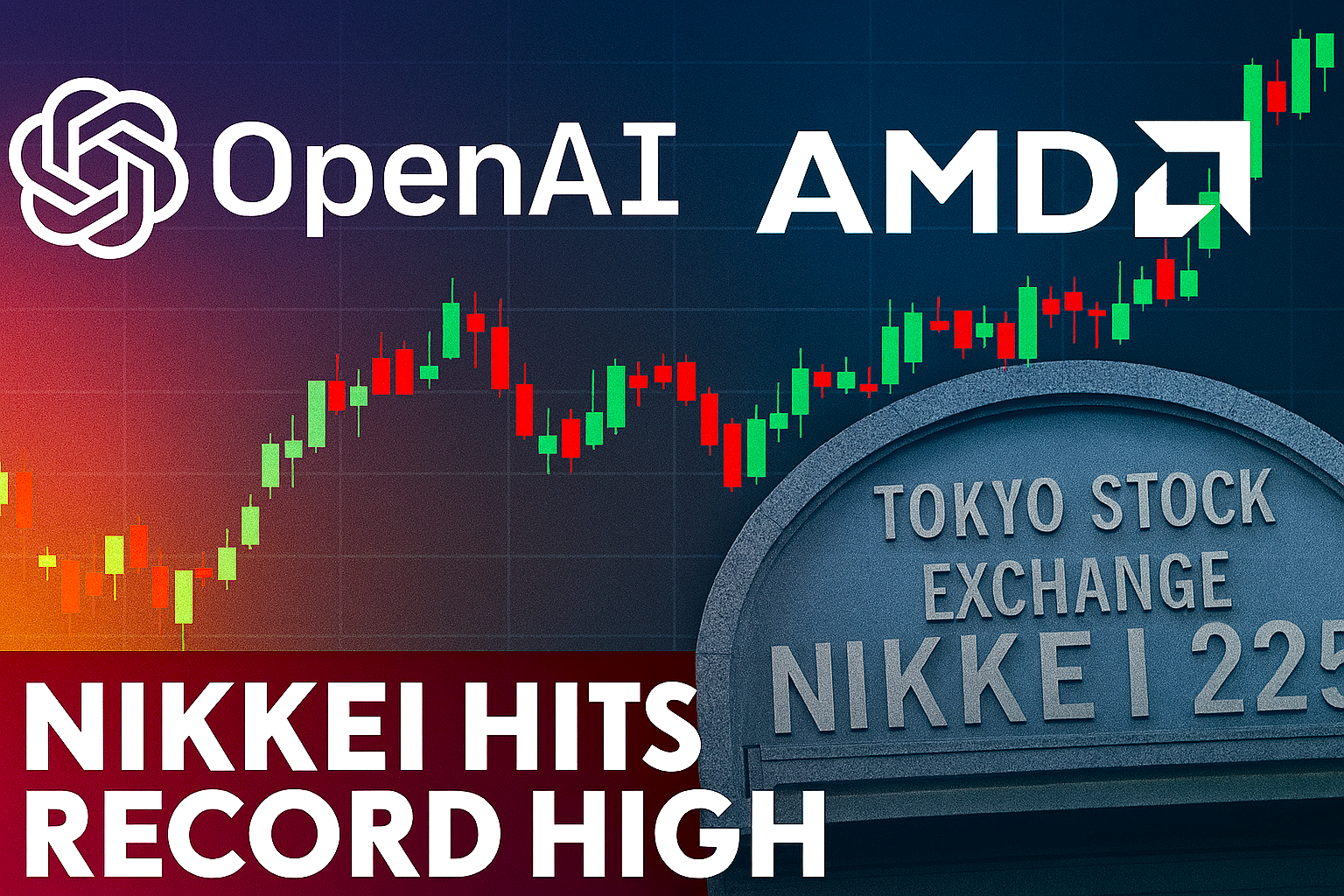
The ripple effects were felt globally, with European and Asian markets also experiencing declines. The Nikkei index declined a further 3%.
Nikkei Index five-day chart
Despite the turmoil, Trump defended the tariffs, likening them to a necessary ‘operation’ for the economy. He expressed confidence that the markets would eventually rebound, emphasising the long-term benefits of reshoring manufacturing and generating federal revenue.
As investors grapple with the implications of these policies, the focus remains on potential retaliatory measures from affected countries and the broader impact on global trade dynamics.
The sharp market sell-off serves as a stark reminder of the delicate balance between protectionist policies and economic stability in an interconnected world.
The coming weeks will be crucial in determining whether these tariffs lead to lasting economic shifts or temporary market volatility.
U.S. companies are experiencing more harm from Trump’s tariffs. He wants manufacturing to come back to America – but after decades of globalization fine tuning – that is no easy task.
Are markets underestimating the impact of the tariffs on inflation?
Are markets pricing in the fact that Trump’s tariff policy will not be fully followed through?
The U.S. would be lucky to see a single rate cut from the Federal Reserve this year – and that will unsettle investors.
The U.S. economy could now only expand by between 1% and 1.5% this year – this would be a significant change in the growth outlook when compared with the International Monetary Fund’s (IMF) projection of 2.7% U.S. growth made earlier this year.
If we get close to 1%, we get close to ‘stall’ speed and then it could just stop – and that will mean recession or worse for the U.S.
Tariffs are terrific, according to Trump – it’s his most favourite word.
Donald Trump’s ‘Liberation Day’ tariffs have sent shockwaves through global trade, marking a dramatic escalation in his tariff trade war strategy. The day of economic independence.
The President of the United States proudly showed off his tariff agenda neatly displayed on a chart akin to a ‘pub quiz scoreboard’.
In the White House Rose Garden on 2nd April 2025 Trump happily unleashed tariff turmoil on a global scale.
Announced with his usual characteristic bravado, these tariffs were ‘calculated’ to impose ‘reciprocal’ charges on imports from over 180 countries, including allies like the UK, the European Union and Canada.
It’s not fair
Trump claims this move will restore fairness in global trade and bolster American manufacturing, but critics warn of dire economic consequences.
The tariffs vary by country, with the UK facing a 10% levy on all exports to the U.S., while the EU faces a 20% tariff. China, already subject to existing tariffs, now faces a combined rate of 54%.
The automotive industry has been hit particularly hard, with a 25% tariff on foreign-made vehicles, threatening thousands of jobs around the world.
Trump’s announcement, delivered in the White House Rose Garden, was accompanied by a chart comparing tariffs imposed by other countries on U.S. goods.
He argued that these measures are necessary to counter years of unfair trade practices and to ‘make America wealthy again’.
However, economists and analysts have expressed concerns that these tariffs could plunge the global economy into a downturn, disrupt decades-old trade alliances, and spark retaliatory measures from affected nations.
Keep calm and carry on
The UK government, led by Prime Minister Keir Starmer, has reportedly vowed to take a calm and pragmatic approach, emphasizing the importance of securing a wider economic prosperity deal with the U.S.
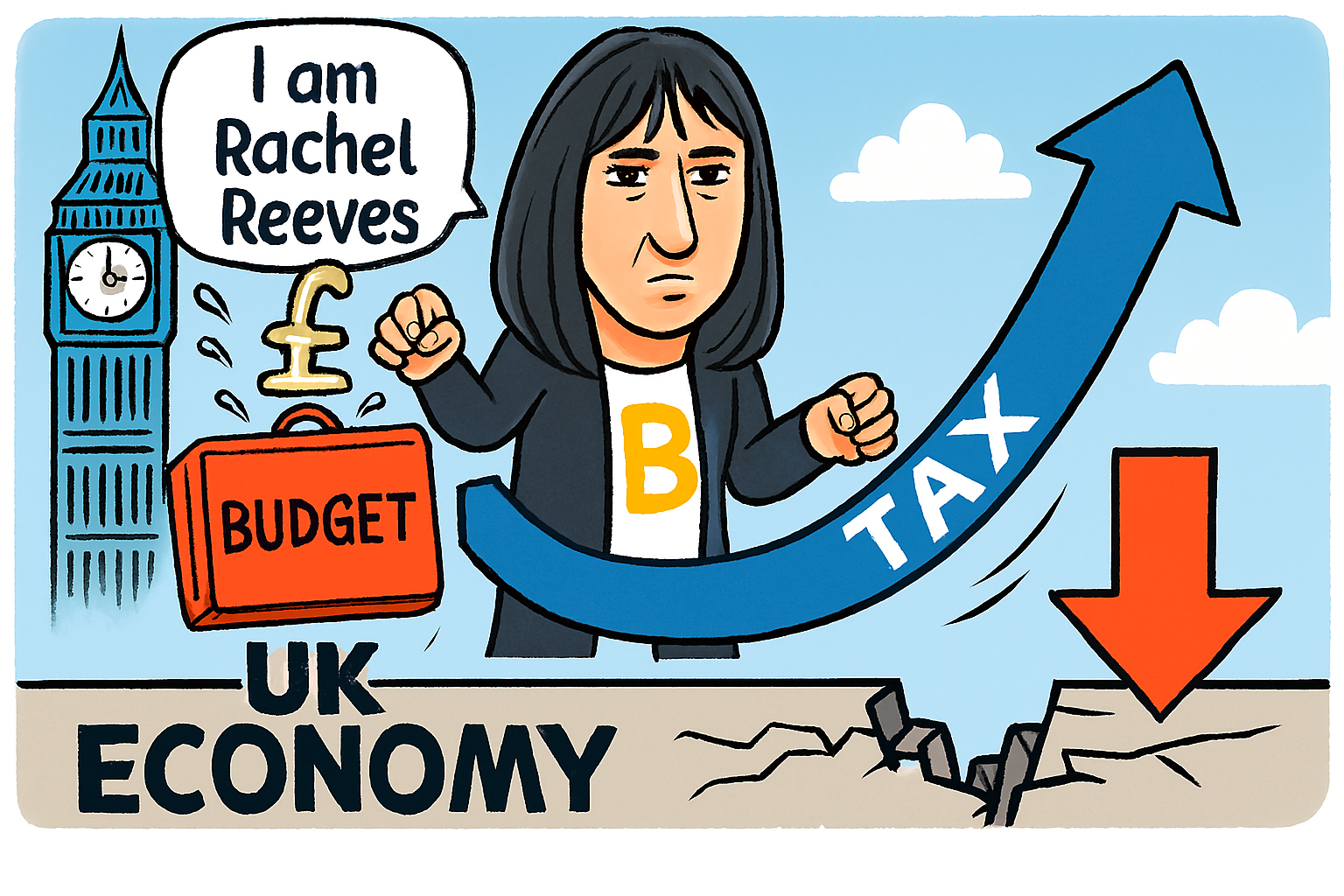
Chancellor Rachel Reeves acknowledged that the UK would not be ‘out of the woods’ even if exemptions are secured, citing the broader impact of global tariffs.
As nations brace for the fallout, Trump’s Liberation Day tariffs may well redefine the landscape of international trade, for better or worse. The world watches as the ripple effects unfold.
Understandably stock markets reacted badly as futures tumbled. The Dow Jones was down 1000 points. Nikkei down 4%. S&P 500 down 3%.
President Donald Trump is to begin the biggest gamble of his second term – ‘Liberation Day’ wagering that broad-based global hitting tariffs on imports will instigate a new era for the U.S. economy.
The concern right now is no one outside the administration knows quite how those goals will be achieved, and what will be the price to pay.
Basically, tariffs are a tax on imports and, theoretically, are inflationary. In practice, though, it doesn’t always work that way.
The U.S. economy is showing potential signs of stagflation where growth is slowing, and inflation is proving stickier than expected.
Trump’s Liberation Day is here – we will see what that actually means in practice.
OpenAI on Monday 31st March 2025 announced it had closed its $40 billion funding round, the most ever raised by a private tech company.
The deal values OpenAI at $300 billion, including the new capital.
The round includes $30 billion from SoftBank and $10 billion from a syndicate of investors.
OpenAI is now more valuable than Chevron.
The generative AI market is projected to exceed $1 trillion in revenue within the next decade. Companies such as Google, Amazon, Anthropic, and Perplexity are rapidly unveiling new products and features as competition to develop ‘AI agents’ intensifies.
The cryptocurrency market has been rocked by significant declines in two of its flagship assets, Bitcoin and Ether.
This downturn reflects mounting concerns over broader economic challenges, including inflationary pressures and uncertainties surrounding Trump’s global trade tariffs.
Snapshot data from CMC
Bitcoin, often seen as a digital gold and a hedge against traditional financial instability, saw its value dip below $80,000. Similarly, Ether, the second-largest cryptocurrency by market capitalisation, tested the $2,100 threshold, shaking investor confidence.
Cryptocurrency fear and greed index chart from CMC
Cryptocurrency fear and greed index from CMC
The decline comes as central banks continue to grapple with persistent inflation, leading to speculation about further interest rate hikes. These economic conditions have raised fears that tighter monetary policies could dampen the speculative fervour that has long driven crypto markets.
In parallel, ongoing uncertainties about global trade tariffs have added another layer of complexity. Concerns about supply chain disruptions and escalating trade tensions have created a cautious environment for investors, spilling over into the volatile cryptocurrency sector.
While cryptocurrencies are no stranger to price swings, the current drop underscores their vulnerability to macroeconomic trends. As investors await clarity on inflation and tariff policies, the market could remain turbulent in the near term.
The resilience of Bitcoin and Ether will likely be tested as they navigate these economic headwinds.
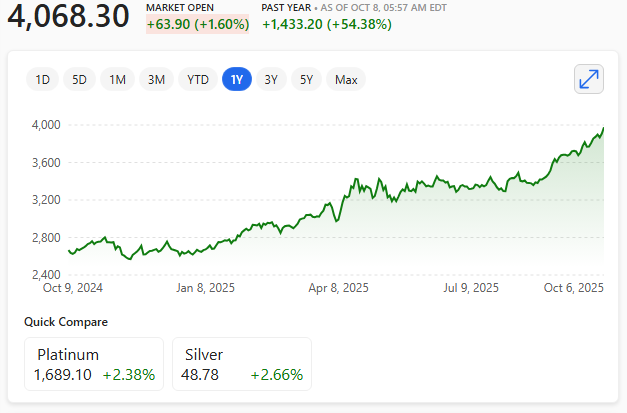
Gold, however, has recently touched new all-time highs.
Stocks sold off sharply on Friday 28th March 2025, pressured by growing uncertainty on U.S. trade policy as well as a grim outlook on inflation
The Dow Jones Industrial Average closed down 715 points at 41,583. The S&P 500 lost 1.97% to close 5,580 ending the week down for the fifth time in the last six weeks. The Nasdaq Composite plunged 2.7% to 17,322.
Shares of several technology giants also fell putting pressure on the broader market. Google-parent Alphabet lost 4.9%, while Meta and Amazon each shed 4.3%.
This week, the S&P 500 lost 1.53%, while the 30-stock Dow shed 0.96%. The Nasdaq declined by 2.59%. With this latest losing week, Nasdaq is now on pace for a more than 8% monthly decline, which would be its worst monthly performance since December 2022.
Dow Jones one-day chart (28th March 2025)
Stocks took a leg lower on Friday after the University of Michigan’s final read on consumer sentiment for March 2025 reflected the highest long-term inflation expectation since 1993.
Friday’s core personal consumption expenditures price index also came in hotter-than-expected, rising 2.8% in February and reflecting a 0.4% increase for the month, stoking concerns about persistent inflation.
Economists had reportedly been looking for respective numbers of 2.7% and 0.3%. Consumer spending accelerated 0.4% for the month, below the 0.5% forecast, according to fresh data from the Bureau of Economic Analysis.
The market is getting squeezed by both sides. There is uncertainty about reciprocal tariffs hitting the major exporting sectors like tech alongside concerns about a weakening consumer facing higher prices
Trump’s tariffs push will hit the U.S. harder than Europe in the short term, it has been reported.
Japan’s Nikkei enters correction as Trump’s tariff assault drives sell-off in Asia markets
Consumer spending accelerated 0.4% for the month, below the 0.5% forecast, but personal income posted a 0.8% rise, against the estimate for 0.4%.
If we were to combine these higher inflation figures with Trump’s tariffs and the unrest Trump is creating around the world and of the tensions with Russia and China – it doesn’t bode well for the future!
U.S. tech giants are making bold strides in the development of humanoid robots, signalling a transformative shift in the robotics industry
Companies like Tesla, Google, Microsoft, and Nvidia are investing heavily in this cutting-edge technology, aiming to create machines that mimic human movement and behaviour.
These humanoid robots are envisioned to revolutionise industries ranging from manufacturing to healthcare, offering solutions to labor shortages and enhancing productivity.
Tesla’s Optimus project is a prime example of this ambition. CEO Elon Musk has announced plans to produce thousands of these robots, designed to perform repetitive and physically demanding tasks.
Optimus robots are expected to integrate seamlessly into factory settings, reducing the need for human intervention in hazardous environments.
Similarly, Boston Dynamics, known for its agile robots, continues to push the boundaries of what humanoid machines can achieve, focusing on tasks that require precision and adaptability.
The integration of artificial intelligence (AI) is a driving force behind these advancements. AI enables robots to learn from their environments, adapt to new tasks, and interact with humans in more intuitive ways.
Companies like Nvidia are leveraging their expertise in AI and machine learning are helping to develop robots capable of complex decision-making and problem-solving.
However, challenges remain. High production costs, limited battery life, and safety concerns are significant hurdles that need to be addressed before humanoid robots can achieve widespread adoption.
Despite these obstacles, the potential benefits are immense. From assisting the elderly to performing intricate surgeries, humanoid robots could redefine the boundaries of human capability.
As U.S. tech giants continue to innovate, the race to dominate the humanoid robotics market intensifies.
Tesla Optimus Gen 2
With China and other nations also making significant investments, the competition is fierce. Analysts warn that U.S. firms could lose out to China, which aims to replicate its success with electric vehicles in the robotics space race.
The future of humanoid robots promises to be a fascinating blend of technology, creativity, and global collaboration
U.S. companies that may benefit from this AI humanoid tech advancement
Tesla: Known for its Optimus humanoid robot project, Tesla is pushing boundaries in robotics and AI.
Google (Alphabet): A leader in AI and robotics research, with projects aimed at enhancing humanoid capabilities.
Microsoft: Investing in AI technologies that support robotics and automation.
Nvidia: Provides advanced AI chips and systems crucial for humanoid robot development.
Boston Dynamics: Famous for its agile robots like Atlas, focusing on precision and adaptability.
Agility Robotics: Creator of Digit, a humanoid robot designed for logistics and manufacturing.
Meta (Facebook): Exploring humanoid robots for social and interactive applications.
Apple: Investing in robotics and AI for potential humanoid advancements.
Amazon: Developing robots like Astro for home monitoring and other tasks.
Figure AI: Innovating humanoid robots like Figure 02 for various industries.
Bill Gates on AI
Bill Gates has shared some fascinating insights about AI recently. He reportedly believes that within the next decade, AI will transform many industries, making specialised knowledge widely accessible.
For example, he predicts that AI could provide high-quality medical advice and tutoring, addressing global shortages of doctors and educators.
Gates has also described this shift as the ‘age of free intelligence,’ where AI becomes a commonplace tool integrated into everyday life. While he acknowledges the immense potential of AI to solve global challenges – like developing breakthrough treatments for diseases and innovative solutions for climate change – he also recognises the disruptive impact it could have on jobs and the workforce.
Despite these concerns, Gates remains optimistic about AI’s ability to drive innovation and improve lives.
He has emphasised that certain human activities, like playing sports or hosting talk shows, will likely remain uniquely human.
However, despite all these predictions from powerful tech leaders – it does beg the question, do these ultra rich CEOs predict the future, or simply make it?
What if Quantum Physics coincides and collides with the ‘full’ arrival of AI and humanoid robots
Quantum computing could enhance the capabilities of AI-powered robots by solving complex optimisation problems, improving machine learning algorithms, and enabling real-time decision-making.
For instance, robots equipped with quantum sensors could navigate intricate environments, detect subtle changes in their surroundings, and interact with humans in more intuitive ways.
This fusion could revolutionise industries such as healthcare, manufacturing, and space exploration. Imagine humanoid robots performing intricate surgeries with precision, managing large-scale logistics, or exploring distant planets with advanced problem-solving abilities.
However, this convergence also raises ethical and societal questions. The potential for such powerful technologies to disrupt industries, impact employment, and challenge privacy norms must be carefully managed.
Collaboration between scientists, policymakers, and ethicists will be crucial to ensure these advancements benefit humanity as a whole.
The intersection of quantum physics, AI, and humanoid robotics is not just a technological milestone – it’s a glimpse into a future where the boundaries of human capability and machine intelligence blur.
It’s an exciting, albeit complex future humans are creating.
But will AI surpass human intelligence – and if it does what then for the human civilisation?
Trump’s tariffs have been a cornerstone of his trade policy, aimed at protecting American industries and reducing trade deficits
These measures include tariffs on steel, aluminum, and a wide range of goods from countries like China, Canada, and the European Union.
While supporters argue that these tariffs have bolstered domestic manufacturing and created jobs, critics highlight the retaliatory tariffs imposed by other nations, which have affected American exporters.
President Donald Trump said he will soon announce tariffs targeting automobiles and pharmaceuticals.
Trump later added the timber and semiconductor industries to his list.
It was unclear whether the newly announced sector-specific tariffs would take effect after the tit-for-tat ‘reciprocal tariffs’ – which are set to take effect on for 2nd April 2025
The president’s latest comments at a Cabinet meeting came hours after he unveiled a plan to place 25% tariffs on all countries that buy oil and gas from Venezuela.
Trump’s tariffs have had widespread economic effects, both domestically and globally
Higher Prices for Consumers
Tariffs increase the cost of imported goods, which often leads to higher prices for consumers. This can reduce purchasing power and affect living standards.
Impact on Businesses
Companies relying on imported materials face higher production costs due to tariffs. Some businesses may pass these costs onto consumers, while others might struggle to remain competitive.
Retaliatory Measures
Countries affected by U.S. tariffs often impose their own tariffs on American goods. This can hurt U.S. exporters and lead to trade wars.
Economic Growth
Studies suggest that tariffs can reduce GDP growth. For example, the U.S. GDP has been estimated to decrease by 0.4% due to these measures.
Employment
While tariffs aim to protect domestic jobs, they can also lead to job losses in industries affected by higher input costs or reduced export opportunities.
Global Trade Dynamics
Tariffs disrupt international trade relationships, leading to uncertainty and reduced investment in affected sectors.
These measures have sparked retaliatory tariffs from other countries, creating a complex web of trade disputes further sowing chaos and unrest.
Markets have reacted negatively to Trumps tariffs.
One thing is certain regarding the imposition of Trump’s tariffs – consumers suffer!
China’s embrace of open-source artificial intelligence (AI) is revolutionising the global AI landscape, challenging traditional notions of innovation and competitiveness in this rapidly evolving field.
Traditionally, the AI sector has been dominated by proprietary models and closed-source systems, particularly in the U.S.
However, China has made a strategic pivot towards open-source initiatives, driven by trailblazers like the AI startup DeepSeek.
DeepSeek’s R1 model, released earlier this year, has become a symbol of China’s open-source movement. Distributed under the permissive MIT licence, the R1 model allows unrestricted use, modification and distribution.
This approach has disrupted traditional business models by democratising access to cutting-edge AI tools. Companies from tech giants like Baidu and Tencent to emerging players like ManusAI have followed suit, releasing their own open-source models and fostering a collaborative environment for AI innovation.
This shift is seen by some as China’s ‘Android moment’ in AI – a reference to the impact of Google’s open-source Android operating system on the mobile app ecosystem.
The move towards open-source has enabled rapid cost reductions, increased accessibility, and accelerated product development. Chinese firms have leveraged these advantages to narrow the perceived technological gap with the U.S., with some analysts suggesting that the disparity has shrunk from years to mere months.
Despite these advancements, the open-source approach also raises questions about intellectual property, security, and sustainable business models.
While it has catalysed innovation, it remains to be seen whether open-source strategies can sustain long-term competitiveness against well-funded proprietary systems.
China’s open-source embrace exemplifies a bold shift in AI strategy, emphasizing collaboration and accessibility over exclusivity.
This paradigm shift could redefine global dynamics in artificial intelligence, fostering a more inclusive and innovative future for the industry.
This news has sparked a surge in TMTG’s stock, which rose by approximately 9% in after-hours trading, despite a challenging year that saw the stock down 38% prior to this development. Will the gain hold?
The ETFs, branded under TMTG’s fintech arm are set to focus on a ‘Made in America’ theme, incorporating a mix of digital assets like Bitcoin and Cronos (Crypto.com’s native token) alongside traditional securities.
Crypto.com will play a pivotal role in this venture, providing backend technology, custody, and cryptocurrency supply for the ETFs.
The products are expected to be available internationally, including in Europe and Asia, through major brokerage platforms and the Crypto.com app, which boasts a global user base of 140 million.
This partnership marks another step in TMTG’s foray into the digital asset space, following previous ventures into non-fungible tokens (NFTs) and meme coins.
The move also highlights the growing intersection between traditional finance and cryptocurrency, as companies seek to innovate and diversify their offerings in a competitive market.
While the announcement has generated excitement, it also raises questions about the regulatory landscape and the sustainability of such ventures.
As TMTG and Crypto.com prepare to launch these ETFs later this year, pending regulatory approval, the financial world will be watching closely to see how this collaboration unfolds and its impact on the broader market
Major corporations like Nike and Accenture, for example have recently reported significant challenges stemming from these policies. Nike has warned of a sharp decline in sales for the current quarter, attributing this to tariffs and weakened consumer sentiment.
Similarly, Accenture has experienced a reduction in revenue due to cuts in U.S. government contracts, highlighting the ripple effects of reduced federal spending. It is a good guide to U.S. consumer sentiment.
The tariffs, part of a broader economic strategy, aim to protect domestic industries but have led to higher production costs and strained international trade relations.
The European Union has postponed its own tariffs on U.S. goods, seeking to negotiate a more favourable agreement and mitigate potential economic fallout.
These developments underscore the delicate balance between protecting domestic interests and maintaining a respectable global economic position.
Some argue that the U.S. tariffs and budget cuts may ultimately harm both businesses and consumers, as higher costs are passed down the supply chain.
As the 2nd April 2025 implementation date for new tariffs approaches, businesses and policymakers alike face mounting pressure to address these challenges and find solutions that support economic growth while minimizing adverse effects.
The coming months will be crucial in determining the long-term impact of these policies.
In February 2025, UK government borrowing reached £10.7 billion, significantly exceeding the £6.5 billion forecast by the Office for Budget Responsibility (OBR)
This marks the fourth-highest borrowing figure for February since records began in 1993. The unexpected rise in borrowing has intensified pressure on Chancellor Rachel Reeves ahead of her upcoming Spring Statement.
The increase in borrowing is attributed to higher public sector spending, which totaled £93 billion for the month, driven by social benefits and investment expenditures.
Meanwhile, government receipts, primarily from taxes, rose to £87.7 billion but failed to offset the spending surge.
Over the financial year to date, borrowing has climbed to £132.2 billion, surpassing the OBR’s earlier projection of £127.5 billion for the entire fiscal year.
Economists warn that the higher-than-expected borrowing could challenge the Chancellor’s fiscal rules, which aim to reduce debt as a share of GDP by 2029/30.
With limited options, Reeves faces tough decisions, including potential spending cuts and tax adjustments, to maintain fiscal discipline.
The borrowing figures underscore the delicate balance between managing public finances and addressing economic pressures.
As the Spring Statement approaches, all eyes are on the Chancellor’s strategy to navigate these challenges while maintaining economic stability.
The Chancellor has allowed herself to be backed into a corner.
Japan’s core inflation rate rose to 3% in February, exceeding market expectations of 2.9%
This marks the 35th consecutive month that inflation has remained above the Bank of Japan’s 2% target.
While the figure is slightly lower than January’s 3.2%, it reflects persistent price pressures, driven by rising food and wage costs. Government subsidies for fuel helped ease the overall inflation rate to 3.7%, down from January’s 4%.
The Bank of Japan has maintained its interest rate at 0.5%, but the data strengthens the case for potential rate hikes in the coming months as inflationary trends continue to challenge households.
The Bank of England has warned economic and global trade uncertainty has ‘intensified’ as it held UK interest rates at 4.5%.
This decision, supported by eight out of nine committee members, reflects the Bank’s cautious approach amidst ongoing economic challenges.
The move comes as inflation remains above the Bank’s 2% target, with the UK Consumer Prices Index (CPI) inflation recorded at 3% in January 2025. Rising energy costs, water bills, and transportation fares have contributed to the persistent inflationary pressures.
Despite these challenges, the UK economy has shown mixed signals, with a slight GDP growth of 0.1% in the final quarter of 2024, followed by a contraction of 0.1% in January 2025.
The BoE’s decision to hold rates steady aims to balance the need to control inflation while supporting economic stability. Governor Andrew Bailey reportedly emphasised the importance of monitoring both global and domestic economic developments closely (that’s useful then – what a good idea).
The MPC’s cautious stance reflects concerns over global trade uncertainties and the potential impact of geopolitical tensions.
While the decision provides some relief to borrowers, it leaves savers and businesses navigating a landscape of economic uncertainty.
Analysts predict that the Bank of England may consider rate cuts later in the year, depending on inflation trends and economic performance.
For now, however, the focus remains on maintaining stability in a forever fast challenging environment.
The Federal Reserve has opted to maintain its federal funds rate within the range of 4.25% to 4.5%, a decision that aligned with market expectations
This comes amidst increasing uncertainty surrounding the economic landscape. While the Fed’s current stance is to hold interest rates steady, it has reiterated its intention to implement two rate cuts later this year – a prospect that has garnered significant attention and appreciation from investors.
Fed Chair Jerome Powell reportedly expressed measured optimism about the state of the U.S. economy during his press conference.
He highlighted the strength of labour markets, and the progress made toward reducing inflation, which, although still above the 2% target, has shown improvement.
Powell also addressed potential short-term impacts of tariffs but downplayed their long-term influence on inflation.
Financial markets responded positively to the announcement, with major stock indices such as the Dow, S&P 500, and Nasdaq rallying after the recent slump.
This reflects investor confidence in the Fed’s ability to navigate economic challenges while supporting growth. However, economists warn of potential risks, including stagflation, as uncertainties tied to Trump’s tariffs and consumer spending persist.
The decision underscores the Fed’s balancing act between fostering economic stability and addressing inflationary pressures, leaving room for cautious optimism as the year unfolds.
Chinese tech giant Baidu has released two new free-to-use artificial intelligence models as it vies to regain its leading position in the country’s fiercely competitive AI space
The Baidu models launched on Sunday 16th March 2025 included the company’s first reasoning-focused model and come ahead of plans to move towards an open-source strategy.
However, analysts reportedly said that while the release of the models is a positive development for Baidu, they also highlight how it is playing catch up as its Ernie bot – one of China’s earliest versions of a ChatGPT-like chatbot – struggles to gain widespread adoption.
‘The new models make Baidu more competitive since the company has been lagging behind in a reasoning model release’, one expert is reported as saying.
A reasoning model is a large language model that breaks down tasks into smaller pieces and considers multiple approaches before generating a response. It is designed to process complex problems in a similar way to humans.
Chinese startup DeepSeek upended the global AI race and transformed China’s ecosystem in January when it released its R1 reasoning model, which rivalled American competitors despite costing a fraction of the price.
BYD, a leading name in the electric vehicle (EV) industry, has unveiled groundbreaking super-charging technology that could redefine EV adoption
The new ‘super e-platform’ boasts peak charging speeds of 1,000 kilowatts (kW), enabling vehicles to gain a range of 400 kilometers (249 miles) in just five minutes.
This innovation brings EV charging times closer to the convenience of refueling traditional gasoline vehicles.
Charging speeds of 1,000 kW would be twice as fast as Tesla’s superchargers whose latest version offers up to 500 kw charging speeds. Fast-charging technology has been key to increasing EV adoption as it is seen to help assure EV drivers’ concerns over being able to charge their cars quickly.
The announcement, reportedly made at BYD’s Shenzhen headquarters, marks a significant leap in addressing ‘charging anxiety’- a key concern for EV users. Founder Wang Chuanfu emphasised the company’s commitment to making EV charging as quick and seamless as possible.
This is the first time the industry has achieved megawatt-level charging power, setting a new benchmark.
To complement this technology, BYD plans to build over 4,000 ultra-fast charging stations across China.
The initial rollout will feature the super e-platform in two new models: the Han L sedan and Tang L SUV, priced from 270,000 yuan ($37,328). These vehicles will pioneer the use of this cutting-edge charging system.
As competition in the EV market intensifies, BYD’s innovation positions it as a formidable player, challenging established giants like Tesla and paving the way for a more electrified future.
Artificial General Intelligence (AGI), a form of AI capable of matching or surpassing human intelligence across all tasks, is expected to emerge within the next five to ten years, according to Demis Hassabis, CEO of Google DeepMind.
Speaking recently, Hassabis highlighted the advancements in AI systems that are paving the way for AGI.
While current AI excels in specific domains, such as playing complex games like chess or Go – it still lacks the ability to generalise knowledge and adapt to real-world challenges.
But the advancements made in AI chatbots such as ChatGPT from OpenAI and DeepSeek have showcased remarkable development, and at speed too. Applying AI to work environments, science and domestic tasks is forever expanding.
Hassabis emphasised that significant research is still required to achieve AGI. The focus lies on improving AI’s understanding of context and its ability to plan and reason in dynamic environments.
Multi-agent systems, where AI entities collaborate or compete, are seen as a promising avenue for development.
These systems aim to replicate the intricate decision-making processes humans exhibit in complex scenarios.
The implications of AGI are profound, with potential applications spanning healthcare, education, and beyond.
However, its development also raises ethical and societal questions, including concerns about control, safety, and equitable access.
While the timeline remains speculative, Hassabis’s insights underscore the accelerating pace of AI innovation, bringing humanity closer to a future where machines and humans collaborate in unprecedented ways.
Gold has reached a historic milestone, breaking the $3,000 per ounce barrier for the first time in history
This remarkable surge reflects a confluence of global economic uncertainties, geopolitical tensions, and shifting investor sentiment.
The rally has been fueled by a variety of factors. Central banks worldwide have significantly increased their gold reserves, seeking a hedge against inflation and a safeguard from potential economic sanctions.
This trend gained momentum following the freezing of Russian central bank assets in 2022, which underscored the vulnerabilities of holding reserves in foreign currencies.
Additionally, escalating trade tensions and fears of a global recession have driven investors toward safe-haven assets like gold. The U.S. administration’s aggressive tariff policies have amplified market volatility, prompting a flight to stability.
Gold-backed exchange-traded funds (ETFs) have also seen substantial inflows, further bolstering demand.
The psychological significance of crossing the $3,000 mark cannot be understated. It signals a shift in market dynamics, with gold outperforming many traditional asset classes.
Analysts predict that, barring a dramatic change in economic conditions, the upward trajectory may continue, potentially reaching new highs in the coming months.
This milestone underscores gold’s enduring appeal as a store of value in turbulent times, cementing its status as a cornerstone of global financial markets.
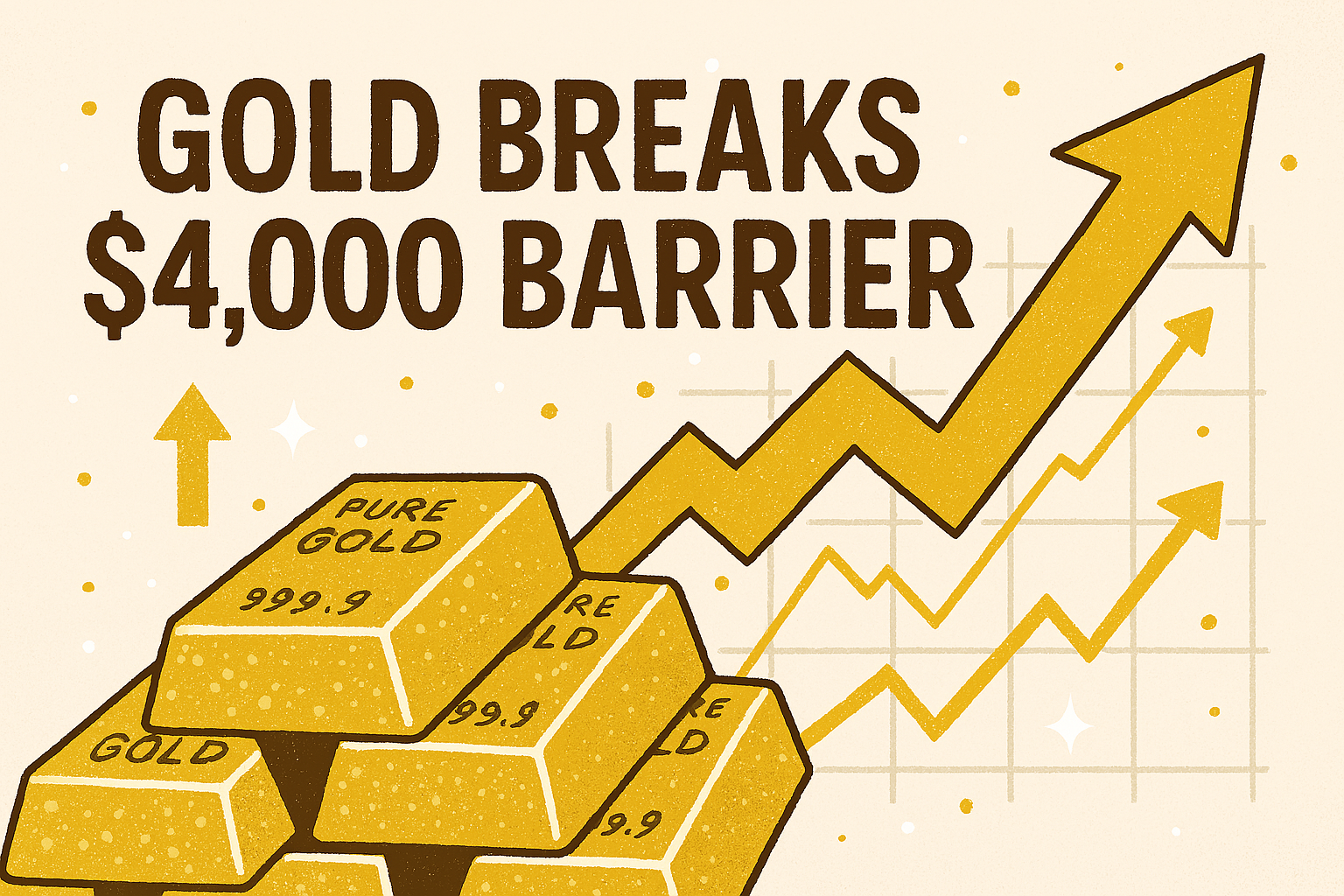
While some experts predict gold could reach $3,500 by the third quarter of 2025, others are more optimistic about the $4,000 mark being attainable in the near future.
The UK economy faced an unexpected contraction of 0.1% in January, marking a surprising downturn following a 0.4% growth in December 2024
This decline, reported by the Office for National Statistics (ONS), has raised concerns about the nation’s economic trajectory, particularly as the government prioritizes boosting growth.
The contraction was primarily attributed to a slowdown in manufacturing, alongside weak performances in oil and gas extraction and construction.
The ONS noted that while the economy shrank in January 2025, the broader three-month period still showed modest growth of 0.2%. But never-the-less, it remains one of weak growth.
Interestingly, the services sector provided a glimmer of hope, driven by robust retail activity, especially in food stores, as consumers opted to eat and drink at home more frequently. This sector’s resilience partially offset the declines in other areas.
The timing of this economic dip is particularly significant, as it precedes the Chancellor’s Spring Statement, where even more government spending cuts are expected to be outlined.
Chancellor Rachel Reeves acknowledged the challenges and reportedly commented that the global economic landscape has shifted, and the UK is feeling the repercussions. She reiterated the government’s commitment to accelerating efforts to stimulate growth and reform public services.
However, the unexpected contraction has sparked criticism from opposition parties, who have labeled the government’s policies as ineffective in fostering sustainable economic growth.
The Shadow Chancellor reportedly described the government as a ‘growth killer,’ citing high taxes and restrictive employment legislation as barriers to business confidence and therefore growth.
As the UK navigates these economic headwinds, the focus will remain on the Chancellor’s upcoming measures and their potential to steer the economy back on track.
The January figures serve as a stark reminder of the fragile state of the UK economy and the challenges that lie ahead.
The S&P 500 has officially entered correction territory, marking a significant shift in market sentiment
The index, widely regarded as a benchmark for the health of large U.S. companies, has fallen over 10% from its February 2025 peak.
This downturn follows a series of escalating trade tensions, with President Donald Trump announcing a 200% tariff on European alcoholic products in response to the European Union’s levies on American whiskey.
The correction reflects growing investor concerns over the potential economic fallout of these trade disputes. The Nasdaq Composite, another major index, had already entered correction territory earlier, signaling broader market unease. The Dow Jones Industrial Average also experienced a decline, marking its fourth consecutive day of losses.
Economists warn that the ongoing trade war could exacerbate fears of a recession, as businesses face rising costs and uncertainty. The Federal Reserve’s recent inflation reports suggest price growth remains elevated, adding to the challenges.
While corrections are not uncommon, they often serve as a wake-up call for investors. Historically, only a fraction of corrections evolve into bear markets, but the current environment of trade tensions and inflationary pressures has heightened concerns.
As markets navigate these turbulent waters, all eyes remain on policymakers and their next moves to stabilise the economy.