

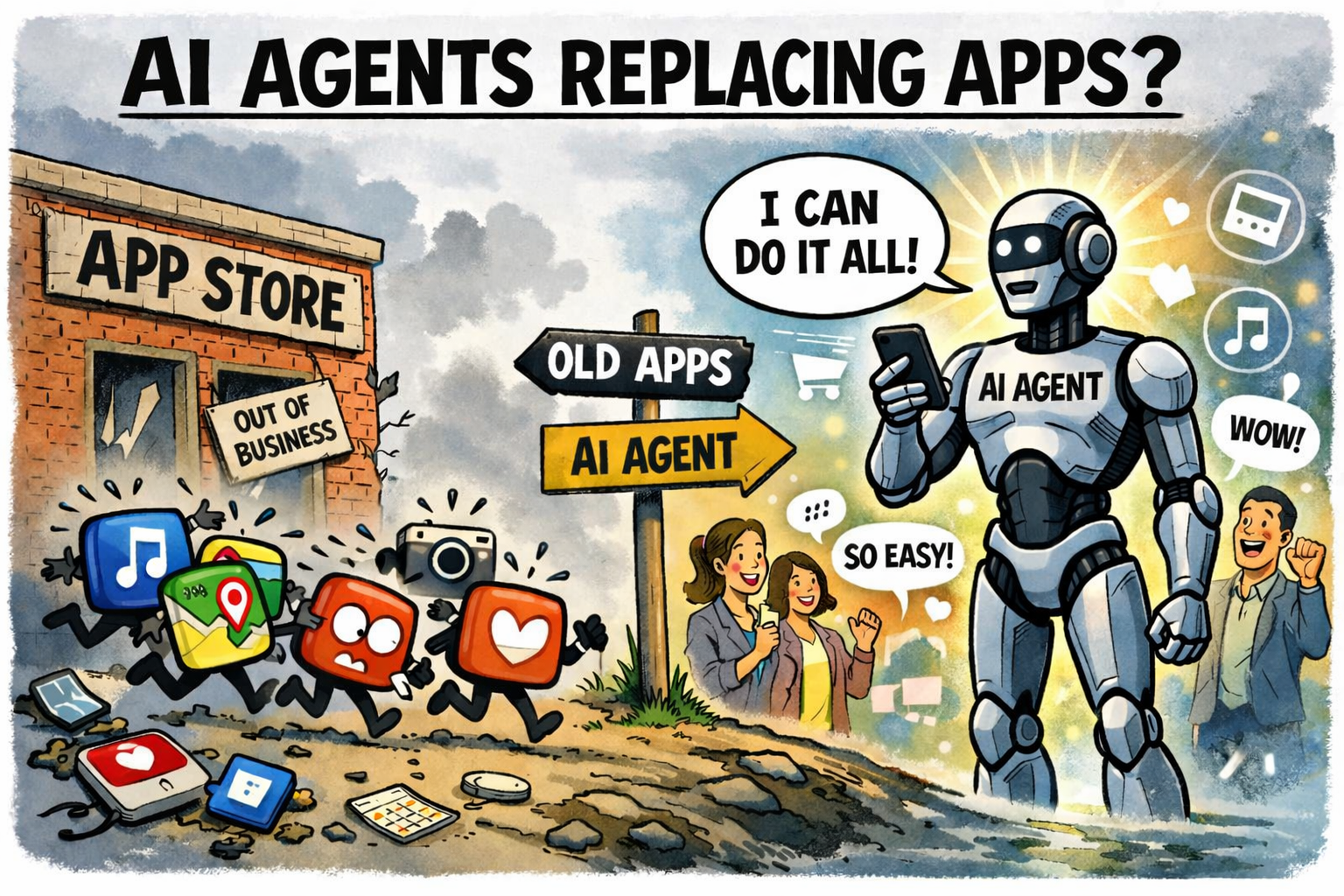
Qualcomm’s latest pitch is blunt: the age of standalone apps is fading, and AI agents are about to take their place.
It’s a bold claim, but it reflects a wider shift sweeping through the tech industry as on‑device AI becomes powerful enough to handle tasks that once required entire software ecosystems.
Delegating Intent
Qualcomm argues that future smartphones will rely less on tapping icons and more on delegating intent. Instead of opening an app to book travel, edit photos, or manage finances, users will instruct an AI agent that understands context, preferences, and history.
The agent will then orchestrate the work across services in the background. In Qualcomm’s view, this makes the traditional app model feel increasingly rigid and outdated.
The company’s latest Snapdragon platforms are designed around this idea: fast local processing, persistent personal models, and low‑latency agentic behaviour that doesn’t rely solely on the cloud.
It’s a strategic move to keep mobile hardware relevant as AI shifts the centre of gravity away from apps and towards continuous, conversational computing.
Sceptics will note that apps won’t vanish overnight. But the direction of travel is clear. If Qualcomm is right, the next major platform shift won’t be about bigger screens or faster chips.
It will be about replacing the app grid with an intelligent layer that simply gets things done.
