

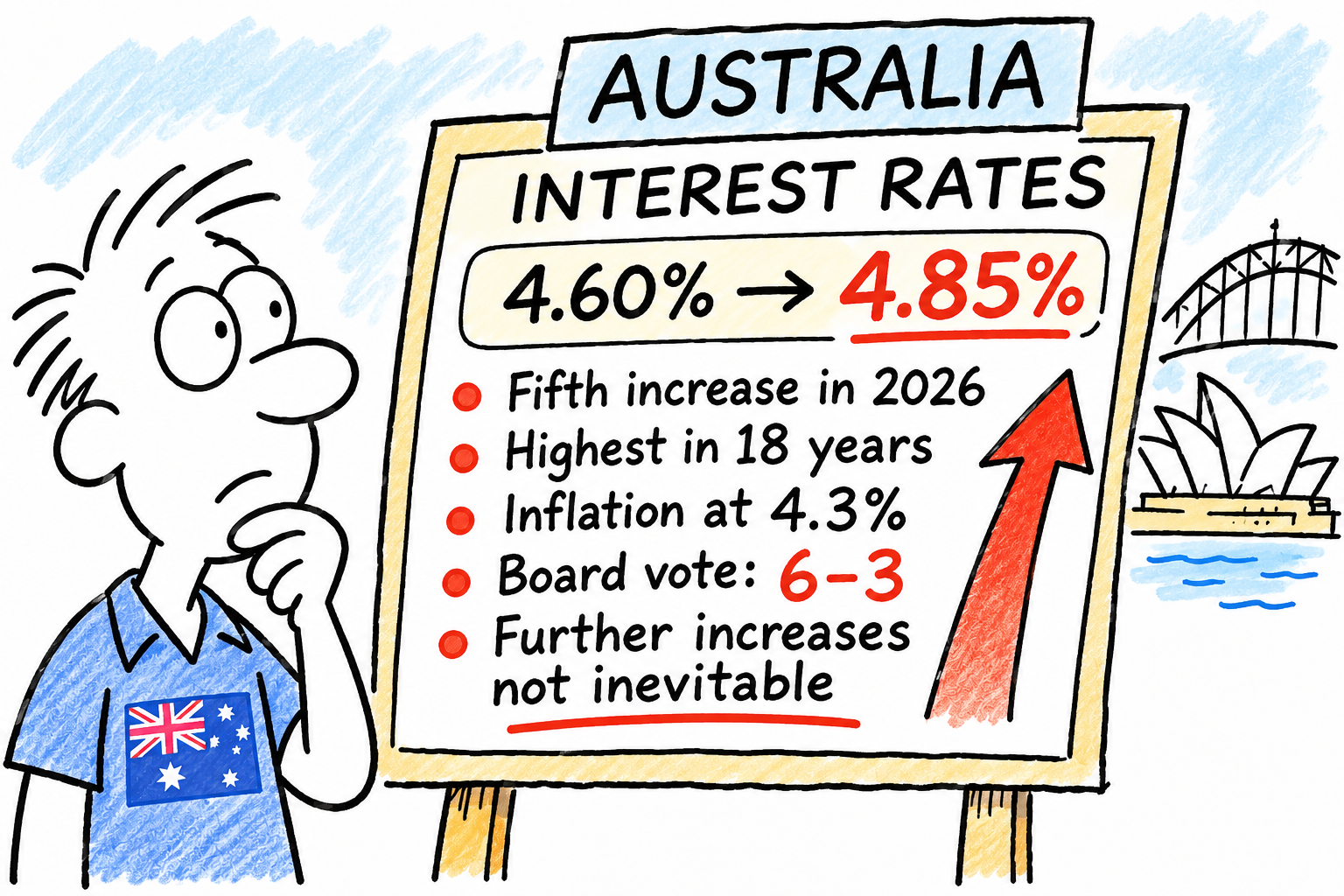
Australia has raised interest rates to their highest level in 18 years as the central bank steps up efforts to bring stubborn inflation under control.
The Reserve Bank of Australia (RBA) increased its cash rate from 4.60% to 4.85%, marking its fifth increase in 2026.
Inflation at 4.3%
Annual inflation reached 4.3% in September 2026, highlighting the difficulties policymakers face in bringing price pressures under control.
The decision was not unanimous, with six members of the nine-person board voting for an increase and three preferring to leave rates unchanged.
Pressure
The latest move will add further pressure to households already struggling with higher mortgage repayments and rising living costs.
Higher borrowing costs are intended to discourage spending, reduce demand and eventually ease inflation.
However, the RBA faces a delicate balancing act, as excessive tightening risks weakening economic activity and pushing the country towards a downturn.
Persistant issue
The decision also highlights a wider problem facing central banks worldwide. Despite previous monetary tightening, inflation has proved more persistent than policymakers had anticipated.
The RBA has indicated that further increases are not inevitable, suggesting it may be approaching the limits of how far it can tighten monetary policy without damaging growth.
For investors, the message is clear: the global interest-rate cycle may not be moving uniformly towards cheaper borrowing.
Inflation remains a stubborn obstacle, and higher interest rates could persist for longer than markets had hoped.