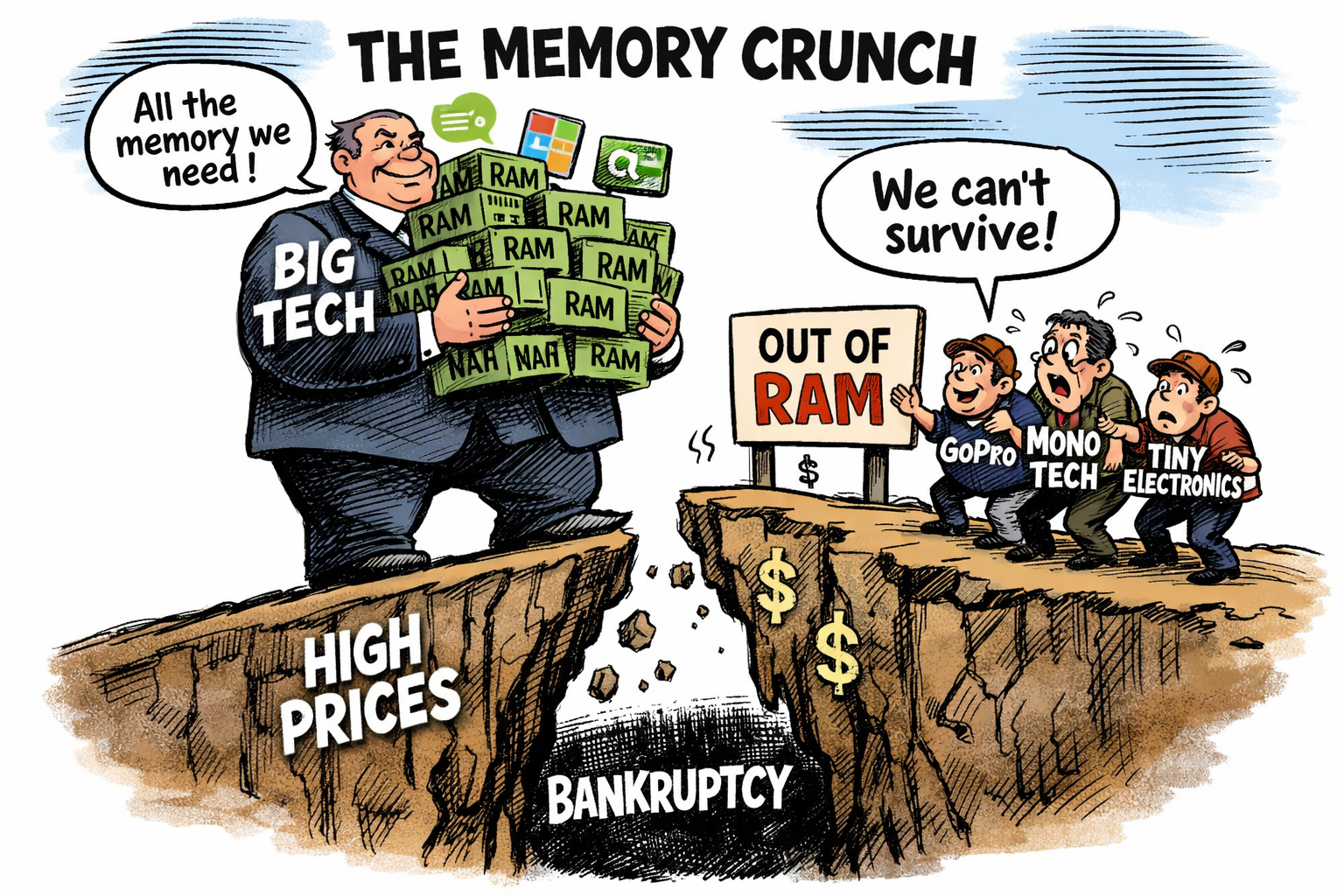

South Korea’s KOSPI plunges 8%!

Kospi Index falls again

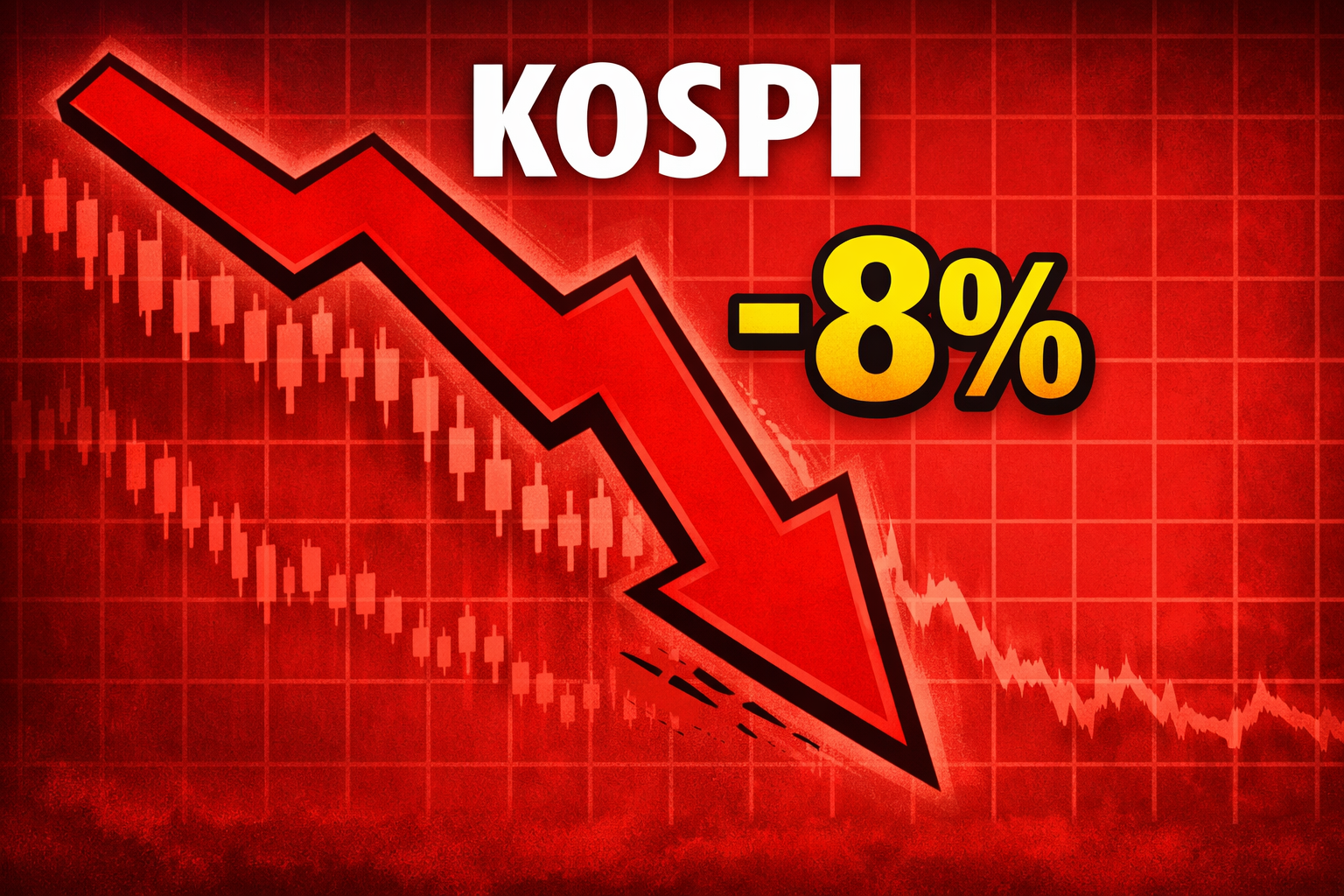
South Korea’s KOSPI index suffered a severe shock on Monday, 8th June, plunging more than 8% in early trading and triggering an automatic 20‑minute circuit breaker as panic selling swept through the market.

The index briefly fell to the mid‑7,400s, marking its third circuit‑breaker event of the year and underscoring the fragility of sentiment after a sharp global tech sell‑off.

Semiconductor heavyweights led the rout. Samsung Electronics slumped more than 8.5%, while SK Hynix dropped over 7%, with additional steep losses across major industrial names including LG Electronics, Hyundai Motor and Samsung SDI.

The sell‑off mirrored a sharp downturn in U.S. markets the previous Friday 5th June 2026, where semiconductor giants such as Nvidia, Broadcom and Micron were hit hard, fuelling fears that the AI‑driven rally had overheated.

A hotter‑than‑expected U.S. jobs report also stoked concerns that the Federal Reserve may lean towards further rate hikes, adding to the risk‑off mood.

Currency markets reflected the stress: the Korean won weakened sharply to around 1,554 per dollar as foreign investors accelerated withdrawals.

Although local institutions and retail investors later stepped in to “buy the dip,” helping trim some losses, the episode highlighted the market’s vulnerability to global tech sentiment and shifting U.S. rate expectations.

Nasdaq’s Rally Snaps as Hot Jobs Data Slams Tech

Nasdaq drops

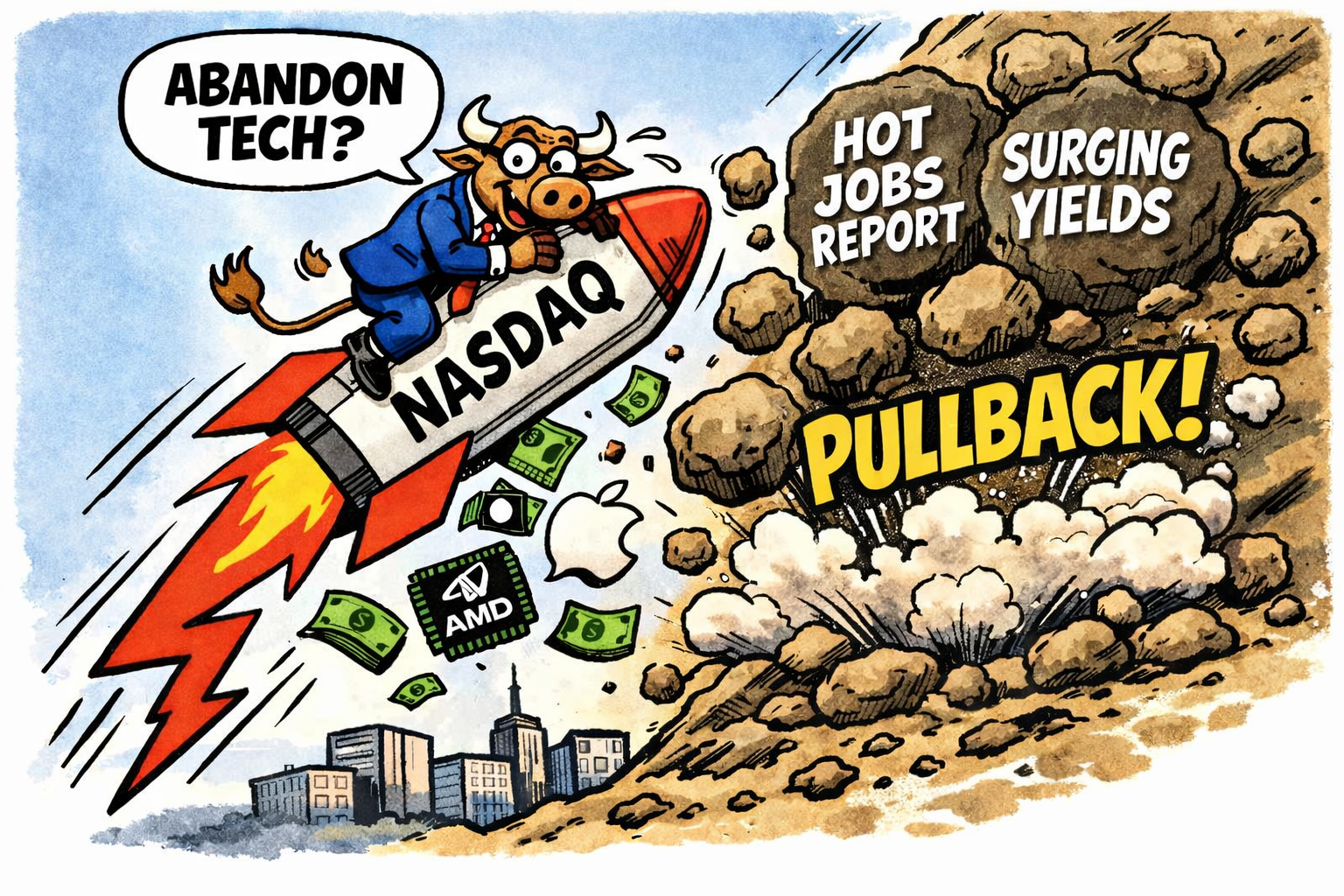
The Nasdaq Composite endured a bruising session on Friday, 5th June 2026, tumbling more than 4% in its steepest single‑day decline since April 2025.

The sell‑off was triggered by a powerful combination of surging Treasury yields and a violent unwinding in semiconductor and mega‑cap technology stocks, following a far stronger‑than‑expected U.S. jobs report.

Employers added 172,000 jobs in May 2026, more than double economists’ forecasts, a result that swiftly erased hopes of near‑term Federal Reserve rate cuts and instead fuelled expectations of tighter policy for longer.

Chipmakers bore the brunt of the rout. Broadcom, Nvidia, Micron, Marvell and AMD all suffered heavy losses, with the sector’s slump wiping out well over a trillion dollars in market value across the week.

The Nasdaq closed at 25,709.43, down around 4.18%, while the S&P 500 fell 2.6% and the Dow Jones Industrial Average dropped 695 points.

The broader risk‑off mood extended beyond equities. Bitcoin slid below $60,000 for the first time since 2024, while gold and silver also weakened as investors recalibrated expectations for monetary policy.

With Treasury yields climbing above 4.5%, markets ended the week facing renewed questions about valuations, positioning, and the durability of the two‑year AI‑driven rally.

S&P 500 and Nasdaq Composite and 100 All Hit Fresh Record Highs as Tech Momentum Intensifies – 26th May 2026

New record all-time highs for U.S. indices

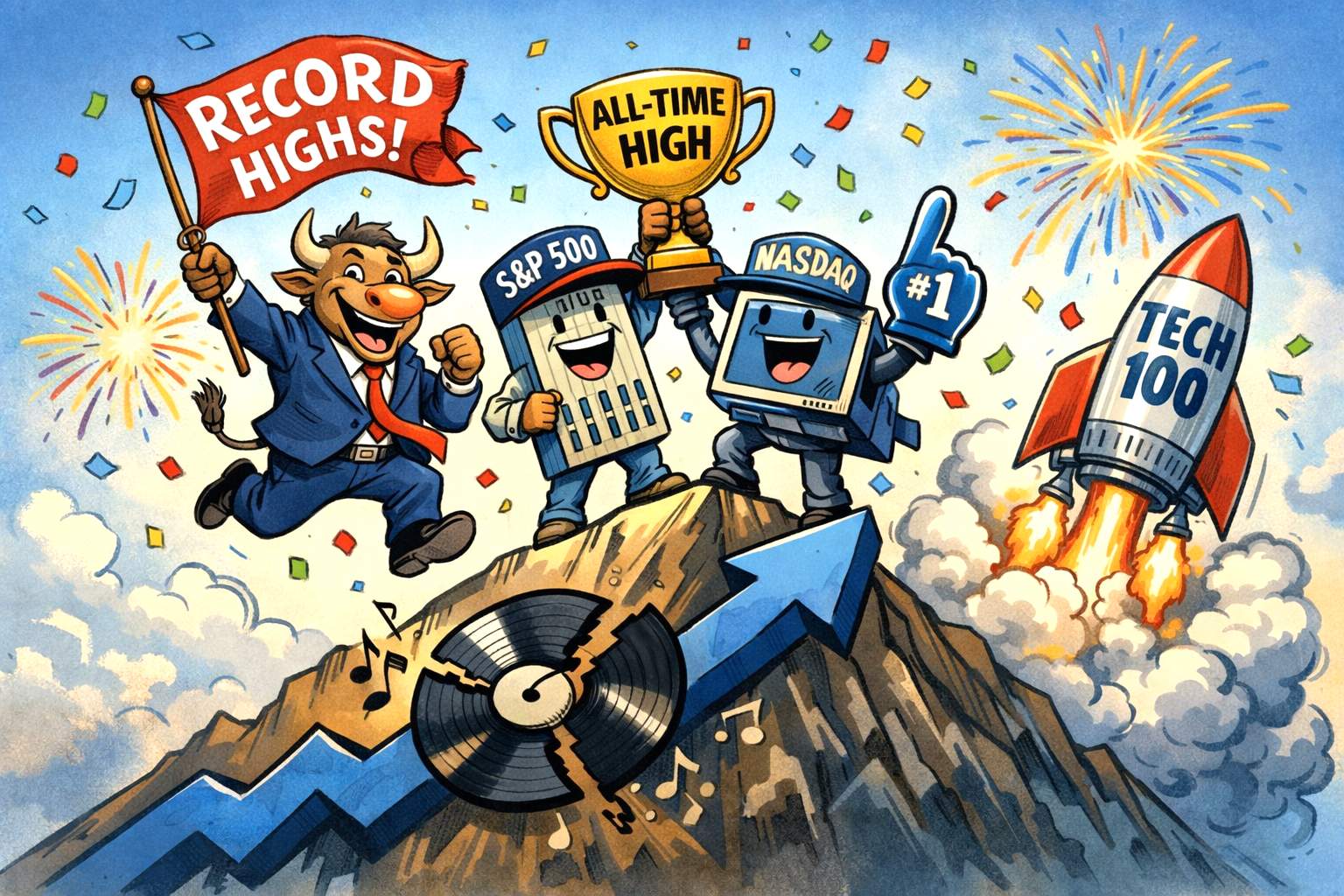
The S&P 500 and Nasdaq Composite surged to new all‑time highs yesterday, extending a rally that shows little sign of fatigue as investors continue to pile into megacap technology and AI‑linked names.

The move higher came despite a patchy run of U.S. macro data, underscoring how dominant earnings strength and sector‑specific momentum have become in driving equity sentiment.

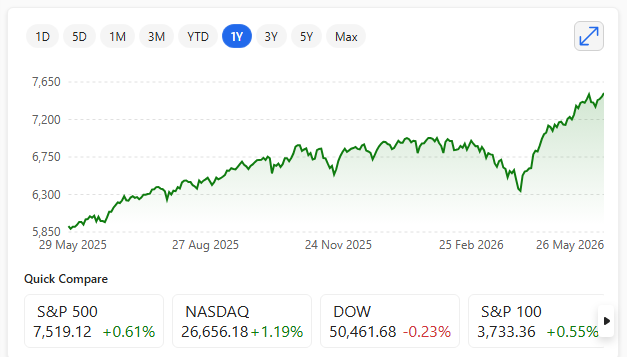
S&P 500: 7,519.12, up 45.65 points (+0.61%) — a record closing high.

S&P 500 26th May 2026

The S&P 500’s climb was supported by broad participation across technology, communication services and consumer discretionary, with investors rewarding companies delivering consistent revenue and margin expansion.

Market breadth has improved modestly in recent weeks, helping reinforce confidence that the rally is not solely dependent on a handful of giants.

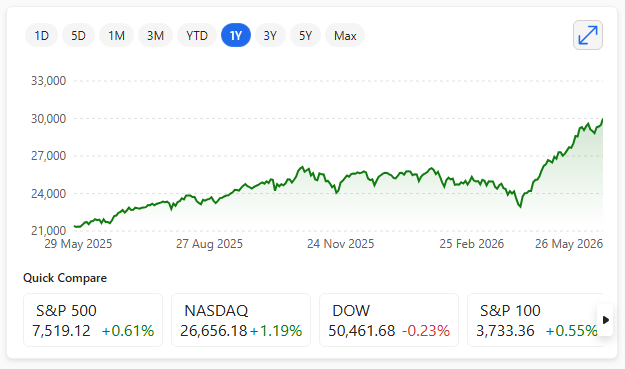
Nasdaq Composite: 26,656.18, up 312.21 points (+1.19%) — also a record closing high, with an intraday peak of 26,725.29.

Nasdaq Composite 26th May 2026

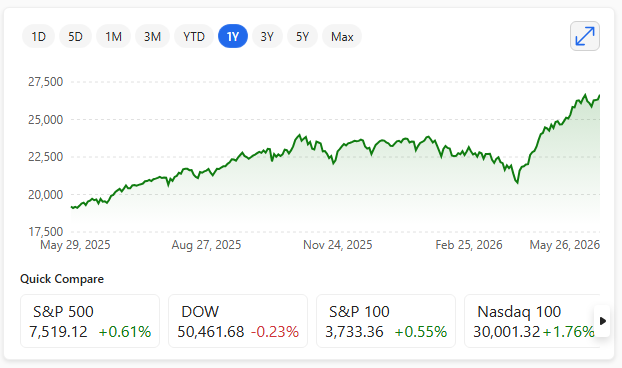
Nasdaq‑100 (NDX): 30,001.32Up: +519.68 points (+1.76%) Intraday high: 30,044.49 – a new record high.

Nasdaq 100 26th May 2026

The Nasdaq once again outperformed, propelled by heavy demand for semiconductor, cloud and AI infrastructure stocks.

Upbeat guidance from several major tech firms earlier this month has strengthened the view that the sector’s earnings cycle still has room to run.

While valuations remain elevated and leave the market exposed to any negative surprise, investors have so far shown little inclination to rotate away from the winners.

Yesterday’s triple records highlight the market’s conviction that the AI‑driven profit cycle remains intact.

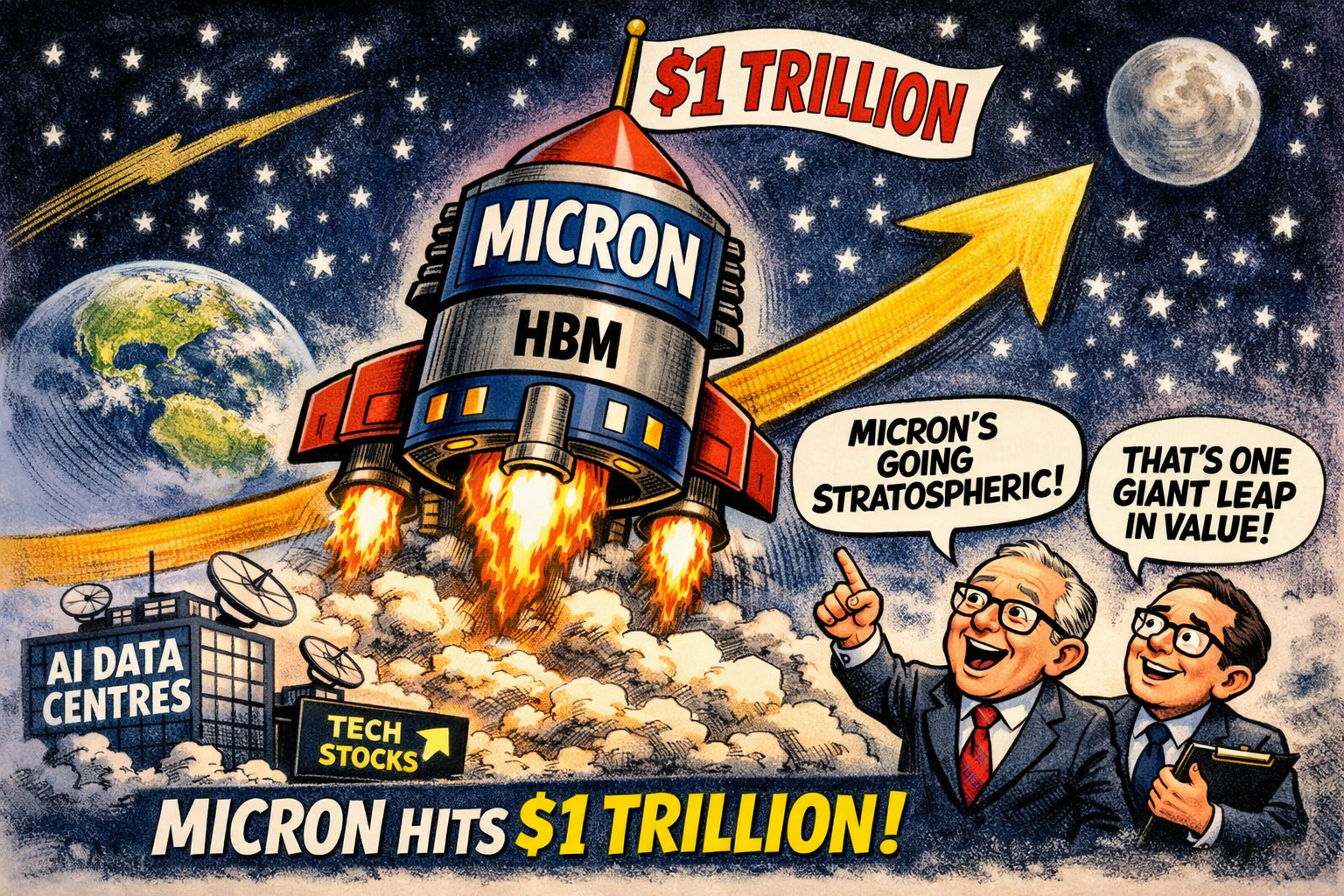
Micron is the latest company to reach $1 trillion valuation

Micron at $1 trillion Cap

Micron has surged past the $1 trillion valuation mark, becoming the latest chipmaker to ride the relentless global demand for advanced memory used in AI data centres.

The company’s shares have climbed sharply as hyperscalers race to secure high‑bandwidth memory for next‑generation training clusters, pushing Micron’s order book to record levels and transforming what was once a cyclical manufacturer into a strategic pillar of the AI supply chain.

Milestone

The milestone reflects a dramatic shift in investor perception. Micron’s HBM3E and emerging HBM4 lines are now viewed as essential infrastructure, commanding premium pricing and long‑term supply agreements.

Profitability has strengthened accordingly, with margins expanding as production scales and shortages persist across the industry.

While the trillion‑dollar threshold underscores Micron’s new status among the semiconductor elite, it also raises expectations.

Sustaining this valuation will depend on flawless execution, continued technological leadership, and the durability of the AI investment boom.

Global Trillion‑Dollar Companies (May 2026) – Micron and SK-Hynix to join

RankCompanyMarket Cap (USD trillions)SectorNotes
1️⃣Nvidia (NVDA)≈ 5.3 – 5.2SemiconductorAI  hardwareWorld’s most valuable firm; GPUs power global AI infrastructure.
2️⃣Alphabet ≈ 4.6 – 4.7Comms ServicesAI‑driven growth via Google Cloud, Gemini, and YouTube ads.
3️⃣Apple (AAPL)≈ 4.5 – 4.4Consumer TechStill a top‑three giant; hardware + services ecosystem.
4️⃣Microsoft ≈ 3.1Software  Cloud  ComputingAzure and enterprise AI remain core drivers.
5️⃣Amazon ≈ 2.8 – 2.9E‑commerce / CloudAWS and retail logistics sustain trillion‑plus value.
6️⃣TSMC (TSM)≈ 2.1SemiconductorCritical foundry for global chip supply chain.
7️⃣Broadcom ≈ 2.0SemiconductorSoftwareRides HBM and networking chip demand.
8️⃣Saudi Aramco≈ 1.8EnergyLargest non‑tech member; oil and petrochemical dominance.
9️⃣Tesla (TSLA)≈ 1.5 – 1.6Automotive /
Energy
EV and AI‑driven autonomy keep valuation high.
🔟Meta Platforms (META)≈ 1.5 – 1.6Social Media   AI  advertisingStill above $1 T despite rotation toward semiconductors.
11️⃣Samsung Electronics≈ 1.3Semiconductors / MemoryNew entrant; HBM and AI‑memory surge.
12️⃣Berkshire Hathaway (BRK.A)≈ 1.0Financial ConglomerateDiversified holdings across insurance, energy, and rail.