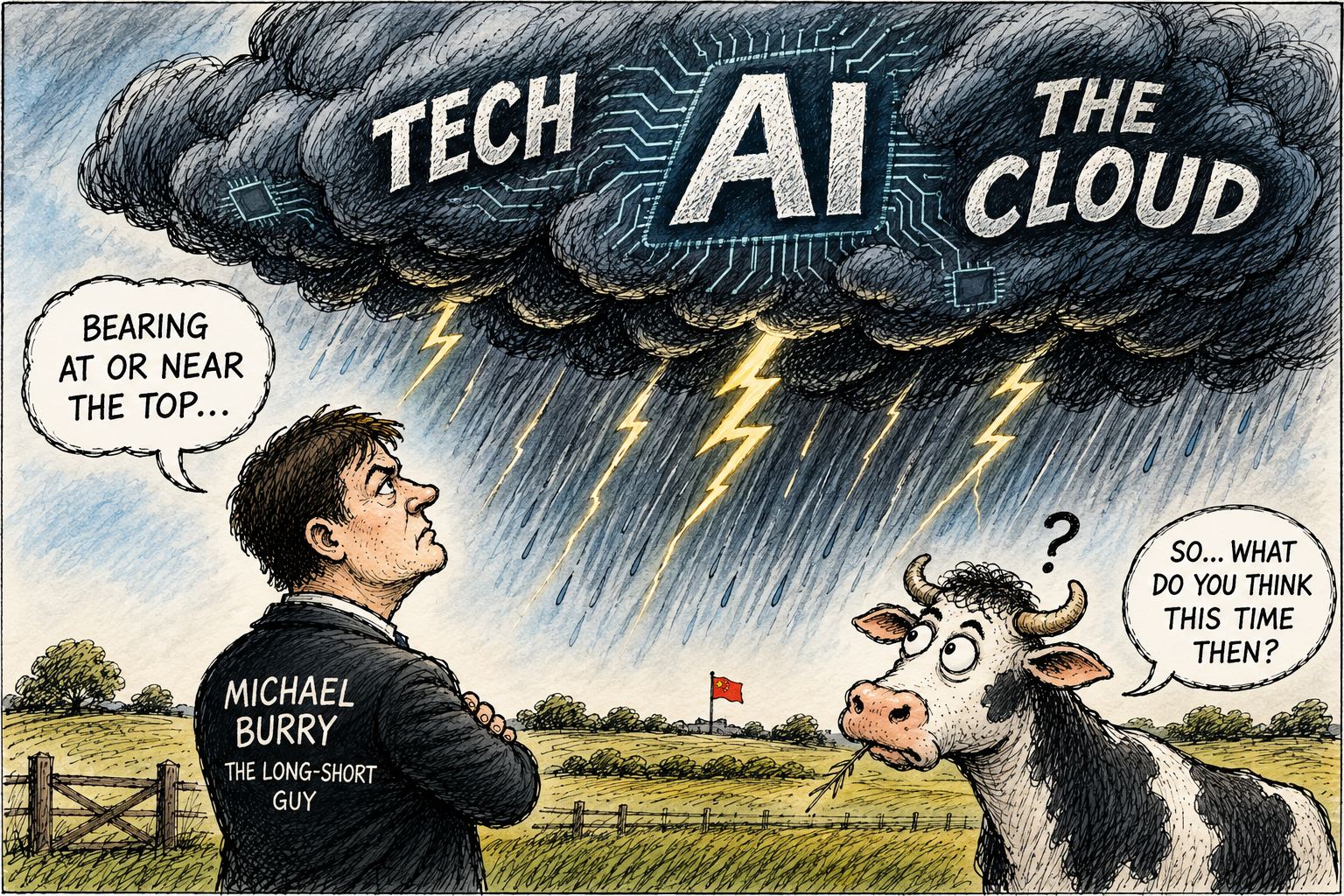


The combination of record global debt, higher borrowing costs and growing doubts about the enormous sums being committed to artificial intelligence is creating a more complicated backdrop for financial markets.
Global debt exceeded $365 trillion in the first half of 2026, according to the Institute of International Finance, with debt now around 310% of global GDP.
China and the U.S. debt mountain
The increase was driven particularly by China and the United States. At the same time, higher interest rates are making refinancing increasingly expensive, creating the possibility of a vicious cycle in which governments and companies borrow more simply to service existing obligations.
This is particularly significant for the AI boom. The OECD says governments and companies are expected to borrow around $29 trillion from markets during 2026, while corporate borrowing is also rising as businesses finance major investment programmes, including AI infrastructure.
Michael Burry
Michael Burry, famous for anticipating the U.S. housing crisis, has added another warning sign.
He has recently reportedly increased bearish positions involving Micron, Palantir, Nebius and the semiconductor sector, arguing that parts of the AI and chip boom could be vulnerable if supply increases faster than demand.
The concern is not necessarily that AI will fail. Rather, enormous investment and borrowing require enormous future revenues to justify them.
If AI spending produces lower-than-expected returns, highly valued technology shares could face pressure at the same time as heavily indebted companies face rising financing costs.
Could this affect the stock market now?
The ingredients for greater volatility are certainly present. Higher bond yields, expensive energy, inflation pressures and debt-servicing costs can compete with equities for investors’ money.
Reuters recently reported that global borrowing costs and energy prices were already creating concerns about the potential impact on equities and credit markets.
Yet markets have so far remained remarkably resilient, with U.S. shares still close to record levels.
The danger, therefore, may not be debt alone, but…
debt + high valuations + expensive AI investment + higher interest rates.
If those pressures reinforce one another, the adjustment in markets could become considerably more significant.