Recent U.S. data is indicating inflation is proving stubborn and isn’t going away anytime soon

Inflation has become a persistent challenge for the Fed

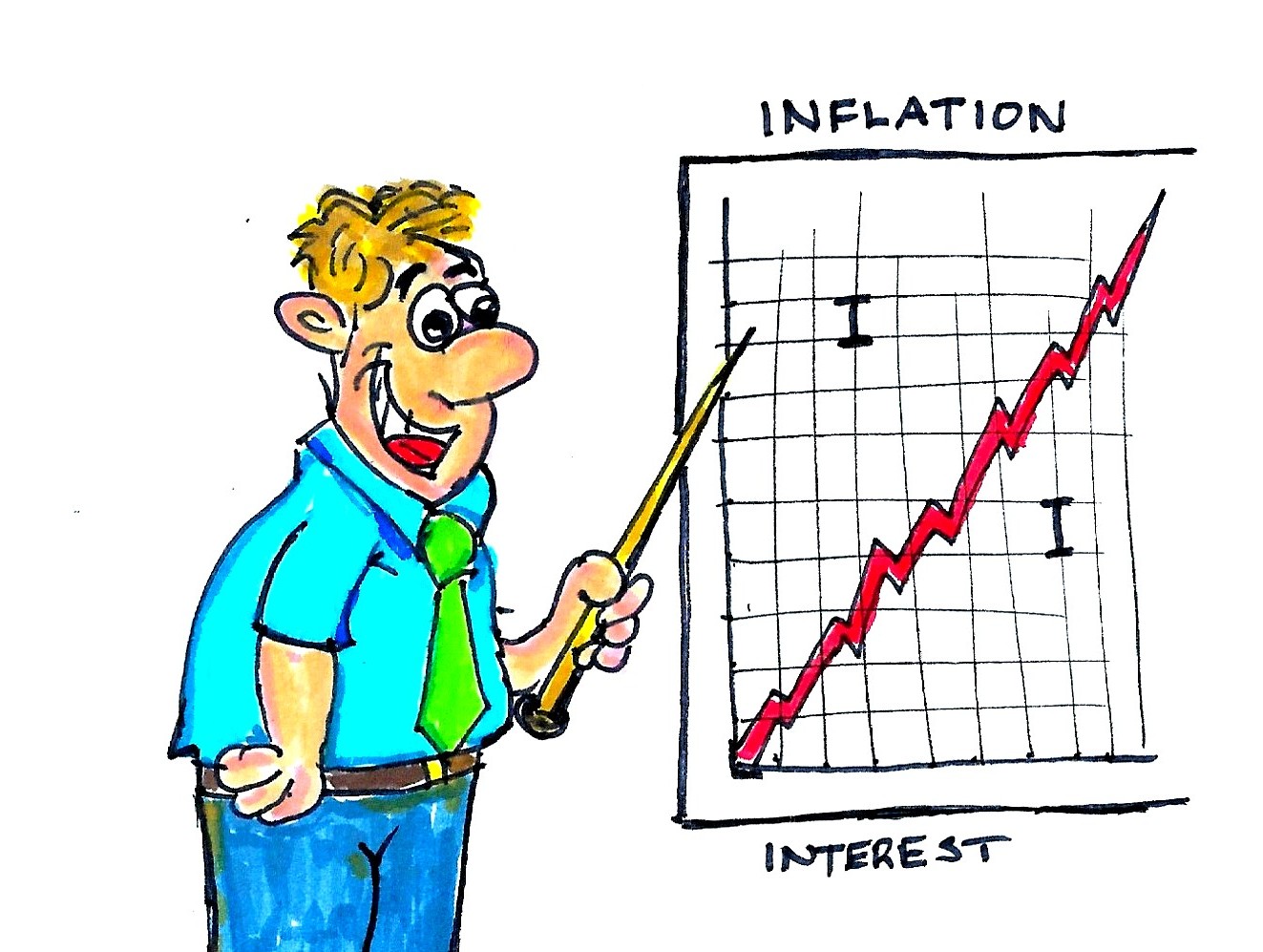
The battle against inflation persists, gradually impacting the U.S. economy and presenting substantial challenges for the Federal Reserve.

Despite concerted efforts to control it, inflation remains stubbornly remains, leaving policymakers in a dilemma – to stimulate economic growth or to curb spiraling prices.

Let the data speak

Recent data presents a concerning scenario. Indexes from the Commerce Department, used by the Federal Reserve as indicators of inflation, reveal that prices are rising at a rate significantly exceeding the central bank’s annual target of 2%. Consumer spending persists, encouraged by the excessive amount of money circulating in the financial system.

However, this spending spree isn’t sustainable, and consumers are dipping into their savings to fund purchases. The personal savings rate has plummeted to its lowest level since October 2022. Borrowing is up and debt is far too high!

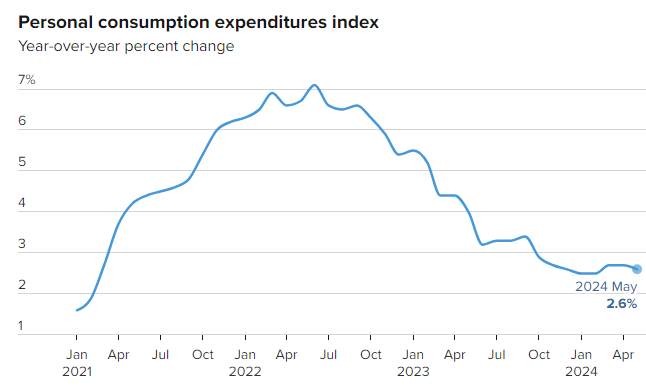
The Federal Reserve’s primary inflation gauge, the personal consumption expenditures price index, rose to 2.7% in March, encompassing all items. The crucial core index, excluding the more volatile food and energy prices, remained constant at 2.8%. These figures highlight the ongoing inflationary pressures.

Fed’s dilemma

The Federal Reserve is navigating a precarious inflation situation. Should it shift towards rate reductions prematurely, there’s a risk that inflation might surge back in 2024. Conversely, persistent inflation could compel central bankers to not only sustain the present rates but also ponder additional increases. The aspiration for a gentle economic descent is at stake.

Outlook

Forecasters anticipate inflation to dip below 2.5% in 2024, yet challenges persist. The Federal Reserve faces the difficult task of steering the economy towards stability and controlling inflation expectations. With the central bank’s policy meeting on the horizon, speculation abounds regarding their forthcoming strategy.

Will they maintain the current interest rates or implement more assertive measures? Their decision is set to influence the economic outlook for the foreseeable future.

Conclusion

U.S. inflation continues to be a persistent challenge, and the Federal Reserve’s efforts are ongoing. The path forward demands cautious steering, as policymakers must achieve a fine equilibrium to sustain economic stability while simultaneously curbing inflation.

And remember, the Fed said inflation was ‘transitory’.

UK inflation eases to 3.2% but down less than expected

UK inflation data March 2024

Inflation in the U.K. eased to 3.2% from 3.4% in March, the Office for National Statistics said on Wednesday 17th April 2024.

But a higher-than-expected reading creates more concern as investors push back bets on the timing of the first Bank of England (BoE) rate cut.

Economists expected 3.1% as inflation has been falling gradually since it peaked at 11.1% in late 2022.

Food prices provided the biggest downward drag on the headline rate, the ONS said, while motor fuels pushed it higher.

The core inflation rate, excluding energy, food, alcohol, and tobacco, was reported at 4.2%, slightly above the forecasted 4.1%. Services inflation, closely monitored by U.K. monetary policymakers, decreased from 6.1% to 6%, still surpassing the expectations of economists and the Bank of England (BoE).

The March core inflation figure, remaining above 4%, is expected to fuel speculation that inflation is more persistent than recent projections indicated, potentially delaying the anticipated timing of initial interest rate reductions.

UK inflation 3.2% March 2024

UK inflation 3.2% March 2024

U.S. Supercore inflation measure indicates Fed may have a problem

Markets have fretted about core inflation recently, now analysts are concerned about a highly specific price gauge within the data – ‘supercore’ inflation.

This measure tracks services inflation, excluding food, energy, and housing, which has recently surged, rising 4.8% year-over-year in March 2024 and over 8% on a three-month annualised basis.

The situation is further complicated as some of the most persistent elements of services inflation include essential household expenses such as car and housing insurance, along with property taxes. Wall Street was unsettled by a recent consumer price index report that exceeded expectations, yet the focus is on the ‘supercore’ inflation reading within the data.

Economists also analysed the core CPI, which omits the volatile prices of food and energy, to discern the true inflation trend. The ‘supercore’ gauge goes a step further by also removing shelter and rent costs from its services calculation.

Federal Reserve officials find this measure particularly useful in the current environment, viewing the spike in housing inflation as a transient issue rather than a reliable indicator of underlying price trends.

Supercore inflation accelerated to a 4.8% pace year over year in March 2024, the highest in 11 months.

Sticky inflation problem

Adding complexity to the situation is the declining consumer savings rate coupled with rising borrowing costs, which may compel the central bank to maintain a restrictive monetary policy “until something breaks,” according to Fitzpatrick.

Analysts warn that the Federal Reserve may struggle to reduce inflation through additional rate hikes, as the prevailing factors are more persistent and less responsive to stringent monetary policy.

U.S. markets unfazed by hot CPI data

U.S. Flag

Despite the recent surge in the Consumer Price Index (CPI), and better than expected PPI data, markets have shrugged off any concern… for now

Fickle

On Wednesday 10th April 2024 the CPI data announcement pushed the markets down and on Thursday 11th the markets recovered after the PPI data was better than expected.

CPI Report for March 2024

  • Both headline and core CPI rose by 0.4%, surpassing forecasts.
  • Bond markets are now cautious about potential rate cuts, shifting from a floor of three cuts to a possible ceiling.
  • Groceries’ inflation has eased, but housing costs remain a pressure point.
  • Fed policymakers closely monitor Supercore services inflation.
  • Solid wage gains continue to impact prices.

Producer Price Index (PPI)

PPI increased by 0.6% in February 2024. Expectations persist for June rate cuts by the Federal Reserve.

Nvidia enters correction territory as stock falls from all-time high

AI

Nvidia, manufacturer of one of the most advanced graphics processing units (GPUs), has significantly benefited from the artificial intelligence (AI) surge due to the high demand for its microchips.

The company’s shares have fallen 10% from their recent all-time high, which was over $950. On Tuesday, 9th April 2024, the stock closed at $853.54, but it saw a slight recovery on Wednesday 10th April 2024, to $870.39.

Nvidia Corporation share price off recent all time high

Nvidia Corporation share price off recent all time high

On Tuesday, 9th April 2024, Intel, a competitor in the chipmaking industry, introduced a new AI chip named Gaudi 3. This chip is designed to drive large language models and stands as a contender against Nvidia’s most sophisticated chips.

U.S. inflation data coming in higher than expected along with a climb in treasuries has led to doubts of a Fed rate cut anytime soon.

These concerns combined together, pushed Nvidia and some other tech stocks lower.

The Nasdaq Composite drifted lower on the day

The Nasdaq Composite drifted lower

Does the U.S. jobs boom raise doubts about rate cuts?

U.S. job creation vs inflation and interest rates

The U.S. economy is on a rip, with employers adding around 303,000 jobs in March 2024 – the largest increase in almost a year.

As the world’s largest economy continues to surge, questions arise about the Federal Reserve’s next move regarding interest rates.

Stronger-than-expected Job Growth

The unemployment rate fell to 3.8%, indicating strong job growth in several sectors such as health care, construction, and government. While economists had predicted job gains of approximately 200,000, the actual numbers have easily exceeded those expectations.

The labour market’s surprising resilience has caught analysts off guard, leading to speculation about the timing of interest rate cuts.

Fed’s Dilemma

The Federal Reserve has held interest rates in a range of 5.25%-5.5%, the highest level in over two decades. Initially, the Fed raised rates sharply in 2022 to curb inflationary pressures. However, the subsequent cooling of price inflation (down to 3.2% in February) without a significant spike in unemployment has complicated matters. The central bank now faces a delicate balancing act.

Delayed Rate Cuts?

The significant increase of 303,000 in non-farm payrolls for March 2024 reinforces the Federal Reserve’s stance that the robustness of the economy permits a gradual approach to interest rate reductions.

The Fed had been expected to initiate rate cuts this year to mitigate the impact of high borrowing costs. However, the stronger-than-anticipated economic performance suggests that rate cuts may not occur until the second half of this year.

Labour Market Dynamics

U.S. government spending in areas like high-tech manufacturing and infrastructure has bolstered the labor market. Additionally, an influx of more than three million immigrants last year has expanded the workforce, potentially keeping wage pressures in check. In March, average hourly pay rose by 4.1% year-on-year, consistent with expectations and near a three-year low.

America’s Comeback

President Joe Biden hailed the latest job figures as a “milestone in America’s comeback.” However, some market analysts argue that the strong jobs growth could complicate efforts to return inflation to the Fed’s 2% target. Some analysts even speculate that rate cuts may not materialize until 2025.

Global Implications

Higher U.S. interest rates have ripple effects worldwide, enticing investors to shift capital toward America. While the Fed’s in-tray still has some warnings, the delay in rate cuts reflects the economy’s underlying strength.

The U.S. jobs boom presents a conundrum for policymakers. Balancing economic vitality with inflation control remains a delicate task, and the Fed’s decisions will reverberate far beyond its borders.

Euro zone inflation unexpectedly falls to 2.4% in March 2024

EU inflation

Eurozone inflation eased to 2.4% in March 2024, as indicated by preliminary figures released on Wednesday 3rd April 2024.

This decrease has increased expectations that interest rate cuts may start in the summer 2024.

Market analysts anticipate that the central bank will commence reductions in interest rates starting in June 2024, reflecting recent communications from the ECB.

Fed Chair Powell stresses the importance of additional proof that inflation is subsiding before cutting interest rates

Powell

Federal Reserve Chairman Jerome Powell stated on Wednesday 3rd April 2024 that policymakers will need time to assess the current inflation situation, leaving the schedule for potential interest rate reductions unclear.

Referring to the stronger-than-anticipated price pressures at the year’s onset, Powell reportedly stated that he and his colleagues are not in a hurry to relax monetary policy.

Market expectations are leaning towards the FOMC initiating policy easing this year, although adjustments to the anticipated timing and scale of reductions have been necessary due to persistently high inflation.

Meanwhile, other economic indicators, especially in the U.S. labour market and consumer spending sectors, remain robust, affording the Fed the opportunity to evaluate the prevailing situation prior to taking action.

The target rate is 2%.

UK inflation down to 3.4% in February 2024

UK inflation

In February 2024, inflation decreased to 3.4%, a decline from January’s 4%, moving closer to the Bank of England’s self-imposed target of 2%


This reduction signifies that the cost of living is increasing at its least rapid rate since September 2021, when it was recorded at 3.1%.

Since reaching a peak of 11.1% in October 2022, the highest in 40 years, inflation has been on a steady decline. In the big inflation picture, that’s a pretty good result.

It has only taken around 16 months to move the rate from 11.1% (a 40-year high) down to just 1.4% above the BoE’s target of 2%.

The primary factor contributing to this decrease, as reported by the Office for National Statistics (ONS), is the deceleration of food price inflation.

U.S. consumer prices rose 0.4% in February 2024 and 3.2% from a year ago

U.S. inflation

The U.S. Consumer Price Index, a comprehensive gauge of the cost of goods and services, rose by 0.4% for the month and increased by 3.2% compared to the previous year.

The annual rate was marginally higher than expected. The monthly rate was slightly above the forecast of 0.3%. This may likely direct the Federal Reserve to hold off on an interest rate reduction, at least until the summer of 2024. What will Wall Street make of it?

The core Consumer Price Index increased by 0.4% monthly and recorded an annual rise of 3.8%. Both figures exceeded forecasts by one-tenth of a percentage point.

An increase of 2.3% in energy costs contributed to the rise in the overall inflation figure. Food prices remained mostly unchanged for the month, while housing expenses saw a further increase of 0.4%.

U.S. consumer price index data for February 2024 – Month on month
U.S. consumer price index data for February 2024Year on year

Powell says the Fed is not ready to start cutting interest rates yet

U.S. interest rates

In his Capitol Hill testimony on 6th March 2024, Federal Reserve Chairman Jerome Powell reiterated that was not yet time to begin cutting interest rates.

To fight inflation, which reached a rate of 9% in the summer of 2022, the central bank has significantly increased interest rates in recent times. However, prices are still stubborn, especially for things like housing and groceries.

Due to the robust economic performance in early 2024, the expected reduction in interest rates has been postponed. Instead of taking place this month, the rate cuts are now more probable in May or June 2024.

Powell reportedly said: ‘The Committee does not expect that it will be appropriate to reduce the target range until it has gained greater confidence that inflation is moving sustainably toward 2 percent.’

He reiterated the pledge to lower inflation to the 2% target and keep long-term inflation expectations stable.

UPDATE

On Thursday 7th March 2024 Powell also said: the Fed is ‘not far’ from the point of cutting interest rates

Inflation in the euro-zone eased to 2.6% in February 2024

Euro zone inflation

Euro zone inflation eased to 2.6% in February figures showed on Friday 1st March 2024, but both the headline and core figures were higher than expected.

Core inflation

Core inflation, removing the volatile elements of energy, food, alcohol and tobacco was 3.1% above the 2.9% rate expected.

The February figures will be a headache for EU policymakers, as core inflation is still holding above 3% even as the headline rate moves toward the ECB’s 2% target.

U.S. inflation up 0.4% in January 2024 as expected and up 2.8% year to-date but coming down ever-closer to 2% target

U.S. inflation

U.S. inflation climbed in line with expectations in January 2024, according to the preferred measure the Federal Reserve uses to make decisions on cutting interest rates.

The personal consumption expenditures (PCE) price index, excluding food and energy costs, increased 0.4% for the month and 2.8% from a year ago, as expected according to analyst’s predictions.

Headline PCE, including the volatile food and energy categories, increased 0.3% monthly and 2.4% on a 12-month basis according to the numbers released Thursday 29th February 2024 by the Commerce Department’s Bureau of Economic Analysis.

The data was released amid an unexpected jump in personal income, which rose 1%, well above the forecast for 0.3%. Spending decreased 0.1% vs. the estimate for a 0.2% gain.

U.S. inflation target is 2%.

Is the fight against inflation failing – or does it get much harder towards the end?

Stubborn inflation

Is progress on U.S. inflation stalling?

That’s the fear spreading through Wall Street as another inflation reading on Friday 16th February 2024 came in hotter-than-expected.  

The producer price index rose 0.3% in January 2024. The largest increase since August 2024 and higher than the 0.1% forecast. Excluding food and energy, core PPI jumped 0.5%, again well above consensus.

Stubborn

It is yet another sign of stubborn price pressures across the broader U.S. economy. And it came just days after an unexpectedly hot CPI reading, which gave markets a nasty jolt.  

Both data have stoked investor worries on whether inflation is firmly under control. The latest developments also reinforce the Fed’s caution that it will need to see more evidence of disinflation before committing to lower rates.

Mohamed El-Erian, Allianz chief economic advisor, posted on X that like the CPI data, the PPI report was a further indication that the last mile of the inflation battle is more complex than many had assumed (and still assume).

Some economists even argue the jump in Friday’s data will likely push January’s personal consumption expenditures price index, the Fed’s preferred inflation gauge.

The PPI data means we can finalise our core PCE forecast for January, at 0.32%. That would be the biggest increase since September. But the three months since then all saw much smaller gains.

But investors will have to wait until later this month for PCE data when it’s released on 29th February 2024.

UK inflation holds steady at 4%, lower than expected

UK inflation statistics

The UK’s inflation rate remained at 4% in January 2024, despite the first monthly fall in food prices in two years, ONS figures show.

January U.K. inflation held steady at 4% year-on-year benefitting from easing prices for furniture and household goods, food and non-alcoholic beverages.

According to the latest figures from the Office for National Statistics (ONS), prices for food and non-alcoholic beverages fell on a monthly basis by 0.4%, marking the first decrease since September 2021.

The core CPI figure excluding volatile food, energy, alcohol and tobacco prices annual reading was 5.1%, below the 5.2% estimate – but only a micro 0.1% difference.

The latest inflation data is a reflection of what is happening in the labour market: a tight labour supply is sustaining high wage growth and thus underlying inflationary pressure.

Inflation still sits double the BoE target of 2%.

U.S. inflation ticks back up to 3.1%

Chart

Stocks dropped on Tuesday 13th February 2024 after hotter-than-expected inflation data for January caused Treasury yields to spike

The new inflation figure raised doubts that the Federal Reserve would be able to cut rates several times this year, a key part of the equity market bull run case.

The consumer price index rose 0.3% in January 2024 from December 2023. CPI was up 3.1% year-to-year. Economists expected CPI to have increased by 0.2% month over month in January and 2.9% from a year earlier.

U.S. inflation ticks back up in January 2024 figures

Turkey’s inflation nears 65%

Inflation climbs

In January 2024, inflation logged its biggest monthly jump since August with a 6.7% rise from December 2023.

Year-on-year inflation hit nearly 65%, according to the Turkish Central Bank’s figures released Monday 5th January 2024

The consumer price index (CPI) for the country of 85 million people increased by 64.86% annually, up slightly from the 64.77% of December.

Sectors with the largest monthly price rises were health at 17.7%, hotels, cafes and restaurants at 12%, and miscellaneous goods and services at just over 10%. Clothing and footwear were the only sectors showing a monthly price decrease, with -1.61%.

Food, beverages and tobacco, as well as transportation, all increased between roughly 5% and 7% month-on-month, while housing was up 7.4% since December 2024.

Interest rate hike to 45%, see report here.

U.S. Federal Reserve Bank holds interest rates at 5.25% – 5.50% and indicates reluctance to cut just yet

U.S. interest rate

The Federal Open Market Committee (FOMC) held interest rates steady and indicated a willingness stop raising interest rates.

But a cut anytime soon is unlikely until inflation is brought fully under control and nearer to the Fed’s 2% inflation target.

The Federal Reserve sent a signal that it is finished with raising interest rates but made it clear that it is not ready to start cutting, just yet. It also said there are no plans yet to cut rates with inflation still running above the central bank’s target.

Federal Reserve interest targets and increases since 2022 to January 2024

U.S. inflation pullback

U.S. Inflation down

Progress on U.S. inflation

Core prices for personal consumption expenditures (PCE), a preferred measure by the Federal Reserve as a longer-term inflation calculation, rose 2% for the period, while the rate was 1.7%.

On an annual basis, the PCE price index rose 2.7%, down from 5.9% a year ago, while the core figure excluding food and energy posted a 3.2% increase annually, compared with 5.1%.

Good news

Inflation falling, GDP rising, stabilizing interest rates and no recession thus far the U.S. economy is looking rock-solid despite all the negativity.

Turkey hikes interest rate to 45% after inflation touches 65%

Turkey inflation high

Turkey’s central bank on Thursday 25th January 2024 hiked its key interest rate to 45%.

It comes amid an ongoing struggle against double-digit inflation for Turkey’s policymakers, with the rate hike the latest step in that ongoing fight.

30 Turkish Lira to 1 U.S. dollar

Inflation in Turkey increased nearly 65% year-on-year in December 2023, up from 62% in November, and the country’s currency, the lira, hit a new record low against the U.S. dollar earlier in January 2024 at 30 Lira to $1.

Analysts predict this will be the last hike for some time, especially with local elections approaching in March 2024

UK inflation ticks up slightly in January 2024

Beer inflation

Inflation, rose marginally to 4% in December, up from 3.9% in November 2023.

Economists had forecast a slight fall but unexpected rises in alcohol and tobacco prices were behind the surprise rise.

However, with energy bills predicted to come down in 2024, there are still expectations of interest rate cuts later this year.

On target still for 2%?

As we have seen in the Germany, the U.S., and France, inflation does not fall in a straight line, ‘but our plan is working and we should stick to it,‘ Jeremy Hunt reportedly said in a statement.

UK inflation from April 2019 to December 2023

UK inflation from April 2019 to December 2023

Unprepared for both the start and the end of the pandemic

Increases in the cost of energy and food costs, started by pandemic lockdowns ending exasperated further by Russia’s invasion of Ukraine and more recently the conflict in Israel have put household finances under extreme pressure.

The UK and other countries were woefully underprepared for all of these events as they ‘began’ and at the ‘end’. We did not prepare to come out of them – there was no exit plan!

Markets and traders are still expecting BoE to cut its base rate in 2024 due to the fast-falling inflation rate. It peaked at 11.1% in October 2022 – and now sits at 4%.

The question is: will the economic recovery be good enough to allow the Bank of England to start cutting rates?

The UK interest rate currently sits at 5.25%.

Beer inflation
‘What’s inflation?’ ‘Dunno, but my beer’s gone up!’

December 2023 U.S. inflation data came in higher-than-expected

U.S. December inflation

Stocks moved lower Thursday 11th January 2024, reflecting the higher-than-expected December 2023 inflation data.

The S&P 500 in early trade edged lower by around 0.7%, while the Nasdaq Composite dropped nearly 0.8%. The Dow Jones Industrial Average dropped by 0.6%. The S&P 500 briefly touched 4800 after climbing above its record high of 4,796.

Higher than expected

December’s consumer price index figure came out slightly higher-than-expected, reflecting a 0.3% increase in consumer prices for the month, pushing the annual rate to 3.4%.

Core CPI, excluding volatile food and energy prices, came out in line with expectations, however, pointing to persistent, but easing inflation pressures. The new inflation data figures suggests that future interest rate cuts may be slower to come.

This move up in CPI is an absolute reminder of the unpredictable nature of economic recovery.

UK inflation down again

THERE ARE TWO I'S IN INFLATION!

UK inflation fell by more than expected in November 2023, driven largely by a drop in fuel prices.

Inflation dropped to 3.9% in the year to November 2023, down from 4.6% in October 2023. Other than fuel, slowing food and household items were also behind the drop.

Inflation has fallen a long way from its peak in 2022, it is still almost double the Bank of England’s 2% target.

The Bank has put up interest rates 14 times since December 2021 to try to slow price rises, pushing up savings rates but also borrowing costs.

The Bank of England Interest rate is currently at 5.25%, a 15-year high.

U.S. inflation at 3.1% November 2023

U.S. Inflation

Prices across a wide spectrum of goods and services moved slightly higher in November 2023 but were mostly in line with expectations, thus further easing pressure on the Federal Reserve.

The consumer price index, a closely watched inflation gauge, increased 0.1% in November, and was up 3.1% from a year ago, the U.S. Bureau of Labor Statistics reported Tuesday 12th December 2023.

While the monthly rate indicated a pickup from the flat CPI reading in October 2023, the annual rate showed another decline after hitting 3.2% a month earlier.

U.S. Bureau of Labour Statistics

Euro zone inflation drops to 2.4%, well below expectations – bringing early Christmas cheer

Cheers

Annual inflation in the euro zone sank to 2.4% in November 2023 from 2.9% in October 2023, data showed Thursday 30th November 2023.

Core inflation was also below expectations at 3.6%.

The European Central Bank has stressed that it is too early to declare victory in the 20-member euro zone bloc, as they monitor potential pressures from wage increases and energy markets.

Headline inflation has now fallen significantly from the peak levels of 10.6% in October 2022.

Target of 2% and is well within reach.

Bank of England governor worried over UK growth outlook

Central Banks are struggling to catch-up with inflation

The governor of the Bank of England, Andrew Bailey has raised concerns over economic growth as he warned again that interest rates will not be cut in the ‘foreseeable future’.

The bank boss said he was concerned over the UK economy’s potential to grow. It comes after the government’s forecaster cut its growth outlook for the UK, due to high inflation, interest rates, energy and food price increases which were exacerbated by the Covid pandemic and Russia’s invasion of Ukraine.

Inflation, which is the rate consumer prices rise at, has dropped sharply in recent months, falling to 4.6% in the year to October largely as a result of lower energy prices.

However, it is still more than double the Bank of England’s 2% target and Mr Bailey warned lowering inflation further would be ‘hard work’.

Interest rates are currently at 5.25%, a 15-year high, which has pushed up borrowing and mortgage costs.

The Bank of England (BoE) failed abysmally to maintain inflation at 2%.