

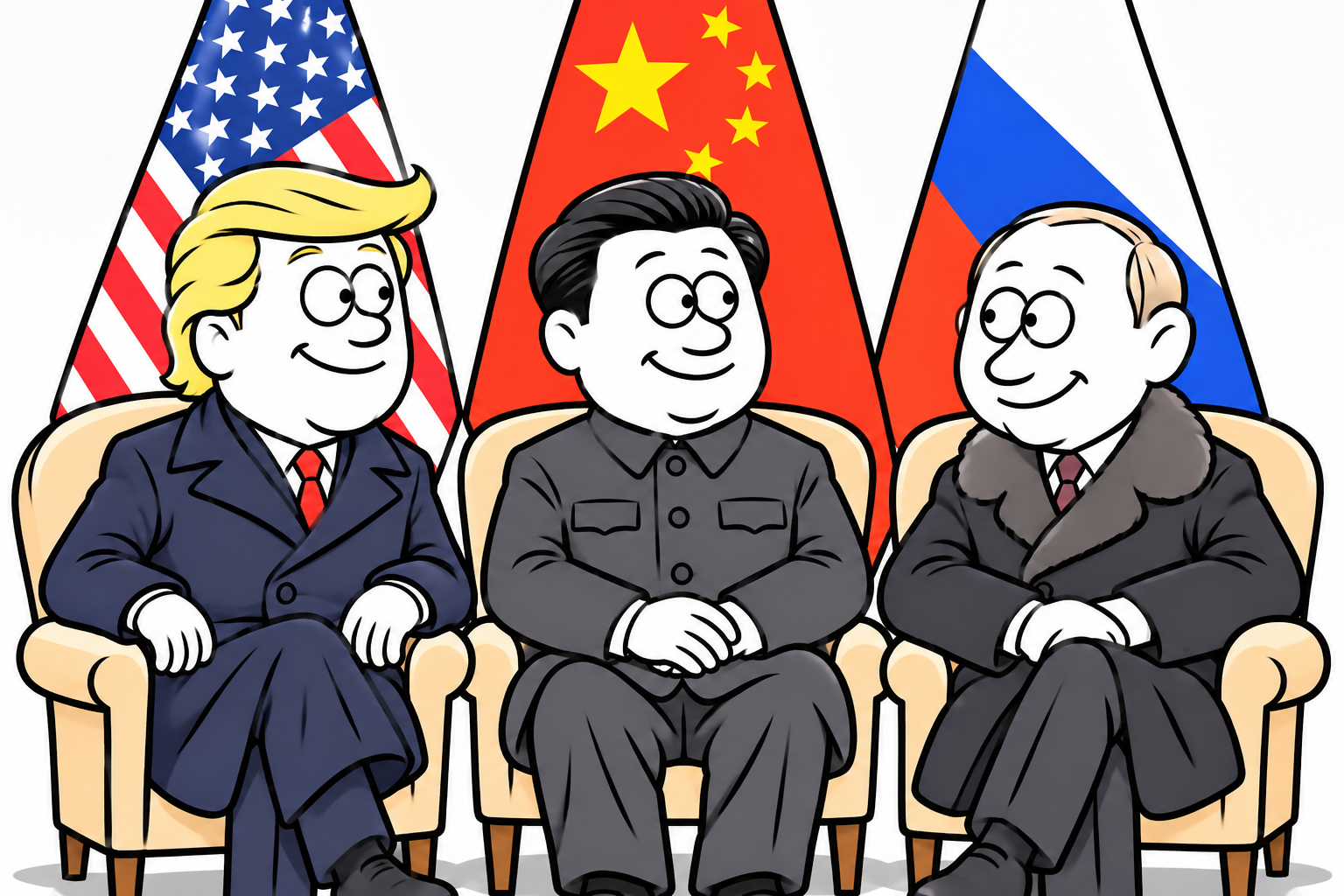
The meeting between Donald Trump, Xi Jinping and Vladimir Putin in China marks a potentially defining moment in modern geopolitics.
For the first time, the leaders of the United States, China and Russia have sat down together for formal trilateral discussions, raising questions about what the three most powerful military nations in the world might be seeking to achieve.
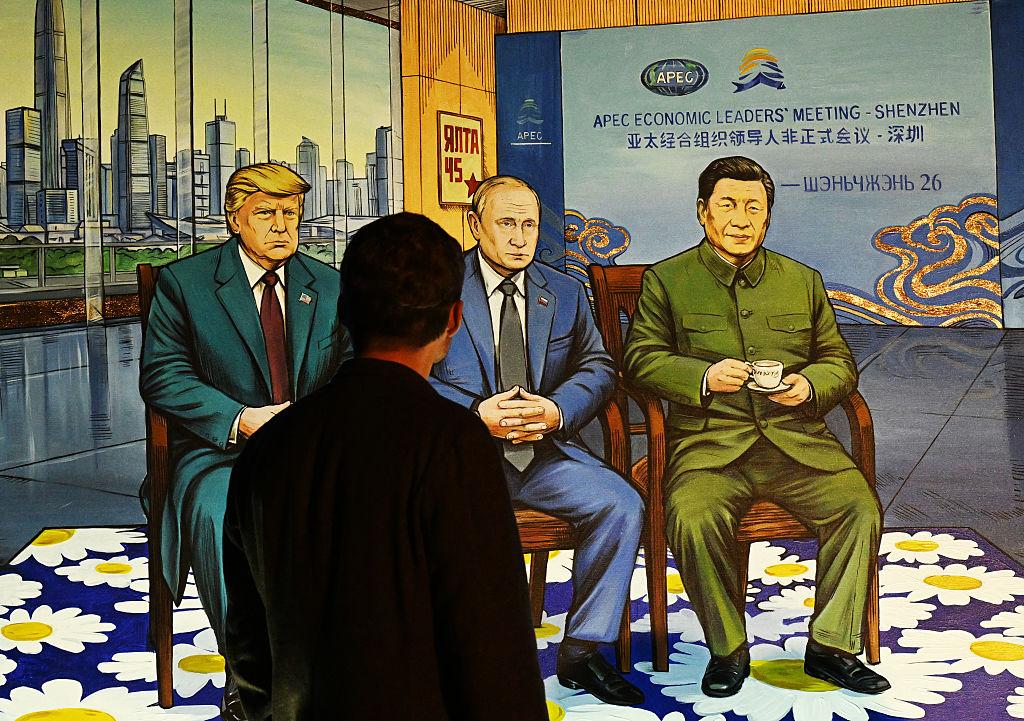
The historic meeting is likened to the Yalta gathering for the then New World Order of 1945.
Held in Shenzhen on the sidelines of the Asia-Pacific Economic Cooperation (APEC) summit, the meeting has been described as historic.
However, beneath the diplomatic handshakes and carefully choreographed photographs lies a far more complicated agenda.
What is the real objective?
Each leader arrives with different priorities. Trump is keen to explore nuclear arms control, potentially seeking an agreement that could reduce the threat of global conflict.
He also faces mounting international pressures, including tensions with Iran and the ongoing war in Ukraine.
Putin, meanwhile, sees an opportunity to discuss Ukraine and potentially secure concessions from Washington over Russia’s territorial ambitions and wider European security arrangements.
For Moscow, simply being included alongside Washington and Beijing is thought to reinforce its claim to remain a major global power.
For China’s Xi Jinping, the meeting may be the greatest diplomatic opportunity of all. Hosting both leaders places Beijing at the centre of international diplomacy, strengthening its image as an emerging global superpower capable of influencing the direction of world affairs.
There are also wider questions about international trade, energy security, military competition and the future balance of global power.
A new world order?
Some observers have drawn comparisons with the 1945 Yalta Conference, when the victorious powers negotiated Europe’s post-war future.
However, today’s three leaders have considerably different ambitions, making any grand agreement far from certain.
Perhaps the real objective is not an immediate peace deal, but establishing a new relationship between the three superpowers.
For smaller nations, particularly those in Europe and Asia, that possibility raises an uncomfortable question: could the world’s biggest powers increasingly make decisions that affect everybody else?
Older World Order of 1945 after the Second World War – Yalta
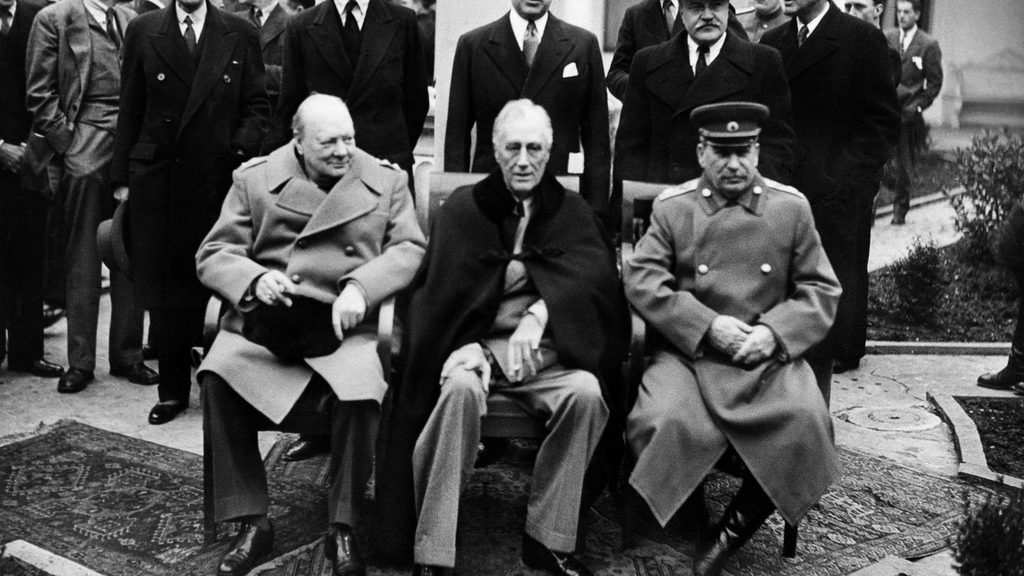
Winston Churchill – British Prime Minister (left).
Franklin D. Roosevelt – U.S. President (centre).
Joseph Stalin – Soviet leader (right).
They met at Livadia Palace in Crimea between 4th and 11th February 1945 to discuss the post-war settlement of Europe and the future of Germany.
The interesting modern connection: On 16th November 2026, an artwork depicting Trump, Putin and Xi was placed in Livadia Park, beside the monument commemorating the original three leaders. It deliberately echoed the historic Yalta gathering.
It is a fascinating parallel – and precisely the historical reference we should use for your cartoon.
Outcome from historic meeting
Following their historic three-way meeting in Shenzhen, China, on 19th November 2026, Donald Trump, Xi Jinping and Vladimir Putin issued a four-point joint peace declaration.
The three countries reportedly agreed to work towards
- Reforming the United Nations.
- Increase the production and international supply of refined petroleum products to help maintain stable energy supplies.
- Uphold the principle of national sovereignty, including protection from what they described as excessive interference by the International Criminal Court.
Most significantly, they reportedly agreed to begin dialogue aimed at reducing nuclear risks and preventing the spread of nuclear weapons.
And it was also reported that they reaffirmed a nuclear war must never be fought.
However, despite discussions reportedly covering Ukraine, Iran, Taiwan and international security, no concrete agreements were reached on ending the war in Ukraine, resolving the Iran conflict, or establishing a new nuclear arms reduction treaty.
The declaration was therefore a diplomatic commitment rather than a substantive peace settlement.
A powerful statement from three powerful nations demonstrating ‘cooperation’.