UK Data Trio Offers Mixed Signals on Prices, Public Finances and Growth – Storm Clouds Gather

UK Economic data April 2026

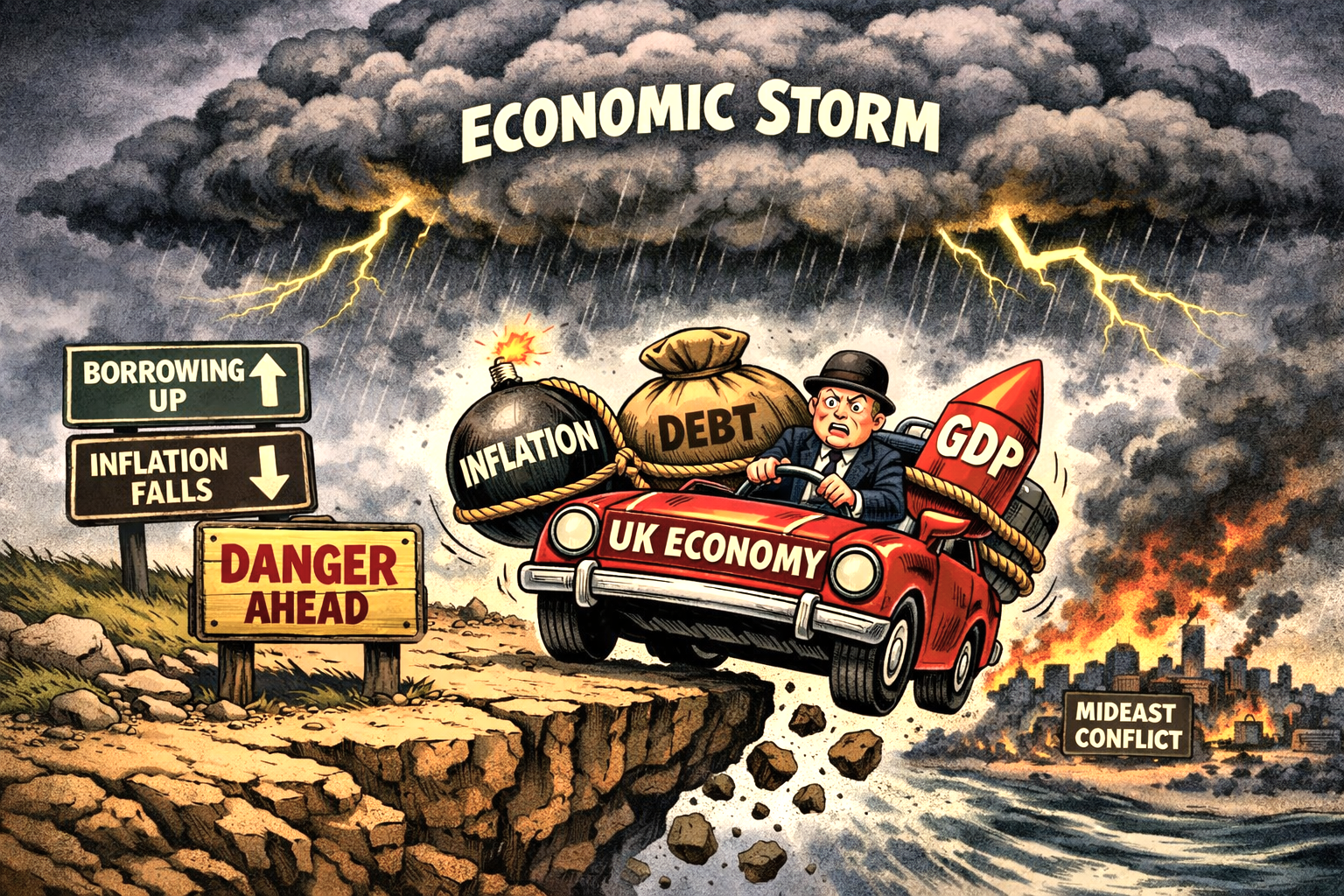
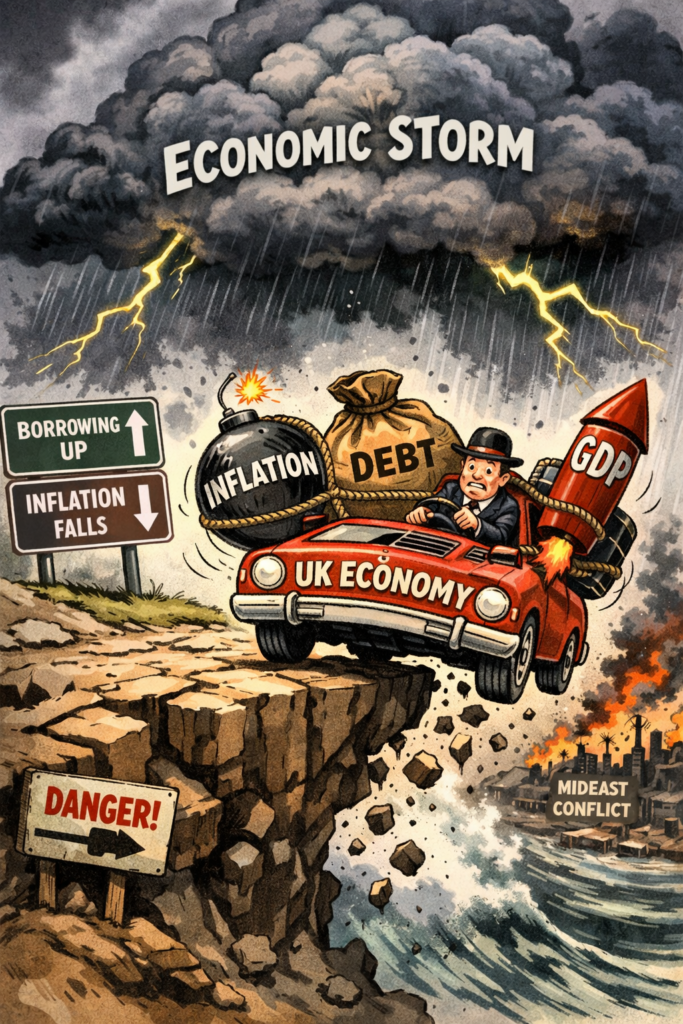
The UK’s latest run of economic data has delivered a contradictory picture: inflation easing sharply, borrowing surging, and growth outperforming expectations.

Together, the figures show an economy stabilising in some areas while coming under renewed strain in others.

Inflation (CPI)

April CPI fell to 2.8%, down from 3.3% in March, the lowest rate in nearly three years.

The drop was driven by Ofgem’s April energy price cap, which cut household gas and electricity bills, alongside softer rises in water charges, road tax and several food categories.

But economists warn the relief will be temporary. Wholesale energy prices have risen sharply since the U.S. / Iran conflict escalated, and inflation is expected to climb back above 4% later in the year.

The Bank of England is therefore likely to remain cautious about cutting rates.

Forecast out of sync

Government Borrowing (April 2026) The borrowing picture was far less encouraging. The government borrowed £24.3 billion in April — the highest April figure since 2020 and well above the £20.9 billion forecast by the OBR.

Borrowing was £4.9 billion higher than the same month last year, driven by inflation‑linked increases in benefits, the earnings‑linked rise in the state pension, and record April debt‑interest payments of £10.3 billion in 2026.

Analysts note that this deterioration comes before the full impact of the energy‑price shock is felt, raising concerns about the fiscal outlook for the rest of the year.

Growth

GDP Growth The bright spot came from growth: the economy expanded 0.3% in March 2026, beating expectations of a slight contraction, and delivered 0.6% growth for Q1 — the fastest among G7 countries reporting so far.

However, the ONS highlights that much of March’s strength reflected “front‑loading” of spending ahead of expected price rises linked to the Iran war, suggesting momentum may fade as higher energy and fuel costs feed through.

This data comes as the global economy waits for the full impact of the U.S. / Iran conflict to unravel.

U.S. consumer confidence falls the most in three years

U.S. consumer

In September 2024, consumer sentiment plummeted, marking the most significant drop in over three years, driven by escalating concerns over employment and business conditions, according to a report by the Conference Board released on Tuesday 24th September 2024.

The consumer confidence index reportedly fell to 98.7 from 105.6 in August 2024, marking the largest one-month drop since August 2021. This was contrary to the forecast of 104 and a stark contrast to the 132.6 reading in February 2020, just before the Covid pandemic’s onset.

All five components surveyed by the organisation declined this month, with the most significant decrease observed in the age bracket of 35-54 with incomes under $50,000.

Concerning

“Consumer evaluations of the present business conditions have turned negative, and the outlook on the current labour market has further weakened. There is also a growing pessimism about future labour market conditions, business conditions, and income prospects,” the Conference Board’s chief economist reportedly commented.

This significant dip in the confidence index last occurred as inflation began its ascent to the highest point in over four decades.

Following the announcement, stocks experienced temporary declines, and Treasury yields decreased.

U.S. PPI wholesale prices rose 0.2% in August 2024

U.S. PPI data

In August 2024, wholesale prices saw an increase that was roughly in line with expectations, marking the final inflation data point before the Federal Reserve’s anticipated interest rate cut due on 18th September 2024

The Bureau of Labor Statistics announced on Thursday 12th September 2024 that the producer price index (PPI), which measures the prices received by producers for goods and services for final demand, increased by 0.2% for the month, matching the consensus estimate.

Excluding food and energy, the PPI experienced a 0.3% increase, slightly above the 0.2% consensus estimate. This core increase persisted even when trade services were removed from the calculation.

UK retailers reported a 0.5% rebound in July 2024

Retail UK

UK retail sales up

The rise came after a significant drop in sales volumes, which track the amount purchased, in June due to unfavorable weather affecting demand.

Last month, department stores and retailers of sports equipment saw an uptick in the volume of goods sold thanks to the Euro football tournament.

However, the Office for National Statistics (ONS), which provided the data, noted that it was a challenging month for clothing and furniture retailers, with fuel sales declining even as prices at the pump decreased.

Slower and smaller-than-expected rate cuts. A slowing U.S. economy and a potential AI bubble – does this all add up to a coming bear market?

Witches' stocks cauldron

The stock markets mix of toil and trouble is in the cauldron ready for a bear market in 2025, if not before.

Why?

  • Fed to resist reducing rates to the market’s desired 3.50%.
  • Profits unlikely from now on to fulfill expectations, because the U.S. economy is slowing.
  • AI sector is in or close to ‘bubble territory’.
  • Debt.
  • Geopolitical concerns.

These concerns are now all combining, and it will likely add-up to a bear market of around 25% in 2025 (this is my best guess).

Remember – make your own decisions and always, always do your own careful research. Seek professional financial advice if in doubt.

RESEARCH! RESEARCH! RESEARCH!