

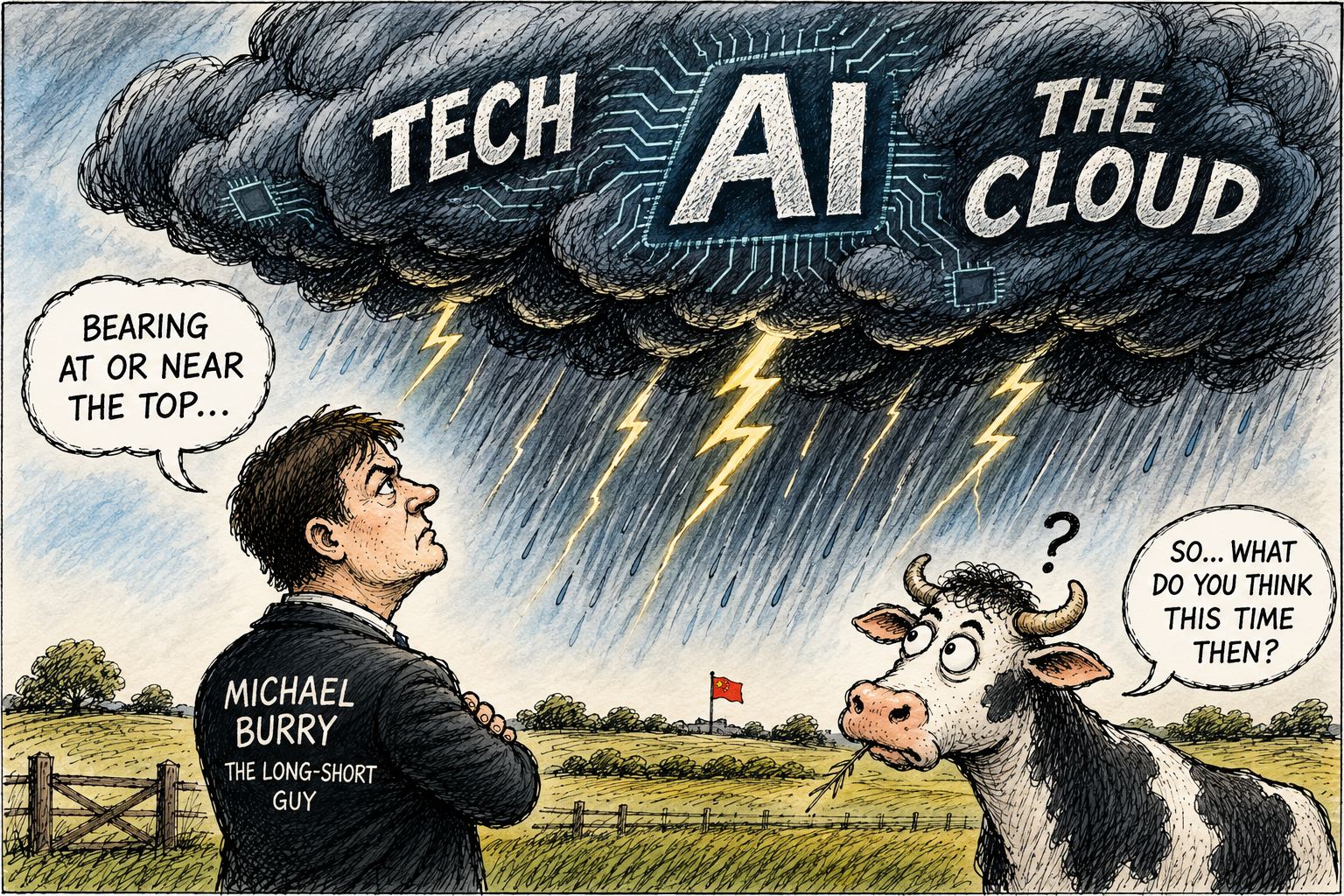
What Michael Burry Has to Say about the AI Fueled Stock Frenzy

Michael Burry Says

Michael Burry, the investor made famous by The Big Short, is once again swimming against the tide.

While Wall Street has embraced the latest AI-driven surge, Burry believes investors should be asking whether enthusiasm has once again raced too far ahead of reality.

Concern

His concern is not that artificial intelligence lacks transformative potential. Rather, he argues that today’s market is showing many of the hallmarks of previous speculative booms.

According to Burry, soaring semiconductor shares, record valuations and relentless optimism are beginning to resemble the final stages of the dot-com bubble in 1999 and 2000.

More recently, he has warned that markets could even be approaching the type of sharp reversal witnessed during the 1987 stock market crash.

Bearish against AI

Burry has taken a series of bearish positions against AI-related stocks and semiconductor investments, arguing that demand for cutting-edge chips may have been pulled forward by hyperscale technology companies racing to build AI infrastructure.

If that spending eventually slows, suppliers could face a painful adjustment as excess capacity meets softer demand.

His stance stands in stark contrast to today’s market mood. Investors continue to reward companies linked to AI, encouraged by strong earnings, heavy capital investment and expectations that artificial intelligence will reshape industries for years to come.

Bulls argue this is a genuine technological revolution rather than another speculative bubble.

High profile

Whether Burry proves right remains uncertain. He has made several high-profile bearish calls over the years that arrived far too early, yet his successful prediction of the 2008 financial crisis ensures markets continue to listen whenever he speaks.

For investors, his latest warning serves as a reminder that even the most exciting technological revolutions can produce excessive optimism.

As history has repeatedly shown, the higher valuations climb, the greater the importance of separating genuine long-term opportunity from speculative excess.
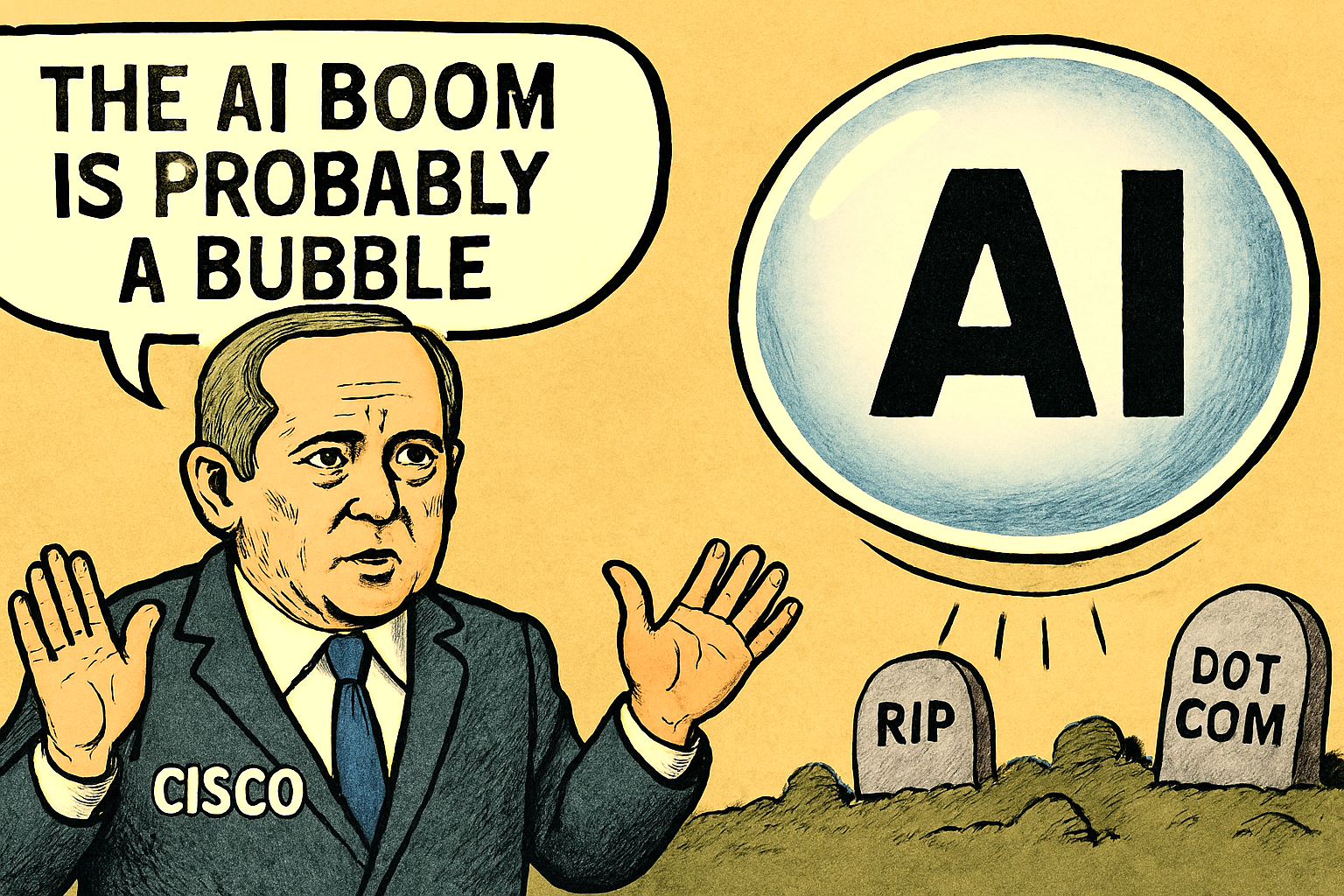
Cisco chief warns of an AI bubble — but reportedly says the long‑term winners will be huge

AI boom bubble!

Cisco’s chief executive, Chuck Robbins, has issued one of the clearest assessments yet of the frenzy surrounding artificial intelligence, arguing that the sector is ‘probably’ in bubble territory even as it lays the foundations for a technological shift larger than the internet itself.

Speaking in a recent interview, Robbins said the scale of investment pouring into AI start‑ups and infrastructure mirrors the exuberance of the late‑1990s dot‑com era.

Back then, vast sums of capital chased unproven ideas, leading to a dramatic market crash. Yet the companies that survived went on to define the modern digital economy.

Caution!

Robbins believes AI is following a similar trajectory: inflated expectations today, followed by a period of painful consolidation, and ultimately a handful of dominant players reshaping global industries.

He cautioned that many firms currently attracting funding will not endure. The rush to build models, platforms and specialised hardware has created what he described as ‘inevitable carnage’ ahead, as weaker businesses fail to convert hype into sustainable products.

Even so, he stressed that the underlying technology is transformative, with applications spanning healthcare, manufacturing, cybersecurity and national infrastructure.

Embedded AI

Cisco itself is deeply embedded in the AI supply chain, providing networking systems capable of handling the enormous data flows required to train and deploy advanced models.

Robbins said demand for high‑performance infrastructure continues to accelerate, driven by cloud providers and enterprises racing to integrate AI into their operations.

Despite the risks, he argued that dismissing AI as a passing bubble would be a mistake. The coming shake‑out, he suggested, is simply part of the cycle that accompanies every major technological revolution.

Once the dust settles, the companies that remain will be those with genuine innovation, strong business models and the capacity to scale globally.