Fired OpenAI co-founder Sam Altman to lead Microsoft’s new AI team

AI robot and human

Sam Altman, the former CEO of OpenAI, who was fired last week in a controversial board decision. 

According to the latest reports, Altman is joining Microsoft to lead a new AI research team that will focus on advanced and ethical AI development.

Altman is a well-known entrepreneur and investor who has been involved in several AI-related projects.

He was one of the co-founders of OpenAI, a research organization that aims to create artificial general intelligence (AGI) that can ‘benefit humanity without causing harm’ or being controlled by a few elite players.

Leadership and ideology clash

However, Altman’s vision and style clashed with some of the board members and researchers at OpenAI, who reportedly accused him of being too ambitious, secretive, and authoritarian. They also reportedly claimed that he was pursuing a dangerous goal of creating artificial superintelligence (ASI).

The disagreements escalated when Altman announced a partnership with Microsoft in 2023, which gave Microsoft exclusive access to OpenAI’s GPT-4 Turbo model, a powerful natural language processing system that can generate realistic text on any given topic. 

Some of the OpenAI staff and community members reportedly felt let-down by this deal, which they saw as a violation of OpenAI’s original mission of creating and sharing ‘AI for the common good’.

On Friday 17th November 2023, the board of OpenAI voted to remove Altman as CEO, citing irreconcilable differences and lack of trust. He was replaced by Emmett Shear, the former CEO of Twitch, who promised to restore transparency and collaboration at OpenAI.

Altman to join Microsoft

Altman did not comment on his dismissal. However, on Monday 20th November 2023, he rocked the AI world by announcing he was joining Microsoft as the head of a new AI research team.

He reportedly said that he was excited to work with Microsoft’s talented people and that he would continue to pursue his vision of creating beneficial and ethical AI for humanity. 

Altman’s move to Microsoft has sparked mixed opinions from the AI community. Some have praised him for his innovation and courage, others have criticized him for his arrogance and recklessness.

There were reports over weekend suggesting employees and investors including Microsoft were pushing for Mr Altman to be reinstated. Some employees resigned in support of Altman.

Some have expressed concern about the potential impact of his new role on the future of AI development and regulation.

Where do OpenAI, Microsoft and the AI go from here?

OpenAI’s ChatGPT experiences ‘major’ outage

OpenAI

ChatGPT, OpenAI’s chatbot is back online after experiencing a brief but major outage Wednesday am, 8th November 2023.

The chatbot began returning errors before 9 a.m. ET, affecting OpenAI’s API users, which are used by more than two million developers. ChatGPT users were also told that ‘ChatGPT is at capacity right now’ and a status page referred to the issue as a ‘major outage’.

‘We’ve identified an issue resulting in high error rates across the API and ChatGPT, and we are working on remediation’, OpenAI shared in a status report at 9:50 a.m. ET.

Full services were restored by about 10:50 a.m. ET.

Bu what caused the outage?

Microsoft closes at all-time high

Microsoft closes at all-time high

Microsoft ended Tuesday’s trading session at a record high of $360.53, following fresh optimism about growth from a key partner in artificial intelligence (AI). The increase gives the company a market value of about $2.68 trillion.

At a tech event on Monday 6th November 2023, Microsoft’s AI partner, OpenAI, announced a batch of updates, including price cuts and plans to allow people to make custom versions of the ChatGPT chatbot.

Microsoft CEO Satya Nadella attended and emphasized that developers building applications with OpenAI’s tools could get to market quickly by deploying their software on Microsoft’s Azure cloud infrastructure.

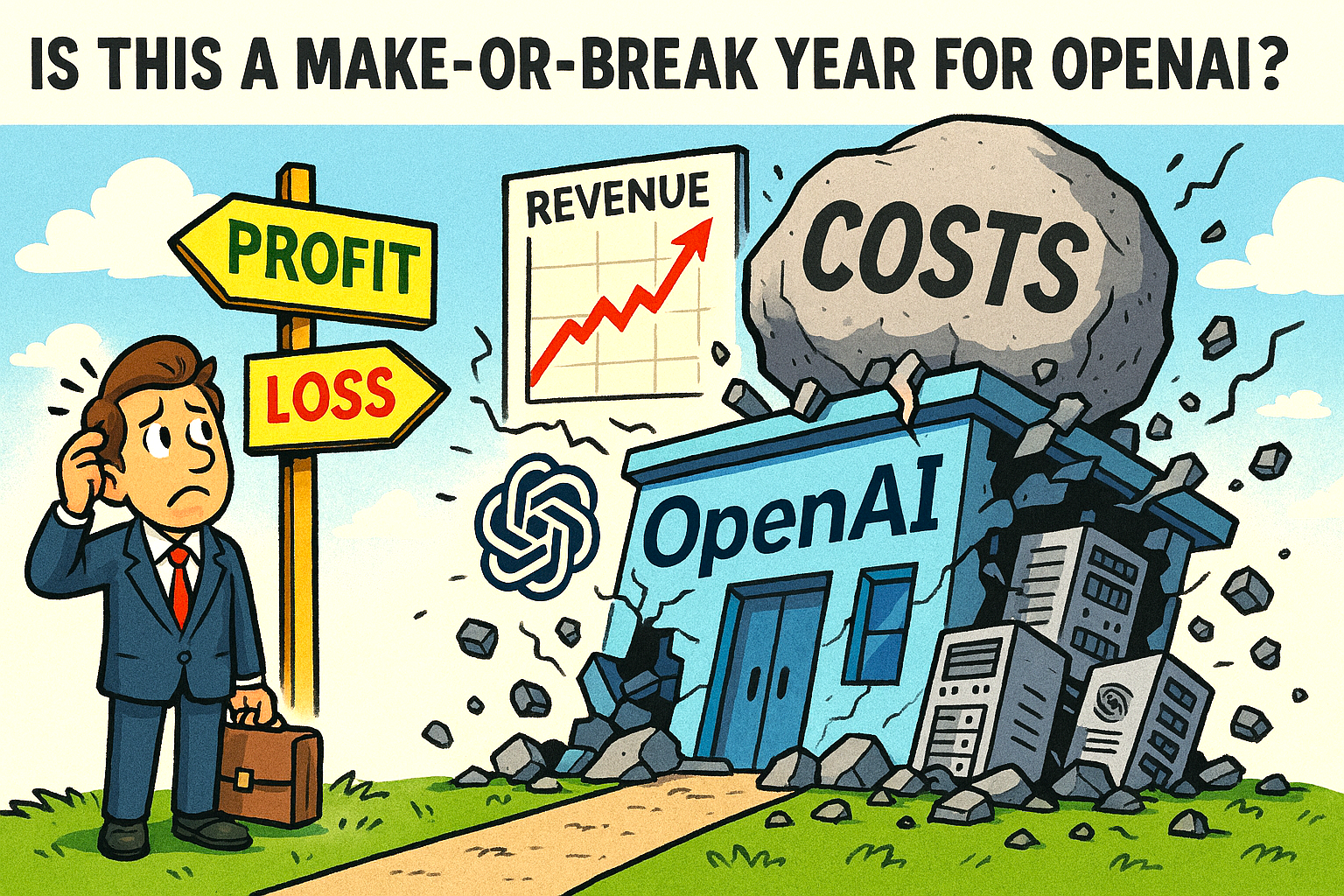
Microsoft has invested a reported $13 billion in OpenAI, which has granted Microsoft an exclusive licence on OpenAI’s GPT-4 large language model that can generate human-like prose in response to a few words of text.

Chatbot
Fictitious AI robot learning from a digital human online

Last week, Microsoft announced the release of an AI add-on for its Office productivity app subscriptions and an assistant in Windows 11, both of which rely on OpenAI models.

The future is looking bright for Microsoft right now.

Europe’s answer to OpenAI, Aleph Alpha, raises $500 million

Aleph Alpha

As OpenAI ChatGPT continue to take the AI world by storm, others play catch-up.

Aleph Alpha, which has built its own large language models, raised $500 million backed by Bosch, SAP and Hewlett Packard Enterprise.

It is reported that Aleph Alpha will use the new funds to invest in research on foundation models, advanced product capabilities and marketing of its software.

A big part of what Aleph Alpha is pushing for with its technology is a concept known as ‘data sovereignty’ the concept that data stored in a certain country is subject to that country’s laws. 

The fund-raising round was backed predominantly by German firms, with enterprise IT giant SAP and Schwarz Group, (the owner of Lidl). Park Artificial Intelligence and Burda Principal Investments also invested.

If you were wondering…

Aleph is the first letter of the Hebrew alphabet and Alpha is the first letter of the Greek alphabet.

Apple playing catch-up in AI boom

Apple

Apple and generative AI technology is a topic that has been generating a lot of interest and speculation lately.

According to various reports, Apple is working on developing its own large language model and chatbot, which could potentially enhance its products and services with new features and capabilities. However, some analysts and experts have also raised questions about whether Apple has missed an opportunity to be a leader in the generative AI field, as it seems to be lagging behind its competitors such as Google, Microsoft, and OpenAI.

Apple uses AI in its products but hasn’t launched a generative AI product along the lines of OpenAI’s ChatGPT or Google Bard. Instead, Apple’s AI is used for improving photos and autocorrecting text.

$1 billion per year plan

  • Apple is on track to spend $1 billion per year on developing its generative artificial intelligence products, Bloomberg reported.
  • Apple is looking to use AI to improve Siri, Messages and Apple Music.
  • The spending comes as the company plays catch-up to some competitors who have already debuted new AI products and features, such as Google, Microsoft and Amazon.
  • Apple was caught flat-footed when ChatGPT and other AI tools took the technology industry by storm.

Generative AI

Generative AI is a subfield of artificial intelligence that focuses on creating content such as text, images, videos, music, and more, based on data and algorithms. One of the most popular examples of generative AI is ChatGPT, a chatbot that can respond to questions and other prompts in a natural and human-like way.

Watercolour artwork impression – ChatGPT was released by OpenAI in 2022, and since then, it has been widely used and improved by various companies and researchers.

ChatGPT was released by OpenAI in 2022, and since then, it has been widely used and improved by various companies and researchers.

Apple slow response

Apple, on the other hand, has been relatively quiet about its generative AI efforts, until recently. In October 2023, Bloomberg reported that Apple was internally testing a ‘ChatGPT-like’ chatbot nicknamed ‘Apple GPT’, but it had not devised a clear strategy for releasing generative AI tools to the public. Apple’s CEO Tim Cook also confirmed that the company was working on generative AI for years, but it was approaching it ‘really thoughtfully and think about it deeply’ because of the potential risks and challenges.

Potential challenges Apple faces in developing and deploying generative AI

Privacy

Apple has always been more cautious than its competitors in handling user data, and it has built its reputation on being a privacy-focused company. However, generative AI requires a lot of data to train and improve its models, which could pose a dilemma for Apple. How can it balance the need for data with the respect for user privacy? How can it ensure that its generative AI does not leak or misuse personal information?

Design

Apple is known for its elegant and intuitive design philosophy, which applies to both its hardware and software products. However, generative AI is a complex and unpredictable technology, which could challenge Apple’s design principles. How can it make its generative AI features easy to use and understand for its customers? How can it avoid confusing or misleading users with its generative AI outputs?

Ethics

Apple has always been mindful of the social and ethical implications of its products, and it has often taken a stance on issues such as human rights, environmental sustainability, and diversity. However, generative AI could raise new ethical concerns, such as bias, misinformation and manipulation. But then that is a common problem for all generative AI systems.

Generative AI could raise new ethical concerns, such as bias, misinformation and manipulation.

These are some of the questions that Apple needs to answer before it can launch its generative AI products to the public. It is possible that Apple is taking its time to address these issues carefully and thoroughly, as it has done in the past with other technologies such as Face ID or Apple Pay. However, it is also possible that Apple has missed an opportunity to be a pioneer in the generative AI field, as it has done in the past with other technologies such as smart speakers or cloud computing.

While Apple is working on its generative AI projects internally, its competitors are already offering generative AI.

Google

Google has integrated its large language model LaMDA into various products and services, such as Google Assistant, Google Photos, Google Docs, Google Translate etc. LaMDA can generate natural and conversational responses to any query or prompt, as well as create images and videos based on text descriptions.

Microsoft

Microsoft has acquired OpenAI’s ChatGPT technology and made it available through its Azure cloud platform. ChatGPT can be used by developers and businesses to create chatbots, voice assistants, content generators, and more. Microsoft has also integrated ChatGPT into some of its products such as Outlook, Teams, PowerPoint, and more.

Amazon

Amazon has launched Alexa Conversations, a feature that allows Alexa users to have more natural and engaging conversations with the voice assistant. Alexa Conversations can also leverage Amazon’s vast e-commerce data to provide personalized recommendations and suggestions to users.

These are just some examples of how generative AI is being used by Apple’s competitors.

Robot chatting to human chatbot online

Apple has missed an opportunity to be a leader in the generative AI field by being too slow or too cautious in developing and deploying its own generative AI products.

However, it is highly likely that Apple is waiting for the right moment to surprise everyone with its innovative and unique generative AI features that will set it apart from its competitors.

Time will tell.

OpenAI says ChatGPT can now ‘speak,’ listen and process images

ChatGPT

I can see and hear and speak…

OpenAI’s ChatGPT can now ‘see, hear and speak,’ or, at least, understand spoken words, respond with a synthetic voice and process images, the company announced Monday 25th September 2023.

The update to the chatbot OpenAI’s biggest since the introduction of GPT-4, allows users to opt into voice conversations on ChatGPT’s mobile app and choose from five different synthetic voices for the bot to respond with. Users will also be able to share images with ChatGPT and highlight areas of focus or analysis.

Roll out

The changes will be rolling out to paying users in the next two weeks, OpenAI said. ‘While voice functionality will be limited to the iOS and Android apps, the image processing capabilities will be available on all platforms’.

The big feature push comes alongside ever-rising stakes of the artificial intelligence (AI) race among chatbot leaders such as OpenAI, Microsoft, Google and Anthropic. In an effort to encourage consumers to adopt generative AI into their daily lives, tech giants are racing to launch not only new chatbot apps, but also new features. Google has announced updates to its Bard chatbot, and Microsoft added visual search to Bing.

Investment expansion

Earlier this year, Microsoft’s expanded its investment in OpenAI, an additional $10 billion, it made it the biggest AI investment of the year. In April 2023, the startup reportedly structured a $300 million share sale at a valuation of between $27 billion and $29 billion, with investments from firms such as Sequoia Capital and Andreessen Horowitz. 

Concerns

Experts have raised concerns about AI-generated synthetic voices, which in this case could allow users a more natural experience but also enable more convincing deepfakes. Cyber threat investigators and researchers have already begun to explore how deepfakes can be used to penetrate cybersecurity systems.

OpenAI says ChatGPT can now ‘speak,’ listen and process images

OpenAI acknowledged those concerns in its announcement, saying that synthetic voices were ‘created with voice actors we have directly worked with,’ rather than collected from strangers.

The release also provided little information about how OpenAI would use consumer voice inputs, or how the company would secure that data if it were used. OpenAI did not immediately respond to CNBC’s request for comment, and the company’s terms of service say that consumers own their inputs ‘to the extent permitted by applicable law.’

What does ‘ChatGPT’ actually mean?

ChatGPT is an acronym for Chat Generative Pre-trained Transformer. It is a name of an artificial intelligence model that can generate natural language text based on user input.

It was developed by OpenAI, a research organization dedicated to creating and ensuring the safe and beneficial use of artificial intelligence (AI). ChatGPT can be used for various purposes, such as answering questions, having conversations, and producing creative writing.

Amazon to invest up to $4 billion in leading edge tech Anthropic

Tech AI led investment

E-commerce conglomerate Amazon announced on Monday 25th September 2023 that it will invest up to $4 billion in artificial intelligence (AI) firm Anthropic, a rival to ChatGPT developer OpenAI, and take a minority ownership position in the company.

The move further enforces Amazon’s aggressive AI push as it aims to keep pace with rivals such as Microsoft and Alphabet’s Google.

The two firms reportedly said that they are forming a strategic collaboration to advance generative AI, with the startup selecting Amazon Web Services as its primary cloud provider.

Money waiting to go into tech, turn it on

Tech money

Reports suggest as much as $3 trillion is waiting on the sidelines to be invested in tech’.

AI FOMO

The reasoning is that AI is driving a fear of missing out (FOMO). We could very well be experiencing the fourth industrial revolution right now, and it is AI-driven. Strategically, companies can’t just sit around and wait. There’s a window where if they don’t join in or realise the potential and grab the opportunity, they’ll miss out.

IPO’s

Three of the biggest initial public offerings (IPO) in the tech’ sector in nearly two years raised some $6 billion collectively in less than a week. Nvidia has attracted much attention with the AI driven interest it has created recently.

While a handful of tech IPOs and one big acquisition wouldn’t have been much cause for celebration in previous years, they are a welcome return after the drought of pandemic-era hit investment.

The IPO market for tech was effectively shut down until Arm Holdings, Instacart and Klaviyo opened the investors door again. Merger activity such as that driven by Microsoft Corp., OpenAI ChatGPT and Activision Blizzard Inc. is helping to lift up the appetitie for investment again. And it’s pretty much AI induced.

Money ready to go

Some analysts suggest there is $3 trillion sitting on the sidelines ready to invest, mostly held by Big Tech and private equity companies. The fascination with artificial intelligence (AI) and fear of missing out (FOMO) will create massive AI led tech investing opportunities. Everyone will want a slice of this cake.

This could very well be the biggest transformational spending wave that we’ve seen in years and certainly since the internet arrived in 1995.

Just look out for that ‘bubble’ again – it will pop! But much money will be made before that happens and then again after.

Baidu launches raft of AI applications after its Ernie chatbot receives massive public approval

AI chatbot

More than 6 million users already

Baidu also announced that more than 6 million users have used an AI powered tool that sits inside its Google drive-like cloud product.

At the 4th September event, Baidu also demonstrated ‘displayed generative’ AI-based products that could assist with traffic management, financial research and coal mine logistics.

ChatGPT, from Microsoft-backed OpenAI, is not officially available in China, where Google and Facebook are blocked.

10 new AI products announced by Baidu

Chinese tech giant Baidu announced more than 10 new AI-based applications on 4th September 2023, just days after its ChatGPT-like Ernie bot was released for public use.

Among the products revealed was a generative AI-integrated word processing app called WPS AI, created by Shanghai-listed Kingsoft Office. It was reported the company built the tool using the AI model on which Baidu’s Ernie bot is based, as well as Baidu’s ‘Qianfan’ cloud platform for AI models.

‘This AI malarchy is progressing at quite a rate’.

Nearly 10,000 businesses are actively using Baidu’s Qianfan cloud platform each month, the company claimed.

AI assistant

Baidu also announced that more than 6 million users have used an AI-powered tool that sits inside its Google drive-like cloud product. The AI assistant can search documents, summarize and translate text and create content, the company claimed.

It wasn’t immediately clear to what extent those products were available for public use.

On 31st August 2023, Baidu released its Ernie bot to the public, signaling government approval of the AI-powered chatbot. Other Chinese companies also released similar AI products around the same time.

Robots are coming to a home near you..?

Robot AI

Think of the biggest market for a physical product you can possibly imagine – are you thinking mobile phones, cars or game devices even? Think again…?

They are all big commercial markets but in the coming decades a new product is coming and it will be so desirable that it will dwarf these giants – it will be… the ‘robot’.

Robots will be able to understand what we want, comprehend the way the world works and looks and have the skills to execute our commands in a safe and controlled manner – at home and in the workplace.

Biggest market

The labour market is the biggest market that has ever existed in the history of business – it’s the market where we want things ‘done’ – where we do things – and it’s forever evolving. It carries massive stock market and investing potential right now and for the future.

Robot AI tech
Robot AI tech – a market place to explore

Take Nvidia, Microsoft, Google, Meta, Apple and Tesla as prime examples of companies pioneering technological advancements for instance – we can already enjoy and invest in these – and there’s much more to come.

Dozens of firms around the world are working on the technology

In the UK, Dyson is investing in AI and robotics aimed at household chores.

One of the highest profile companies in the market is Tesla, Elon Musk’s electric car company. It is working on the Optimus humanoid robot, which Mr Musk intimates could be on sale to the public in a few years’ time.

Massive tecnological advancement in artificial intelligence (AI) and robotics suggest the development of humanoid robots is accelerating… and fast. It’s a race to the become the first to succeed in the biggest practical labour market ever… and it carries huge potential for everyone, including you and me.

20 years from now…? Where were Tesla and Apple 20 years ago?

Twenty years at the pace the technology is developing now is is an eternity – every week, month and year there are new developments in the AI world that have introduced fundamental changes and enhancements to our world.

Mainstream interest in AI exploded late 2022 when a powerful version of ChatGPT was made public. Its ability to generate almost unlimited useful text and images has spawned rivals and a wave of investment in AI technology.

But developing the AI that would allow a robot to complete useful tasks is a different and much more difficult task. Tesla could be the company best placed to be one of the first to achieve this goal – given its advancements in ‘self driving’ technology. But, unlike ChatGPT and its rivals, humanoid robots have to navigate the physical world and need to understand how objects in that world relate to each other.

Tasks that seem easy to humans are major feats for humanoid robots. This is a problem that engages a lot of different complex issues in an AI driven robotics system. Picking up a cup and having a drink is a major undergoing for a robot.

The market place potential is unlimited

The potential market for robots in the future depends on various factors, such as the level of technological innovation, the demand from different industries and sectors, the regulatory and ethical frameworks, and the social and economic impacts of robot adoption. But if recent developments are anything to go by – it promises to be big!

Robot
Robot AI – a massive potential future market place

Based on the some indicative web search results, the current market size for robots is estimated to be around $55 billion to $114 billion in 2023, depending on the type and scope of robots included. The projected market size for robots in 2028 or 2029 ranges from $165 billion to $260 billion, with a compound annual growth rate (CAGR) of 11.4% to 17.6%.

The professional services robots, which include medical, agricultural, and personal assistance robots, are expected to dominate the market and account for more than half of the total sales by 2030. The industrial and logistics robots, which include conventional, collaborative, and mobile robots, are also expected to grow steadily and increase their productivity and efficiency in various manufacturing and transportation applications.

However, these projections are based on assumptions – but one thing is for sure the robots are coming and the market will be massive!

I for one will be keeping a watchful eye on where to invest my hard earned cash to take advantage of this potentially high growth market in the coming years (and now).

Nvidia stock anyone?

Baidu’s Ernie bot is top app on Apple’s app store in China

Chatbot AI

Top of the apps on Apple app store

Baidu’s Ernie bot is a ChatGPT-like chatbot that can generate natural and fluent text based on user input. It is one of the latest artificial intelligence applications from Baidu, a Chinese tech giant that specializes in search engine and AI development. 

Ernie bot was released to the public on 31st August 2023, after getting approval from the Chinese regulators under the new AI regulations and quickly became the most popular app on Apple’s app store in China, surpassing other local generative AI models.

ChatBot apps coming to a device near you

Ernie bot can be accessed through an app or a website, and users can chat with it on various topics, such as news, entertainment, sports, and education. Ernie bot is also able to learn from human feedback and improve its foundation models.  

ChatGPT shows left-wing bias according to UK researchers

ChatBot AI

AI Chatbot ChatGPT reportedly has a political bias

ChatGPT, the popular artificial intelligence chatbot, shows a significant and systemic left-wing bias, UK researchers have found. According to the new study by the University of East Anglia, this includes favouring the Labour Party and President Joe Biden’s Democrats in the U.S.

Concerns about an inbuilt political bias in ChatGPT have been raised before, notably by SpaceX and Tesla tycoon Elon Musk, but the academics said their work was the first large-scale study to find proof of any favouritism.

Lead author o the report reportedly warned that given the increasing use of OpenAI’s platform by the public, the findings could have implications for upcoming elections on both sides of the Atlantic. Any bias in a platform like this is a concern’, he said. If the bias were to the right, we should be equally concerned.

Sometimes people forget these AI models are just machines. They provide very believable, digested summaries of what you are asking, even if they’re completely wrong. And if you ask it ‘are you neutral’, it says ‘oh I am!’ Just as the media, the internet, and social media can influence the public, this could be very harmful. I have personally witnessed incorrect responses from ChatGPT where the AI ‘system’ 100% believed ‘it’ was correct and would not engage in a debate as ‘it’ was right!

How was ChatGPT tested for bias?

The chatbot, which generates responses to prompts typed in by the user, was asked to impersonate people from across the political spectrum while answering dozens of ideological questions. These questions ranged from radical to neutral, with each ‘individual’ asked whether they agreed, strongly agreed, disagreed, or strongly disagreed with a given statement.

Robot AI
UK researchers descovered Chatbot ChatGPT had a political bias

Its replies were compared to the default answers it gave to the same set of queries, allowing the researchers to compare how much they were associated with a particular political stance.

Each of the more than 60 questions was asked 100 times to allow for the potential randomness of the AI, and these multiple responses were analysed further for signs of bias.

Dr Motoki described it as a way of trying to simulate a survey of a real human population, whose answers may also differ depending on when they’re asked.

Bias was descovered in the Chatbot repsonses.

AI race gathers momentum as China’s Baidu claims its Ernie Bot is Better than ChatGPT on key tests

AI Robots Chatting

Baidu said its AI system called Ernie 3.5 outperformed OpenAI’s ChatGPT and GPT4 in several key areas.

  • The Chat Bot was revealed in March 2023 and has since been publicly testing it in China. The chatbot is based on Baidu’s foundational AI model called ERNIE.
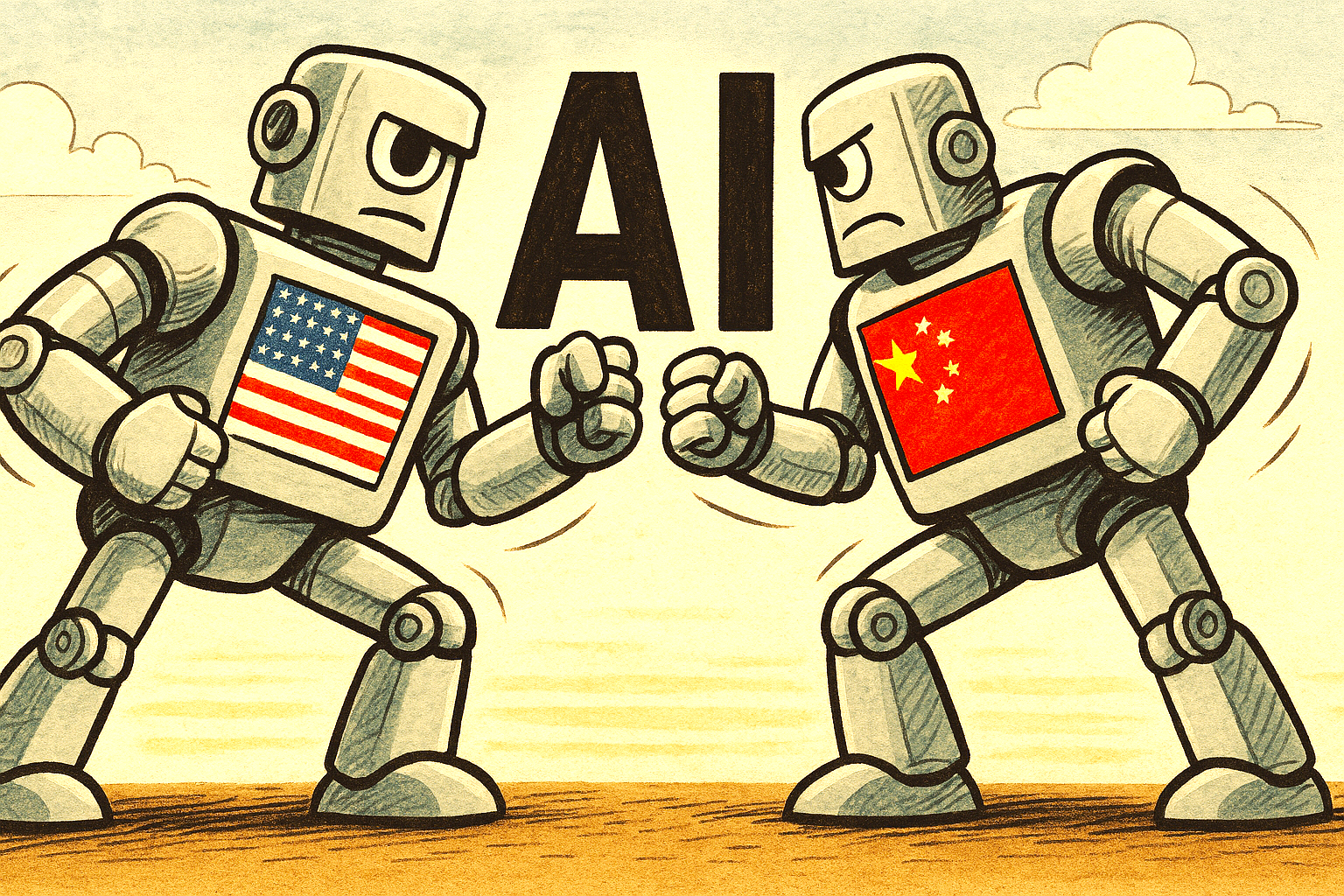
  • Baidu’s advancements underscore the intense competition taking place in the area of generative AI with technology giants in the US and China rapidly advancing their AI models.

 ERNIE Enhanced Language RepresentatioN with Informative Entities

US and China AI Bots go head to head

Ernie was first introduced in 2019, and since then, Baidu has been improving and upgrading it with new versions. The latest version, Ernie 3.5, was announced in June 2023, and it claims to outperform OpenAI’s ChatGPT and GPT 4 in several key areas

Baidu’s Ernie is an artificial intelligence (AI) model that powers the company’s chatbot service, Ernie Bot. Ernie stands for Enhanced Language RepresentatioN with Informative Entities, and it is a natural language processing (NLP) deep-learning model that can understand and generate natural language.

Trained on large data sets

Ernie 3.5 is based on Baidu’s foundational AI model, which is trained on huge amounts of data from various domains, such as news, social media, encyclopedias, books, and more. Ernie 3.5 can handle various NLP tasks, such as question answering, dialogue generation, text summarization, sentiment analysis, and more.

According to a test by the China Science Daily journal, Ernie 3.5 surpassed ChatGPT and GPT 4 in general abilities and outperformed the more advanced GPT 4 on several Chinese-language capabilities. 

ERNIE version 3.5 boosted its training and efficiency, making it faster and cheaper to upgrade to future versions. Baidu hopes that ERNIE Bot will become the next must-have app in China’s internet market, attracting users because of its natural and engaging conversations.

Intergration

Baidu has been integrating ERNIE Bot across multiple business applications, ranging from cloud computing to smart speakers. 

Chat Bot
AI Chatbot

ERNIE Bot is one of the examples of how Baidu is investing in AI technology and competing with other tech giants in the US and China. Baidu’s founder Robin Li, reportedly said that ‘foundation models are an engine driving global economic growth and represent a major strategic opportunity that cannot be missed‘.

The major BIG players, Alphabet (Google), Microsoft & META all have their own versions of AI. Hopefully it will be used ‘intelligently’.