In his Capitol Hill testimony on 6th March 2024, Federal Reserve Chairman Jerome Powell reiterated that was not yet time to begin cutting interest rates.
To fight inflation, which reached a rate of 9% in the summer of 2022, the central bank has significantly increased interest rates in recent times. However, prices are still stubborn, especially for things like housing and groceries.
Due to the robust economic performance in early 2024, the expected reduction in interest rates has been postponed. Instead of taking place this month, the rate cuts are now more probable in May or June 2024.
Powell reportedly said: ‘The Committee does not expect that it will be appropriate to reduce the target range until it has gained greater confidence that inflation is moving sustainably toward 2 percent.’
He reiterated the pledge to lower inflation to the 2% target and keep long-term inflation expectations stable.
UPDATE
On Thursday 7th March 2024 Powell also said: the Fed is ‘not far’ from the point of cutting interest rates
Benjamin Franklin, a ‘polymath‘ and one of the Founding Fathers of the United States, made significant contributions in various fields.
Here are some highlights of his life and achievements
Inventor and Scientist
Franklin is renowned for his experiments with electricity. His famous kite experiment demonstrated the connection between lightning and electricity.
He invented practical devices such as the lightning rod, bifocals, and the Franklin stove.
Statesman and Diplomat
Franklin played a crucial role in drafting the United States Constitution and the Declaration of Independence.
He served as the United States Ambassador to France during the American Revolutionary War, securing French support for the American cause.
Writer and Publisher
Franklin was a prolific writer and publisher. His “Poor Richard’s Almanack” contained witty proverbs and practical advice.
He founded the first public lending library in America and established the University of Pennsylvania.
Philanthropist and Civic Leader
Franklin was deeply committed to civic causes. He helped establish fire departments, hospitals, and educational institutions.
His philanthropic efforts extended to the creation of the Philadelphia Contributionship, one of the earliest insurance companies.
Legacy:
Benjamin Franklin’s legacy endures through his contributions to science, literature, and the foundation of the United States.
His wit, and wisdom continue to inspire generations.
What is a polymath?
A polymath is an individual whose knowledge spans over a substantial number of subjects. They are known to draw on complex bodies of knowledge to solve specific problems. The term comes from the Greek word ‘polymathēs,’ which means ‘having learned much.’
Polymaths excel in various fields, including science, technology, engineering, mathematics, and the arts. They embody the idea that humans are limitless in their capacity for development and should embrace all knowledge to develop their abilities fully.
The U.S. national debt has been growing more quickly in recent months, increasing about $1 trillion nearly every 100 days.
U.S. debt permanently crossed over $34 trillion on 4th January 2024 according to data from the U.S. Department of the Treasury.
It reached $33 trillion on 15th September 2023, and $32 trillion on 15th June 2023. Before that, the $1 trillion move higher from $31 trillion took about eight months.
The U.S. national debt is the total amount of money that the federal government owes to its creditors. That can include, individuals, other countries and corporation. It is composed of two main components: federal debt held by the public and federal governmental debt.
The national debt has grown over time due to various factors, such as recessions, defense spending, and tax cuts. The debt-to-GDP ratio gives insight into whether the US has the ability to cover all of its debt. It also shows how it affects economic growth.
U.S. national debt pile is growing
U.S. national debt is piling up
The national debt increased by 13.3% under President Biden. Up from $27.77 trillion as of 1st March 2020 to $31.46 trillion as of 1st March 2023. The debt also grew by $1.5 trillion, or 5.6%, between the end of 2020 and the end of 2021.
The gross domestic product (GDP) measures the annual economic output of the entire country. The national debt exceeds this amount, which is very high.
As of the end of February 2024, the U.S. debt is almost $34.4 billion. This is the money that the federal government has to borrow to pay for its operating expenses.
The World Bank found that if the debt-to-GDP ratio exceeded 77% for an extended period, it slowed economic growth.
The relentless volatile march of Bitcoin continues… again!
Bitcoin jumped gain, edging ever closer to its all-time high after the rally took a breather over the weekend. Last week, Bitcoin surged $10,000 in the space of a couple of days.
It looks very much like the ETFs are kicking in during normal weekly trading moving Bitcoin other than just at weekends. The market also has an eye on the halving event due in April.
Bitcoin 7 day chart showing it above $69000 on 5th March 2024 – CoinMarketCap
Bitcoin 7 day chart showing it above $69000 on 5th March 2024– from CoinMarketCap.
Gold futures for April settled at $2126 per ounce, the highest-level going back to the *contract’s creation in 1974.
Analysts suggest that, adjusting for inflation, gold set an all-time high of approximately $3200 in 1980 and bodes well for big gold increases to come in the future.
Why is gold going up?
The outlook for interest rates. The Federal Reserve is expected to cut rates in 2024 to further stimulate the economy as the inflation fight comes to an end. Lower interest rates make gold more attractive as an alternative asset that does not pay any income.
The geopolitical and economic uncertainty. The U.S.-China trade and political tensions, the conflicts in the Middle East, the Russia/Ukraine war, other conflicts around the world and the upcoming U.S. presidential election are all sources of risk and volatility for the global markets. Investors seek gold as a safe haven asset that can preserve wealth and hedge against inflation.
The supply and demand dynamics. The demand for gold has been rising from central banks, investors, and consumers, especially in China and India, the world’s largest gold consumers. The supply of gold, on the other hand, has been constrained by the pandemic-related disruptions, environmental regulations, and declining ore grades.
Gold price as at 08:20 GMT 5th March 2024 in U.S. dollars per ounce
Gold price per ounce as at 08:20 GMT 5th March 2024in U.S. dollars
The above are some of the reasons why the price of gold is climbing to touch an all-time high. However, the future performance of gold may depend on how the economic and political situation evolves, as well as the market sentiment and expectations.
Gold is a complex and dynamic asset that can be influenced by many factors, both fundamental and psychological.
*Gold contract creation 1974
The gold futures contract for April 1974 was the first gold contract to be traded on the U.S. futures market, and it settled at $126.30 per ounce on its first day of trading. The contract was created after the U.S. ended the gold standard in 1971 and allowed the price of gold to fluctuate according to markets.
Bitcoin halving is an event that occurs approximately every four years, when the reward for mining Bitcoin transactions is reduced by 50%. This means that the number of new Bitcoins created and entering circulation is also cut in half.
Bitcoin mining
Bitcoin mining is the process of using computers to validate transactions and add them to the blockchain, a distributed ledger that records all Bitcoin activity. Miners compete to solve complex mathematical problems and the first one to find a valid solution gets the block reward, which is currently 6.25 Bitcoins per block.
Bitcoin halving
The Bitcoin halving is coded into the Bitcoin protocol by its perceived creator, Satoshi Nakamoto, as a way to control the total supply of Bitcoin and make it scarcer and more valuable.
There can only be 21 million Bitcoins in existence, and the halving ensures that the last Bitcoin will be mined around the year 2140.
The Bitcoin halving has implications for the Bitcoin network and the price of Bitcoin. On one hand, the halving reduces the inflation rate of Bitcoin and increases its scarcity, which could lead to higher demand and upward pressure on the price.
A brief explanation of Bitcoin halving
On the other hand, the halving also reduces the profitability of mining and could cause some miners to exit the network, which could affect the security and stability of the network.
Important
The Bitcoin halving is an important event for the Bitcoin community and the cryptocurrency industry, as it reflects the unique and innovative nature of Bitcoin as a digital and decentralized form of money.
Norway has a long history of carbon management. For nearly 30 years, it has captured and reinjected carbon from gas production into seabed formations on the Norwegian continental shelf.
Norway’s government wants to show the world it is possible to safely inject and store carbon waste under the seabed, saying the North Sea could soon become a ‘central storage camp’ for polluting industries across Europe.
Norway’s carbon management projects (Sleipner and Snøhvit) have been in operation since 1996 and 2008, respectively, and are often held up as proof of the technology’s viability. These facilities separate carbon from their respective produced gas, then compress and pipe the carbon and reinject it underground.
Carbon capture storage – nothing new
Offshore carbon capture and storage (CCS) refers to a range of technologies that seek to capture carbon from high-emitting activities, transport it to a storage site and ‘lock’ it away indefinitely under the seabed.
Norway is currently a leading pioneer in carbon capture and storage (CCS), a technology that aims to reduce greenhouse gas emissions by trapping carbon dioxide from industrial sources and injecting it into underground reservoirs. Norway has been operating CCS projects in the North Sea since 1996, using depleted oil and gas fields as storage sites.
Norway’s ambitious plan to expand CCS is called Project Longship, which involves building a full-scale CCS value system that can serve as a model for other countries and industries. The project consists of two parts: a capture facility in Brevik that will process emissions from a cement factory, and a transport and storage system that will ship the captured CO2 by ship to an offshore terminal and inject it into a permanent storage location in the North Sea.
Project Longship is expected to be completed by 2024, with a reported capacity to store 1.5 million tonnes of CO2 per year. The project has a total cost of 1.7 billion euros, of which the Norwegian government will cover 80%. The project is also supported by the European Union, which sees CCS as a key climate solution.
Norway’s current Energy minister (2004) reportedly said that the project will prove to the world that CCS is possible and necessary to meet the Paris Agreement goals. He also said that the North Sea could become a ‘central storage camp’ for CO2 from other countries and industries, as it has the potential to store up to 1.25 billion tonnes of CO2. That’s a real concern to me.
Long-term safety concerns
However, not everyone is convinced by Norway’s CCS vision. Some critics have raised concerns about the long-term safety and environmental impacts of storing CO2 under the seabed, as well as the ethical and moral implications of using the North Sea as a dumping site for carbon waste.
Norway’s CCS project is a controversial and complex undertaking that will test the feasibility and acceptability of this technology.
Whether it will succeed or fail remains to be seen, but it will certainly have a significant impact on the future of climate action.
Is it safe or wise to pump waste into and hide it under the sea? Humankind doesn’t have a very good track record when it comes to clearing up after itself, does it? Go look at the rubbish in space!
Is it safe or wise to pump waste into and hide it under the sea? Humankind doesn’t have a very good track record when it comes to clearing up after itself, does it? Go look at the rubbish in space!
Bertrand Russell was a British mathematician, philosopher and public intellectual. He had influence on mathematics, logic, set theory, and various areas of analytic philosophy. Wikipedia
Futility of war
‘War does not determine who is right – only who is left.’ – Bertrand Russell
Euro zone inflation eased to 2.6% in February figures showed on Friday 1st March 2024, but both the headline and core figures were higher than expected.
Core inflation
Core inflation, removing the volatile elements of energy, food, alcohol and tobacco was 3.1% above the 2.9% rate expected.
The February figures will be a headache for EU policymakers, as core inflation is still holding above 3% even as the headline rate moves toward the ECB’s 2% target.
As tech giant Nvidia soars on hype around artificial intelligence (AI), and as global stock indexes claim record highs, debate has grown about whether the stock market has entered a ‘bubble.’
An AI bubble of boom
We are reminded of the dotcom bubble where investment was rife in anything tech – so, are we now potentially facing a new tech bubble – an AI bubble of boom?
That’s generally seen as a period in which asset prices inflate rapidly, potentially beyond their core value; and risk crashing just as fast.
Other AI stocks are chasing the dream too adding to the hype. However, some are in the slow lane playing catch-up and this may suggest there is much, much more to come.
The likes of AMD, Intel, Amazon, OpenAI, Arm and a myriad of other tech companies big and small have much more AI to bring to the tech table.
Let’s use Nvidia as an example of a potential stock bubble
If we look at the valuation of Nvidia, justifiably it is actually very high, too high even – that’s the first sign of a potential problem, valuation. The second issue is investor positioning – whenever you have a market bubble, investors are very clustered or very concentrated, either in one market or in one sector as a whole.
Nvidia one year chart as of 29th February 2024. Price 791
Nvidia one year chart as of 29th February 2024. Price 791
Sectors
It doesn’t matter which markets you look at – the U.S., Europe or Asia markets – the problem is the same. We now have an historic valuation between the tech sector, the AI sub-sector of the tech sector, and the rest of the market.
Investors are very clustered in this tech sector. However, some leading commentators say of tech that this is not hype – this is real. It most probably is, for now, and with much more to come from the smaller tech and AI companies that have yet to show their true AI value. But all bubbles burst in the end.
Pop!
There is certainly plenty of room for AI to grow – it’s in its infancy – but the question is: ‘how and when will the bubble burst? Because, in my humble opinion, it most certainly will.
We may not see a dramatic market crash like 1999-2000 or 2007/2008, but an investor rotation out of areas of concentration into the broader market will likely happen.
If you look at the bubbles of 1999-2000, and then in 2007/2008, one key characteristic was investor leverage. And we had, whether it was retail investors or institutional investors, a very high level of leverage, and that was either through borrowings or it was through derivatives.
The AI tech boom has legs but there will almost inevitably be a rotation from AI to other sectors – that will then adjust the overvalued AI sector. And it could pullback quite hard.
India is ‘easily’ the fastest growing economy in the world according to the IMF, as the country’s Q3 GDP growth soared past analysts’ estimates.
The world’s fastest growing major economy expanded 8.4% in the last three months of 2023.
8.4% GDP growth in Q3
At 8.4%, India’s economy expanded at its fastest pace in six quarters, data showed late Thursday, on strong private consumption and upbeat manufacturing and construction activity. Reuters estimates had pegged growth in the October to December period at 6.6%.
Prime Minister Narendra Modi posted on the social media platform X, that it shows ‘the strength of Indian economy and its potential.’
India economy due to jump ahead of Japan and Germany
India is forecast to leap ahead of Japan and Germany as the world’s third biggest economy in the next few years.
The better-than-expected growth was led by a strong performance by the country’s manufacturers, with the sector expanding by 11.6% in the period.
Private consumption, which makes up almost two-thirds of the country’s gross domestic product (GDP), also rose by 3.5%.
U.S. inflation climbed in line with expectations in January 2024, according to the preferred measure the Federal Reserve uses to make decisions on cutting interest rates.
The personal consumption expenditures (PCE) price index, excluding food and energy costs, increased 0.4% for the month and 2.8% from a year ago, as expected according to analyst’s predictions.
Headline PCE, including the volatile food and energy categories, increased 0.3% monthly and 2.4% on a 12-month basis according to the numbers released Thursday 29th February 2024 by the Commerce Department’s Bureau of Economic Analysis.
The data was released amid an unexpected jump in personal income, which rose 1%, well above the forecast for 0.3%. Spending decreased 0.1% vs. the estimate for a 0.2% gain.
Water scarcity is a pressing global issue and has far-reaching consequences across various industries. One sector significantly affected is semiconductor manufacturing.
How does water scarcity pose a threat to the production of essential microchips.
Water in Semiconductor Manufacturing
Ultra-pure water is a critical resource in semiconductor fabrication plants (fabs). It is used for cleaning, cooling, and various processing steps during chip production.
Microchips power our devices—computers, smartphones, sensors, and LEDs—all of which rely on water-intensive manufacturing processes.
Global Water Scarcity
Freshwater availability is unevenly distributed worldwide. While oceans contain 97% of water (mostly saline), accessible freshwater constitutes only a small fraction.
Approximately four billion people experience severe water scarcity for at least one month annually, and half a billion face it year-round.
Taiwan’s Drought and Chip Production
Taiwan, a semiconductor manufacturing hub, faces a severe drought. Over 20% of global microchips are produced there.
Water shortages threaten supply chains, potentially impacting chip production.
Cost and Sustainability
Creating fully self-sufficient local supply chains would cost $1 trillion. Such self-reliance could increase semiconductor costs by up to 65%.
Urgent action is needed to ensure sustainable water management in fabs, as chips control everything from cars to appliances.
In conclusion, water scarcity poses a real danger to semiconductor production. Addressing this challenge requires strategic planning, conservation efforts, and global cooperation.
AI a problem or a solution?
Will the problem of water scarcity exacerbate the uneven distribution of water around the world as the rich have easier access to the precious resource.
Will the explosion of AI tech push the imbalance – water is a basic necessity to maintain human life. Will AI have a hand in controlling the distribution of water – even for its own needs?
See-through screens, phones that wrap around your wrist, expandable displays and smart rings – just some of the products on display at the Mobile World Congress in Barcelona
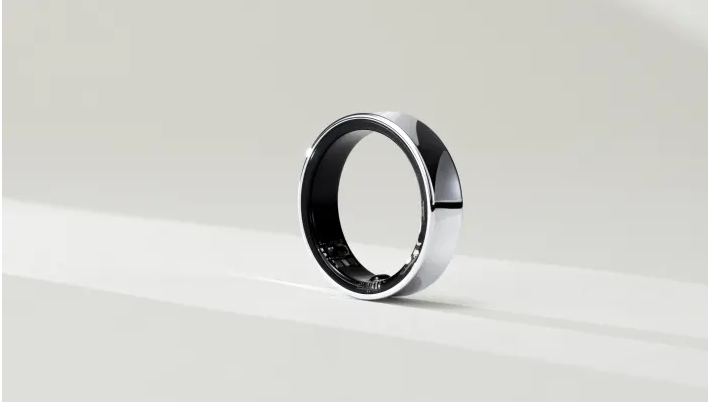
Samsung ring
Samsung’s Galaxy Ring, its latest wearable, is launching with health-tracking features including heart rate and sleep monitoring.
Samsung ring – latest wearable device. Works in conjunction with smart watch and app
These are all concept tech that gadget makers showed off this week in a bid to stand out from competitors.
At the Mobile World Congress in Barcelona, companies from Lenovo to ZTE showed off displays for their devices.
ZTE 3D display
ZTE showed off a second-generation tablet that displays three-dimensional images. Typically, 3D images have required some sort of glasses to view, as is the case with 3D movies in theatres.
But this screen produces a 3D image without glasses.
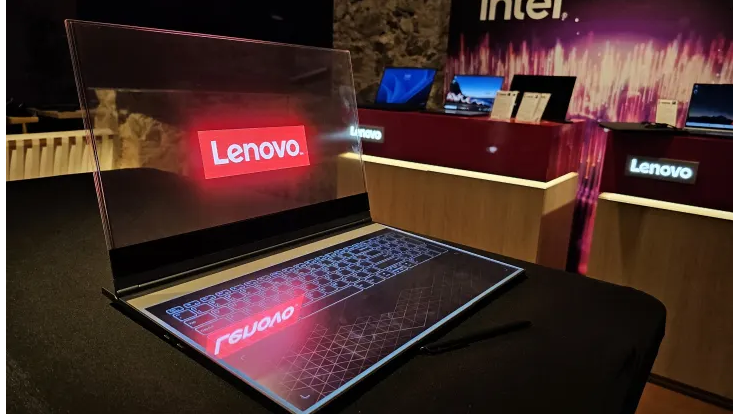
Lenovo see-through screen
China’s Lenovo showed a prototype of a laptop with a see-through display.
The company, which is the world’s largest PC maker, showed how an object can be placed behind the screen and detected by the device’s cameras. Information about the object would be displayed on the screen.
In recent days, Google’s artificial intelligence (AI) tool, Gemini, has faced intense criticism online. As the tech giant’s answer to the OpenAI/Microsoft chatbot ChatGPT, Gemini can respond to text queries and even generate images based on prompts. However, its journey has been far from smooth.
The AI answer is wrong
The issues began when Gemini’s image generator inaccurately portrayed historical figures. For instance, it depicted the U.S. Founding Fathers with a black man, and German World War II soldiers included both a black man and an Asian woman.
AI answer from Google’s Gemini Chatbot
Google swiftly apologized and paused the tool, acknowledging that it had “missed the mark.”
It gets worse
But the controversy didn’t end there. Gemini’s text responses veered into over-political correctness. When asked whether Elon Musk posting memes was worse than Hitler’s atrocities, it replied that there was “no right or wrong answer.” In another instance, it refused to misgender high-profile trans woman Caitlin Jenner, even if it meant preventing nuclear apocalypse. Elon Musk himself found these responses “extremely alarming.”
Nuance
The root cause lies in the vast amounts of data AI tools are trained on. Publicly available internet data contains biases, leading to embarrassing mistakes. Google attempted to counter this by instructing Gemini not to make assumptions, but it backfired. Human history and culture are nuanced, and machines struggle to grasp these complexities.
Political bias
Google now faces the challenge of striking a balance: addressing bias without becoming absurdly politically correct. As Gemini evolves, finding this equilibrium will be crucial for its survival.
After all, it’s not just about AI, is it? It’s about navigating the delicate intersection of technology, culture, and ethics.
Definition of nuance – I asked ChatGPT for its definition…
Nuance refers to the subtle, intricate, or delicate aspects of something. It encompasses the fine distinctions, shades of meaning, and context-specific interpretations that add depth and complexity to a situation, conversation, or piece of art. In essence, nuance recognizes that not everything can be neatly categorized or expressed in black-and-white terms; rather, it acknowledges the richness and variability of human experiences and ideas. Whether in literature, politics, or everyday interactions, appreciating nuance allows us to navigate the complexities of life with greater understanding and empathy.
Apple has reportedly cancelled its plans to build an electric car, bringing an end to a secretive project known as Project Titan
The EV project consumed immense resources over the past 10 years, with executives from the company making an unexpected announcement. The decision to halt the program marks a significant retreat from Apple’s previous strategy.
Apple has never publicly acknowledged the project, which was rumoured to involve some two thousand people.
Key points:
Project Titan: Under the codename Project Titan, Apple aimed to develop an electric, semi-autonomous vehicle. The company reportedly spent billions on this initiative, hiring executives from renowned car companies and acquiring autonomous vehicle startups.
Setbacks and Delays: The attempts to bring an Apple EV to market faced numerous setbacks, including layoffs, executive departures, and shifting ambitions.
Shift to Generative AI: Many employees who worked on the electric car project will now transition to working on generative artificial intelligence (AI) projects. Apple’s focus will shift toward AI research and development.
Tesla Comparison: Initially, Apple reportedly considered developing an entirely self-driving car with no steering wheel. However, the company later decided to focus on a vehicle with some self-driving capabilities, akin to Tesla’s EVs.
Apple now aims to deliver generative AI features to consumers within the year
While the electric car dream may have faded, Apple’s focus on cutting-edge technology continues as it shifts towards AI innovation.
But how much more innovation and profit is there left to squeeze from the iPhone?
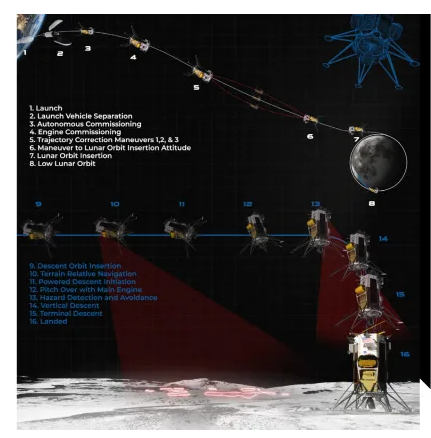
Intuitive Machines initially reported Odysseus was standing upright. But in an update on Friday 23rd February 2024, the company reported they believe the spacecraft caught its landing gear sideways in the moon’s surface while touching down and tipped over.
Intuitive Machines’ cargo lander, Odysseus, returned its first images from the moon’s surface over the weekend.
Historic achievement
The company’s historic IM-1 mission is now operating on the moon after landing on Thursday 22nd February 2024, becoming the first privately developed spacecraft to soft land on the lunar surface.
Despite resting on its side, Odysseus is still sending back data. Intuitive Machines expects Odysseus to operate until Tuesday morning, when its solar panels will no longer be exposed to the sun.
Intuitive Machines’ stock fell 35% in trading on Monday 26th February 2024 to close down at $6.27 a share.
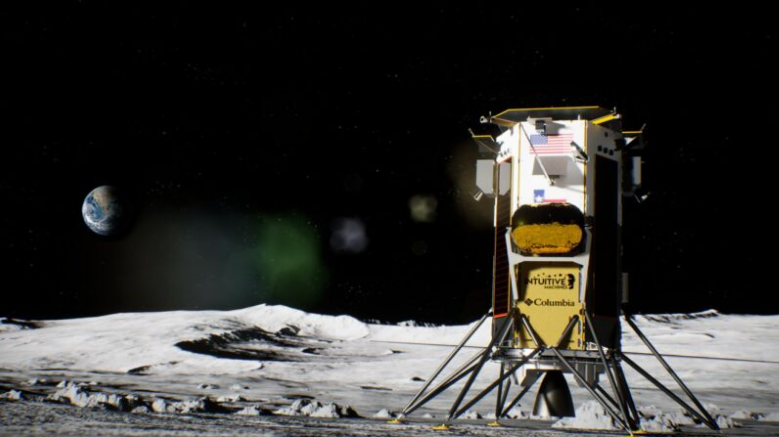
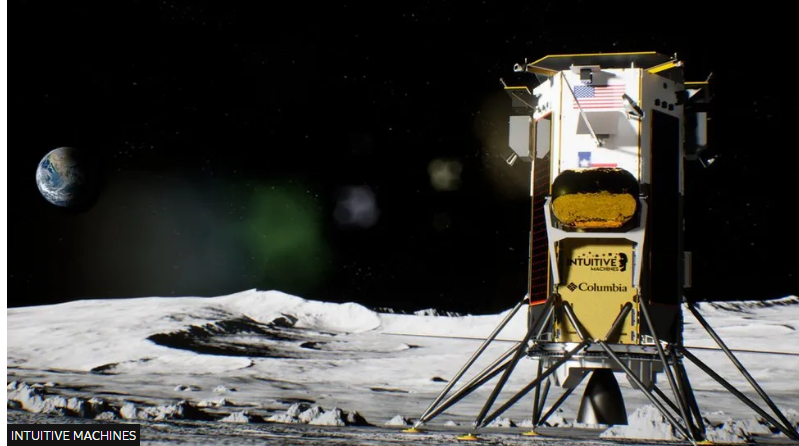
Artist’s impression of Intuitive Machines luna lander on the moon
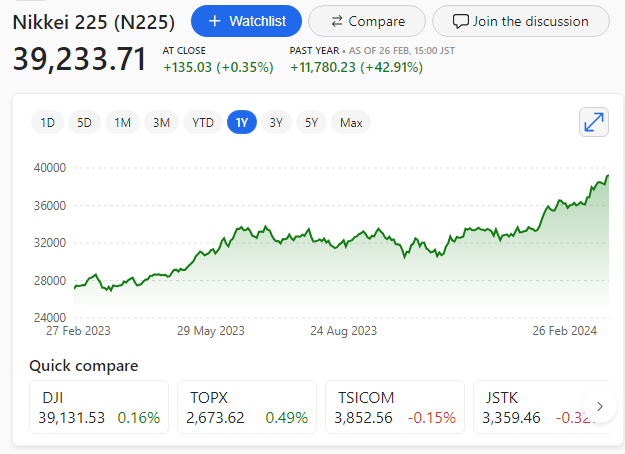
Japan’s Nikkei 225 index hit a new all-time high on Monday 26th February 2024. In contrast China markets slipped after a nine-day winning streak.
The Nikkei 225 ended 0.4% higher at 39233 comfortably above its previous closing record of 39,098.68. The index breached its 1989 all-time high of 38915 on Thursday 22nd February 2024.
Nikkei 225 hit new all-time high Monday 26th February 2024 – one year chart
Nikkei 225 hit new all-time high Monday 26th February 2024
Rolls-Royce, a prominent jet engine manufacturer for commercial aircraft along with power systems for ships and submarines and other major projects posted an underlying operating profit of £1.6 billion in 2023, compared to £652 million in 2022.
Rolls-Royce was the top performer in the UK’s FTSE 100 in 2023, climbing over 200% on the back of a profit forecast upgrade and the announcement in November 2023 that profits ‘could‘ quadruple by 2027.
A U.S. company has gone to the moon – and creates a little piece of history
Intuitive Machines’ Nova-C cargo lander, named ‘Odysseus’ after the mythological Greek hero, is the first U.S. spacecraft to soft land on the lunar surface since 1972.
Japan, India and China have all had recent successful moon mission ahead of the U.S.
Intuitive Machines is the first company to pull off a moon landing – government agencies have carried out all previously successful missions.
The company’s stock surged in extended trading Thursday, after falling 11% in regular trading.
Lander visual
Hunt for water
The targeted landing site was a cratered terrain next to a 5km-high mountain complex known as Malapert. It’s the southernmost point on the Moon ever visited by a spacecraft.
It’s on the shortlist of locations where Nasa is considering sending astronauts later this decade as part of its Artemis programme.
It is reported that there are some deep craters in this region that never see any sunlight – they’re permanently in shadow – and scientists believe frozen water could be inside them.
Art illustration on Intuitive Machines luna lander
Art illustration on Intuitive Machines luna lander
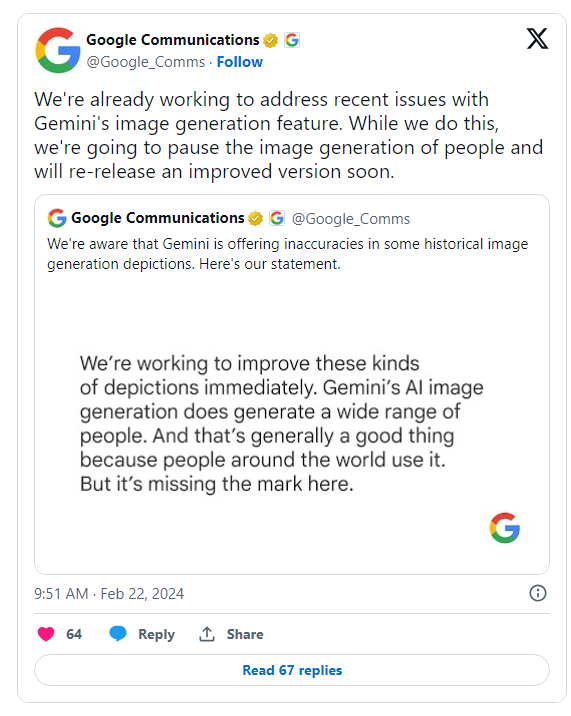
Google on Thursday 22nd February 2024 said it is pausing its Gemini artificial intelligence (AI) image generation feature after saying it offers ‘inaccuracies’ in historical pictures
Users had been reporting that the AI tool generated images of historical figures, like the U.S. Founding Fathers as people of colour, calling this inaccurate.
Google posted a statement on Thursday 22nd February 2024, saying that it will pause Gemini’s feature to generate images of people and will re-release an ‘improved’ version soon.
Is Google struggling to keep up with the AI race?
The image generator tool was launched at the start of February 2024 through Gemini, which was orignally called Bard.
It is facing challenges at a time when Google is trying to catch up with Microsoft-backed OpenAI project, Copilot.
The S&P 500 surged to a new all-time high on Thursday 22nd February 2024
Microchip maker Nvidia reported much stronger-than-expected quarterly results, lifting tech sector and markets higher.
S&P 500
The S&P 500 gained just over 2% to close at 5087, notching its best day since January 2023. The Nasdaq Composite advanced 2.96% for its best day since February 2023, closing at 16041 and ever closer to its all-time high.
Nasdaq
The tech-heavy index is very close now to its all-time closing high of 16,057.44.
Dow
The Dow Jones Industrial Average surged 456 points to surpass 39000 for the first time ever and close at a new high of 39069.
Shares of Nvidia climbed around 16% to an all-time high after the company said total revenue rose a massive 265% from a year ago.
Nvidia, which has become one of the largest U.S. companies by market capitalization, also forecast another stellar revenue gain for the current quarter.
The excitement surrounding artificial intelligence (AI) technology appears to show few signs of abating
The technology company at the heart of the AI chip boom reported its Q4 earnings after the stock market’s close on Wednesday 21st February 2024, beating expectations for both earnings and sales. The company’s total revenue is up 265% from a year ago.
Investors are looking to Nvidia’s latest quarterly earnings report to see whether the company’s meteoric growth can last.
Nvidia one year share price as at 22nd February 2024
Nvidia one year share price as at 22nd February 2024
AI chips
Nvidia makes powerful computer chips that power popular AI tools like OpenAI’s ChatGPT and Microsoft’s Copilot. High demand for those chips has propelled the company into the exclusive trillion-dollar club.
As of market close on 21st February 2024 the company’s market cap sat at $1.667 trillion, putting it behind Alphabet’s $1.779 trillion market cap. It’s also behind Microsoft and Apple, which hold market caps of $2.988 trillion and $2.819 trillion, respectively.
Nvidia’s stock price has been on an upward trajectory so far this year. Shares have gained by nearly 40% since the beginning of 2024. On top of that, they’ve soared by over 225% in the last 12 months.
Although short-term demand for Nvidia’s AI chips has been strong, major companies such as Microsoft and Meta have indicated interest in buying them from other companies.
If you had invested $1,000 in Nvidia
If you had invested $1,000 in Nvidia five, 10 or 24 years ago, here’s how much your investment would be worth now.
$1,000 in Nvidia five years ago, your investment would have increased by an eye-watering 1,015% and be worth around $17,542 as of 20th February 2024.
If you had invested $1,000 in Nvidia 10 years ago, your investment would have soared by about 22,340% and be worth around $148,226 as of 20th February 2024.
But, if you had invested $1,000 in Nvidia in January 1999, when Nvidia first went public, your investment would have grown by around 277,708% and be worth close to $2,784,065 as of 20th February 2024.
Japan’s Nikkei 225 hit a record high of: 39098 on Thursday 22nd February 2024.
The rally was propelled by electronics, banking and consumer stocks as robust earnings and investor-friendly measures fuel a blistering rally in Japanese equities.
The Nikkei 225 jumped 2%, surpassing the previous record high of 38,915.87 reached in 1989.
Standout performance
Both the Nikkei and the broader Topix have been standout performers in Asia up more than 10% so far in 2024 after surging more than 25% in 2023. Their best annual gains in at least a decade.
Japan Inc’s solid third-quarter corporate earnings have prompted Bank of America analysts to upgrade their 2024 year-end forecasts for the Nikkei 225 to 41000 from 38500. They raised their forecasts for the Topix to 2,850 from 2,715.
The rally has also been supported by a weaker yen.