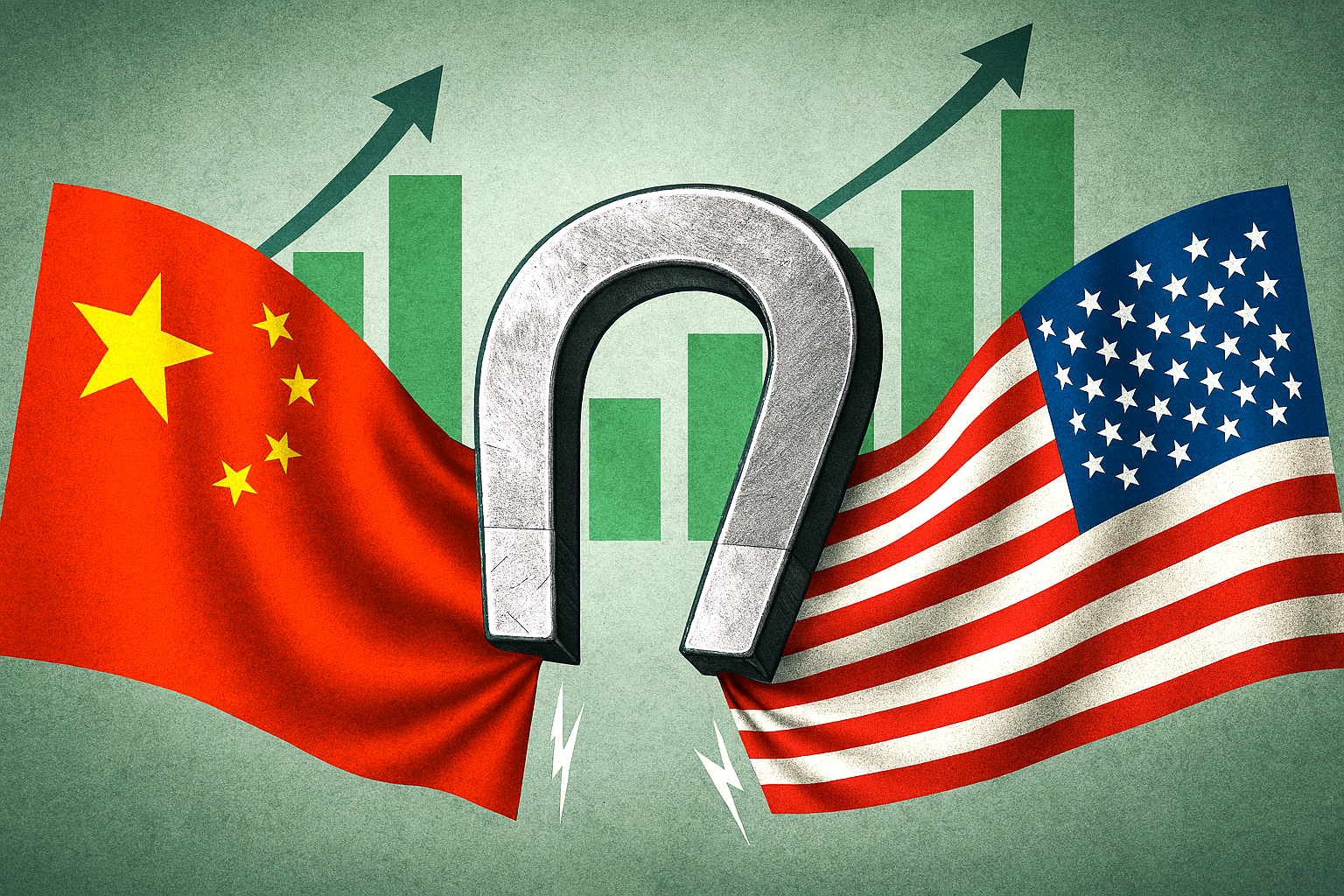

In a surprising breakthrough, the United States and China have agreed to suspend most tariffs on each other’s goods for 90 days, marking a significant step toward easing trade tensions between the world’s two largest economies.
Following high-stakes negotiations in Geneva, representatives from both nations announced that reciprocal tariffs would be slashed from 125% to 10%, significantly lowering trade barriers.
However, the U.S. will continue imposing 20% tariffs on Chinese imports related to fentanyl, meaning total tariffs on Chinese goods will settle at 30%.
The agreement signals a temporary thaw in what has been a long-standing economic standoff between Washington and Beijing. U.S. Treasury Secretary Scott Bessent, who played a leading role in the discussions, described the talks as ‘very productive’, crediting the location for fostering an atmosphere of cooperation.
While this move could provide immediate relief for businesses and consumers impacted by trade restrictions, analysts caution that the 90-day suspension may not translate into a long-term solution.
Some experts speculate that ongoing trade negotiations could lead to further reductions, while others warn that unresolved tensions could lead to reinstated tariffs if agreements stall.
For now, the deal presents an opportunity for renewed dialogue, leaving global markets optimistic about future relations between the two economic powerhouses.
How the next three months unfold will determine whether this development is a stepping stone to broader reforms or simply a temporary reprieve in a complex trade dispute.
I expect Trump, having instigated the ‘tariff’ upheaval, will happily hang on to this ‘deal’ with China to avoid any further stock market turmoil.
What really just happened? The markets seem to be rewarding a situation that was artificially created and then ‘fixed’.
Aren’t we simply back where we were before the Trump tariff onslaught or is this really a ‘promise’ for better ‘deals’ to come?
Despite the weight of U.S. tariffs imposed by President Donald Trump, China’s export sector has shown remarkable resilience, posting an 8.1% increase in April 2025 compared to the previous year.
This surge comes as a surprise, surpassing economists’ expectations of a modest 1.9% rise.
While China’s outbound shipments to the U.S. plunged by over 21%, exports to Southeast Asian nations soared by 20.8%, with Indonesia and Thailand seeing particularly strong growth.
This shift suggests that Chinese exporters are successfully redirecting their goods to alternative markets, mitigating the impact of U.S. trade restrictions.
The tariffs, which now stand at 145% on Chinese imports, were designed to pressure Beijing into trade concessions. In response, China retaliated with 125% duties on American goods, further escalating tensions.
However, analysts suggest that some of China’s export growth may be attributed to transshipment through third countries and contracts signed before the tariffs took effect.
Despite the export boom, China’s factory activity has taken a hit, falling to a 16-month low in April 2025, with new export orders dropping to their lowest level since December 2022.
Concerns are mounting that the tariffs could spill over into the job market, with estimates suggesting China could lose 16 million jobs tied to U.S. – bound production.
As both nations prepare for high-level trade talks in Switzerland, there is cautious optimism that a phased rollback of tariffs could be on the horizon.
While a comprehensive deal remains elusive, even minor tariff reductions could provide relief to businesses on both sides.
The coming months will be crucial in determining whether China can sustain its export momentum or if the tariff war will take a deeper toll on its economy.
The Bank of England has cut interest rates by 25 basis points to 4.25% on 8th May 2025 marking its fourth reduction since August 2023.
The decision, backed by a majority of the Monetary Policy Committee, reflects easing inflation pressures and a need to support economic growth.
Inflation, currently at 2.6%, is expected to rise temporarily to 3.5% due to household bill increases.
The cut will provide relief to homeowners and businesses facing high borrowing costs.
However, policymakers remain cautious, balancing growth stimulation with inflation control. Markets anticipate further cuts, potentially bringing rates down to 3.25% by year-end.
The Federal Reserve held its key interest rate steady at 4.25% – 4.50% on 7th May 2025, citing economic uncertainty and the potential impact of tariffs.
Fed Chair Jerome Powell emphasised that the central bank is in wait-and-see mode, monitoring inflation and employment risks.
The decision follows concerns that Trump’s trade policies could lead to stagflation, with rising prices and slowing growth.
While markets reacted positively, analysts remain divided on whether the Fed will cut rates later this year.
Powell stated that future adjustments will depend on evolving economic conditions and the balance of risks.
Trump’s take on this decision was reportedly to call Powell… a fool.
What is stagflation?
Stagflation is an economic condition where high inflation, stagnant economic growth, and high unemployment occur simultaneously.
It presents a challenge for policymakers because measures to reduce inflation can worsen unemployment, while efforts to boost growth may fuel inflation further.
The U.S. economy is showing cracks as multiple indicators suggest that growth may be slowing.
With GDP shrinking by 0.3% in the first quarter of 2025, concerns about an impending recession have intensified among analysts and investors.
A key driver of this economic downturn is the ongoing trade uncertainty, which has prompted businesses to stock up on imports before new tariffs take effect.
While some experts argue this is a temporary setback, others caution that prolonged trade conflicts could stifle growth for months to come.
Resilient labour market
Despite these concerns, the labour market has remained resilient, with unemployment hovering at 4.2%. However, signs of strain are emerging – job openings have declined, and layoffs have picked up in certain industries.
If hiring slows further, consumer spending could weaken, adding pressure to the economy.
Inflation remains another point of concern. Rising costs of goods and services have strained household budgets, leading to reduced discretionary spending.
The Federal Reserve, which has maintained high interest rates, is carefully assessing whether policy adjustments are needed to prevent a sharper downturn.
On Wall Street, sentiment is divided. Goldman Sachs estimates a 45% probability of a recession, while J P Morgan suggests the likelihood could be as high as 60%.
Some economists believe strategic trade deals and government intervention could avert a full-blown recession, but the margin for error is slim.
Does it really matter if there is to be a recession – it will likely be short lived. It will not please the U.S. President Donald Trump.
While uncertainty clouds the future, one thing is clear – the U.S. economy is at a pivotal moment. Whether policymakers can stabilise growth or if the nation is headed towards a deeper slowdown will depend on the next few quarters and the outcome of Trump’s tariffs.
Tudor Investment Corporation
Paul Tudor Jones, the founder of Tudor Investment Corporation, recently shared his outlook on the U.S. economy, and his perspective isn’t exactly optimistic.
He believes that U.S. stocks are likely to hit new lows before the end of the year, even if President Trump dials back tariffs on Chinese imports.
Jones pointed out that the combination of high tariffs and the Federal Reserve’s reluctance to cut interest rates is putting significant pressure on the stock market.
He reportedly noted that even if Trump reduced tariffs to 50% or 40%, it would still amount to one of the largest tax increases since the 1960s, potentially slowing economic growth.
The billionaire investor also warned that unless the Fed adopts a more dovish stance and aggressively cuts rates, the market is likely to continue its downward trajectory.
He reportedly emphasised that the current economic conditions – marked by trade uncertainty and tight monetary policy – are not favourable for a stock market recovery.
Interestingly, Jones also expressed concerns about artificial intelligence, stating that AI poses an imminent threat to humanity within our lifetime.
The index closed 1.47% higher on the final day of the streak on Friday 2nd May 2025, reflecting investor optimism amid shifting global economic conditions.
This historic run comes as China and the U.S. signal the potential of renewed trade discussions, easing concerns over tariffs and supply chain disruptions.
Additionally, a strong U.S. jobs report has bolstered confidence, with employment figures exceeding expectations. The rally has been broad-based, with technology, financial, and industrial stocks leading the charge.
Despite the impressive streak, analysts warn of potential volatility ahead. While the S&P 500 has demonstrated resilience, market corrections often follow extended periods of gains.
S&P 500 all-time chart as of 5th May 2025 – 9-day consecutive run record
Investors are now watching for signs of consolidation or further momentum and that is down to Trump’s tariffs and the Fed’s interest rate decision.
The FTSE 100 has made history, recording 15 consecutive days of gains—its longest winning streak since its inception in 1984.
The index closed at 8,596.35 points, marking a 1.17% rise on the final day of the streak.
This remarkable run comes amid the potential of easing trade tensions between the U.S. and China, with signs that tariff negotiations may commence.
Investors have responded positively, driving up stock prices across multiple sectors. Financial stocks, including Barclays and HSBC, have surged following strong earnings reports, while industrial and mining stocks – such as Rolls-Royce and Rio Tinto – have rebounded.
Despite the impressive streak, analysts caution that uncertainty remains. The FTSE 100 has yet to reclaim its record high from March 2025, and concerns over global trade policies could limit further gains.
However, the index has still outperformed expectations, rising 4.9% over six months and 5.1% over the past year.
FTSE 100 one-month chart
As investors celebrate this milestone, the question remains: can the FTSE 100 sustain its momentum, or is a market correction on the horizon?
Either way, this winning streak has cemented its place in financial history.
Dividend investing is a strategy that allows investors to generate consistent income while benefiting from long-term capital appreciation.
By purchasing shares in companies that regularly distribute a portion of their profits to shareholders, investors can create a reliable stream of passive income.
This approach is particularly attractive for those seeking financial stability, retirees looking for steady cash flow, or anyone aiming to reinvest dividends for compounded growth.
One of the key advantages of dividend investing is its ability to provide returns even during market downturns.
While stock prices fluctuate, dividend payments remain relatively stable, offering a cushion against volatility. Additionally, companies that consistently pay dividends often have strong financials, making them more resilient in economic downturns.
For investors looking to maximize their returns, selecting high-yield dividend stocks is crucial.
Here are five strong dividend-paying stocks to consider
Aviva Plc – With a dividend yield of around 7%, Aviva remains a solid choice for income-focused investors.
Legal & General – Offering around an impressive 8% yield, this financial services company is known for its consistent payouts.
Phoenix Group – A standout in the insurance sector, Phoenix Group boasts around a 10% dividend yield.
M&G – With around a 10% yield, M&G provides strong returns for dividend investors.
BP Plc – A reliable energy sector pick, BP offers a 6% dividend yield.
Dividend investing is a powerful tool for wealth creation, offering both stability and growth potential.
By carefully selecting high-yield stocks, investors can build a portfolio that generates passive income while benefiting from long-term market appreciation.
Dividend investing is a powerful strategy for building wealth over time by generating passive income.
By holding shares in companies that consistently pay dividends, investors can benefit from regular payouts while also potentially enjoying capital appreciation.
Why Dividend Investing Works
Steady Income Stream – Dividend-paying stocks provide regular income, which can be reinvested to compound wealth over time.
Portfolio Stability – Companies that pay dividends are often well-established, helping to reduce volatility.
Inflation Protection – Some dividends grow over time, helping investors maintain purchasing power.
Tax Advantages – Depending on tax laws, dividends may be taxed at a lower rate than ordinary income.
Choosing Dividend Stocks
Investors typically look for companies with…
Consistent dividend payments
Low payout ratios (ensuring sustainability)
Strong financials and earnings growth
Dividend yield that balances risk and return
The Long-Term Benefit
By reinvesting dividends, investors can take advantage of compounding returns, where earnings generate additional earnings. Over decades, where earnings generate additional earnings.
Over decades, this strategy can build substantial wealth.
Remember to carefully do your own research. The dividend stocks listed here are NOT recommendations.
The U.S. economy shrank by 0.3% in the first quarter of 2025, marking the first contraction since early 2022.
The decline was largely driven by a surge in imports, which soared 41.3%, as businesses rushed to stockpile goods ahead of President Donald Trump’s newly imposed tariffs. Imports subtract from GDP calculations, contributing to the negative growth figure.
Despite the contraction, consumer spending remained positive, increasing 1.8%, though at a slower pace than previous quarters. Private domestic investment also saw a sharp rise of 21.9%, fueled by a 22.5% increase in equipment spending, likely influenced by tariff concerns.
The Federal Reserve faces a complex decision ahead of its upcoming policy meeting. While the negative GDP growth may push the central bank toward interest rate cuts, inflation remains a concern, with the U.S. Personal Consumption Expenditures (PCE) price index rising 3.6% for the quarter.
Markets reacted cautiously, with stock futures slipping and Treasury yields climbing. As the Trump administration navigates trade negotiations, economists warn that continued uncertainty could weigh on future growth prospects.
U.S. President Donald Trump has definitely brought a lot of shock in the first 100 days of his presidency, smashing trade links, alliances, and even his own government, but it can hardly be said to have left anybody truly in ‘awe’.
Donald Trump’s first 100 days in office during his second term have been a whirlwind of activity, marked by bold moves and significant controversy.
His poll rating is the lowest of any President of recent times for the first 100 days. It currently sits at around 41% (a CNN poll result suggests).
How does it compare?
Harry S. Truman, hit a rock-bottom approval rating of 22% in 1952. Other presidents like Richard Nixon and George W. Bush also dipped below 25%. But these were during their terms and not in the first 100 days.
His administration has focused heavily on reshaping trade policies, imposing tariffs that have disrupted global markets and strained relationships with long-standing allies.
Despite his claims of progress, no major trade deals have been finalised, leaving many questioning the effectiveness of his approach.
Legal challenges
Domestically, Trump’s policies have faced significant legal challenges, with numerous lawsuits filed against his administration. His stance on immigration and energy has sparked heated debates, reflecting the polarising nature of his decisions.
Trump’s ‘drill-baby-drill’ mantra has not had the desire reaction – oil prices has fallen with U.S. oil below $65 a barrel.
The automotive industry, for instance, has grappled with regulatory uncertainty and additional costs due to his tariffs, prompting him to soften some measures in response to industry concerns.
Internationally, Trump’s actions have raised concerns about U.S. credibility and stability. His hostile stance toward traditional allies, such as Canada, the EU and NATO, has left multi-decade relationships in tatters.
Meanwhile, his administration’s handling of the ongoing war in Ukraine and trade negotiations with China has drawn criticism for its lack of tangible results.
Despite these challenges, Trump remains confident in his vision for America. He has claimed progress in tariff negotiations with India, suggesting that a trade deal may be on the horizon.
No deals… yet
There has not been a single trade deal concluded with Trump’s administration – despite him reportedly claiming to have done ‘200 deals’ with only 195 countries in the world.
China is still striking a defiant tone on trade, and the war in Ukraine rages on. The president has also been forced to walk back on his “reciprocal tariffs.”
However, his administration’s approach has left many wondering whether his first 100 days will be remembered for their impact or their controversy.
As the dust settles, the world watches closely to see how Trump’s policies will shape the future of the United States and its role on the global stage.
Trump may have wanted his first 100 days to be historic, and they were – but for all the wrong reasons.
HSBC, Europe’s largest lender, has posted better-than-expected results for the first quarter of 2025, demonstrating resilience despite global economic challenges.
The bank reported a pre-tax profit of $9.48 billion, surpassing analyst estimates of $7.83 billion. Revenue for the quarter stood at $17.65 billion, reflecting a 15% decline compared to the previous year.
HSBC’s pre-tax profit for Q1 2025 was $9.48 billion, which represents a 25% decline compared to the same quarter last year when it reported $12.65 billion.
However, compared to the previous quarter, pre-tax profit surged by nearly 317%.
A key highlight of HSBC’s earnings announcement was its $3 billion share buyback program, which the bank intends to complete before its interim results later this year.
This move signals confidence in its financial position and commitment to returning value to shareholders.
Despite the strong performance, HSBC warned of heightened macroeconomic uncertainty, citing protectionist trade policies as a factor negatively impacting consumer and business sentiment.
However, the bank remains optimistic about its restructuring efforts, which are expected to drive cost savings and operational efficiency.
HSBC’s wealth business and corporate banking segments were standout performers, contributing significantly to its earnings growth.
CEO Georges Elhedery emphasised the bank’s strategic discipline and ability to navigate market volatility.
A sudden and unprecedented power outage swept across Spain and Portugal, leaving millions without electricity and causing widespread disruption.
The blackout, which began on 28th April 2025, affected major cities including Madrid, Barcelona, and Lisbon, halting transportation, shutting down businesses, and sparking concerns about the stability of the Iberian power grid and beyond.
The Scale of the Blackout
The outage impacted nearly 60 million people across the Iberian Peninsula, disrupting daily life in ways not seen in recent history.
Metro systems ground to a halt, traffic lights went dark, airports were forced to delay flights, shops stopped trading, banks closed, and mobile phones and computers just stopped as internet access failed.
Hospitals relied on backup generators, while businesses scrambled to maintain operations amid the chaos.
The Spanish power operator, Red Eléctrica (REE), reported that by early Tuesday morning, roughly 90% of mainland Spain had regained electricity, though the cause of the blackout remained unclear.
Investigating the Cause
Authorities in both Spain and Portugal launched urgent investigations into the outage, with early reports suggesting a possible connection issue between Spain and France.
Spanish Prime Minister Pedro Sánchez assured the public that all potential causes were being examined, urging patience amid swirling rumors of cyber sabotage.
Portuguese Prime Minister Luís Montenegro echoed these sentiments, stating that while the root of the problem likely originated in Spain, there was no firm evidence of an attack.
One theory gaining traction is that a rare atmospheric phenomenon caused extreme temperature variations, leading to instability in the electrical grid.
An Explanation?
In this case, the “rare atmospheric phenomenon” refers to extreme temperature variations in Spain that caused instability in the electrical grid.
According to Portugal’s grid operator, REN, these temperature fluctuations led to anomalous oscillations in high-voltage power lines, disrupting synchronization between electrical systems.
This resulted in cascading failures across the interconnected European network, ultimately triggering the massive blackout.

Essentially, the rapid shifts in temperature created disturbances in the power infrastructure, affecting the way electricity was transmitted and distributed. While the exact mechanics are still being investigated, experts suggest that such oscillations can interfere with grid stability, leading to widespread outages
The Portuguese grid operator, REN, warned that fully restoring power could take up to a week, highlighting the complexity of the situation.
Impact on Daily Life
The blackout triggered widespread panic, with long queues forming outside banks as people rushed to withdraw cash. Supermarkets saw shelves emptied as residents stocked up on essentials, fearing prolonged outages.
Transportation networks were severely affected, with trains halted and passengers stranded. Emergency services worked tirelessly to rescue individuals trapped in elevators and metro stations.
What’s Next?
As power gradually returns, European officials and energy experts are assessing the vulnerability of the Iberian grid.
The European Commission has pledged support, emphasising the need for stronger infrastructure to prevent future disruptions. While the immediate crisis is being managed, the incident raises critical questions about energy security and the resilience of interconnected power networks.
Spain and Portugal now face the challenge of restoring full stability while ensuring that such a massive outage does not happen again.
His ‘America First’ ideology, which prioritised domestic interests over international collaboration, assumed that the world needed America more than America needed the world. While this may have held true in certain aspects, the global response suggests otherwise.
Southeast Asian nations, heavily impacted by Trump’s tariffs, have begun strengthening intra-regional trade and diversifying their export destinations.
This shift reflects a growing desire to reduce reliance on the U.S. economy and mitigate the risks associated with its unpredictable trade policies.
Similarly, China, facing significant challenges from the U.S.-China trade war, has ramped up fiscal stimulus and expanded its markets beyond American borders. These moves highlight a strategic effort to counteract the economic pressures imposed by U.S. tariffs.
China has also introduced employment support and hinted at more stimulus as U.S. created trade war tension escalates.
The U.S. has increasingly found itself playing catch-up in critical areas like rare earth elements and minerals. The original U.S. tariff scope has already been adjusted and rolled back.
The 90-day tariff pause being one of them and the reduction of tech related tariffs another.
Trump’s recent executive order to jump-start deep-sea mining underscores America’s attempt to secure access to these strategically important resources, which China currently dominates.
However, this reactive approach may not be enough to recover from the damage already done and to regain lost ground may prove even harder still.
The unintended consequence of Trump’s policies is a more fragmented global trade landscape. Countries are taking measures to strengthen their own economies and reduce dependence on the U.S., potentially leaving America isolated in certain aspects of international affairs.
While the U.S. remains a major player in global trade, its unilateral actions have prompted other nations to explore alternative paths, reshaping the dynamics of global commerce.
This shift serves as a reminder that in an interconnected world, cooperation often yields better outcomes than isolationist policies.
The long-term implications of these changes are yet to fully unfold, but they signal a significant transformation in the global economic order.
Will the U.S. be the loser – or will it become even stronger in the world order?
It was already the world’s number one economy!
It’s not easy to unravel 100’s of years of interconnected world trade.
Global markets have shown resilience in the past three days, rebounding from recent downturns as technology stocks rally amid cautious optimism.
The boost in investor confidence follows strong earnings reports from major tech firms, highlighting their ability to weather economic uncertainty.
However, lingering concerns about international trade tensions raise questions about how sustainable this recovery truly is.
Technology stocks have led the charge, with companies in artificial intelligence, cloud computing, and semiconductor production posting better-than-expected growth figures.
Investors have flocked to these sectors, hoping that innovation will drive forward profitability even amid broader market volatility.
This renewed enthusiasm has helped offset concerns over ongoing global trade disputes, which have led to tariffs and economic slowdowns in key sectors such as manufacturing and consumer goods.
Yet, beneath this recovery, risks persist. Geopolitical uncertainties, including unresolved trade negotiations between major economies, continue to cast a shadow over financial markets.
Inflationary pressures, alongside tightening monetary policies by central banks, also threaten to cool investor enthusiasm. Analysts warn that without concrete progress on trade agreements; the rebound may be short-lived.
As investors weigh the competing forces of technological optimism and trade anxieties, the market remains in a delicate balance.
The question remains: Is this recovery a sign of renewed growth, or merely a temporary respite before further economic turbulence?
With the next wave of financial reports and policy decisions on the horizon, market makers will be closely monitoring whether the tech sector’s momentum can sustain broader economic confidence – or whether trade headwinds will ultimately pull markets back into uncertainty again.
Tech gains ground again
Stocks jumped Thursday 24th April 2024 thanks to strong gains in Mega Cap tech names.
The S&P 500 ended up 2.03%, while the tech-heavy Nasdaq Composite added 2.74%.
The S&P 500 index was able to exit correction territory, ending at least 10% above its recent low set in the wake of President Donald Trump’s 2nd April 2025 ‘liberation day’ tariffs.
For the S&P 500 to maintain its rapid exit from correction territory – it now has to witness Trump’s tariff walk-back and the ‘cooling’ of a potential Fed fight.
Trump seems to be the first to have ‘blinked’ on his self-imposed tariffs suggesting the tariffs are too high and will not go any higher – thy are high enough!
China has reportedly said there are no ‘ongoing’ trade talks?
The Dow Jones Industrial Average lagged the other two indexes but still added 1.23% and retook the 40,000 for the first time since 15th April 2025.
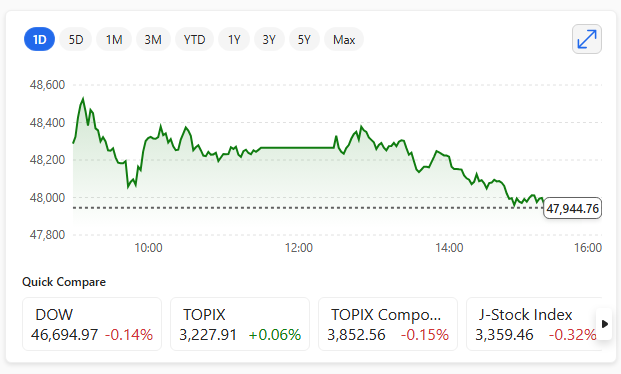
Japan’s Nikkei 225 up almost 2% and leading gains.
Alphabet shares climb after better than expected results
Alphabet reported stronger-than-expected first-quarter growth on Thursday 24th April 2025.
Alphabet’s search and advertising units are still showing strong growth despite AI competition heating up, according to its first-quarter earnings report.
The company’s overall revenue grew 12% year-on-year, higher than the 10% Wall Street expected.
Shares rose more than 5% in after-hours trading.
However, Alphabet reportedly indicated to expect ‘slight headwind’ to ads business this year.
Intel also posts results beat, but warns of tariff impact
Intel reported first-quarter results on 24th April 2025 that beat analysts’ estimates but also reportedly issued disappointing guidance.
Second-quarter revenue will come in below estimates due to elevated uncertainty driven by the macro environment, the company warned.
Intel was reported saying that President Donald Trump’s tariffs and retaliation from other countries had increased the likelihood of a U.S. recession.
Big tech gains drive markets but the uncertainty surrounding Trump’s tariffs remain.
Norway’s sovereign wealth fund, the largest in the world, has reported a first-quarter loss of $40 billion, largely due to a downturn in the technology sector.
The fund, managed by Norges Bank Investment Management (NBIM), saw its value drop to 18.53 trillion kroner by the end of March 2025, with 70% of its investments in equities, which recorded a 1.6% loss.
CEO Nicolai Tangen attributed the decline to significant market fluctuations, particularly in tech stocks, which have faced recent sell-offs. The fund holds major stakes in Meta, Alphabet, Amazon, Nvidia, Tesla, and Microsoft, all of which have experienced volatility.
Additionally, currency movements played a role, with the Norwegian krone strengthening against key currencies, contributing to an 879 billion kroner (around $84.5 billion) decrease in the fund’s value.
Despite the losses, NBIM maintains a diversified portfolio, with fixed-income investments returning 1.6% and unlisted real estate yielding 2.4% gains.
British fintech giant Revolut has achieved a major financial milestone, reporting £1.1 billion ($1.5 billion) in net profit for 2024, marking a 149% increase from the previous year.
The company’s revenue also saw significant growth, surging 72% to £3.1 billion, driven by a combination of subscription services, wealth management, and interest income.
One of the standout contributors to this success was Revolut’s wealth unit, which includes stock trading, boasting a 298% jump in revenue. The firm’s loan book also expanded 86% to £979 million, further strengthening its financial position.
This growth comes at a pivotal moment for Revolut, as it prepares to launch its UK bank later this year after securing a banking licence in 2024.
Once fully operational, the bank will enable Revolut to offer traditional financial services, including loans, overdrafts, and mortgages, enhancing its appeal as a primary banking option.
Revolut’s UK CEO has emphasised that securing full banking authorisation is a crucial step toward global expansion and an eventual IPO.
As the company continues to evolve, it faces stiff competition from established players such as Monzo and Starling, both of whom secured banking licences years earlier.
Revolut’s remarkable financial performance signals its ambitions to become a dominant force in banking – a fintech powerhouse redefining modern finance.
About Revolut
Revolut is a British fintech company that provides digital banking services, including currency exchange, stock trading, cryptocurrency transactions, and personal finance management.
The name ‘Revolut’ suggests a revolution in financial services, aiming to simplify and modernise banking through technology.
Founded in 2015 by Nikolay Storonsky and Vlad Yatsenko, Revolut started as a platform offering fee-free foreign exchange and has since expanded into a global financial super app.
It operates in multiple countries and serves millions of customers, offering both free and subscription-based banking services.
Tesla has been making headlines with a series of major developments, from financial setbacks to strategic shifts by CEO Elon Musk.
The electric vehicle giant recently reported a 20% drop in automotive revenue, a significant decline that has raised concerns among investors.
Meanwhile, Musk has announced that he will bespending much less time on the Department of Government Efficiency (DOGE), a move that could signal a renewed focus on Tesla.
Additionally, Tesla’s ambitious Optimus humanoid robot project has hit a roadblock due to China’s restrictions on rare earth materials, further complicating the company’s future plans.
Tesla’s Revenue Decline
Tesla’s first-quarter earnings report revealed a 20% drop in automotive revenue, with total revenue sliding 9% year-on-year.
The company attributed the decline to factory retooling for a refreshed Model Y, lower average selling prices, and increased sales incentives.
Net income plummeted 71%, reflecting the broader challenges Tesla faces in a competitive EV market.
Tesla 3 month share price chart 2025
The company has refrained from promising growth this year, stating that it will revisit its 2025 guidance in its Q2 update.
Musk’s Shift Away from DOGE
Elon Musk’s involvement in the Department of Government Efficiency (DOGE) has been a controversial topic, with critics arguing that his political commitments have distracted him from Tesla’s operations.
However, Musk has now confirmed that his time allocation to DOGE will drop significantly, allowing him to focus more on Tesla.
He stated that he will likely spend only one or two days per week on government matters, a shift that could reassure investors concerned about his divided attention.
Reports of his popularity in recent U.S. polls suggest he is out of favour with the American people and is now low in people’s opinion around the world because of his contentious DOGE role.
Optimus Robots and China’s Rare Earth Restrictions
Tesla’s Optimus humanoid robots, which Musk has touted as a revolutionary step toward automation, have encountered a major obstacle due to China’s export restrictions on rare earth materials.
The restrictions, imposed as part of an escalating trade war, have disrupted Tesla’s supply chain, particularly affecting the rare earth magnets used in Optimus actuators.
Musk has expressed hope that Tesla will secure an export licence, but the uncertainty surrounding the restrictions could delay production.
Looking Ahead
Tesla is navigating a challenging landscape, balancing financial setbacks, Musk’s shifting priorities, and geopolitical hurdles.
While the company remains a leader in EV innovation, its ability to adapt to market pressures and geopolitical challenges will be crucial in determining its future success.
Investors and industry watchers will be closely monitoring Tesla’s next moves as it works to regain momentum.
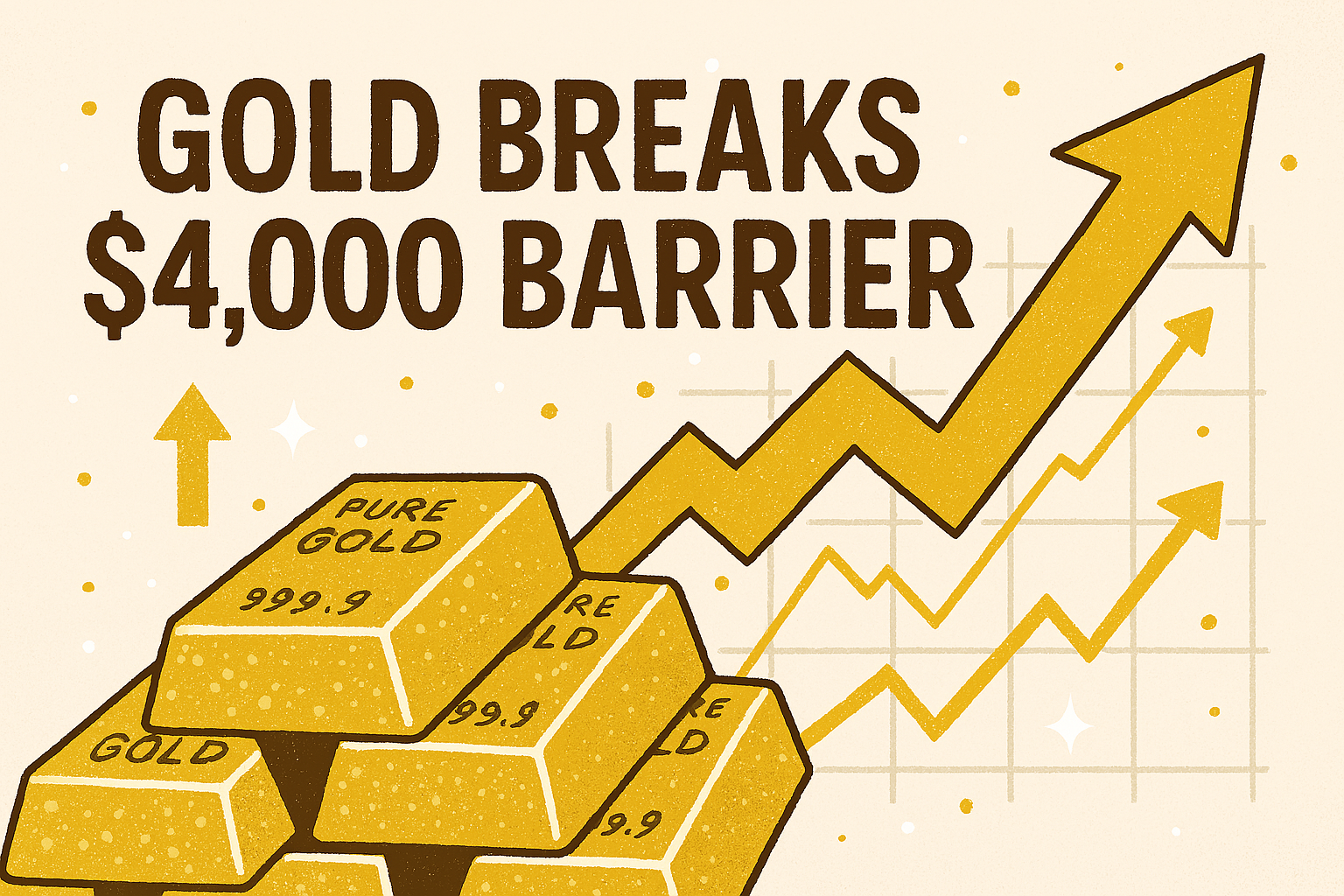
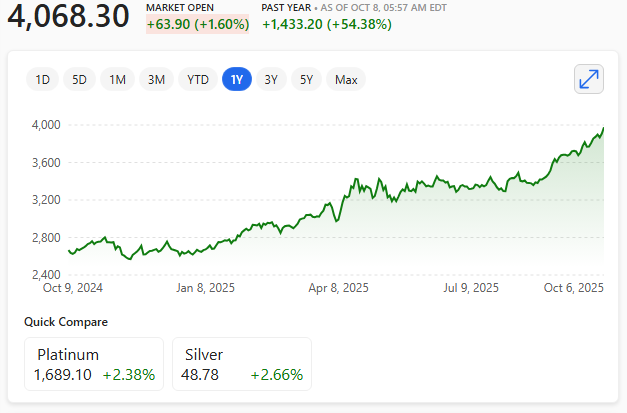
Gold extended a blistering rally to rise above $3,500 an ounce for the first time, as concern that President Donald Trump could fire Federal Reserve Chair Jerome Powell triggered a flight from U.S. stocks, bonds and the dollar.
This public rebuke of JeromePowell comes on top of geopolitical risks, trade tensions and concerns over economic stability – all enflamed by Trump’s tariff onslaught.
Gold hits new all-time high!
Gold has reached an unprecedented milestone, soaring to $3,500 per ounce for the first time, as political and economic uncertainty surrounding President Donald Trump’s criticism of Federal Reserve Chair Jerome Powell shakes global markets.
Investors have flocked to gold as a safe-haven asset, seeking refuge from the volatility triggered by Trump’s public demands for immediate interest rate cuts and threats to dismiss Powell.
Gold’s rapid ascent has been supported by a combination of trade tensions, tariff uncertainties, and geopolitical risks. Its ascent this year suggests that markets have less confidence in the U.S. than ever.
Dollar plummets as gold hits new all-time high!
The U.S. dollar has plummeted to its lowest level since 2023, further fueling gold’s meteoric rise.
Concerns over the Federal Reserve’s independence have eroded confidence in U.S. assets, prompting a flight to bullion-backed exchange-traded funds and central-bank purchases.
Market analysts are divided on whether gold’s rally will sustain its momentum. While some predict further gains, citing the metal’s enduring appeal as a hedge against economic instability, others caution that the recent surge may lead to a temporary pullback.
Regardless, gold’s historic climb underscores its status as a reliable store of value in times of turmoil, solidifying its position as the ultimate safe-haven asset.
Gold has seen a significant rise in 2025
On 1st January 2025, gold was priced at $2,623 per ounce. As of 21st April, 2025, gold has surged to $3,373.70 per ounce.
This marks an increase of $750.70 per ounce, or approximately 29% in just a few months.
One-year gold chart
Gold one-year chart
In April 2024, gold was priced at approximately $2,284 per ounce. As of April 2025, gold has surged to $3,373.70 per ounce. This marks an increase of $1,089.70 per ounce, or roughly 48% in just one year.
President Donald Trump’s recent criticism of Federal Reserve Chair Jerome Powell has sent shockwaves through the financial markets, reigniting concerns about the central bank’s independence.
On Monday 21st April 2025, Trump took to social media to publicly call Powell a ‘major loser’ and demanded immediate interest rate cuts, warning of an economic slowdown if his demands were not met.
This public rebuke, coupled with Trump’s earlier threats to terminate Powell, has unsettled investors and triggered another sharp sell-off in U.S. stocks.
The Dow Jones Industrial Average plunged nearly 1,000 points, or 2.48%, closing at 38170. The S&P 500 and Nasdaq Composite also suffered significant losses, falling 2.36% and 2.55%.
Dow Jones one-year chart
Trump continues to create uncertainty
Analysts attribute this market turmoil to fears that Trump’s rhetoric could undermine the Federal Reserve’s ability to operate independently, a cornerstone of its credibility.
‘Magnificent Seven’ tech companies dragged the major indexes lower, with Tesla and Nvidia respectively losing 5.8% and more than 4%. Amazon shed 3%, and Meta Platforms suffered losses too.
Tesla one-year chart
Adding to the uncertainty, Trump’s tariff policies have already strained investor confidence. The combination of trade tensions and doubts about the Fed’s autonomy has led to a flight from U.S. assets.
The dollar hit a three-year low, while gold prices soared to record highs above $3,400 per ounce as investors sought safe-haven assets.
Market experts warn that prolonged uncertainty could have far-reaching implications. ‘The market is okay with rates coming down,’ reportedly said Thierry Wizman, a global currency strategist. ‘What the market is not okay with is having the president or politicians tell the Fed that the rates need to come down’.
As Trump’s public rebuttal of Powell continues, investors observe the potential implications. The stakes are high, not just for the U.S. economy but for global markets that rely on the stability of American financial institutions.
Investors are left grappling with a volatile landscape, where political pressures and economic policies collide.
The European Central Bank (ECB) announced its seventh consecutive interest rate cut on Thursday 17th April 2025, lowering the rate by 0.25% to 2.25%.
This decision aims to counter economic growth concerns fueled by global trade tensions, particularly the impact of tariffs imposed by the United States.
The ECB’s move is expected to make borrowing more affordable, supporting consumer spending and business investment.
Inflation in the eurozone has fallen to 2.2%, close to the ECB’s target, shifting the focus to growth worries.
The eurozone economy grew by a modest 0.2% in the last quarter of 2024, highlighting the need for measures to stimulate activity.
The ECB’s decision reflects the challenges posed by trade uncertainties and the potential impact of tariffs on European industries.
Russia’s exemption from recent U.S. tariffs has sparked curiosity and debate. While many nations face new trade duties, Russia remains notably absent from the list
This decision stems from a combination of geopolitical, economic, and strategic factors.
One key reason is the existing sanctions imposed on Russia by several countries, including the United States, following its invasion of Ukraine in 2022.
These sanctions have already significantly curtailed trade between Russia and its global partners, rendering additional tariffs less impactful.
For instance, U.S.-Russia trade has dwindled to a fraction of its pre-war levels, focusing primarily on strategic goods like fertilisers and chemicals.
Another factor is the ongoing diplomatic efforts to address the conflict in Ukraine. Some analysts suggest that exempting Russia from tariffs could be a strategic move to maintain a channel for negotiation and potential cooperation.
This approach might aim to encourage Russia’s participation in peace talks or other diplomatic initiatives.
Additionally, the structure of Russia’s exports plays a role. Certain goods, such as fertilisers, are critical to global supply chains, and imposing tariffs could disrupt markets and harm economies reliant on these imports.
While the decision has drawn criticism, it underscores the complexities of balancing economic policies with geopolitical realities.
The debate continues as the global community navigates these challenging dynamics caused through the imposition of U.S. tariffs.
The stock market experienced another sharp Trump tariff related downturn Wednesday 16th April 2025, driven by a tech-heavy sell-off continuing to rattle investors.
The Nasdaq Composite plunged by 3%, while the Dow Jones Industrial Average shed nearly 700 points, marking one of the most significant declines in recent months.
Concerns over tariffs and inflation were amplified by Federal Reserve Chair Jerome Powell’s remarks about the tariff uncertainty, which highlighted the challenging economic landscape.
Tech stocks bore the brunt of the sell-off, with semiconductor companies like Nvidia and AMD leading the decline. Nvidia’s announcement of a $5.5 billion quarterly charge related to export restrictions on its chips to China added to the sector’s woes.
Powell’s comments on tariffs exacerbated market fears, as he warned of potential stagflation—a scenario where inflation rises while economic growth slows.
This sentiment was echoed across trading floors, with investors grappling with the implications of ongoing trade tensions and restrictive policies.
As the market inches closer to bear territory, the focus remains on navigating these turbulent times.
The sell-off underscores the fragility of investor confidence and the pivotal role of technology in shaping market dynamics
The UK economy displayed unexpected resilience in February 2025, with GDP growing by 0.5%.
This figure has exceeded market expectations and provided a welcome boost to UK economic confidence. The growth was fueled by robust activity in the services and manufacturing sectors, which helped counterbalance ongoing challenges in other areas.
February’s performance marks a recovery from the flat growth seen in January 2025, underscoring the adaptive capacity of businesses and consumers alike.
Adding to the positive momentum, the Consumer Prices Index (CPI) inflation rate eased to 2.6% in March 2025, down from February’s 2.8%.
The decline in inflation reflects a combination of factors, including falling fuel costs and stable food prices, which have alleviated pressure on household budgets.
This marks the lowest inflation level since late 2024 and aligns with the Bank of England’s goal of achieving price stability.
The interplay of stronger-than-expected GDP growth and easing inflation suggests a cautiously optimistic outlook for the UK economy.
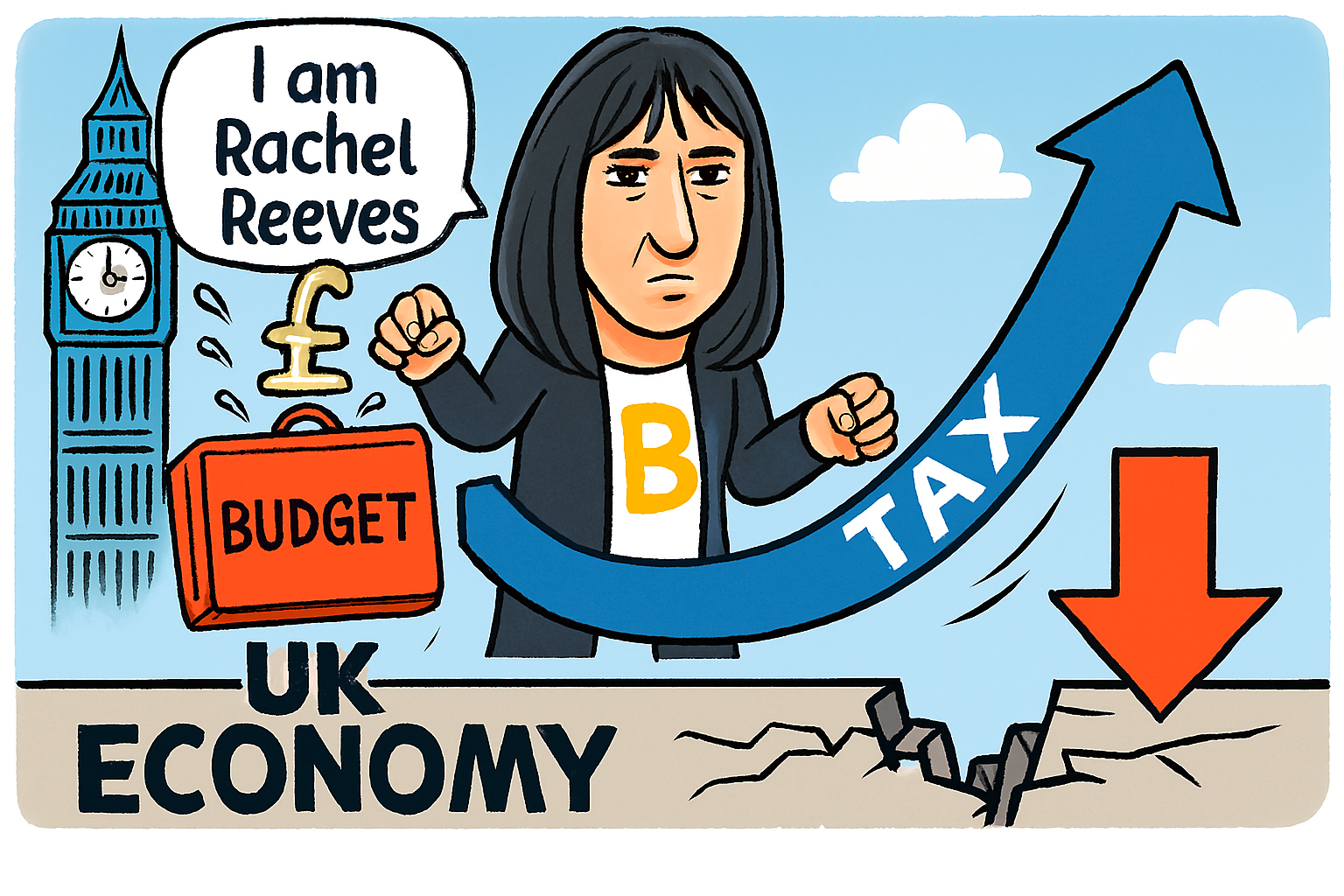
While challenges persist, such as global economic uncertainties and lingering effects of Brexit, these latest figures indicate a potential turning point, despite the Chancellors autumn and spring ‘budgets’.
The UK government and market participants will be watching closely to see if this positive trend continues into the coming months.
On Monday 14th April 2025, the stock market experienced a notable mini rally, driven by the tech sector’s resurgence following a weekend announcement of a temporary tariff pause.
Major tech companies like Apple, Nvidia, and Amazon saw significant gains, with Apple shares surging by 7.5%. The Nasdaq Composite, heavily weighted with tech stocks, climbed 1.9%, while the S&P 500 rose 1.5%.
This rally marked a stark contrast to the volatility of the previous week, where tariff uncertainties had sent shockwaves through the market.
The tariff pause, although temporary and restricted to 20%, helped to alleviate immediate concerns about rising costs for consumers and businesses.
Importers were spared from choosing between absorbing higher expenses or passing them on to customers. This relief was particularly impactful for companies reliant on Chinese manufacturing, as the exemptions covered a wide range of tech products.
Market analysts noted that the rally was not just a reaction to the tariff news but also a reflection of the tech sector’s resilience.
Despite facing challenges earlier in the year, tech companies have continued to innovate and adapt, maintaining their position as a driving force in the U.S. and world economies.
However, the rally’s sustainability remains uncertain. The administration’s mixed messages about future tariffs have left investors cautious.
While Monday’s gains were encouraging, the broader market continues to grapple with the unpredictability of trade policies.
Is this a fair ‘take’ on the last weeks tariff turmoil?
President Trump’s tariffs have left a significant mark on global trade and financial markets, creating waves that continue to shape global economic dynamics.
The tariffs, initially aimed at reducing the U.S. trade deficit and protecting domestic industries, triggered a rollercoaster ride for stock markets and strained international relations.
Highs to lows
The Dow Jones Industrial Average, Nasdaq Composite, and S&P 500 experienced sharp declines following the announcement of sweeping tariffs. At their lowest points, the Dow fell to 37226, the Nasdaq dropped to 15266, and the S&P 500 sank to 4956.
These figures marked significant losses, with trillions of dollars wiped off the market in just a few days.
The volatility was exacerbated by fears of a global trade war and the uncertainty surrounding the tariffs’ implementation.
Tariff turmoil and 90 day pause
In response to the market turmoil, President Trump announced a 90-day pause on most tariffs, providing temporary relief to investors and businesses. This decision led to a rebound in stock markets, with indices recovering some of their losses.
However, the relief was short-lived, as tensions with China escalated. While tariffs on many trading partners were paused, China’s tariff rate was increased to a staggering 125%.
This move further strained U.S.-China relations and added pressure on industries reliant on Chinese imports.
Tech garners favour
The tech sector, heavily dependent on global supply chains, was among the hardest hit. Tariffs on components like microchips and finished products such as smartphones and computers disrupted production and increased costs.
Companies faced challenges in maintaining profitability and passing on the increased costs to consumers. The eventual reduction and cancellation of some tariffs provided a lifeline to the tech industry, allowing businesses to stabilize operations and reduce prices.
However, the uncertainty surrounding trade policies continued to pose challenges for the sector.
Market turmoil?
Was this the ultimate in market ‘management’ as President Trump posted on his social media platform, Truth Social, that it was a ‘great time to buy’ just hours before announcing the 90-day tariff pause.?
This statement, made at 9:37 am., came shortly before the announcement, which caused stock markets to surge significantly. The timing of his post raised eyebrows and sparked discussions about potential insider trading concerns
China retaliates
China’s response to the tariffs was swift and retaliatory. Beijing imposed its own tariffs on U.S. imports, raising rates to 125%. This retaliation targeted key U.S. industries, including agriculture and technology, further escalating the trade conflict.
The Chinese yuan also hit its lowest level against the dollar since the global financial crisis. These measures highlighted the deepening economic rift between the world’s two largest economies.
The effects of President Trump’s tariffs underscore the complexities of modern trade policies. While intended to protect domestic industries, the tariffs created significant economic disruptions, both domestically and globally.
The stock market volatility, strained international relations, and challenges faced by industries like technology illustrate the far-reaching consequences of such policies.
As the world continues to navigate the aftermath of these tariffs, the importance of balanced and strategic trade policies becomes increasingly evident.
Markets moved up, unsurprisingly, after Trump announced the tech tariff adjustment
Over the weekend, President Trump reportedly made several statements about tariffs on tech products, creating some confusion.
Initially, it was announced that smartphones, computers, and other electronics would be temporarily excluded from the steep tariffs.
However, Trump later clarified that these products were not entirely exempt but had been moved to a different ‘tariff bucket.’ He reportedly stated that they would still face a 20% tariff as part of broader measures targeting Chinese goods.
Trump also hinted at upcoming tariffs on semiconductors and the entire electronics supply chain, emphasising the need for the U.S. to produce more of these components domestically.
President Trump reportedly described this as part of a ‘National Security Tariff Investigation’. These announcements have left tech companies and investors uncertain about the long-term implications for the industry.
Tariffs are like a spider’s web cast over the world with the spider, crawling around collecting from its prey.
Trump’s tariffs continue to ‘infect’ world trade, and they will be here for a while yet.
Do you believe in the ‘collective unconscious’, a universal mind to which all humanity is connected?
In the context of the financial world, the stock market is based on unwavering fundamental mathematics… numbers. However, is often driven by sentiment, instinct, hopes and fears.
They both function in a similar manner.
In other words, it is essentially a sentiment tracker.
This was very evident in the stock market movement during ‘normal’ trading hours immediately preceding U.S. President Donald Trump’s tariff plan unveiling, contrasted with extended trading.
Investors had time to digest the sheer weight of the heavy tariffs on countries across the globe – we then witnessed an instant stock reversal after almost ‘normal’ trading before.
The point
Trump hinted at leniency on tariffs days before revealing his true intentions. However, that sense of mercy was absent, as the tariffs were sweeping and severe.
To describe Trump’s plan as a seismic shift in the economic and financial order might be understatement.
It will take time for tariff price changes to filter into the economy, but the stock market, reflecting the collective unconscious of investors, registered this shock instantly – just minutes after a stock climb.